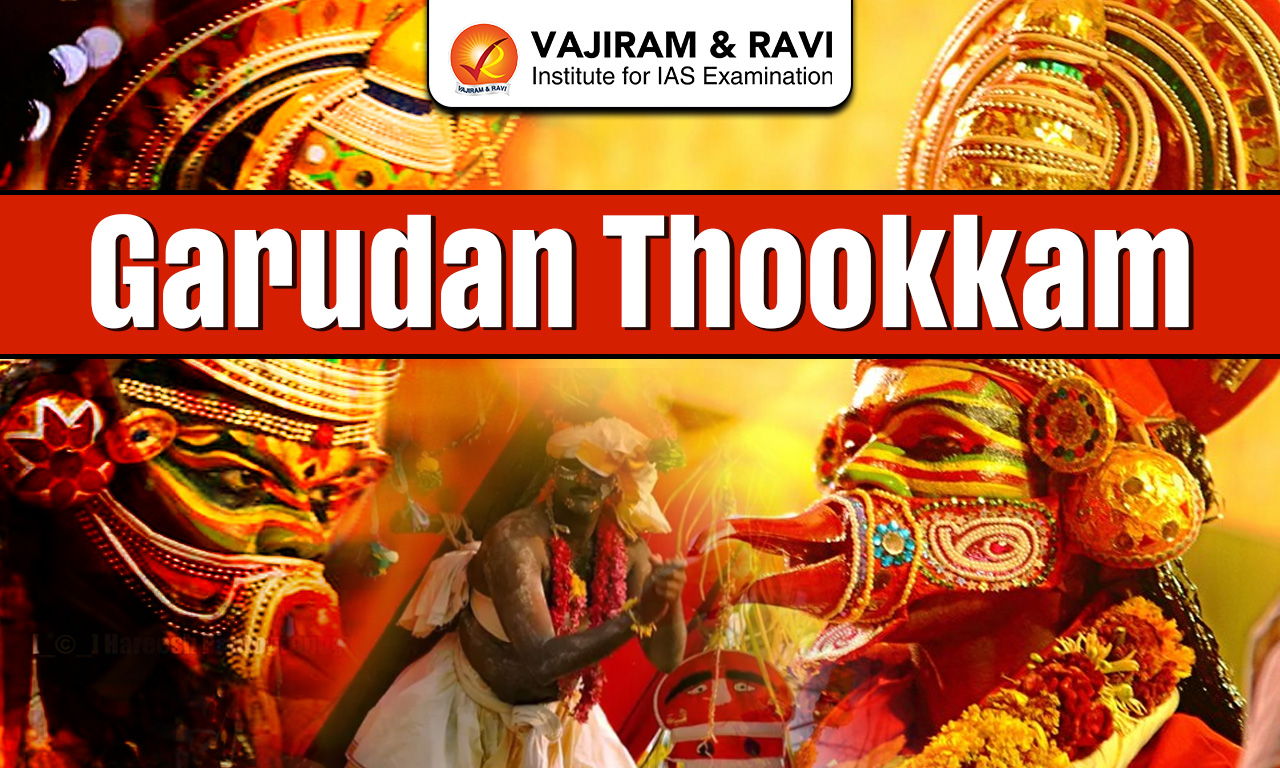
Garudan Thookkam is a ritual art form observed in southern India, especially in Kerala and parts of Tamil Nadu. It is closely linked with Bhadrakali worship and temple festivals. It represents devotion, sacrifice and mythology through symbolic performance. This art form is performed by devotees seeking blessings and solutions to problems. Garudan Thookkam continues as a living cultural tradition rooted in ancient beliefs and rituals.
Also Read: Classical Dances of India
Garudan Thookkam
Garudan Thookkam is a ritual dance where performers dress as Garuda and enact mythological devotion through symbolic acts, music and temple processions.
- History: It is rooted in ancient Bhadrakali worship traditions of the former Travancore region, based on the legend of Goddess Kali and demon Darika, symbolizing devotion, sacrifice and ritual offerings practiced for centuries in temple culture.
- Location: Garudan Thookkam is mainly performed in Kerala and parts of Tamil Nadu, especially in districts like Kottayam and Thiruvananthapuram, where Bhadrakali temples host the ritual during annual festivals.
- Ritual: It is performed in Bhadrakali temples, especially in former Travancore regions. Devotees offer Garudan Thookkam as a vow for fulfilled wishes, reflecting strong faith traditions and community participation in temple centered rituals.
- Performance Style and Costume: Performers dress as Garuda using Pattuvaal, Njori, Kacha, Mundi, Astimala, Chiraku, Uttareeyam and Kireedam. Bright costumes, elaborate makeup and symbolic wings recreate the divine eagle associated with Lord Vishnu.
- Musical Elements: It includes traditional instruments like Chenda, Elathalam and Kombu. The performance follows 18 Thalavattam rhythmic patterns, creating a powerful sound environment that enhances the ritual intensity and cultural authenticity.
- Ritual Act: A distinctive aspect of Garudan Thookkam involves Choondakuthal, where hooks pierce the skin on the performer’s back. They are then suspended and carried around the temple, symbolizing sacrifice and devotion to Goddess Kali.
- Processions: It is conducted through vibrant processions using bullock carts, boats, or hand pulled carts. In regions like Kottayam, decorated Garudas move along rivers with illuminated structures, creating grand visual spectacles.
- Sarkara Devi Temple: At Sarkara Devi Temple, It is part of festivals like Meena Bharani. The temple, dedicated to Bhadrakali, was historically enriched by Anizham Thirunal
- Regional Practices: Garudan Thookkam is widely seen in temples like Elamkavu Devi Temple and Arayankavu Bhagavathy Temple. Some locations host over 100 performers annually, making it one of the largest ritual performances in Kerala.
Also Read: Folk Dances of India


 Last updated on Oct, 2026
→ UPSC 2027 Notification will be released on 13 January 2027 at upsconline.nic.in.
→ Check Nobel Prize 2026 Winners List here.
→ Download PIB PRiSM Monthly Magazine 2026 here.
→ Check UPSC Monthly Current Affairs Magazine The Recitals here.
→ Check out the latest UPSC Syllabus here.
→ Download UPSC Model Answers for Mains 2026
→ UPSC Mains Question Paper 2026 is out now for Essay & GS Paper 1, 2, 3 & 4.
→ UPSC Calendar 2027 has been released.
→ Enroll in Vajiram & Ravi’s UPSC Mains Test Series 2027 for structured answer writing practice, expert evaluation, and exam-oriented feedback.
→ Join Vajiram & Ravi’s UPSC Mentorship Program 2027 for personalized guidance, strategy planning, and one-to-one support from experienced mentors.
→ Go through the UPSC Mains Previous Year Papers to enhance your preparation.
→ UPSC has released UPSC Toppers List 2025 with the Civil Services final result on its official website.
→ Also check Best UPSC Coaching in India
Garudan Thookkam FAQs
Q1. What is Garudan Thookkam?+
Q2. Where is Garudan Thookkam mainly performed?+
Q3. Why is Garudan Thookkam performed?+
Q4. What is the main ritual in Garudan Thookkam?+
Q5. Which deity is associated with Garudan Thookkam?+
Tags: art and culture garudan thookkam