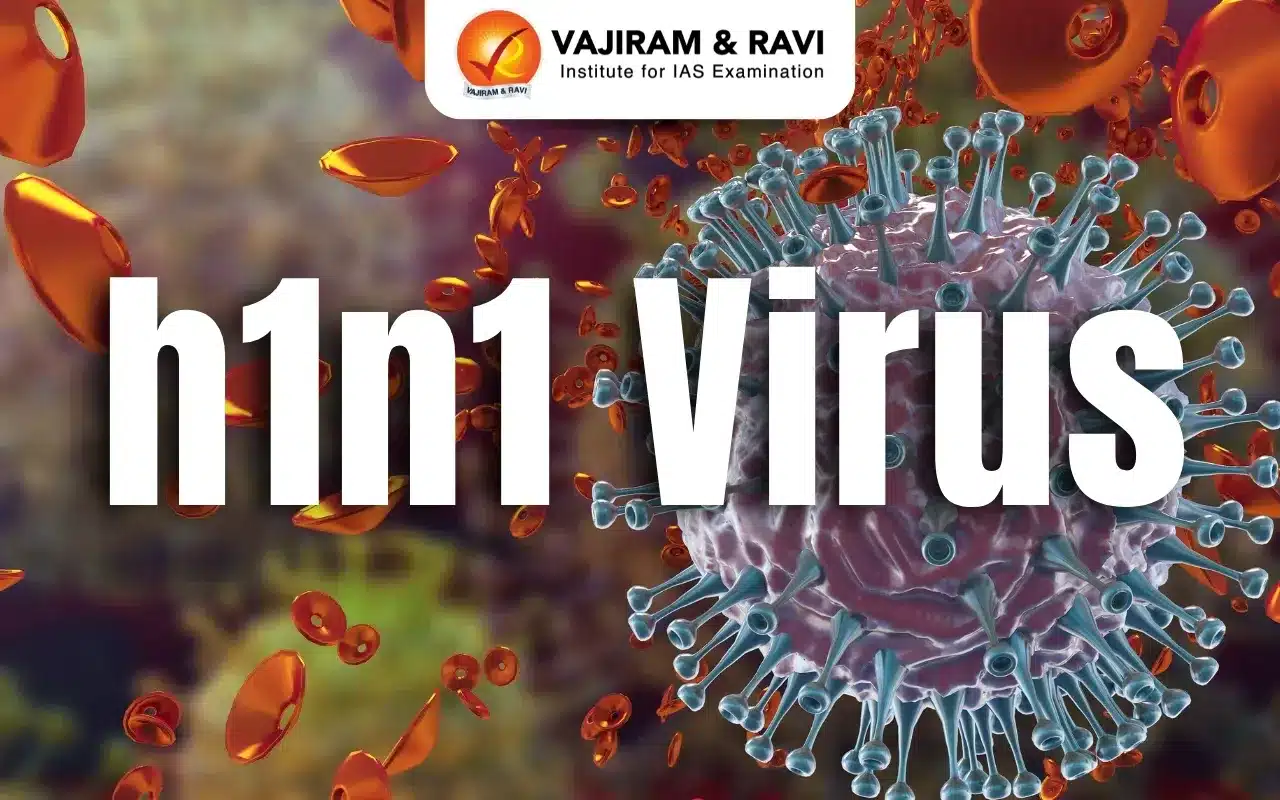
H1N1 Virus is a subtype of Influenza A that causes an acute respiratory infection commonly known as Swine flu. It can affect people of all ages. Most infections remain mild and improve within about a week. However, severe cases can cause pneumonia, respiratory failure, hospitalisation and death, especially among high risk groups.
Why is H1N1 Virus in News?
Delhi has reported 1,344 H1N1 Virus (influenza) cases this season, compared with 229 during the corresponding period last year. This is nearly a six fold increase. The rise has again focused attention on seasonal Influenza, its transmission, symptoms and risk of severe disease.
H1N1 Virus
H1N1 Virus is an Influenza A subtype. The virus responsible for the 2009 pandemic is called A(H1N1)pdm09 and continues to circulate as a seasonal virus.
- Full Form: H1N1 refers to Hemagglutinin 1 and Neuraminidase 1. These names identify two surface proteins used to classify Influenza A virus subtypes.
- H1N1 Disease: H1N1 causes an acute respiratory infection commonly called Swine flu. Influenza has four types, A, B, C and D, while A and B cause seasonal epidemics in humans.
- 2009 Pandemic: The new A(H1N1) virus was first reported in North America in April 2009. WHO declared a pandemic in June 2009 after infections were confirmed in 74 countries and territories.
- Origin: Genetic analysis showed that the 2009 virus originated from animal Influenza viruses. It was different from human seasonal H1N1 viruses circulating since 1977.
- First Case in India: India reported its first confirmed H1N1 case in May 2009. The virus has since caused several outbreaks, with significant cases reported in 2021, 2022 and 2023.
- Transmission: Swine Flu mainly spreads through respiratory droplets released during coughing and sneezing. Infection can also occur after touching contaminated surfaces and then touching the mouth or nose.
- Incubation: Symptoms generally appear about two days after infection. The incubation period can range from one to four days, allowing transmission before symptoms become clearly noticeable.
- Diagnosis: Most cases are identified clinically. Laboratory testing of respiratory samples can confirm infection. RT PCR can detect Influenza specific RNA and generally has better sensitivity than rapid diagnostic tests.
Also Read: Difference Between Pandemic and Epidemic


H1N1 Virus Symptoms
H1N1 Virus symptoms usually begin suddenly and resemble those of ordinary seasonal flu, with fever, cough, body pain and marked tiredness being common features.
- Common Symptoms: Fever, dry cough, sore throat, headache, muscle and joint pain, runny nose, chills and severe tiredness are common symptoms of Swine Flu infection.
- Other Symptoms: Some infected people may experience vomiting or diarrhoea. Symptoms generally improve within about a week, although cough and weakness can continue for two weeks or longer.
- Severe Illness: H1N1 can sometimes cause serious complications. Pneumonia, respiratory failure and sepsis have been reported in severe infections requiring medical attention.
- High Risk Groups: Pregnant women, children below five years, adults aged 65 years and above and people with chronic diseases face a higher risk of severe Influenza.
H1N1 Virus Prevention and Treatment
Prevention of the H1N1 Virus focuses on vaccination, hygiene and limiting exposure, while treatment depends on disease severity and the person’s risk of complications.
- Vaccination: WHO considers vaccination the best protection against seasonal Influenza. Annual vaccination is recommended because immunity declines over time and circulating viruses continually change.
- Hygiene: Regular handwashing, proper disposal of tissues, covering the mouth and nose while coughing or sneezing and avoiding unnecessary contact with infected people can reduce the spread of Swine Flu.
- Isolation: This helps limit transmission, particularly during the infectious period.
- Antiviral Treatment: WHO recommends antiviral medicines as soon as possible for high risk patients and people with severe Influenza. Treatment within 48 hours may reduce severe complications and deaths.
- Public Health Measures: Effective control requires adequate vaccination, diagnostic facilities, disease surveillance and awareness, particularly for pregnant women, young children, older adults and people with chronic illnesses.

 Last updated on Oct, 2026
→ UPSC 2027 Notification will be released on 13 January 2027 at upsconline.nic.in.
→ Check Nobel Prize 2026 Winners List here.
→ Download PIB PRiSM Monthly Magazine 2026 here.
→ Check UPSC Monthly Current Affairs Magazine The Recitals here.
→ Check out the latest UPSC Syllabus here.
→ Download UPSC Model Answers for Mains 2026
→ UPSC Mains Question Paper 2026 is out now for Essay & GS Paper 1, 2, 3 & 4.
→ UPSC Calendar 2027 has been released.
→ Enroll in Vajiram & Ravi’s UPSC Mains Test Series 2027 for structured answer writing practice, expert evaluation, and exam-oriented feedback.
→ Join Vajiram & Ravi’s UPSC Mentorship Program 2027 for personalized guidance, strategy planning, and one-to-one support from experienced mentors.
→ Go through the UPSC Mains Previous Year Papers to enhance your preparation.
→ UPSC has released UPSC Toppers List 2025 with the Civil Services final result on its official website.
→ Also check Best UPSC Coaching in India
H1N1 Virus FAQs
Q1. What is H1N1 Virus?+
Q2. How does H1N1 Virus spread?+
Q3. What are the main symptoms of H1N1 Virus?+
Q4. Is H1N1 Virus a serious disease?+
Q5. Can antibiotics treat H1N1 Virus?+
Tags: H1N1 virus virus