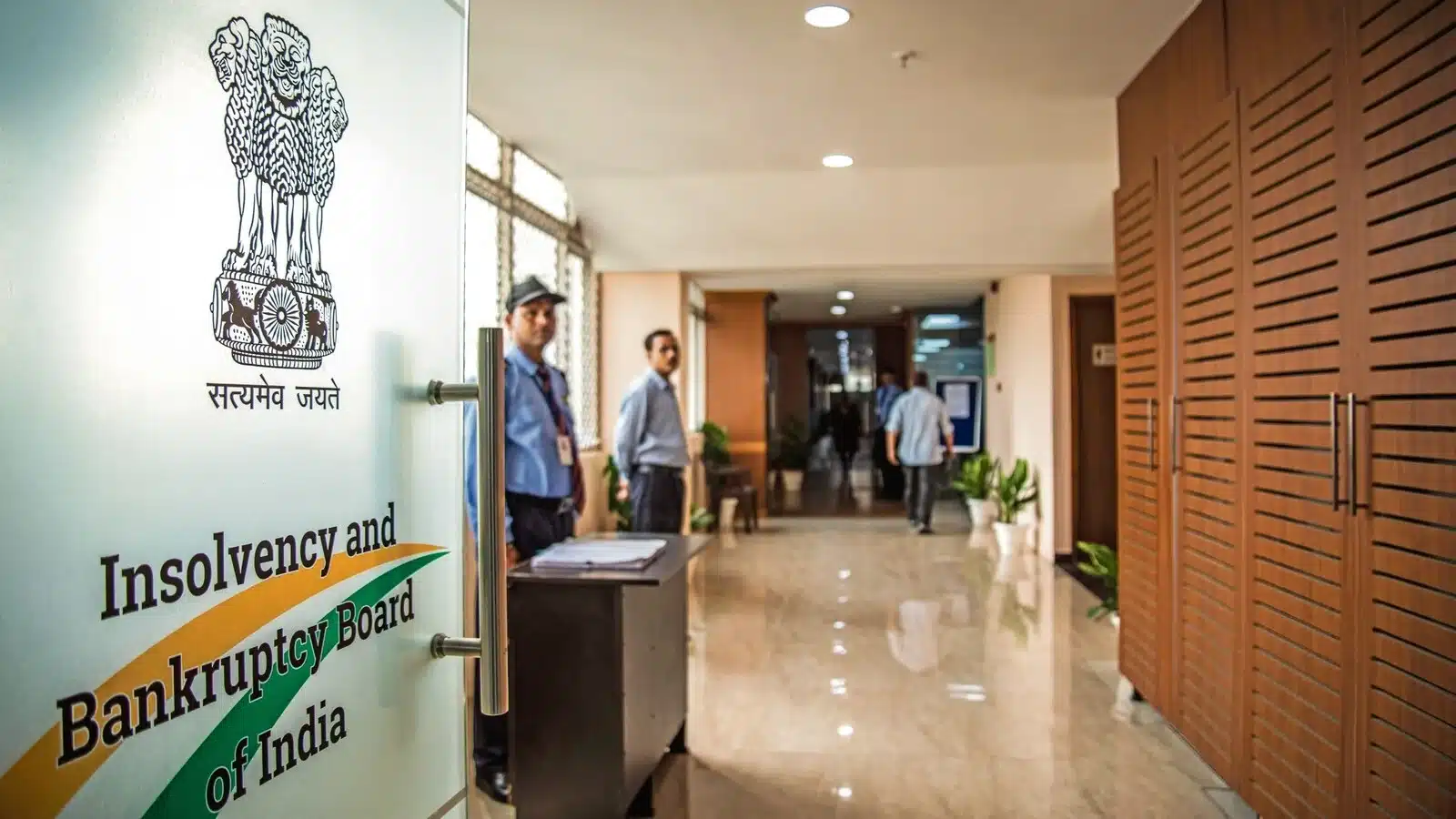
About Insolvency and Bankruptcy Board of India (IBBI)
- The IBBI was established on October 1, 2016 in accordance with the provisions of the ‘Insolvency and Bankruptcy Code, 2016’.
- It is responsible for the implementation of the IBC. The IBC amends and consolidates the laws relating to the insolvency resolution of individuals, partnership firms, and corporate persons in a time-bound manner.
- The IBBI regulates professionals as well as processes.
- It has regulatory oversight over the insolvency professional agencies, insolvency professional entities, insolvency professionals, and information utilities.
- It enforces rules for processes of corporate insolvency resolution, individual insolvency resolution, corporate liquidation, and individual bankruptcy under the IBC.
- It has also been designated as the ‘Authority’ under the Companies (Registered Valuers and Valuation Rules), 2017 for the regulation and development of the profession of valuers in the country.
- Constitution of the Board: The Board consists of the following members who are appointed by the Central Government:
- A Chairperson.
- Three members from among the officers of the Central Government equivalent or not below the rank of a Joint Secretary. Out of the three members, each will represent the Ministry of Finance, the Ministry of Corporate Affairs, and the Ministry of Law, ex -officio.
- One member nominated by the RBI (Reserve Bank of India), ex-officio.
- Five other members nominated by the Central Government, out of which at least three should be whole-time members.
- The term of office of the Chairperson and members (other than ex-officio members) is five years or until they attain sixty-five years, whichever is earlier, and they are eligible for re-appointment.
Q1) What is Insolvency and Bankruptcy?
Insolvency is a financial state where a person cannot meet debt payments on time. Bankruptcy is a legal process that happens when the individual declares he or she can no longer pay back his or her debts to creditors.


 Last updated on Oct, 2026
→ UPSC 2027 Notification will be released on 13 January 2027 at upsconline.nic.in.
→ Check Nobel Prize 2026 Winners List here.
→ Download PIB PRiSM Monthly Magazine 2026 here.
→ Check UPSC Monthly Current Affairs Magazine The Recitals here.
→ Check out the latest UPSC Syllabus here.
→ Download UPSC Model Answers for Mains 2026
→ UPSC Mains Question Paper 2026 is out now for Essay & GS Paper 1, 2, 3 & 4.
→ UPSC Calendar 2027 has been released.
→ Enroll in Vajiram & Ravi’s UPSC Mains Test Series 2027 for structured answer writing practice, expert evaluation, and exam-oriented feedback.
→ Join Vajiram & Ravi’s UPSC Mentorship Program 2027 for personalized guidance, strategy planning, and one-to-one support from experienced mentors.
→ Go through the UPSC Mains Previous Year Papers to enhance your preparation.
→ UPSC has released UPSC Toppers List 2025 with the Civil Services final result on its official website.
→ Also check Best UPSC Coaching in India