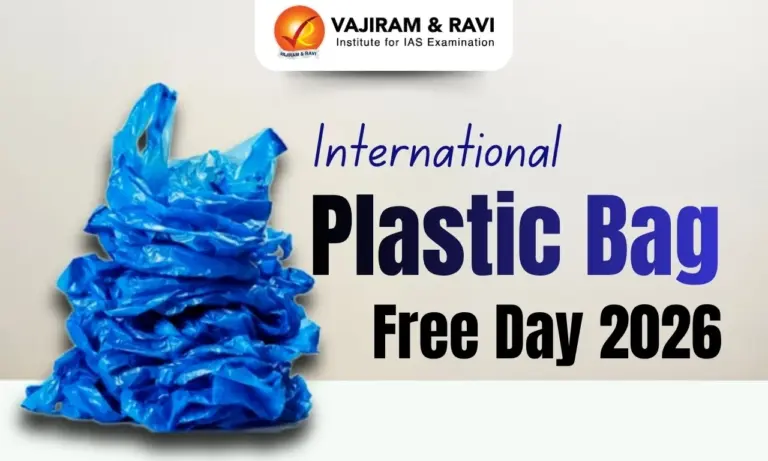
Plastic pollution has become one of the biggest environmental challenges of the 21st century. Every year, millions of plastic bags are used for just a few minutes but remain in the environment for hundreds of years. To spread awareness about this growing problem, International Plastic Bag Free Day 2026 is observed annually on 3 July across the world. The day encourages individuals, businesses, and governments to reduce the use of single-use plastic bags and adopt sustainable alternatives such as cloth, jute, paper, and reusable bags.
International Plastic Bag Free Day 2026
International Plastic Bag Free Day 2026 will be observed on Friday, 3 July 2026. The campaign is supported by environmental organizations, governments, schools, businesses, and citizens worldwide to encourage people to refuse single-use plastic bags and switch to eco-friendly alternatives.
International Plastic Bag Free Day 2026 Theme
The International Plastic Bag Free Day 2026 theme, “Breaking Free from Single-Use Plastics: Towards a Sustainable Future,” encourages people to reduce their dependence on disposable plastics by choosing reusable bags and adopting sustainable habits in their everyday lives.


International Plastic Bag Free Day 2026 Significance
International Plastic Bag Free Day 2026 highlights the urgent need to reduce single-use plastic bag consumption, protect the environment, and encourage individuals, businesses, and governments to adopt sustainable alternatives for a cleaner future.
- Raises awareness about the harmful effects of plastic bags on land, rivers, and oceans.
- Encourages the use of reusable cloth, jute, and eco-friendly bags.
- Helps reduce plastic pollution and littering in public spaces.
- Protects wildlife and marine organisms from ingestion and entanglement in plastic waste.
- Supports sustainable consumption and responsible waste management practices.
- Promotes community participation through clean-up drives, awareness campaigns, posters, and educational activities.
- Encourages governments and businesses to strengthen plastic reduction policies and eco-friendly packaging initiatives.
- Contributes to global efforts to achieve environmental sustainability and reduce plastic pollution.
Why Reducing Plastic Bag Use is Important?
Reducing the use of plastic bags is essential to minimize plastic pollution, protect ecosystems, conserve natural resources, and promote a cleaner and more sustainable environment for future generations.
- Reduces plastic pollution in rivers, oceans, forests, and urban areas.
- Protects marine life and wildlife from choking, entanglement, and ingestion of plastic.
- Prevents the formation of microplastics that contaminate soil, water, and the food chain.
- Lowers the amount of non-biodegradable waste sent to landfills.
- Helps prevent drainage blockages, reducing the risk of urban flooding.
- Conserves natural resources and fossil fuels used in plastic production.
- Reduces greenhouse gas emissions associated with the manufacture and disposal of plastic bags.
- Encourages the adoption of reusable and eco-friendly alternatives such as cloth and jute bags.
- Supports cleaner cities and healthier ecosystems through responsible waste management.
- Promotes sustainable lifestyles and environmentally responsible consumer behavior.
International Treaties and Global Initiatives to Reduce Plastic Pollution
International treaties and global initiatives play a vital role in combating plastic pollution by promoting international cooperation, strengthening waste management systems, and encouraging countries to reduce the production and use of single-use plastics.
- Global Plastics Treaty (Under Negotiation): A proposed legally binding international agreement led by the United Nations to address plastic pollution throughout the entire lifecycle of plastics, from production to disposal.
- United Nations Environment Assembly (UNEA): The world’s highest decision-making body on environmental issues, which adopted a landmark resolution in 2022 to develop a global treaty to end plastic pollution.
- Basel Convention Plastic Waste Amendments (2019): Regulates the transboundary movement of plastic waste and ensures environmentally sound management of plastic waste through international cooperation.
- MARPOL Convention (Annex V): Prohibits ships from dumping plastics and other garbage into the sea, helping to reduce marine pollution.
- UNEP Clean Seas Campaign: A global initiative launched by the United Nations Environment Programme (UNEP) to encourage governments, industries, and individuals to reduce marine plastic pollution.
- Beat Plastic Pollution Campaign: An international awareness campaign that promotes reducing plastic consumption, improving recycling, and adopting sustainable alternatives. It is also the theme of many World Environment Day celebrations.
- Sustainable Development Goals (SDGs): Several SDGs, particularly SDG 12 (Responsible Consumption and Production), SDG 13 (Climate Action), SDG 14 (Life Below Water), and SDG 15 (Life on Land), support efforts to reduce plastic pollution and protect ecosystems.
- Global Partnership on Plastic Pollution and Marine Litter (GPML): A multi-stakeholder platform that brings together governments, businesses, researchers, and civil society to share knowledge and accelerate action against plastic pollution.
- New Plastics Economy Global Commitment: Led by the Ellen MacArthur Foundation in collaboration with UNEP, this initiative encourages businesses and governments to eliminate unnecessary plastics, promote reuse, and improve recycling systems.
India’s Efforts to Curb Single-Use Plastic and Plastic Bag Usage
India has introduced several policies, regulations, and awareness campaigns to reduce the use of single-use plastics and promote eco-friendly alternatives. These initiatives aim to minimize plastic pollution, improve waste management, and encourage sustainable consumption across the country.
- Nationwide Ban on Identified Single-Use Plastics (2022): India banned the manufacture, import, stocking, distribution, sale, and use of several identified single-use plastic (SUP) items from 1 July 2022 under the Plastic Waste Management Rules.
- Plastic Waste Management Rules, 2016: These rules provide a comprehensive framework for the collection, segregation, recycling, and environmentally sound disposal of plastic waste. The rules have been amended over time to strengthen implementation.
- Extended Producer Responsibility (EPR): Under the EPR framework, plastic producers, importers, and brand owners are responsible for collecting, recycling, and managing the plastic packaging waste generated by their products.
- Swachh Bharat Mission: The mission promotes scientific solid waste management, cleanliness, and public participation, encouraging citizens to reduce plastic waste and maintain cleaner surroundings.
- Awareness and Behaviour Change Campaigns: The government regularly conducts public awareness drives, educational programs, and campaigns to encourage people to carry cloth and jute bags instead of plastic bags.
- Promotion of Eco-Friendly Alternatives: India supports the use of cloth bags, jute bags, paper bags, compostable carry bags, and other sustainable packaging materials to reduce dependence on conventional plastics.
- Plastic Waste Collection and Recycling: Urban Local Bodies and State Pollution Control Boards have strengthened plastic waste collection, segregation, and recycling systems in many cities.
- Support for Circular Economy: The government encourages industries to adopt recycling technologies, resource efficiency, and circular economy practices that reduce plastic waste generation.

 Last updated on Oct, 2026
→ UPSC 2027 Notification will be released on 13 January 2027 at upsconline.nic.in.
→ Check Nobel Prize 2026 Winners List here.
→ Download PIB PRiSM Monthly Magazine 2026 here.
→ Check UPSC Monthly Current Affairs Magazine The Recitals here.
→ Check out the latest UPSC Syllabus here.
→ Download UPSC Model Answers for Mains 2026
→ UPSC Mains Question Paper 2026 is out now for Essay & GS Paper 1, 2, 3 & 4.
→ UPSC Calendar 2027 has been released.
→ Enroll in Vajiram & Ravi’s UPSC Mains Test Series 2027 for structured answer writing practice, expert evaluation, and exam-oriented feedback.
→ Join Vajiram & Ravi’s UPSC Mentorship Program 2027 for personalized guidance, strategy planning, and one-to-one support from experienced mentors.
→ Go through the UPSC Mains Previous Year Papers to enhance your preparation.
→ UPSC has released UPSC Toppers List 2025 with the Civil Services final result on its official website.
→ Also check Best UPSC Coaching in India
International Plastic Bag Free Day 2026 FAQs
Q1. When is International Plastic Bag Free Day 2026 observed?+
Q2. What is the purpose of International Plastic Bag Free Day?+
Q3. What is the theme of International Plastic Bag Free Day 2026?+
Q4. Why are plastic bags harmful to the environment?+
Q5. What are the best alternatives to plastic bags?+
Tags: important day july important day july 2026 international plastic bag free day 2026