


What’s in today’s article?
- Why in News?
- What is UNSC Resolution 1701?
- key takeaways from Israel-Lebanon ceasefire
- Reasons for Israel’s Ceasefire Decision
Why in News?
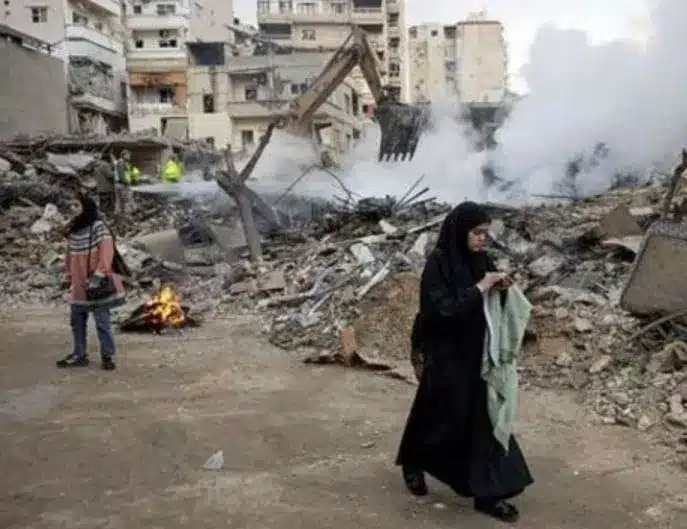
Israel and Lebanon have entered into a ceasefire. This happened a day after Israel’s security cabinet approved a US-backed proposal to end the 13-month-long conflict that escalated in September.
This ceasefire has been modeled after UNSC Resolution 1701 from the 2006 conflict.


What is UNSC Resolution 1701?
- Overview of UNSC Resolution 1701
- UNSC Resolution 1701, adopted on August 11, 2006, seeks to end hostilities between Hezbollah and Israel, establish a buffer zone, and achieve a permanent ceasefire.
- Historical Context
- The resolution aimed to complete Israel’s withdrawal from southern Lebanon along the Blue Line and Golan Heights, following its partial withdrawal in 2000.
- Triggered by Hezbollah’s attack in July 2006, which killed three Israeli soldiers and kidnapped two, the ensuing war lasted over a month, causing significant casualties (1,000+ Lebanese and 170 Israelis).
- Key Provisions
- Disarmament and Sovereignty:
- Full disarmament of all armed groups in Lebanon, ensuring the Lebanese State’s monopoly over weapons and authority.
- Prohibition of foreign forces in Lebanon without government consent.
- Arms Control:
- No sales or supply of arms to Lebanon without government authorization.
- Landmine Information:
- Israel to provide maps of landmines in Lebanon to the UN.
- Buffer Zone and Ceasefire:
- Respect for the Blue Line by both parties.
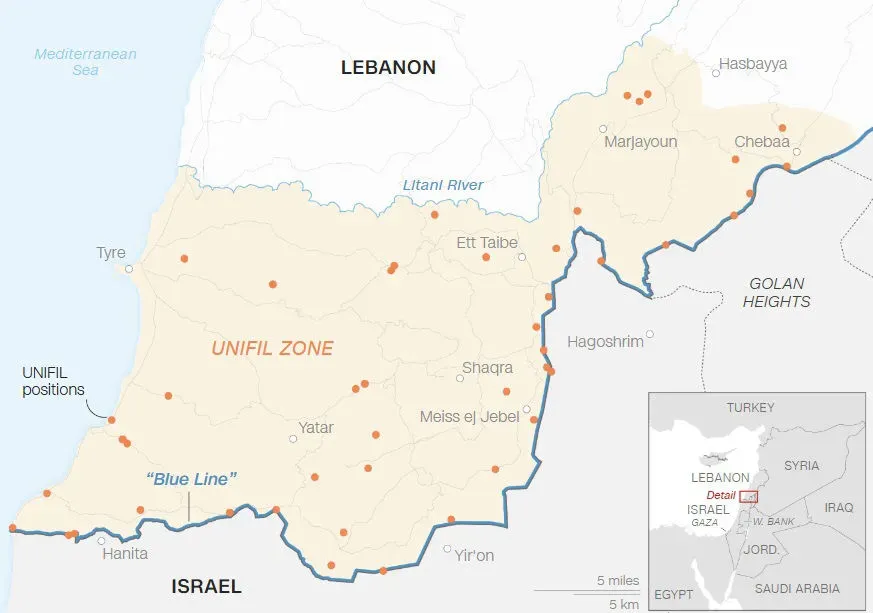
- Creation of a demilitarized zone free of armed personnel and weapons, apart from Lebanese authorities and UNIFIL, between the Blue Line and the Litani River.
- UNIFIL (United Nations Interim Force in Lebanon) Mandate
- The resolution authorized up to 15,000 UN peacekeepers to:
- Monitor the cessation of hostilities.
- Assist Lebanese troops in securing the buffer zone.
- Ensure the safe return of displaced Lebanese populations.
- Disarmament and Sovereignty:
key takeaways from Israel-Lebanon ceasefire
- Cessation of hostilities
- A 60-day cessation of hostilities has been established as a framework for a lasting truce between Israel and Hezbollah.
- Withdrawal of Forces
- Hezbollah: Required to retreat approximately 40 kilometers (25 miles) from the Israel-Lebanon border.
- Israel: Committed to withdrawing its ground forces from Lebanese territory.
- Basis of the Deal
- The agreement is rooted in UNSC Resolution 1701, which ended the 2006 war. Negotiations focused on the resolution’s enforcement.
- Enhanced Monitoring and Supervision
- Lebanon will intensify its oversight of Hezbollah’s movements south of the Litani River to prevent regrouping.
- Monitoring responsibilities are shared by:
- United Nations peacekeeping troops.
- The Lebanese military.
- A multinational committee (A key update is the inclusion of the U.S. and France in the oversight mechanism, alongside Lebanon, Israel, and UNIFIL.)
- Israel’s Conditional Stance
- Israel has warned it will resume military operations if the agreement is breached.
- The agreement does not mandate complete disarmament of Hezbollah in northern Lebanon.
Reasons for Israel’s Ceasefire Decision
- Focus on Iran: Israel aims to direct its attention toward countering Iran.
- Military Replenishment: The ceasefire allows Israeli forces to regroup and replenish resources.
- Separation of Fronts: By halting conflict with Hezbollah, Israel seeks to isolate the Hamas and Hezbollah theaters of war.
- Hezbollah’s Parallel Front: Hezbollah opened a secondary front in support of Hamas following Hamas’s terror attack and Israel’s subsequent bombardment of Gaza.
- Additional Factors Influencing the Decision
- Civil-Military Dynamics in Israel
- Former Defense Minister and the IDF Chief of Staff advocated for a ceasefire, questioning the government’s military objectives.
- Strategic Challenges in Lebanon
- Prolonged military presence in Lebanon risks wearing down the IDF and strengthening Hezbollah’s domestic support.
- Hezbollah’s Resilience
- Despite heavy losses, Hezbollah retained the capability to strike, launching 250 rockets two days before the ceasefire.
- Israel’s symbolic achievement of reaching the Litani River was followed by a ceasefire to avoid a prolonged and costly conflict.
- Civil-Military Dynamics in Israel
Q.1. What are the key terms of the Israel-Hezbollah ceasefire agreement?
The ceasefire includes a 60-day cessation of hostilities, Hezbollah’s withdrawal 40 km from the border, Israel’s troop withdrawal from Lebanon, and enhanced monitoring by UNIFIL, the Lebanese military, and a multinational committee.
Q.2. Why did Israel agree to the ceasefire with Hezbollah?
Israel’s decision stems from strategic priorities: focusing on countering Iran, regrouping its military, isolating the Hezbollah and Hamas fronts, and avoiding prolonged conflict that could bolster Hezbollah’s domestic support.
News: What is the UNSC Resolution 1701 upon which the Israel-Lebanon ceasefire is based? | Indian Express | CNN

 Last updated on Oct, 2026
→ UPSC 2027 Notification will be released on 13 January 2027 at upsconline.nic.in.
→ Check Nobel Prize 2026 Winners List here.
→ Download PIB PRiSM Monthly Magazine 2026 here.
→ Check UPSC Monthly Current Affairs Magazine The Recitals here.
→ Check out the latest UPSC Syllabus here.
→ Download UPSC Model Answers for Mains 2026
→ UPSC Mains Question Paper 2026 is out now for Essay & GS Paper 1, 2, 3 & 4.
→ UPSC Calendar 2027 has been released.
→ Enroll in Vajiram & Ravi’s UPSC Mains Test Series 2027 for structured answer writing practice, expert evaluation, and exam-oriented feedback.
→ Join Vajiram & Ravi’s UPSC Mentorship Program 2027 for personalized guidance, strategy planning, and one-to-one support from experienced mentors.
→ Go through the UPSC Mains Previous Year Papers to enhance your preparation.
→ UPSC has released UPSC Toppers List 2025 with the Civil Services final result on its official website.
→ Also check Best UPSC Coaching in India








