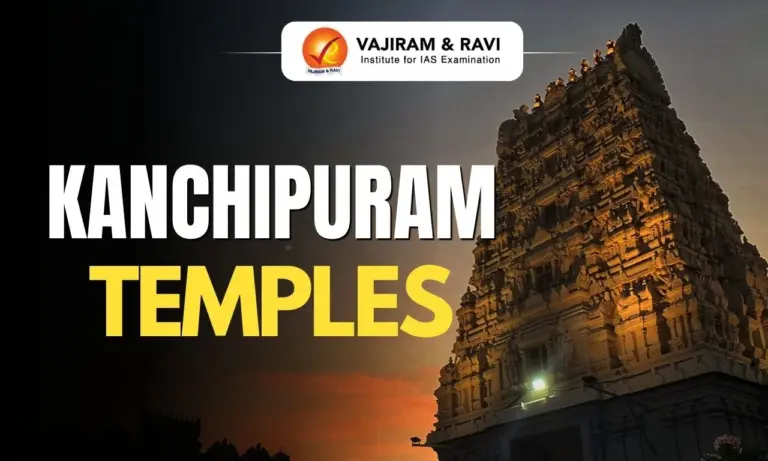
Kanchipuram Temples are an important part of Tamil Nadu’s religious and cultural heritage. Known as the “City of Thousand Temples,” Kanchipuram is famous for its ancient temples, impressive architecture, intricate carvings, and rich religious traditions. Dedicated mainly to Lord Shiva and Lord Vishnu, these temples also reflect the region’s history, art, and South Indian architectural traditions.
Famous Temples in Kanchipuram
Kanchipuram, also known as Kanchi, is one of the ancient and important temple cities of India. It has been associated with religion, education, culture and architecture for centuries. The city has more than 150 temples, many of which are dedicated to Lord Shiva and Lord Vishnu. Some of the most important temples include:
- Kailasanatha Temple: Built by Pallava ruler Rajasimha I (700-728 CE), this is one of the finest early structural temples of the Pallava period. Originally known as Rajasimhesvaram, it is noted for its sandstone architecture, sculptures and Somaskanda panels.
- Vaikuntaperumal Temple: Also called Parameswara Vinnagaram, this temple was built by Nandivarman II Pallavamalla. Its three-level vimana is particularly notable, with different forms of Vishnu represented on each level. Its sculpted panels also depict important episodes from Pallava history.
- Muktesvara Temple: A later Pallava-period temple built mainly of sandstone. It is known for its three-storeyed vimana and detailed sculptures depicting different forms of Shiva and other deities.
- Varadharaja Perumal Temple: An important Vaishnavite temple that developed significantly during the Chola and later periods. The complex contains several mandapas, shrines, inscriptions and architectural additions from different periods.
- Ekambaresvara Temple: One of the major Shaivite temples of Kanchipuram and one of the Pancha Bhuta Kshetras, representing the element of earth. The present temple complex was expanded during the Chola and Vijayanagara periods and is known for its impressive gopura.
- Pandava Dootha Perumal Temple: One of the older temples of Kanchipuram, dedicated to Krishna. Its main deity is a large representation of Krishna’s Vishwaroopa, while the temple complex also reflects Pallava, Chola and Vijayanagara contributions.
- Yathothkari Perumal Temple: Located in Vishnu Kanchi, this ancient temple is dedicated to Vishnu in a reclining posture. Its architecture includes additions made during the Vijayanagara period, while inscriptions connect it with several Chola rulers.
- Ulagalanda Perumal Temple: Dedicated to Vishnu’s Vamana/Trivikrama form, the temple is known for its very large image of Ulagalantha Perumal and its distinctive temple complex containing four smaller sacred shrines.
Historical and Architectural Significance of Kanchipuram Temples
The Kanchipuram Temples reflect the city’s rich history and the evolution of South Indian temple architecture. Their key historical and architectural features are discussed below.
- Kanchipuram has a long history as a centre of religion, education, culture and political power. Ancient Sanskrit and Tamil texts mention the city, showing its importance from the early centuries of Indian history.
- The Pallavas played a major role in developing Kanchipuram as a temple city. When the Pallavas made Kanchi their capital, they supported the construction of temples and institutions of learning, giving the city greater cultural and architectural importance.
- The temples display important features of Pallava temple architecture, including vimanas, mandapas, shrines, sculptural panels and circumambulatory passages. The use of sandstone along with granite elements can also be seen in some early structures.
- The Kailasanatha Temple is especially important for understanding the development of structural temple architecture under the Pallavas. Its walls and subsidiary shrines contain a wide variety of sculptures representing Shiva, Vishnu, Durga, Ganesha and other figures.
- The Vaikuntaperumal Temple is significant not only for its religious architecture but also for its historical sculptures. Panels in the temple narrate the history and genealogy of the Pallava dynasty, providing valuable information about rulers, warfare, royal life, clothing and traditions.
- Later dynasties such as the Cholas and Vijayanagara rulers added new structures, mandapas, gopuras and other architectural features to several temples. This gives Kanchipuram’s temple complexes a layered architectural character.


Religious and Cultural Importance of Kanchipuram Temples
The Kanchipuram Temples hold deep religious and cultural importance, reflecting the city’s traditions of Shaivism, Vaishnavism, education, art, and festivals. Their key religious and cultural aspects are discussed below.
- Kanchipuram has been an important centre of Shaivism and Vaishnavism for centuries. Religious teachers, saints and scholars associated with these traditions helped shape the city’s spiritual and cultural identity.
- The city was also associated with Buddhism and Jainism, showing that Kanchipuram was historically a place where different religious traditions flourished. Over time, the Bhakti movement strengthened Shaivite and Vaishnavite traditions in the city.
- The temples were not only places of worship but also centres of education and learning. Temple-linked ghatikas provided higher education in the Vedas and other religious scriptures, particularly during the Pallava period.
- Saints such as the Nayanmars and Alwars contributed to the religious importance of Kanchipuram through their devotional hymns and association with its Shiva and Vishnu temples.
- The temples continue to preserve festivals, rituals, religious traditions and other forms of intangible heritage. Major temple festivals bring together devotees and help pass religious traditions from one generation to the next.
- The combination of religion, architecture, education, art and history makes Kanchipuram an important cultural heritage centre. Its temples preserve the contributions of several dynasties and reflect the city’s continuing importance as a sacred and cultural destination.

 Last updated on Oct, 2026
→ UPSC 2027 Notification will be released on 13 January 2027 at upsconline.nic.in.
→ Check Nobel Prize 2026 Winners List here.
→ Download PIB PRiSM Monthly Magazine 2026 here.
→ Check UPSC Monthly Current Affairs Magazine The Recitals here.
→ Check out the latest UPSC Syllabus here.
→ Download UPSC Model Answers for Mains 2026
→ UPSC Mains Question Paper 2026 is out now for Essay & GS Paper 1, 2, 3 & 4.
→ UPSC Calendar 2027 has been released.
→ Enroll in Vajiram & Ravi’s UPSC Mains Test Series 2027 for structured answer writing practice, expert evaluation, and exam-oriented feedback.
→ Join Vajiram & Ravi’s UPSC Mentorship Program 2027 for personalized guidance, strategy planning, and one-to-one support from experienced mentors.
→ Go through the UPSC Mains Previous Year Papers to enhance your preparation.
→ UPSC has released UPSC Toppers List 2025 with the Civil Services final result on its official website.
→ Also check Best UPSC Coaching in India
Kanchipuram Temples FAQs
Q1. What are Kanchipuram Temples famous for?+
Q2. Which are the most famous Kanchipuram Temples?+
Q3. Which is the oldest temple in Kanchipuram?+
Q4. What is the historical importance of Kanchipuram Temples?+
Q5. Which Kanchipuram temple is associated with the Pancha Bhuta Kshetras?+
Q6. Which Kanchipuram Temples are dedicated to Lord Vishnu?+
Q7. Why is Kailasanatha Temple important?+
Q8. What is special about Vaikuntaperumal Temple?+
Q9. Why are Kanchipuram Temples culturally important?+
Q10. Why is Kanchipuram called the City of Thousand Temples?+
Tags: history history notes kanchipuram temples