About Light-Emitting Diodes
- A diode is an electronic component which has two points of contact, or terminals, called its anode and cathode.
- A diode’s primary purpose is to allow current to flow in only one direction.
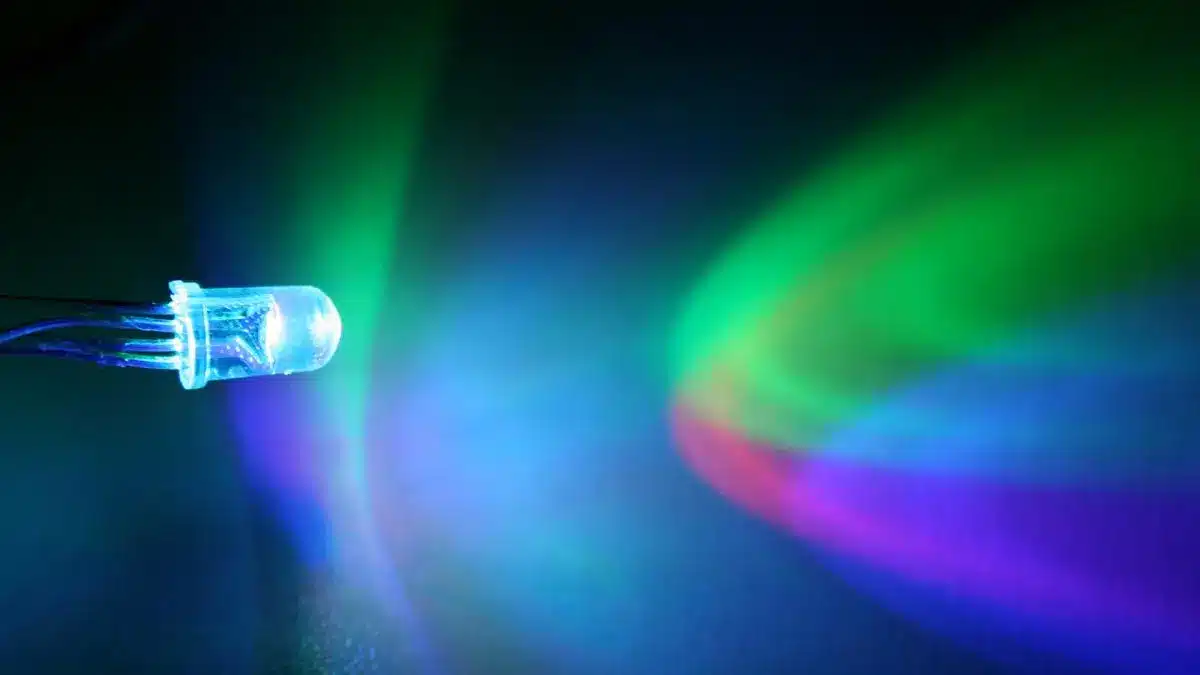
- An LED is a semiconductor device which emits light when electric current flows through it.
- It can produce all three primary colours – red, green, and blue – different LEDs can be combined on a display board to produce a large variety of colours.
Advantages of LED
- Energy Efficiency: It requires far less electricity to produce the same light as incandescent bulbs. LEDs use approximately 75-80% less energy than traditional incandescent bulbs
- Durability: LED bulbs are highly durable and resistant to shocks, vibrations, and temperature fluctuations.
- Instant Illumination: It provides instant illumination without the warm-up period required by incandescent bulbs.
- Heat Generation: LED bulbs generate very little heat, making them safer to handle and more efficient in terms of energy utilization.
- Environmental Impact: LEDs have a significantly lower environmental impact compared to incandescent. The energy efficiency and longer lifespan result in reduced greenhouse gas emissions and less waste.


What are the Applications of LEDs?
- LEDs have several applications in industry, consumer electronics, and household appliances: from smartphones to TV screens, from signboards to ‘feeding’ plants light in greenhouses, from barcode scanners to monitoring air quality.
Q1) What is a semiconductor?
It is a substance that has specific electrical properties that enable it to serve as a foundation for computers and other electronic devices. It is typically a solid chemical element or compound that conducts electricity under certain conditions but not others.
Source: What are light-emitting diodes and why are they prized as light sources? | Explained

 Last updated on Oct, 2026
→ UPSC 2027 Notification will be released on 13 January 2027 at upsconline.nic.in.
→ Check Nobel Prize 2026 Winners List here.
→ Download PIB PRiSM Monthly Magazine 2026 here.
→ Check UPSC Monthly Current Affairs Magazine The Recitals here.
→ Check out the latest UPSC Syllabus here.
→ Download UPSC Model Answers for Mains 2026
→ UPSC Mains Question Paper 2026 is out now for Essay & GS Paper 1, 2, 3 & 4.
→ UPSC Calendar 2027 has been released.
→ Enroll in Vajiram & Ravi’s UPSC Mains Test Series 2027 for structured answer writing practice, expert evaluation, and exam-oriented feedback.
→ Join Vajiram & Ravi’s UPSC Mentorship Program 2027 for personalized guidance, strategy planning, and one-to-one support from experienced mentors.
→ Go through the UPSC Mains Previous Year Papers to enhance your preparation.
→ UPSC has released UPSC Toppers List 2025 with the Civil Services final result on its official website.
→ Also check Best UPSC Coaching in India