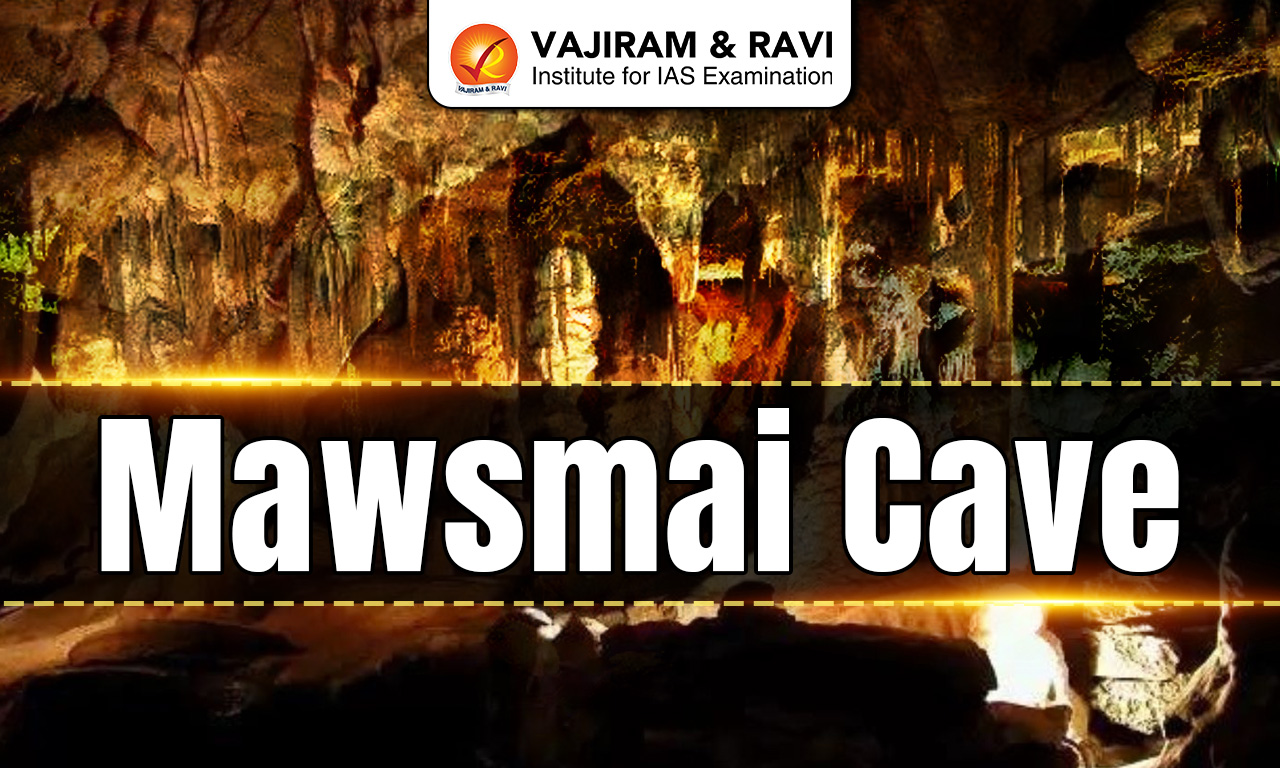
The Mawsmai Cave is a limestone cave near Sohra in Meghalaya, formed over millions of years by water erosion. It is known for its unique rock formations, narrow passages, and underground chambers. The cave also contains fossils and diverse life, making it a fascinating natural wonder. Mawsmai Cave Location, History of Formation, Presence of Fossils, Recent Discovery and Significance have been discussed in detail in this article.
Also Read: Karla Caves
Mawsmai Cave Features
- Location: Mawsmai Cave is situated in Mawsmai village in the East Khasi Hills district of Meghalaya, close to Sohra (Cherrapunji). It lies just a short distance from the town and is approximately 57 kilometres away from Shillong.
- History of Formation: Mawsmai Cave developed over millions of years through the natural process of water erosion. Heavy rainfall in the Khasi Hills allowed water to slowly dissolve and shape the limestone, gradually creating the cave’s passages, chambers, and unique structures seen today.
- Stalactites and Stalagmites: Inside the cave, water keeps dripping from the roof, leading to the formation of stalactites (hanging from the ceiling) and stalagmites (rising from the ground). Over time, some of these join together to form natural pillars, creating fascinating shapes that look almost artistic.
- Narrow and Wide Passages: One of the most interesting features of the cave is its changing structure. While some parts are wide and open, almost like halls, others are very narrow, requiring visitors to bend or squeeze through. This variation adds a sense of adventure while exploring.
- Illuminated and Dark Sections: A part of the cave is well-lit and easily accessible for visitors, making it safe and comfortable to explore. However, there are deeper sections that remain dark and untouched, showing how mysterious and untouched the cave still is.
- Large Chambers and Rooms: The cave contains spacious chambers that resemble natural halls. Some sections are so large that they feel like underground rooms, giving visitors a sense of the cave’s vastness and natural design.
- Continuous Water Dripping: The steady dripping of water inside the cave is not only soothing but also plays an important role in shaping its features. This process is still ongoing, meaning the cave continues to evolve even today.
- Presence of Fossils: Fossils can be spotted on the cave walls, offering a glimpse into the ancient past. These formations tell the story of life and natural processes that existed long before humans explored the cave.
- Rich Biodiversity Inside: Despite being dark and enclosed, the cave supports small forms of life such as insects and bats. These organisms have adapted to survive in low-light and humid conditions.
- Discovery of a Rare Micro Snail Species: A new micro snail species named Georissa mawsmaiensis was recently discovered inside the cave. This finding is significant because it came nearly 170 years after the last such discovery, highlighting how the cave still holds many hidden secrets.
- Natural Light Openings: In some parts of the cave, there are small openings that allow sunlight to filter in. These natural “windows” create a beautiful contrast between light and darkness and offer glimpses of the greenery outside.
- Cultural and Linguistic Significance: The name “Mawsmai” comes from the Khasi language, meaning “Oath Stone.” This reflects the cultural connection of the cave with the local Khasi community and their traditions.
- Unique Shape and Structure: The cave’s entrance is quite wide, welcoming visitors easily, but as one moves further, the pathways become tighter and more complex. This gradual change in structure makes the exploration both interesting and slightly challenging.
Also Read: Udayagiri Caves


 Last updated on Oct, 2026
→ UPSC 2027 Notification will be released on 13 January 2027 at upsconline.nic.in.
→ Check Nobel Prize 2026 Winners List here.
→ Download PIB PRiSM Monthly Magazine 2026 here.
→ Check UPSC Monthly Current Affairs Magazine The Recitals here.
→ Check out the latest UPSC Syllabus here.
→ Download UPSC Model Answers for Mains 2026
→ UPSC Mains Question Paper 2026 is out now for Essay & GS Paper 1, 2, 3 & 4.
→ UPSC Calendar 2027 has been released.
→ Enroll in Vajiram & Ravi’s UPSC Mains Test Series 2027 for structured answer writing practice, expert evaluation, and exam-oriented feedback.
→ Join Vajiram & Ravi’s UPSC Mentorship Program 2027 for personalized guidance, strategy planning, and one-to-one support from experienced mentors.
→ Go through the UPSC Mains Previous Year Papers to enhance your preparation.
→ UPSC has released UPSC Toppers List 2025 with the Civil Services final result on its official website.
→ Also check Best UPSC Coaching in India
Mawsmai Cave FAQs
Q1. What is Mawsmai Cave famous for?+
Q2. Where is Mawsmai Cave located?+
Q3. How was Mawsmai Cave formed?+
Q4. What types of formations can be seen inside Mawsmai Cave?+
Q5. What is the significance of the discovery of Georissa mawsmaiensis?+
Tags: geography geography notes mawsmai cave