Mobile Phone Manufacturing Scheme (MPMS) Latest News
- The Government has notified the ₹62,500-crore Mobile Phone Manufacturing Scheme (MPMS) for five years from FY 2026-27 to FY 2030-31.
- It succeeds the Production Linked Incentive (PLI) Scheme for Large Scale Electronics Manufacturing (PLI-LSEM), whose tenure ended on March 31, 2026.
- The new scheme seeks to move India beyond large-scale assembly towards higher domestic value addition (DVA), indigenous design and R&D, stronger component supply chains and globally competitive Indian brands.
Need for the New Scheme
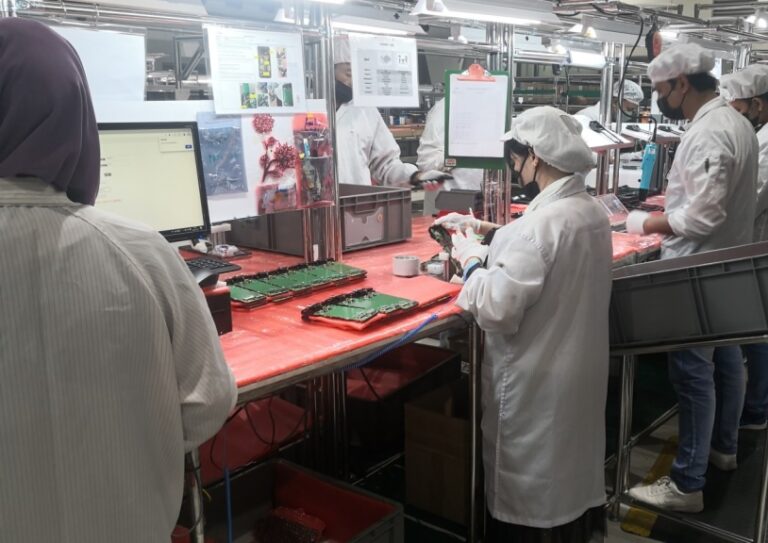
- India has emerged as a major global mobile-phone manufacturing hub, but much of the value captured in the sector remains concentrated in assembly and foreign-owned brands.
- The MPMS therefore attempts to address the “assembly versus value creation” gap by incentivising both manufacturing scale and ownership of technology, intellectual property and brands.
- The earlier PLI-LSEM helped establish India as a major manufacturing and export base.
- The next challenge is to deepen the ecosystem so that more components, design capabilities, patents and economic value are generated domestically.


Two-Pronged Architecture
- Scale-up of mobile manufacturing:
- The first component targets mobile-phone manufacturers and Electronics Manufacturing Services (EMS) companies.
- Applicant companies must be incorporated in India and have recorded at least ₹10,000 crore turnover in FY 2025-26.
- Existing brands must achieve incremental sales over a progressively rising threshold – ₹5,000 crore in FY27, rising annually to ₹25,000 crore in FY31.
- For a new brand, eligibility begins after achieving ₹10,000 crore annual sales, followed by year-on-year incremental sales requirements.
- A moving baseline is used – baseline sales are the previous year’s domestic sales plus 15%. Incentives are calculated on sales exceeding this baseline.
- This design attempts to reward genuine incremental production rather than merely subsidising existing output.
- The first component targets mobile-phone manufacturers and Electronics Manufacturing Services (EMS) companies.
- Building Indian-owned mobile brands:
- The second component represents the more strategic shift.
- The Government wants India not merely to manufacture smartphones for global companies but to develop Indian-owned brands comparable with leading international players.
- To qualify as an Indian brand, the company must meet conditions relating to –
- Incorporation in India;
- Indian ownership of trademark and intellectual property;
- Management control by Indian citizens;
- More than 51% Indian ownership/control; and
- In-house design and R&D capabilities in India.
- The Government is reportedly working with Indian companies to develop such brands, with the objective of bringing a strong indigenous product to market.
Incentive Structure
- The scheme provides 2.25%–5% incentives on eligible sales, depending on the category.
- Indian brands receive stronger support –
- 5% incentive on eligible incremental sales;
- Up to 1.5% additional incentive for domestic sourcing of key components and sub-assemblies;
- Additional 3% incentive for Indian design and R&D;
- A one-year gestation period is available to Indian brands; and
- Additional non-fiscal support may be provided through an empowered committee.
- Thus, the incentive architecture deliberately links public support with domestic sourcing, innovation and intellectual-property creation, rather than focusing solely on production volumes.
The Larger Economic Significance
- The scheme reflects a transition in India’s electronics strategy: Import substitution → domestic assembly → export-oriented manufacturing → domestic value addition → Indian technology, IP and brands.
- The Government aims to strengthen India’s position in Global Value Chains (GVCs) while retaining a larger share of the economic value generated by the electronics sector.
- India is already the world’s second-largest mobile-phone manufacturer by volume, while 99.2% of mobile phones used domestically are now made in India.
- Smartphones also became India’s largest individual exported product category in 2025.
- The Government estimates that MPMS –
- Could generate around ₹39 lakh crore of cumulative production and about 60,000 direct jobs,
- While strengthening technological sovereignty and Indian patents in design and R&D.
- Domestic value addition was around 23% in FY2023-24, highlighting the substantial scope for deeper localisation.
Key Structural Challenges
- Component ecosystem: India remains dependent on imports for several high-value components and inputs.
- Technology gap: Manufacturing at scale does not automatically translate into ownership of core technologies.
- Global competition: Indian brands must compete with established firms possessing strong R&D, supply chains, consumer loyalty and distribution networks.
- Cost competitiveness: Higher domestic sourcing can initially raise production costs.
- Innovation ecosystem: Sustained investment in R&D, semiconductor technology, design and skilled manpower is essential.
- MSME integration: Benefits should eventually reach smaller domestic component manufacturers rather than remaining concentrated among large firms.
Way Forward
- MPMS should be integrated with the India Semiconductor Mission, electronics-component ecosystem, skill development, R&D incentives and trade policy.
- Greater support for Indian design houses, startups and component manufacturers can help create an end-to-end electronics ecosystem.
- The real measure of success should therefore be domestic value addition, rather than merely the number of smartphones assembled in India.
Source: IE

 Last updated on Oct, 2026
→ UPSC 2027 Notification will be released on 13 January 2027 at upsconline.nic.in.
→ Check Nobel Prize 2026 Winners List here.
→ Download PIB PRiSM Monthly Magazine 2026 here.
→ Check UPSC Monthly Current Affairs Magazine The Recitals here.
→ Check out the latest UPSC Syllabus here.
→ Download UPSC Model Answers for Mains 2026
→ UPSC Mains Question Paper 2026 is out now for Essay & GS Paper 1, 2, 3 & 4.
→ UPSC Calendar 2027 has been released.
→ Enroll in Vajiram & Ravi’s UPSC Mains Test Series 2027 for structured answer writing practice, expert evaluation, and exam-oriented feedback.
→ Join Vajiram & Ravi’s UPSC Mentorship Program 2027 for personalized guidance, strategy planning, and one-to-one support from experienced mentors.
→ Go through the UPSC Mains Previous Year Papers to enhance your preparation.
→ UPSC has released UPSC Toppers List 2025 with the Civil Services final result on its official website.
→ Also check Best UPSC Coaching in India
Mobile Phone Manufacturing Scheme (MPMS) FAQs
Q1. How does the ₹62,500-crore Mobile Phone Manufacturing Scheme seek to move India to value-added electronics production?+
Q2. What is the significance of the Mobile Phone Manufacturing Scheme in promoting technological sovereignty?+
Q3. How does the new mobile manufacturing scheme improve upon the earlier PLI approach?+
Q4. What challenges may limit India’s ambition to develop globally competitive domestic smartphone brands?+
Q5. Why India’s success in mobile manufacturing should be measured by value captured?+
Tags: mobile phone manufacturing scheme (mpms) prelims pointers upsc current affairs upsc prelims current affairs