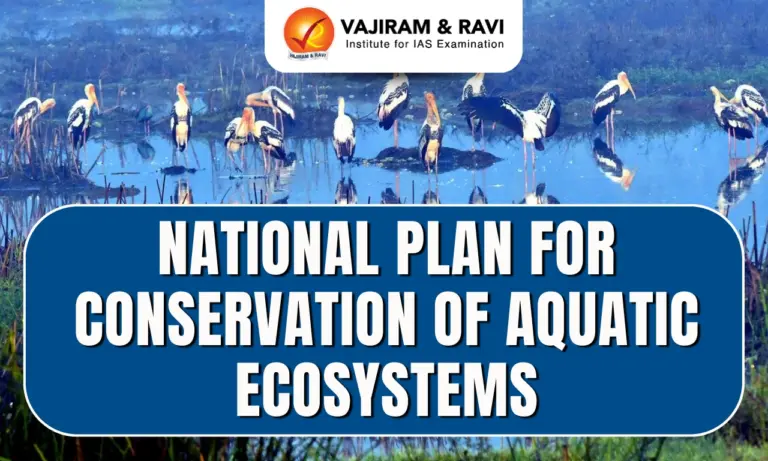
The National Plan for Conservation of Aquatic Ecosystems (NPCA) is a centrally sponsored scheme of MoEF&CC aimed at conserving, restoring and managing wetlands and lakes across India. It follows an integrated approach to improve water quality, biodiversity and ecosystem health while addressing pollution, encroachment and degradation. The scheme supports sustainable use of aquatic resources and promotes ecological security through coordinated efforts of the Central Government, State Governments, Union Territories and local communities.
National Plan for Conservation of Aquatic Ecosystems Objectives
The key objectives and aim of the National Plan for Conservation of Aquatic Ecosystems has been listed below:
- The scheme aims to conserve and restore lakes and wetlands while maintaining their ecological character and environmental functions.
- NPCA seeks to reduce pollution loads by supporting wastewater interception, diversion, treatment and other measures that enhance the overall quality of water bodies.
- It promotes conservation of aquatic flora and fauna by protecting habitats, controlling ecological degradation and improving ecosystem resilience across wetlands and lakes.
- The programme strengthens ecological services such as groundwater recharge, flood moderation, fisheries support and livelihood opportunities dependent on aquatic ecosystems.
National Plan for Conservation of Aquatic Ecosystems Background
The National Plan for Conservation of Aquatic Ecosystems emerged from the need for unified management of wetlands and lakes facing increasing developmental and human pressures.
- In February 2013, the National Wetlands Conservation Programme (NWCP) and National Lake Conservation Plan (NLCP) were merged to create NPCA and improve coordination.
- Before 2012-13, MoEF&CC separately funded identified wetlands under NWCP and lakes under NLCP for conservation and management activities.
- Increasing pollution, encroachment, untreated effluents, land use changes and developmental pressures highlighted the need for a consolidated conservation programme.
- The Wetlands (Conservation and Management) Rules 2017 under the Environment (Protection) Act 1986 strengthened conservation efforts through a national regulatory framework.


National Plan for Conservation of Aquatic Ecosystems Features
The major highlighting features of the National Plan for Conservation of Aquatic Ecosystems has been discussed below:
- NPCA operates on a cost sharing basis between the Central Government and respective State or Union Territory Governments.
- The scheme supports wastewater treatment, shoreline protection, lakefront development, desilting, de-weeding, stormwater management and bioremediation initiatives.
- Activities include catchment area treatment, biodiversity conservation, weed control, fisheries development and ecological habitat improvement.
- Survey, demarcation, bio fencing and ecosystem monitoring are undertaken to safeguard wetlands and prevent further degradation.
- More than ₹1,000 crore has been released under NPCA for conservation of 157 wetlands across the country.
National Plan for Conservation of Aquatic Ecosystems Implementation
Implementation of National Plan for Conservation of Aquatic Ecosystems involves the below given process:
- State Based Proposals: Central assistance is provided based on proposals submitted by State Governments in accordance with NPCA guidelines and budget availability.
- Wetland Authorities: State and Union Territory Wetland Authorities constituted under the Wetlands Rules 2017 are responsible for conservation and protection measures.
- Pollution Control Responsibility: States, Union Territories and local bodies must ensure treatment of sewage and industrial effluents before discharge into wetlands.
- Waste Management Integration: Solid Waste Management Rules prohibit dumping, burning or disposal of waste into drains and water bodies, supporting NPCA objectives.
- Awareness Initiatives: MoEF&CC conducts regional workshops and World Wetlands Day programmes to improve stakeholder participation and conservation awareness.
- Funding Support: During 2019-20, 2020-21 and 2021-22, central assistance of ₹44.58 crore, ₹32.63 crore and ₹36 crore respectively was provided to various States and Union Territories.
National Plan for Conservation of Aquatic Ecosystems Challenges
Despite policy support and funding, several environmental and administrative challenges affect the National Plan for Conservation of Aquatic Ecosystems.
- Anthropogenic Pressure: Urbanisation, developmental projects and human activities continue to exert pressure on wetlands and lakes across India.
- Pollution: Untreated sewage, industrial effluents and solid waste remain major threats to aquatic ecosystem health and water quality.
- Encroachment Issues: Illegal land conversion and non wetland use activities can reduce wetland area and disturb ecological balance despite regulatory safeguards.
- Implementation Gaps: Effective coordination among multiple agencies, local bodies and stakeholders remains essential for successful conservation outcomes.
- Waste Disposal Practices: Improper segregation and disposal of waste by generators continue to contribute to environmental degradation in some regions.
National Plan for Conservation of Aquatic Ecosystems Significance
National Plan for Conservation of Aquatic Ecosystems plays a crucial role in preserving aquatic ecosystems that support biodiversity, water security and environmental sustainability.
- Biodiversity Conservation: The scheme protects habitats for numerous plant and animal species, strengthening ecological stability and natural ecosystem functions.
- Pollution Reduction: Wastewater treatment and restoration measures help improve water quality and reduce environmental degradation in wetlands and lakes.
- Water Resource Security: Healthy wetlands support groundwater recharge, hydrological balance and long term availability of freshwater resources.
- Climate and Disaster Benefits: Conserved wetlands assist in flood moderation, carbon storage and climate resilience through natural ecosystem processes.
- Livelihood Support: Fisheries, tourism and other ecosystem based activities provide economic benefits to communities dependent on aquatic resources.
- Sustainable Development: By integrating conservation with wise use, NPCA promotes balanced development while protecting India’s valuable aquatic ecosystems for future generations.

 Last updated on Oct, 2026
→ UPSC 2027 Notification will be released on 13 January 2027 at upsconline.nic.in.
→ Asian Games 2026 are being held in Aichi-Nagoya, Japan, from 19 September to 4 October.
→ Check Nobel Prize 2026 Winners List here.
→ Download PIB PRiSM Monthly Magazine 2026 here.
→ Check UPSC Monthly Current Affairs Magazine The Recitals here.
→ Check out the latest UPSC Syllabus here.
→ Download UPSC Model Answers for Mains 2026
→ UPSC Mains Question Paper 2026 is out now for Essay & GS Paper 1, 2, 3 & 4.
→ UPSC Calendar 2027 has been released.
→ Enroll in Vajiram & Ravi’s UPSC Mains Test Series 2027 for structured answer writing practice, expert evaluation, and exam-oriented feedback.
→ Join Vajiram & Ravi’s UPSC Mentorship Program 2027 for personalized guidance, strategy planning, and one-to-one support from experienced mentors.
→ Go through the UPSC Mains Previous Year Papers to enhance your preparation.
→ UPSC has released UPSC Toppers List 2025 with the Civil Services final result on its official website.
→ Also check Best UPSC Coaching in India
National Plan for Conservation of Aquatic Ecosystems FAQs
Q1. What is the National Plan for Conservation of Aquatic Ecosystems (NPCA)?+
Q2. When was the National Plan for Conservation of Aquatic Ecosystems launched?+
Q3. Which ministry implements the NPCA scheme?+
Q4. What are the Wetlands (Conservation and Management) Rules 2017?+
Q5. What are the main objectives of the National Plan for Conservation of Aquatic Ecosystems?+
Tags: ecology environmental studies geography geography notes national plan for conservation of aquatic ecosystems