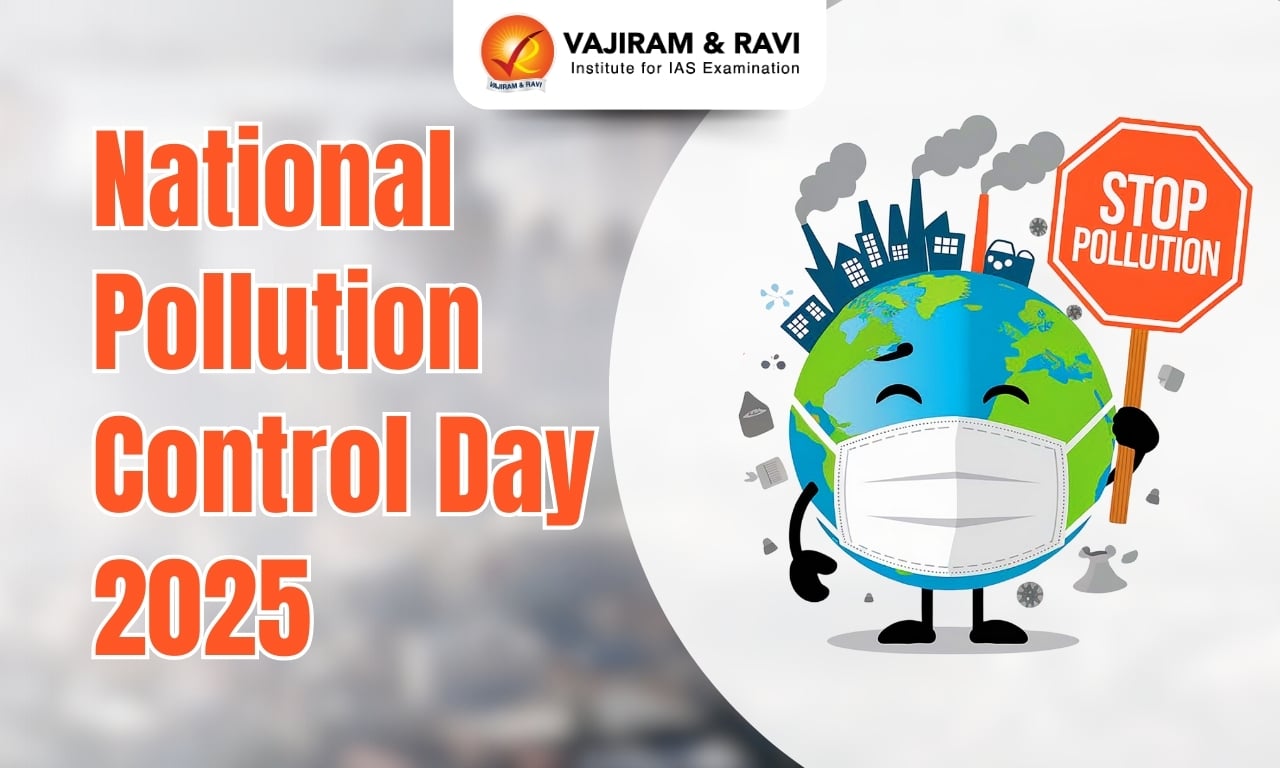
National Pollution Control Day is observed every year on 2 December in India to raise awareness about the harmful effects of pollution and to strengthen actions that prevent industrial disasters. The day commemorates the victims of the Bhopal Gas Tragedy of 1984, one of the world’s deadliest industrial accidents.
National Pollution Control Day 2025 Theme
National Pollution Control Day 2025 Theme is “Sustainable Living for a Greener Future,” which emphasises how small, everyday decisions made by individuals and communities can collectively improve India’s environmental health. It highlights the need for responsible consumption, reduced waste, energy conservation, and eco-friendly habits to build a cleaner and more sustainable future for all.
National Pollution Control Day 2025 Objectives
National Pollution Control Day 2025 is observed to raise awareness about pollution and prevent industrial disasters. It aims to educate citizens, promote environmental responsibility, and strengthen safety measures across industries.
- Commemoration: Honour the victims of the Bhopal Gas Tragedy 1984.
- Awareness Generation: Educate the public on air, water, soil, noise, and chemical pollution.
- Industrial Safety: Emphasise safe handling of hazardous chemicals and disaster preparedness.
- Pollution Control: Encourage adoption of clean technologies, waste management, and zero-discharge practices.
- Policy Support: Support national environmental initiatives like Clean Air, Namami Gange, and climate action programs.


Bhopal Gas Tragedy 1984
The Bhopal Gas Tragedy, which occurred on 2-3 December 1984, is the world’s worst industrial disaster. A massive leak of Methyl Isocyanate (MIC) gas from the Union Carbide pesticide plant in Bhopal led to catastrophic consequences.
- Over 3,000 deaths within the first 72 hours.
- Long-term deaths are estimated at 15,000-20,000.
- Over 5,50,000 people were exposed to the toxic gas.
- Survivors suffer from chronic diseases: respiratory disorders, vision loss, cancers, reproductive issues, and neurological damage.
Environmental Laws and Regulations in India
India has developed a strong environmental regulatory framework over the years. Key laws include:
- Environment (Protection) Act, 1986: Enacted after the Bhopal Gas Tragedy, this act provides an umbrella framework for environmental protection in India. It empowers the government to set standards, regulate emissions, and take action against polluting industries.
- Air (Prevention and Control of Pollution) Act, 1981: This act focuses on controlling and preventing air pollution across India. It authorizes the government to monitor air quality, set emission limits, and penalize violators.
- Water (Prevention and Control of Pollution) Act, 1974: Designed to safeguard water bodies from industrial and domestic pollution, this act establishes pollution control boards. It regulates discharge into rivers, lakes, and groundwater, ensuring clean and safe water for public use.
- Public Liability Insurance Act, 1991: This law ensures compensation for victims of accidents involving hazardous chemicals. Industries must maintain insurance coverage to provide immediate relief to affected persons.
- Hazardous Waste Management Rules, 2016: These rules govern the proper handling, storage, and disposal of hazardous waste. They aim to minimize environmental damage and promote safe industrial practices.
- National Green Tribunal (NGT), 2010: The NGT provides a fast-track mechanism for environmental litigation and enforcement of laws. It hears cases related to pollution, forest conservation, and environmental protection.
Central Pollution Control Board (CPCB)
The Central Pollution Control Board (CPCB), established in 1974, is a statutory body under the Water (Prevention and Control of Pollution) Act of 1974. It is India’s apex authority for monitoring and controlling pollution. It sets environmental standards, monitors air and water quality, coordinates with State Pollution Control Boards, and enforces compliance to reduce pollution nationwide.
Functions:
- Monitors air, water, and soil quality across India.
- Advises the Central Government on pollution control policies and regulations.
- Implements programs like the National Clean Air Programme (NCAP).
- Supports industrial safety and hazardous waste management initiatives.

 Last updated on Oct, 2026
→ UPSC 2027 Notification will be released on 13 January 2027 at upsconline.nic.in.
→ Asian Games 2026 are being held in Aichi-Nagoya, Japan, from 19 September to 4 October.
→ Check Nobel Prize 2026 Winners List here.
→ Download PIB PRiSM Monthly Magazine 2026 here.
→ Check UPSC Monthly Current Affairs Magazine The Recitals here.
→ Check out the latest UPSC Syllabus here.
→ Download UPSC Model Answers for Mains 2026
→ UPSC Mains Question Paper 2026 is out now for Essay & GS Paper 1, 2, 3 & 4.
→ UPSC Calendar 2027 has been released.
→ Enroll in Vajiram & Ravi’s UPSC Mains Test Series 2027 for structured answer writing practice, expert evaluation, and exam-oriented feedback.
→ Join Vajiram & Ravi’s UPSC Mentorship Program 2027 for personalized guidance, strategy planning, and one-to-one support from experienced mentors.
→ Go through the UPSC Mains Previous Year Papers to enhance your preparation.
→ UPSC has released UPSC Toppers List 2025 with the Civil Services final result on its official website.
→ Also check Best UPSC Coaching in India
National Pollution Control Day 2025 FAQs
Q1. When is National Pollution Control Day observed?+
Q2. Why is the day observed on 2 December?+
Q3. What is the theme of National Pollution Control Day 2025?+
Q4. Which agency monitors pollution in India?+
Q5. What is the main aim of National Pollution Control Day?+
Tags: national pollution control day