What’s in today’s article?
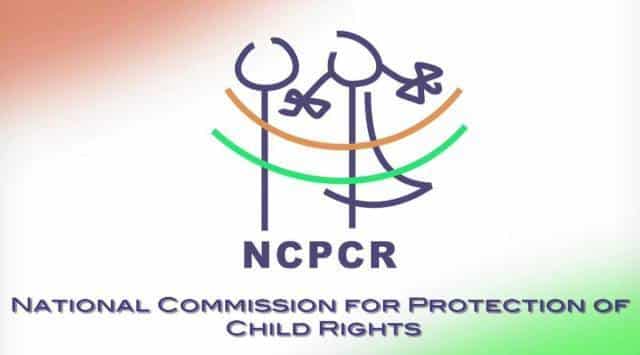
- About NCPCR
- About JJ Act
- Need for the GHAR Portal
Why In News?
- On World Children’s Day (November 20), the National Commission for Protection of Child Rights (NCPCR) launched a web portal – “GHAR – Go Home and Re-Unite.”
- The portal will be a platform for digital tracking and monitoring of children from every district to smoothen the process of their repatriation and restoration.
- NCPCR also launched the –
- Training Modules for the Child Welfare Committees (CWCs) for implementing the amendments brought in the Juvenile Justice Act.
- Protocols for Restoration and Repatriation of Children.
About NCPCR:

- It is an Indian statutory body established in 2007 under an Act of Parliament – the Commission for Protection of Child Rights Act, 2005 and works under the aegis of Union Ministry of Women and Child Development (WCD).
- Its mandate is to ensure that all laws, policies, programs and administrative systems conform to the vision of the rights of the child (age 0 – 18 years) as enunciated in the Indian Constitution as well as the UN Convention on the Rights of the Child.
- The Commission envisages a rights-based perspective, which flows into national-state-local policies and programmes.
- Thus, the Commission envisages an indispensable role for the state to ensure –
- Children and their well-being,
- Strong institution-building processes,
- Respect for local bodies and decentralisation at the community level and greater social concern in this direction.
- Some portals of NCPCR –
- MASI Portal (Monitoring App for Seamless Inspection for managing inspections at shelter homes)
- Baal Swaraj Portal (for online tracking and digital real-time monitoring mechanism of children in need of care and protection)


About the Juvenile Justice (Care or Protection of Children) Act/JJ Act, 2015:
- The Act was introduced (by the WCD) to replace the Juvenile Delinquency Law and the Juvenile Justice (Care and Protection of Children) Act, 2000.
- One of the main provisions of the Act is allowing the trial of juveniles in conflict with law in the age group of 16-18 years as adults.
- The nature of the crime and whether the juvenile should be tried as a minor or a child, was to be determined by a Juvenile Justice Board (JJB).
- The second major provision is with regards to
- The Act streamlined adoption procedures for orphans, abandoned and surrendered children.
- The existing Central Adoption Resource Authority (CARA) has been made a statutory body to enable it to perform its function more effectively.
- The State Government may, by notification, establish one or more Child Welfare Committees (CWC) for each district or group of districts to exercise the powers conferred under this Act.
- The Committee has the final say on cases involving the care, protection, treatment, development and rehabilitation of children, as well as the provision of basic needs and the protection of human rights.
Need for the GHAR portal:
- The portal will enable digital transfer of cases of children to the authorities concerned.
- It will ensure that the rights of children related to restoration and repatriation are realised, which was a challenge due to lack of convergence and information-sharing between authorities.
- Many children who were taken before JJBs and the CWCs were discovered to be from another place, but it was difficult to repatriate them due to a lack of information on their native place.
- A step to significantly reduce the number of children languishing in child care Institutions (CCIs).

 Last updated on Oct, 2026
→ UPSC 2027 Notification will be released on 13 January 2027 at upsconline.nic.in.
→ Check Nobel Prize 2026 Winners List here.
→ Download PIB PRiSM Monthly Magazine 2026 here.
→ Check UPSC Monthly Current Affairs Magazine The Recitals here.
→ Check out the latest UPSC Syllabus here.
→ Download UPSC Model Answers for Mains 2026
→ UPSC Mains Question Paper 2026 is out now for Essay & GS Paper 1, 2, 3 & 4.
→ UPSC Calendar 2027 has been released.
→ Enroll in Vajiram & Ravi’s UPSC Mains Test Series 2027 for structured answer writing practice, expert evaluation, and exam-oriented feedback.
→ Join Vajiram & Ravi’s UPSC Mentorship Program 2027 for personalized guidance, strategy planning, and one-to-one support from experienced mentors.
→ Go through the UPSC Mains Previous Year Papers to enhance your preparation.
→ UPSC has released UPSC Toppers List 2025 with the Civil Services final result on its official website.
→ Also check Best UPSC Coaching in India