


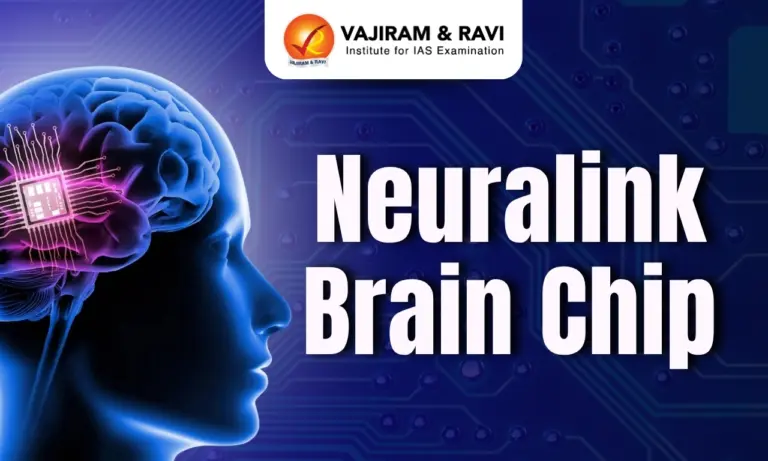
The Neuralink Brain Chip is a highly advanced medical and technological invention that connects the human brain directly with computers. It is a small implant placed inside the brain that can read brain signals and convert them into digital commands.
This technology is developed by Neuralink, which focuses on creating brain-computer communication systems. The main aim of this chip is to help people with paralysis, neurological disorders, and brain injuries regain control over devices and improve their quality of life.
What is Neuralink?
Neuralink is a neurotechnology company working on building brain-machine interface systems. It was founded and promoted by Elon Musk, who believes that brain-chip technology will play a major role in the future of human intelligence.
Neuralink develops a tiny implantable device that can be inserted into the brain. This device connects the brain with external devices like computers, phones, and robotic systems. The goal of Neuralink is to create a smooth connection between the human brain and artificial intelligence.
What is a Brain-Computer Interface (BCI)?
A Brain-Computer Interface (BCI) is a technology that enables direct communication between the human brain and an external computer or machine without using physical movement. It works by detecting electrical signals from the brain, interpreting them, and converting them into digital commands. These commands can control devices like computers, prosthetic limbs, or robots. BCI is a key technology behind advanced systems like Neuralink Brain Chip.


Neuralink Brain Chip Uses
The Neuralink Brain Chip focuses on enabling direct communication between the brain and machines, mainly for medical support, communication improvement, and future human–technology interaction.
- Helps paralysed patients control devices like smartphones, computers, and wheelchairs using brain signals. Example: A person with spinal cord injury can move a cursor or type messages without using hands.
- Supports treatment of neurological disorders such as Parkinson’s disease, epilepsy, and severe brain injuries. Example: Real-time brain signal monitoring may help doctors detect abnormal brain activity during seizures.
- Enables communication for speech-impaired or locked-in patients by converting thoughts into text or speech output. Example: A patient who cannot speak may type sentences just by thinking.
- Allows control of robotic arms and prosthetic limbs for disabled individuals. Example: A person with an amputated hand can pick up objects using a robotic arm controlled by thought.
- Assists in advanced brain research by recording and analyzing neural activity in real time. Example: Scientists can study how the brain responds when a person moves or makes decisions.
- May enable future human-AI interaction and cognitive enhancement such as faster thinking or memory support. Example: In future, users may search information or perform tasks directly through brain commands.
Neuralink Brain Chip Benefits
The Neuralink Brain Chip Benefits include significant advancements in healthcare, communication, and human interaction with technology. This innovative brain-chip technology has the potential to improve the lives of people with paralysis and neurological disorders.
- Helps paralysed individuals regain independence by enabling control of devices through brain signals
- Supports treatment and monitoring of neurological disorders such as Parkinson’s disease and epilepsy
- Improves communication abilities for speech-impaired patients
- Enhances control of prosthetic limbs and robotic devices through thought-based commands
- Enables faster and more efficient human-computer interaction without physical movement
- Assists scientists in advanced brain and neuroscience research
- May contribute to future memory enhancement and cognitive improvement
- Encourages innovation in artificial intelligence and medical technology
- Reduces dependence on traditional input devices like keyboards and touchscreens
- Opens new possibilities for advanced rehabilitation and smart healthcare systems
Future of Neuralink Brain Chip
The Future of Neuralink Brain Chip is expected to bring major changes in healthcare, communication, and human interaction with technology. Experts believe this advanced brain-chip technology could transform the treatment of neurological disorders and create a direct connection between humans and machines.
- May revolutionize treatment for paralysis, epilepsy, Parkinson’s disease, and brain injuries
- Could enable direct thought-based communication between humans and computers
- May replace traditional input devices such as keyboards, mouse systems, and touchscreens
- Can improve the performance of prosthetic limbs and robotic assistance devices
- May help speech-impaired individuals communicate more effectively
- Could strengthen future human–artificial intelligence integration
- May contribute to enhanced memory, learning ability, and cognitive performance
- Can support advanced research in neuroscience and brain signal technology
- May create smarter and faster assistive healthcare systems
- Could become a major innovation in the future of human-machine interaction
- May help develop more personalized treatments for neurological conditions
- Could increase the use of AI-powered medical devices in hospitals and rehabilitation centers

 Last updated on Oct, 2026
→ UPSC 2027 Notification will be released on 13 January 2027 at upsconline.nic.in.
→ Check Nobel Prize 2026 Winners List here.
→ Download PIB PRiSM Monthly Magazine 2026 here.
→ Check UPSC Monthly Current Affairs Magazine The Recitals here.
→ Check out the latest UPSC Syllabus here.
→ Download UPSC Model Answers for Mains 2026
→ UPSC Mains Question Paper 2026 is out now for Essay & GS Paper 1, 2, 3 & 4.
→ UPSC Calendar 2027 has been released.
→ Enroll in Vajiram & Ravi’s UPSC Mains Test Series 2027 for structured answer writing practice, expert evaluation, and exam-oriented feedback.
→ Join Vajiram & Ravi’s UPSC Mentorship Program 2027 for personalized guidance, strategy planning, and one-to-one support from experienced mentors.
→ Go through the UPSC Mains Previous Year Papers to enhance your preparation.
→ UPSC has released UPSC Toppers List 2025 with the Civil Services final result on its official website.
→ Also check Best UPSC Coaching in India
Neuralink Brain Chip FAQs
Q1. What is the Neuralink Brain Chip?+
Q2. Who developed Neuralink?+
Q3. What is the main purpose of Neuralink?+
Q4. What is a Brain-Computer Interface (BCI)?+
Q5. How does the Neuralink Brain Chip work?+
Tags: biotechnology neuralink brain chip











