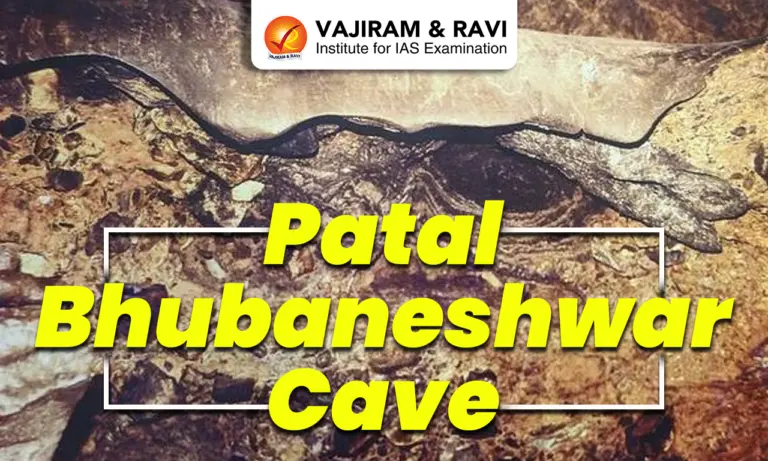
Patal Bhubaneshwar Cave is an underground limestone cave temple dedicated mainly to Lord Shiva. The word “Patal” means underground world, while “Bhubaneshwar” means Lord of the Universe. The cave is located at a height of around 1,350 meters above sea level in the Kumaon region of Uttarakhand.
Patal Bhubaneshwar Cave Features
Patal Bhuvaneshwar is a famous limestone cave temple located in Bhubneshwar village of Uttarakhand.
- It is considered one of the most mysterious and spiritual destinations in Uttarakhand.
- Patal Bhuvaneshwar is not just a single cave but a complete cave city with interconnected chambers and tunnels.
- The cave network was naturally formed over thousands of years due to the continuous flow of water through limestone rocks.
- This sacred pilgrimage site is situated at an altitude of approximately 1,350 meters above sea level.
- Lord Shiva is the principal deity worshipped inside the cave temple.
- It is believed that worshipping at Patal Bhuvaneshwar provides spiritual benefits equal to visiting Uttarakhand’s Chota Char Dham.
- The limestone formations inside the cave have created beautiful stalactites and stalagmites in different colors and shapes.
- Every rock formation, cave chamber, and natural structure inside the cave is believed to represent stories from Hindu mythology.
- Many formations resemble Hindu gods, goddesses, saints, and famous mythological characters from ancient scriptures.
- One of the most famous attractions is the Sheshnag stone formation, which is believed to support the earth, heaven, and the underworld.
- The Sheshnag formation is considered one of the most sacred and mysterious parts of the cave complex.
Also Read: Udayagiri Caves
About Stalactites and Stalagmites
Stalactites and stalagmites are natural mineral formations created over thousands of years by the continuous dripping of mineral-rich water inside caves such as Patal Bhuvaneshwar.
- Stalactites are formations that hang from the ceiling of caves like icicles.
- Stalagmites are formations that rise upward from the cave floor due to water droplets falling from above.
- Both formations are mainly made of limestone minerals, especially calcium carbonate.
- These structures are formed very slowly through the natural process of mineral deposition.
- Rainwater mixed with carbon dioxide dissolves limestone rocks and carries minerals into caves.
- As the mineral-rich water drips inside the cave, it leaves behind tiny mineral deposits that gradually form stalactites and stalagmites.
- Over hundreds and thousands of years, these deposits grow larger and create unique shapes and patterns.
- In many caves, stalactites and stalagmites eventually join together to form a single rock column known as a pillar or column formation.
- The formations inside Patal Bhuvaneshwar Cave resemble various Hindu gods, goddesses, animals, and mythological figures.
- Different minerals present in the water give these formations various natural colors such as white, brown, yellow, and reddish shades.
- Stalactites and stalagmites are considered important geological features that help scientists study cave history and climate changes.
- These formations are extremely delicate, and even a small human touch can stop their natural growth process.
Also Read: Elephanta Caves


 Last updated on Oct, 2026
→ UPSC 2027 Notification will be released on 13 January 2027 at upsconline.nic.in.
→ Check Nobel Prize 2026 Winners List here.
→ Download PIB PRiSM Monthly Magazine 2026 here.
→ Check UPSC Monthly Current Affairs Magazine The Recitals here.
→ Check out the latest UPSC Syllabus here.
→ Download UPSC Model Answers for Mains 2026
→ UPSC Mains Question Paper 2026 is out now for Essay & GS Paper 1, 2, 3 & 4.
→ UPSC Calendar 2027 has been released.
→ Enroll in Vajiram & Ravi’s UPSC Mains Test Series 2027 for structured answer writing practice, expert evaluation, and exam-oriented feedback.
→ Join Vajiram & Ravi’s UPSC Mentorship Program 2027 for personalized guidance, strategy planning, and one-to-one support from experienced mentors.
→ Go through the UPSC Mains Previous Year Papers to enhance your preparation.
→ UPSC has released UPSC Toppers List 2025 with the Civil Services final result on its official website.
→ Also check Best UPSC Coaching in India
Patal Bhubaneshwar Cave FAQs
Q1. Where is Patal Bhubaneshwar Cave located?+
Q2. Why is Patal Bhubaneshwar famous?+
Q3. Which god is worshipped in Patal Bhubaneshwar Cave?+
Q4. What is special about Patal Bhubaneshwar Cave?+
Tags: art and culture art and culture notes patal bhubaneshwar cave