


Pithora Painting Latest News
The Pithora painting, a centuries-old wall art tradition of Gujarat’s Rathwa tribal community, recently received a Geographical Indication (GI) tag.
About Pithora Painting
- It is a traditional tribal wall art that has originated in the tribal regions of Gujarat, mainly in Panchmahal and Chhota Udaipur.
- It is done by tribes such as the Rathwa, Bhil, and Bhilala, who hold a strong belief in nature, spirits, and divine powers.
- It holds a long history, and its existence dates back to around the 13th century.
- It is named after Pithora De, who is their tribal god and is associated with marriage, prosperity, and the well-being of the tribe.
- Traditionally, Pithora paintings were created on the walls of homes. The paintings were often commissioned during significant life events, such as weddings, births, and festivals, serving as a means of invoking blessings and protection from deities.
- Artists: Traditionally executed by specialist ritual painters known as Lakharas, under the guidance of a priest called Badwa.
- Surface Preparation: Traditionally, walls are prepared by applying a mixture of cow dung and clay.
- Natural Colors:
- Artists use natural pigments derived from minerals, plants, and other organic materials to create the colors for their paintings.
- Common colors include red, yellow, green, and blue, each derived from specific natural sources.
- Painters use a combination of bamboo sticks, cotton and wooden stencils to create their art.
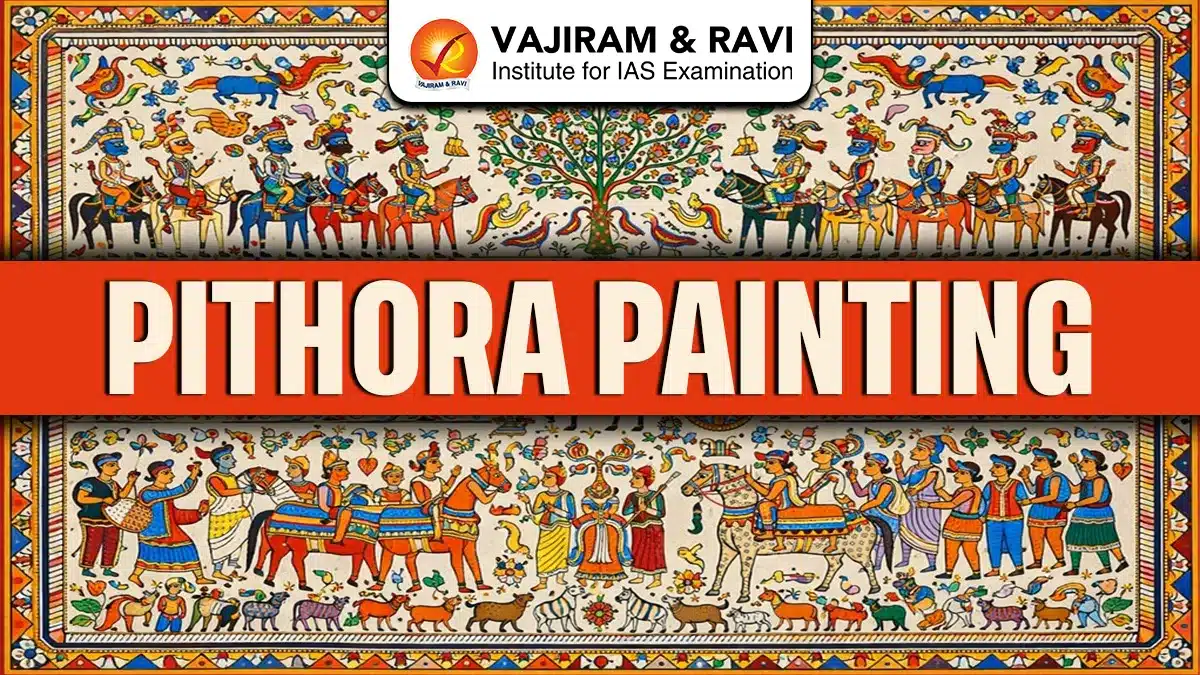
- The paintings show tribal and Hindu deities, horses, animals, and scenes from daily life like farming, hunting, and dancing.
- It plays a crucial role in preserving tribal stories, beliefs, and customs and helps to teach younger generations about their culture.
- Although it is traditionally practiced only as wall art, today’s generation of pithora painters use paper and canvas that they sell commercially.
- It has been awarded a Geographical Indication (GI) tag in 2026.
News: NM


 Last updated on Oct, 2026
→ UPSC 2027 Notification will be released on 13 January 2027 at upsconline.nic.in.
→ Check Nobel Prize 2026 Winners List here.
→ Download PIB PRiSM Monthly Magazine 2026 here.
→ Check UPSC Monthly Current Affairs Magazine The Recitals here.
→ Check out the latest UPSC Syllabus here.
→ Download UPSC Model Answers for Mains 2026
→ UPSC Mains Question Paper 2026 is out now for Essay & GS Paper 1, 2, 3 & 4.
→ UPSC Calendar 2027 has been released.
→ Enroll in Vajiram & Ravi’s UPSC Mains Test Series 2027 for structured answer writing practice, expert evaluation, and exam-oriented feedback.
→ Join Vajiram & Ravi’s UPSC Mentorship Program 2027 for personalized guidance, strategy planning, and one-to-one support from experienced mentors.
→ Go through the UPSC Mains Previous Year Papers to enhance your preparation.
→ UPSC has released UPSC Toppers List 2025 with the Civil Services final result on its official website.
→ Also check Best UPSC Coaching in India
Pithora Painting FAQs
Q1. What is Pithora Painting?+
Q2. Which tribes traditionally practice Pithora Painting?+
Q3. Where were Pithora Paintings traditionally created?+
Q4. During which occasions were Pithora Paintings traditionally commissioned?+
Q5. Who traditionally executes Pithora Paintings?+
Tags: pithora painting prelims pointers upsc current affairs upsc prelims current affairs








