INS Mahendragiri

INS Mahendragiri

INS Mahendragiri Latest News

Recently, the INS Mahendragiri was delivered to the Indian Navy at Mazagon Dock Shipbuilders Limited (MDSL) Mumbai.

About INS Mahendragiri

  • It is the sixth ship of Nilgiri Class (Project 17A).
  • It was designed by Warship Design Bureau (WDB).
  • It was built at Mazagon Dock Shipbuilders Limited (MDSL) Mumbai.

Features of INS Mahendragiri

  • Propulsion: These ships are configured with Combined Diesel or Gas (CODOG) propulsion plants.
  • Comprising a diesel engine and a gas turbine that drive a Controllable Pitch Propeller (CPP) on each shaft, and state-of-the-art Integrated Platform Management System (IPMS)
  • Armaments: The potent weapon and sensor suite comprises anti-surface, anti-air, and anti-submarine warfare systems.

What are Project 17A frigates?

  • These are versatile multi-mission platforms designed to address current and emerging challenges in the maritime domain. 
  • The five already delivered to the Navy are INS Nilgiri, INS Himgiri, INS Udaygiri, INS Taragiri and INS Vindhyagiri.
  • Armaments: P17A ships are fitted with an advanced weapon and sensor suite like MF-STAR active phased array radar, BrahMos supersonic cruise missiles, and Barak-8 long-range surface-to-air missiles, designed for superior anti-air, anti-surface and anti-submarine warfare.

Source: PIB

INS Mahendragiri FAQs

Q1: Which shipyard built INS Mahendragiri?

Ans: Mazagon Dock Shipbuilders Limited, Mumbai

Q2: INS Mahendragiri belongs to which class of warships?

Ans: Nilgiri-class stealth frigate / Project 17A

Jamaica

Jamaica

Jamaica Latest News

Recently, India has deployed its flagship Aarogya Maitri portable healthcare infrastructure in Jamaica, viewed as part of India’s broader outreach to CARICOM countries.

About Jamaica

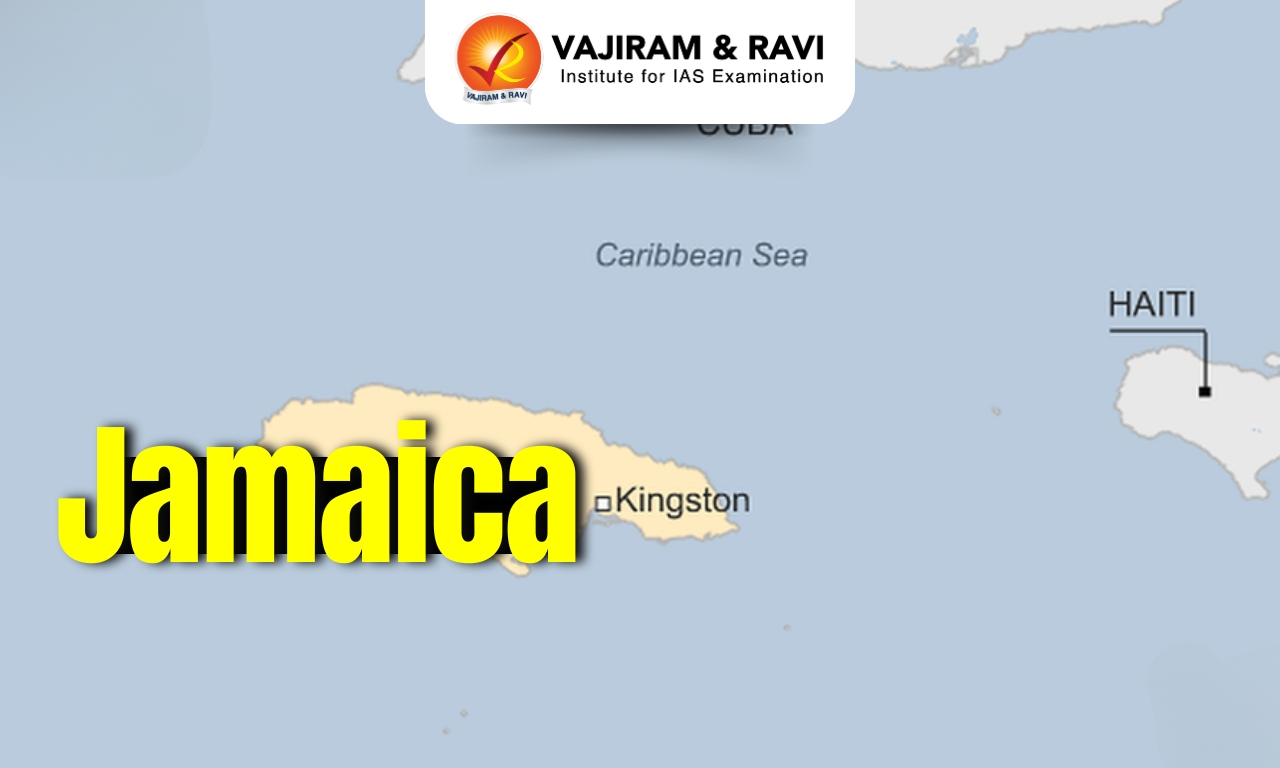
  • It is a large island nation located in the west-central Caribbean in the Greater Antilles archipelago.
  • It is situated to the south of Cuba; to the west of Hispaniola Islands (Haiti & the Dominican Republic) and to the northwest of Cayman Islands.
  • It is surrounded by the Caribbean Sea.
  • Capital City: Kingston

Geographical Features of Jamaica

  • Climate: The tropical climate is influenced by the sea and the northeast trade winds, which are dominant throughout the year. 
  • Major Mountains: It consists of Blue Mountains (highest point), John Crow Mountains, Don Figuero Mountains, Santa Cruz, etc. 
  • Major Rivers: Rio Minho (the longest river of Jamaica), Black River, Rio Cobre
  • Natural Resources: Jamaica's main natural resources are bauxite, gypsum and limestone.

What is Aarogya Maitri?

  • 'Aarogya Maitri' project is a humanitarian initiative that extends India's commitment to global health and disaster relief.
  • The Bharat Health Initiative for Sahyog Hita & Maitri (BHISHM), part of Project Aarogya Maitri, is an innovative emergency medical aid program.
  • At its core are compact, portable "mini cubes" filled with essential medicines and equipment, designed for rapid deployment in various emergencies.

Source: News On Air

Jamaica FAQs

Q1: Jamaica is located in which sea?

Ans: Caribbean Sea

Q2: What is the capital of Jamaica?

Ans: Kingston

Whitley Awards

Whitley Awards

Whitley Awards Latest News

Recently, Indian conservationists Barkha Subba, Parveen Shaikh won Whitley Awards for conservation of Himalayan salamander and endangered Indian skimmer.

About Whitley Awards

  • It is often called as the “Green Oscars,”
  • It recognises grassroots conservation leaders in the Global South.
  • It is given by the UK charity Whitley Fund for Nature (WFN).
  • It provides winners with £50,000 in project funding over one year to scale up local solutions to biodiversity loss.

Key Facts about Himalayan salamander

  • It is a lizard-like amphibian species.
  • Although it resembles a lizard, it lacks scales on its body.
  • Distribution: It is endemic to India (the Darjeeling region), Nepal and Bhutan,
  • It can grow up to 17 cm in length and live for up to 11 years.
  • Salamanders return to their natal site to breed and lay eggs—a process known as philopatry, which makes them highly vulnerable to changes in habitat and wetland health.
  • Cultural Significance: The wetlands where Himalayan salamanders breed are culturally revered water bodies, associated with local deities and rituals.
  • Conservation Status: IUCN: Vulnerable

Key Facts about Indian skimmer

  • It is one of the three species that belong to the skimmer genus Rynchops in the family Laridae. 
  • It gets its name from the way it feeds, flying low over the water surface and ‘skimming’for fish.
  • Habitat: It occurs primarily on larger, sandy, lowland rivers, around lakes and adjacent marshes.
  • Distribution: It is mainly found in India, Bangladesh, and Pakistan, with some populations extending to Nepal and Myanmar.
  • In India, one of the key areas for spotting Indian Skimmers is the Chambal River.
  • Conservation status: IUCN: Endangered

Source: HT

Whitley Awards FAQs

Q1: Whitley Awards are given by which organization?

Ans: Whitley Fund for Nature, UK

Q2: Whitley Fund for Nature was established in which year?

Ans: 1993 – By Edward Whitley

DAMPE Satellite

DAMPE Satellite

DAMPE Satellite Latest News

China's DAMPE space telescope recently made an observation on the acceleration of cosmic rays, such as nuclei of hydrogen, helium, etc., and found that the intensity of the cosmic radiation decreases more rapidly upon reaching a specific high-energy threshold.

About DAMPE Satellite

  • DAMPE (Dark Matter Particle Explorer), also known as “Wukong”, is China's first astronomical satellite.
  • It is a powerful space telescope for high-energy gamma-ray, electron, and cosmic ray detection. 
  • The satellite was launched into a polar, sun-synchronous orbit with an altitude of 500 km on December 17, 2015.  
  • The main scientific objective of DAMPE is to measure electrons and photons with much higher energy resolution and energy reach than achievable with existing space experiments in order to identify possible dark matter signatures. 
  • It also has great potential in advancing the understanding of the origin and propagation mechanism of high-energy cosmic rays, as well as in new discoveries in high-energy gamma astronomy. 
  • Since its launch, DAMPE has recorded about 18.5 billion high-energy particle events.

Source: IS

DAMPE Satellite FAQs

Q1: Which country launched the DAMPE Satellite?

Ans: China

Q2: What kind of particles does DAMPE detect?

Ans: High-energy gamma rays, electrons, and cosmic rays.

Q3: When was the DAMPE launched?

Ans: 17 December 2015

Q4: What is the primary objective of DAMPE?

Ans: To detect high-energy electrons and photons with high precision to identify possible dark matter signatures.

Hepatitis

Hepatitis

Hepatitis Latest News

According to the WHO’s Global Hepatitis Report 2026 India remains among the countries bearing the highest burden of hepatitis-related deaths.

About Hepatitis

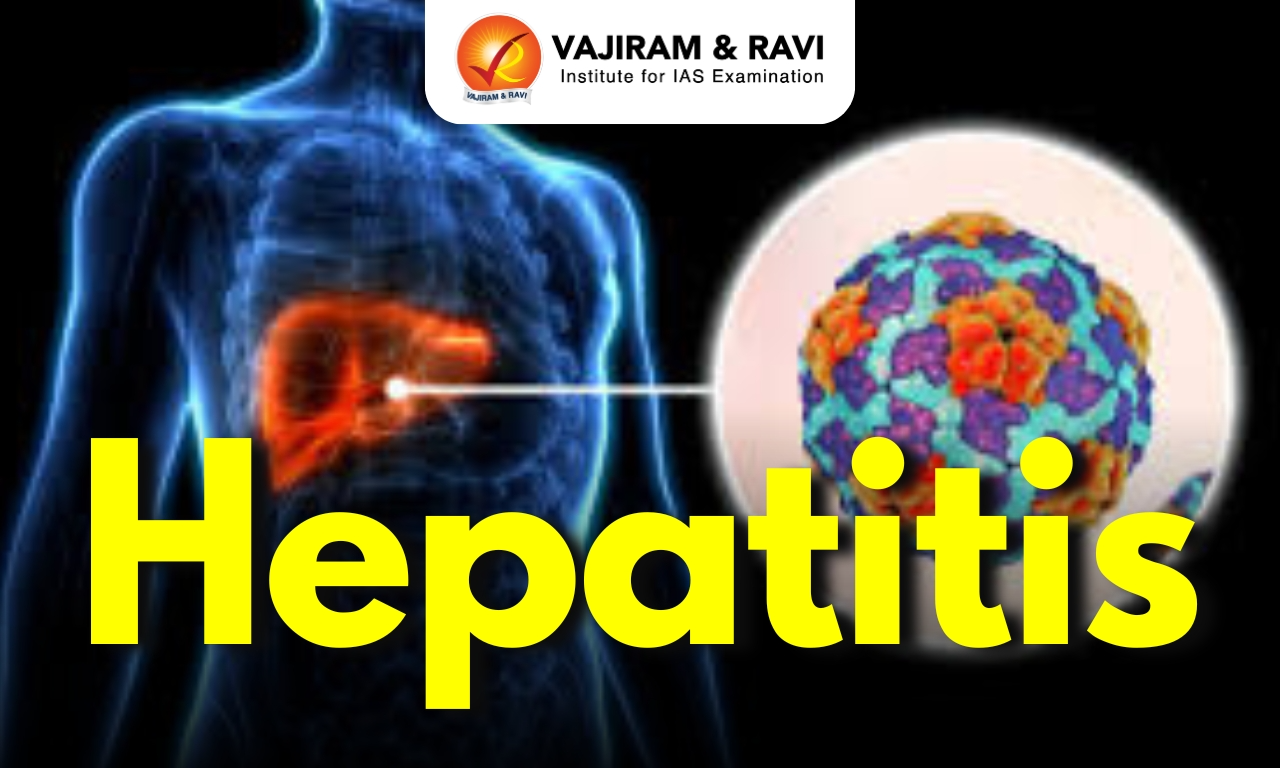
  • It is an inflammation of the liver that is caused by a variety of infectious viruses and non-infectious agents.
  • It is commonly the result of a viral infection, but there are other possible causes of hepatitis.
    • These include autoimmune hepatitis and hepatitis that occurs as a secondary result of medications, drugs, toxins, and alcohol.
    • Autoimmune hepatitis is a disease that occurs when your body makes antibodies against your liver tissue.
  • Common Symptoms: Fatigue, flu-like symptoms, dark urine, pale stool, abdominal pain, loss of appetite, unexplained weight loss, yellow skin and eyes, which may be signs of jaundice.

Classification of Hepatitis 

  • Hepatitis A: It is the result of an infection with the hepatitis A virus (HAV). This type of hepatitis is an acute, short-term disease.
  • Hepatitis B: The hepatitis B virus (HBV) causes hepatitis B. This is often an ongoing, chronic condition.
  • Hepatitis C: It comes from the hepatitis C virus (HCV). It is among the most common bloodborne viral infections and typically presents as a long-term condition.
  • Hepatitis D: It is a rare form of hepatitis that only occurs in conjunction with hepatitis B infection.
    • The hepatitis D virus (HDV) causes liver inflammation like other strains, but a person cannot contract HDV without an existing hepatitis B infection
  • Hepatitis E: It is a waterborne disease that results from exposure to the hepatitis E virus (HEV).
    • It is mainly found in areas with poor sanitation and typically results from ingesting fecal matter that contaminates the water supply.

Treatment for Hepatitis 

  • There are vaccines that can help protect against many hepatitis viruses.
  • There are vaccines for prevention against Hepatitis A, B and D.
  • However, there is no vaccine for Hepatitis C or E.

Source: TOI

Hepatitis FAQs

Q1: Hepatitis is inflammation of which organ?

Ans: Liver

Q2: Which Hepatitis types are transmitted through contaminated food and water?

Ans: Hepatitis A and E

Enquire Now