Andromeda Galaxy

Andromeda Galaxy

Andromeda Galaxy Latest News

A major new study using data from Nasa's Hubble Space Telescope has found that star formation in Andromeda has been declining for the past 500 million years.  

About Andromeda Galaxy

  • It is also known as M31, comparable in size to our Milky Way galaxy.
  • It is a large spiral galaxy located approximately 2.5 million light years from Earth.
  • It is named for its celestial location in the constellation of Andromeda.
  • It is the closest major galaxy to the Milky Way and is visible to the naked eye.
  • It is currently transitioning to its ‘middle age’, away from being a vibrant, active galaxy and towards a quiescent state 
  • It is a barred spiral galaxy, so-called for the bar-like structure formed by the stars in its center.
  • It is observed that this galaxy is moving towards the Milky Way at approximately 110 km/s. 

Key Facts about Hubble Space Telescope

  • It is named in honour of the trailblazing astronomer Edwin Hubble which was launched by NASA.
  • It is a large, space-based observatory, which has revolutionized astronomy since its launch and deployment by the space shuttle Discovery in 1990.
  • Hubble’s domain extends from the ultraviolet through the visible (which our eyes see) and into the near infrared.
  • It is one of NASA’s Great Observatories Programs.

Source: TH

Andromeda Galaxy FAQs

Q1: Andromeda Galaxy is located in which constellation?

Ans: Andromeda

Q2: Which telescope captured the most detailed image of Andromeda?

Ans: Hubble Space Telescope

Malvi Camel

Malvi Camel

Malvi Camel Latest News

Recently, it was observed that the rare malvi camel breed is facing threat of extinction and which prompted a conservation initiative by the National Research Centre on Camel (NRCC).

About Malvi Camel

  • It is one of the nine recognised camel breeds in India.
  • It is also valued for milk production, with a female capable of yielding around 4-5 kg of milk per cycle.
  • Distribution: It is primarily found in Madhya Pradesh’s Malwa region, including Mandsaur, Neemuch, Ratlam and Gwalior, and parts of Rajasthan such as Kota, Bundi, Jhalawar and Baran.
  • Physical Appearance
    • It is known for its distinct white colour and is considered the smallest among India’s camel breeds.
    • Malvi camels are generally medium-sized with a robust build.
    • They often have a light brown to reddish-brown coat and a well-developed hump.
  • Adaptability: These camels are well-adapted to both semi-arid and slightly more humid conditions, as the Malwa region experiences a range of climatic conditions compared to the harsher desert environments of other camel breeds.
  • Endurance and Strength: These are known for their endurance and strength, making them suitable for carrying loads and performing work, including transportation and agricultural tasks.

Source: TP

Malvi Camel FAQs

Q1: Malvi Camel is primarily found in which region?

Ans: Malwa region of Madhya Pradesh and Rajasthan

Q2: Malvi Camel is mainly reared for which purpose in Malwa region?

Ans: Milk and transportation

SHetA2 Therapy

SHetA2 Therapy

SHetA2 Therapy Latest News

Recently, a new cervical cancer SHetA2 pill showed promise by stopping Human Papillomavirus (HPV) from turning cancerous. 

About SHetA2 Therapy

  • SHetA2 is a small molecule therapy that is designed to stop an HPV infection from causing cancer.
  • Small molecule therapies are chemically manufactured, low-weight compounds that can easily be absorbed by the body.
  • It is designed to treat HPV-induced cervical dysplasia and cervical cancer.
  • Working
    • This therapy targets three proteins in the human body called mortalin, heat shock cognate (hsc70), and glucose regulated protein 78 (Grp78).
    • These are essential for the proliferation of the cancer-causing oncoprotein of the virus.
    • It works by breaking the connection between the HPV-E7 protein and a host protein inside human cells.
    • Normally, this host protein protects E7 and allows it to keep damaging healthy cells. When SHetA2 breaks this connection, the harmful E7 protein is destroyed by the body’s normal immune defences.
  • The therapy is meant for those who have developed precancerous lesions of cervical cancer.
  • The therapy has, at present, been evaluated in an oral, capsule form. 

Key Facts about Human Papillomavirus (HPV)

  • HPV is the most common sexually transmitted infection (STI), and there are more than 100 types of HPV.
  • However, some types of HPV infection cause skin growths called warts, and some types of HPV infection can cause cancer.
  • Transmission
    • The virus that causes HPV infection is transmitted through skin-to-skin contact. 
    • Most people get a genital HPV infection through direct sexual contact, including vaginal, anal, and oral sex.
    • About 80% of people – both men and womenwill get an HPV infection at some point in their lives. 
  • Symptoms may include warts on the genitals or anus or cancerous growths in the mouth or throat. 
  • Treatment: There’s no cure for HPV. HPV vaccination is the most effective way to prevent HPV-related cancers.

Source: IE

SHetA2 Therapy FAQs

Q1: SHetA2 therapy is related to which treatment?

Ans: Ovarian Cancer

Q2: How does SHetA2 work?

Ans: It works by inducing apoptosis in cancer cells.

Koldam Hydro Power Project

Koldam Hydro Power Project

Koldam Hydro Power Project Latest News

The Koldam NTPC Hydroelectric Project generated over 3512 million units of power in 2025-26, the highest ever since the project was commissioned.

About Koldam Hydro Power Project

  • It is located on the Satluj River in the Bilaspur District of Himachal Pradesh.
  • It is located just upstream of the Bhakra reservoir.  
  • The total capacity of the project is 800 MW.
  • The project involved the construction of a 167m-high rock-and-gravel-filled clay-core dam.
  • It also necessitated the construction of an upstream coffer dam as well as a downstream coffer dam. 
  • The reservoir created by the dam can hold up to 560 million cubic metres of water.  
  • It is owned and operated by India's biggest power utility National Thermal Power Corporation (NTPC).
  • The output from the power plant is conveyed to the national grid via a 400kV direct current (D/C) line. 
  • Himachal Pradesh receives 15% of the generated power free of cost and 12% at bus-bar rate. 
  • The project also benefits Delhi, Haryana, Punjab, Rajasthan, Uttar Pradesh, Jammu and Kashmir, and Chandigarh.

News: RED

Koldam Hydro Power Project FAQs

Q1: Where is the Koldam Hydro Power Project located?

Ans: It is located on the Satluj River in the Bilaspur District of Himachal Pradesh.

Q2: Near which major reservoir is the Koldam Hydro Power Project located?

Ans: Just upstream of the Bhakra Reservoir.

Q3: What is the total installed capacity of the Koldam Hydro Power Project?

Ans: 800 MW.

Q4: Which organization owns and operates the Koldam Hydro Power Project?

Ans: National Thermal Power Corporation (NTPC).

Kikai Caldera

Kikai Caldera

Kikai Caldera Latest News

A vast reservoir of magma beneath Japan's Kikai caldera appears to be filling again, offering scientists a rare glimpse into how some of Earth's largest volcanoes recover after catastrophic eruptions.

About Kikai Caldera

  • It is a massive submarine caldera with three small islands, parts of the caldera rim, that project above sea level. 
  • It is located in the East China Sea just south of Kyushu, Japan
  • The caldera is about 19 km in diameter. 
  • About 7,300 years ago, it produced the largest known volcanic eruption of the Holocene, the current geological epoch, which began roughly 11,700 years ago. 
  • About 150 cubic km of ash erupted. It sent pyroclastic flows 150 kilometers across the sea and buried much of Japan and the Korean Peninsula in ash. 
  • The volcanic explosivity index (VEI) for the eruption was 7 (there have only been three other VEI=7 eruptions in the last 10,000 years). 
  • It is still active, producing a scattered array of minor eruptions in recent decades. 
  • Research has found evidence of new volcanic activity beneath the Kikai Caldera, pointing to the formation of a lava dome and raising concerns about its potential to erupt again.

News: SD

Kikai Caldera FAQs

Q1: Where is the Kikai Caldera located?

Ans: In the East China Sea, just south of Kyushu, Japan.

Q2: What is the approximate diameter of the Kikai Caldera?

Ans: About 19 km.

Q3: When did the Kikai Caldera produce its largest known eruption?

Ans: About 7,300 years ago.

Q4: Is the Kikai Caldera still volcanically active?

Ans: Yes, it is still active.

Q5: Why is the Kikai Caldera significant in volcanology?

Ans: It produced the largest known volcanic eruption of the Holocene epoch.

Tigidia singhal

Tigidia singhal

Tigidia singhal Latest News

Researchers recently described a new trapdoor spider species, Tigidia singhal, from the semi-arid grasslands of the Deccan Plateau.

About Tigidia singhalt

  • It is a new species of trapdoor spider.
  • It was discovered from the semi-arid grasslands of the Deccan Plateau in Maharashtra
  • The collected specimen was a 15-millimetre-long female with black legs covered in greyish bristle-like hairs and a lighter abdomen with chevron-shaped markings.  
  • The discovery brings the number of Tigidia species in India to eight. Spiders of the genus Tigidia occur only in Madagascar, Mauritius, and India
  • Until now, species of this genus were known from peninsular India’s tropical evergreen and deciduous forests, particularly the Western and Eastern Ghats. 
  • T. singhal is the first record of this genus from a semi-arid open natural ecosystem. 

What are Trapdoor Spiders?

  • Trapdoor spiders are long-living, sedentary spiders that spend most of their lives in burrows, rarely leaving except to search for a mate.
  • The doors of silk, soil, moss, and leaves that many species construct to camouflage their burrows give this group its name.  
  • This adaptation has great advantages for the spider, providing protection against desiccation and predators and enabling efficient prey capture.
  • They feed by quickly opening the trap door and grabbing an insect or other arthropod that is passing close by. 
  • Trapdoor spider burrows aerate soil, maintain soil structure, and provide microhabitats for other organisms. 
  • Highly sensitive to habitat disturbances, these spiders also serve as ecological indicators, with their presence suggesting a healthy ecosystem and rich soil biodiversity. 
  • They belong to the infraorder Mygalomorphae, which also includes tarantulas and funnel-web spiders.  
  • The genus Tigidia falls within the family Barychelidae (brush-footed spiders) — one of India’s nine mygalomorph families.

News: MONG

Tigidia singhal FAQs

Q1: What is Tigidia singhal?

Ans: It is a newly discovered species of trapdoor spider.

Q2: Where was Tigidia singhal discovered?

Ans: In the semi-arid grasslands of the Deccan Plateau in Maharashtra.

Q3: To which group of spiders does Tigidia singhal belong?

Ans: Trapdoor spiders.

Q4: In which three regions of the world does the genus Tigidia occur?

Ans: Madagascar, Mauritius, and India.

Q5: What type of ecosystem does Tigidia singhal inhabit?

Ans: A semi-arid open natural grassland ecosystem.

Japan

Japan

Japan Latest News

The Japanese Prime Minister said that 13 people were confirmed dead after a powerful earthquake struck the southern Japanese city of Kumamoto. 

About Japan

  • Location: It is an island nation in East Asia, situated in the Northwestern Pacific Ocean.
  • Maritime borders: It is bordered by the Pacific Ocean (East), Sea of Okhotsk (North), Sea of Japan (West East) and East China Sea (Southwest).
  • Capital City: Tokyo.

Geographical Features of Japan

  • It comprises a chain of islands stretching ~1,500 miles in a northeast–southwest arc.
  • Terrain: Over 80% mountainous, with rugged terrain.
  • Main Islands (north to south): Hokkaido, Honshu, Shikoku, and Kyushu.
  • Climate: It ranges from subarctic in the north to humid subtropical in the south.
  • Volcanic activity: It is located on the Pacific Ring of Fire – a major zone of earthquakes and active volcanoes.
  • Highest peak: Mount Fuji (3,776 m), which is a stratovolcano.
  • Major mountain ranges: Japanese Alps.
  • Major rivers: Shinano River (longest), Tone River, Kiso River.
  • Natural Resources: It mainly consists of Coal, iron ore, zinc, lead, copper, sulfur, gold, and silver.

Source: IE

Japan FAQs

Q1: What is the capital of Japan?

Ans: Tokyo

Q2: Which is the highest mountain in Japan?

Ans: Mount Fuji

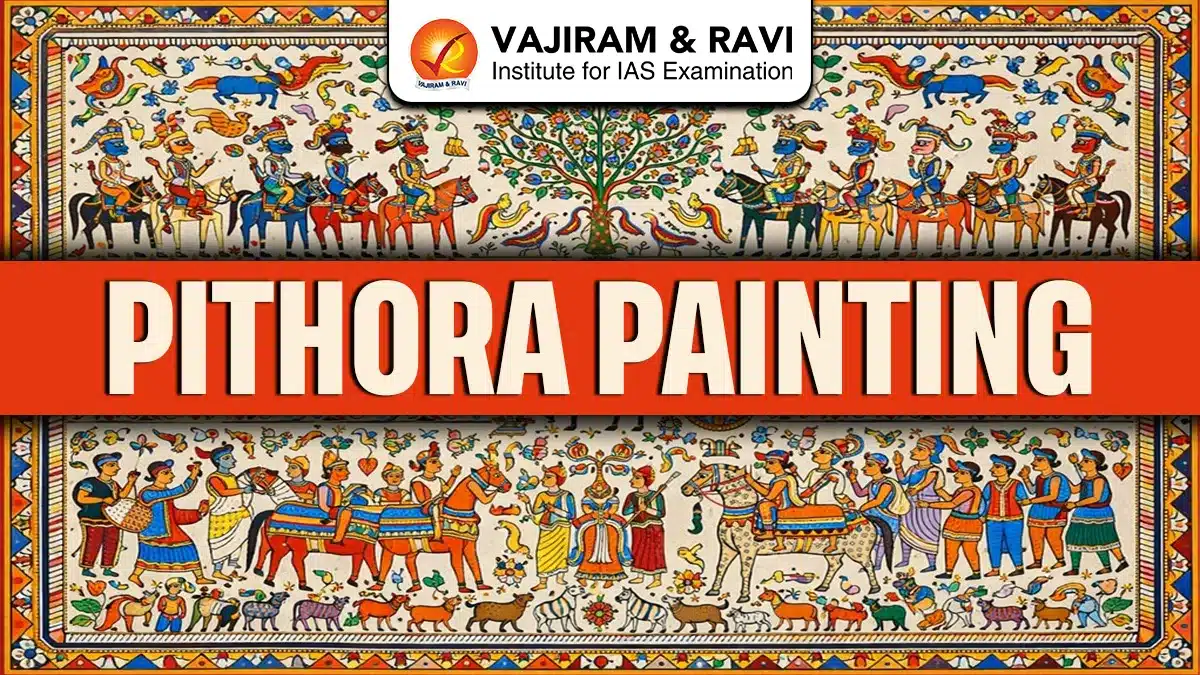
Pithora Painting

Pithora Painting

Pithora Painting Latest News

The Pithora painting, a centuries-old wall art tradition of Gujarat’s Rathwa tribal community, recently received a Geographical Indication (GI) tag.

About Pithora Painting

  • It is a traditional tribal wall art that has originated in the tribal regions of Gujarat, mainly in Panchmahal and Chhota Udaipur.
  • It is done by tribes such as the Rathwa, Bhil, and Bhilala, who hold a strong belief in nature, spirits, and divine powers.
  • It holds a long history, and its existence dates back to around the 13th century.
  • It is named after Pithora De, who is their tribal god and is associated with marriage, prosperity, and the well-being of the tribe.
  • Traditionally, Pithora paintings were created on the walls of homes. The paintings were often commissioned during significant life events, such as weddings, births, and festivals, serving as a means of invoking blessings and protection from deities. 
  • Artists: Traditionally executed by specialist ritual painters known as Lakharas, under the guidance of a priest called Badwa. 
  • Surface Preparation: Traditionally, walls are prepared by applying a mixture of cow dung and clay. 
  • Natural Colors: 
    • Artists use natural pigments derived from minerals, plants, and other organic materials to create the colors for their paintings. 
    • Common colors include red, yellow, green, and blue, each derived from specific natural sources. 
  • Painters use a combination of bamboo sticks, cotton and wooden stencils to create their art. 
  • The paintings show tribal and Hindu deities, horses, animals, and scenes from daily life like farming, hunting, and dancing.
  • It  plays a crucial role in preserving tribal stories, beliefs, and customs and helps to teach younger generations about their culture.
  • Although it is traditionally practiced only as wall art, today’s generation of pithora painters use paper and canvas that they sell commercially.  
  • It has been awarded a Geographical Indication (GI) tag in 2026.

News: NM

Pithora Painting FAQs

Q1: What is Pithora Painting?

Ans: It is a traditional tribal wall art of Gujarat.

Q2: Which tribes traditionally practice Pithora Painting?

Ans: The Rathwa, Bhil, and Bhilala tribes.

Q3: Where were Pithora Paintings traditionally created?

Ans: On the walls of homes.

Q4: During which occasions were Pithora Paintings traditionally commissioned?

Ans: The paintings were often commissioned during significant life events, such as weddings, births, and festivals.

Q5: Who traditionally executes Pithora Paintings?

Ans: Specialist ritual painters known as Lakharas.

Soliga Tribe

Soliga Tribes

Soliga Tribe Latest News

A recent study showed that fortress conservation approach has led to uprooting, ongoing distress and despondency worldwide, and offers the Soligas in the Biligiri Rangaswamy Temple Wildlife Sanctuary (BRTWS) as a prime conservation exemplar. 

About Soliga Tribe

  • The term “Soliga” literally translates to “children of bamboo”, which reflects the tribe’s relationship with nature and their belief that they too have emerged from it.
  • Distribution: They are a group of indigenous, forest-dwelling people found mostly in Tamil Nadu and Karnataka.
  • They reside in the peripheral forest areas near Biligiri Rangana Hills and Male Mahadeshwara Hills.
  • Soligas was the first tribal community living inside a tiger reserve and getting their forest rights recognised by a court in a judgment in 2011.
  • Language: The Dravidian language sholaga is spoken by the Soliga. They also speak Kannada and Tamil.
  • The Soligas live in single-room huts, built of bamboo and mud.
  • They believe in coexisting with the environment and have indigenous ways of using nature to make unique utility products, such as the ‘jottai’, which is a cup made out of leaves.
  • Religion of Soliga Tribes : Along with adhering to Hindu customs, the Soliga people practice naturism and animism.
  • Economy:  The traditional economy of the Soliga is mostly based on shifting cultivation and collection of minor forest produce.

Source: TH

Soliga Tribe FAQs

Q1: Soligas are famous for living in which Tiger Reserve?

Ans: Biligiri Rangaswamy Temple - BRT Tiger Reserve

Q2: Soliga language belongs to which language family?

Ans: Dravidian

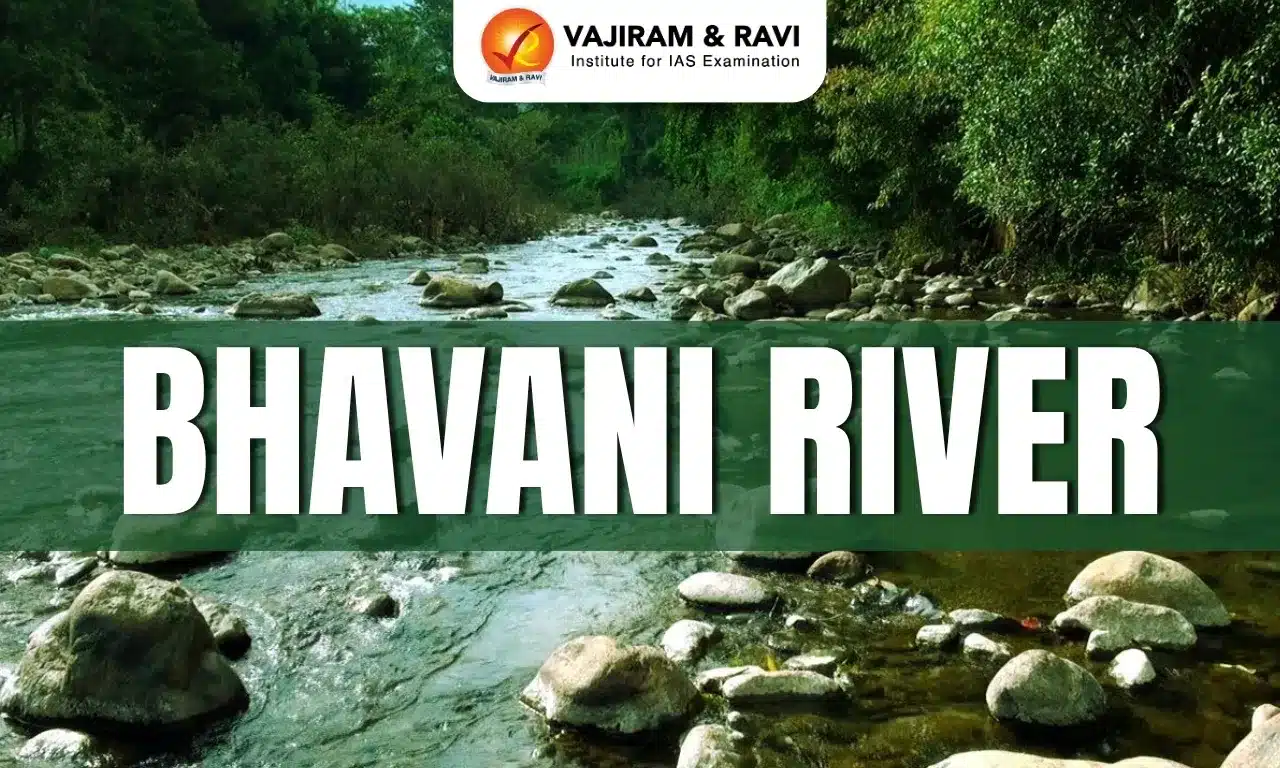
Bhavani River

Bhavani River

Bhavani River Latest News

Large stretches of the Bhavani River near Kooduthurai at Bhavani have been recently engulfed by water hyacinth, prompting farmers and residents to urge the State government to remove the invasive aquatic weed.

About Bhavani River

  • It is a major tributary of the Cauvery River flowing through the states of Kerala and Tamil Nadu.
  • It is the second largest river in Tamil Nadu.
  • Course
    • It originates from the Western Ghats in the Nilgiri Hills, located in the Tiruppur district of Tamil Nadu.  
    • The river emerges from Bhavani Lake, at an elevation of about 2,165 meters (7,100 feet) above sea level.  
    • From there, it flows into Kerala, passing through the Silent Valley National Park
    • After flowing through Kerala, the river turns and flows back into Tamil Nadu.
    • Finally, the river merges with the Cauvery River in the town of Bhavani, at a location known as Bhavani Sangameshwarar Temple, a significant pilgrimage site for Hindus.
  • Total Length: 217 km.
  • It is a “perennial” river, which means it flows all year round and never dries up.
  • The drainage basin spans approximately 6,200 sq.km., covering parts of Tamil Nadu, Kerala, and Karnataka:
  • About 90 percent of the river water is used for agriculture.
  • Tributaries: The largest tributaries are West and East Varagar, which come from the Nilgiris. 
  • Major Dams:
    • Bhavani Sagar Dam
    • Kodiveri Dam.

News: TH

Bhavani River FAQs

Q1: Which major river is the Bhavani River a tributary of?

Ans: The Cauvery River.

Q2: Through which two states does the Bhavani River primarily flow?

Ans: Kerala and Tamil Nadu.

Q3: Where does the Bhavani River originate?

Ans: In the Western Ghats in the Nilgiri Hills, Tiruppur district, Tamil Nadu.

Q4: What is the total length of the Bhavani River?

Ans: 217 km.

Enquire Now