DAANVEER Initiative

DAANVEER Initiative

DAANVEER Initiative Latest News

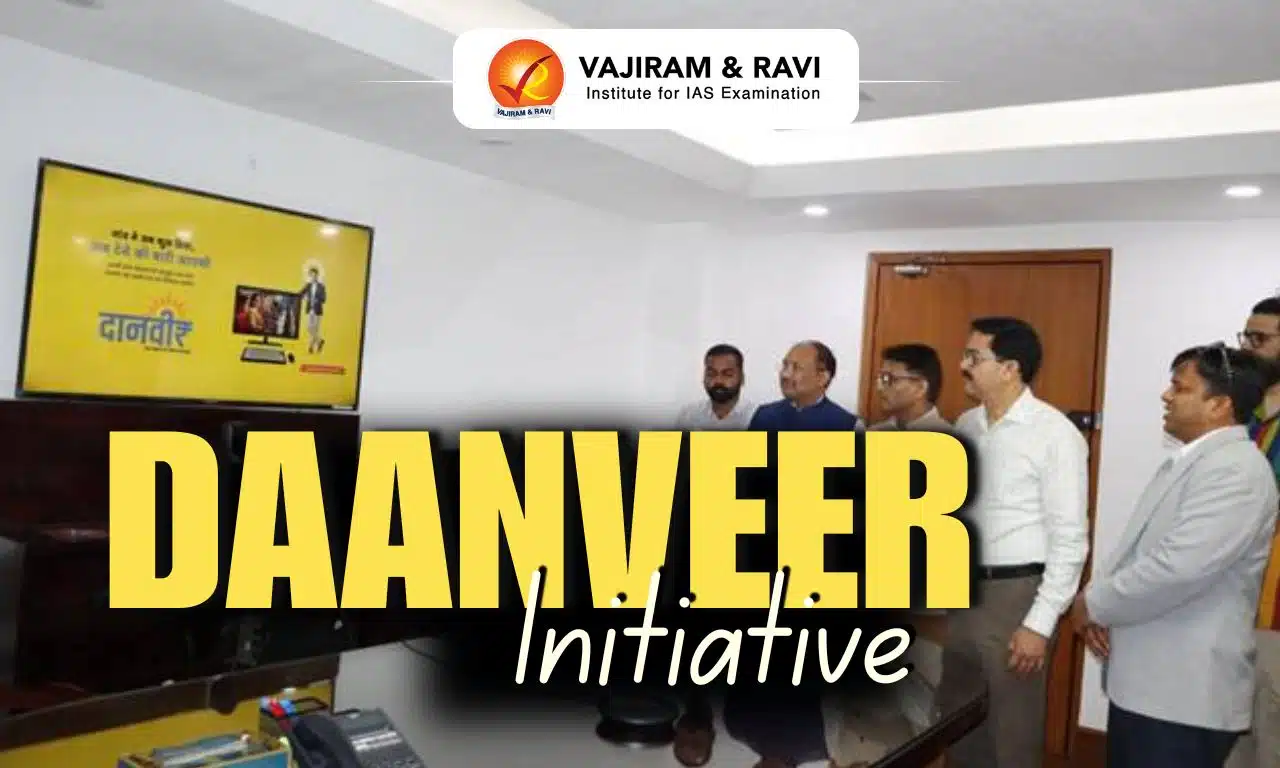
Recently, the Ministry of Panchayati Raj launched the DAANVEER initiative. 

About DAANVEER Initiative

  • It is a citizen participation initiative that enables individuals and organisations to voluntarily contribute computers to gram panchayats.
  • It is done through the ‘Meri Panchayat’ mobile application to strengthen digital infrastructure at the grassroots.
  • It is an initiative of the Ministry of Panchayati Raj, it has been developed in collaboration with the National Informatics Centre (NIC) and DigiHaat.
  • Features
    • It provides an end-to-end digital and verifiable mechanism through which citizens and organisations can contribute towards the technology and infrastructure needs of gram panchayats.
    • The initiative is available through the Meri Panchayat app, which is integrated with the DigiHaat marketplace.
    • Donors can choose from pre-approved computer bundles mapped to state-specific technical specifications, while delivery details are automatically populated to eliminate additional paperwork.
    • The platform also allows contributors to track their donations from dispatch to installation and provides them with a digital certificate of appreciation.
  • Significance: Through this citizens can meaningfully participate in strengthening rural digital infrastructure while contributing to the broader vision of a digitally empowered and self-reliant rural India.

Source: PIB

DAANVEER Initiative FAQs

Q1: Which ministry launched the initiative for voluntary donation of computers to Gram Panchayats?

Ans: Ministry of Panchayati Raj

Q2: What is the main objective of DAANVEER Initiative?

Ans: Digitize Gram Panchayat offices and improve service delivery
Raimona National Park

Raimona National Park

Raimona National Park Latest News

A firing incident was recently reported from the Athiabari Range of Raimona National Park in Assam's Kokrajhar district, with a man suspected of involvement in illegal deforestation allegedly being shot by forest personnel.

About Raimona National Park

  • It is located in the Kokrajhar district of Assam within the Bodoland Territorial Region.
  • It lies along the India-Bhutan border at the foothills of the Eastern Himalayas.  
  • It shares contiguous forest patches of Phibsoo Wildlife Sanctuary and Jigme Singye Wangchuck National Park in Bhutan, creating a transboundary conservation landscape of more than 2,400 sq km. 
  • Rivers:
    • The Sankosh River flows along the western boundary.
    • The Saralbhanga River lies on the eastern side.
    • Pekua River forms the southern boundary.
  • Flora:
    • Mostly, this park flourishes with myriads of orchid species, other tropical rainforest species, and riverine grasslands. 
    • Other intriguing fauna includes varieties of bamboo and numerous wetland ecosystems.  
  • Fauna: 
    • It boasts of an endangered primate species called the Golden Langur, which has been named the mascot of the Bodoland region.  
    • The park is also inhabited by various other species such as elephant, Bengal tiger, wild bison, white-spotted deer, clouded leopard, and wild buffalo. 
    • It has recorded four to five species of hornbills, 170 species of birds, and more than 150 species of butterflies.

News: IT

Raimona National Park FAQs

Q1: Where is Raimona National Park located?

Ans: Raimona National Park is located in the Kokrajhar district of Assam within the Bodoland Territorial Region.

Q2: Along which international border is Raimona National Park situated?

Ans: It is situated along the India–Bhutan border at the foothills of the Eastern Himalayas.

Q3: Which protected areas in Bhutan form a transboundary conservation landscape with Raimona National Park?

Ans: Phibsoo Wildlife Sanctuary and Jigme Singye Wangchuck National Park.

Q4: Which river forms the western boundary of Raimona National Park?

Ans: The Sankosh River.

Q5: Which animal has been designated as the mascot of the Bodoland region?

Ans: The Golden Langur.

Pradhan Mantri Viksit Bharat Rozgar Yojana

Pradhan Mantri Viksit Bharat Rozgar Yojana

Pradhan Mantri Viksit Bharat Rozgar Yojana Latest News

Recently, the Prime Minister of India disbursed incentives amounting to approximately ₹2,400 crore under the Pradhan Mantri Viksit Bharat Rozgar Yojana (PM-VBRY). 

About Pradhan Mantri Viksit Bharat Rozgar Yojana

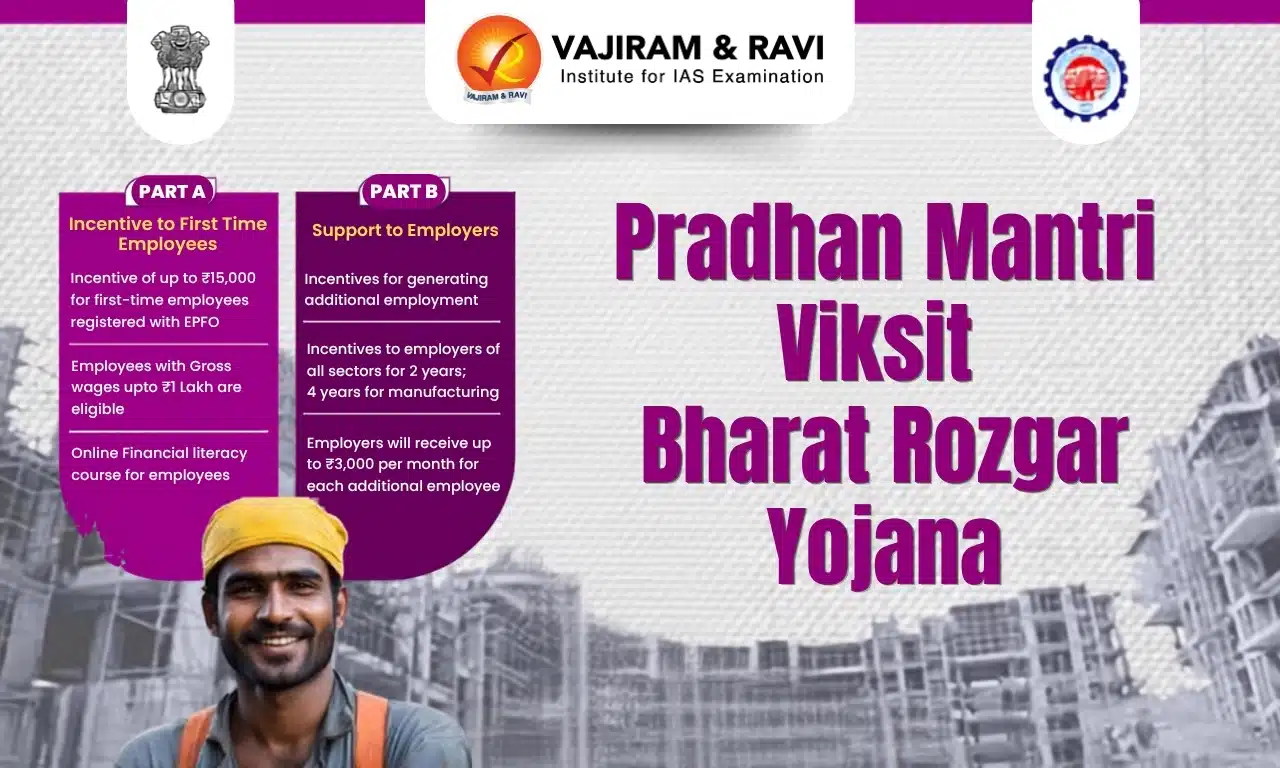
  • It is a flagship employment generation scheme launched by the Government of India to encourage job creation in the formal sector.
  • The scheme provides financial incentives to employers and first-time employees, promoting increased enrollment in the Employees’ Provident Fund Organisation (EPFO).
  • It aims to boost employment opportunities, strengthen social security coverage, and support the vision of a developed India by 2047.

Key Features of Pradhan Mantri Viksit Bharat Rozgar Yojana

  • Part A – Support to First-Time Employees
    • Targeting first-time employees registered with EPFO, this Part will offer one-month EPF wage up to Rs 15,000 in two installments.
    • Employees with salaries up to Rs 1 lakh will be eligible for the incentives.
    • All payments to the First Time Employees under Part A of the Scheme will be made through DBT (Direct Benefit Transfer) mode using Aadhar Bridge Payment System (ABPS).
  • Part B – Incentives for Employers
    • This part will encourage generation of additional employment in all sectors, with a special focus on the manufacturing sector.
    • The employers will get incentives in respect of  new employees with salaries up to Rs 1 lakh.
    • The Government will incentivize employers, up to Rs 3000 per month, for two years, for each additional employment, sustained  for at least six months.
    • For the manufacturing sector, incentives will be extended to the 3rd and 4th  years as well.
    • Payments to the Employers under Part B will be made directly into their PAN-linked Accounts.

Source: PIB

Related Post
PM Awas Yojana PM Uday Yojana
PMGSY (Pradhan Mantri Gram Sadak Yojana) PM Vishwakarma Scheme
Amrit Bharat Station Scheme PM Schools for Rising India
Pradhan Mantri Surya Ghar Yojana Ayushman Bharat Pradhan Mantri Jan Aarogya Yojana
Pradhan Mantri Swasthya Suraksha Yojna Pradhan Mantri Matru Vandana Yojna
Pradhan Mantri Kaushal Vikas Yojna Pradhan Mantri Garib Kalyan Rojgar Yojana
Pradhan Mantri Gramodaya Yojana Pradhan Mantri Viksit Bharat Rozgar Yojana
Pradhan Mantri Jan Dhan Yojana PM Matru Vandana Yojana
Pradhan Mantri Vaya Vandana Yojana Pradhan Mantri Viksit Bharat Rozgar Yojana
Pradhan Mantri Shram Yogi Maan Dhan Yojana Pradhan Mantri Van Dhan Vikas Yojna
Pradhan Mantri Van Dhan Yojana Pradhan Mantri Ujjwala Yojana
Pradhan Mantri Fasal Bima Yojana
Pradhan Mantri Bhartiya Jan Aushadhi Kendras
Ayushman Bharat Pradhan Mantri Jan Arogya Yojana Pradhan Mantri Bhartiya Janaushadhi Pariyojana
PM VIKAS Scheme Pradhan Mantri Kaushal Vikas Yojana
Pradhan Mantri Jeevan Jyoti Bima Yojana PM Kisan Samman Nidhi Yojana

Pradhan Mantri Viksit Bharat Rozgar Yojana FAQs

Q1: PM-VBRY has two parts. What is Part A for?

Ans: First-time employees – up to ₹15,000 in 2 instalments; salary ceiling ₹1 lakh/month

Q2: What incentive does Part B provide to employers?

Ans: Up to ₹3,000/month per new employee – 2 years for all sectors, 4 years for manufacturing

Sooty Bark Disease

Sooty Bark Disease

Sooty Bark Disease Latest News

In British Columbia, Canada, maple trees have been observed with sooty bark disease, and researchers are working on ways to reduce the rate at which the disease spreads.

About Sooty Bark Disease

  • It is a fungal disease of maple trees, which causes rapid wilting and mortality.
  • The disease is caused by the fungus Cryptostroma corticale.
  • It can also have implications for human health if fungal spores are inhaled. 
  • The fungus is endemic to the Great Lakes region of North America but is considered an introduced disease in Europe. 
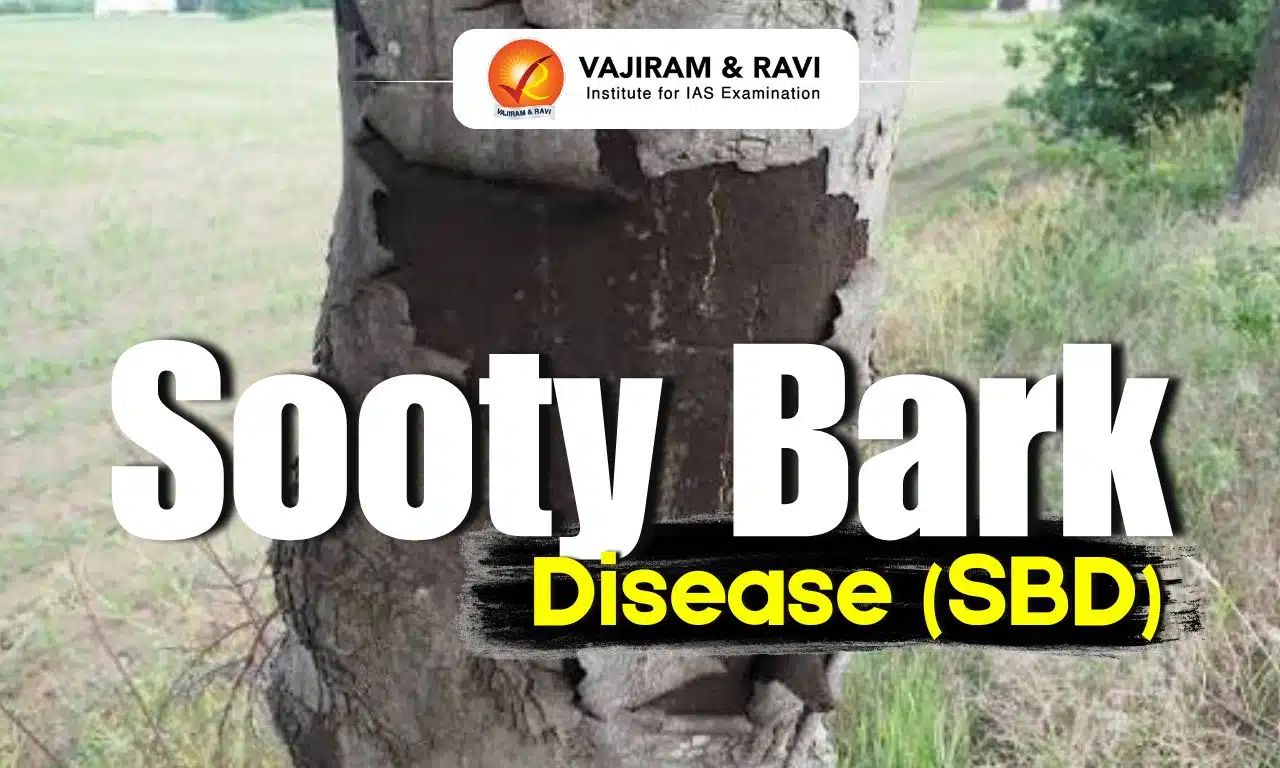
  • It is most often noticed after periods of hot weather when extensive black sooty patches are revealed beneath the bark of affected trees.  
  • It is a disease which needs high temperatures for extended periods of time.
  • The fungus may remain dormant inside a tree for years before becoming active under hot, dry conditions, and it can kill a tree in as little as three years.
  • The main characteristic of sooty bark disease is the predominantly black discolouration caused by concentrated spore formation on the trunk. 
  • There is currently no control that exists for sooty bark disease.

News: TOI

Sooty Bark Disease FAQs

Q1: What is Sooty Bark Disease (SBD)?

Ans: It is a fungal disease of maple trees that causes rapid wilting and mortality.

Q2: Which fungus causes Sooty Bark Disease?

Ans: The fungus Cryptostroma corticale.

Q3: Which trees are primarily affected by Sooty Bark Disease?

Ans: Maple trees.

Q4: Where is the fungus Cryptostroma corticale endemic?

Ans: The Great Lakes region of North America.

Q5: Which climatic conditions activate the fungus causing Sooty Bark Disease?

Ans: Hot and dry conditions.

Danube River

Danube River

Danube River Latest News

The remains of a mammoth were recently discovered in northern Bulgaria as Danube River levels reached a historic low, revealing bones potentially thousands of years old.

About Danube River

  • It is the second-longest river of the European continent, after the Russian Volga River.  
  • Course: 
    • It flows for 2,850 km, sourcing from the confluence of the Brigach and Breg rivers, close to the German town of Donaueschingen in the Black Forest region of Germany. 
    • The river passes through 10 European nations: Germany, Austria, Hungary, Serbia, Bulgaria, Croatia, Slovakia, Moldova, Ukraine, and Romania. 
    • It ultimately drains into the Black Sea via the Danube Delta.  
  • The Danube delta covers an area of some 4,300 sq. km. 
    • Located in the Tulcea County of Romania, it is comparatively young and continuously growing at a rate of 24 to 30 m annually towards the sea.
    • It is a UNESCO World Heritage Site renowned for its rich biodiversity. 
  • The Danube is fed by major tributaries like the Inn, Drava, Sava, Tisza, Prut, and Siret.
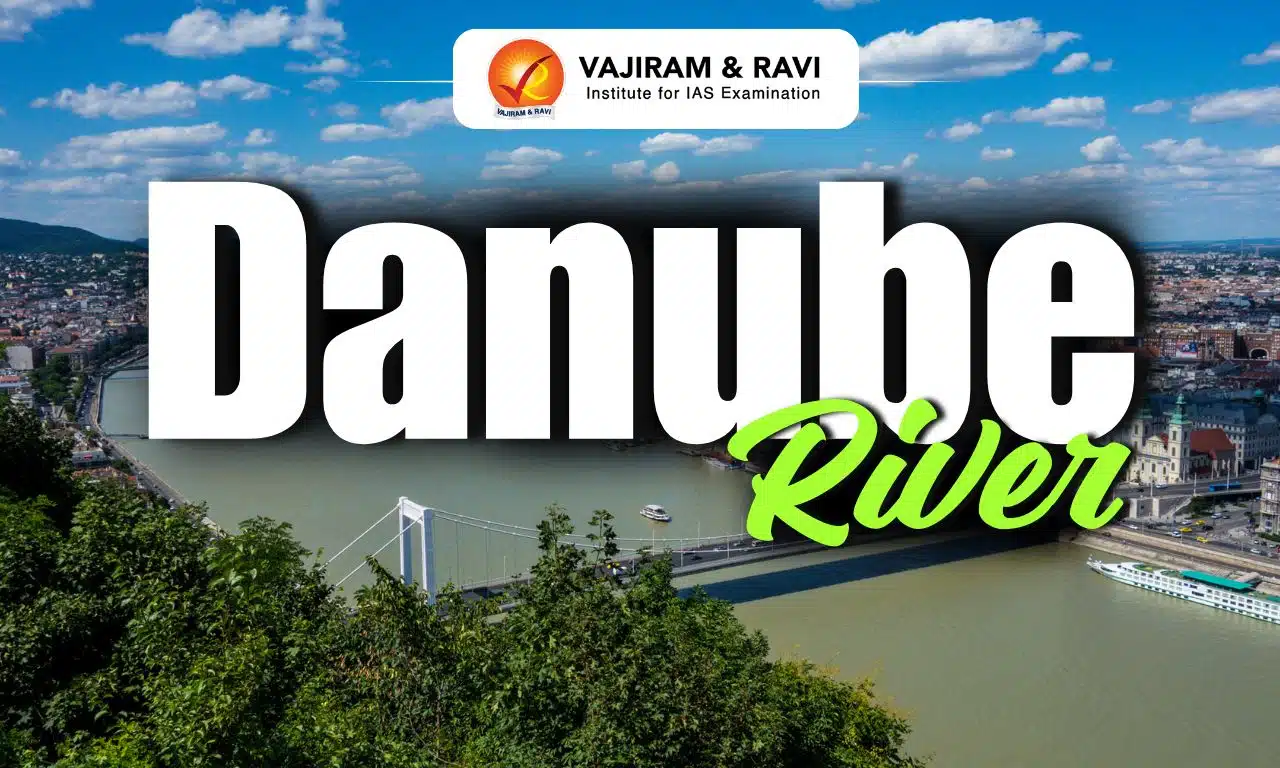
  • The Danube River flows directly through many significant European cities, including four national capitals – Vienna (Austria), Bratislava (Slovakia), Budapest (Hungary), and Belgrade (Serbia). 
  • History:
    • Sailors from ancient Greece began exploring the Danube as early as the 600s BCE. 
    • The river later served as the northern boundary of the Roman Empire. 
    • Several other empires took control of the lands along the river over the years. Eventually people began to use the river for trade.  
    • The Danube played a vital role in the settlement and political evolution of central and southeastern Europe. 
    • An agreement in the mid-1800s opened the Danube to the shipping of all nations. 
  • Countries along the river ship goods from such ports as Belgrade, Serbia; Budapest, Hungary; Vienna, Austria; and Regensburg, Germany. 
  • Through the Rhine-Main-Danube Canal, it connects the North Sea at Rotterdam to the Black Sea at Sulina, forming a 3,500 km trans-European inland waterway.

News: DEVD

Danube River FAQs

Q1: How long is the Danube River?

Ans: Approximately 2,850 km.

Q2: Where does the Danube River originate?

Ans: It originates from the confluence of the Brigach and Breg rivers near Donaueschingen in the Black Forest region of Germany.

Q3: Into which sea does the Danube River drain?

Ans: The Black Sea.

Q4: Which are the countries through which the Danube River flows?

Ans: Germany, Austria, Slovakia, Hungary, Croatia, Serbia, Bulgaria, Romania, Moldova, and Ukraine.

Q5: Which canal connects the Danube River to the Rhine River?

Ans: The Rhine–Main–Danube Canal.

Machilipatnam ASW Warship

Machilipatnam ASW Warship

Machilipatnam ASW Warship Latest News

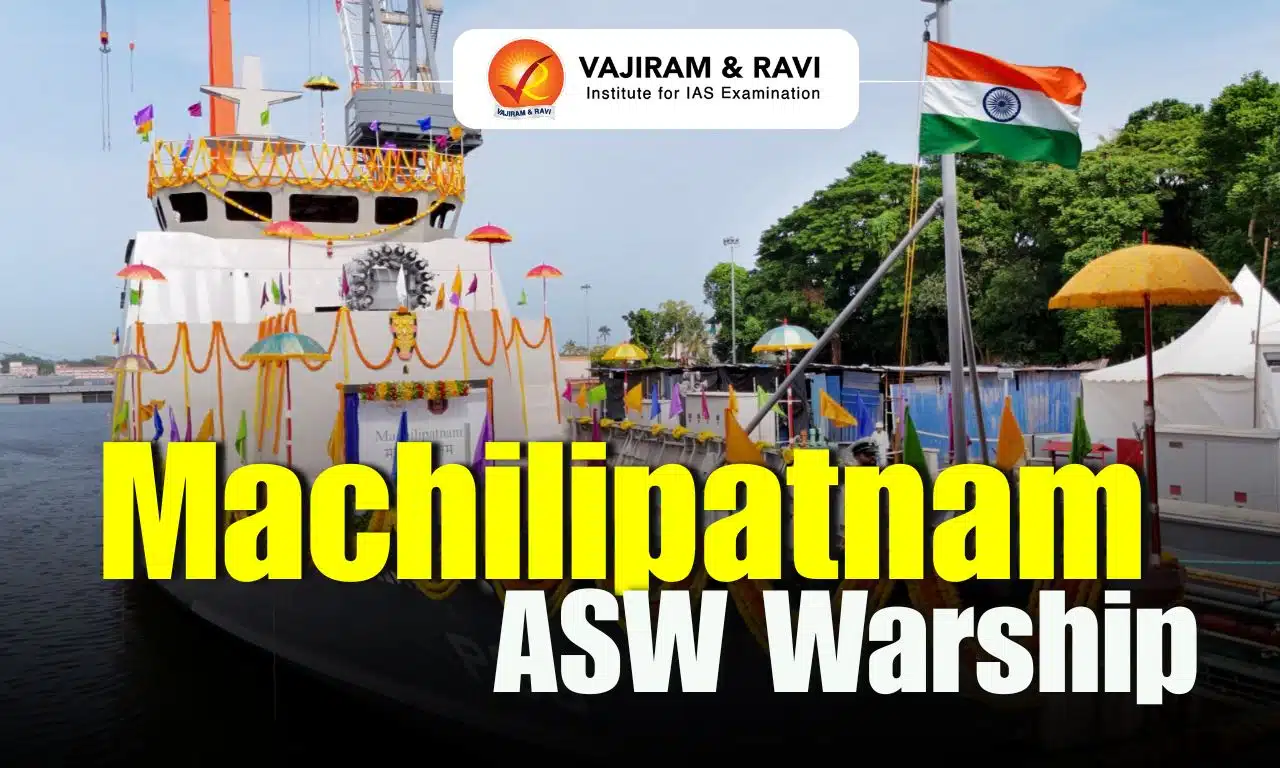
Recently, the Machilipatnam (BY 529) Anti-Submarine Warfare Shallow Water Craft (ASW SWC) was launched.

About Machilipatnam ASW Warship

  • It is the seventh of the Mahe-class Anti-Submarine Warfare Shallow Water Craft (ASW-SWC).
  • It derives its name from the historic port city of Machilipatnam, in Krishna district of Andhra Pradesh.
  • It is built by Cochin Shipyard Limited (CSL) for the Indian Navy.
  • Features
    • It has a displacement of around 900 tonnes, a maximum speed of 25 knots and an endurance of 1,800 nautical miles.
    • The ships are equipped with indigenously developed advanced systems, including hull-mounted sonar and low-frequency variable depth sonar, in line with the Government’s Atmanirbhar Bharat initiative.
    • It is equipped for Underwater Surveillance, Anti-Submarine Warfare (ASW) operations, and Low Intensity Maritime Operations (LIMO), along with Mine Warfare capability.
    • It has indigenous content exceeding 80 percent.
  • Significance: It will further bolster coastal defence and enhance Maritime Domain Awareness.

Source: PIB

Machilipatnam ASW Warship FAQs

Q1: What is Machilipatnam ASW Warship?

Ans: It is the seventh of the Mahe-class Anti-Submarine Warfare Shallow Water Craft (ASW-SWC).

Q2: INS Machilipatnam has been built by which shipyard?

Ans: It is built by Cochin Shipyard Limited (CSL) for the Indian Navy.

Vitamin A

Vitamin A

Vitamin A Latest News

Higher levels of vitamin A were significantly associated with better lung function in children and adults with asthma.

About Vitamin A

  • It is a fat-soluble vitamin primarily stored in the liver.
  • Although vitamin A is often considered a single nutrient, it is actually a group of fat-soluble compounds, including retinol, retinal, and retinyl esters. 
  • There are two types of vitamin A that are found in the diet.
    • Preformed vitamin A is found in animal products such as meat, fish, poultry, and dairy foods.
    • Precursors to vitamin A, also known as provitamin A, are found in plant-based foods such as fruits and vegetables. The most common type of provitamin A is beta-carotene.
  • In order to use these two types of vitamin A, the body must convert them into the active forms of the vitamin, retinal and retinoic acid.  
  • Foods with the highest levels of vitamin A include:
    • Beef liver and other organ meats
    • Some types of fish such as herring and salmon and cod fish oil
    • Eggs
    • Dairy products such as cheese and fortified milk 
    • Fortified breakfast cereals
    • Orange and yellow vegetables and fruits, such as carrots, sweet potatoes, mangos, and cantaloupe
    • Broccoli, spinach, and most dark green, leafy vegetables.
  • Function:
    • It supports cell growth, immune function, fetal development, and vision.
    • One of the best-known functions of vitamin A is its role in vision and eye health. 
    • It is also known as retinol because it produces the pigments in the retina of the eye.
    • Vitamin A promotes good eyesight, especially in low light. 
    • Vitamin A helps protect surface tissues such as the skin, intestines, lungs, bladder, and inner ear.
    • It supports immune function by promoting the growth and distribution of T cells, a type of white blood cell that protects the body from infection.
    • Vitamin A supports male and female reproductive health and fetal development. 
  • If you do not get enough vitamin A, you have more risk of eye problems such as:
    • Reversible night blindness
    • Non-reversible corneal damage known as xerophthalmia
    • It can also lead to hyperkeratosis or dry, scaly skin.
  • Vitamin A deficiency can be treated with vitamin A supplements.
  • Just as vitamin A deficiency can negatively affect health, taking too much can also be dangerous. 
    • Taking too much vitamin A can cause serious side effects and can even be fatal if consumed in extremely high doses.

News: MED

Vitamin A FAQs

Q1: What type of vitamin is Vitamin A?

Ans: Vitamin A is a fat-soluble vitamin.

Q2: Where is Vitamin A primarily stored in the body?

Ans: It is primarily stored in the liver.

Q3: What are the major functions of Vitamin A?

Ans: It supports vision, immune function, cell growth, and fetal development.

Q4: Why is Vitamin A also known as retinol?

Ans: Because it helps produce the pigments in the retina of the eye.

Q5: Can excessive intake of Vitamin A be harmful?

Ans: Yes. Too much Vitamin A can cause serious side effects and may even be fatal in extremely high doses.

Pradhan Mantri Vidyalaxmi Scheme

Pradhan Mantri Vidyalaxmi Scheme

Pradhan Mantri Vidyalaxmi Scheme Latest News

The Pradhan Mantri Vidyalaxmi scheme is positively contributing to the goals of Sustainable Development Goal 4 and NEP 2020 by advancing inclusive and equitable quality education.

About Pradhan Mantri Vidyalaxmi Scheme

  • It is a flagship initiative of the Education Ministry that seeks to make quality higher education accessible to deserving students facing financial constraints. 
  • Eligibility Criteria for Students:
    • It is available to students who have secured merit-based admission through competitive exams in any of the designated Quality Higher Education Institutions (QHEIs) in India.
    • The scheme provides education loans for all degree and diploma courses.
  • Eligibility Criteria for Higher Education Institutions
    • Top 100 ranked HEIs in the overall/ category-specific and/or domain-specific rankings in the latest list of National Institutional Ranking Framework (NIRF) published by the Ministry of Education
    • Top 200 ranked HEIs under the governance of State/Union Territories governments in the latest list of NIRF published by the Ministry of Education
    • All remaining HEIs under the governance of the Government of India.
  • Loan Repayment Period: The repayment period of the education loan would be up to 15 years excluding the moratorium period (course period + 1 year).
  • Credit Guarantee: Loans up to ₹ 7.5 lakhs are provided 75% credit guarantee by Government of India.
  • Interest Subvention
    • For students with up to ₹ 8 lakhs annual family income, the scheme provides for 3% interest subvention on loans up to ₹ 10 lakh.
    • This is in addition to the full interest subvention already offered to students with up to ₹ Rs. 4.5 lakhs annual family income.
  • The educational loans are provided through Scheduled Banks, Regional Rural Banks (RRBs), and Cooperative Banks participating in the scheme.
  • The scheme offers affordable education loans with interest rates capped at the bank's Externally Benchmarked Lending Rate (EBLR) + 0.5%.
  • Under this, interest subvention and credit guarantee benefits are available only once for undergraduate, postgraduate, or integrated courses. 

Source: PIB

Pradhan Mantri Vidyalaxmi Scheme FAQs

Q1: Which ministry is the nodal ministry for PM Vidyalaxmi Scheme?

Ans: Ministry of Education

Q2: PM Vidyalaxmi Scheme is aligned with which policy?

Ans: National Education Policy 2020

e-Zero FIR System

e-Zero FIR System

e-Zero FIR System Latest News

Recently, the Minister of State for Home informed that the government has introduced the system of registering e-Zero FIRs in cybercrime cases across eighteen states and Union Territories.

About e-Zero FIR System

  • It is a technology-based platform that enables the automated registration of Zero FIRs for value cyber financial crimes. 
  • It is a new mechanism where financial cybercrime complaints involving fraud above ₹10 lakh are automatically converted into FIRs if reported via the 1930 helpline or the National Cybercrime Reporting Portal (NCRP).
  • Statutory Backing: It is enabled under Section 173 of the Bharatiya Nagarik Suraksha Sanhita (BNSS), 2023.
  • Nodal Body: It is led by the Indian Cybercrime Coordination Centre (I4C), Ministry of Home Affairs.

How Does the System Work?

  • Complaints of financial cybercrime losses above ₹10 lakh, once filed through 1930 or NCRP, will automatically trigger a Zero FIR at the e-Crime Police Station.
  • This Zero FIR is immediately routed to the relevant territorial cybercrime police station, based on the complainant’s location.
  • Victims are required to visit the cybercrime police station within 3 days to get the Zero FIR converted into a regular FIR.
  • Integration of Key Platforms
    • The process involves integration of: I4C’s National Cybercrime Reporting Portal (NCRP), and National Crime Records Bureau’s (NCRB) Crime and Criminal Tracking Network & Systems (CCTNS).
    • This interlinking of databases facilitates real-time processing, auto-routing, and nationwide interoperability for cybercrime cases.

Source: News On Air

e-Zero FIR System FAQs

Q1: Which ministry has launched e-Zero FIR System?

Ans: Ministry of Home Affairs

Q2: e-Zero FIR primarily targets which type of cyber crime?

Ans: Financial frauds like phishing, UPI fraud

Himalayan Chandra Telescope

Himalayan Chandra Telescope

Himalayan Chandra Telescope Latest News

25 years of the successful operations of the Himalayan Chandra Telescope (HCT) atop Hanle in Ladakh was recently celebrated with a conference highlighting its history, engineering challenges, scientific research, and the road ahead.

About Himalayan Chandra Telescope

  • It is a 2 meter optical-infrared telescope named after Nobel laureate Subramaniam Chandrasekhar.
  • It is located at the Indian Astronomical Observatory (IAO) in Hanle near Leh in Ladakh.
  • It is currently the tenth highest optical telescope in the world, situated at an elevation of 4,500 meters.
  • The cloudless skies and low atmospheric water vapour make it one of the best sites in the world for optical, infrared, sub-millimetre, and millimetre wavelengths. 
  • The telescope saw its 'First Light' on 26 September 2000, and was dedicated to the nation in August 2001. 
  • The telescope is remotely operated using a dedicated satellite communication link from the Centre for Research & Education in Science & Technology (CREST), Indian Institute of Astrophysics (IIA), Hosakote, about 35 km northeast of Bangalore.  
  • Currently, the HCT hosts HFOSC (a spectrograph and camera in the optical), uTIRSPEC (a near-infrared spectrometer and imager), and HESP (a high-resolution Echelle spectrograph). 
  • HCT is used by astronomers from across India, to study objects as varied as planets and asteroids, to stars and galaxies. 
  • Some research highlights have been spectroscopy of comets, study of atmospheres of exo-planets, and participation in the discovery of the famous Trappist 1b exoplanet in the field of planetary science. 

News: PIB

Himalayan Chandra Telescope FAQs

Q1: What is the Himalayan Chandra Telescope (HCT)?

Ans: It is a 2-meter optical-infrared telescope.

Q2: After whom is the Himalayan Chandra Telescope named?

Ans: Nobel laureate Subrahmanyan Chandrasekhar.

Q3: Where is the Himalayan Chandra Telescope located?

Ans: It is located at the Indian Astronomical Observatory (IAO) in Hanle, near Leh in Ladakh.

Q4: From where is the Himalayan Chandra Telescope remotely operated?

Ans: From the Centre for Research & Education in Science & Technology (CREST) of the Indian Institute of Astrophysics (IIA) at Hosakote, near Bengaluru.

Smooth Coated Otter

Smooth-Coated Otter

Smooth Coated Otter Latest News

A recent study has identified evidence of a significant smooth coated otter population in Mettur dam and Cauvery River stretches of Salem district which prompted researchers to call for the area to be declared a protected freshwater habitat.

About Smooth Coated Otter

  • It is a species of otter, the only extant representative of the genus Lutrogale. 
  • Appearance: It has rounder head, prominent naked noses, and flattened tails, webbed feet and strong dexterous paws that are armed with sharp claws.
  • Distribution: They live in southern and Southeast Asia, China, and India, and in Iraq there is a small population.
  • Habitat: It is mostly found in lowlands, coastal mangrove forests, peat swamp forests, freshwater wetlands, large forested rivers, lakes, and rice paddies.
  • This species is equally comfortable on land and can travel long distances overland in search of suitable habitat. 
  • Features of Smooth-coated Otters
    • They are the largest otter in Southeast Asia.
    • The fur of this species is smoother and shorter than that of other otters.
    • The fur is light to dark brown dorsally and light brown to almost gray ventrally.
    • They have short, tightly packed under fur and longer, water-repellant guard hairs.
    • They are strong swimmers and hunt in groups. When fishing, they travel in a V-formation going upstream.
  • Threats:  Loss of habitat, habitat degradation due to water pollution from fertilizers and pesticides and poaching.
  • Conservation Status
    • IUCN: Vulnerable

Source: TH

Smooth Coated Otter FAQs

Q1: The Smooth-coated Otter is listed under which IUCN category?

Ans: Vulnerable

Q2: What are the characteristic of Smooth-coated Otter?

Ans: Short, smooth fur and broad muzzle

Enquire Now