Lepidoptera

Lepidoptera

Lepidoptera Latest News

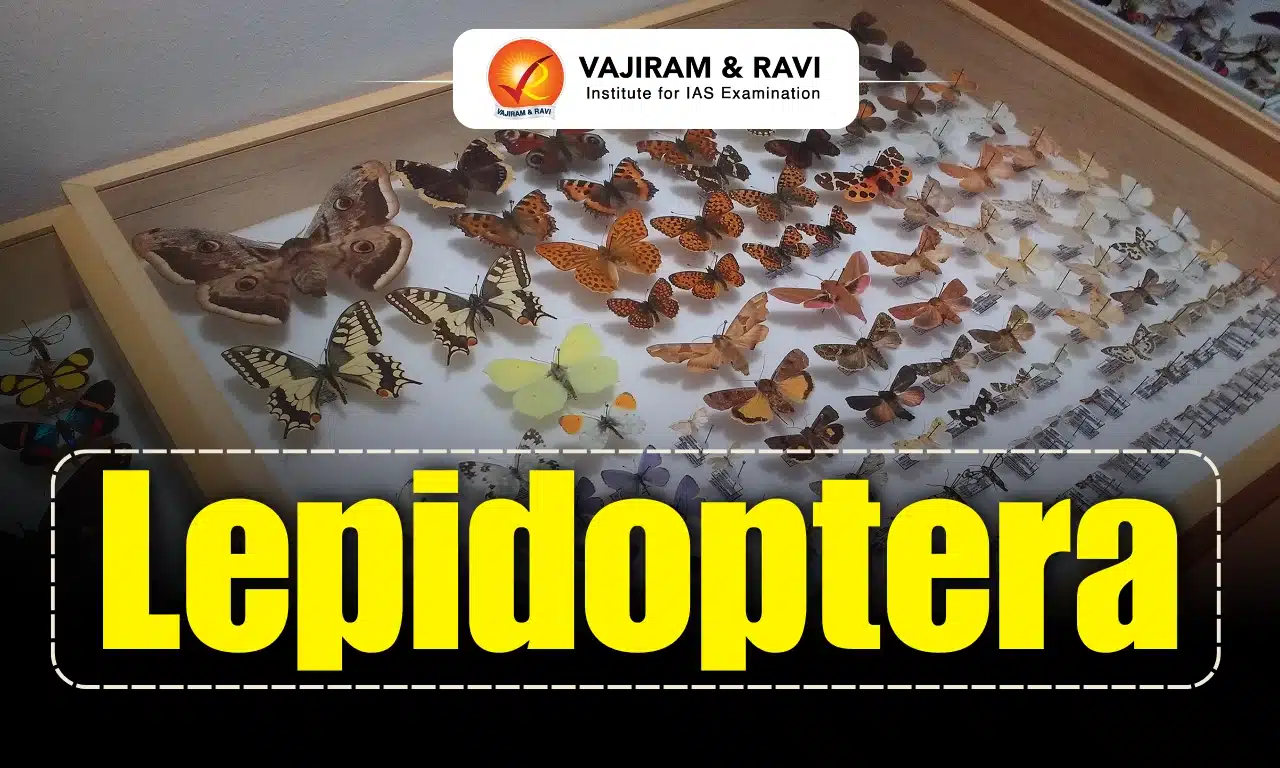
Scientists of the Zoological Survey of India (ZSI) have come out with a detailed Catalogue of Lepidoptera (Butterflies & Moths) of India recently.

About Lepidoptera

  • It is an insect order comprising about 180,000 species of butterflies and moths.
  • This order of insects is second in size only to Coleoptera, the beetles
  • The name ‘’Lepidoptera’’ is derived from the Greek, meaning “scaly winged,” and refers to the characteristic covering of microscopic dustlike scales on the wings. 
  • With the exception of a few moths, all adult lepidopterans have two pairs of wings. 
  • Because of their day-flying habits and bright colors, the butterflies are more familiar than the chiefly night-flying and dull-colored moths, but the latter are far more varied and abundant. 
  • Distribution:
    • Lepidopterans live on every continent except Antarctica. 
    • Though they are far more numerous and diversified in the tropics, some species survive at the limits of polar vegetation. 
  • The life cycle of lepidopterans consists of four stages: egg, larva (caterpillar), pupa, and adult. 
  • They are mostly herbivorous (folivorous) as caterpillars and nectarivorous as adults. 
  • They play an important role in the natural ecosystem as pollinators and serve as primary consumers in the food chain.
  • Conversely, their larvae (caterpillars) are considered very problematic to vegetation in agriculture, as they consume large quantities of plant matter (mostly foliage) to sustain growth. 
  • Silkworm (Bombyx mori), a moth, is the source of commercial silk. 

Catalogue of Lepidoptera (Butterflies & Moths) of India

  • India is home to 13,703 species of lepidoptera, which is about 8.25% of the total lepidoptera found across the globe. 
  • Of the 13,703 species of lepidoptera, 1,417 are butterflies, and the remaining 12,286 are moths.
  • Among the 13,703 species of lepidoptera, the scientists have identified and catalogued 2,205 species of Geometroidea, nocturnal pollinators taking over the “night shift” when daytime butterflies rest. 
    • These 2,205 species account for 8.8% of the world’s known species in this superfamily.

News: TH

Lepidoptera FAQs

Q1: What is Lepidoptera?

Ans: Lepidoptera is an order of insects comprising butterflies and moths.

Q2: What is the meaning of the word "Lepidoptera"?

Ans: It is derived from the Greek meaning "scaly-winged."

Q3: Why are Lepidopterans called "scaly-winged" insects?

Ans: Because their wings are covered with microscopic dust-like scales.

Q4: What are the four stages in the life cycle of Lepidopterans?

Ans: Egg, larva (caterpillar), pupa, and adult.

Amboseli National Park

Amboseli National Park

Amboseli National Park Latest News

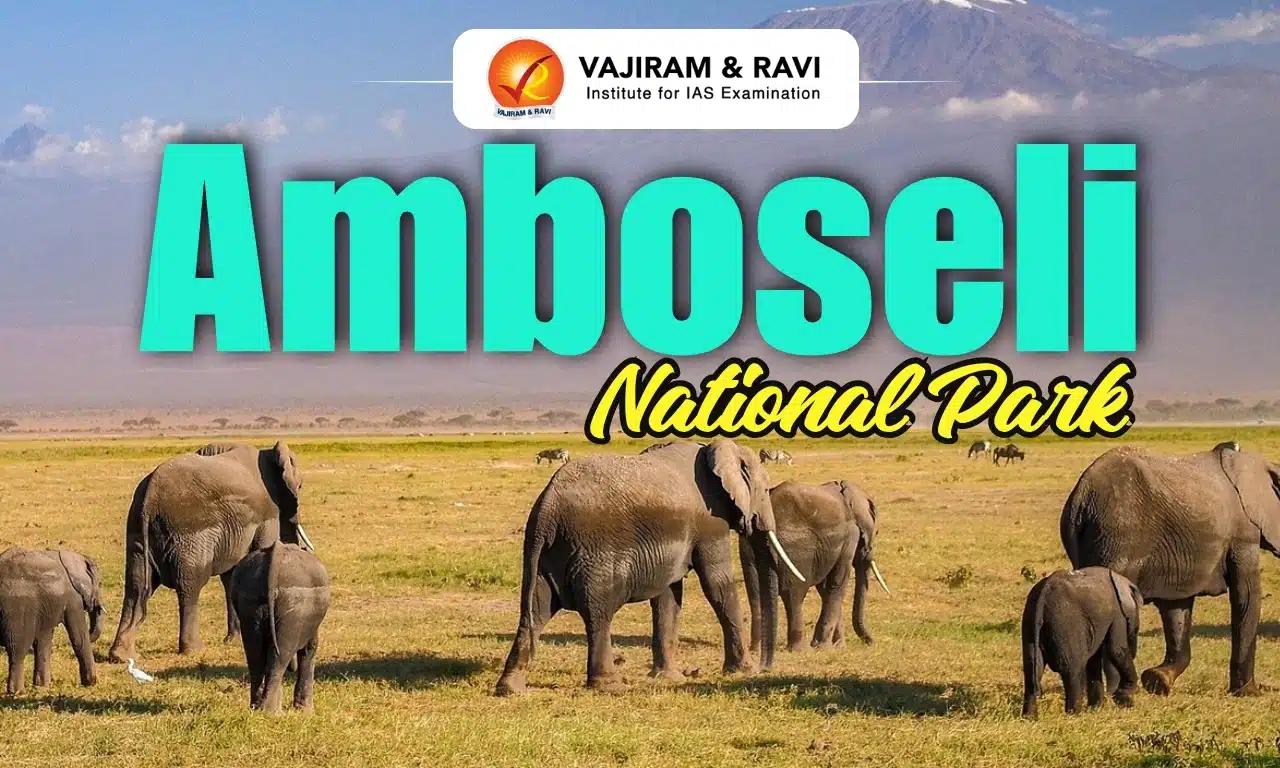
Wildlife authorities in Kenya have launched an investigation after 15 elephants died over the past month in Amboseli National Park, with preliminary tests detecting a potential toxic substance in samples collected from the animals.

About Amboseli National Park

  • It is located in southern Kenya near the border with Tanzania.
  • The name ‘’Amboseli’’ comes from the Maasai (nomadic pastoralists of East Africa) word "Empusel," which means "salty, dusty place." 
  • It covers approximately 392 sq.km. 
  • Though relatively small in size, the park is part of a much larger ecosystem that extends across the Kenya–Tanzania border, linking with protected areas surrounding Mount Kilimanjaro
  • Mount Kilimanjaro, Africa’s highest peak, rises dramatically just beyond the park’s boundary and provides one of the most recognizable backdrops in all of Africa. 
  • Amboseli is best known for its large herds of free-ranging African elephants.
  • The geography of Amboseli is defined by a mix of dry lakebeds, open savannas, acacia woodlands, and lush wetlands fed by underground water flowing from the melting snow of Mount Kilimanjaro. 
  • The remnants of an ancient lake basin form the park’s central plains, which can appear dusty and arid for much of the year. 
  • Biodiversity
    • In addition to its famous elephants, the park is home to lions, cheetahs, hyenas, and a variety of herbivores including zebras, wildebeest, buffalo, and giraffes. 
    • The wetlands attract numerous bird species, making Amboseli an important site for birdwatching, with flamingos, pelicans, and many migratory birds frequently observed. 
  • The Amboseli ecosystem was officially designated a UNESCO Biosphere Reserve in 1991.

News: OUT

Amboseli National Park FAQs

Q1: Where is Amboseli National Park located?

Ans: Amboseli National Park is located in southern Kenya, near the border with Tanzania.

Q2: Which international border ecosystem is Amboseli National Park a part of?

Ans: It is part of the Kenya–Tanzania transboundary ecosystem linked with protected areas around Mount Kilimanjaro.

Q3: Which famous mountain forms the backdrop of Amboseli National Park?

Ans: Mount Kilimanjaro.

Q4: What is Amboseli National Park best known for?

Ans: It is best known for its large herds of free-ranging African elephants.

PowerBank-50

PowerBank-50

PowerBank-50 Latest News

Hyderabad-based space startup TakeMe2Space recently announced that its PowerBank-50 satellite battery pack has now earned the ‘flight heritage’ tag.

About PowerBank-50

  • It is an indigenously built satellite battery pack developed by Hyderabad-based spacetech startup TakeMe2Space.
  • It is India's first indigenously developed satellite battery to earn the coveted 'flight heritage' status. 
  • The recognition comes after the battery pack has successfully completed its first mission aboard Skyroot Aerospace's Vikram-1 on its maiden flight -- Mission 'Aagaman'.
    • Vikram-1 became the first privately developed Indian rocket to reach orbit, making India only the third country in the world, after the United States and China, where a private company has achieved orbital launch capability. 
  • A PowerBank-50 unit powered Cosmoserve Space’s experimental payload aboard the rocket’s Orbital Adjustment Module (OAM) at an altitude of 450 km. 
  • The battery performed as designed throughout launch and in the harsh conditions of space, including vacuum, radiation, and extreme temperature fluctuations. 

PowerBank-50 Features

  • It is a compact lithium-ion battery pack designed specifically for small satellites. 
  • Weighing just 380 grams and roughly the size of a paperback book, it stores over 50 Wh of energy and is equipped with an intelligent battery management system, onboard heaters, and an aluminium flight enclosure. 
  • Multiple PowerBank-50 units can be stacked together to power CubeSats and microsatellites, with an operational life of up to five years in low-Earth orbit

Why ‘Flight Heritage’ Matter?

  • In the satellite industry, ‘flight heritage’ is the hardest credential to earn. 
  • Satellite builders, launch providers, and insurers are deeply reluctant to fly components that have never flown, because a single subsystem failure can end a multi-crore mission. 
  • This creates a well-known barrier for new suppliers: you cannot get ‘heritage’ without flying, and you cannot fly without that tag. 
  • The bar is highest of all for batteries that are among the most safety scrutinised components on any rocket. 
  • Batteries must survive intense launch vibration and shock, then operate reliably in vacuum through extreme hot and cold cycles every orbit.

News: TOI

PowerBank-50 FAQs

Q1: What is PowerBank-50?

Ans: PowerBank-50 is an indigenously developed satellite battery pack designed for small satellites.

Q2: Which company developed PowerBank-50?

Ans: PowerBank-50 was developed by Hyderabad-based spacetech startup TakeMe2Space.

Q3: Why is PowerBank-50 significant?

Ans: It is India's first indigenously developed satellite battery to receive 'flight heritage' status.

Q4: What is meant by 'flight heritage' status?

Ans: It signifies that a space component has successfully operated during an actual space mission.

Ujh Multipurpose Project

Ujh Multipurpose Project

Ujh Multipurpose Project Latest News

The Union Minister of State for Prime Minister’s Office recently reviewed the status and phased implementation roadmap of the Ujh Multipurpose Project in the Kathua district of Jammu and Kashmir.

About Ujh Multipurpose Project

  • It is a multipurpose (Hydropower, Irrigation, and Drinking) project in the Kathua District of Jammu and Kashmir  on the River Ujh, which is a major tributary of River Ravi
  • The project, which was declared as a “national project” in the year 2008, involves the construction of a 116-metre-high concrete-faced rockfill dam.
  • It is expected to generate between 186 MW and 212 MW of hydroelectric power. 
  • It is designed to provide irrigation to nearly 90,000 hectares of agricultural land across Kathua and Samba districts in Jammu and Kashmir, besides Pathankot and Gurdaspur districts in Punjab
  • The project will also supply drinking water to the Kathua district and make water available for industrial use. 
  • Apart from its developmental significance, the project also has a crucial strategic dimension. 
    • Backed by the Ministry of Home Affairs, the project is expected to regulate water flows more effectively and help plug vulnerable cross-border infiltration routes along the riverbed. 
  • After construction of the project, utilization of waters of Eastern Rivers allotted to India as per the Indus Water Treaty would be enhanced by utilizing the flow that presently goes across the border unutilized.

News: NOA

Ujh Multipurpose Project FAQs

Q1: Where is the Ujh Multipurpose Project located?

Ans: The project is located in Kathua district, Jammu and Kashmir.

Q2: On which river is the Ujh Multipurpose Project being constructed?

Ans: It is being constructed on the Ujh River, a major tributary of the Ravi River.

Q3: What type of dam is being constructed under the Ujh Multipurpose Project?

Ans: A 116-metre-high concrete-faced rockfill dam is being constructed.

Q4: What is the expected hydropower generation capacity of the Ujh Multipurpose Project?

Ans: The project is expected to generate 186 MW to 212 MW of hydroelectric power.

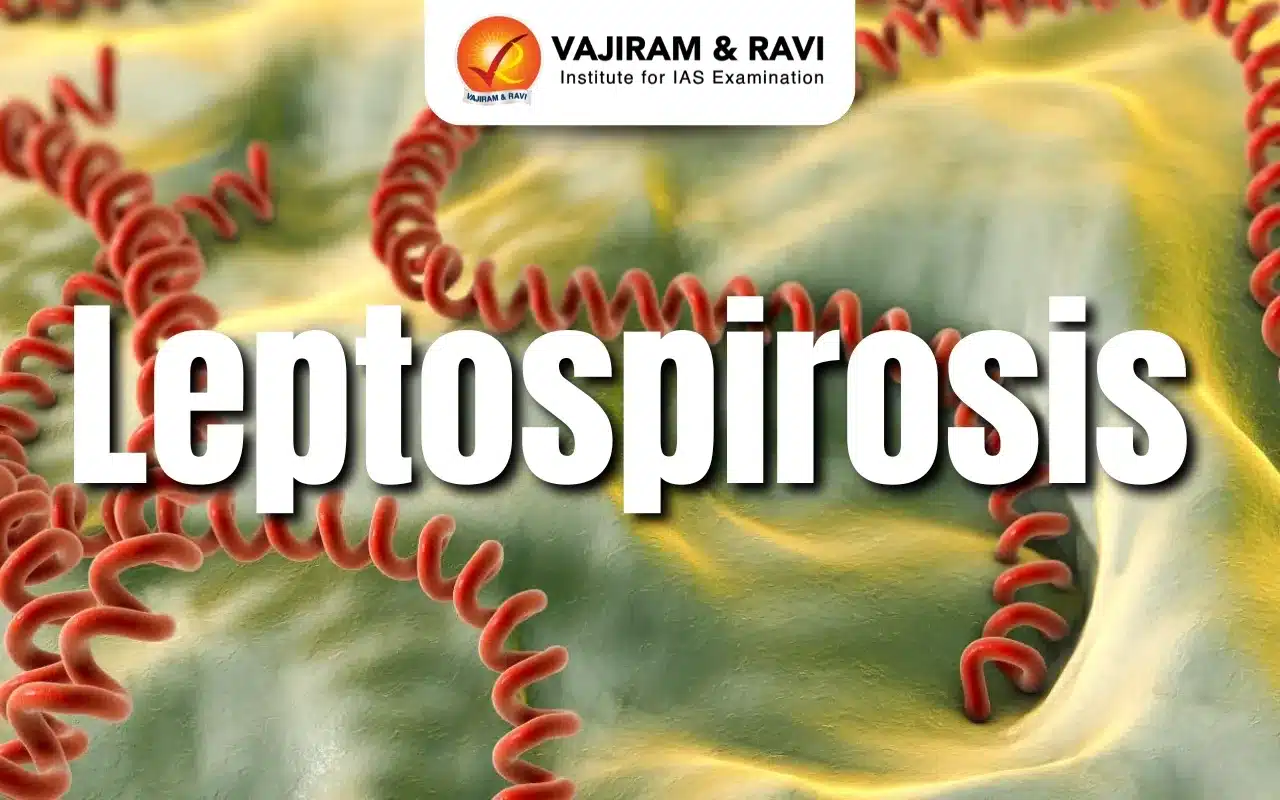
Leptospirosis

Leptospirosis

Leptospirosis Latest News

Leptospirosis, which began to be reported in Kerala since 1989, has been endemic in the State for the past three decades or more and has now become the communicable disease with the highest mortality profile.

About Leptospirosis

  • It is a flu-like bacterial disease that affects both humans and animals. 
  • It is caused by the bacterium Leptospira that can be found in contaminated water or soil. 
  • It is a zoonotic disease. This means it’s transmitted between animals and humans.  

Leptospirosis Transmission

  • Contact with water or soil containing urine or body fluids from infected animals, especially after hurricanes, flooding, or heavy rainfall.
  • Directly touching body fluids from an infected animal.
  • Eating food or drinking water contaminated by the urine of an infected animal.
  • The bacteria enter the body through cuts or abrasions on the skin or through the mucous membranes of the mouth, nose, and eyes. 
  • Person-to-person transmission is rare

Leptospirosis High Risk Groups

  • Leptospirosis has a global distribution but is most common in tropical and subtropical regions, where warm temperatures, high humidity, and heavy rainfall favor the survival of Leptospira bacteria. 
  • People who work outdoors, such as those engaged in hiking, gardening, outdoor cleaning and maintenance, or handling animals, as well as people who participate in outdoor water sports like swimming or wading in contaminated lakes and rivers, are at higher risks of the disease.

Leptospirosis Symptoms

  • Common symptoms include high fever, severe headache, chills, muscle aches, and vomiting. 
  • Other symptoms, including jaundice, red eyes, abdominal pain, diarrhoea, or rash, may also occur. 
  • Without treatment, leptospirosis in people can lead to kidney damage, meningitis (inflammation of the membrane around the brain and spinal cord), liver failure, trouble breathing, and even death. 

Leptospirosis Treatment 

  • It is treated with antibiotics, such as doxycycline or penicillin.  
  • Intravenous (IV) antibiotics may be needed for people who have more severe leptospirosis symptoms.

News: TH

Leptospirosis FAQs

Q1: What is Leptospirosis?

Ans: A bacterial disease

Q2: What are the common symptoms of Leptospirosis?

Ans: Fever, headache, and muscle pain

Enquire Now