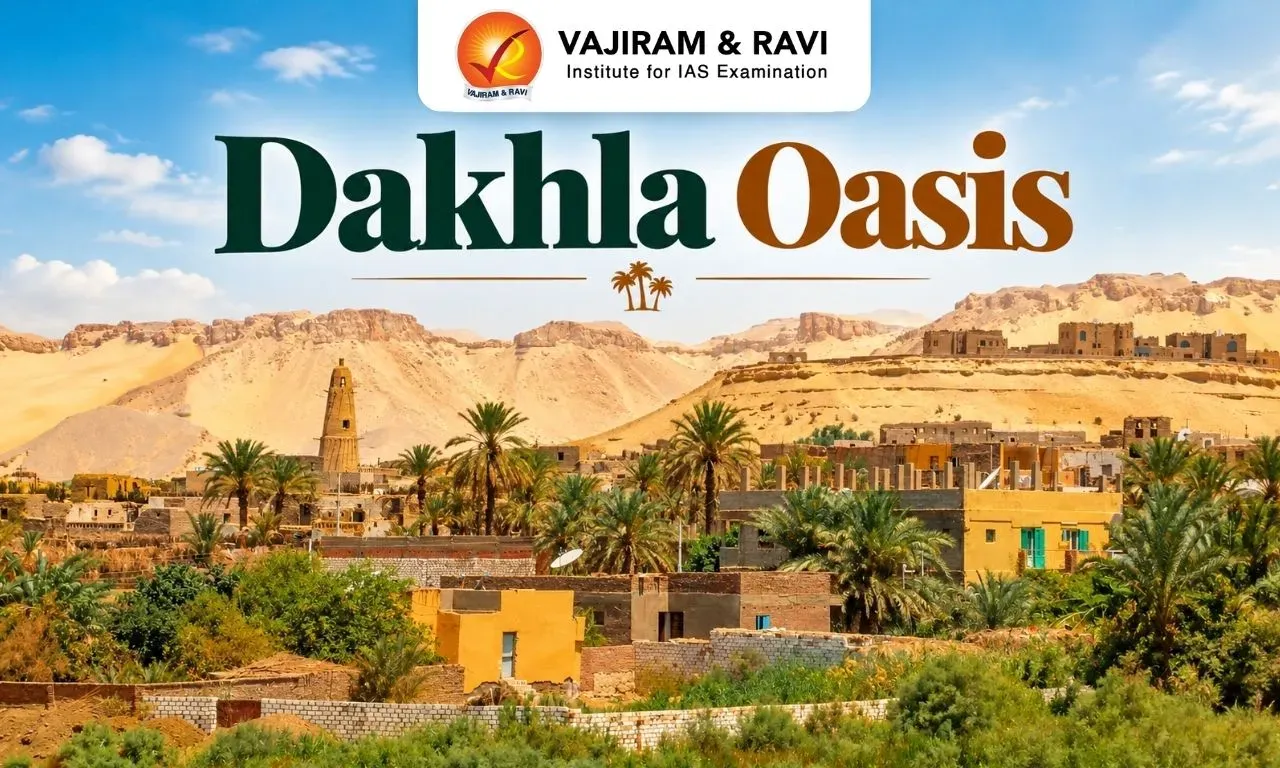
Dakhla Oasis

Dakhla Oasis

Dakhla Oasis Latest News

A rare pyramid-shaped tomb dating to the Roman period has been recently uncovered at Bir Al-Shaghala in Egypt’s Dakhla Oasis.

About Dakhla Oasis

  • It is a desert oasis located west of the Nile River, between Cairo and Luxor in Egypt.
  • It is part of the Western Desert, which covers two-thirds of the land area of the country.
  • It covers an area of about 2,000 sq.km and is known for its rich history and stunning landscapes.
  • Nomadic hunter-gatherers first settled in Dakhla Oasis around 12,000 years ago.  
  • It has long been a crossroads between different parts of North Africa. 
    • Ancient routes passing through the region connected communities travelling between Egypt, the Sahara, and Libya, leaving behind evidence of repeated human activity.
  • Among the most valuable remains are thousands of petroglyphs carved into exposed rock surfaces. 
    • Some depict animals that once lived in a wetter Sahara, while others show people, hunting scenes, and symbols connected to different periods of settlement.
  • It was only connected to the outside world by a road built in the 80s, the so-called Great Desert Loop. 
  • The soil's exceptional fertility makes Dakhla famous. Local farmers grow dates, olives, and other crops that are the foundations of the region's agriculture. 
  • The oasis also features therapeutic hot springs like Bir Tarfawi and Bir Al-Gebel. 
  • Dakhla Oasis is home to several important sites, including Mut, Al-Qasr village, and the Dakhla Oasis Heritage Museum.

What is an Oasis?

  • An oasis is an area made fertile by a source of freshwater in an otherwise dry and arid region. 
  • Oases (more than one oasis) are irrigated by natural springs or other underground water sources. 
  • They vary in size from a cluster of date palms around a well or a spring to a city and its irrigated cropland. 
  • Dates, cotton, olives, figs, citrus fruits, wheat, and corn (maize) are common oasis crops. 
  • Underground water sources called aquifers supply most oases. 
  • In some cases, a natural spring brings the underground water to the surface.  At other oases, manmade wells tap the aquifer.

News: TOI

Dakhla Oasis FAQs

Q1: In which country is Dakhla Oasis located?

Ans: Dakhla Oasis is located in Egypt.

Q2: Why has Dakhla Oasis historically been important?

Ans: It has long been a crossroads between different parts of North Africa.

Q3: What are petroglyphs found in Dakhla Oasis?

Ans: They are carvings made on exposed rock surfaces, depicting animals, people, hunting scenes and symbols from different periods.

Q4: Why is Dakhla Oasis famous for agriculture?

Ans: It is famous for agriculture because of its exceptionally fertile soil.

Q5: Which important settlements and sites are located in Dakhla Oasis?

Ans: Important sites include Mut, Al-Qasr village and the Dakhla Oasis Heritage Museum.
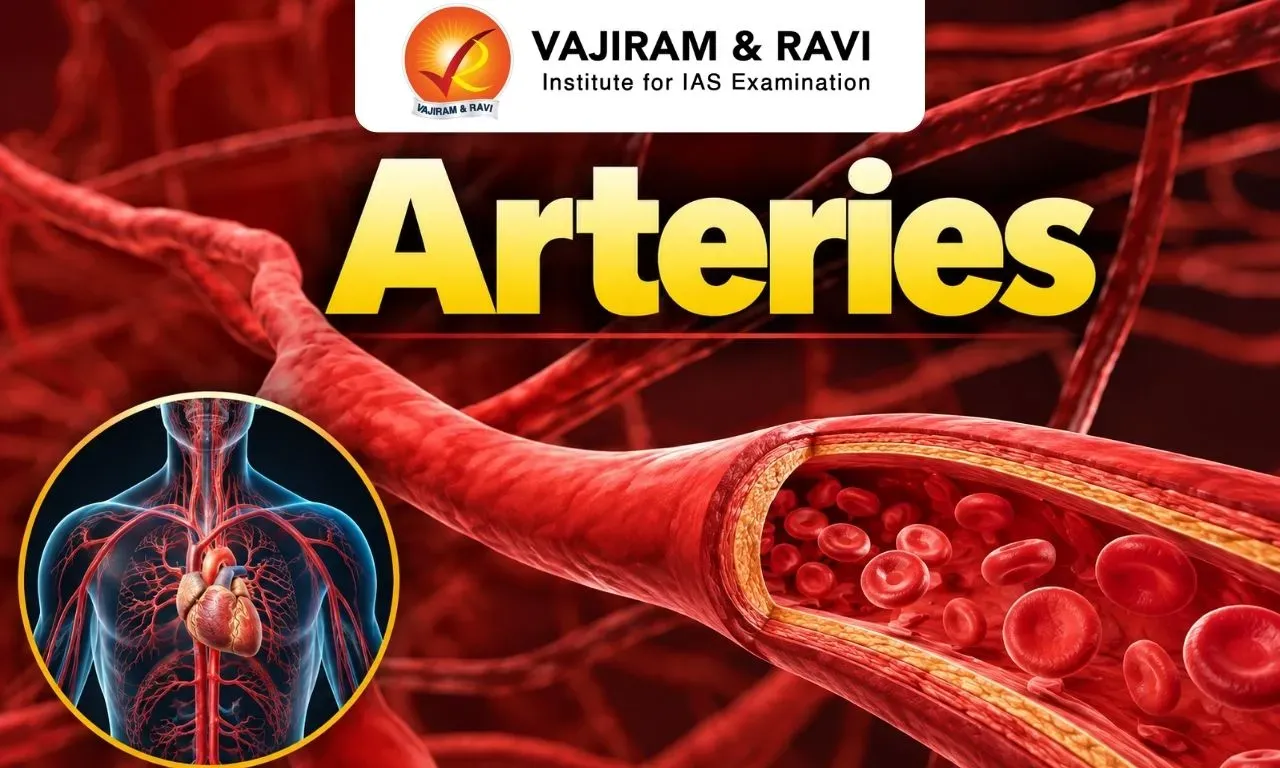
Arteries

Arteries

Arteries Latest News

Pain in your legs when you walk can be a warning sign that the arteries carrying blood to your legs are becoming blocked, a condition called peripheral artery disease (PAD). 

About Arteries

  • Arteries are the blood vessels that bring oxygen-rich blood from your heart to all of your body’s cells. 
  • Arteries make up a major part of the circulatory system, with the veins and heart being the other main components. 
  • They play a crucial role in distributing oxygen, nutrients, and hormones throughout your body.
  • Your heart pumps oxygen-rich blood into the biggest artery in your body — your aorta. 
  • This branches off into parts that feed smaller and smaller arteries, eventually reaching your entire body. 
  • Arteries keep your body alive and healthy by delivering what your cells and tissues need. 
  • Roughly 10% of your body’s blood is in your arteries at any point in time.
  • Your arteries have three layers:
    • Tunica intima, or inner layer: Has tissue with elastic fiber.
    • Tunica media, or middle layer: This is mostly smooth muscle that lets your arteries get tighter or more open as needed.
    • Tunica externa, or outer layer: Interacts with other tissues, including nerves that send commands to pull in or expand.
  • The two types of arteries are:
    • Elastic: Have more elastic tissue than muscular arteries and are located close to your heart. Examples: Aorta and pulmonary artery.
    • Muscular: Have more smooth muscle than elastic arteries. Examples: Femoral, radial, and brachial arteries.
  • Specific arteries provide blood to organs or certain parts of your body, such as:
    • Coronary arteries: Heart.
    • Carotid arteries: Brain, head, face and neck.
    • Vertebral arteries: Brain and spine.
    • Iliac arteries: Pelvis.
    • Femoral artery: Legs.
    • Subclavian arteries: Head, neck, and arms.
    • Celiac and mesenteric arteries: Digestive system.
  • Conditions that can harm your arteries include:
    • Atherosclerosis, a condition in which plaque builds up inside your arteries.
      • Over time, plaque hardens and causes your arteries to narrow. 
      • That limits the flow of oxygen-rich blood to your body.
    • Aneurysm (a stretch or bulge in an artery that can break open).
    • Blood clot.
    • Coronary artery disease (atherosclerosis in your coronary arteries).
    • Carotid artery disease (atherosclerosis in your carotid artery).
    • High blood pressure.
    • High cholesterol.
    • Peripheral artery disease (PAD): A common condition in which narrowed arteries reduce blood flow to the arms or legs. 
    • Vasculitis.

How are Arteries Different from Veins?

  • Arteries:
    • Take oxygen-rich blood away from your heart and distribute it to your whole body.
    • Have strong, muscular walls that can handle the high pressure of blood your heart pumps out with each heartbeat.
    • Don’t need valves because the force of the blood coming from your heart ensures the blood only goes in one direction.
  • Veins:
    • Bring blood back to your heart after your body’s cells and tissues have taken the oxygen out of it. This is known as oxygen-poor blood or deoxygenated blood.
    • Have thinner walls because the pressure inside them isn’t as high as it is in arteries.
    • Have valves inside them to keep blood from moving in the wrong direction.

News: MED

Arteries FAQs

Q1: What are arteries?

Ans: Arteries are blood vessels that carry oxygen-rich blood from the heart to the body's cells.

Q2: Which blood vessel is the largest artery in the human body?

Ans: The aorta is the largest artery in the human body.

Q3: What are the three layers of an artery?

Ans: The three layers are tunica intima, tunica media and tunica externa.

Q4: What is atherosclerosis?

Ans: Atherosclerosis is a condition in which plaque builds up inside the arteries, causing them to narrow over time.

Modhera Sun Temple

Modhera Sun Temple

Modhera Sun Temple Latest News

Prime Minister recently highlighted the thousand-year history of Gujar Modhera Sun Temple, recalling its destruction during invasions and its subsequent reconstruction, while also highlighting the village's transformation into India's first 24x7 s village.

About Modhera Sun Temple

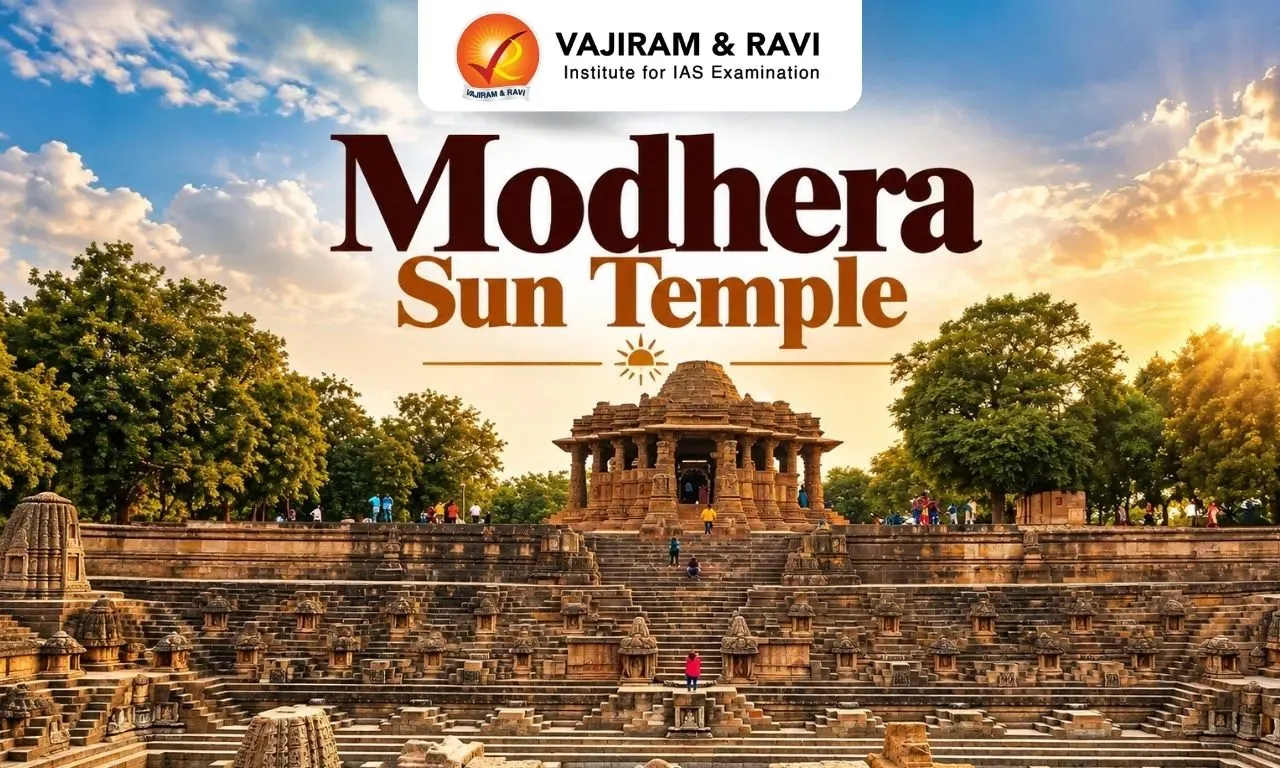
  • It is a Hindu temple dedicated to the solar deity Surya located at Modhera village of the Mehsana district, Gujarat. 
  • It is situated on the bank of the river Pushpavati. 
  • It was built after 1026-27 CE during the reign of King Bhima I of the Chaulukya dynasty.  
  • No worship is offered now and is a protected monument maintained by the Archaeological Survey of India (ASI). 
  • It entered the list of UNESCO World Heritage Sites in the year 2014. 

Modhera Sun Temple Architecture

  • The temple complex is built in Maru-Gurjara style (Chaulukya style).  
  • The temple complex has three components: Gudhamandapa, the shrine hall; Sabhamandapa, the assembly hall; and Kunda, the reservoir. 
  • Each part is aligned along an east-west axis, reinforcing the temple’s connection to the sun’s movement. 
  • The halls have intricately carved exterior and pillars. 
  • Sabha Mandap standing on 52 pillars, depicting the 52 weeks in a year. The intricate carvings on the pillars depict scenes from ancient Indian epics Ramayana, Mahabharata and scenes from the life of Lord Krishna.  
  • The reservoir has steps to reach the bottom and numerous small shrines. 
  • On equinoxes, with the perfect planning and precision of the architecture, sun rays enter the main sanctum. 
  • In those days light was used to further reflect to other idols from the correctly placed diamond on the head of Sun God.
  • The exterior walls are engraved with beautiful intricate carvings.

News: ET

Modhera Sun Temple FAQs

Q1: Where is the Modhera Sun Temple located?

Ans: It is located in Modhera village of Mehsana district, Gujarat.

Q2: On the bank of which river is the Modhera Sun Temple located?

Ans: It is situated on the bank of the Pushpavati River.

Q3: During whose reign was the Modhera Sun Temple built?

Ans: It was built during the reign of King Bhima I of the Chaulukya dynasty.

Q4: Which architectural style is represented by the Modhera Sun Temple?

Ans: It is built in the Maru-Gurjara style, also known as the Chaulukya style.

Polylactic Acid

Polylactic Acid

Polylactic Acid Latest News

Recently, the Union minister for Science and Technology launched the commercial use of bio-based biodegradable plastic based on Polylactic Acid (PLA). 

About Polylactic Acid

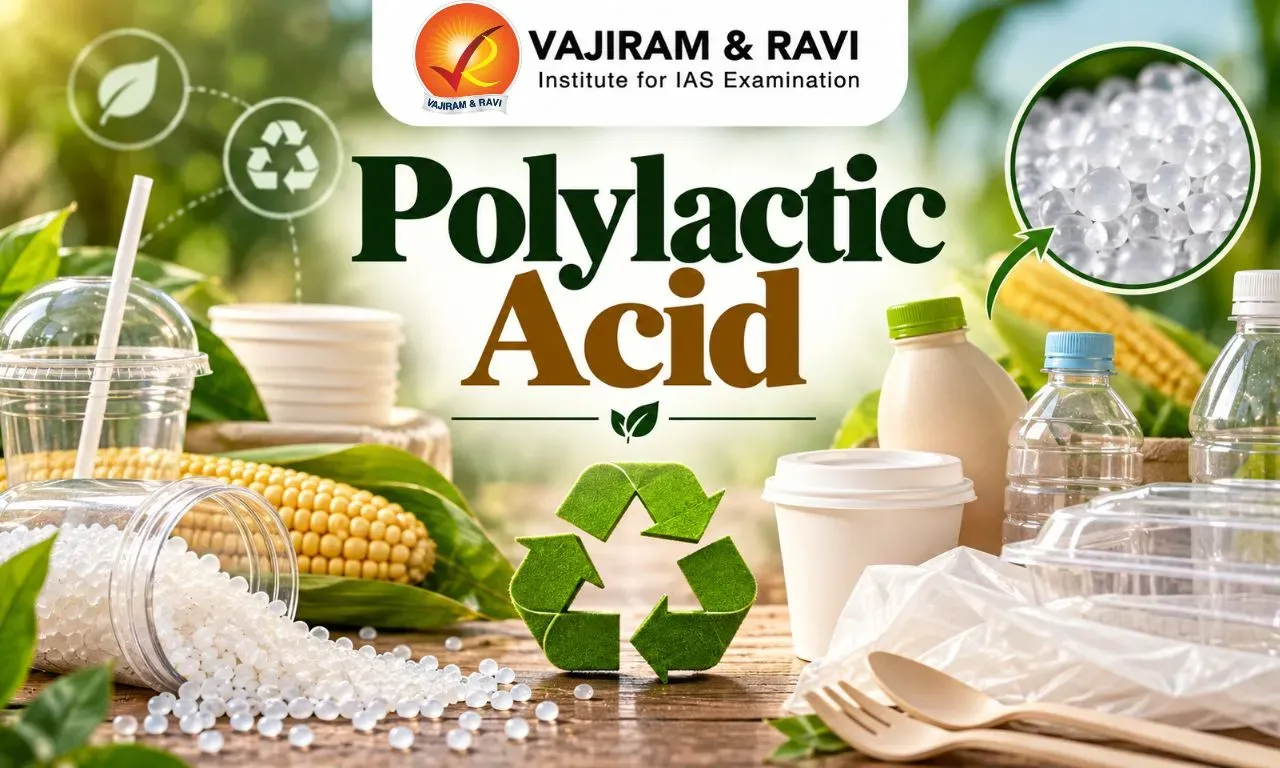
  • It is a biodegradable, thermoplastic polymer derived from renewable resources such as corn starch or sugarcane.
  • It is synthesized through the fermentation of glucose to produce lactic acid, which is then polymerized.
  • Applications: PLA is known for its eco-compatibility and versatility, finding applications in areas like food packaging, medical sutures, and 3D printing.
  • Advantages of Polylactic Acid
    • Reduces Carbon Footprint: Its bio-based origin ensures a reduced carbon footprint and aligns with global sustainability goals.
    • Dual Benefit: PLA’s ability to integrate agricultural waste into the value chain can create dual benefits first with farmers gaining additional income streams, and second is industries achieving a sustainable supply of raw materials.
    • Resource utilization: Integrating PLA production within existing agro-industrial frameworks—such as co-locating bioplastic plants with sugar mills—can optimize resource utilization while reducing waste.

Source: News On Air

Polylactic Acid FAQs

Q1: What is Polylactic Acid?

Ans: It is a biodegradable, thermoplastic polymer derived from renewable resources such as corn starch or sugarcane.

Q2: What are the applications of Polylactic Acid?

Ans: It has applications in areas like food packaging, medical sutures, and 3D printing.

Tetrataenium manipurense

Tetrataenium manipurense

Tetrataenium manipurense Latest News

A team of botanists from Manipur University and Mizoram University has officially identified a local culinary herb recently and named it Tetrataenium manipurense after the state of Manipur.

About Tetrataenium manipurense

  • It is a new plant species from Manipur.
  • Locally known as 'Singjang-kumol' or 'Manshang-nakuppi', the species has been named Tetrataenium manipurense after the state of Manipur. 
  • It is a local culinary herb in Manipur.
  • Despite its long-standing popularity in traditional Manipuri cuisine, the plant previously lacked official recognition in global scientific records. 
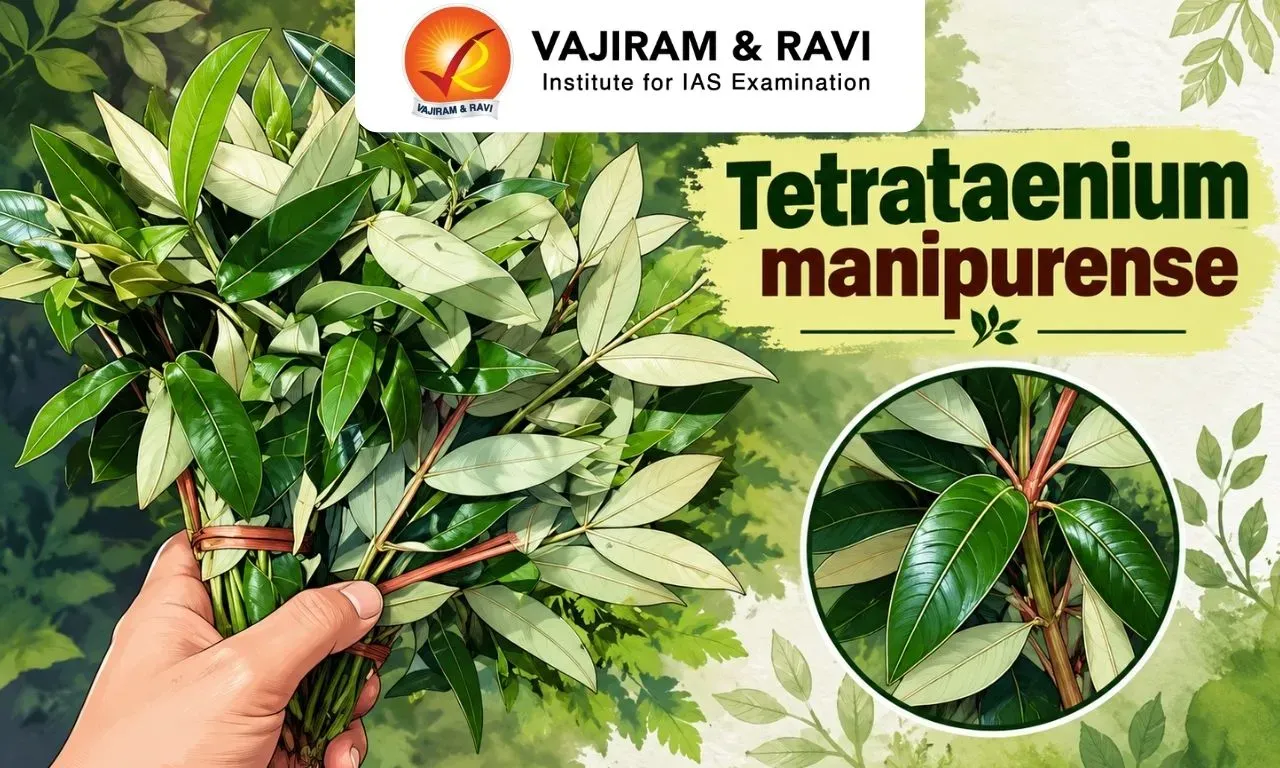
  • It has long, slender, grass-like green leaflets and an exceptionally long cylindrical rootstock that can reach up to 40 centimetres. 
  • The plant also produces stalks measuring 10–20 centimetres that bear small, oblong-oval fruits. 
  • For generations, communities have harvested its aerial shoots, flowers, and basal leaves to season traditional dishes.
  • Local markets in Manipur have been trading this wild aromatic vegetable for generations, where it is typically sold in bundles of fresh green sprigs. 
  • It is provisionally categorised as Least Concern (LC) under the IUCN Red List criteria.

News: NEN

Tetrataenium manipurense FAQs

Q1: What is Tetrataenium manipurense?

Ans: It is a new plant species from Manipur.

Q2: What are the local names of Tetrataenium manipurense in Manipur?

Ans: It is locally known as 'Singjang-kumol' or 'Manshang-nakuppi'.

Q3: What is the culinary significance of Tetrataenium manipurense?

Ans: It is a local culinary herb used in traditional Manipuri cuisine.

Q4: What do the leaves of Tetrataenium manipurense look like?

Ans: It has long, slender, grass-like green leaflets.

Q5: What is the provisional IUCN Red List category of Tetrataenium manipurense?

Ans: It is provisionally categorised as Least Concern (LC) under the IUCN Red List criteria.

Musk Deer

Musk Deer

Musk Deer Latest News

Recently, the Assam Police recovered six musk deer pods from two Arunachal Pradesh-based men during an operation near Guwahati. 

About Musk Deer

  • Musk deer (Moschidae) are small deer-like animals that belong to the family Moschidae.
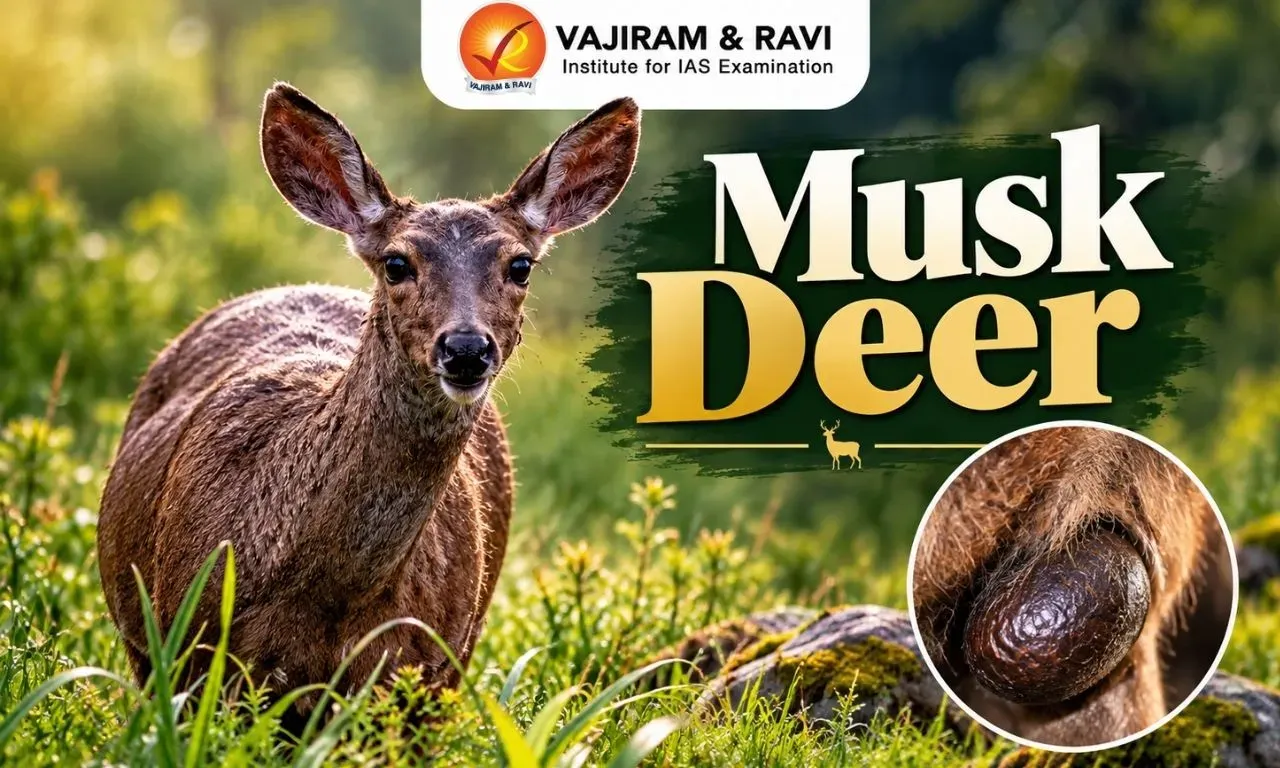
  • Appearance: Its coat is dark brown, mottled with paler, greyer hair underneath. It has whitish markings on its chin and ears.
  • Habitat: They typically inhabit forests and brushlands at intermediate elevations and rocky slopes at altitudes between 2,600 and 3,000 meters.
  • Distribution: They live in highland areas in central and northeastern Asia, particularly in western China, Myanmar and the Himalayas.

Characteristics of Musk Deer

  • They are shy, usually feeding at night, and tend to live alone, occasionally in pairs but never in herds.
  • Musk deer lack antlers.
  • The animal has well-developed side toes that give it a sure-footedness and allow it to scamper around rocks in the snow and even climb trees.
  • Diet:  Their diet includes both browse and graze, and they also consume some mosses and lichens
  • A musk deer pod is a specialised scent gland found in the abdomen of a male musk deer.
  • It produces a strong-smelling, reddish-brown secretion used in traditional perfumes and medicines.
  • A musk gland in males produces a strong scent used for communication/territorial marking.

Conservation Status of Musk Deer

Source: TH

Musk Deer FAQs

Q1: Where do we find Musk Deer?

Ans: They live in highland areas in central and northeastern Asia, particularly in western China, Myanmar and the Himalayas.

Q2: What is the IUCN status of Musk Deer ?

Ans: Endangered

Livestock Insurance Portal

Livestock Insurance Portal

Livestock Insurance Portal Latest News

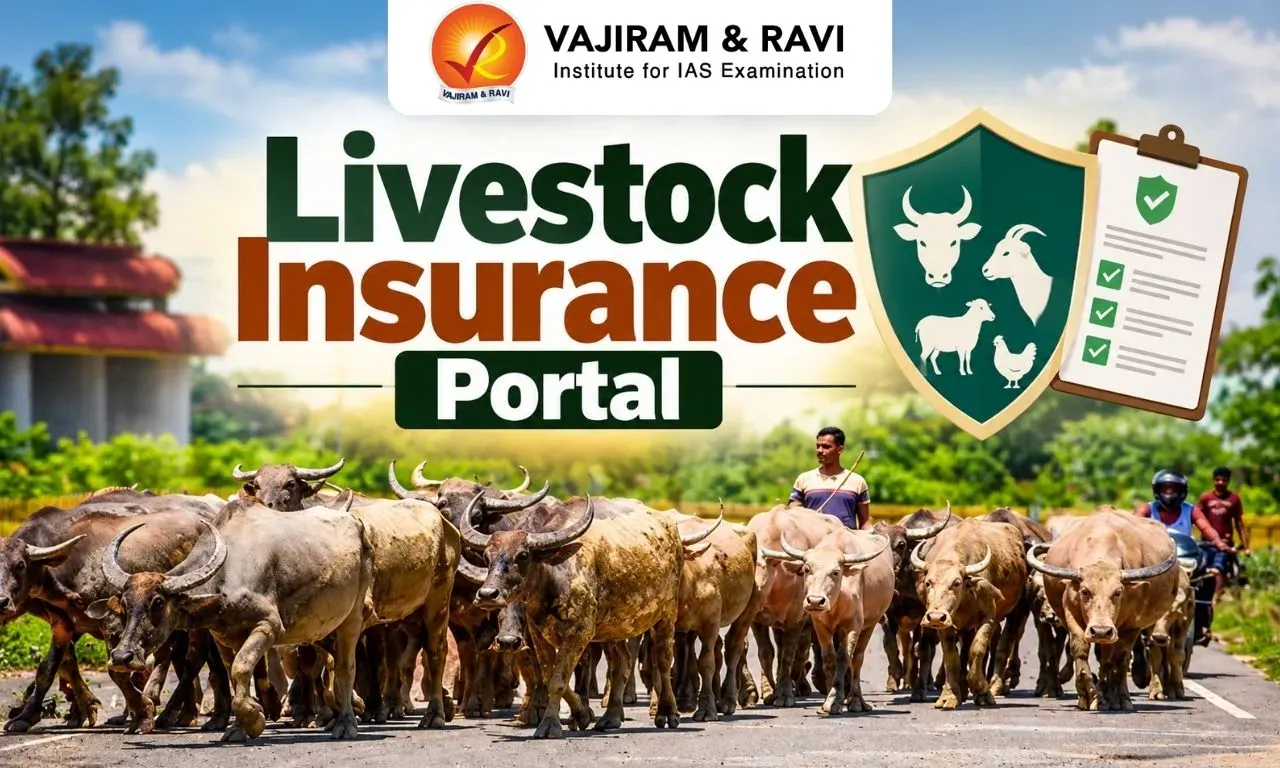
The Department of Animal Husbandry and Dairying will launch the Livestock Insurance Portal in New Delhi. 

About Livestock Insurance Portal

  • It will provide a single, integrated digital platform for livestock insurance.
  • It is aimed at making livestock insurance services more transparent, efficient, accessible and technology-driven.
  • It will strengthen risk protection for livestock farmers and support the sustainability of their livelihoods.
  • It is an initiative of the Ministry of Fisheries, Animal Husbandry and Dairying.
  • Features
    • It enables streamlined policy issuance, claim processing, monitoring and reporting, in case of animals insured under the Livestock Insurance Scheme of the Department of Animal Husbandry & Dairying.
    •  The Portal will also be available in 11 regional languages apart from Hindi and English, enabling livestock farmers to access information and services in languages familiar to them.
    • It will also facilitate better coordination, real-time monitoring and data-driven management of livestock insurance programmes, contributing to improved service delivery across the country.

Source: PIB

Livestock Insurance Portal FAQ's

Q1: What is Livestock Insurance Portal?

Ans: It will provide a single, integrated digital platform for livestock insurance.

Q2: Livestock Insurance Portal is an initiative of which ministry?

Ans: Ministry of Fisheries, Animal Husbandry and Dairying.

Begonia rajvikramanii

Begonia rajvikramanii

Begonia rajvikramanii Latest News

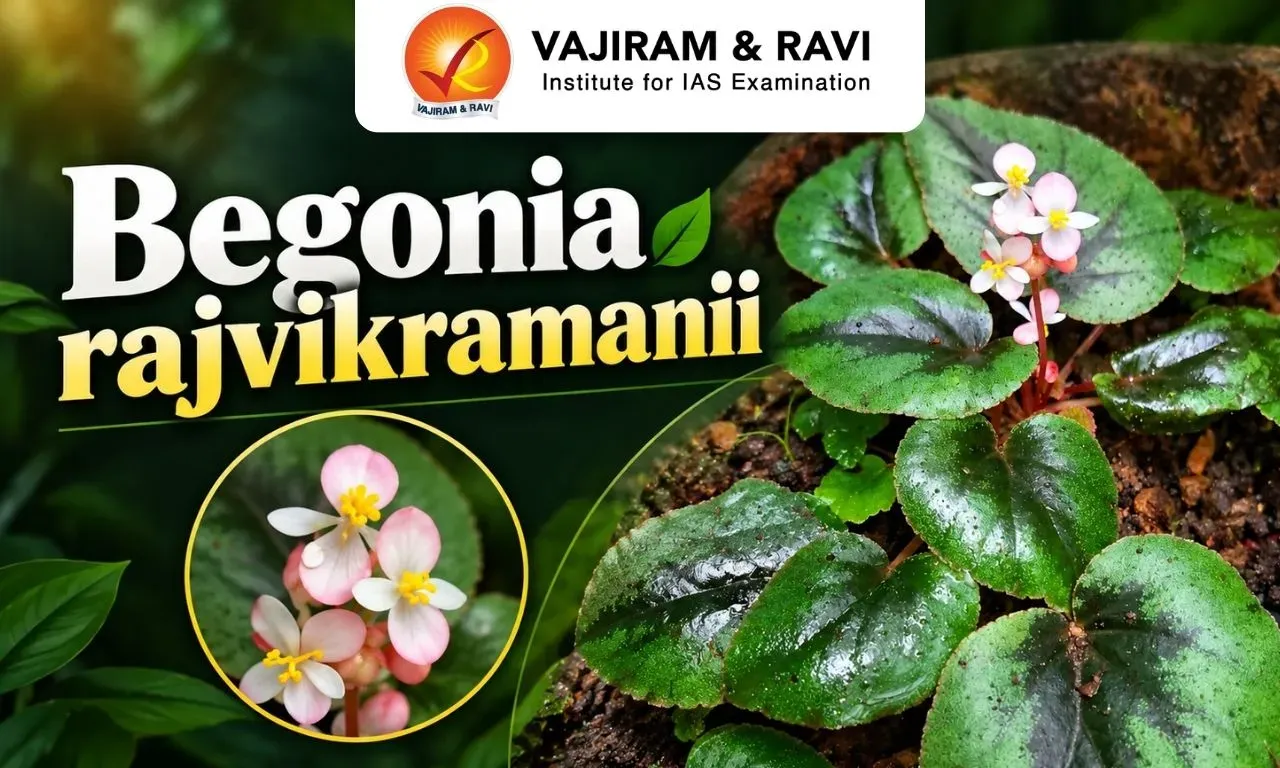
Researchers recently identified a new species of the genus Begonia from the Western Ghats region in Keralam’s Kollam district and named it Begonia rajvikramanii.

About Begonia rajvikramanii

  • It is a new species of perennial flowering plant.
  • It belongs to the genus Begonia in the family Begoniaceae.
    • The genus Begonia is one of the largest flowering plant genera, with 2,200 accepted species, mainly distributed across the tropical and subtropical regions of Africa, Asia, and America.  
  • Begonia rajvikramanii was discovered from the Western Ghats region in Keralam’s Kollam district. 
  • It grows in wet habitats, particularly on rocky cliffs and road-cut walls, at elevations of approximately 200 metres-350 metres 
  • Flowering and fruiting of Begonia rajvikramanii occurs between August and April. 
  • The observed population of this species comprises approximately 200 mature individuals, occupying an area of less than 5 sq.km.
  • It has been assessed as ‘Data Deficient’ (DD), pending comprehensive assessment in the future.

News: TH

Begonia rajvikramanii FAQs

Q1: What is Begonia rajvikramanii?

Ans: It is a newly discovered species of perennial flowering plant.

Q2: Where was Begonia rajvikramanii discovered?

Ans: It was discovered in the Western Ghats region of Kollam district, Keralam.

Q3: What type of habitat does Begonia rajvikramanii prefer?

Ans: It grows in wet habitats, particularly on rocky cliffs and road-cut walls.

Q4: What is the IUCN conservation status of Begonia rajvikramanii?

Ans: It has been assessed as Data Deficient (DD).

Pradhan Mantri Awas Yojana (Gramin)

Pradhan Mantri Awas Yojana

About Pradhan Mantri Awas Yojana

  • Pradhan Mantri Awas Yojana (PMAY) is a credit-linked subsidy scheme initiated to provide affordable housing to low and moderate-income residents across the country.
  • The newly formed government has approved the proposal to provide 3 crore additional rural and urban houses under PMAY.
  • The scheme has two components: PMAY-U for the urban poor and PMAY-G and PMAY-R for the rural poor.

PMAY-U (Urban)

  • Objective: To provide housing for all in urban areas.
  • Beneficiaries: Economically Weaker Section (EWS), Low-Income Group (LIG), and Middle-Income Group (MIG).
  • Subsidy Schemes:
    • Credit Linked Subsidy Scheme: Offers interest subsidy on home loans for EWS, LIG, and MIG categories.
    • In-Situ Slum Redevelopment: Utilizes land as a resource to provide houses to eligible slum dwellers.
    • Affordable Housing in Partnership: Promotes partnerships with public and private sectors to provide affordable housing.
    • Beneficiary-Led Construction: Provides financial assistance to individuals to construct or enhance their own houses.

PMAY-G (Gramin)

  • Objective: To provide a pucca house with basic amenities to all rural families who are homeless or living in kutcha or dilapidated houses.
  • Beneficiaries: Identified using the Socio-Economic and Caste Census (SECC) 2011.
  • Features:
    • Financial Assistance: Rs. 1.2 lakh in plain areas and Rs. 1.3 lakh in hilly, difficult, and Integrated Action Plan (IAP) areas.
    • Construction: Houses are to be constructed by beneficiaries with technical assistance from the government.
    • Convergence with other schemes: Encourages convergence with other schemes like Swachh Bharat Mission (SBM) for toilet construction, and MGNREGA for wage employment.

Source: PIB

Pradhan Mantri Awas Yojana FAQs

Q1: What is a Center Sector Scheme?

Ans: Central Sector Schemes are those that are implemented by a central agency and 100% funded by the centre on subjects within the union list.

Travel & Tourism Development Index

Travel & Tourism Development Index

Travel & Tourism Development Index Latest News

The latest  2026 Travel & Tourism Development Index by the World Economic Forum suggests that travel and tourism conditions have strengthened across the world.

About Travel & Tourism Development Index (TTDI)

  • It is published biennially by the World Economic Forum (WEF). 
  • It has evolved from the Travel & Tourism Competitiveness Index (TTCI), published biennially from 2007 to 2019 by the WEF. 
  • Relaunched in 2022 in its current form, it reflects a broader focus on sustainable and resilient development, beyond competitiveness alone. 
  • TTDI 2026 Highlights:
    • It was published by WEF in collaboration with Zurich Insurance Group.
    • It ranked 110 economies on the factors and conditions that support the development of travel and tourism.
    • Being high on the TTDI does not necessarily mean a country receives the most tourists. 
    • The index is designed to measure how well economies are positioned to support sustainable and resilient tourism development. 
    • Japan moved up two places to take the top spot in the 2026 ranking. It was followed by the US, Spain, Australia, and France. And, Germany, the UK, China, Switzerland, and Italy comprised the top 10.
    • India Rankings:
      • India is ranked 31st, moving up from 39th place in 2024, helped by its low travel costs, cultural resources, and natural attractions.
      • India also ranks among the top 10 economies for the number of World Heritage cultural sites, along with China and Mexico.
      • The report also pointed to some challenges for India. Workforce skills, environmental sustainability, and tourism infrastructure remain areas that need improvement.
    • Tourism conditions improve worldwide:
      • Tourism conditions improved across most economies between 2024 and 2026. 
      • International tourist arrivals reached 1.5 billion in 2025, with arrivals 4.4% higher than pre-pandemic levels.
      • 101 of the 110 economies covered by the index improved their scores during the period. 
      • The average score rose 2.1%, the fastest growth since 2019.
      • China, India, Indonesia, Malaysia, Thailand, Viet Nam, the Philippines, Türkiye, Mexico, and Brazil, the 10 largest non-high-income travel and tourism economies account for more than 28% of global direct travel and tourism GDP, with their share projected to rise to 35% by 2035.

News: TP

Travel & Tourism Development Index FAQs

Q1: Who publishes the Travel & Tourism Development Index (TTDI)?

Ans: The World Economic Forum (WEF) publishes the TTDI.

Q2: What was the top-ranked country in the Travel & Tourism Development Index (TTDI) 2026?

Ans: Japan was ranked first.

Q3: What was India's rank in the Travel & Tourism Development Index (TTDI) 2026?

Ans: India was ranked 31st.

Q4: Which factors helped India improve its Travel & Tourism Development Index (TTDI) ranking in 2026?

Ans: India's low travel costs, cultural resources and natural attractions helped improve its ranking.

Kaladi

Kaladi

Kaladi Latest News

The Union Minister of State in PMO recently stated that the “Kaladi”, the GI-tagged traditional dairy product of the Udhampur district of Jammu and Kashmir, has reached the commercial threshold for local and global consumption.

About Kaladi

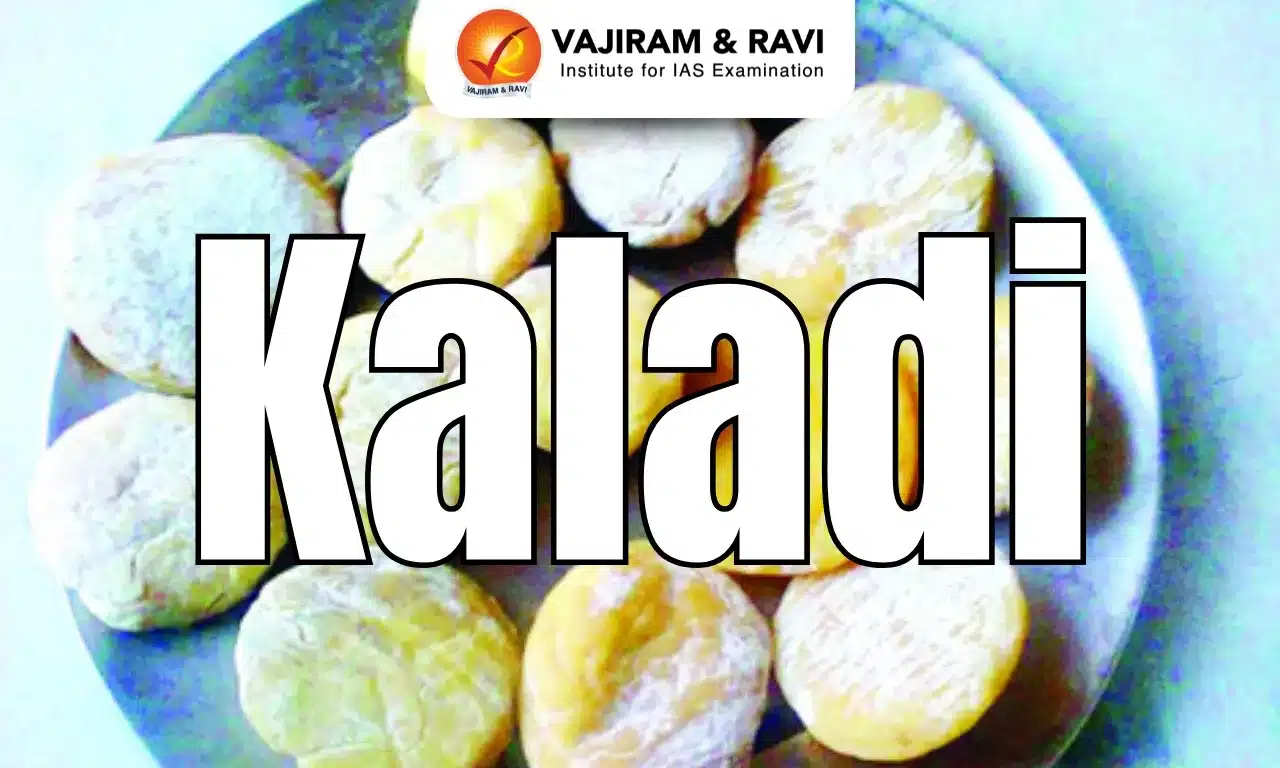
  • Known as Kalari cheese or the “mozzarella of the Himalayas”, it is a traditional dairy product originated from the Ramnagar area, Udhampur district of Jammu & Kashmir.
  • The local delicacy is traditionally made by Gujjar shepherds in the mountains of Kashmir. 
  • It is a traditionally ripened cheese made from cow’s or goat’s milk. 
  • Kalari was developed to preserve excess milk during the summer months, when the heat would make it difficult to store fresh milk. 
  • Preparation:
    • Traditionally handmade, the milk is churned with a wooden spoon, after which sour whey—a byproduct of cheesemaking—is added to the warm milk to curdle it. 
    • The milk solids are separated from the whey liquid and hand-pressed into small discs.
    • These discs are then sun-dried for several days to dry the outer layer, while the interior remains soft and moist. 
  • It has a mild flavor and a dense, stretchy texture.  
  • It develops a golden, crispy crust when pan‑seared while staying gooey inside.  
  • To maintain freshness, Kalari is kept frozen in sealed packets. 
  • It received the Geographical Indication (GI) tag in 2023.

News: GK

Kaladi FAQs

Q1: What is Kaladi?

Ans: Kaladi, also known as Kalari cheese, is a traditional dairy product from Jammu & Kashmir.

Q2: Which community traditionally makes Kaladi?

Ans: Gujjar shepherds traditionally make Kaladi in the mountains of Kashmir.

Q3: Why was Kaladi traditionally developed?

Ans: It was developed to preserve excess milk during the summer months, when storing fresh milk was difficult.

Q4: What happens to the texture of Kaladi during sun-drying?

Ans: The outer layer becomes dry, while the interior remains soft and moist.

Q5: How is Kaladi stored to maintain its freshness?

Ans: Kaladi is kept frozen in sealed packets to maintain freshness.

Enquire Now