Mawmluh Cave in Meghalaya Faces Threat from Climate Change and Mining

Mawmluh Cave

Mawmluh Cave Latest News

Climate change and mining are threatening Mawmluh Cave fragile cave systems, altering rainfall and groundwater patterns while destroying geological formations and underground ecosystems.

About Mawmluh Cave

  • Location: It is located at Sohra in the East Khasi Hills district of Meghalaya.
  • It is locally known as Krem Mawmluh.
  • It was the first cave that was explored by a British official Lieutenant Yule in 1844.
  • It is one of the longest and deepest caves in India, holds evidence of the events in the geological history of Earth. 
  • At 7.2 km in length, it is the fourth longest cave in the Indian subcontinent.
  • The cave is part of the Meghalayan Age, the latest age in Earth’s official geological timeline, which began around 4,200 years ago and continues today.
  • Geological Structures
    • It is known for its stalagmite structures and other rock formations.
    • The cave has several entrances, has formed at the junction between an early Eocene dolomite and a sandstone formation.
    • It contains numerous stalactites, stalagmites, columns and drapes, collectively termed speleothems. 
  • Recognition: In 2022, it was recognised among the First 100 Geological Heritage Sites by the International Union of Geological Sciences (IUGS).

Source: IM

Mawmluh Cave FAQs

Q1: Where is Mawmluh Cave located?

Ans: Meghalaya

Q2: What type of geographic structure is found in Mawmluh Cave?

Ans: It is known for its stalagmite structures and other rock formations.

Kerala Researchers Discover Five New Nematode Species in Coastal Mangrove Sediments

Nematode

Nematode Latest News

Researchers from the Department of Aquatic Biology and Fisheries, University of Kerala, have discovered five new species of free-living nematodes in mangrove sediments along the Keralam coast.

About Nematode

  • These are any worm of the phylum Nematoda.
  • They occur as parasites in animals and plants or as free-living forms in soil, fresh water, marine environments, and even such unusual places as vinegar, beer malts, and water-filled cracks deep within Earth’s crust.
  • Features
    • Appearance: Nematodes are bilaterally symmetrical, elongate, and usually tapered at both ends.
    • Some species possess a pseudocoel, a fluid-filled body cavity between the digestive tract and the body wall.
  • Distribution: They have been reported from every continent on earth and occur in deserts, swamps, the oceans, the tropics and Antarctica.
  • Significance of marine nematodes
    • Nutrient Cycling: Breaking down organic waste and recycling essential nutrients back into the ocean.
    • Sediment Health: Maintaining the stability and productivity of coastal sediments.
    • Bio-Indicators: Serving as vital markers for environmental health and climate change impact.

New Nematode Species

  • These were collected from mangrove-associated sediments of the Kerala coast.
  • These news species are named as
    • Pseudochromadora coronate, P. cryptica, and P. kairali from the mangrove forests of Sambranikodi, Kollam, and Pseudochromadora kandeli and P. longicaudata
  • Marine nematodes are free-living - meaning they are not parasites and generally measure a few millimetres in length.
  • They abundantly inhabit marine and estuarine sediments, playing important ecological roles in organic matter decomposition and nutrient cycling,

Source: TH

Nematodes FAQs

Q1: What are Nematodes?

Ans: These are any worm of the phylum Nematoda.

Q2: Where do we find Nematodes?

Ans: They have been reported from every continent on earth and occur in deserts, swamps, the oceans, the tropics and Antarctica.

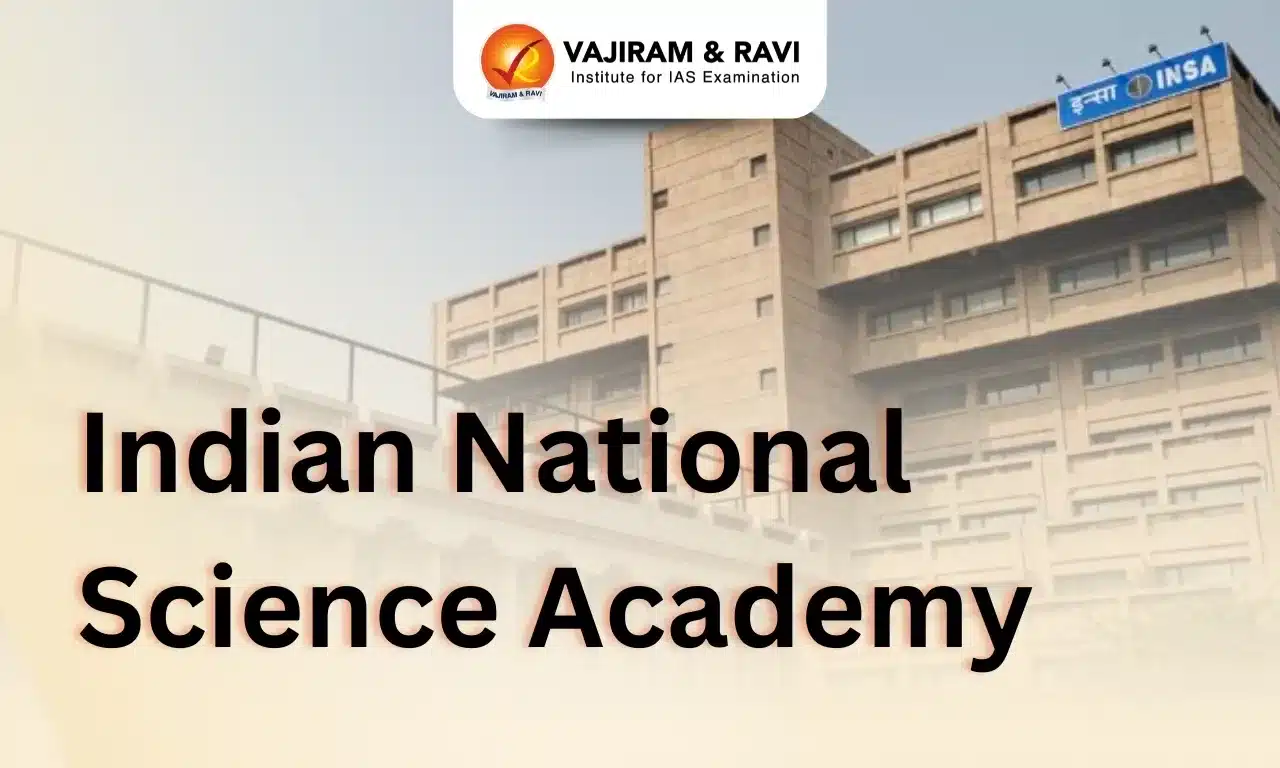
Indian National Science Academy Endorses G20 Science Academies’ S20 Statement 2026

Indian National Science Academy (INSA)

Indian National Science Academy Latest News

Recently, the Indian National Science Academy (INSA) participated in the S20 2026 process and endorsed the Joint S20 Statement released by the science academies of the G20 countries.  

About Indian National Science Academy  

  • It was established in January 1935 for promoting science in India and harnessing scientific knowledge for the cause of humanity and national welfare.
  • Background
    • It was earlier known as the National Institute of Sciences of India (NISI)
    • It was inaugurated on 7 January 1935 at Calcutta and functioned with its headquarters at Asiatic Society of Bengal till 1951 and thereafter shifted to Delhi.
  • Objectives
    • Promotion of scientific knowledge in India, including its practical application to problems of national welfare.
    • Coordination among Scientific Academies, Societies, Institutions, Government Scientific Departments, and Services.
    • To publish such proceedings, journals, memoirs, and other publications as may be found desirable.
    • To promote and maintain liaison between Science and Humanities.
    • To secure and manage funds and endowments for the promotion of science.
  • Senior scientists are honoured through election to its Fellowship.
  • The Academy has established exchange programmes with different overseas academies to facilitate visits of Indian scientists to research institutions abroad and of foreign scientists to India for lectures/scientific discussions.
  • It was designated as the adhering organization in India to the International Council for Science (ICSU) on behalf of the Government of India in January 1968.

Source: PIB

Indian National Science Academy FAQs

Q1: When was Indian National Science Academy established?

Ans: It was established in January 1935.

Q2: What is the aim of Indian National Science Academy ?

Ans: For promoting science in India and harnessing scientific knowledge for the cause of humanity and national welfare.

Israel Unveils SUPER ICE Cruise Missile with 454 kg Warhead, Four Times ICE BREAKER Payload

Super Ice Missile

Super Ice Missile Latest News

Israeli defense company Rafael Advanced Defense Systems recently unveiled SUPER ICE, a new long-range cruise missile carrying a 454 kg warhead, four times heavier than the payload on its ICE BREAKER predecessor.

About Super Ice Missile

  • It is a long-range cruise missile developed by Israeli defense company Rafael Advanced Defense Systems. 
  • The missile is part of Rafael’s relatively new group of cruise missiles. 
    • The other members of the family include Sea Breaker, which was introduced in 2021, and Ice Breaker, which was introduced in 2023.  
  • Super Ice is designed to conduct long-range stand-off strikes against high-value strategic targets, military facilities, and air-defense systems. 
  • It has launch options spanning aircraft, ground-based systems, and naval platforms. 

Super Ice Missile Features

  • It is equipped with a 454 kg warhead compatible with the MK83 (a US-made aerial bomb).
  • It is equipped with an autonomous navigation system that allows it to fly at low altitudes while following the terrain.
  • For target acquisition, the missile uses an electro-optical system featuring high-precision image matching technology.
    • Image-matching guidance allows the missile to compare images captured by its onboard sensors with reference imagery to help determine its position and identify its intended target.  
    • This is particularly useful when satellite navigation signals are disrupted or unavailable. 
  • The company has withheld its exact range and speed, but the new missile is said to be faster and has a longer range than the ICE BREAKER, which has a range of up to 300 km.

News: IE

Super Ice Missile FAQs

Q1: What is the Super Ice missile?

Ans: It is a long-range cruise missile developed by Israeli defence company Rafael Advanced Defense Systems.

Q2: What is the primary objective of the Super Ice missile?

Ans: To conduct long-range stand-off strikes against high-value strategic targets, military facilities and air-defence systems.

Q3: What is the warhead capacity of the Super Ice missile?

Ans: It is equipped with a 454 kg warhead compatible with the MK83 (a US-made aerial bomb).

Q4: What type of navigation system is used by the Super Ice missile?

Ans: An autonomous navigation system that enables it to fly at low altitudes while following the terrain.

Q5: Which guidance technology is used by the Super Ice missile for target acquisition?

Ans: An electro-optical system featuring high-precision image-matching technology.

Cabinet Approves ₹3,230 Crore Yuge Yugeen Bharat Museum in Delhi’s North and South Blocks

Yuge Yugeen Bharat Museum

Yuge Yugeen Bharat Museum Latest News

The Cabinet Committee on Economic Affairs recently approved a 3,230-crore project to develop the Yuge Yugeen Bharat Museum in the historic North and South Block buildings in New Delhi.

About Yuge Yugeen Bharat Museum

  • It is envisioned as a landmark civilisational museum showcasing the continuity, diversity, and richness of India’s civilisational heritage through an integrated narrative of its tangible and intangible cultural heritage. 
  • It will be developed by the Ministry of Culture through the adaptive reuse of the historic North Block and South Block buildings in New Delhi.
  • It aims to transform the two prominent government buildings into a national institution highlighting the continuity, diversity, and richness of India's civilisational heritage.
  • It is an integral part of the Central Vista Redevelopment Project.
  • The project draws inspiration from France's 'Grands Projets' initiative, under which government buildings were repurposed into major cultural spaces.
  • Features:
    • Spread over a proposed built-up area of approximately 1,78,509 square metres, the museum will integrate contemporary museum practices, immersive technologies, and visitor-centric interpretation. 
    • It is going to be the museum with the largest display area in the world.
    • It will present India’s civilisational journey through curated thematic galleries, exhibitions, and interpretation of its diverse cultural traditions, knowledge systems, artistic practices, and heritage.
    • The project encompasses gallery development, collection storage and conservation facilities, integration of technologies and immersive experiences, landscaping, intelligent building systems, and associated infrastructure.
  • Implementation Strategy and Targets:
    • The project will be implemented in a phased manner over FY 2026-27 to FY 2030-31. 
    • The first inaugural gallery on the theme of Adornment is expected to open to the public in the North Block in the latter part of 2027.
    • A modular approach is being formulated to add more galleries.
    • Other galleries are being developed on themes such as Architecture and Cityscapes, Mathematics and Astronomy, Languages and Scripts, Faith and Spirituality, and Bharat Connects – Trade and Ideas, among others.
    • Around 1.8 million objects have been identified from the National Museum and other museums under the Ministry of Culture, 52 ASI site museums, state museums, and private collections for the proposed museum.

News: TH

Yuge Yugeen Bharat Museum FAQs

Q1: What is the Yuge Yugeen Bharat Museum?

Ans: It is a landmark civilisational museum showcasing the continuity, diversity and richness of India's civilisational heritage.

Q2: Where is the Yuge Yugeen Bharat Museum being developed?

Ans: In New Delhi, through the adaptive reuse of the historic North Block and South Block buildings.

Q3: Which country's initiative inspired the Yuge Yugeen Bharat Museum project?

Ans: France's 'Grands Projets' initiative.

Q4: What is the key distinction of the Yuge Yugeen Bharat Museum in terms of display area?

Ans: It is envisioned to have the largest museum display area in the world.

Scientists Discover Disporopsis crispata in Arunachal Pradesh, Marking Genus’ First Record in India

Disporopsis crispata

Disporopsis crispata Latest News

Researchers recently discovered a new flowering plant species named Disporopsis crispata in Arunachal Pradesh's Changlang district, marking the first recorded occurrence of the genus Disporopsis in India.

About Disporopsis crispata

  • It is a new species of flowering plant.
  • It was discovered in the Vijoynagar area, Changlang district of Arunachal Pradesh. 
  • It grows on damp slopes in temperate forests dominated by mixed rhododendron and bamboo vegetation, at elevations of 2,500-2,800 metres. 
  • It marks the first recorded occurrence of the genus Disporopsis in India. 
  • The discovery is significant, as the genus Disporopsis, comprising around 12 known species, was previously recorded mainly in Myanmar, China, Taiwan, the Philippines, and other parts of Southeast Asia. 
  • Disporopsis crispatta is distinguished by its strongly wavy, crinkled leaf margins, reddish stems, and white-and-green flowers. 
  • Its stems grow between 30 and 80 cm tall, while its lance-shaped leaves measure 5–15 cm in length. 
  • The plant produces fleshy white fruits containing three to eight seeds. 
  • Researchers named the species crispata in reference to the distinctive crinkled or undulating edges of its leaves. 
  • The plant flowers between May and June, with fruiting recorded from July to December.

News: IT

Disporopsis crispata FAQs

Q1: What is Disporopsis crispata?

Ans: Disporopsis crispatta is a newly discovered species of flowering plant.

Q2: In which Indian state was Disporopsis crispatta discovered?

Ans: Arunachal Pradesh.

Q3: In which type of habitat does Disporopsis crispatta grow?

Ans: Damp slopes in temperate forests dominated by mixed rhododendron and bamboo vegetation.

Q4: What are the distinctive morphological features of Disporopsis crispatta?

Ans: Strongly wavy and crinkled leaf margins, reddish stems, and white-and-green flowers.

Three Maharashtra Beaches Receive Blue Flag Certification for First Time in 2026-27

Blue Flag Certification

Blue Flag Certification Latest News

Three beaches in Maharashtra—Ladghar and Guhagar in Ratnagiri district and Shrivardhan in Raigad district — recently received the international Blue Flag certification for the 2026–27 season, marking the first time beaches from the State have secured the recognition.

About Blue Flag Certification

  • It is a globally recognized eco-label accorded by the Foundation for Environment Education in Denmark (FEE).
  • It is one of the world’s most recognised voluntary awards for beaches, marinas, and sustainable tourism boats.
  • The Blue Flag Programme started in France in 1985. It has been implemented in Europe since 1987 and in areas outside of Europe since 2001. 
  • It promotes sustainable development in freshwater and marine areas.
  • The award encourages local governance bodies, including Panchayats, Municipalities, district and state administrations, to commit to sustainable coastal development. 
  • The candidate beaches applying for the Blue Flag award are evaluated based on their compliance to the 33 international criteria in four major heads: environmental education and information, bathing water quality, environment management and conservation, and safety and services in the beaches.  
  • Currently there are over 5,000 Blue Flag sites worldwide across 51 countries.
  • Of all Blue Flag-certified sites worldwide, 68.6 percent sit in just six countries. Spain leads the world with 794 certified sites, followed by Greece (658), Türkiye (628), Italy (612), France (488), and Portugal (438). 
  • Chandrabhaga Beach, located on the Konark coast of Odisha, was the first beach in India to receive the Blue Flag Certification in 2018. It was also the first beach in Asia to receive this certification. 
  • The Centre for Environment Education (CEE) is the National Operating Agency for the Blue Flag in India. 

Key Facts about Foundation for Environment Education in Denmark 

  • It is a leading international non-governmental organisation dedicated to promoting sustainable development through environmental education. 
  • Established in 1981 and headquartered in Copenhagen, Denmark, FEE works with a global network of over 110 member organisations in more than 85 countries.  
  • FEE empowers people to rise to the most defining challenges of our time: the escalating climate crisis, the devastating loss of biodiversity, and the relentless tide of environmental pollution. 
  • FEE’s work is delivered through five internationally recognised programmes:
    • Green Key– an international eco-label for tourism and hospitality that promotes sustainable business practices.
    • Blue Flag– a leading eco-label for beaches, marinas, and tourism boats that meet stringent environmental and safety criteria.
    • Eco-Schools– the world’s largest sustainable schools programme, empowering students to drive environmental action in their schools and communities.
    • Young Reporters for the Environment (YRE)– a network that supports young people to investigate environmental issues and propose solutions through journalism, photography, and video.
    • Learning about Ecosystems and Forests (LEAF)– a programme that promotes outdoor, nature-based learning focused on forests and ecosystems.
    • Green Key Indonesia operates under this global Green Key programme, ensuring that certified establishments in Indonesia follow criteria and processes that are aligned with FEE’s internationally benchmarked standards.

News: TH

Blue Flag Certification FAQs

Q1: What is Blue Flag Certification?

Ans: It is a globally recognised eco-label awarded to beaches, marinas and sustainable tourism boats that meet specified environmental and sustainability standards.

Q2: Which organisation awards the Blue Flag Certification?

Ans: The Foundation for Environmental Education (FEE), based in Denmark.

Q3: What is the primary objective of the Blue Flag Programme?

Ans: To promote sustainable development in freshwater and marine areas.

Q4: Which country has the highest number of Blue Flag-certified sites worldwide?

Ans: Spain.

Q5: Which beach was the first in India to receive Blue Flag Certification?

Ans: Chandrabhaga Beach in Odisha.

Scientists in Spain Develop Rechargeable Battery Using Vitamin B12 as Catalyst

Vitamin B12

Vitamin B12 Latest News

Researchers in Spain recently made a rechargeable battery that uses vitamin B12 as a catalyst.

About Vitamin B12

  • Vitamin B12, also called cobalamin, is a water-soluble vitamin. 
  • It has the largest and most complex chemical structure of all the vitamins.
  • It is unique among vitamins in that it contains a metal ion, cobalt.  
  • The human body cannot produce B12 on its own, so it must be obtained through foods high in vitamin B12 or supplements. 
  • It is naturally found in animal foods such as fish, meat, poultry, eggs, milk, and milk products. 
  • It is not present in plant foods unless fortified.
  • The body stores vitamin B12 in the liver. 
  • The body can store vitamin B12 for 2 to 5 years, and it can get rid of any excess or unwanted vitamin B12 in the urine.
  • Function:
    • It helps create your DNA and red blood cells.
    • Your body also needs B12 for the development of your central nervous system (your brain and spinal cord). 
    • It also helps keep your hair, nails, and skin healthy.  
  • Vitamin B12 Deficiency: 
    • Vitamin B12 deficiency occurs when the body does not get or is not able to absorb the amount of the vitamin that the body needs. 
    • Deficiency is most common in people who:
    • Are over the age of 50
      • Follow a vegetarian or vegan diet
      • Have had stomach or intestinal surgery, such as weight loss surgery
      • Have digestive system conditions such as celiac disease or Crohn’s disease
      • Have pernicious anemia, an autoimmune condition that occurs when your body destroys cells in your stomach that make an intrinsic factor, which is needed to help your body absorb B12 efficiently.
  • Low levels of B12 can cause:
    • Anemia
    • Loss of balance
    • Numbness or tingling in the arms and legs
    • Weakness
    • Dementia due to metabolic causes.

News: AM

Vitamin B12 FAQs

Q1: What is Vitamin B12 also known as?

Ans: Cobalamin.

Q2: What type of vitamin is Vitamin B12?

Ans: It is a water-soluble vitamin.

Q3: Which metal ion is present in Vitamin B12?

Ans: Cobalt.

Q4: Can the human body produce Vitamin B12 on its own?

Ans: No. It must be obtained through food or supplements.

Q5: What are the major functions of Vitamin B12 in the human body?

Ans: It helps in DNA synthesis, red blood cell formation and the development and functioning of the central nervous system.

India Holds Talks with LeadIT Partners to Accelerate Clean Industrial Transition

Leadership Group for Industry Transition

Leadership Group for Industry Transition Latest News

Recently, the Union Minister for Environment, Forest and Climate Change held interaction with Leadership Group for Industry Transition (LeadAT) members and Project Partners.

About Leadership Group for Industry Transition

  • It was jointly launched by the governments of Sweden and India at the UN Climate Action Summit in September 2019.
  • It is supported by the World Economic Forum.
  • It was the first global high level initiative aimed at reaching net zero emissions from heavy industry. 
  • Aim: It gathers countries and companies that are committed to reaching net-zero carbon emissions from industry by 2050.
  • LeadIT fosters public and private partnerships to enable the necessary policy environment, finance flows, and exchange of best practice for a just and inclusive industry transition.
  • LeadIT 2.0 was initiated for the period 2024-26, at COP-28 in Dubai which focus on
    • Inclusive & Just Industry Transition
    • Co-development & transfer of low-carbon technology
    • Financial support to emerging economies for Industry Transition
  • LeadIT’s three-year Mission Statement, adopted at the annual LeadITSummit at COP28.
  • Secretariat: It is hosted by the Stockholm Environment Institute.
  • Member countries: 19 countries and 33 companies.

Source:  PIB

Leadership Group for Industry Transition FAQs

Q1: What is the aim Leadership Group for Industry Transition?

Ans: It gathers countries and companies that are committed to reaching net-zero carbon emissions from industry by 2050.

Q2: When was Leadership Group for Industry Transition launched?

Ans: It was jointly launched by the governments of Sweden and India at the UN Climate Action Summit in September 2019.

President Highlights Swachh Shehar Jodi Initiative at Swachh Survekshan Awards 2025-26

Swachh Shehar Jodi Initiative

Swachh Shehar Jodi initiative Latest News

Recently, the President of India honoured India’s cleanest cities at the Swachh Survekshan Awards 2025–26 and appreciated the Swachh Shehar Jodi initiative. 

About Swachh Shehar Jodi initiative

  • It aims to institutionalise structured mentorship, peer learning, and collaborative action between mentor cities and mentee cities from within the same State.
  • It is implemented under the Swachh Bharat Mission – Urban (SBM-U).
  • Nodal Ministry: Ministry of Housing and Urban Affairs (MoHUA)
  • Objectives
    • The objective is to support comparatively low performing cities in improving their swachhata performance by drawing on the experience of mentor cities to:
    • Replicate tested best practices in sanitation and waste management
    • Strengthen processes in mentee cities
    • Support the waste processing set up to improve visible cleanliness
    • Improve citizen engagement for responsible behaviour change for swachhata

Key features of Swachh Shehar Jodi initiative

  • Under this each mentor city and mentee city pair will jointly develop an Action Plan.
  • Eight thematic Focus Areas
    • visible cleanliness; waste segregation and transportation; scientific processing of waste; access to sanitation; used water management; mechanised desludging and worker welfare; Swachhata advocacy and citizen engagement; and citizen feedback and grievance redressal.
  • Funding: Both mentor and mentee cities may utilize the Capacity Building (CB) Funds allocated to each State/UT as part of SBM-U 2.0. State/UT Governments are encouraged to top up this fund, if required.

Recent Participation in Swachh Survekshan 2025–26

  • Under this initiative 70 mentor cities have been paired with 191 mentee cities to facilitate knowledge-sharing and improve sanitation outcomes. 
  • Recognition in Swachh Survekshan 2025–26: The top three city pairs were Ahmedabad-Sanand, Indore-Depalpur and Tirupati-Kuppam. 

Source: PIB

Swachh Shehar Jodi initiative FAQs

Q1: What is the aim of Swachh Shehar Jodi initiative ?

Ans: It aims to institutionalise structured mentorship, peer learning, and collaborative action between mentor cities and mentee cities from within the same State.

Q2: Under which mission Swachh Shehar Jodi initiative is being implemented?

Ans: It is implemented under the Swachh Bharat Mission – Urban (SBM-U).

Enquire Now