Overa-Aru Wildlife Sanctuary: Report Flags Environmental Violations Near Pahalgam

Overa-Aru Wildlife Sanctuary

Overa-Aru Wildlife Sanctuary Latest News

A report from Kashmir reveals severe environmental violations in the ecologically sensitive Overa-Aru Wildlife Sanctuary  near Pahalgam.

About Overa-Aru Wildlife Sanctuary

  • It is located in the Aru Valley near Pahalgam in the Anantnag district of Jammu and Kashmir.
  • Established as a game reserve in 1945 under Dogra rule and upgraded to a sanctuary in 1981, it covers an area of about 511 sq.km. 
  • It is known for its rich biodiversity and scenic landscape, including lakes, glaciers, mountains, and forests with elevations ranging from 2,100 to 5,425 meters. 
  • It also plays a vital role in protecting the Lidder River catchment area, which is key for irrigation and drinking water supply in the region. 
  • Flora: The sanctuary's forests vary by altitude, with deciduous species like walnut and chestnut at lower levels, coniferous blue pine and silver fir at mid-levels, birch at higher levels, and alpine shrubs near the peaks. 
  • Fauna:
    • It is a critical habitat for endangered species such as the Hangul or Kashmir stag, musk deer, Asiatic ibex, Himalayan serow, and predators like the common leopard and Asiatic black bear. 
    • It also supports over 117 bird species, including the endangered Egyptian vulture and vulnerable Kashmir flycatcher.

News: IT

Overa-Aru Wildlife Sanctuary FAQs

Q1: Where is Overa-Aru Wildlife Sanctuary located?

Ans: It is located in the Aru Valley near Pahalgam in Anantnag district of Jammu and Kashmir.

Q2: What is the approximate geographical area of Overa-Aru Wildlife Sanctuary?

Ans: It covers an area of approximately 511 sq. km.

Q3: Which river's catchment area is protected by Overa-Aru Wildlife Sanctuary?

Ans: It plays an important role in protecting the catchment area of the Lidder River.

Q4: What type of vegetation is found near the peaks of Overa-Aru Wildlife Sanctuary?

Ans: Alpine shrubs are found near the peaks.

Allan-Herndon-Dudley Syndrome: Drug Cost Cut from ₹9 Crore to ₹2.5 Lakh

Allan-Herndon-Dudley Syndrome

Allan-Herndon-Dudley Syndrome Latest News

Recently, an initiative led by Hyderabad-based paediatrician brought down rare disease Allan-Herndon-Dudley syndrome (AHDS) drug cost from ₹9 crore to ₹2.5 lakh and made seven children to get the medicine tiratricol free of cost. 

About Allan-Herndon-Dudley Syndrome

  • It is also known as MCT8 deficiency.
  • It is a rare X-linked genetic disorder that primarily affects males and disrupts brain development and movement.
  • Cause: It is caused by mutations in the SLC16A2 gene, which block the thyroid hormone triiodothyronine (T3) from entering nerve cells in the developing brain while leaving excess T3 circulating in the bloodstream.
  • Symptoms
    • It has weak muscle tone (hypotonia) and underdevelopment of many muscles (muscle hypoplasia).
    • As they get older, they usually develop joint deformities called contractures, which restrict the movement of certain joints.
  • Abnormal muscle stiffness (spasticity), muscle weakness, and involuntary movements of the arms and legs also limit mobility.
  • Treatment: Treatment options range from symptomatic interventions, including botulinum toxin injections, levodopa/carbidopa, assistive devices, functional therapies, rehabilitation to replacement therapies.

Source: TH

Allan-Herndon-Dudley Syndrome FAQs

Q1: What is Allan-Herndon-Dudley Syndrome?

Ans: It is a rare X-linked genetic disorder that primarily affects males and disrupts brain development and movement.

Q2: What is the cause of Allan-Herndon-Dudley Syndrome?

Ans: It is caused by mutations in the SLC16A2 gene

Klebsiella Pneumonia: ICMR Report Flags Low Effectiveness of Antibiotics

Klebsiella Pneumonia

Klebsiella Pneumonia Latest News

The Indian Council of Medical Research (ICMR) Antimicrobial Resistance Surveillance and Research Network (AMRSN) Annual Report 2025 found particularly low effectiveness of several antibiotics against E. coli and Klebsiella pneumonia.

About Klebsiella Pneumonia

  • It is a type of bacteria that can cause pneumonia.
  • It is usually found in poop (stool) and your respiratory tract. It can also live in dirt and water in the environment.
  • It is a major cause of healthcare-associated infections, particularly in adult and newborn intensive-care units (ICUs).
  •  It can cause pneumonia, bloodstream infections and sepsis, and is associated with high mortality, especially among critically ill patients.
  • It is known to develop multidrug resistance, including resistance to carbapenems, which are important antibiotics used to treat severe bacterial infections.
  • Types of Klebsiella pneumoniae
    • Classic: These strains can live in your body and usually don’t harm you. But they can spread in hospitals and long-term care facilities. They usually infect people with medical devices or those who have other health conditions.
    • Hypervirulent: These are more likely to cause severe illness and spread outside of healthcare facilities (community-acquired).
  • Symptoms: Klebsiella symptoms depend on where you get infected. Some symptoms could include: belly pain, cough, shortness of breath, eye pain, fever, chills etc.
  • Treatment: Healthcare providers treat Klebsiella infections with antibiotics.

Source: IE

Klebsiella Pneumonia FAQs

Q1: What is Klebsiella Pneumonia?

Ans: It is a type of bacteria that can cause pneumonia.

Q2: What infections are caused by the Klebsiella Pneumonia?

Ans:  It can cause pneumonia, bloodstream infections and sepsis, and is associated with high mortality, especially among critically ill patients.

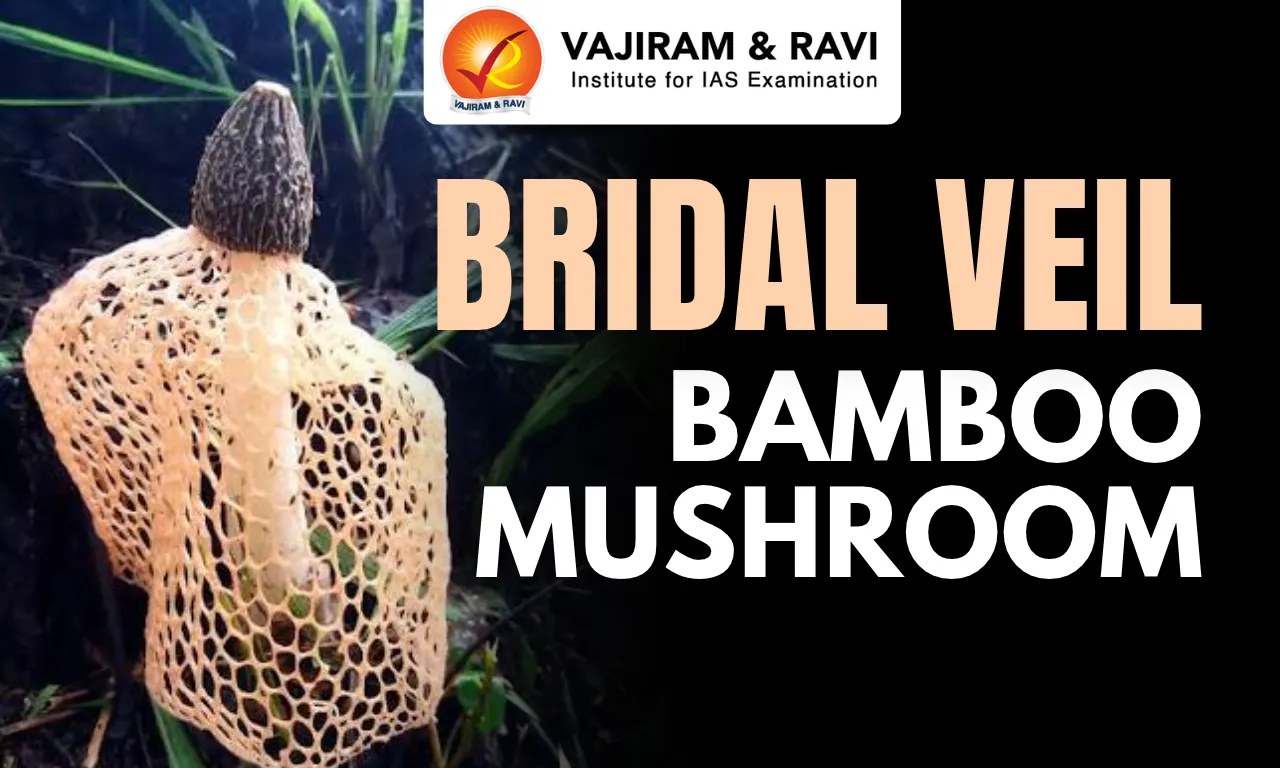
Bridal Veil Bamboo Mushroom Spotted at Ranganathittu Bird Sanctuary in Karnataka

Bridal Veil Bamboo Mushroom

Bridal Veil Bamboo Mushroom Latest News

Recently, biologists spotted the short-lived Bridal Veil bamboo mushroom in Ranganathittu Bird Sanctuary, Karnataka.

About Bridal Veil Bamboo Mushroom

  • It is scientifically known as Phallus indusiatus.
  • It is popularly referred as “veiled lady” or bamboo pith, derives its common name from its close association with bamboo thickets.
  • Appearance: The net-like structure surrounding its stalk is called an indusium, which gives it the distinctive appearance of a veil,
  • It can grow up to 25 centimeters tall, and it consists of a brown cap, a hollow shaft, and its distinctive netting.
  • Habitat: It can also grow in other moist, shaded habitats rich in decaying leaves and organic matter.
  • Distribution: It is found in tropical environments around the world, from the Amazon to Southern China.
  • This fungus grows on deadwood bamboo when moisture and temperature conditions are favourable, adding that it also emits a distinctive odour.
  • Uses: It is considered a delicacy in several Asian cuisines and is used in soups and stir-fries after proper processing.

Source: TH

Bridal Veil Bamboo Mushroom FAQs

Q1: What is the scientific name of Bridal Veil Bamboo Mushroom?

Ans: Phallus indusiatus

Q2: Where do we find Bridal Veil Bamboo Mushroom?

Ans: It grows in other moist, shaded habitats rich in decaying leaves and organic matter.

DIVERSIFARM-India Survey Finds Over 1,000 Community Seed Banks Across India

DIVERSIFARM-India

DIVERSIFARM-India Latest News

According to a survey conducted by DIVERSIFARM-India, India has at least 1,000 community seed banks (CSBs).

About DIVERSIFARM-India

  • It is a project designed to strengthen community seed banks, farmer-managed seed systems and Farmers’ Rights in India.
  • It aims to improve food, nutrition, and livelihoods for small farmers by strengthening seed systems through community seed banks.
  • It will provide an overview of community seed banks, invite them to share experiences through a joint platform, develop solutions to joint challenges and identify how best practices can be scaled out.
  • It is a project led by Fridtjof Nansen Institute (FNI) and the M S Swaminathan Research Foundation (MSSRF).
  • Funded By: It is funded by the Royal Norwegian Embassy, New Delhi.
  • Key Features
    • National mapping: The project estimates at least 1,000 CSBs in India and has profiled 652 in a digital atlas.
    • Six management types: An earlier survey of 475 CSBs identified six types based on how they are managed.
    • Odisha roadmap: A ten-point proposal recommends a coordinating secretariat, district-level recognition and access to technical and financial support.
    • Capacity-building manual: A practical guide covers seed quality, storage, documentation, governance and financial sustainability.

What are Community Seed Banks?

  • These are local, informal or formal institutions/initiatives whose core functions are to conserve, manage and share seeds and propagate material of diverse local crop varieties for local use.
  • They comprise institutions and initiatives that are collectively governed as well as individual initiatives aimed at supporting local communities with crop diversity.

Source:  PIB

DIVERSIFARM-India FAQs

Q1: What is DIVERSIFARM-India ?

Ans: It is a project designed to strengthen community seed banks, farmer-managed seed systems and Farmers’ Rights in India.

Q2: What is the aim of DIVERSIFARM-India ?

Ans: It aims to improve food, nutrition, and livelihoods for small farmers by strengthening seed systems through community seed banks.

Hypereteone indica: New Marine Bristle Worm Discovered on Odisha and Bengal Coasts

Hypereteone indica

Hypereteone indica Latest News

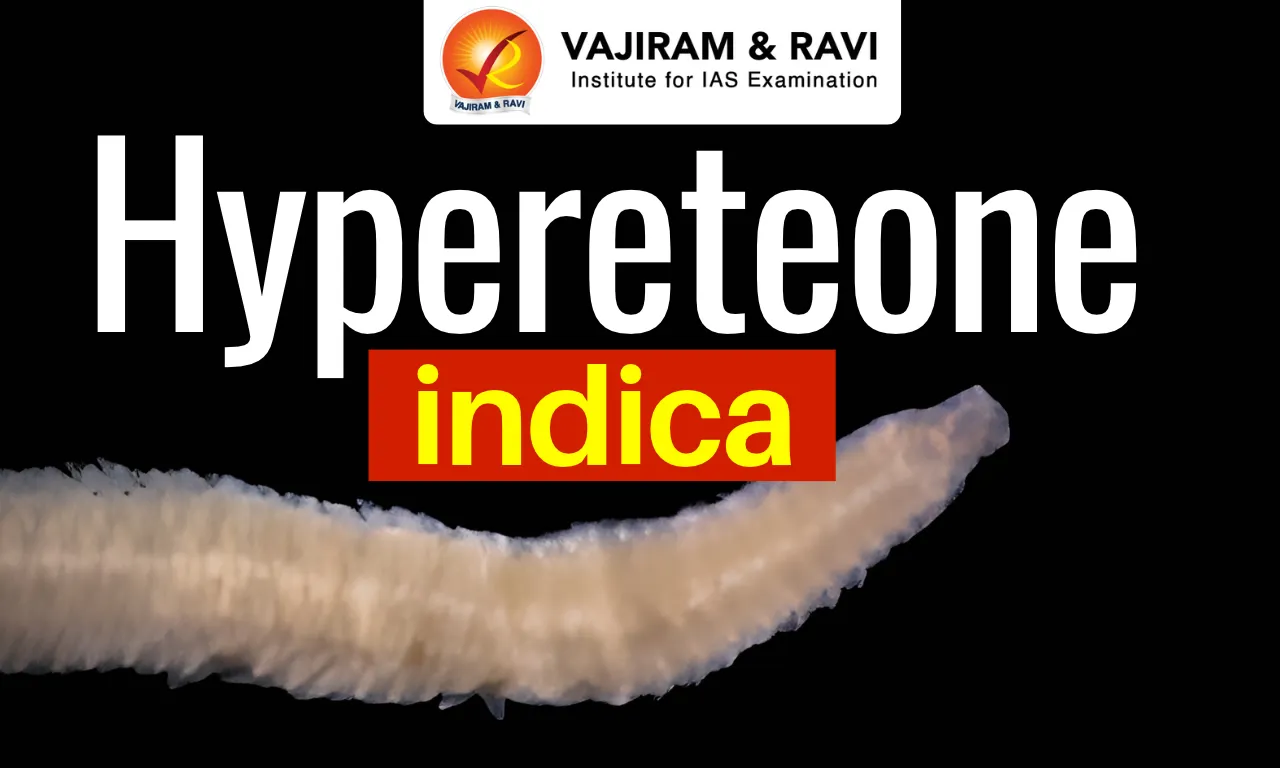
Scientists recently discovered a new species of marine bristle worm named Hypereteone indica along the northern Bay of Bengal coast.

About Hypereteone indica

  • It is a new species of marine bristle worm.
  • It was discovered along the northern Bay of Bengal coast in the intertidal zones of Udaipur Beach in Odisha and Hijli Beach in Bengal.
  • The discovery takes the number of recognised species in the genus worldwide to 10.
  • The worms were spotted in the early morning but could not be found after sunrise despite repeated attempts, suggesting possible sensitivity to light or a distinct daily activity pattern.
  • The worm has an elongated, flattened body.
  • The holotype — the specimen used to formally describe the species — measures about 43 mm.
  • Pale yellowish when alive, it turns opaque brown after preservation.
  • It is distinguished from its relatives by several physical features, including a prominent terminal ring on its proboscidial papillae, ventral cirri as long as the neuropodia, and bristles with a long, curved tooth accompanied by smaller accessory teeth. 

What are Bristle Worms?

  • Members of the annelid family: the term ‘’bristle worm’’ encompasses more than 10,000 species.  
  • Generally found in the ocean (but also occasionally in fresh water), they're characterized by segmented bodies with bristle-like protrusions—called chaetae—which extend from both sides of their body along their entire length.   
  • These worms can grow very large—up to 24 inches in a tank—but most are between 1 and 6 inches long. 
  • They are nocturnal and tend to stay in or under a live rock or in substrate.

News: TOI

Hypereteone indica FAQs

Q1: What is Hypereteone indica?

Ans: Hypereteone indica is a newly discovered species of marine bristle worm.

Q2: Along which coast was Hypereteone indica discovered?

Ans: It was discovered along the northern coast of the Bay of Bengal.

Q3: What is the characteristic body shape of Hypereteone indica?

Ans: It has an elongated and flattened body.

Q4: What is the colour of Hypereteone indica when alive?

Ans: It is pale yellowish when alive.

Q5: What distinctive feature is observed in the bristles of Hypereteone indica?

Ans: Its bristles possess a long, curved tooth accompanied by smaller accessory teeth.

Purana Qila Hosts First SCO Civilisational Dialogue Forum, Inaugurated by PM Modi

Purana Qila

Purana Qila Latest News

The Prime Minister recently inaugurated the first SCO Civilisational Dialogue Forum at Delhi's Purana Qila.

About Purana Qila

  • Purana Qila, also known as Qila-e-Kohna (meaning 'old fort’), is located in the southeastern part of the present city of New Delhi.
  • It is one of the oldest forts in Delhi built on the banks of the Yamuna River.

Purana Qila History

  • The fort was also mentioned by the Greek traveler Megasthenes in the 4th century BCE as one of the seven cities of Delhi. 
  • The current structure of Purana Qila was built by the Mughal Emperor Humayun from 1533 to 1538. He named it Dinpanah, meaning the refuge of faith. 
  • The Afghan ruler Sher Shah Suri (‘The Lion King’) defeated Humayun in 1540, renamed the fort as Shergarh, and added several structures in the complex during his five-year reign.  
  • Purana Qila changed hands several times between the Mughals and their rivals until it came under the control of the British in 1803 CE. 
  • The British used it as a military camp and a prison during the First War of Independence in 1857 CE. 

Purana Qila Architecture

  • It is an impressive example of medieval Indian architecture, combining elements of Hindu, Islamic, and Persian styles. 
  • It is roughly rectangular in shape. 
  • The fort complex has walls measuring 18 m in height and 1.5 km in length. 
  • The fort has three main entrances, the Bara Darwaza, which faces west and is used as the entrance to the fort even today. 
  • The South Gate is known as the Humayun Gate, and the third gate is called the Talaqi Gate, or the forbidden gate. 
  • All these gateways are beautifully decorated with tiles, marble inlays, and pillared pavilions.
  • The double-storied gates of the Purana Quila are quite massive and are built with red sandstone.
  • The fort is surrounded by a moat, which is fed by river Yamuna. 
  • The Sher Mandal and the Quila-i-Kunha Mosque are the notable structures inside the Fort complex. 
    • The Sher Mandal was built by Humayun. It is a two storied octagonal tower, used by Humayun as his library. 
    • The Quila-I-Kunha Mosque is an example of Indo-Islamic architecture built by Sher Shah Suri in 1541 AD. 

News: NDTV

Purana Qila FAQs

Q1: Where is Purana Qila located?

Ans: It is located in the southeastern part of the present city of New Delhi.

Q2: On the banks of which river is Purana Qila situated?

Ans: Purana Qila is situated on the banks of the Yamuna River.

Q3: Which Mughal emperor built the present structure of Purana Qila?

Ans: Mughal Emperor Humayun built the present structure of Purana Qila.

Q4: Which Afghan ruler defeated Humayun in 1540 and took control of Purana Qila?

Ans: Sher Shah Suri defeated Humayun in 1540 and took control of the fort.

Q5: In which year did Purana Qila come under British control?

Ans: Purana Qila came under British control in 1803 CE.

Estonia Eyes Stronger Defence and Trade Cooperation with India

Estonia

Estonia Latest News

Estonia will close its road border crossings with Russia on security grounds for at least six months, the Baltic country's government ‌said recently, prompting a warning from Moscow that it would respond with political and diplomatic measures.

About Estonia

  • It is a small Baltic country  in northern Europe.
  • It is the northernmost of the three Baltic states, the other two being Latvia and Lithuania.  
  • It is bordered by Russia in the east and Latvia in the south. 
  • The country is mostly low and flat (close to sea level).  
  • It is bounded by the Gulf of Finland to the north and the Baltic Sea to the west.  
  • Estonia shares its maritime borders with Finland and Sweden. 
  • Estonia’s area includes some 1,500 islands and islets; the two largest of these islands, Saaremaa and Hiiumaa, are off mainland Estonia’s west coast. 
  • Lakes: 
    • Over 1,400 small lakes dot the western parts of the country. 
    • The largest lakes include Peipus and Pskov (shared with Russia) and Lake Vorts-Jarv. 
    • Lake Peipus is one of the largest lakes in Europe. It forms much of Estonia’s border with Russia. 
  • Known for its advanced digital society, Estonia is often recognized for its e-governance initiatives, making it a leader in digital innovation. 
  • Capital: The capital city, Tallinn, features a well-preserved medieval old town that is a UNESCO World Heritage site.
  • Official Language: Estonian   
  • Currency: euro (€) 
  • Political System:  It is a parliamentary republic. 
  • History:
    • Estonia has been dominated by foreign powers through much of its history.  
    • It ended up part of the Russian Empire in the 18th century.
    • It experienced its first period of independence in 1918, following the end of World War One and the collapse of the Russian Empire.
    • In 1940 it was forcibly incorporated into the U.S.S.R. as one of its constituent republics. 
    • Estonia remained a Soviet republic until 1991, when, along with the other Baltic states, it declared its independence. 
    • Economically, Estonia has transitioned into a free market system, and it is a member of the European Union and NATO.

News: TH

Estonia FAQs

Q1: Where is Estonia located?

Ans: Estonia is a small Baltic country located in Northern Europe.

Q2: Which countries share land borders with Estonia?

Ans: Estonia shares land borders with Russia in the east and Latvia in the south.

Q3: Which water bodies border Estonia to the north and west?

Ans: The Gulf of Finland lies to its north, while the Baltic Sea lies to its west.

Q4: What is the capital of Estonia?

Ans: Tallinn is the capital of Estonia.

Q5: What is the political system of Estonia?

Ans: Estonia is a parliamentary republic.

Bandhavgarh Tiger Reserve: Study Reveals 2,700 Years of Monsoon and Vegetation Changes

Bandhavgarh Tiger Reserve

Bandhavgarh Tiger Reserve Latest News

Recently, researchers used pollen-based records from Bandhavgarh Tiger Reserve and integrated them with the Earth System Paleoclimate Simulation (ESPS) model to reconstruct vegetation and Indian Summer Monsoon (ISM) variability over the past ~2700 years.

About Bandhavgarh Tiger Reserve

  • Location: It is located between the Vindhyan and Satpura ranges in the Umaria district of Madhya Pradesh. 
  • It was declared a National Park in 1968 and a Tiger Reserve in 1972.
  • Topography: The habitat is characterized by valleys, hills, and plains, with the Bandhavgarh fort prominently seen as a major landmark. 
  • Archeological Monuments: The reserve features around 39 caves with Pali inscriptions and animal depictions.
  • It also contains ancient structures, including stupas and statues from the 1st century BCE.
  • Vegetation: The habitat consists of tropical moist, deciduous forests with sal, mixed forest and grasslands.
  • Flora: It mainly consists of Saja, Dhauda, Tendu, Arjun, Aonla, Pals, Salai, Bhirra, Khamer, Dhaman, Mango, Jamun, Dhobin, etc. 
  • Fauna: It is known to have one of the highest density of tigers in the world. It is also considered the origin of all the white tigers in the world.  
  • It is also home to leopards, Indian bison (gaur), sambar deer, spotted deer, nilgai, wild boar, sloth bears, Indian wolves, jackals, and both langur and rhesus macaque monkeys.

Source: PIB

Bandhavgarh Tiger Reserve FAQs

Q1: Where is Bandhavgarh Tiger Reserve located?

Ans: Madhya Pradesh

Q2: What type of vegetation is found in Bandhavgarh Tiger Reserve ?

Ans: The habitat consists of tropical moist, deciduous forests with sal, mixed forest and grasslands.

Lonar Lake in Maharashtra Added to IUGS Top 100 Geological Heritage Sites List

Lonar Lake

Lonar Lake Latest News

Lonar Lake has been recently included in the ‘Third 100 IUGS Geological Heritage Sites’, an international list recognising locations of outstanding scientific importance.

About Lonar Lake

  • Lonar Lake (also known as Lonar Crater) is situated in the Buldhana district of Maharashtra.
  • It is less than 1.6 km in diameter and sits in a nearly circular bowl.
  • It sits inside the Deccan Plateau—a massive plain of volcanic basalt rock leftover from eruptions some 65 million years ago.
  • Its location in this basalt field suggested to some geologists that it was a volcanic crater. 
  • Scientists in the 1970s, however, confirmed the presence of maskelynite—a naturally occurring glass that is only formed by extremely high-velocity impacts. 
  • It is believed to have been created around 52,000 years ago when a high-velocity meteorite struck the basaltic Deccan Plateau. 
  • This impact led to the formation of a nearly circular depression, which gradually transformed into a saline and alkaline lake. 
  • It is the only known impact crater lake in basaltic rock in the world.  
  • It is the only known saline crater lake in the world. Its water is seven times saltier than seawater due to the presence of basalt rock.
  • The basin is surrounded by steep slopes. It has several springs around the lake that supply water to the lake. 
  • It has several vents around the lake that release gases such as methane, carbon dioxide, hydrogen sulphide, etc. 
  • One of the most striking aspects is its color, which changes from green to pink depending on the season and the water conditions. 
    • This is caused by the presence of microorganisms that thrive in the saline and alkaline environment of the lake.
  • Apart from its scientific importance, Lonar also has a rich historical and cultural heritage. 
  • The region has been mentioned in ancient scriptures, such as the Skanda Purana and the Aina-i-Akbari. 
  • The area surrounding the crater is home to centuries-old temples built during the Chalukya and Hemadpanti eras, showcasing stunning architectural craftsmanship and religious significance. 
  • It was already recognized as a Ramsar Site and a National Geological Heritage Monument. 
  • With the latest recognition, Lonar Lake moved closer to becoming a Unesco World Heritage Site.

Key Facts about IUGS Geological Heritage Sites

  • IUGS Geological Heritage Sites are recognised by the International Union of Geological Sciences (IUGS) for their outstanding scientific value as exceptional examples of geological features, processes and discoveries.  
    • With 74 active national members, IUGS is one of the World´s largest scientific organisations. 
    • It encourages international cooperation and participation in the Earth sciences in relation to human welfare. 
  • They represent some of the world’s most significant places for understanding the Earth and its history. 
  • Located across the globe, they offer a surprising journey through the most important geological sites of the Earth. 
  • The selection of the Third 100 builds on the success and global impact of the First 100, announced in Zumaia, Spain, in 2022, and the Second 100, announced during the 37th International Geological Congress (IGC 2024) in Busan, Republic of Korea. 
  • Third 100 Geological Heritage Sites was announced at a IUGS Geoheritage Event, Algarve, Portugal. 
  • They are distributed across 47 countries and include 11 sites in Africa, 22 in the Americas, 22 in the Asia-Pacific region, 6 in the Middle East, 34 in Europe, 2 in Antarctica, and 3 in the High Seas.
  • This list of geographical wonders include the Fjords of Norway, the San Andreas Fault in the US, Chocolate Hills in the Philippines and Mount Fuji in Japan.

News: NH

Lonar Lake FAQs

Q1: Where is Lonar Lake located?

Ans: Lonar Lake is located in the Buldhana district of Maharashtra.

Q2: What geological event led to the formation of Lonar Lake?

Ans: A high-velocity meteorite struck the basaltic Deccan Plateau, creating a nearly circular depression that eventually became a lake.

Q3: What type of lake was formed following the meteorite impact at Lonar?

Ans: The impact depression gradually transformed into a saline and alkaline lake.

Q4: What makes Lonar Lake unique among impact craters worldwide?

Ans: It is the only known impact crater lake in the world formed in basaltic rock.

Q5: What geological factor contributes to the high salinity of Lonar Lake?

Ans: The presence of basaltic rock contributes to the lake's unusual saline and alkaline conditions.

Enquire Now