The Ghadar Party was principally founded by Lala Har Dayal and Baba Sohan Singh Bhakna in 1913. It aimed to overthrow British rule in India and establish an independent nation. With prominent leaders like Lala Har Dayal and Baba Sohan Singh Bhakna, the movement advocated nationalist ideals through its weekly newspaper Ghadar, spreading anti-colonial sentiments and promoting equality and secularism.
The Ghadar movement undertook revolutionary activities, including attempts to incite mutiny during World War I and the Komagata Maru incident. However, the movement faced challenges such as overestimating mass support, underestimating British strength, and lacking proper coordination, leading to its eventual downfall.
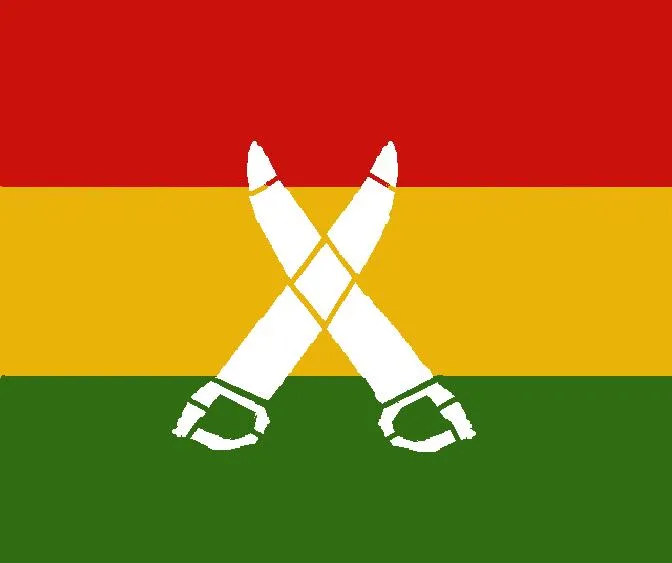
Ghadhar Party 1913 Background
The Ghadar Party originated among Punjabi immigrants, primarily Sikh farmers and labourers, who migrated to the US and Canada in the early 1900s seeking economic opportunities.
- The Punjabi immigrants encountered severe racial discrimination, local labour union hostility, and harsh immigration restrictions. This hostility made them realise that their mistreatment abroad was directly tied to India's status as a subjugated colony, concluding that true equality required national freedom.
- On July 15, 1913, these expatriates formally established the Pacific Coast Hindustan Association across Oregon and California.
- Initially, the movement started with the publication of a weekly newspaper called Ghadar by Lala Hardayal from San Francisco. The first edition of the Ghadar was published in Urdu, with the caption Angrezi Raj Ka Dushman, and a month later, it was published in Gurmukhi.
- Operating from its San Francisco headquarters at the Yugantar Ashram, the organisation adopted the name Hindustan Ghadar Party. It focused on uniting the Indian diaspora in North America to organise an armed revolutionary struggle against British rule in India.
Ghadar Party Founder
The Ghadar Party was founded in 1913 in the US by Baba Sohan Singh Bhakna, who served as founding President, and Lala Har Dayal, who served as chief ideologue, primary organizer, and General Secretary. Key members included Pandit Kanshi Ram, Bhai Parmanand, and Kartar Singh Sarabha.
Ghadar Party Members
Ghadar Party mainly consisted of Indian immigrants from the Punjab. Notable members included Baba Sohan Singh Bhakna, Lala Har Dayal, Pandit Kanshi Ram Morali, Bhai Parmanand, Sant Baba Wasakha Singh Dadeha, Baba Jawala Singh, Santokh Singh, and Harnam Singh Tundilat.
- Baba Sohan Singh Bhakna (1870-1968): He was the first President and the founder of Ghadar Party in the U.S.A.
- Lala Har Dayal: He was the General Secretary of the Ghadar Party. He was also the editor of the weekly paper Gadar. He established the Hindi Association of the Pacific Coast. It was later known as the Hindustan Ghadar Party in May 1913. This was established to take control of the Indian immigrant community in Portland.
- Pandit Kanshi Ram Morali: He, along with Sohan Singh Bhakna, established the Hindi Association, which later evolved into the Ghadar Party. He was the treasurer of the Ghadar Party.
- Bhai Parmanand: He was also a founding member of the Ghadar Party. He also wrote a book for the Ghadar Party named Tarikh-i-Hind.
- Harnam Singh Tundilat: He was an ex-serviceman of the Punjab Regiment of the British Army. Harnam Singh wrote patriotic poems for Ghadar and was a bodyguard for the Party's General Secretary, Lala Har Dayal.


Ghadar Party Objectives
Ghadar Party sought to assist in overthrowing British Rule in India through armed revolt. Its main objectives include:
- Improving the conditions of the poor and the working class.
- Promoting education and social reforms.
- Overthrowing British colonial power through revolution.
- Establishing an independent and sovereign India.
- Creating a secular state embracing all religions.
- To unite all Indians, regardless of their religion and caste.
- To spread nationalist ideals, expose British economic exploitation, and raise political awareness through their weekly publication, Ghadar.
Ghadar Party Activities Undertaken
Ghadar Party, formed to challenge British rule in India, engaged in a range of revolutionary activities. From organizing assassinations of British officials and supplying weapons to inciting mutiny during World War I, the party aimed to spark uprisings across British colonies. Their efforts included the launch of the weekly newspaper Ghadar and involvement in events like the Komagata Maru incident.
- Assassination of British Officials: The party organised the assassinations of British officials stationed abroad, igniting uprisings across British colonies worldwide.
- Weapon Supply: During World War 1, Ghadar Party members returned to Punjab, where they sought to incite an armed rebellion. They supplied weapons and incited Indian soldiers in the British Army to mutiny.
- Ghadar Mutiny: In February 1915, the Ghadar Mutiny began as a result of weapons smuggling and the party’s anti-colonial efforts.
- Although the mutiny was planned to spread across India, it was swiftly and harshly suppressed by British authorities, culminating in the execution of 42 members after the Lahore Conspiracy Case trial.
- Publishing the Ghadar Newspaper: The party launched the Urdu-language weekly, Ghadar, in November 1913, which became a crucial tool for disseminating nationalist ideals. It was circulated widely among Indian immigrants globally.
- Propaganda Campaign: Ghadar leaders embarked on extensive propaganda efforts, delivering speeches and distributing materials in workplaces where Indian immigrants were employed.
- They utilised the freedom available in the U.S. to fuel anti-colonial sentiment and oppose British domination.
- Komagata Maru Incident: Ghadar Party activists visited the Komagata Maru ship during its voyage, delivering lectures and handing out anti-colonial literature.
- Upon the ship’s arrival in Canada, it was denied entry by authorities, leading to frustration and anger among the passengers.
Ghadar Movement
The Ghadar movement gained momentum in 1914 due to many significant events that inspired the revolutionaries living abroad. The arrest of Lala Har Dayal, the Komatgaru incident, and the outbreak of World War I shaped the movement's strategies.
- Lala Har Dayal's arrest: In 1914, Lala Har Dayal was arrested by US authorities under British pressure. After his release on bail, he fled to Switzerland, weakening the Ghadar leadership at a critical moment.
- Komagata Maru incident: The Japanese steamship Komagata Maru, carrying 376 Indian passengers, was denied entry to Canada and forced back. Upon reaching Calcutta during World War I, passengers were not allowed to disembark, leading to a violent clash in Budge Budge, resulting in 18 deaths and 202 arrests. This fueled anti-British sentiment.
- World War I revolt attempt: Ghadar leaders saw World War I as an opportunity to revolt. They issued the Ailan-e-Jung (Proclamation of War), urging Indians abroad to return and join the struggle against British rule.
Ghadar Party Achievements
Ghadar Party made a significant contribution to the Revolutionary Movements in India. It advocated for nationalist ideology, equality, and a secular idea, as seen in the weekly newspaper Ghadar published by the Ghadar Party.
- Spread of nationalist ideology: Ghadarites raised awareness about British exploitation, inspiring peasant uprisings in Punjab and other regions in later years.
- Core ideology: The movement’s principles centred on equality, democracy, and a radical approach, influenced by Irish, Mexican, and Russian revolutionaries.
- Fostered International Unity: The Ghadar Party fostered international unity by connecting the Indian diaspora across North America and Asia, including Canada, the United States, Hong Kong, and Singapore, in a collective movement toward national independence.
- Secular nature: The Ghadar Party was highly secular, dismissing religious concerns as insignificant. They welcomed leaders from diverse backgrounds, such as Har Dayal (Hindu), Barkatullah (Muslim), and Rash Behari Bose (Bengali Hindu).
Ghadar Party Failure
Ghadar Movement overestimated its readiness and public support, misjudged the strength of the British forces, and lacked proper coordination. Internal leadership conflicts and poor organisation further weakened the movement, leading to its downfall.
- Lack of mass support: The movement overestimated the readiness of the Indian masses for rebellion, which led to a gap between leadership efforts and public participation.
- Weak coordination: There was a significant lack of proper coordination between the leadership and the people, making it difficult to mobilise effectively.
- British strength: The party underestimated the power and swift response of the British government, which took strict measures to counter their efforts.
- Leadership crisis: Many key leaders were arrested upon their arrival in India, severely weakening the organisational capacity and momentum of the movement.
Ghadar Party UPSC PYQs
Q1: Consider the following freedom fighters: (UPSC Prelims 2022)
- Barindra Kumar Ghosh
- Jogesh Chandra Chatterjee
- Rash Behari Bose
Who of the above was/were actively associated with the Ghadar Party?
(a) 1 and 2
(b) 2 only
(c) 1 and 3
(d) 3 only
Ans: (d)
Q2: The Ghadr (Ghadar) was a (UPSC Prelims 2014)
(a) revolutionary association of Indians with headquarters at San Francisco
(b) nationalist organization operating from Singapore
(c) militant organization with headquarters at Berlin
(d) communist movement for India's freedom with headquarters at Tashkent
Ans: (a)

 Last updated on Oct, 2026
→ UPSC 2027 Notification will be released on 13 January 2027 at upsconline.nic.in.
→ Check Nobel Prize 2026 Winners List here.
→ Download PIB PRiSM Monthly Magazine 2026 here.
→ Check UPSC Monthly Current Affairs Magazine The Recitals here.
→ Check out the latest UPSC Syllabus here.
→ Download UPSC Model Answers for Mains 2026
→ UPSC Mains Question Paper 2026 is out now for Essay & GS Paper 1, 2, 3 & 4.
→ UPSC Calendar 2027 has been released.
→ Enroll in Vajiram & Ravi’s UPSC Mains Test Series 2027 for structured answer writing practice, expert evaluation, and exam-oriented feedback.
→ Join Vajiram & Ravi’s UPSC Mentorship Program 2027 for personalized guidance, strategy planning, and one-to-one support from experienced mentors.
→ Go through the UPSC Mains Previous Year Papers to enhance your preparation.
→ UPSC has released UPSC Toppers List 2025 with the Civil Services final result on its official website.
→ Also check Best UPSC Coaching in India
Ghadar Party FAQs
Q1. Who formed the Ghadar Party and why?+
Q2. What was the Ghadar Party?+
Q3. Why did the Ghadar Movement fail?+
Q4. What was the main aim of the Ghadar Party?+
Q5. Who led the Ghadar Party in Punjab?+
Tags: ghadar party quest upsc modern history notes