
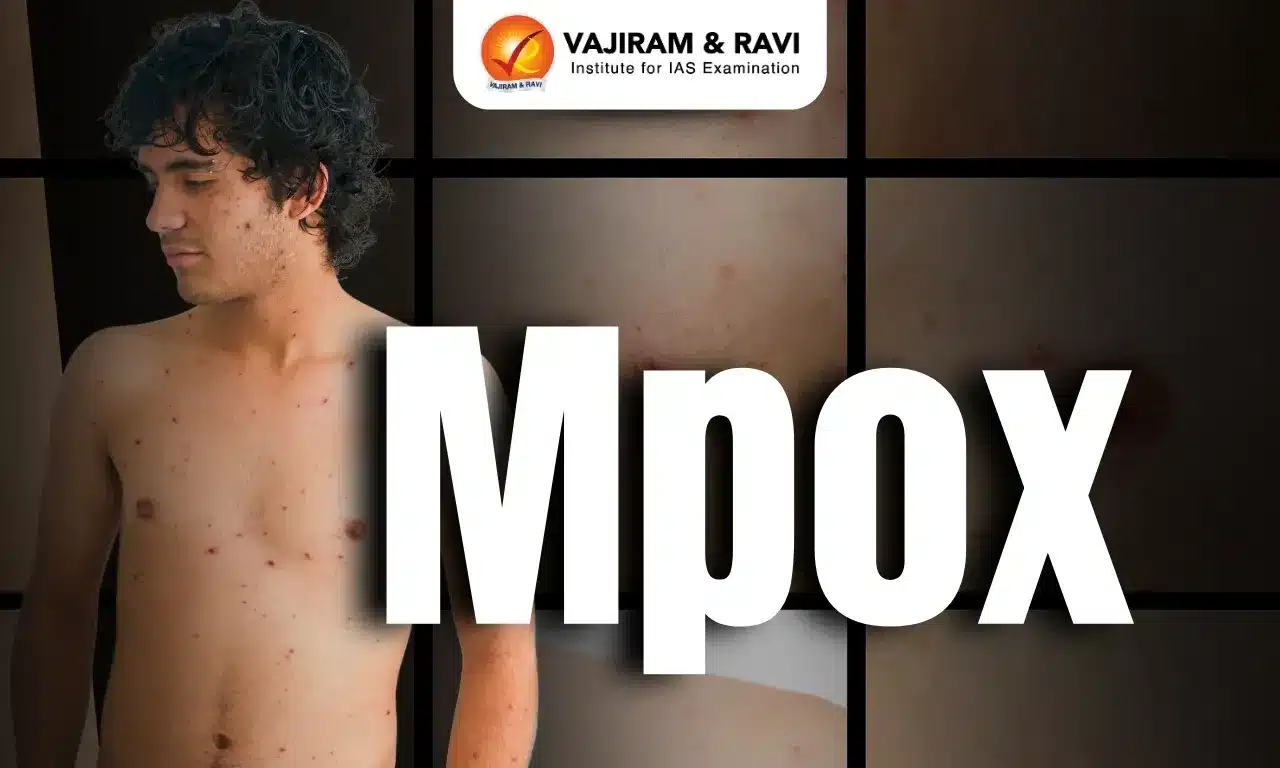
Mpox Latest News
The scientific community is divided on whether mpox should be given the label of a sexually transmitted disease (STD), with targeted public health interventions to contain it.
About Mpox
- Mpox, previously known as monkeypox, is a zoonotic viral illness caused by the monkeypox virus, a species of the genus Orthopoxvirus.
- Mpox is characterized by rash or skin lesions that are usually concentrated on the face, palms of the hands, and soles of the feet.
- The first human case of mpox was recorded in 1970 in the Democratic Republic of the Congo (DRC).
Subtypes of Mpox
- Clade I: It is endemic to Central Africa. It tends to cause more serious illness than clade II. Recent outbreaks of clade I have been less deadly.
- Clade II: It is endemic to East Africa. There’s been a global outbreak of clade II mpox since 2022. It’s less likely to be fatal than clade I.
Mpox Transmission
- Mpox is transmitted to people by close contact with infected animals or people or by touching virus-contaminated materials.
- It enters the body through (often invisible) injuries or wounds in the skin, or the mucous membranes.
- Mpox can be passed from one person to another during sexual contact.
- During pregnancy, the virus may be passed to the fetus, or to the newborn during or after birth.
Mpox Symptoms
- Common symptoms of mpox are a skin rash or mucosal lesions, which can last 2–4 weeks, accompanied by fever, headache, muscle aches, back pain, low energy and swollen lymph nodes.
- Mpox symptoms often resolve on their own without the need for treatment.
Mpox Treatment
- There are no specific treatments for monkeypox virus infection.
- Treatment for most people with mpox is to relieve symptoms.
Source: TH
Mpox FAQs
Q1: What is the survival rate for mpox?
Ans: The survival rate for Mpox (formerly Monkeypox) is generally high, with most cases being mild to moderate.
Q2: What is the cause of monkeypox?
Ans: Mpox is an illness caused by the monkeypox virus.
Q3: Is monkeypox curable?
Ans: Currently, there are no treatments specifically for monkeypox, and most people who get monkeypox get better on their own without treatment and can recover at home.
