Lok Adalat

Lok Adalat

Lok Adalats Latest News

The Rajasthan High Court has taken suo motu cognizance of the non-functioning of 16 permanent Lok Adalats across the state, following a news report highlighting this grave issue.

About Lok Adalats

  • Lok Adalats (“People’s Courts”) are statutory alternative dispute resolution (ADR) forums established under the Legal Services Authorities Act, 1987. 
  • They provide an accessible, informal, and expeditious mechanism to settle disputes either pending in courts or at the pre-litigation stage, through mutual compromise and conciliation.
  • Statutory Status: Constituted under the Legal Services Authorities Act, 1987, they have legal backing and their awards are enforceable as civil court decrees.
  • Lok Adalats can be organized at the district, state, and national levels.
    • The State/District Legal Services Authority or the Supreme Court/High Court/Taluk Legal Services Committee may organise Lok Adalat at such intervals and places and for exercising such jurisdiction and in such areas as it thinks fit.
  • Nature of Cases: Civil, compoundable criminal, family, property, and pre-litigation disputes. Non-compoundable criminal cases are excluded.
  • No Court Fees: There is no fee for cases referred to Lok Adalats. If a case pending in court is settled, the court fee paid is refunded.
  • Voluntary and Non-Coercive: Settlements are based on mutual agreement; no party is compelled to accept a decision.
  • Binding Awards: Decisions are final, binding, and equivalent to civil court decrees, with very limited scope for challenge (mainly on grounds of fraud or coercion).
  • If the parties are not satisfied with the award of the Lok Adalat though there is no provision for an appeal against such an award, but they are free to initiate litigation by approaching the court of appropriate jurisdiction by filing a case by following the required procedure, in exercise of their right to litigate.

Permanent Lok Adalats

  • Establishment and Purpose: Permanent Lok Adalats were introduced under the Legal Services Authorities Act, 1987 (amended in 2002), to resolve disputes related to public utility services such as transport, postal, and telegraph.
  • Composition and Jurisdiction: These are permanent bodies comprising a Chairman and two members, with jurisdiction to resolve disputes involving amounts up to ₹1 crore. However, they cannot adjudicate cases involving non-compoundable offences.

Lok Adalats FAQs

Q1. What is meant by Lok Adalats?

Ans. Lok Adalats are “people’s courts” in India that settle disputes quickly and amicably outside regular courts.

Q2. How many Lok Adalats are there in India?

Ans. Lok Adalats are organized at multiple levels across all states and districts, but the exact current number varies; sessions are held regularly nationwide.

Q3. Who started Lok Adalat in India?

Ans. The first Lok Adalat was held in 1982 in Junagarh, Gujarat.

Q4. What are the powers of Lok Adalat?

Ans. Lok Adalats have powers similar to civil courts, such as summoning witnesses, requiring documents, and making binding decisions.

SourceTH

PREFIRE Polar Mission

PREFIRE Polar Mission

About PREFIRE Polar Mission: 

  • The Polar Radiant Energy in the Far-InfraRed Experiment(PREFIRE) polar mission consists of twin satellites, each carrying one instrument and measuring the poles about six hours apart.
  • Objective: The objective of the mission is to reveal the full spectrum of heat loss from Earth’s polar regions for the first time, making climate models more accurate.
  • Aim :
    • The data from the PREFIRE mission is aimed at addressing the gap in knowledge and provide data to improve predictions of climate change and sea level rise.
    • Provide new information on how Earth’s atmosphere and how ice influences the amount of heat being radiated out to space from the Arctic and Antarctic.
  • How will the satellites work?
    • The mission with cube satellites about the size of a shoebox will be launched aboard an Electron launch vehicle.
    • It is equipped with technology proven on Mars, and will measure a “little-studied portion” of the radiant energy emitted by Earth.
    • Two satellites carrying a thermal infrared spectrometer will be in asynchronous near-polar orbits and will be passing over a given spot on Earth at different times. To maximize coverage, they will be overlapping every few hours near the poles.
    • The instruments weighing less than 6 pounds (3 kilograms) each will make readings using a device called a thermocouple, similar to the sensors found in many household thermostats.
  • The mission will help in
    • Understand why the Arctic has warmed more than 2½ times faster than the rest of the planet since the 1970s.
    • Give scientists a better idea of how efficiently far-infrared heat is emitted by matter like snow and sea ice, and how clouds influence the amount of far-infrared radiation that escapes to space.
    • It will help researchers better predict how the heat exchange between Earth and space will change in the future, and how those changes will affect phenomena like ice sheet melting, atmospheric temperatures, and global weather.

Q1: What is Electromagnetic Spectrum?

The electromagnetic spectrum is a continuum of all electromagnetic waves arranged according to frequency or wavelength. It is fundamental to understanding how energy is transmitted across space.

Source: NASA’s new mission to study polar regions’ heat loss to launch on May 22: All you need to know

Apple Cultivation

Apple Cultivation

About Apple Cultivation: 

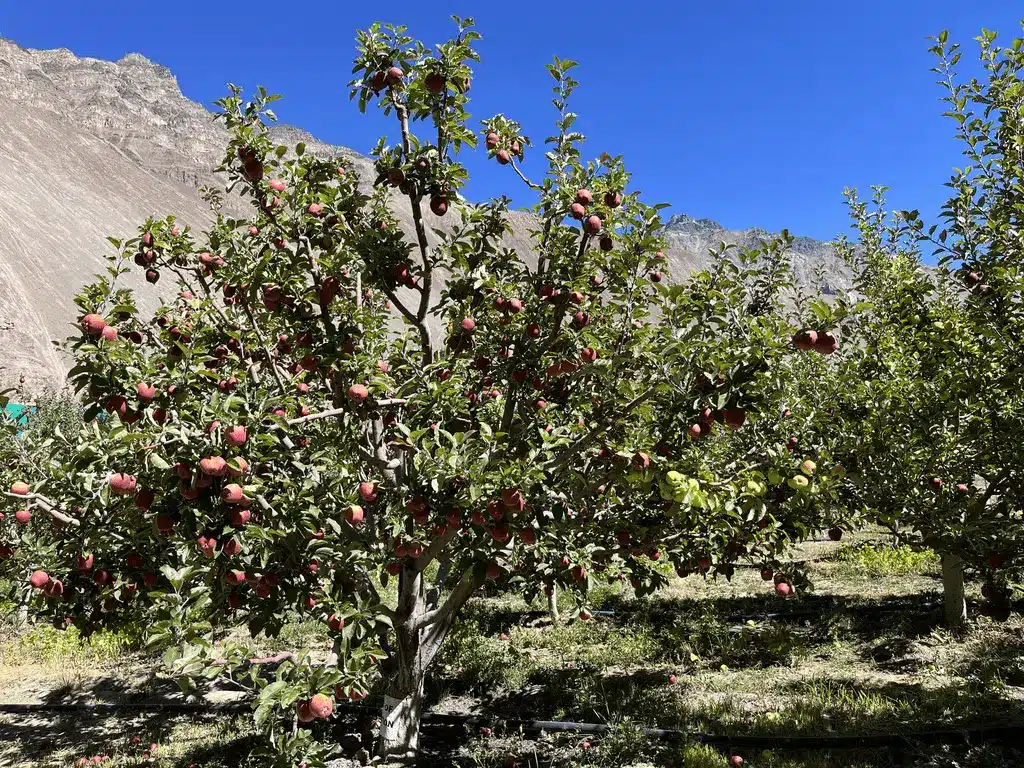
  • Apple (Malus pumila) is an important temperate fruit.
  • However, in India, the apple-growing areas do not fall in the temperate zone but the prevailing temperate climate of the region is due to the Himalayan ranges and high altitudes.
  • Climatic conditions required
    • Temperature: The average summer temperature should be around 21-24 degrees C during the active growth period.
    • It can be grown at an altitude of 1500- 2700 m above sea level.
    • Rainfall: Well-distributed rainfall of 1000-1250 mm throughout the growing season is most favourable for the optimum growth and fruitfulness of apple trees.
    • Soil: Apples grow best on well-drained, loamy soils.
  • Apple growing areas in India:
    • In India apple is primarily cultivated in Jammu & Kashmir; Himachal Pradesh; the hills of Uttar Pradesh and Uttaranchal.
    • It is also cultivated to a small extent in Arunachal Pradesh; Nagaland; Punjab and Sikkim.

Q1: What is Subsistence Agriculture?

Subsistence agriculture occurs when farmers grow food crops to meet the needs of themselves and their families on smallholdings.

Source: Global warming’s unforeseen outcome: How Spiti’s new crop of apple farmers are reaping a fortune

What is a Synchrotron?

What is a Synchrotron?

About Synchrotron:

  • A synchrotron is a type of circular particle accelerator, where particles move in a loop.
  • It works by accelerating charged particles (electrons) through sequences of magnets until they reach almost the speed of light. 
  • These fast-moving electrons produce very bright light, called synchrotron light. 
  • This very intense light, predominantly in the X-ray region, is millions of times brighter than light produced from conventional sources and 10 billion times brighter than the sun.
  • The light is channelled down beamlines to experimental workstations, where it is used for research.
    • Scientists can use this light to study minute matter such as atoms and molecules.
    • They can examine how a sample scatters, diffracts, absorbs, or reemits the synchrotron light, which reveals various different details of structure or chemical composition.
  • There are approximately 70 synchrotrons around the world in various stages of development. There are technical differences between the use and capabilities of synchrotrons, with some being used for appliances and others for fundamental/theoretical research.

Key Facts about High Energy Photon Source (HEPS):

  • Location: It is located approximately 50 kilometers from Beijing in Huairou, China.
  • The HEPS is designed to accelerate electrons up to energies of 6 gigaelectron volts within its 1.36-kilometer circumference storage ring.
  • This process will produce high-energy X-rays that can penetrate deep into samples, revealing intricate details at the nanometer scale.
  • HEPS will provide researchers with access to 14 beamlines catering to diverse fields such as energy, condensed matter physics, materials innovation, and biomedicine.
  • Compared to third-generation synchrotrons like the Shanghai Synchrotron Radiation Facility, which boasts a circumference of 432 meters and stands as China’s most advanced working synchrotron, HEPS will offer a time resolution 10,000 times superior.

Q1: What are electrons?

An electron is a subatomic particle that carries a negative electric charge. It is one of the fundamental particles that make up atoms, along with protons and neutrons. Electrons carry a fundamental electric charge, denoted as "e," which is approximately equal to -1.602 x 10^-19 coulombs (C).

Source: China inaugurates next-generation synchrotron, boasting world's brightest X-rays

Land Acquisition Valid Only if it Passes Constitutional Test

Land Acquisition Valid Only if it Passes Constitutional Test

What’s in today’s article?

  • Why in News?
  • The Right to Property in India
  • What were the Observations Made by the SC in the Recent Case?

Why in News?

  • In a landmark verdict to protect the interests of landowners against acquisition of their property by the government, the Supreme Court of India ruled that all acquisitions would have to pass the test of Article 300A.
  • The SC quashed the decision of Kolkata Municipal Corporation to acquire private land to build a public park, as the law does not authorise the body to acquire the land and the acquisition was illegal.

The Right to Property in India:

  • Before the enactment of the 44th Constitutional Amendment (1978):
    • Part III of the Indian Constitution (Fundamental Rights) included Article 19 (1) (f) and Article 31.
    • Indian residents were given the right to purchase, possess, and dispose of their property under Article 19(1)(f).
    • Article 31 safeguarded the right against being deprived of one’s property. The right was absolute and could not be denied in any circumstance.
    • However, there was a clash, because the above provisions limited the state’s ability to acquire any movable property in the public interest because the right to property was a fundamental right.
  • The 44th Amendment to the Indian Constitution:
    • It abolished Article 19 (1) (f) and Article 31, and a modified version of it (Article 31) was inserted as Article 300-A.
    • This changed the very nature of the right to property in India from being a fundamental right to a legal/constitutional right.
  • What is stated in Article 300-A?
    • Article 300-A states that “no person shall be deprived of his property except by authority of law”.
    • The article gives the government the authority to seize someone else’s property for the benefit of the general welfare.
  • How the courts interpreted Article 300-A?
    • The Madhya Pradesh HC (2022) clarified that the law requiring the property acquisition needed to be legitimate and that the state’s acquisition of land had to be for the benefit of the public.
    • In Vidya Devi v. the State of Himachal Pradesh (2022), the SC ruled that under a welfare state, even the government authorities cannot seize property without following the necessary legal process.
    • In Vimlaben Ajitbhai Patel vs. Vatslaben Ashokbhai Patel, the SC ruled that although it may no longer be a fundamental right, the right to property is still a human right.

What were the Observations Made by the SC in the Recent Case?

  • Nature of right to property: Under the current constitutional scheme, the right to property is protected as a constitutional right and has even been interpreted to be a human right.
  • Seven basic rights:
    • The court said Article 300A confers seven basic procedural rights to landowners and similar duties upon the state which must be followed and fulfilled for any valid acquisition. These are:
    • First, duty of State to inform the owners that it intends to acquire his property - right to notice;
    • Second, duty of State to hear objections - right to be heard;
    • Third, duty of State to inform its decision on acquisition - right to a reasoned decision;
    • Fourth, duty of State to demonstrate that acquisition is for public cause - acquisition only for public purpose;
    • Fifth, duty of State to restitute and rehabilitate - right to fair compensation;
    • Sixth, duty of State to conduct the process of acquisition efficiently and within prescribed timelines - right to an efficient conduct; and
    • Seventh, final conclusion of the proceedings - the right of conclusion.
  • Procedural justice - A significant mandate of Article 300A: The existence of and adherence to procedural safeguards is crucial for the protection of the right to property as they ensure -
    • Fairness,
    • Transparency,
    • Natural justice, and
    • Non-arbitrary exercise of power in the process of acquisition.

Q.1. Why was the Indian Constitution amended to exclude the freedom to own property?

The Right to Property was removed from the list of Fundamental Rights in 1978 by the 44th constitutional amendment because it posed numerous obstacles to the realisation of socialism and equitable distribution of wealth.

Q.2. What do you mean by procedural justice?

Procedural Justice refers to the idea of fairness in the processes that resolve disputes and allocate resources. It is not a practice, but a philosophy and a movement which promotes positive organisational change.

Source: State cannot acquire property without proper procedure: Supreme Court | ToI

Swachhata Pakhwada

Swachhata Pakhwada

About Swachhata Pakhwada: 

  • It is an initiative launched in April, 2016 under the Swachh Bharat Mission.
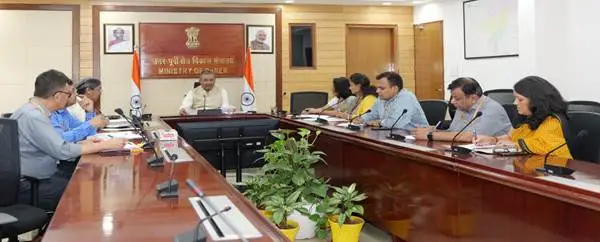
  • Objective: It was launched with the objective of bringing a fortnight of intense focus on the issues and practices of Swachhata by engaging the central government ministries/departments.
  • Aim: It aims to include all ministries and departments through a common programme to contribute for Swachh Bharat Mission.
  • An annual calendar is pre-circulated among the ministries to help them plan for the Pakhwada activities.
  • The ministries observing Swachhata Pakhwada are monitored closely using the online monitoring system of Swachhata Samiksha where action plans, images, videos related to Swachhata activities are uploaded and shared.
  • For the Pakhwada fortnight, observing ministries are considered as ‘Swachhata Ministries’ and are expected to bring qualitative swachhata improvements in their jurisdictions.

Key facts about Swachh Bharat Mission

  • The Indian government launched the swachh bharat mission on October 2, 2014.
  • The mission covered all rural and urban areas.
    • The urban component of the mission is implemented by the Ministry of Urban Development, and the rural component by the Ministry of Drinking Water and Sanitation.
  • The programme includes elimination of open defecation, conversion of unsanitary toilets to pour flush toilets, eradication of manual scavenging, municipal solid waste management and bringing about a behavioural change in people regarding healthy sanitation practices.

Q1: What is Anaerobic treatment?

It is a proven and energy-efficient method for treating industrial wastewater. It uses anaerobic bacteria (biomass) to convert organic pollutants or COD (chemical oxygen demand) into biogas in an oxygen-free environment.

Source: Ministry of Development of North Eastern Region Launches Swachhata Pakhwada

What is the Deda Method?

What is the Deda Method?

About Deda Method: 

  • It is a method of preserving seeds that his ancestors handed over to his family. 
  • How do they preserve?
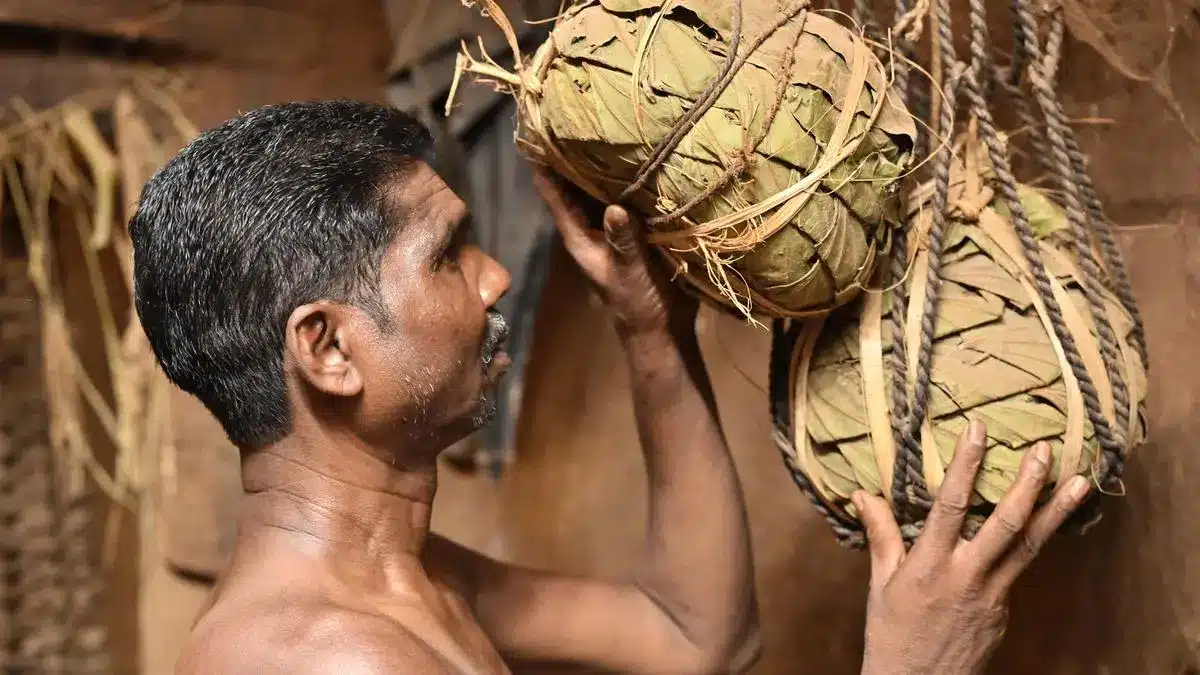
    • The seeds are preserved in leaves and packed almost airtight to look like boulders from a distance.
    • The packaged seeds are, in turn, woven with Siali leaf (Bauhinia vahlii), which is locally known as ‘addakulu’ to make the deda. 
    • A deda has three layers. In the first layer, wood ash is spread inside the Siali leaves.
    • Later, the ash is covered with lemon leaves to form a casing, and, lastly, the seeds are preserved inside the casing and sealed. Each deda is crafted to support at least 5kg of seeds.
  • Advantages
    • The deda method guarantees protection of seed from pests and worms.
    • In this method, the stored seeds can be used for cultivation for up to five years.
    • It helps in preserving the seeds of pulses like the green gram, red gram, black gram and beans. 

Key facts about Muria Tribe

  • Location: They are located in the states of Telangana, Andhra Pradesh, Chhattisgarh and Odisha. They speak Koya, which is a Dravidian language.
  • The Muria settlements are known as habitations of Internally Displaced People (IDPs), whose population is around 6,600 in A.P., and they here are referred to as ‘Gutti Koyas’ by the native tribes.
  • They have progressive perspective towards marriage and life as a whole. The biggest example being the Ghotul (a commune or dormitory), which is meant to create an environment for Muria youth to understand their sexuality.
  • Gutti Koyas’ The held ST status in Chattisgarh but they were not granted ST status in their migrated states such as Telangana.

Q1: What is the characteristic of Monocot plants?

These are marked by seeds with a single cotyledon, parallel-veined leaves, scattered vascular bundles in the stem, the absence of a typical cambium, and an adventitious root system.

Source: Muria tribes’ own eco-friendly, foolproof seed preservation method

Enquire Now