Lithium

Lithium

Lithium Latest News

A recent study published in Science Advances by Duke University has uncovered distinctive geochemical properties of lithium-rich brines found in salt pans (salars) in South America and Asia.

About Lithium

  • Lithium is a lightweight, silvery-white alkali metal with the lowest density among metals.
  • It reacts vigorously with water and makes alloys with aluminium and magnesium, enhancing material strength and reducing weight—ideal for aerospace and battery technologies.
  • Lithium, also known as “white gold”, is a critical mineral essential for the renewable energy sector, especially in the production of electric vehicle (EV) batteries and energy storage systems.
  • Around 40% of global lithium supply is derived from evaporative brine mining in salt flats (salars) of the central Andes (Chile, Argentina, Bolivia—“Lithium Triangle”) and the Tibetan Plateau.

Key Findings

  • The study focused on Salar de Uyuni in Bolivia, the world’s largest lithium brine reserve, located in a high-altitude arid region.
  • It was found that, unlike seawater, where carbonate molecules dominate pH regulation, the pH of these brines is controlled almost entirely by boron compounds.
  • Boron, present in the form of boric acid and borates, was found to determine the pH and alkalinity of natural brines.
  • During brine evaporation in mining ponds:
    • The concentration of boron increases.
    • Boric acid breaks down, releasing hydrogen ions, which lowers the pH and makes the brine highly acidic.

Lithium FAQs

Q1: What is Lithium?
Ans: Lithium is a soft, silvery-white alkali metal used mainly in rechargeable batteries for electric vehicles and electronics.

Q2: Why is Lithium called a critical mineral?

Ans: It is termed a critical mineral due to its strategic importance, limited global supply, and growing demand in green energy technologies.

Source: PHY
Sweet Sorghum

Sweet Sorghum

About Sweet sorghum:

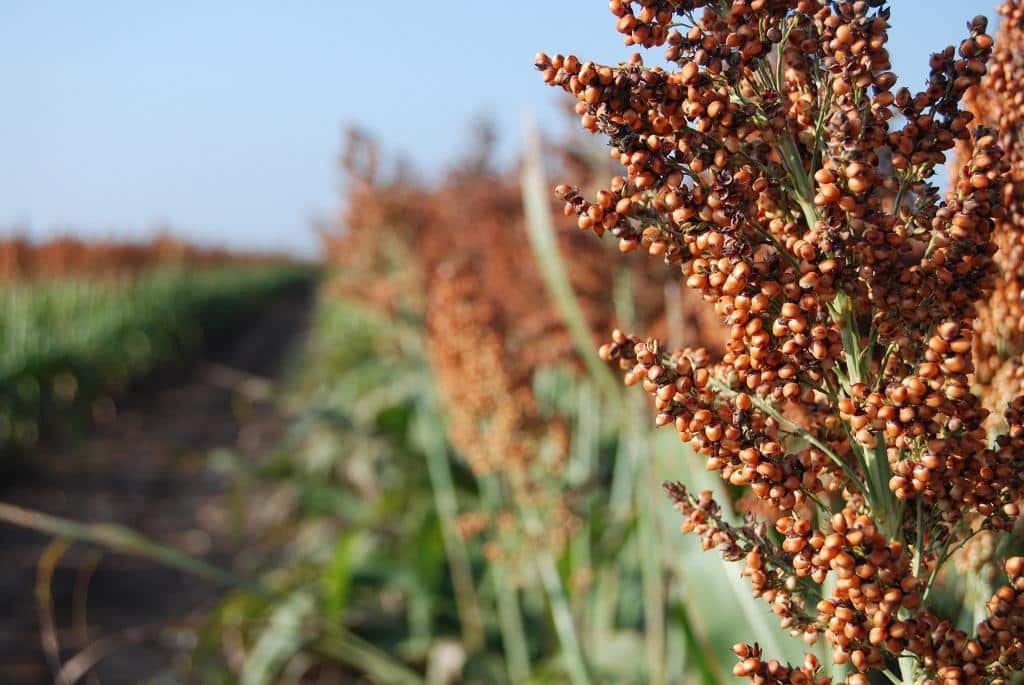
  • It is the most important millet crop occupying the largest area among the cereals next to rice.
  • One of the key characteristics of sweet sorghum varieties is their drought resistance. It allows them to enter a dormant state during extended periods of dryness and resume growth afterwards.
  • Required climatic conditions and
    • The crop does not prefer high rainfall as high soil moisture or continuous heavy rain after flowering may hamper sugar increase.
    • All soils that have medium depth with good drainage are suited.
    • Depending on the soil (red, black, laterite and loamy) and its depth water requirement may vary which in turn decide the suitability of the crop.
  • Unique features of Sorghum
    • It has ability to withstand low water and nitrogen inputs, as well as its tolerance for salinity and drought stress, makes it an ideal crop for farmers in arid regions.
    • Research has shown that, under intense water scarcity conditions, sweet sorghum makes use of its stalk juice to supplement its plant needs.
  • It is used in the food industry and its stalk is used for the production of value-added products like ethanol, syrup and jaggery and bioenriched bagasse as a fodder and as a base material for cogeneration.
  • It can produce grains, animal feed and sugary juice, making it unique among crops.
  • The grains from sweet sorghum are prepared as steamed bread or porridge malt for traditional beer, as well as in commercial beer production across the continent.

Q1: What is Ethanol?

Ethanol is an agricultural by-product which is mainly obtained from the processing of sugar from sugarcane, but also from other sources such as rice husk or maize.

Source: Sweet sorghum is a hardy, nutritious, biofuel crop that offers solutions in drought-hit southern Africa

Declining Household Savings – Not a Mere Change in Saving Pattern

Declining Household Savings - Not a Mere Change in Saving Pattern

What’s in today’s article?

  • Why in News?
  • How the Debate on India’s Declining Household Savings Emerges?
  • Declining Household Savings is Not a Mere Change in Savings Pattern
  • What is the Argument of the CEA?
  • What is the Problem with the CEA’s Argument?
  • Is a Higher Household Debt-to-Income Ratio a Sign of a Structural Change?
  • What are the Macroeconomic Challenges Highlighted by this Structural Change?

 Why in News?

  • Household net financial savings to GDP ratio in India have declined due to increased borrowing and structural shifts rather than a mere change in savings pattern.
  • Hence, there is a need for macroeconomic policies to support household income growth to reduce financial stress on individuals and stabilise the macroeconomy.

How the Debate on India’s Declining Household Savings Emerges?

  • According to a news article, there has been a drastic fall in household net financial savings to GDP ratio during 2022-23 in India on account of a higher borrowing to GDP ratio.
    • The higher borrowing to GDP ratio largely reflected a household’s need to finance greater interest payment commitments, leading to an increase in financial distress of the household.
  • In response to this article, the Chief Economic Advisor (CEA) to the Government of India has interpreted this trend as a mere shift in the composition of household savings.
  • According to the CEA, households incur greater borrowing (or reduce net financial savings) solely to finance higher physical savings (investment).
  • Therefore, there is the need to find inconsistencies in this interpretation of the CEA and highlight some signs of structural shifts in the Indian economy.

Declining Household Savings is Not a Mere Change in Savings Pattern:

  • The household savings to GDP ratio is the sum of its net financial savings to GDP ratio, physical savings to GDP ratio and gold and ornaments.
  • A mere shift in the composition of savings would have kept the overall household savings to GDP ratio unchanged.
    • This is because the lower net financial savings to GDP ratio or higher borrowing to GDP ratio is compensated by higher physical savings to GDP ratio.
  • However, the trends depict another picture.
    • The net financial savings to GDP ratio declined by 2.5 percentage points, whereas the physical savings to GDP ratio increased only by 0.3 percentage points.
    • The household borrowing to GDP ratio increased by 2 percentage points, significantly more than the increase in the physical savings to GDP ratio.
    • With the gold savings to GDP ratio remaining largely unchanged, the household savings to GDP ratio declined by 1.7 percentage points.

What is the Argument of the CEA?

  • The CEA’s response is based on the analysis of absolute nominal (inflation unadjusted) numbers of household total savings.
  • The nominal value of a household’s total savings has increased, as the nominal value of physical savings has increased more than the fall in nominal value of net financial savings.

What is the Problem with the CEA’s Argument?

  • This trend merely shows that the nominal growth rate of total household savings has been positive during 2022-23.
  • However, this trend neither addresses the historic fall in net-financial savings to GDP ratio nor invalidates the explanation of the higher borrowing to GDP ratio.

Is a Higher Household Debt-to-Income Ratio a Sign of a Structural Change?

  • The share of interest payment in household income is the product of interest rate and debt-income ratio.
    • The recent period has been associated with a sharp rise in both these variables.
  • The debt-income ratio of the household is increasing due to -
    • A higher net borrowing-income ratio of the household, where net borrowing is the difference between total borrowing and interest payments.
    • The increase in interest rates and reduction in nominal income growth rate of households. The phenomenon is known as “Fisher dynamics”.
  • The key structural feature that has emerged in the post-COVID period is that the nominal income growth rate has often been lower than the weighted average lending rate.
  • However, the good news is that India’s debt servicing ratio (at present) is still lower than that of many countries.
    • Debt servicing ratio is a comparison of one's debt commitment to his/her income.

What are the Macroeconomic Challenges Highlighted by this Structural Change?

  • With the emergence of the Fisher dynamics, there are two unique challenges that confront the Indian economy.
  • The first challenge pertains to decreasing the gap between interest rate and income growth, which can quickly push up household’s interest payment burdens.
  • The second challenge is preventing aggregate demand from declining in the face of household debt obligations and rising interest rates.
  • These challenges point towards the need to include a macroeconomic policy to stimulate and support household income growth and stabilise the economy.

Q.1. What is the office of the Chief Economic Advisor (CEA) to the Government of India?

The CEA advises the government on economic matters and is responsible for the preparation of the Economic survey of India tabled in Parliament before the Union budget of India is presented.

Q.2. What are the macroeconomic challenges of the upcoming Indian government?

To sustain economic growth, the forthcoming Indian government must tackle rising inflation, economic challenges, such as the slowing growth of the agriculture and allied sectors, a drop in foreign direct investment and a lower trade account.

Source: Rising debt strains household savings

GSAP SKILLS Platform

GSAP SKILLS Platform

About GSAP SKILLS Platform:

  • Global Species Action Plan (GSAP), the Species Conservation Knowledge, Information, Learning, Leverage and Sharing (SKILLS) platform brings the GSAP’s content online and allows the updating of technical tools and resources in real time.
  • It aims to facilitate global collaboration and partnership, connecting decision makers, species conservation practitioners and experts at all levels.
  • The platform provides real-time updates on technical tools and resources, ensuring accessibility and relevance.
    • Each Global Biodiversity Framework target is accompanied by a brief summary and rationale for species conservation interventions, actions, and sub-actions, actors and technical tools and resources for those actions, facilitating the scaling-up of implementation efforts.
  • This platform is managed proactively by IUCN to meet the needs from governments and all stakeholders to take actions for species.
  • The development of the GSAP SKILLS platform has been principally supported by Ministry of Environment, Republic of Korea, with additional resources from the Tech4Nature Initiative launched by IUCN and Huawei in 2020.

What is the Global Species Action Plan?

  • It has been developed to support implementation of the Kunming-Montreal Global Biodiversity Framework (GBF) and to address the increasing biodiversity loss worldwide.
  • It outlines strategic interventions and actions to conserve and sustainably manage species while ensuring equitable benefits.

Q1: What is Convention on Biological Diversity (CBD)?

With currently 196 contracting parties, is the most comprehensive binding international agreement in the field of nature conservation and the sustainable use of natural resources.

Source: IUCN launches GSAP SKILLS - the Global Species Action Plan Online Knowledge Platfor

What is Ferroptosis?

What is Ferroptosis?

About Ferroptosis:

  • Ferroptosis is a form of regulated cell death caused by a toxic buildup of lipid peroxideson cell membranes.
  • It is different from other forms of cell death, such as apoptosis.
  • This type of cell death requires iron, which is why it has the name “FERroptosis.”
  • How does it happen?
    • Lipid peroxides, which are generated through normal metabolic activities, can lead to oxidative damage to cell membranes.
    • Ferroptosisis characterized by a reduction in intracellular glutathione (GSH) and decreased activity of glutathione peroxidase, so that lipid peroxides cannot be oxidized, leading to an increase in lipid peroxidation from iron. 
    • Our cells have powerful defense mechanisms to maintain cell survival.
    • However, when our defense mechanisms become defective, unchecked lipid peroxides accumulate to toxic levels, damage membrane integrity, and kill cells through ferroptosis.
  • Several studies have linked ferroptosis with many diseases, including ischemia-reperfusion and kidney injuries, nervous system diseases, cancer, and blood diseases.

What is Apoptosis?

  • Apoptosis is a process of programmed cell death that occurs in multicellular organisms.
  • It is a highly regulated and controlled process that occurs normally during development and aging as a homeostatic mechanism to maintain cell populations in tissues.
    • For example, the separation of fingers and toes in a developing human embryo occurs because cells between the digits undergo apoptosis.
  • Apoptosis also occurs as a defence mechanism such as in immune reactions or when cells get damaged by disease or by noxious agents.
  • Apoptosis can be triggered by mild cellular injury and by various factors internal or external to the cell; the damaged cells are then disposed of in an orderly fashion.
  • Apoptosis involves condensation of the nucleus and cytoplasm, followed by cellular partitioning into well-defined fragments for disposal.

Q1: What are lipids?

Lipids are fatty compounds that perform a variety of functions in your body. They’re part of your cell membranes and help control what goes in and out of your cells. They help with moving and storing energy, absorbing vitamins and making hormones. Having too much of some lipids is harmful.

Source: Research shows that ferroptosis, a form of cell death, occurs in severe COVID-19 patient lungs

What is ASMPA Missile?

What is ASMPA Missile?

About ASMPA Missile:

  • The Air-Sol Medium Range (ASMP/ASMP-A) is an air-launched land-attack supersonic cruise missile that carries a nuclear payload
  • It is a central component of France’s nuclear deterrent force.
  • Versions:
    • The ASMP, originally developed in 1986, had a range between 80 and 300 km, and used the TN 81 warhead of variable yield, between 100 and 300 kilotons of TNT. 
    • ASMP-A, an upgraded version of the ASMP, arrived into French service in 2009. This version had an extended range of up to 500 km, and supported a new 300 kt thermonuclear warhead. 
    • The ASMPA-R project is a renovated version of the AMSPA intended to add additional range and support another advance in its warhead. 
  • Features:
    • It is 5.38 m in length, 0.38 m in body diameter, and has a launch weight of 860 kg. 
    • It is an inertial-guided, air-to-surface missile most likely directed by terrain-mapping and a pre-programmed onboard computer
    • The motor assembly is comprised of a solid-propellant engine which fires after the missile has been released from the aircraft.
  • Upon ignition, the missile accelerates to Mach 2.0 in five seconds, after which the booster cartridge is ejected from the ramjet exhaust nozzle.

Then, the liquid (kerosene)–powered ramjet motor takes over and accelerates to a maximum speed of Mach 3.0, depending on the altitude.


Q1: What is a Cruise Missile?

Cruise missiles are unmanned vehicles that are propelled by jet engines, much like an airplane. They can be launched from ground, air, or sea platforms. Cruise missiles remain within the atmosphere for the duration of their flight and can fly as low as a few meters off the ground. Flying low to the surface of the earth expends more fuel but makes a cruise missile very difficult to detect.

Source: France Conducts Successful Test of ASMPA Supersonic Nuclear Missile Amid Global Tensions

Enquire Now