About Bio-bitumen:
- It is a petroleum-free alternative to bitumen, or asphalt.
- It is a sustainable alternative to traditional asphalt and it’s designed to lower the carbon footprint of road construction.
- It’s made using non-petroleum-based renewable resources and can be made from vegetable oils, synthetic polymers, or both, making it a more sustainable model long term.
- Advantages
- Sustainable: It is generated from renewable materials. This makes it a more environmentally friendly alternative to petroleum-based bitumen, which is derived from limited resources.
- Low Carbon Footprint: As it is derived from organic materials that have absorbed carbon dioxide during their development, it often has a lower environmental impact than standard bitumen.
- Improved environmental performance: It is less toxic and detrimental to the environment than regular bitumen. It contains fewer heavy metals and other hazardous pollutants.
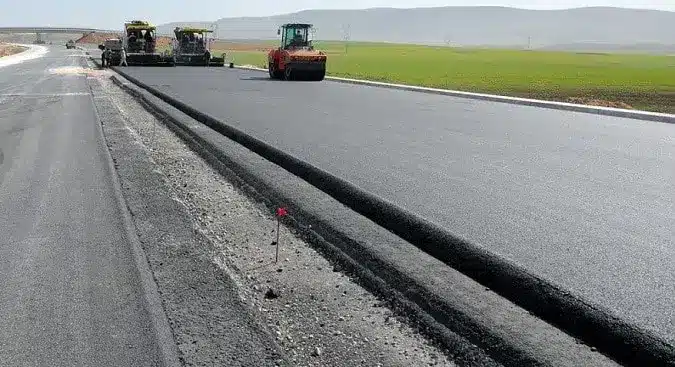
- Applications: It isversatile and may be utilised in a variety of applications, including road paving, roofing, and waterproofing.
What is Bitumen?
- It is a dense, highly viscous, petroleum-based hydrocarbon.
- It is found in deposits such as oil sands and pitch lakes (natural bitumen) or is obtained as a residue of the distillation of crude oil.
Q1:What Is a Hydrocarbon?
The term hydrocarbon refers to an organic chemical compound that is composed exclusively of hydrogen and carbon atoms. Hydrocarbons are naturally-occurring and form the basis of crude oil, natural gas, coal, and other important energy sources.
News: TOI