Daily Newspaper Editorial Analysis 6 January 2025

Launched in May 2021 in response to the Supreme Court's directive, the portal aimed to address the distressing plight of migrant workers during the COVID-19 pandemic by creating a unified national database.

Context

  • The Ministry of Labour and Employment (MoL&E) in India recently declared the e-Shram portal as the largest database of unorganised workers globally, with over 300 million workers registered.
  • Launched in May 2021 in response to the Supreme Court's directive, the portal aimed to address the distressing plight of migrant workers during the COVID-19 pandemic by creating a unified national database.
  • Despite this ambitious initiative, challenges in its implementation and gaps in its utility highlight the pressing need for more robust measures to ensure social protection and inclusion for India's vulnerable unorganised workforce.

Historical Context and the Need for a Database

  • The concept of maintaining a database for migrant and unorganised workers is not new.
  • The Interstate Migrant Workmen Act (1979) mandated contractors to provide detailed worker records, and the National Commission for Enterprises in the Unorganised Sector (2007) called for universal worker registration.
  • Similarly, the Unorganised Workers’ Social Security Act (2008) proposed identity cards for workers.
  • However, these efforts failed to gain traction, leaving millions of workers invisible to policymakers and the public.
  • This historical neglect underscores the significance of the e-Shram portal as a potentially transformative initiative.

Understanding the Vulnerability of Migrant Workers

  • Socio-Economic Exclusion
    • The lack of stable employment ties leaves migrant workers in a precarious situation.
    • Many are employed informally in sectors such as construction, agriculture, domestic work, and small-scale industries, where job security is almost non-existent.
    • Without formal contracts, they have little to no bargaining power and are frequently subjected to exploitative working conditions, including low wages, long hours, and unsafe environments.
    • The absence of unionisation further worsens their vulnerability, as they are unable to collectively advocate for better terms or working conditions.
  • Challenges of Disenfranchisement
    • Due to the transient nature of their employment, migrant workers often lack access to fundamental rights like voting.
    • Many are unable to register as voters in their place of work, and their names are often missing from electoral rolls in their home states.
    • This disenfranchisement not only alienates them politically but also deprives them of a voice in decisions that directly impact their lives, reinforcing their marginalisation.
  • Poor Access to Social Services
    • Access to essential services such as healthcare, education, housing, and social security is severely limited for migrant workers.
    • The lack of portability of welfare benefits across states means that they often cannot avail themselves of government schemes in their place of work.
    • For instance, migrant families may lose access to ration cards or healthcare benefits when they move to a new location.
    • Similarly, their children are at risk of losing continuity in education due to frequent relocations, perpetuating the cycle of poverty and vulnerability.
  • Stigma and Discrimination
    • Migrant workers frequently face stigma and discrimination in host communities.
    • They are often viewed as outsiders and treated with suspicion, which leads to social exclusion and sometimes even hostility.
    • This discrimination can limit their opportunities to integrate into local communities and access resources, further isolating them.
    • Women migrants are particularly vulnerable to exploitation and harassment, both at work and in their living conditions, compounding their struggles.

Persistent Challenges

  • Documentation and Eligibility Exclusion
    • A significant challenge lies in the exclusion of workers due to inadequate documentation.
    • Many migrant workers lack essential identification documents such as Aadhaar cards, ration cards, or voter IDs, which are often prerequisites for registration.
    • Additionally, issues such as unlinked mobile numbers, lack of permanent phone access, or inconsistent address details complicates their ineligibility.
    • For workers who are constantly on the move or live in temporary housing, these documentation requirements become insurmountable hurdles, effectively locking them out of social protection mechanisms.
  • Technological Barriers
    • Although the e-Shram portal aims to simplify access through technology, digital illiteracy among unorganised workers poses a significant barrier.
    • Many workers, especially those in rural areas, are unfamiliar with online processes or lack access to smartphones and reliable internet connectivity.
    • This digital divide disproportionately affects women workers, who often have limited access to personal mobile devices.
    • As a result, many workers are unable to navigate the registration process independently, relying on intermediaries who may exploit them.
  • Limited Portability of Benefits
    • The mobility of migrant workers creates a unique challenge in ensuring access to welfare benefits across states.
    • While initiatives like the One Nation One Ration Card (ONORC) attempt to address this issue, many schemes remain tied to a worker’s place of origin.
    • This lack of portability leaves inter-state migrants unable to access entitlements such as subsidised food, housing, or healthcare in their destination states.
    • Without seamless integration of welfare schemes across jurisdictions, a large segment of the migrant workforce remains excluded from critical support systems.
  • Fragmentation of Social Security Systems
    • India’s social security landscape is highly fragmented, with multiple schemes operating under different ministries and departments.
    • While the OSS attempts to integrate these schemes, the process is far from complete.
    • Key welfare programs like PM Matru Vandana Yojana and Shramik Suraksha Yojana are yet to be linked with the e-Shram portal, leaving gaps in coverage.
    • Additionally, overlapping responsibilities and bureaucratic inefficiencies slow down the implementation of a cohesive framework.

The Path Ahead

  • To fully realise its potential, the e-Shram portal must transcend its role as a mere registration platform and evolve into a comprehensive tool for empowering workers.
  • This requires disaggregating migration data, enhancing portability of benefits, and integrating human development outcomes into program design.
  • Non-profits and policymakers advocate viewing migrants as assets rather than burdens, emphasising their critical role in driving economic growth.
  • The 2030 Agenda for Sustainable Development warns that poorly managed migration can impede progress.

Conclusion

  • Migrants and unorganised workers are indispensable to India's economy, yet they continue to await recognition and rights.
  • The e-Shram portal and OSS are commendable steps, but achieving "Viksit Bharat" (Developed India) demands well-designed social protection systems that prioritise inclusion and equity for this workforce.
  • While the e-Shram portal has laid the foundation for addressing long-standing challenges faced by unorganised workers, its success depends on overcoming systemic barriers and integrating inclusive, sustainable policies.

Source: The Indian Express

Daily Editorial Analysis 6 January 2025

Q1: What are the key barriers preventing migrant workers from accessing benefits under the e-Shram portal?

Ans: Key barriers include inadequate documentation, such as the absence of Aadhaar cards or unlinked mobile numbers, and technological challenges due to digital illiteracy and lack of access to smartphones or the internet. Additionally, the lack of portability of benefits across states, limited awareness about the portal, and language barriers further hinder access. These systemic and operational gaps disproportionately exclude the most vulnerable workers from welfare schemes.

Q2: How does gender inequality impact women in the unorganised workforce, and what can be done to address it?

Ans: Women in the unorganised workforce often face lower wages, informal employment, and limited social security benefits. They are also more vulnerable to workplace harassment and lack access to maternity benefits or childcare support. To address these issues, welfare schemes should adopt a gender-sensitive approach, integrating specific provisions like maternity benefits, childcare facilities, and protection mechanisms to ensure equity and safety for women workers. 

Daily Newspaper Editorial Analysis 4 January 2025

The growth of international trade has underscored the importance of effective regulation to address the complex challenges of cross-border insolvency.

Context

  • The growth of international trade has underscored the importance of effective regulation to address the complex challenges of cross-border insolvency.
  • predictable insolvency framework is essential for developing economic stability, attracting foreign investments, and enabling corporate restructuring.
  • However, India’s historical and current approaches to insolvency law have struggled to address cross-border complexities

Historical Evolution of Insolvency Laws in India

  • Colonial Era
    • The Indian Insolvency Act of 1848 was the country’s first insolvency law, followed by the Presidency-Towns Insolvency Act, 1909, and the Provincial Insolvency Act, 1920.
    • While these laws provided a structure for managing domestic insolvencies, they were ill-equipped to handle cross-border cases, leaving a critical gap in the legal system.
  • Post-Independence
    • Post-independence, these laws remained largely unchanged despite recommendations from the Third Law Commission in 1964 for modernisation.
    • It was only in the 1990s, driven by economic liberalization and globalisation, that the need for a comprehensive insolvency law, including provisions for cross-border cases, gained national attention.
    • Committees like the Eradi Committee (2000), Mitra Committee (2001), and Irani Committee (2005) advocated for the adoption of the United Nations Commission on International Trade Law (UNCITRAL) Model Law on Cross-Border Insolvency, 1997.
  • Introduction of the Insolvency and Bankruptcy Code (IBC)
    • The Insolvency and Bankruptcy Code (IBC), introduced in 2016, marked a significant step forward, focusing on domestic insolvency.
    • However, despite the inclusion of Sections 234 and 235 to address cross-border insolvency, these provisions remain dormant due to the lack of reciprocal agreements and government notification, rendering them legally unenforceable.

Challenges in India's Existing Cross-Border Insolvency Framework

  • Dormant Provisions in the IBC
    • Sections 234 and 235 of the IBC, introduced to manage cross-border insolvency cases, have been rendered ineffective due to their dormant status.
    • Section 234 allows the Indian government to enter into reciprocal agreements with foreign countries to enforce insolvency resolutions, while Section 235 outlines the procedure for seeking cooperation from foreign courts through letters of request.
    • However, these provisions are yet to be operationalised because of two primary issues:
      • India has not established reciprocal arrangements with any foreign jurisdiction. These agreements are vital for enabling mutual recognition and enforcement of insolvency proceedings.
      • Without such agreements, the implementation of Section 234 remains impractical.
    • Sections 234 and 235 have not been notified by the government, rendering them legally unenforceable.
    • This inaction has left a critical gap in India's insolvency framework, forcing courts and stakeholders to rely on ad hoc solutions.
  • Judicial Challenges
    • Limited Powers of the NCLT
      • The National Company Law Tribunal (NCLT) is the primary adjudicating authority for insolvency matters under the IBC.
      • However, it lacks the power to recognise or enforce foreign insolvency judgments. This limitation hampers its ability to address cross-border insolvency comprehensively.
      • Additionally, Rule 11 of the NCLAT Rules, 2016, which could allow the NCLT to exercise inherent jurisdiction and facilitate comity with foreign courtshas not been implemented for IBC matters.
    • Dependence on Ad Hoc Protocols
      • In the absence of a formal framework, Indian courts have resorted to ad hoc cross-border insolvency protocols.
      • While these have been helpful in individual cases, such as Jet Airways (India) Limited vs. State Bank of India (2019), they are temporary solutions.
      • These protocols increase the judicial burden, elevate transaction costs, and delay resolutions, often reducing the value of a debtor’s assets.
    • Outdated Communication Mechanisms
      • Communication between Indian and foreign courts in insolvency matters is inefficient and outdated.
      • Traditional methods of issuing letters of request lack the transparency and speed required for resolving complex cross-border cases.
      • This creates additional delays, increasing uncertainty for stakeholders.
  • Regulatory and Legislative Shortcomings
    • Unclear Framework for Recognition of Foreign Proceedings
      • Unlike countries that have adopted the UNCITRAL Model Law on Cross-Border Insolvency, India does not have a clear mechanism for recognising foreign insolvency proceedings.
      • This results in inconsistent judicial decisions, as courts often rely on discretionary powers or general principles of comity.
    • Inadequate Coordination with Foreign Jurisdictions
      • Cross-border insolvency cases often require seamless coordination between domestic and foreign jurisdictions.
      • However, India's lack of a structured framework for judicial cooperation undermines the efficiency and fairness of insolvency proceedings.

Case Study: State Bank of India vs. Jet Airways (India) Limited (2019)

  • The Jet Airways case is a landmark example of the challenges posed by India’s inadequate cross-border insolvency framework. The NCLT highlighted two major issues:
  • The absence of a reciprocal agreement between India and the Netherlands made it impossible to enforce insolvency proceedings in the latter jurisdiction.
  • Sections 234 and 235, which could have addressed these issues, were deemed “dead letters” due to their non-operational status.
  • Although an ad hoc cross-border insolvency protocol was developed to coordinate proceedings between Indian and Dutch administrators, this solution was neither sustainable nor efficient.

Recommendations for Reform

  • Adopting the UNCITRAL Model Law:
    • The model law offers a structured and internationally recognised framework for managing cross-border insolvencies.
    • Its adoption would enhance predictability, improve efficiency, and strengthen investor confidence in India’s insolvency regime.
  • Modernising Judicial Communication
    • Outdated communication methods between Indian and foreign courts hinder the resolution of cross-border insolvency cases.
    • Implementing the Judicial Insolvency Network (JIN) Guidelines (2016) and its Modalities of Court-to-Court Communication (2018) would modernise judicial coordination, enhance transparency, and streamline cross-border insolvency proceedings.
  • Expanding the Powers of the NCLT
    • Section 60(5) of the IBC restricts civil courts from exercising jurisdiction over insolvency matters, making the NCLT the sole adjudicating authority.
    • However, the NCLT lacks the authority to recognize or enforce foreign judgments, limiting its effectiveness.
    • Expanding the NCLT’s powers and implementing Rule 11 of the NCLAT Rules, 2016, would enable it to address cross-border insolvency issues comprehensively.

Conclusion

  • India’s economic integration with the global market necessitates a robust cross-border insolvency framework.
  • While the IBC has laid a strong foundation for managing domestic insolvencies, its limitations in addressing cross-border cases remain a significant challenge.
  • Adopting the UNCITRAL Model Law, modernising judicial communication, and empowering the NCLT are crucial steps toward bridging this gap.

source: The Hindu

Daily Editorial Analysis 4 January 2025

Q1: Why are Sections 234 and 235 of the IBC ineffective in addressing cross-border insolvencies in India?

Ans: Sections 234 and 235 of the Insolvency and Bankruptcy Code (IBC) are ineffective due to their dormant status. Section 234 allows the Indian government to enter into reciprocal agreements with foreign jurisdictions to facilitate the enforcement of insolvency resolutions. However, no such agreements have been established, leaving the provision inoperative. Section 235 outlines the procedure for seeking assistance from foreign courts through letters of request, but it also remains unimplemented because the central government has not notified these sections. Consequently, these provisions, though theoretically present, cannot be applied in practice, creating a significant gap in India’s ability to manage cross-border insolvencies.

Q2: What are the main challenges faced by Indian courts in resolving cross-border insolvency cases?

Ans: Indian courts face several hurdles in handling cross-border insolvency cases effectively. The National Company Law Tribunal (NCLT), the primary adjudicating authority under the IBC, lacks the authority to recognize or enforce foreign insolvency judgments, limiting its jurisdiction in cross-border matters. In the absence of a formal framework, courts rely on ad hoc cross-border insolvency protocols, which, while useful in individual cases, are temporary and inefficient, increasing transaction costs and judicial burden. Furthermore, communication with foreign courts is hampered by outdated procedures like letters of request, which are slow and lack transparency. These challenges collectively undermine the efficiency of cross-border insolvency resolution in India. 

Daily Newspaper Editorial Analysis 3 January 2025

Cash transfers have long been part of social protection schemes across the globe, designed to address specific challenges like poverty, health access, and education.

Context

  • Cash transfers have long been part of social protection schemes across the globe, designed to address specific challenges like poverty, health access, and education.
  • India’s National Social Assistance Programme (NSAP), one of the oldest cash transfer initiatives, exemplifies this by providing pensions to vulnerable populations such as the elderly, widowed, and disabled.
  • However, recent trends reveal that cash transfers have evolved from targeted safety nets to political tools used as a panacea for a wide array of social and economic challenges.
  • While they have gained popularity among political parties, their efficacy in addressing underlying issues remains questionable.

The Rise of Cash Transfers in Indian Politics

  • In recent years, cash transfer schemes have become a favoured strategy for political parties to secure electoral success.
  • For instance, incumbent governments in Maharashtra and Jharkhand successfully utilised cash transfer schemes targeted at women voters, contributing significantly to their re-election.
  • Similarly, states like Telangana and Odisha adopted cash transfers to address agrarian distress, a model later expanded by the central government through the PM-KISAN scheme in 2019.
  • These schemes have since been extended to tackle unemployment, with several states implementing or promising direct financial assistance for the unemployed.
  • The appeal of cash transfers lies in their simplicity and immediacy.
  • With the expansion of financial inclusion, these schemes are easy to implement and provide direct, tangible benefits to voters, bypassing bureaucratic inefficiencies and middlemen.
  • Additionally, their fungible and unconditional nature makes them highly attractive to beneficiaries.
  • For politicians, they offer a direct connection with the electorate, enhancing their popularity and electoral prospects.

Arguments Against the Cash Transfer Policy: The Problematic Assumptions

  • Cash Transfers Solve Root Problems
    • A prevalent belief is that direct financial assistance can effectively resolve issues like poverty, unemployment, and agrarian distress.
    • However, this assumption overlooks the multi-dimensional nature of these problems.
    • Poverty, for instance, is influenced by factors such as lack of education, inadequate healthcare, and limited access to infrastructure.
    • Similarly, agrarian distress arises from systemic challenges, including outdated farming techniques, volatile markets, and inadequate policy support.
    • Cash transfers provide temporary relief but fail to address the structural issues underlying these crises.
  • Universality Equals Effectiveness
    • Another flawed assumption is that cash transfers, being fungible and universal, inherently meet the diverse needs of beneficiaries.
    • While their unconditional nature provides flexibility, it also limits their capacity to address specific issues effectively. For example, a farmer receiving cash under an agrarian distress scheme might use it for immediate household expenses rather than investing in agricultural inputs or modern equipment.
    • Similarly, unemployed youth might use funds for consumption rather than skill development or entrepreneurship.
    • The universal application of cash transfers disregards the varied and nuanced needs of different demographic groups.
  • Cash Transfers Bypass Bureaucratic Inefficiencies
    • While cash transfers do circumvent some layers of bureaucracy and reduce the role of intermediaries, they are not immune to implementation challenges.
    • Issues such as exclusion errors, where eligible beneficiaries are left out, and inclusion errors, where ineligible individuals receive benefits, are common.
    • These errors undermine the fairness and effectiveness of such schemes.
    • Additionally, the dependence on robust financial infrastructure and digital literacy excludes marginalised populations, particularly in rural areas where access to banking services remains limited.
  • Political Success Equals Policy Success
    • Perhaps the most problematic assumption is the conflation of political and policy success.
    • The electoral gains achieved through cash transfers are often seen as evidence of their effectiveness.
    • However, this ignores the broader metrics of success, such as improvements in human development indicators, economic growth, or social equity.
    • Political parties focus on the immediate popularity boost from cash transfers without evaluating their long-term impact or sustainability.

Arguments Supporting the Cash Transfer Policy

  • Empowering Women Through Direct Transfers
    • India’s performance in global indices of gender equality reveals a stark reality.
    • Ranked 129 out of 146 countries in the 2023 Global Gender Gap report, India has seen a declining trend in women’s workforce participation despite robust economic growth.
    • Direct cash transfers to women have shown promise in dismantling barriers to education, employment, and dignified living.
    • For instance, the Delhi government’s 2019 initiative of free bus rides for women resulted in a 24% increase in employment among women from marginalized communities, as reported in a 2023 independent study.
    • This program illustrates how targeted subsidies can empower women by providing affordable mobility, a critical factor in accessing work and education.
  • Broader Impact on Society
    • Over the last decade, the Delhi government has introduced multiple subsidies, such as free electricity and water, aimed at enhancing the quality of life for lower- and middle-income groups.
    • These measures not only act as social safety nets but also stimulate economic demand by boosting purchasing power.
    • Contrary to fears of misuse, global evidence suggests that beneficiaries of cash transfers prioritise essential expenses such as nutrition, education, and healthcare.
    • A study across 119 developing countries found recipients of unconditional cash assistance programs improved their quality of life significantly, underscoring the utility of such schemes in addressing poverty and inequality.
  • Balancing Welfare with Development
    • The concern that welfare schemes might divert resources from critical investments in infrastructure and human capital is valid but context-dependent.
    • The Delhi Model provides an instructive case. Approximately 40% of its annual budget is allocated to health and education, leading to significant improvements in these sectors.
    • Delhi now boasts some of the best government schools and public healthcare systems in India.
    • Simultaneously, the state has made significant strides in infrastructure development, from doubling the Delhi Metro’s length to expanding green mobility through e-buses.
    • These achievements demonstrate that welfare schemes and developmental investments can coexist, provided there is prudent fiscal management.

Way Forward: Rethinking the Assumptions

  • The problematic assumptions underpinning the over-reliance on cash transfers highlight the need for a paradigm shift in policy design.
  • Cash transfers should be viewed as one component of a broader strategy, complementing investments in infrastructure, education, healthcare, and social services.
  • Policymakers must recognise that sustainable solutions require time, effort, and collaboration across stakeholders.
  • Without addressing these flawed assumptions, cash transfers risk becoming a superficial fix rather than a transformative tool for development.

Conclusion

  • While cash transfers have their merits, their overuse as a political tool risks undermining the very objectives they aim to achieve.
  • The need of the hour is a more balanced understanding of the role of cash transfers in social welfare.
  • Rather than being viewed as quick-fix solutions, they should be integrated into broader strategies aimed at strengthening social safety nets and addressing systemic issues.
  • This requires prioritising investments in critical sectors and designing interventions that go beyond electoral gains to achieve sustainable development outcomes.

Q) Why are cash transfers considered insufficient in addressing complex societal problems?

Cash transfers are insufficient because they provide temporary relief without addressing the systemic and multi-dimensional nature of issues like poverty, unemployment, and agrarian distress. These problems often require long-term structural reforms, targeted policies, and investments in education, healthcare, and infrastructure. While cash transfers may offer immediate benefits, they fail to tackle the root causes of these challenges.

Q) What are the risks of over-relying on cash transfers as a political tool?

Over-reliance on cash transfers risks fostering a culture of competitive populism, where governments prioritize short-term political gains over sustainable development. This leads to fiscal strain, neglect of essential investments in health, education, and infrastructure, and ineffective solutions to deeper societal issues. Additionally, it perpetuates the flawed assumption that cash transfers alone can resolve complex problems.

Source:The Indian Express

Daily Newspaper Editorial Analysis 2 January 2025

Tackling Delimitation by Reversing Population Control

In recent years, the Chief Ministers of Andhra Pradesh and Tamil Nadu have voiced concerns over the implications of the proposed delimitation exercise and the potential loss of parliamentary seats for southern states.

Context

  • In recent years, the Chief Ministers of Andhra Pradesh and Tamil Nadu have voiced concerns over the implications of the proposed delimitation exercise and the potential loss of parliamentary seats for southern states.
  • This development, driven by the south’s advanced fertility transition, highlights a complex intersection of demography, politics, and regional equity.
  • The debate sheds light on the challenges of balancing population trends with political representation, alongside broader questions about fertility policies and their socio-economic impact.

Fertility Transition and Political Representation

  • Fertility Transition
    • The southern states of India, including Andhra Pradesh and Tamil Nadu, have excelled in achieving lower fertility rates, reflecting successful family planning initiatives.
    • However, this demographic success inadvertently poses a political disadvantage.
    • The delimitation exercise, which adjusts parliamentary representation based on population, could reduce the number of seats for states with declining populations, thereby diminishing their political influence.
    • This issue underscores a fundamental tension in India’s federal structure: the ideal of "one person, one vote" clashes with the reality of demographic disparities.
  • The Debate on Political Representation
    • As Mr. Naidu and Mr. Stalin have pointed out, this dynamic can create perverse incentives, encouraging policies that promote higher fertility to preserve political representation.
    • While Mr. Naidu suggested revisiting policies that incentivise larger families, Mr. Stalin humorously proposed aiming for significantly more children.
    • These remarks highlight the absurdity and complexity of addressing regional imbalances in political representation through demographic measures.

Lessons from Global Experiences

  • International examples, such as China’s one-child policy, offer critical insights into the unintended consequences of fertility regulation.
  • While China successfully curbed population growth, the policy led to significant challenges, including a skewed sex ratio, a rising dependency burden, and an irreversible decline in fertility rates.
  • Similarly, countries like Japan and South Korea, despite implementing pro-natalist policies, have struggled to reverse declining fertility trends.
  • These cases demonstrate that fertility transitions, once achieved, are rarely reversible through state intervention.
  • India must tread cautiously to avoid repeating such mistakes. Quick-fix regulatory measures aimed at increasing fertility could disrupt the natural demographic transition, creating long-term socio-economic and cultural challenges.

The Debate on Demographic Disparity: Challenges and Implications

  • The North-South Demographic Divide
    • The southern states, including Tamil Nadu, Andhra Pradesh, Kerala, and Karnataka, have undergone significant demographic transitions over the past decades.
    • These states have achieved lower fertility rates, higher literacy levels, better healthcare outcomes, and robust economic growth.
    • This is largely due to sustained investments in education, family planning, and infrastructure, alongside proactive governance.
    • In contrast, many northern states, such as Uttar Pradesh, Bihar, Madhya Pradesh, and Rajasthan, continue to grapple with higher fertility rates, lower literacy levels, and slower socio-economic progress.
    • This demographic divide has led to an uneven population growth trajectory, with northern states accounting for a larger share of India’s overall population.
  • Increasing Debate on Political Representation
    • When parliamentary representation is determined solely by population size, the southern states stand to lose seats due to their slower population growth, while the northern states gain political clout.
    • This imbalance creates a paradox where states that have achieved population stabilisation and socio-economic development are penalised, while those with higher population growth are rewarded.
  • Implications for Federal Equity
    • This demographic disparity poses significant challenges to the principles of federal equity.
    • Southern states, which contribute disproportionately to India’s GDP and have lower dependency burdens, may feel marginalised if their political representation diminishes.
    • This could lead to a sense of alienation and undermine the cooperative spirit necessary for India’s federal system to function effectively.
    • At its core, the issue raises a critical question: should population size alone determine political representation, or should other factors, such as a state’s developmental achievements and contributions to national growth, also be considered?
  • Gendered Implications
    • Encouraging higher fertility rates raises critical questions about the role of women in society and women bear the brunt of reproduction, often at significant personal and professional costs.
    • Policies aimed at reversing fertility decline must prioritize comprehensive social support systems, including childcare, healthcare, and compensation for women’s reproductive labour.

Potential Solutions for Equity

  • Weighted Representation
    • One potential solution is to introduce weighted representation, where factors such as literacy rates, healthcare outcomes, and economic contributions are considered alongside population size.
    • This would ensure that states are rewarded for their developmental achievements rather than penalised for lower population growth.
  • Revisiting Delimitation Criteria
    • The delimitation exercise could be restructured to include demographic and socio-economic indicators as additional criteria for seat allocation.
    • For instance, states that have achieved population stabilization could receive a baseline level of representation, preventing significant reductions in their parliamentary seats.
  • Inter-Regional Redistribution
    • To address the immediate demographic divide, policies could promote greater inter-regional migration.
    • Encouraging labour mobility between northern and southern states could help balance population densities and foster economic integration, thereby reducing the regional divide over time.
  • Fiscal Incentives for Development
    • Beyond representation, fiscal policies could incentivize lagging states to invest in family planning, education, and healthcare.
    • By addressing the root causes of high population growth, these policies would help reduce the demographic divide in the long term.

Way Forward: Balancing Unity and Diversity and Evolution of the Role of Federalism

  • Balancing Unity
    • The issue of regional disparities in political representation is not merely a technical challenge but a test of India’s commitment to federal unity and equity.
    • Southern states have legitimate concerns about being underrepresented despite their developmental contributions, while northern states argue that their larger populations warrant greater representation.
    • Striking a balance between these perspectives requires innovative and inclusive policymaking.
  • Evolution of the Role of Federalism
    • India’s federal system must evolve to accommodate its demographic realities while preserving the principles of unity and equity.
    • Recognising regional disparities and addressing them proactively will strengthen trust among states and ensure that all regions feel equally valued in the national decision-making process.
    • By doing so, India can uphold the spirit of cooperative federalism and create a more balanced and inclusive framework for governance.

Conclusion

  • The debate over fertility and representation reflects broader challenges in managing India’s demographic transition.
  • Balancing political representation with demographic realities requires innovative solutions that prioritise equity, sustainability, and gender justice.
  • Ultimately, the focus must shift from reversing fertility trends to creating a fair and inclusive framework for governance that respects the diversity and achievements of India’s states. 

Source: The Hindu

Daily Newspaper Editorial Analysis 2 January 2025 FAQs

Q1: Why do southern states in India face the risk of losing political representation despite their demographic success?

Ans: Southern states, such as Tamil Nadu and Andhra Pradesh, have achieved lower fertility rates through successful family planning and development initiatives. However, parliamentary representation is based on population size, and their slower population growth reduces their share of seats in the Lok Sabha. This creates a paradox where states that have stabilized their populations are penalized politically, while states with higher population growth gain representation.

Q2: What measures can address the regional disparities in political representation in India?

Ans: Potential measures include introducing weighted representation that considers development indicators like literacy and healthcare, restructuring delimitation criteria to prevent drastic reductions in representation for developed states, and encouraging inter-regional migration to balance population densities. Additionally, fiscal policies could incentivize lagging states to invest in development and population control, helping reduce the demographic divide over time.

Electrokinetic Mining

Electrokinetic Mining

About Electrokinetic Mining: 

  • It is a novel technique which uses Electrokinetic i.e the application of a direct or alternating electric field to accelerate the migration of movable species, such as metals, water, and particles.
  • Issue with present technique:
    • Currently, heavy rare earth elements (HREE) are dominantly mined from ion-adsorption rare earth deposits (IADs) discovered in South China, and the regional mining produces and supports 95% of the global demand of HREEs.
    • However, the conventional mining applies excessive usage of ammonium-salt-based leaching agents to recover HREEs from IADs, such technique exhibits low efficiency and devastating environmental impact on the local eco-system. 
  • Advantages of Electrokinetic Mining
    • It reduces leaching agent usage by 80%, and energy consumption by 60%.
    • High recovery rate: Its recovery rate exceeds 95% which marks a breakthrough in sustainable mining.
    • It can simultaneously help reduce the environmental impacts and improve the recovery rate of REEs.

Q1: What is electrolysis mining?

Electrolysis uses a direct electric current to create a chemical reaction. This process is used to produce pure copper metal in the final stage of copper extraction from ores after being removed from the ground.

Source: STD

INS Nilgiri, INS Surat, and INS Vaghsheer Commissioned: India’s Naval Power Strengthened

INS Nilgiri, INS Surat, and INS Vaghsheer Commissioned: India's Naval Power Strengthened

What’s in today’s article?

  • Why in News?
  • What is INS Nilgiri?
  • What is INS Surat?
  • What is INS Vaghsheer?
  • Commissioning Ceremony of Three Vessels

Why in News?

Three frontline combatants were commissioned into the Indian Navy at the Naval Dockyard in Mumbai: INS Nilgiri, the lead ship of the Project 17A stealth frigate class; INS Surat, the fourth and final ship of the Project 15B stealth destroyer class; and INS Vaghsheer, the sixth and final Scorpene-class submarine.

What is INS Nilgiri?

  • Nilgiri-Class Stealth Frigates: An Overview
    • The Nilgiri-class stealth frigates, developed under Project 17A, are advanced follow-on vessels of the Shivalik-class (Project 17). 
    • These multi-mission frigates are designed for blue-water operations, capable of handling both conventional and non-conventional threats.
  • Key Features and Capabilities
    • Integrated construction for faster building times.
    • Equipped with supersonic surface-to-surface missiles, Medium Range Surface-to-Air Missiles (MRSAM), upgraded 76 mm guns, and rapid-fire close-in weapon systems.
    • Versatile roles in anti-surface, anti-air, and anti-submarine warfare.
  • INS Nilgiri: Lead Ship of Project 17A
    • Construction and Launch: Keel laid on December 28, 2017; launched on September 28, 2019.
    • Sea Trials: Began in August 2023, followed by comprehensive harbour and sea trials.
    • Delivery: Handed over to the Navy in December 2024.
  • Other Ships in the Class
    • The remaining six frigates — Himgiri, Taragiri, Udaygiri, Dunagiri, Vindhyagiri — are under construction at Mazagon Dock Shipbuilders Limited (MDL), Mumbai, and Garden Reach Shipbuilders and Engineers (GRSE), Kolkata.

What is INS Surat?

  • INS Surat: Overview of Project 15B Destroyers
    • INS Surat is the fourth and final stealth guided missile destroyer under Project 15B, following INS Visakhapatnam, INS Mormugao, and INS Imphal, commissioned over the last three years. 
    • It represents an advanced iteration of the Kolkata-class destroyers built under Project 15A.
  • Key Features of INS Surat
    • India's First AI-Enabled Warship: Utilizes indigenously developed artificial intelligence solutions for enhanced operational efficiency.
  • Specifications:
    • Displacement: 7,400 tonnes.
    • Length: 164 metres.
    • Speed: Achieved speeds exceeding 30 knots (56 km/h) during sea trials.
  • Advanced Armaments: Equipped with state-of-the-art surface-to-air missiles, anti-ship missiles, torpedoes, and modern sensors for network-centric warfare.
  • Project 15B: Evolution of Stealth Destroyers
    • Built as an advanced variant of the Kolkata-class destroyers under Project 15A (INS Kolkata, INS Kochi, INS Chennai).
    • Contract Signing: January 2011, for four destroyers designed by the Indian Navy's Warship Design Bureau and built by MDL.
      • Named after major Indian cities representing the four corners of the country.
  • Role of Destroyers in Naval Operations
    • High-speed, manoeuvrable warships with greater strike capability and endurance.
    • Critical assets for offensive operations and network-centric warfare, integrating force elements using advanced IT and communication tools.

What is INS Vaghsheer?

  • INS Vaghsheer: Overview of the Kalvari Class Submarine
    • INS Vaghsheer is the sixth and final submarine of the modern Kalvari class built under Project 75, designed for stealth and versatility in naval operations.
  • Design and Capabilities
    • Based on the Scorpene Class: Developed from the Scorpene design by French defence major Naval Group and Spanish entity Navantia.
    • Diesel-Electric System: Primarily "attack" or "hunter-killer" submarines, built to target and destroy adversary naval vessels.
    • Silent and Versatile: Known as one of the world’s most silent and versatile diesel-electric submarines.
  • Mission Versatility
    • Wide Range of Missions: Includes anti-surface warfare, anti-submarine warfare, intelligence gathering, area surveillance, and special operations.
    • Armament: Equipped with wire-guided torpedoes, anti-ship missiles, and advanced sonar systems.
  • Naming and Heritage
    • Named After Sandfish: INS Vaghsheer is named after a species of sandfish found in the Indian Ocean.
    • Historical Significance: The Kalvari class submarines take their names from decommissioned classes, including Kalvari, Khanderi, Karanj, and the Vela class, reflecting the early Soviet-origin Foxtrot class submarines of the Indian Navy post-Independence.

Commissioning Ceremony of Three Vessels

  • About the news
    • Prime Minister Narendra Modi presided over the commissioning of INS Nilgiri, INS Surat, and INS Vaghsheer, marking the first time a destroyer, a frigate, and a submarine have been commissioned together in the Indian Navy.
  • Significance of the Vessels
    • Indigenous Construction: All three vessels are Made in India, underscoring India's growing self-reliance in defense capabilities.
    • Development Timeline: The journey from design to commissioning of these ships spanned 10 to 15 years, reflecting the long-term investment in naval infrastructure.
  • Strategic Importance
    • Enhancing Naval Power: The addition of these platforms strengthens India’s defense capabilities, contributing to the Navy’s force level needed to deter regional threats.
    • Bolstering Maritime Influence: These ships are key to enhancing India’s strategic maritime presence in the Indian Ocean Region and beyond.
  • Dual Military and Economic Significance
    • The commissioning of these vessels holds both military and economic importance, strengthening India’s defense posture and reinforcing its role as a key player in global maritime security.

Q.1. What is the significance of INS Nilgiri in the Indian Navy?

INS Nilgiri, the lead ship of Project 17A, is an advanced stealth frigate designed for blue-water operations. It strengthens India's defense with capabilities in anti-surface, anti-air, and anti-submarine warfare, contributing to India’s naval dominance.

Q.2. How does INS Surat enhance India's naval power?

INS Surat is India’s first AI-enabled warship, equipped with advanced armaments and sensors. It strengthens India's defense capabilities, supports network-centric warfare, and enhances strategic maritime influence, playing a vital role in deterring regional threats.

Source: IE | IE | IT

Hydroclimate whiplash

Hydroclimate whiplash

About Hydroclimate Whiplash: 

  • It is a rare meteorological condition wherein an extremely wet season is succeeded by an extremely dry season.
  • How does it occurs?
    • It’s kind of this paradox that as the atmosphere gets warmer, both the amount of water vapour in the atmosphere can increase, and the deficit of water vapour in the atmosphere can also increase exponentially.
    • Consequently, as the atmosphere warms, it is able to hold much more water – for a longer period – before it is eventually released as precipitation.
    • It is this relationship between global warming and the atmosphere which leads to the extended periods of dry spells and more intense rainfall when it eventually occurs.
  • Impacts
    • Increases the number of droughts and floods.
    • Fires created by the dry condition exacerbate respiratory and cardiovascular diseases through their polluting smoke.
    • Human health: Flooding creates conditions for waterborne illnesses such as cholera, leptospirosis
  • Such ‘hydroclimate whiplash’ conditions have increased by 31-66 per cent in three-month periods (sub-seasonal) and by 8-31 per cent in 12-month periods (inter-annual) across the world since the middle of the 20th century.

Q1:What is a hydroclimate?

Hydroclimate is the scientific field that brings together hydrology and climate, including the impacts that water and its processes have on Earth's climate, and the impacts of climate patterns and change on the global hydrological (or water) cycle.

Source: DTE

Sydney Funnel-Web Spider

Sydney Funnel-Web Spider

About Sydney Funnel-Web Spider: 

  • Scientists have named this 9-centimetre (3.54 inches) long species as Atrax christenseni.
  • The new funnel-web species has earned the nickname "Big Boy" and was first discovered in the early 2000s near Newcastle, 170 km (105 miles) north of Sydney.
  • Characteristics
    • It is a shiny, dark brown to black spiders with finger-like spinnerets (silk-spinning organs) at the end of their abdomen.
    • Its venom glands are a lot larger and its fangs are a lot longer.
    • Only the male Sydney funnel-web, which carries a much stronger venom, is responsible for human deaths.
  • Habitat: They are found in bushy suburban areas, open and closed sclerophyll forests and woodlands, often on south or east-facing slopes or in shady gullies.

What is a funnel-web spider?

  • These are one of the most dangerous arachnids in the world.
  • There are 36 described species of Australian funnel-web spiders and they are currently placed in three genera: Hadronyche, Atrax and Illawarra.
  • The spider has venom, which is filled with 40 different toxic proteins.
  • Its raw venom is the best way to make life-saving antivenom.

Q1: What's the Most Poisonous Spider in the World? 

According to the Guinness World Records, the Sydney funnel-web spider, Atrax robustus, is the most dangerous spider to humans in the world.

Source: IT

Kokborok Language

Kokborok Language

About Kokborok Language:

  • Kokborok is a language of the Borok people, geographically known as Tripuris.
  • It is one of the State’s official languages of Tripura, notified on January 19, 1979.
  • It is a Sino-Tibetan language and can be traced back to at least the 1st century AD when the historical record of Tripuri kings started to be written down in a book called the Raj Ratnakar. 
  • So far, the term Kokborok is known to first occur as ‘Kok-boro’ in 1897/98 in an early primer on the language, Daulat Ahmed ‘Kokboroma.
  • In 1900, Thakur Radhamohan Debbarma spelt ‘Kokborok’ in a published grammar of the language.
  • At the time, various British Political Agents, District Officers, Sub- Division Officers were known as linguists – they called this language Tipperh, Tipura, or Tipra Language.
  • The word Kokborok is derived from the word ‘Kok’, meaning ‘verbal’, and ‘Borok’, meaning ‘people’ or ‘human’.
  • According to the 2011 Census report, the number of Kokborok-speaking people is 8,80,537, which is 23.97% of the total population of Tripura.

Q1: What is the Roman script?

Roman script, also known as the Latin script, is the writing system originally developed by the ancient Romans. It is the most widely used writing system in the world today and is the script used for writing English, as well as many other languages such as Spanish, French, Italian, German, and Portuguese.

Source: IT

US AI Export Rule Excludes India from Benefits of Closest Allies: Impact on AI Growth

US AI Export Rule Excludes India from Benefits of Closest Allies: Impact on AI Growth

What’s in today’s article?

  • Why in News?
  • Three-Tier Framework for AI Hardware Export Restrictions
  • Special Provision for India and China
  • Why did the US impose these caps?
  • Potential Impact on India
  • Nvidia’s Criticism of the AI Diffusion Rules

Why in News?

The Joe Biden administration, days before leaving office, introduced a regulatory framework titled ‘Framework for Artificial Intelligence Diffusion’ that categorizes countries into three tiers for AI hardware export restrictions. The first tier includes 18 close US allies with minimal restrictions, while the third tier severely restricts exports to countries of concern.

The rules aim to maintain US control over advanced AI chips and models, but their enforcement will depend on the incoming Trump administration.

Three-Tier Framework for AI Hardware Export Restrictions

  • Tier 1: Closest US Allies
    • Includes 18 countries like Australia, Canada, Germany, Japan, and the UK.
    • No restrictions on computing power deployment by US companies.
    • Security requirements are minimal.
  • Tier 2: Majority of Countries, Including India
    • Most countries fall in this category, including India.
    • Limited to importing around 50,000 advanced AI chips through 2027, which could double with a US agreement.
    • India is placed in the middle tier, facing some limitations on importing GPUs, potentially impacting its plan to acquire 10,000 GPUs for the IndiaAI Mission.
    • Large AI data centers could face challenges, but smaller firms remain unaffected.
  • Tier 3: Restricted Countries (severely restricts exports to countries of concern)
    • Includes nations like Russia, China, North Korea, and Libya.
    • Export of US AI technology to these countries is nearly prohibited.

Special Provision for India and China

  • The law also envisions a special review called the General Validated End User
  • This list includes only two countries: India and China.
  • India
    • Indian companies that get this authorisation can use the exported items for civilian and military purposes, but not for nuclear use.
  • China 
    • Chinese companies with this authorisation can only use the technology for civilian use.

Why did the US impose these caps?

  • To prevent adversaries like China, Iran, and Russia from accessing advanced AI technologies.
  • To build a trusted technology ecosystem while addressing national security risks.
  • The policy aims to protect US technological leadership without stifling innovation.

Potential Impact on India

  • Short-term Impact:
    • Experts feel that India’s initial plan to procure 10,000 GPUs for the ₹10,000-crore IndiaAI Mission is unlikely to be affected.
    • Subsidised GPUs will be provided to startups, academia, and researchers for training AI models.
  • Long-term Concerns:
    • Licensing uncertainties and trade negotiations may challenge large-scale AI deployments.
    • Companies like Reliance and Yotta, aiming to build AI compute infrastructure, could face delays.
    • Scaling up AI data centers requiring several hundred thousand GPUs may become difficult.

India’s Response and Options

  • Current demand can be fulfilled, but future scaling may require reassessment of restrictions by the incoming Trump administration.
  • India could secure General National Validated End User authorisations due to its non-re-exporter status and support from Nvidia and AMD.
  • The country’s AI market is projected to grow to $17 billion by 2027 at an annual rate of 25%-35%.

Nvidia’s Criticism of the AI Diffusion Rules

  • Nvidia, dominating the AI GPU market, criticized the Biden administration’s new AI diffusion rules as:
    • Overreaching and Bureaucratic: Described the 200+ page regulatory framework as excessive, secretive, and lacking proper legislative review.
    • Harming US Competitiveness: Claimed the rules impose unnecessary controls over semiconductor and software design and marketing, weakening US innovation and global leadership.
    • Contrasting Trump’s Approach: Praised the first Trump administration for fostering AI growth through industry competition without compromising national security, contrasting it with Biden's policies.
  • Nvidia suggested the new rules would hinder innovation rather than mitigate any threats.

Q.1. How does the new US AI export rule affect India?

India is placed in Tier 2, with limited access to advanced AI chips, impacting large-scale AI projects. However, initial AI missions like IndiaAI may not face immediate disruption, although future scaling could be challenging.

Q.2. What is Nvidia’s criticism of the new AI export rules?

Nvidia criticized the rules for being bureaucratic and excessive, harming US innovation and competitiveness. The company argued that the restrictions would impede the growth of AI technology, contrasting it with Trump’s more flexible approach.

Source: IE | IE | FE

Growing Plants in Space: The Future of Sustenance Beyond Earth

Growing Plants in Space: The Future of Sustenance Beyond Earth

What’s in today’s article?

  • Introduction
  • Why Grow Plants in Space?
  • Challenges of Growing Plants in Space
  • Techniques for Space Farming
  • ISRO’s Experiment with Lobia
  • Ideal Space Crops
  • Significance of Space Farming
  • Conclusion

Introduction

  • The Indian Space Research Organisation (ISRO) achieved a significant milestone by successfully germinating lobia (black-eyed pea) seeds in space as part of its Compact Research Module for Orbital Plant Studies (CROPS).
  • This development highlights the importance of cultivating plants in extra-terrestrial environments, paving the way for sustainable life on celestial bodies like the Moon and Mars.

Why Grow Plants in Space?

  • As space missions extend over years, traditional food supplies fall short due to their limited shelf life and nutritional degradation over time.
  • Growing plants in space addresses these challenges by:
    • Sustaining Food Supply: Plants provide a renewable source of nutrition.
    • Oxygen Production: Photosynthesis in plants releases oxygen, making the air aboard spacecraft breathable.
    • Recycling Systems: Plants create a closed-loop system by recycling carbon dioxide and organic waste.
    • Mental Health Benefits: Tending to plants helps reduce stress and enhances astronauts' overall well-being.

Challenges of Growing Plants in Space

  • Growing plants in space presents several obstacles, primarily due to the microgravity environment:
  • Root Growth and Water Delivery:
    • In microgravity, roots lack the directional pull of gravity and fail to grow downward.
    • Water clings to surfaces rather than reaching the roots, complicating nutrient absorption.
  • Radiation and Temperature Fluctuations:
    • High levels of radiation can damage plant DNA and hinder growth.
    • Extreme temperature variations in space require insulation to protect plants.
  • Light Limitations:
    • In regions of low sunlight, photosynthesis is disrupted, reducing oxygen production.

Techniques for Space Farming

  • Scientists have developed innovative methods to grow plants in space:
    • Hydroponics: Uses liquid solutions to deliver water and nutrients directly to plants, eliminating the need for soil.
    • Aeroponics: Plants grow with their roots suspended in air, using mist for nutrient delivery. This method reduces water and fertiliser usage while eliminating the need for pesticides.
    • Soil-like Media: Mimics terrestrial soil to support plant growth, often supplemented with slow-release fertilisers.
  • The ‘Veggie’ system aboard the International Space Station (ISS), a space garden about the size of a carry-on bag, exemplifies these approaches.

ISRO’s Experiment with Lobia

  • ISRO’s CROPS module functioned as a miniature greenhouse, simulating Earth-like conditions in space:
    • Medium: Highly porous clay pellets were used, retaining water and providing nutrients via slow-release fertilisers.
    • Light: Eight LEDs (four warm, four cool) simulated a 16-hour day and an 8-hour night for photosynthesis.
    • Temperature and Atmosphere: Conditions were regulated between 20–30°C, with Earth-like air composition.
    • Water Delivery: An electric valve controlled from Earth injected water into the soil-like medium.
  • The seeds germinated on the fourth day, with leaves emerging a day later, demonstrating the success of the experiment.

Ideal Space Crops

  • Plants are chosen based on their growth efficiency, nutrient content, and adaptability to confined environments. Common space crops include:
    • Leafy Greens: Lettuce, spinach, and kale grow quickly and are nutrient-dense.
    • Beans and Peas: Protein-rich and capable of fixing nitrogen in the medium.
    • Root Vegetables: Radishes and carrots thrive in compact spaces.
    • Grains: Wheat and rice are essential for long-term sustenance.
    • Fruits: Tomatoes and strawberries offer a sweet, nutritious addition to space diets.

Significance of Space Farming

  • Cultivating plants in space is a cornerstone of future interplanetary missions.
  • By providing fresh food, recycling resources, and enhancing mental health, space-grown crops contribute to the sustainability of long-term extra-terrestrial habitats.
  • Advances like ISRO’s CROPS experiment underscore India’s growing expertise in this critical field.

Conclusion

  • The successful growth of lobia seeds in ISRO’s space module is a step forward in addressing the challenges of space farming.
  • As humans prepare for extended missions and the colonisation of other planets, innovations in space agriculture will play a pivotal role in ensuring sustainability and self-sufficiency beyond Earth.

Q1. What is IN-SPACe?

 IN-SPACe is a single-window, independent, nodal agency that functions as an autonomous agency in the Department of Space (DOS).

Q2. What is a stem in a plant?

A stem is one of two main structural axes of a vascular plant, the other being the root.

Souce : IE

Atomic Energy Commission (AEC)

Atomic Energy Commission (AEC)

About Atomic Energy Commission (AEC):

  • It is the governing body of the Department of Atomic Energy (DAE), Government of India.
  • AEC was first set up in August 1948 in the Department of Scientific Research, which was created a few months earlier in June 1948. 
  • The Department of Atomic Energy (DAE) was set up on August 3, 1954, under the direct charge of thePrime Minister through a Presidential Order
    • As per this order, all businesses of the Government of India related to atomic energy and to the functions of the Central Government under the Atomic Energy Act, 1948, were directed to be transacted in the DAE.
    • DAE encompasses all the areas related to power and non-power applications of atomic energy. 
    • The Department has the mandate of development of nuclear power technology which includes exploration, identification and processing of uranium resources and atomic minerals, fabrication of nuclear fuel, production of heavy water, construction and operation of nuclear power plants, nuclear fuel reprocessing and waste management
    • DAE is also responsible for research and development of fast reactors and fusion technologies, accelerator and laser technology, advanced electronics and instrumentation, materials science, biological sciences, etc.
    • As part of non-power applications of atomic energy, the Department carries out cutting-edge research and development for the application of isotopes and radiation technologies for health care, food & agriculture, industry, and the environment.
  • Subsequently, in accordance with a government resolution dated March 1, 1958, the Atomic Energy Commission (AEC) was established in the DAE.
    • The AEC is responsible for formulating the policy of the DAE.
    • The secretary to the government of India in the DAEis ex-officio chairman of the AEC.
    • The other members of the AEC are appointed for each calendar year on the recommendation of the AEC chairman and after approval by the Prime Minister.
    • Headquarters: Mumbai, Maharashtra

Q1: Who is the first Chairman of the Atomic Energy Commission (AEC)?

Homi Jehangir Bhabha was the first Chairman of the Atomic Energy Commission (AEC) of India. He served from 1948 to 1966.

Source: ET

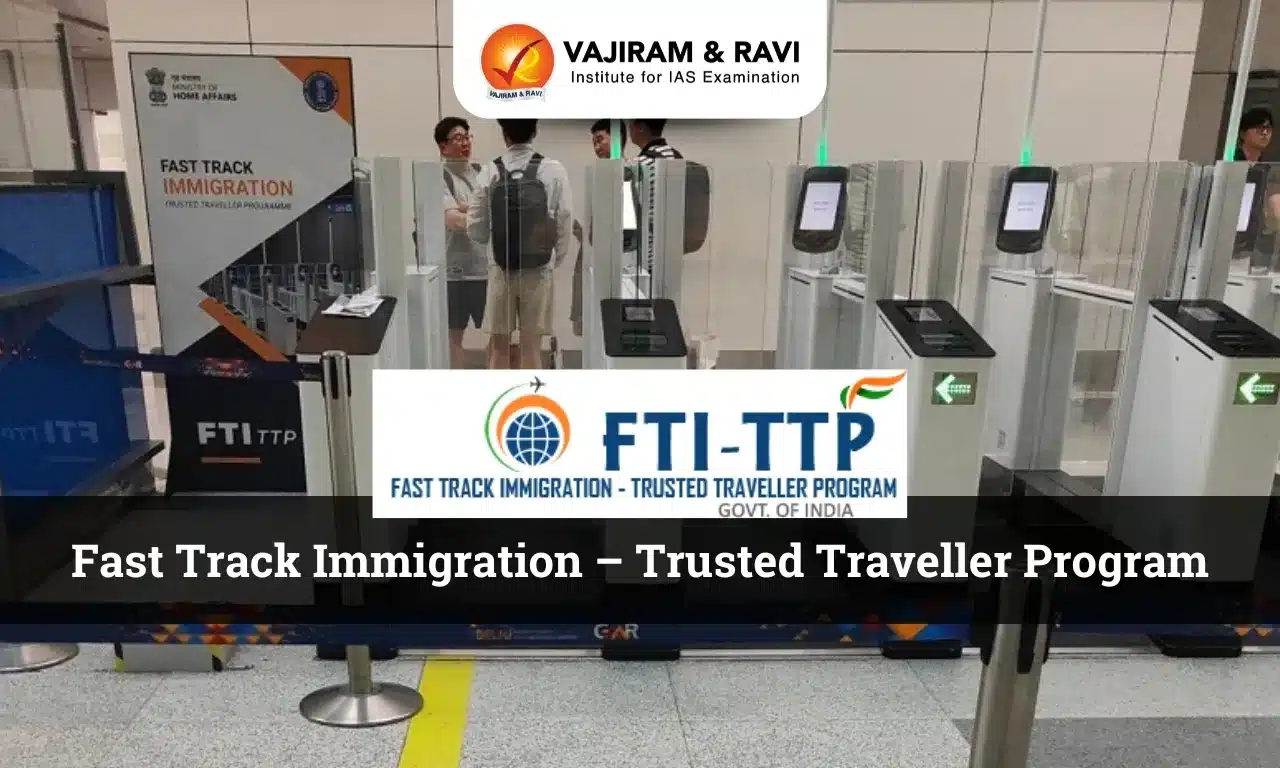
What is the Fast Track Immigration Trusted Traveller Programme (FTI-TTP)?

What is the Fast Track Immigration Trusted Traveller Programme (FTI-TTP)?

About Fast Track Immigration – Trusted Traveller Program: 

  • It is an initiative to speed up the Immigration clearance process for eligible persons from the following categories: Indian Nationals and Foreign Nationals holding OCI Cards.
  • It was first launched at Delhi’s IGI Airport in 2024.
  • Purpose: It has been introduced with the purpose of facilitating international mobility with faster, smoother and secure immigration clearances.
  • To enroll in the scheme, the applicant has to register online on the portal with details and documents.
  • One can sign up after successfully authenticating their identity through mobile OTP and email verification. One needs to ensure that the Passport is valid for at least 6 months at the time of applying for FTI-TTP.
  • Applicants found eligible, will need to provide Biometrics (fingerprint and face image) in addition to the required information as per the data fields provided in the application form.
  • Biometrics of the registered applicants will be captured at the Foreigners Regional Registration Office (FRRO) or at the time of passage through the airport. The registered passenger has to scan the boarding pass issued by the airlines at the e-gates and then scan the passport.
  • Validity: The FTI registration will be valid for a maximum of five years or until the validity of the passport, whichever comes first.
  • It will be implemented at 21 major airports across the country. In the first phase, in addition to Delhi, this facility is being introduced at seven major airports—Mumbai, Chennai, Kolkata, Bengaluru, Hyderabad, Kochi, and Ahmedabad.
  • Nodal Agency: The FTI-TTP is implemented through an online portal with the Bureau of Immigration being the nodal agency.
  • Significance: Once Indian and foreign citizens with OCI cards enroll and become members of the Fast Track Immigration -Trusted Traveller Programme, their immigration clearance will be faster, easier, and more secure. 

Q1: What is the fast track immigration trusted traveller programme?

It is a significant step under the 'Viksit Bharat' 2047 initiative to provide world-class immigration facilities to travellers, making international travel seamless and secure. Initially, this facility was launched free of cost for Indian citizens and OCI cardholders.

Source: PIB

Indian National Science Academy (INSA)

Indian National Science Academy (INSA)

About Indian National Science Academy (INSA):

  • The INSA was established in January 1935 with the object of promoting science in India and harnessing scientific knowledge for the cause of humanity and national welfare.
  • The foundation of the Academy, earlier known as the National Institute of Sciences of India (NISI), was the outcome of joint endeavours of several organizations and individuals, and the Indian Science Congress Association (ISCA) playing a leading role in this regard.
  • It was inaugurated on 7 January 1935 at Calcutta and functioned with its headquarters at Asiatic Society of Bengal till 1951 and thereafter shifted to Delhi.
  • Objectives:
    • Promotion of scientific knowledge in India, including its practical application to problems of national welfare.
    • Coordination among Scientific Academies, Societies, Institutions, Government Scientific Departments, and Services.
    • To act as a body of scientists of eminence for the promotion and safeguarding of the interests of scientists in India and to present internationally the scientific work done in the country.
    • To act through properly constituted National Committees, in which other learned academies and societies may be associated, for undertaking scientific work of national and international importance which the Academy may be called upon to perform by the public and by the Government.
    • To publish such proceedings, journals, memoirs, and other publications as may be found desirable.
    • To promote and maintain liaison between Science and Humanities.
    • To secure and manage funds and endowments for the promotion of science.
    • To perform all other acts that may assist in, or be necessary for the fulfilment of, the above-mentioned objectives of the Academy.
  • Acting as a link between the scientific community and planners, it advises the government on critical issues relating to science and technology.
  • The academy also serves as a forum for interactions among scientists within and outside the country and recognizes outstanding young scientists,engineers, and technologiststhrough the award of medals/prizes and by providing modest financial support for pursuing research.
  • Senior scientists are honoured through election to its Fellowship.
  • The Academy has established exchange programmeswith different overseas academies to facilitate visits of Indian scientists to research institutions abroad and of foreign scientists to India for lectures/scientific discussions.
  • It was designated as the adhering organization in India to the International Council for Science (ICSU) on behalf of the Government of India in January 1968.'

Q1: Who founded the Indian National Science Academy?

The Academy was established on 7th January 1935, as the National Institute Of Sciences Of India, in Calcutta, in the premises of the Asiatic Society with Sir Lewis Fermor as the founder President (1935-36). Prof. Meghnad Saha was elected as the first Indian President (1937-38).

Source: TH

Key Developments and Implications of Gurpatwant Pannun Assassination Plot Case

Key Developments and Implications of Gurpatwant Pannun Assassination Plot Case

What’s in Today’s Article?

  • Gurpatwant Pannun Assassination Plot Case
  • US Allegations and Global Context
  • Strategic and Political Implications
  • Conclusion

Why in News?

  • The Indian government has taken steps to address allegations of an assassination plot targeting Khalistan separatist Gurpatwant Singh Pannun, based on inputs provided by the United States.
  • A high-level committee set up by the Ministry of Home Affairs (MHA) investigated the case and recommended legal action against an individual, marking a critical development in the matter.
  • The timing of this report is pivotal, coinciding with the transition to the Trump administration in the United States.

Gurpatwant Pannun Assassination Plot Case:

  • Background of the case: The US authorities provided evidence alleging the involvement of Vikash Yadav, a former Indian official, in a plot to assassinate Pannun, a US-Canada dual citizen and leader of the banned Sikhs for Justice group.
  • Formation of committee:
    • The Indian government established a high-powered committee to probe the matter, investigate leads, and ensure due process.
    • The committee conducted independent inquiries.
    • Collaborated with US authorities, exchanging visits and scrutinizing evidence.
  • Key findings of the committee:
    • The committee identified criminal links and antecedents of the implicated individual.
    • Recommended expeditious legal action against the accused.
    • Proposed systemic and procedural improvements to prevent similar incidents.

US Allegations and Global Context:

  • US indictment:
    • Vikash Yadav, along with another Indian national, Nikhil Gupta, was implicated in a plot to pay an assassin $100,000 to kill Pannun in New York.
    • Gupta was detained in Prague and later extradited to the US.
    • Yadav, no longer a government employee, faced legal challenges in India, including an extortion case.
  • Broader implications:
    • The revelations followed Canadian Prime Minister Justin Trudeau’s earlier accusations against Indian officials in the killing of Hardeep Singh Nijjar, another Khalistan separatist.
    • India rejected Trudeau’s claims but responded seriously to US allegations, signaling a different approach.

Strategic and Political Implications:

  • Maintaining bilateral relations:
    • India’s timing of the report and its clean-slate approach aims to strengthen ties with the incoming US administration under Donald Trump.
    • Meetings with outgoing and incoming US National Security Advisors emphasize India’s intent to insulate future engagements from past incidents.
  • Commitment to due process:
    • The extensive investigation underscores India’s adherence to procedural fairness.
    • By highlighting the accused as a rogue element, the government distances itself from the individual’s actions.
  • Response to accountability demands:
    • The committee’s recommendations for systemic reforms signal India’s commitment to transparency and accountability.
    • Steps to enhance control mechanisms and coordinated responses aim to prevent recurrence.
  • Prioritizing Indian legal jurisdiction:
    • The committee’s recommendation for expeditious legal action within India preempts any US attempts to extradite or try Yadav in American courts.
    • This move asserts India’s sovereignty over its legal proceedings.
  • Canada relations: The report’s release provides an opportunity for future Canadian leadership to rebuild ties strained over allegations against India.

Conclusion:

  • The Indian government’s measured response to the Pannun assassination plot reflects its focus on balancing international relations, ensuring legal accountability, and upholding due process.
  • By addressing systemic gaps and strengthening procedural safeguards, India aims to navigate the complex geopolitical dynamics while maintaining its global credibility.

Q.1. What led to the worsening of India-Canada bilateral relations?

India-Canada relations worsened after Canadian Prime Minister Justin Trudeau accused Indian agents of being involved in the killing of Khalistan separatist Hardeep Singh Nijjar, a claim India dismissed as baseless and politically motivated.

Q.2. What threats pro-Khalistani separatists pose to India's national security?

Pro-Khalistani separatists pose significant threats to India's national security by advocating for the secession of Punjab to establish an independent Khalistan, thereby challenging the country's territorial integrity.

Source: IE | IE

Enquire Now