Telangana Leads in SC Sub-Categorisation After Supreme Court Nod

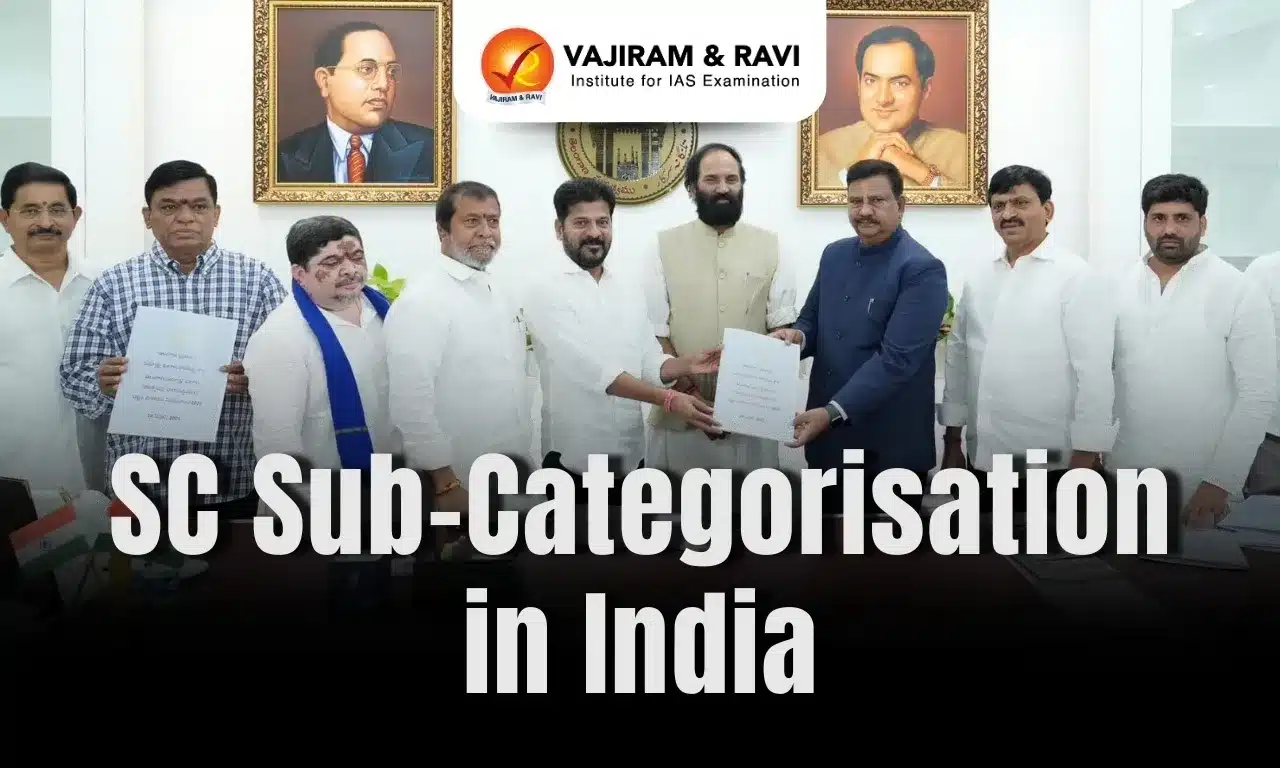
SC Sub-Categorisation in India

What’s in Today’s Article?

  • SC Sub-Categorisation Latest News
  • Telangana’s Landmark Move on SC Sub-Categorisation
  • Structure of Sub-Categorisation
  • Supreme Court's Landmark Ruling
  • Political and Social Context in Telangana
  • Looking Ahead: 2026 Census and Further Reform
  • Scheduled Caste Sub-Categorisation FAQs

SC Sub-Categorisation Latest News

  • Telangana’s Congress government issued a gazette notification that formally implemented Scheduled Caste sub-categorisation, popularly called reservation within reservation.

Telangana’s Landmark Move on SC Sub-Categorisation

  • Telangana has become the first Indian state to officially implement sub-categorisation of Scheduled Castes (SCs), a long-debated policy initiative
  • The move follows the landmark judgment of the Supreme Court that upheld the constitutionality of further classification within SCs and Scheduled Tribes (STs) for targeted reservation benefits.
  • The implementation comes through the Telangana Scheduled Castes (Rationalisation of Reservations) Act, 2025, which was notified in the state gazette on April 14, 2025, coinciding with the birth anniversary of Dr. B.R. Ambedkar.

Structure of Sub-Categorisation

  • Under this new system, the state government has divided the SCs into three distinct groups:
  • Group I:
    • Reservation Quota: 1%
    • Sub-Castes Included: 15
    • Justification: These communities are the most socio-economically and educationally backward among SCs.
    • Notable Detail: Although their population is just 0.5%, the government allocated 1% to increase their representation.
  • Group II:
    • Reservation Quota: 9%
    • Sub-Castes Included: 18
    • Justification: These sub-castes have received only marginal benefits from the existing reservation structure.
  • Group III:
    • Reservation Quota: 5%
    • Sub-Castes Included: 26
    • Justification: These groups have fared relatively better and enjoyed more benefits under the current system.
  • The total reservation of 15% for SCs remains unchanged, but the internal distribution now aims to ensure equitable access to opportunities among all sub-groups.

Supreme Court's Landmark Ruling

  • The legal foundation for this policy rests on a seven-judge Constitution Bench judgment delivered by the Supreme Court in August 2024
  • The verdict affirmed that states have the power to sub-classify SCs and STs for the purpose of more nuanced reservation.
  • Key highlights of the judgment include:
    • Recognition that benefits of reservation were being disproportionately cornered by certain sub-castes within SCs.
    • Validation of the principle of "reservation within reservation" to uplift the most marginalised sub-groups.
    • Clear ruling that such sub-categorisation does not violate Article 14 (Right to Equality) or Article 341 of the Constitution.
  • This judgment overturned previous conflicting views and gave states the green signal to make caste-wise assessments within broader SC/ST categories.

Political and Social Context in Telangana

  • The sub-categorisation was a long-standing demand of the Madiga community, which argued that dominant SC sub-castes like the Malas had monopolised reservation benefits.
  • According to the Telangana Government, this policy aims to “ensure equitable access to education and employment” and will be immediately applicable to new recruitment processes.
  • The categorisation process was based on extensive data, including social, economic, political, and educational indicators
  • Recruitment and reservation for government jobs will now follow this new classification system.

Looking Ahead: 2026 Census and Further Reform

  • The Telangana government has stated that it will revisit and possibly enhance reservations after the 2026 Census, depending on the revised demographic profile of SC communities. 
  • Meanwhile, about 33 of the 59 SC sub-castes continue in their earlier grouping, with only 26 sub-castes reshuffled based on recent assessments.

Scheduled Caste Sub-Categorisation FAQs

Q1. Which state is the first to implement SC sub-categorisation?

Ans. Telangana is the first Indian state to implement SC sub-categorisation.

Q2. How many groups are created under Telangana’s new SC quota system?

Ans. SCs are divided into three groups – Group I, Group II, and Group III.

Q3. What was the basis for this sub-categorisation?

Ans. It was based on social, educational, and economic backwardness as well as a Supreme Court judgment.

Q4. Does this change increase the total SC reservation in Telangana?

Ans. No, the total SC reservation remains at 15%, but it is now internally reallocated.

Q5. What did the Supreme Court say about sub-categorising SCs and STs?

Ans. The Supreme Court upheld the constitutionality of sub-categorising SCs and STs for targeted reservation benefits.


Source: TH | IE | TOI

STELLAR Model

STELLAR Model

STELLAR Model Latest News

On April 11, 2025, the Central Electricity Authority (CEA) launched the STELLAR Model—an advanced, indigenously developed software tool for integrated generation, transmission, and storage expansion planning with demand response. T

About STELLAR Model

  • The STELLAR Model (State-of-the-art, Totally indigenously developed Resource adequacy model) is designed to help Indian states and discoms prepare comprehensive resource adequacy plans, in line with the Ministry of Power’s guidelines issued in June 2023. 
  • It is a vital tool for ensuring that the power sector can reliably meet future electricity demand through optimal planning of generation, transmission, and storage resources

STELLAR Model Key Features

  • Integrated Planning: The model enables simultaneous planning for generation, transmission, and storage expansion, incorporating demand response as a key component.
  • Resource Adequacy Compliance: Assists states in meeting the dynamic, annually revised resource adequacy requirements mandated by the Ministry of Power.
  • User-Friendly and Transparent: Developed entirely in India under CEA’s guidance, the tool is transparent and will be regularly updated based on user feedback.
  • Free Distribution: The software will be provided at no cost to all states and discoms, promoting uniformity and ease of use across the country.
  • Collaboration: Developed in partnership with The Lantau Group (TLG) and the Asian Development Bank (ADB) under a technical assistance program.

STELLAR Model FAQs

Q1. What is the STELLAR Model?

Ans. The STELLAR Model is an indigenously developed software tool for integrated generation, transmission, and storage expansion planning, supporting resource adequacy in India’s power sector.

Q2. Who developed the STELLAR Model?

Ans. The model was developed by the Central Electricity Authority (CEA) in collaboration with The Lantau Group (TLG) and the Asian Development Bank (ADB).

Source: PIB

World Chagas Disease Day

World Chagas Disease Day

World Chagas Disease Day Latest News

Recently, World Chagas Disease Day was observed on April 14, 2025, to raise awareness about Chagas disease, a neglected tropical disease affecting millions globally.

About World Chagas Disease Day

  • World Chagas Disease Day is observed every year on April 14. The 2025 theme, “Prevent, Control, Care: Everyone’s Role in Chagas Disease,” calls for global action to improve awareness, prevention, and access to care for those affected. 
  • The World Chagas Disease Day was celebrated for the first time in 2020.
  • In 2025, the theme is “Prevent, Control, Care: Everyone’s role in Chagas disease,” emphasizing collective responsibility.
  • Over 7 million people are currently infected worldwide, with more than 100 million at risk, and an estimated 10,000–12,000 deaths annually. 
  • The World Health Organization and partners are urging governments, health systems, and communities to strengthen early diagnosis, treatment, and comprehensive care for all.

Chagas Disease

  • Chagas disease, also known as American trypanosomiasis, is a potentially life-threatening illness caused by the protozoan parasite Trypanosoma cruzi. 
  • The parasite is primarily transmitted to humans by triatomine bugs—commonly called “kissing bugs”—but can also spread through blood transfusions, organ transplants, from mother to child during pregnancy, and, rarely, through contaminated food or laboratory accidents.
  • It is often termed the “silent or silenced disease” due to its asymptomatic nature and prevalence among marginalised populations.
  • Chagas disease is endemic in 21 countries in Latin America but is increasingly detected in the United States, Europe, and other regions due to migration.

World Chagas Disease Day FAQs

Q1. What is the theme of World Chagas Disease Day 2025?

Ans. The theme is “Prevent, Control, Care: Everyone’s Role in Chagas Disease”.

Q2. What is Chagas disease?

Ans. Chagas disease, or American trypanosomiasis, is a parasitic infection caused by Trypanosoma cruzi, transmitted primarily by triatomine bugs.

Q3. Is Chagas disease seen in India?

Ans. Chagas disease is not endemic to India and is extremely rare in the country.

Q4. What is the drug of choice for Chagas disease?

Ans. Benznidazole is the preferred first-line treatment for Chagas disease.

Source: WHO

Plastic Ice VII

Plastic Ice VII

Plastic Ice VII Latest News

For the first time in scientific history, researchers have directly observed a strange phase of water known as Plastic Ice VII, which is believed to exist deep within the interiors of icy planets and moons, such as Neptune, Europa, and Titan.

What is Plastic Ice VII?

  • Plastic Ice VII is a hybrid phase of water that displays the dual characteristics of both a solid and a liquid:
    • Like a crystalline solid, the water molecules remain in fixed positions within a cubic crystal lattice.
    • Simultaneously, these molecules can rotate freely, similar to the behavior of molecules in a liquid.
  • This unique plasticity means the ice can deform under pressure like a malleable substance, making it fundamentally different from conventional ice types found on Earth.

Why is it called "Plastic" Ice?

  • The term "plastic" refers not to synthetic materials but to its physical property of plasticity—the ability to mold or deform under pressure while still maintaining a solid structure.
  • Physicist Livia Bove, one of the lead researchers, describes it as a solid that can be squeezed through a hole, highlighting its semi-fluid behavior under stress.

The Discovery and Methodology

  • This breakthrough was achieved by scientists at the Institut Laue-Langevin in Grenoble, France, using a cutting-edge neutron beam tool capable of analyzing molecular behavior at extreme pressures and temperatures:
    • The experiments involved heating water to 326°C and subjecting it to pressures of up to 60,000 bars, equivalent to 28 times the pressure at the Mariana Trench, Earth’s deepest ocean point.
    • Under these conditions, water molecules exhibited rapid rotational motion while staying in place structurally—confirming the formation of Plastic Ice VII.
  • By analyzing the energy shifts of scattered neutrons, the team could accurately track molecular movements, proving the presence of this exotic state of matter.

Comparison with Other Ice Phases

  • Common Earth Ice (Ice Ih): Found in glaciers, snow, and ice cubes; molecules are arranged in a hexagonal honeycomb lattice.
  • Ice VII: Forms above 20,000 bars, has a dense cubic structure, and has been found in diamonds and is theorized to exist inside Earth and other planets.
  • Plastic Ice VII: A phase of Ice VII with mobile water molecules, but within a fixed lattice, existing above 30,000 bars and 177°C.

Plastic Ice VII FAQs

Q1. What is Plastic Ice VII?
Ans. Plastic Ice VII is a rare high-pressure form of ice, distinct from regular ice, where water molecules are arranged in a cubic crystalline structure rather than the hexagonal form found in common ice.

Q2. Under what conditions does Ice VII form?
Ans. Ice VII forms under extreme pressure, typically above 2 GigaPascals (GPa), which can occur naturally deep within planetary interiors or in laboratory settings.

Q3. Why is Ice VII scientifically significant?
Ans. Ice VII is important for understanding planetary science because it likely exists in the mantles of icy moons and exoplanets, influencing theories about water and life beyond Earth.

Source: SCN

Sillahalla Pumped Storage Hydroelectric Project

Sillahalla Pumped Storage Hydroelectric Project

Sillahalla Pumped Storage Hydroelectric Project Latest News

In April 2025, opposition to the Sillahalla Pumped Storage Hydroelectric Project in the Nilgiris intensified, with local farmers, tribal groups, and environmentalists staging protests and submitting petitions to the Tamil Nadu government.

About Sillahalla Pumped Storage Hydroelectric Project

  • The Sillahalla Pumped Storage Hydroelectric Project (SPSHEP) is a major infrastructure initiative proposed by the Tamil Nadu Green Energy Corporation Limited (TNGECL) to address the state’s peak power demand and support renewable energy integration.
  • Location: Nilgiris district, Tamil Nadu, within the Kundah region, adjacent to the Silent Valley and Mukurthi National Parks.
  • Aim: To generate 1,000 MW electricity to meet peak power demand.
  • Project Features:
    • Construction of two dams (upper and lower reservoirs).
    • Tunnels of 2.8 km (head race) and 1.56 km (tail race).
    • Underground powerhouse and surface storage points.
  • Environmental Concerns: The potential submergence of around 1,000 acres of farmland and 500 acres of forest land would affect approximately 3,000 farmers. 
  • Issue of Joint Pattas: Many affected lands are under joint patta, and farmers will not be able to get the compensation accordingly. Moreover, people who have given their land for road projects are yet to receive compensation in the district.
  • Public Response: Local communities have raised concerns over environmental impacts and loss of livelihoods.

Sillahalla Pumped Storage Hydroelectric Project FAQs

Q1. What is the main purpose of the Sillahalla project?

Ans: To provide 1,000 MW of flexible, peak-hour power supply and support renewable energy integration in Tamil Nadu.

Q2. Why is there strong opposition to the project?

Ans: Due to concerns over large-scale submergence of forests and farmland, displacement of thousands, and threats to the Nilgiris’ fragile ecology and cultural heritage.

Q3. Which is the largest pumped hydro storage in India?

Ans: The Greenko Group is constructing India's largest pumped storage project in Madhya Pradesh, with a capacity of 1,440 MW, expandable to 1,920 MW.

Source: TH

Mehul Choksi Arrested in Belgium: India Seeks Extradition in ₹13,500 Crore PNB Scam

Mehul Choksi Arrested in Belgium: India Seeks Extradition in ₹13,500 Crore PNB Scam

What’s in Today’s Article?

  • Mehul Choksi Extradition Latest News
  • Next in Mehul Choksi’s Case
  • Hurdles India May Face in Extraditing Mehul Choksi
  • Allegations Against Mehul Choksi
  • Mehul Choksi Extradition FAQs

Mehul Choksi Extradition Latest News

  • Mehul Choksi, a key accused in the ₹13,500 crore Punjab National Bank fraud case, was arrested in Belgium. 
  • India has requested his extradition for trial. Choksi had moved to Belgium last year for cancer treatment after living in Antigua and Barbuda as a citizen since 2018.

Next in Mehul Choksi’s Case

  • Extradition Treaty with Belgium
    • India and Belgium have an extradition treaty dating back to 1901, which permits extradition based on dual criminality—the crime must be punishable in both countries. 
    • The treaty excludes extradition for political offences or if the accused claims political persecution.
  • Legal Timeframe
    • Belgium must receive evidence of Choksi’s culpability from India within two months, or he will be released.
  • Agencies Involved
    • Choksi was arrested following requests by the CBI and ED. These agencies will now prepare a detailed legal case aligned with Belgian laws.
  • Mutual Legal Assistance Treaty (2020)
    • India and Belgium signed this treaty to facilitate better cooperation in legal matters, including extraditions.
  • Challenges Ahead
    • Despite the arrest, Choksi’s return to India may take a long time. European extradition processes are typically slow and complex.
  • Past Precedents
    • India’s extradition efforts in Europe—like those involving Nirav Modi and Vijay Mallya in the UK—have faced prolonged delays, indicating that Choksi’s extradition may also be drawn out.

Hurdles India May Face in Extraditing Mehul Choksi

  • 2021 Dominica Kidnapping Allegation
    • Choksi’s lawyers are expected to highlight the controversial 2021 incident where he was allegedly abducted from Antigua and taken to Dominica. 
      • Photos showed him bruised and injured. 
    • Indian officials had arrived in Dominica to bring him back, but the attempt failed amid allegations of abduction and coercion.
  • Allegations of Forced Consent
    • Choksi’s legal team claims he was forced to sign a document consenting to return to India, which was meant to bypass legal protections he enjoyed as a citizen of Antigua. 
    • His London-based lawyer argued this undermined his legal rights.
  • Interpol Red Corner Notice Withdrawal
    • In 2023, Interpol withdrew its Red Corner Notice against Choksi, citing concerns over the alleged abduction and the risk of an unfair trial in India.
  • Human Rights and Health Concerns
    • Choksi’s defence is likely to argue that poor prison conditions in India, possible human rights violations, and his deteriorating health make extradition unsafe and unjust.
  • Complications Due to Antiguan Citizenship
    • Choksi’s status as a citizen of Antigua could further complicate the process, even though he is currently in Belgium. 
    • His lawyers may argue that Belgium must consider his citizenship status in Antigua before approving extradition to a third country.

Allegations Against Mehul Choksi

  • Expansion Through Gitanjali Group
    • Choksi, hailing from a family of diamantaires, expanded his business under the Gitanjali Group, opening luxury jewellery stores in India and abroad. 
    • He, along with his nephew Nirav Modi, spent heavily on marketing, hiring international celebrities like Kate Winslet and Rosie Huntington-Whiteley.
  • Fraudulent Use of Bank Credit
    • Between 2014 and 2017, Choksi and Modi allegedly colluded with officials at PNB’s Brady House branch in Mumbai to obtain fraudulent Letters of Undertaking (LoUs). 
    • These were used to secure overseas credit, which funded their business operations and personal assets.
  • LoU Misuse and Loan Defaults
    • LoUs were meant to be repaid within 90 days, but bank officials kept rolling them over with interest, maintaining liquidity for the duo while debt ballooned. 
    • Eventually, PNB discovered the fraud and approached the CBI, by which time both had fled the country.
  • Scale of the Scam
    • The total fraud amounted to over ₹13,500 crore, with Choksi alone accused of cheating the bank of more than ₹6,000 crore.
  • ED Action and Fake Assets
    • The Enforcement Directorate attached Choksi’s assets, initially valued at over ₹5,000 crore. 
    • However, lab tests showed many diamonds were fake. 
    • The current estimated value of all his assets, including properties and investments, is around ₹2,500 crore.

Mehul Choksi Extradition FAQs

Q1. Why was Mehul Choksi arrested in Belgium?

Ans. He was arrested following CBI and ED requests, linked to his role in the ₹13,500 crore PNB fraud.

Q2. What is the PNB scam case against Mehul Choksi?

Ans. He allegedly secured fraudulent bank guarantees to obtain overseas credit, defrauding Punjab National Bank of over ₹6,000 crore.

Q3. What hurdles could delay Choksi’s extradition?

Ans. Legal claims of abduction, Antiguan citizenship, human rights concerns, and Belgium’s complex process may delay extradition significantly.

Q4. What happened in Dominica in 2021?

Ans. Choksi alleged Indian agents abducted and coerced him to return; this incident may impact his extradition from Belgium.

Q5. Is India likely to succeed in extraditing Choksi soon?

Ans. Unlikely. European extradition is slow and complicated, with previous cases like Nirav Modi and Vijay Mallya still pending.

Source: IE | IE

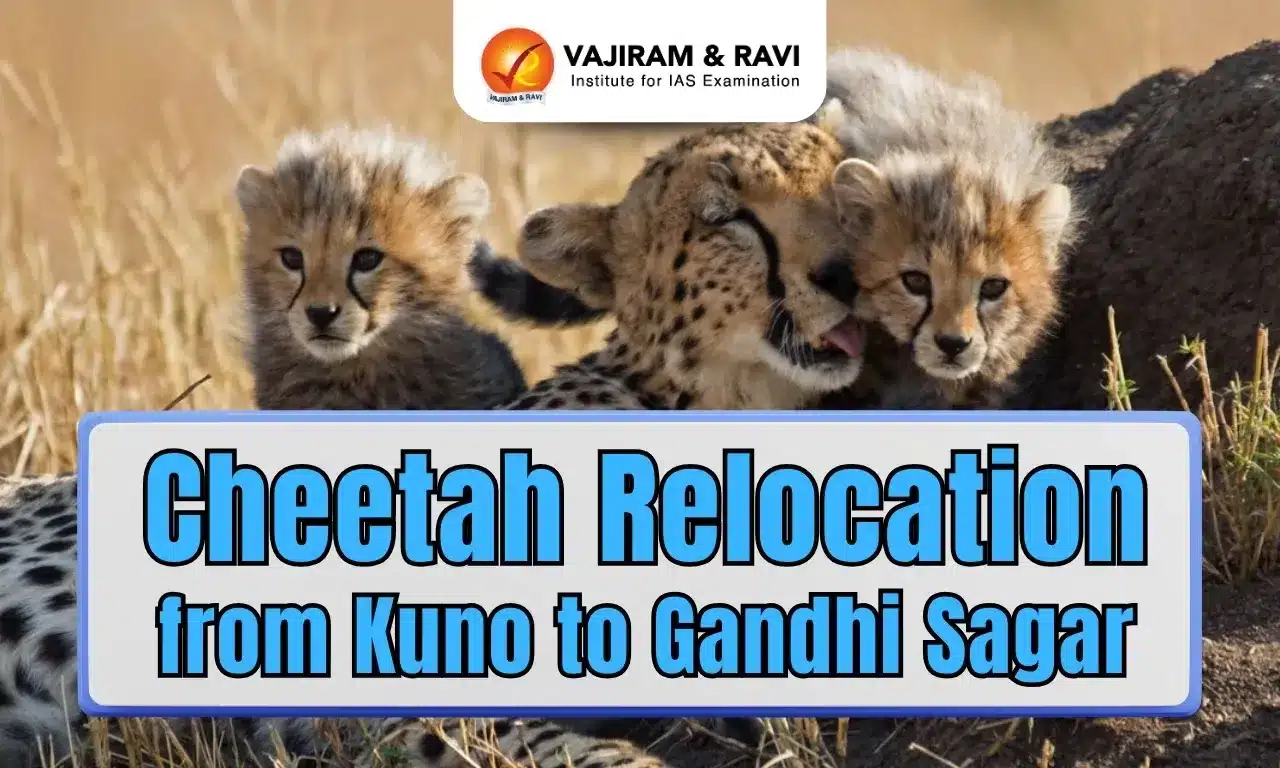
Cheetah Relocation from Kuno to Gandhi Sagar

Cheetah Relocation from Kuno to Gandhi Sagar

Cheetah Relocation from Kuno to Gandhi Sagar Latest News

Recently, the Cheetah Project Steering Committee officially approved the relocation of some cheetahs from Kuno National Park to Gandhi Sagar Wildlife Sanctuary in Madhya Pradesh.

About Cheetah Relocation from Kuno to Gandhi Sagar

  • The Cheetah Project Steering Committee was set up in May 2023 by the National Tiger Conservation Authority (NTCA) to review, monitor, and advise on the cheetah reintroduction program.
  • Project Cheetah began in 2022 with the translocation of 8 cheetahs from Namibia and 12 from South Africa to Kuno National Park. Still, the project has faced setbacks, with 8 adult cheetahs and 5 cubs dying so far.
  • Gandhi Sagar Wildlife Sanctuary has been identified as a key part of establishing a cheetah meta-population of 60–70 individuals across the Kuno–Gandhi Sagar landscape, which stretches across Madhya Pradesh and Rajasthan.
  • As of now, there are 26 cheetahs at Kuno, of which 17 are in the wild and 9 are still inside large enclosures. It is yet to be decided whether the relocated cheetahs will come from the wild or enclosures.
  • According to forest officials, prey species at Gandhi Sagar currently include chinkara, chousingha, nilgai, and chital.

About Cheetahs

  • Cheetahs breed year-round, with peak breeding during the rainy season. Females reach sexual maturity between 20–24 months, while males mature later, at 24–30 months.
  • The gestation period of a cheetah is approximately 90–95 days, and they typically give birth to 3–5 cubs.
  • Cheetahs do not roar like other big cats; instead, they communicate using high-pitched chirps, barks, and stutter barks to establish presence or territory.
  • They are solitary animals and use urine sprays, cheek rubbing, and scratch marks on trees to mark territory.
  • Cheetahs are the fastest land animals, capable of reaching speeds up to 120 km/h and can accelerate from 0 to 100 km/h in just 3 seconds.
  • During hunting, they employ a unique tripping technique using their semi-retractable claws to destabilise prey, though their hunting success rate is only 40–50%.

Protection Status of Cheetahs

  • Cheetahs are listed as Vulnerable on the IUCN Red List.
  • They are protected under Schedule II of the Wild Life (Protection) Act, 1972.
  • They are also included in Appendix I of the Convention on International Trade in Endangered Species (CITES), offering the highest level of protection from international trade.

African vs Asiatic Cheetah

African Cheetah (Acinonyx jubatus)

Asiatic Cheetah (Acinonyx jubatus venaticus)

Distribution: Across Northwest, East, and Southern Africa.

Physical Traits: Larger build, robust neck and legs.

Fur: Golden-brown, denser coat.

Status: Vulnerable (IUCN).

Distribution: Critically endangered, limited to Iran (only 12 individuals).

Physical Traits: They are more slender and smaller.

Fur: Buff/light fawn, with extra fur on the neck and underbelly.

Status: Critically Endangered (IUCN).

Cheetah Relocation from Kuno to Gandhi Sagar FAQs

Q1. Why were cheetahs reintroduced into India?
Ans. Cheetahs were reintroduced in India to restore ecological balance, as they were declared extinct in 1952, and the reintroduction aims to re-establish their role as apex predators in the grassland ecosystem.

Q2. From which country were the cheetahs relocated to India under Project Cheetah?
Ans. Cheetahs were translocated to India from Namibia and South Africa under the Project Cheetah initiative launched in 2022.

Q3. Which Indian national park became the site for the cheetah reintroduction?
Ans. Kuno National Park in Madhya Pradesh was selected for the reintroduction of cheetahs due to its suitable habitat and prey base.

Source: IE

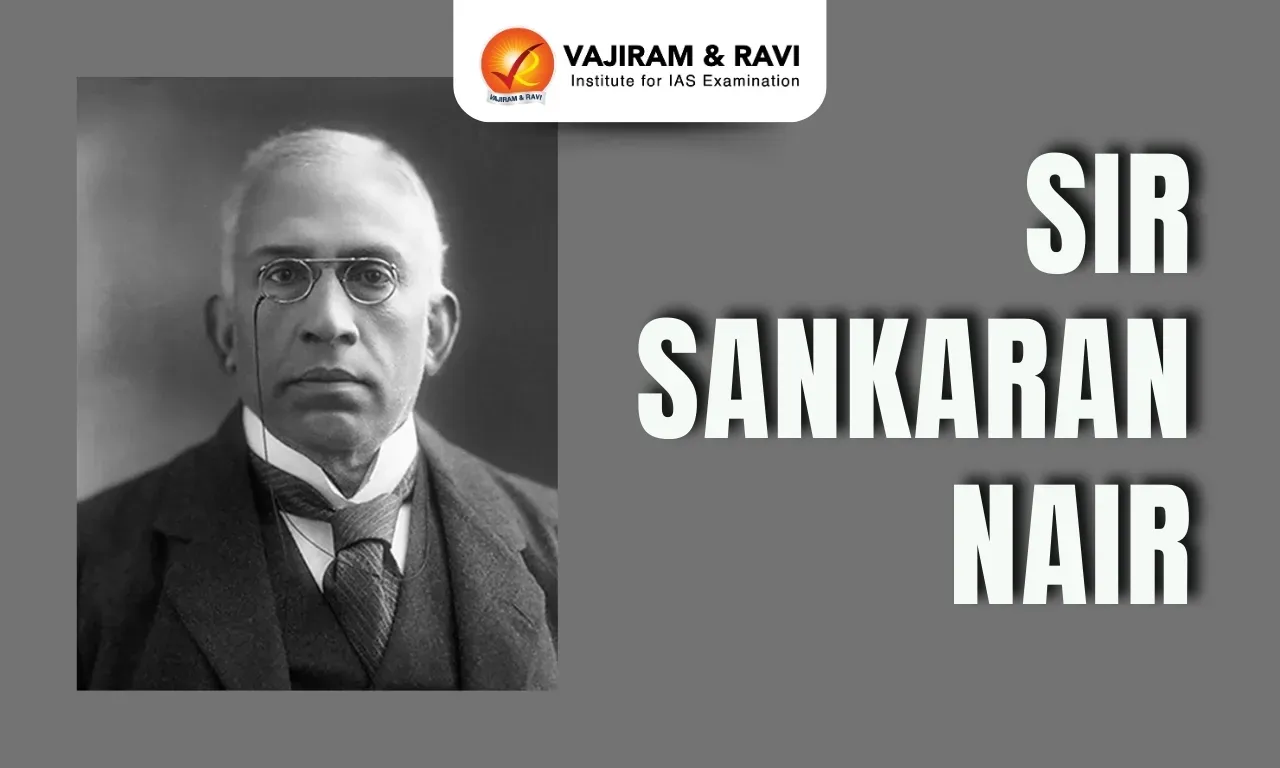
Sir Sankaran Nair

Sir Sankaran Nair

Sir Sankaran Nair Latest News

The Prime Minister’s tribute on the 106th anniversary of the Jallianwala Bagh massacre acknowledged Nair’s fearless voice against British tyranny.

About Sir Sankaran Nair

  • Sir Chettur Sankaran Nair was born in 1857 in an aristocratic family from Mankara village, located in Malabar’s Palakkad district (present-day Kerala).
  • He was known for his unwavering moral courage, strong convictions, and outspoken opposition to colonial injustice.
  • Nair graduated from Presidency College, Madras, and began his legal career under Sir Horatio Shepherd, who later became Chief Justice of the Madras High Court.

Key Positions and Recognitions

  • In 1897, Nair became the youngest President of the Indian National Congress (INC) — and remains the only Malayali to have ever held that post.
  • He was appointed to the Raleigh University Commission by Lord Curzon in 1902.
  • Honored as Companion of the Indian Empire in 1904 and knighted in 1912 for his service.
  • In 1908, he became a permanent judge in the Madras High Court, where he was known for progressive and reform-oriented judgments.
  • In 1915, he joined the Viceroy’s Executive Council, overseeing the education portfolio.

Role in the Freedom Movement

  • Nair was a strong nationalist who firmly advocated for India’s right to self-rule.
  • In 1919, he contributed significantly to the Montagu-Chelmsford Reforms, which introduced dyarchy in provinces and increased Indian participation in administration.
  • Following the Jallianwala Bagh massacre on April 13, 1919, he resigned from the Viceroy’s Council in protest — a bold move that shook the British government.
  • His resignation triggered changes, including the lifting of press censorship in Punjab, the termination of martial law, and the formation of the Hunter Commission to investigate the massacre.

The Historic Defamation Trial Against Michael O’Dwyer

  • In his book, Nair accused Michael O’Dwyer, then Lieutenant Governor of Punjab, of being directly responsible for the Jallianwala Bagh massacre due to his repressive policies.
  • O’Dwyer filed a defamation case against Nair in an English court in 1922, expecting support from the British legal system.
  • The trial lasted five and a half weeks and was the longest-running civil trial in Britain.
  • The 12-member English jury, presided over by Justice Henry McCardie, mostly sided with O’Dwyer (11–1 majority), with only Harold Laski, a Marxist theorist, dissenting.
  • Nair was ordered to pay £500 and the trial expenses. He refused to apologize, even when O’Dwyer offered to waive the penalty if he did so.
  • Although Nair lost, the trial exposed the deep bias in the British legal system and galvanised nationalist sentiments in India.

Death and Recognition

  • Sir Sankaran Nair passed away in 1934 at the age of 77, but he remains a symbol of fearless resistance and principled leadership in colonial India.
  • His legacy continues to inspire through books like The Case That Shook the Empire by his descendants and upcoming films like Kesari Chapter 2.

Sir Sankaran Nair FAQs

Q1. Who was Sir Sankaran Nair?
Ans. Sir Chettur Sankaran Nair was a prominent Indian jurist, social reformer, and nationalist known for his contributions to the Indian freedom struggle and for advocating civil rights under British rule.

Q2. Why is Sir Sankaran Nair remembered in Indian history?
Ans. He is remembered for resigning from the Viceroy’s Executive Council in protest against the Jallianwala Bagh Massacre in 1919.

Q3. What legal position did Sir Sankaran Nair hold?
Ans. He served as a Judge of the Madras High Court and later as the President of the Indian National Congress in 1897.

Source: IE

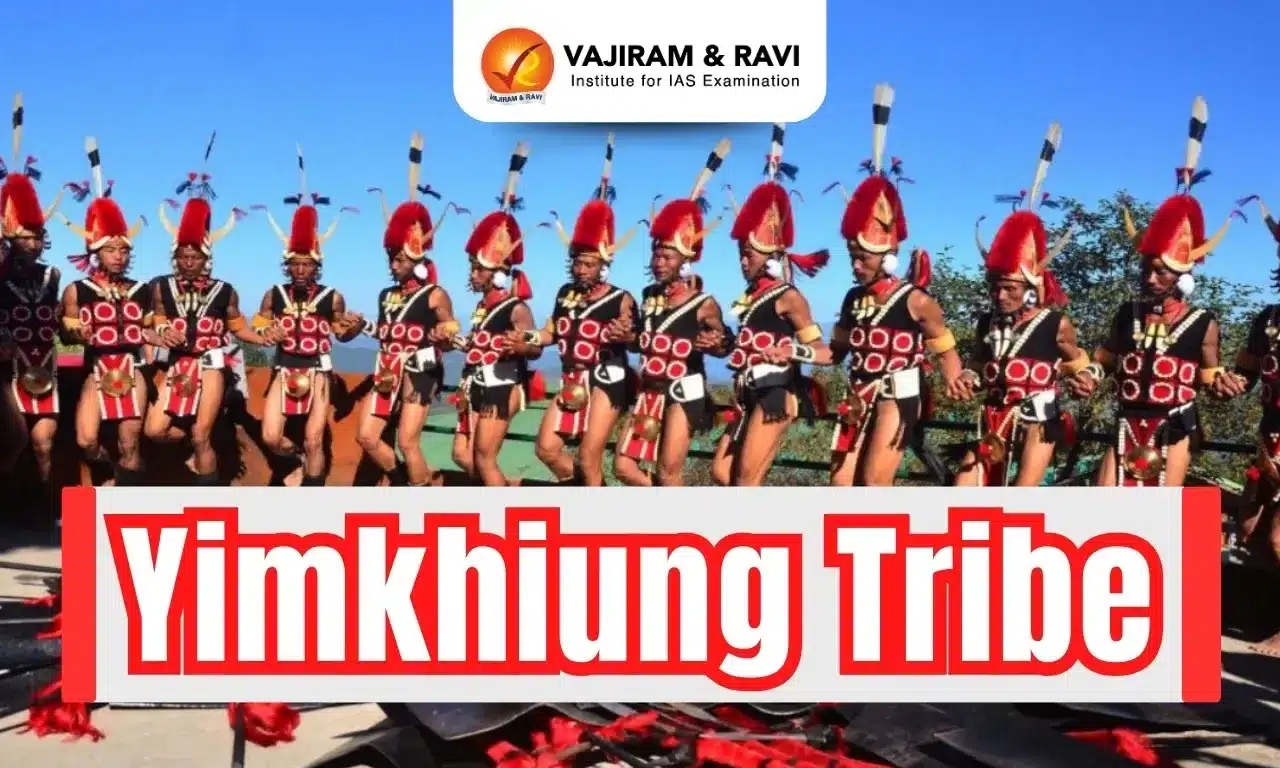
Yimkhiung Tribe

Yimkhiung Tribe

Yimkhiung Tribe Latest News

Recently, the Yimkhiung Tribal Council (YTC) led a major protest in Pungro Town, Nagaland, against the Indian government’s plan to fence the Indo-Myanmar border and the recent abolition of the Free Movement Regime (FMR).

About Yimkhiung Tribe

  • The Yimkhiung are one of the major Naga tribes, primarily inhabiting eastern Nagaland’s Kiphire district and adjacent areas in Myanmar. 
  • Their society is organised around clan-based villages, and there is a strong tradition of oral history, festivals, and communal land ownership.
  • The Yimkhiung community is divided by the international border, with some villages in Myanmar and the rest in India. The border, drawn during colonial times, is seen by the tribe as an “imaginary line” that splits families and ancestral lands.
  • The Yimkhiungrü language belongs to the Sino-Tibetan language family and is spoken by over 100,000 people across more than 100 villages and towns.
  • The tribe celebrates several traditional festivals, with Tsüngkamnyo being the most significant post-harvest festival.

The Border Fencing Controversy

  • In February 2024, the Indian government announced the end of the Free Movement Regime (FMR) and plans to construct a border fence along the 1,643 km Indo-Myanmar border, including 215 km in Nagaland. 
  • The FMR previously allowed border residents to travel up to 16 km (later reduced to 10 km) into each other’s territory without a visa for social, economic, and cultural reasons.
  • In response to this development, Yimkhiung have submitted a memorandum for the reversal of the fencing plan.

Yimkhiung Tribe FAQs

Q1. What is the meaning of Yimkhiung tribe?

Ans. The term "Yimkhiung" means "the ones who have reached their place of choice" or "Searched, Arrived and Found".

Q2. What are the 17 major tribes of Nagaland?

Ans. The 17 major tribes of Nagaland are: Angami, Ao, Chakhesang, Chang, Kachari, Khiamniungan, Konyak, Kuki, Lotha, Phom, Pochury, Rengma, Sangtam, Sumi, Tikhir, Yimkhiung, and Zeliang.

Q3. What is the new name of Yimchunger?

Ans. The Government of Nagaland officially changed the tribe's name from "Yimchunger" to "Yimkhiung" in 2021.

Source: AT

Asian Hornet

Asian Hornet

Asian Hornet Latest News

In 2025, sightings of the hornet have surged dramatically, with evidence of the species breeding and overwintering in the UK for the first time, as confirmed by DNA studies.

About the Asian Hornet

  • The Asian hornet (Vespa velutina), also known as the yellow-legged hornet, is an invasive species originally native to Southeast Asia.
  • It is not the same as the Asian Giant Hornet (Vespa mandarinia), often wrongly labeled the “murder hornet.” While both are bee predators, the Asian hornet (Vespa velutina) is smaller but equally destructive in ecological terms.
  • These hornets are predatory insects, feeding primarily on social bees and wasps, especially honeybees, which are critical pollinators in ecosystems.
  • The Asian hornet’s specialised hunting tactics make it a lethal threat to honeybee colonies, as it can wait at hive entrances and kill bees mid-flight.
  • Adult Asian hornets typically measure about 25 mm in length.
  • They can be identified by their black velvety thorax, bright orange-yellow abdominal band, and distinctive yellow legs.
  • Their sting is painful, and they are known for their aggressive behavior, especially around nests.

Invasion History and Spread

  • The Asian hornet was first introduced to Europe in 2004, most likely via a shipment of Chinese pottery that brought a fertilised queen to France.
  • Since then, the species has spread to 15 European countries, with France alone hosting over 500,000 nests.
  • Britain recorded its first official detection of the Asian hornet in 2016.

Asian Hornet FAQs

Q1. What is the Asian Hornet and where is it native to?
Ans. The Asian Hornet (Vespa velutina) is an invasive wasp species native to Southeast Asia, known for preying on honeybees and disrupting local ecosystems.

Q2. Why is the Asian Hornet considered a threat in Europe?
Ans. The Asian Hornet is a major threat to European honeybee populations, which are vital for pollination and agriculture, leading to ecological and economic concerns.

Q3. How did the Asian Hornet spread to Europe?
Ans. The Asian Hornet was accidentally introduced to France via imported goods around 2004, and has since spread across much of Western Europe.

Source: DTE

RBI Proposes New Guidelines to Regulate Gold Loans Amid Rising NPAs and Loan Disbursals

RBI Proposes New Guidelines to Regulate Gold Loans Amid Rising NPAs and Loan Disbursals

What’s in Today’s Article?

  • RBI Gold Loan Guidelines Latest News
  • Surge in Gold Loan NPAs
  • RBI Flags Irregular Practices in Gold Loans
  • Draft Guidelines Released
  • The Attractiveness of Gold Loans
  • RBI Gold Loan Guidelines FAQs

RBI Gold Loan Guidelines Latest News

  • The Reserve Bank of India (RBI) is introducing a framework for gold loans amid a sharp rise in gold loan outstanding and non-performing assets (NPAs). 
  • The surge in gold prices has led to increased gold loan disbursals, with NPAs rising by 28.58% and loan outstanding by 27.26% over the past year. 
  • The new framework aims to regulate the gold loan segment and mitigate potential risks.

Surge in Gold Loan NPAs

  • Gold loan NPAs rose sharply by over ₹1,500 crore to ₹6,824 crore as of December 2024, compared to ₹5,307 crore a year earlier.

Break-Up of NPAs

  • Commercial banks reported gold loan NPAs of ₹2,040 crore, up from ₹1,404 crore in December 2023.
  • NBFCs reported NPAs of ₹4,784 crore, compared to ₹3,904 crore last year.

Gold Loan Outstanding Growth

  • Total gold loan outstanding of banks and NBFCs stood at ₹11,11,398 crore in December 2024, rising from ₹8,73,701 crore a year ago.

Banks' Share

  • Commercial banks held the majority share with ₹9,23,636 crore in gold loan outstanding.

RBI Flags Irregular Practices in Gold Loans

  • A review by the RBI revealed several deficiencies in gold loan practices, including:
    • Use of third parties for sourcing and appraisal without proper oversight
    • Valuation of gold in the absence of the customer
    • Inadequate due diligence and end-use monitoring
    • Lack of transparency in gold auctions after defaults
    • Weak monitoring of Loan-to-Value (LTV) ratio
    • Incorrect application of risk weights

RBI Directives to Lenders

  • The RBI instructed banks and NBFCs to review their gold loan policies and processes, identify gaps, and take corrective measures within a set timeframe. 
  • It also emphasized strict monitoring of the gold loan portfolio and greater control over outsourced activities and third-party service providers.

Curbing Evergreening of Loans

  • Previously, borrowers could repledge jewellery by just paying interest, enabling indefinite loan extensions. 
  • Post RBI intervention in September 2023, repledging now requires full repayment of principal and interest, making the process costlier and limiting loan evergreening.

Draft Guidelines Released

  • On April 9, the RBI issued draft comprehensive guidelines for gold loans.

Prohibited Collateral

  • Lenders are barred from granting advances against:
    • Primary gold/silver
    • Financial assets backed by primary gold/silver (e.g., ETFs, mutual fund units)

Loan-to-Value (LTV) Cap

  • For consumption gold loans, the LTV ratio must not exceed 75% of the gold’s value.

Restrictions on Collateral Use

  • Gold used as collateral for income-generating loans cannot be used simultaneously for consumption loans.

Ownership Verification

  • Lenders must verify and maintain records of the ownership of gold collateral. Loans should not be extended where ownership is doubtful.

Tenor Cap for Bullet Repayment Loans

  • Consumption loans requiring bullet repayment (principal and interest due at maturity) are to be limited to a maximum tenor of 12 months.

Operational Norms for Lenders

  • Lenders must:
    • Integrate gold loan policies with credit and risk frameworks
    • Set borrower- and sector-specific exposure limits
    • Ensure loans are linked to repayment capacity via due diligence
    • Monitor end-use of funds and maintain detailed records

The Attractiveness of Gold Loans

  • Ease and Accessibility
    • Gold loans are attractive due to easy availability, minimal documentation, and quick processing. 
    • PSU banks and major financial institutions offer instant loans with flexible repayment options.
  • Higher Loan Value
    • The sharp rise in gold prices has enabled borrowers to secure higher loan amounts against their gold holdings.
  • Cultural Significance and Emergency Use
    • Gold, often passed down through generations, is readily pledged during financial emergencies like medical or educational expenses.
  • Economic Uncertainty and Stability of Gold
    • During economic slowdowns or uncertainty, gold is viewed as a stable asset, encouraging individuals to opt for gold loans.
  • Digital Expansion
    • The rise of digital platforms and fintech solutions has made gold loans more accessible, even in remote areas, boosting their popularity.

RBI Gold Loan Guidelines FAQs

Q1. Why did RBI propose new gold loan rules?

Ans. Due to rising gold loan NPAs and irregular lending practices, RBI aims to regulate and safeguard the gold loan market.

Q2. What is the Loan-to-Value (LTV) cap for gold loans?

Ans. RBI’s draft guidelines cap the LTV ratio at 75% of the gold’s value for consumption-related gold loans.

Q3. What are RBI’s concerns with current gold loan practices?

Ans. Concerns include third-party involvement, weak monitoring, non-transparent auctions, and evergreening through repledging without principal repayment.

Q4. What changes were made to stop loan evergreening?

Ans. Since September 2023, repledging gold requires full repayment of principal and interest, curbing indefinite loan extensions.

Q5. Why are gold loans popular in India?

Ans. Gold loans are easily accessible, require minimal paperwork, offer high value due to gold prices, and suit emergency financial needs.

Source: IE | FE | CNBCTV18

Enquire Now