
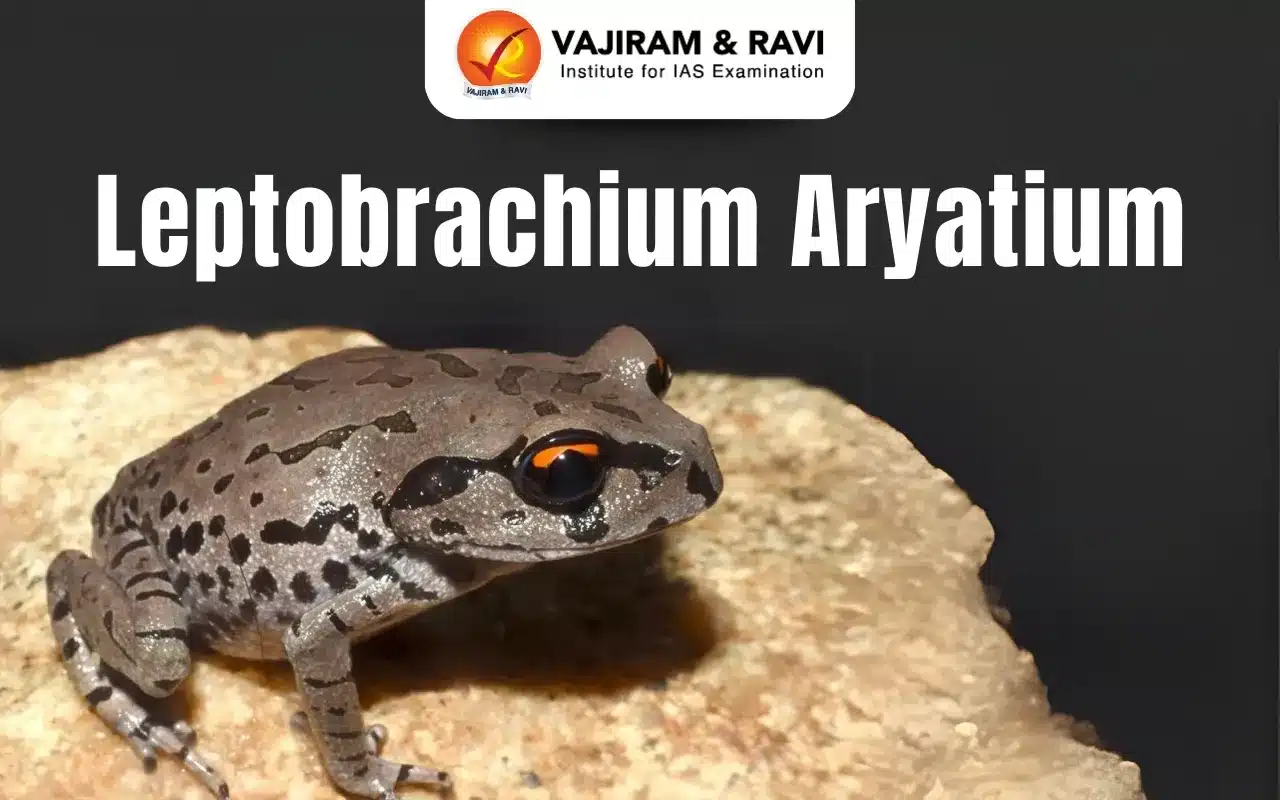
Leptobrachium aryatium Latest News
New Frog Species ‘Leptobrachium aryatium’ Discovered in Assam
Why in the News?
- A new species of frog, named Leptobrachium aryatium, has been officially identified after a 21-year-long study.
- The frog was first studied in 2004 but was originally misidentified as Leptobrachium smithi.
- This species was found in the Garbhanga Reserve Forest, located on the southwestern edge of Guwahati, Assam, bordering Meghalaya.
- It lies adjacent to Deepor Beel, a Ramsar site, and forms a crucial part of the Garbhanga-Rani-Deepar Beel elephant corridor, highlighting its importance in regional wildlife movement.
- The frog has been named after Arya Vidyapeeth College, a prominent educational institution in Guwahati, in recognition of its role in transforming the local area from a liquor brewing hub to an educationally respected zone.
Key Biological Features of Leptobrachium aryatium
- Leptobrachium aryatium belongs to the Leptobrachium genus, which includes stocky frogs with broad heads, short hind limbs, and distinctively coloured eyes.
- This new species is notable for its fiery orange-and-black eyes, a reticulated throat pattern, and a rhythmic dusk-time call.
- Scientific confirmation of its status as a new species was done through morphological examination, DNA analysis, and bioacoustic studies (study of call patterns).
Source: TH
Leptobrachium aryatium FAQs
Q1: What is Leptobrachium aryatium?
Ans: Leptobrachium aryatium is a newly discovered species of frog belonging to the family Megophryidae, known for their distinctive broad heads and camouflaged appearance.
Q2: Where was Leptobrachium aryatium discovered?
Ans: This frog species was discovered in the forests of Arunachal Pradesh, India, highlighting the rich amphibian biodiversity of the Eastern Himalayas.
Q3: Why is Leptobrachium aryatium ecologically significant?
Ans: Amphibians like Leptobrachium aryatium serve as bioindicators, meaning their health reflects the health of their ecosystems.
