Colossal Squid

Colossal Squid

Colossal Squid Latest News

Marine scientists recently captured the world's first footage of a colossal squid swimming freely in its natural habitat - nearly a century after the species was first identified.

About Colossal Squid

  • It is one of the largest and most elusive invertebrates on Earth.
  • Scientific Name: Mesonychoteuthis hamiltoni
  • Distribution: It is found in the icy depths of the Southern Ocean near Antarctica.

Colossal Squid Features

  • This soft-bodied marine animal is somewhat like an octopus, but with a much bulkier frame and far greater length.
  • It has a tube-shaped body, huge eyes, and arms and tentacles with suckers to grab food.
  • It can reach lengths of up to 7 metres (around 23 feet) and weight as much as 500 kilograms.
  • When they’re young, these creatures are almost see-through, giving them the glassy, ghost-like look that’s typical of many deep-sea juveniles. 
  • As they grow, their appearance changes drastically, taking on a deep red or purplish colour and developing thick, muscular arms.
  • Fully grown, they are believed to be the largest invertebrates on Earth, meaning they have no bones but can still grow to massive sizes.
  • What really sets the colossal squid apart, though, are the sharp, swivelling hooks on its tentacles, something no other squid species has. 
  • It’s also known for having the largest eyes of any animal ever discovered, believed to help it detect prey and predators in the pitch-black ocean depths.
  • Colossal Squid Conservation Status: It is classified as Least Concern under the IUCN Red List.

Source: TH

Colossal Squid FAQs

Q1: Where is the colossal squid primarily found?

Ans: Southern Ocean near Antarctica

Q2: What makes the colossal squid’s eyes remarkable?

Ans: They are the largest eyes of any known animal.

Q3: What is the conservation status of the colossal squid according to the IUCN Red List?

Ans: Least Concern

Vehicle-to-Grid (V2G) Technology

V2G Technology

Vehicle-to-Grid (V2G) Technology Latest News

Recently, the Kerala State Electricity Board (KSEB), in partnership with IIT Bombay, has launched a pilot V2G project to test its feasibility in the state.

What is Vehicle-to-Grid (V2G) Technology?

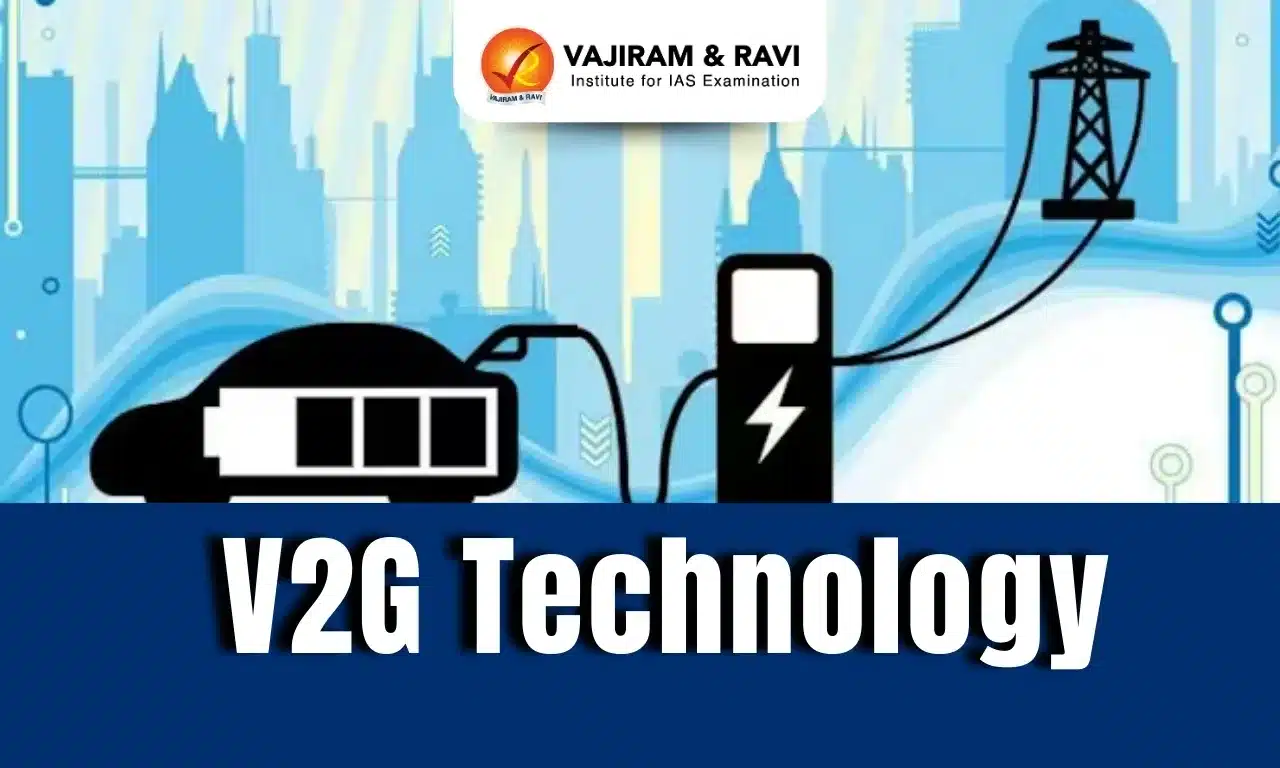
  • Vehicle-to-Grid (V2G) is a set of technologies that enable Electric Vehicles (EVs) to send stored electricity back to the power grid when they are not in use.
  • When an EV is idle and connected via a bi-directional charger, it can act as a decentralised battery energy storage system, contributing electricity to the grid.
  • V2G supports both charging (Grid to Vehicle – G2V) and discharging (Vehicle to Grid – V2G) of EV batteries, creating a two-way energy flow.
  • EV batteries act as a load on the grid during charging, which can be managed using tools like Time of Use (ToU) tariffs and smart charging to reduce stress during peak hours.
  • During discharging, EV batteries serve as distributed energy sources, providing electricity during peak demand periods or when renewable energy (RE) is low.
  • V2G is part of a broader framework including Vehicle to Home (V2H) and Vehicle to Vehicle (V2V) applications, but V2G is the most widely explored use case globally.

Source: TH

Vehicle-to-Grid (V2G) Technology FAQs

Q1: What is V2G Technology?

Ans: Vehicle-to-Grid (V2G) Technology allows electric vehicles (EVs) to return stored electricity back to the grid when they are not in use, helping balance energy supply and demand.

Q2: How does V2G Technology benefit the power grid?

Ans: V2G helps stabilize the power grid by storing surplus energy in EVs during low demand and supplying it back during peak demand periods, thereby reducing the load on power stations.

Q3: Why is V2G important for renewable energy integration?

Ans: V2G enables efficient energy storage, helping overcome the intermittent nature of renewable energy sources like solar and wind by using EV batteries as distributed energy reservoirs.

India’s Prison Crisis: Overcrowding and Lack of Healthcare Services in Focus

India Prison Overcrowding

What’s in Today’s Article?

  • India’s Prison Conditions Latest News
  • About the India Justice Report
  • India’s Prison Healthcare Crisis Under Scrutiny
  • Worsening Inmate Overcrowding
  • Acute Shortage of Medical Professionals
  • A Mental Health Emergency Behind Bars
  • Invisibility of Disability in Prisons
  • Recommendations and Way Forward
  • India’s Prison Conditions FAQs

India’s Prison Conditions Latest News

  • The Tata Trusts recently published the India Justice Report 2025 according to which Indian jails face extreme overcrowding and are battling multiple health challenges.

About the India Justice Report

  • The India Justice Report (IJR) is a collaborative effort by several civil society organizations and policy think tanks. 
  • It is a data-driven assessment that evaluates the justice delivery systems across India’s 36 States and UTs, covering five key sectors:
    • Police
    • Judiciary
    • Prisons
    • Legal Aid
    • Human Rights Commissions
  • The report employs quantitative indicators to highlight both progress and persistent gaps in structural capabilities and public service delivery.

India’s Prison Healthcare Crisis Under Scrutiny

  • The India Justice Report 2025 reveals alarming findings about the condition of Indian prisons, placing the spotlight on worsening overcrowding, the glaring lack of healthcare personnel, and the urgent need for mental health support across prison facilities. 
  • With a rising inmate population and stagnant infrastructure development, the report flags a systemic failure that requires immediate policy attention.

Worsening Inmate Overcrowding

  • The inmate population in India rose sharply from 3.8 lakh in 2012 to 5.7 lakh in 2022, and is projected to reach 6.8 lakh by 2030
  • However, the available prison capacity stands at only 4.3 lakh, with a forecast of just 5.15 lakh by 2030, falling significantly short of demand.
  • The national occupancy rate stands at 131%, a substantial jump from 112% in 2012.
  • States like Maharashtra saw an occupancy spike from 99% to 161% over a decade.
  • The report identifies overcrowding as a key contributor to communicable disease outbreaks, deteriorating living conditions, and increased strain on administrative and health infrastructure.

Acute Shortage of Medical Professionals

  • The report highlights a 43% vacancy rate among prison medical officers, and the existing doctor-to-prisoner ratio stands at a staggering 1:775, far worse than the Model Prison Manual 2016 benchmark of 1:300.
  • This deficit in medical staff hinders not only day-to-day healthcare but also responses to outbreaks, injuries, chronic illness management, and even forensic documentation.

A Mental Health Emergency Behind Bars

  • Perhaps the most serious revelation of the report is the near-collapse of India’s prison mental healthcare system.
    • Only 25 psychologists are available for the entire prison population, equating to one psychologist for every 22,929 prisoners.
    • In 2022, India had 69 sanctioned posts for mental health professionals, but less than half were filled.
    • Not a single state or union territory meets the standard of 1 psychologist per 500 inmates.
  • Mental illness among prisoners doubled from 4,470 in 2012 to 9,084 in 2022.
  • Despite this surge, 25 States and Union Territories make no provision for a psychologist or psychiatrist within their correctional staff. 
  • This gap poses immense risks, including increased suicides, unchecked behavioural issues, and relapse among those with substance use disorders.

Invisibility of Disability in Prisons

  • The report also notes the absence of national-level data regarding prisoners entering jails with a disability or those who acquire disabilities during incarceration
  • This undermines efforts to implement inclusive prison reforms or offer legal protection and special care to these vulnerable groups.

Recommendations and Way Forward

  • The India Justice Report calls for:
    • Urgent recruitment of medical and mental health staff in jails.
    • Strategic investment in prison infrastructure expansion.
    • Regular publication of prison health and disability data.
    • Policy incentives for States to decongest prisons, especially through alternatives to incarceration like bail reforms and community sentencing.
  • India’s prison system stands at a crossroads. As the country advances technologically and economically, its correctional system needs equal attention to ensure dignity, health, and safety for all inmates, aligning with international human rights standards.

India’s Prison Conditions FAQs

Q1. What is the current national prison occupancy rate in India?

Ans. India’s national prison occupancy rate is 131%, far exceeding its prison capacity.

Q2. How many psychologists are available for Indian prisons?

Ans. There are only 25 psychologists available for over 5.7 lakh prisoners across the country.

Q3. What is the ideal doctor-to-prisoner ratio as per the Model Prison Manual?

Ans. The benchmark is 1 doctor per 300 inmates. Currently, the national average is 1:775.

Q4. What was the rise in mental illness cases among inmates between 2012 and 2022?

Ans. The number of prisoners with recorded mental illness rose from 4,470 in 2012 to 9,084 in 2022.

Q5. What does the India Justice Report 2025 emphasize?

Ans. The report emphasizes urgent reforms in prison staffing, infrastructure, and healthcare delivery, especially mental health support.

Source: TH

Study Recommends Rollback of FGD Mandate for Indian Coal Power Plants

FGD mandate for coal plants

What’s in Today’s Article?

  • FGD Mandate for Coal Plants Latest News
  • Flue Gas Desulphurisation (FGD)
  • Key Highlights of the Study
  • FGD Mandate for Coal Plants FAQs

FGD Mandate for Coal Plants Latest News

  • A study by the National Institute of Advanced Studies, commissioned by the Office of the Principal Scientific Adviser, has recommended that the Union Environment Ministry roll back its 2015 policy mandating all 537 coal-fired power plants to install Flue Gas Desulphurisation (FGD) units. 
  • Instead, the installation should be limited to plants using imported coal or coal with high sulphur content (>0.5%), ensuring a more cost-effective and targeted approach to reducing sulphur dioxide emissions.

Flue Gas Desulphurisation (FGD)

  • Flue Gas Desulphurisation (FGD) is a process used to remove sulphur dioxide (SO₂) from the exhaust gases of fossil fuel power plants and industrial sources.
  • SO₂ is a harmful air pollutant that causes acid rain and respiratory issues. FGD helps reduce its presence in the atmosphere.

Working of FGD

  • Absorption: An absorbent like lime, limestone, or ammonia reacts with SO₂.
  • Scrubbing: The absorbent, often in slurry form, is sprayed into a scrubber tower to contact flue gases.
  • Chemical Reaction: SO₂ reacts with the absorbent to form compounds like calcium sulphite or calcium sulphate.
  • Byproducts: Some systems produce useful byproducts like gypsum, which is used in construction.

Regulatory Mandate in India

  • The MoEF&CC has made FGD installation mandatory for all coal-fired thermal power plants to curb SO₂ emissions and comply with environmental norms.

Timeline of Compliance Extensions

  • 2015: Emission Norms Introduced
    • MoEF&CC introduced strict SO₂ emission norms for coal-fired thermal power plants (TPPs).
    • Initial compliance deadline set for 2017.
  • 2017: First Extension Granted
    • Ministry of Power requested a 7-year extension.
    • Supreme Court allowed a 5-year extension till 2022.
    • Plants in Delhi-NCR were to comply by 2019.
  • 2021: Task Force and Categorization
    • April 1: MoEF&CC issued a notification to form a task force.
    • April 16: Task force created with officials from MoEF&CC, Power Ministry, CEA, and CPCB.
    • Plants categorized based on location:
      • Category A: Within 10 km of NCR/1M+ population cities — Deadline: Dec 31, 2022
      • Category B: Within 10 km of critically polluted/non-attainment cities — Dec 31, 2023
      • Category C: All other plants — Dec 31, 2024
  • 2022: Deadlines Revised
    • New compliance deadlines announced in September:
      • Category A: Dec 31, 2024
      • Category B: Dec 31, 2025
      • Category C: Dec 31, 2026
  • 2024: Final Extension Announced
    • December notification revised deadlines again for non-retiring plants:
      • Category A: Dec 31, 2027
      • Category B: Dec 31, 2028
      • Category C: Dec 31, 2029

Key Highlights of the Study

  • FGD Mandate Should Be Rolled Back
    • The study recommended withdrawing the 2015 policy mandating FGD installation in all 537 coal-fired power plants.
  • Apply FGD Only to High-Sulphur Coal Users
    • FGDs should be mandatory only for plants using imported or high-sulphur coal (>0.5%), not for those using domestic low-sulphur coal.
  • Poor Compliance Despite Extended Deadlines
    • Although the original deadline for installing FGDs was 2018, only 8% of plants have complied, with deadlines now pushed to as late as 2029. 
    • Of the 537 plants, 230 are in various stages of installing FGDs, while 260 have yet to place orders.
  • High Costs Make FGD Economically Unviable
    • FGD installation costs ₹1.2 crore per MW. With coal capacity expected to reach 283,000 MW by 2032, the financial burden is massive.
  • Indian Coal Emits Less SO₂
    • The study pointed out that 92% of Indian coal has low sulphur content (0.3%–0.5%). 
    • Furthermore, existing pollution control norms—such as mandatory 220-metre stack heights—combined with Indian climatic conditions, are adequate to prevent harmful SO₂-related effects like acid rain. 
      • A 2024 IIT Delhi study referenced in the report confirms that acid rain is not a major concern in India.
  • FGDs Could Worsen Global Warming
    • The report warns that widespread FGD installation could backfire environmentally. 
    • It would raise freshwater and power consumption in plants and add 69 million tonnes of CO₂ between 2025 and 2030, while only reducing SO₂ emissions by 17 million tonnes. 
    • Given that SO₂ helps mask global warming, indiscriminate removal of SO₂ emissions could actually intensify global warming, the study argues, referencing Intergovernmental Panel on Climate Change (IPCC) findings.
  • Focus Should Shift to Particulate Matter
    • Instead of targeting SO₂, the study recommends focusing on reducing particulate matter pollution, primarily caused by the high ash content in Indian coal. 
    • Installing electrostatic precipitators—available from Bharat Heavy Electricals Limited—could reduce PM emissions by 99% at a cost of just ₹25 lakh per MW, making it a more cost-effective and impactful solution.

FGD Mandate for Coal Plants FAQs

Q1. What is the FGD mandate for coal plants in India?

Ans. It mandates installation of Flue Gas Desulphurisation units to reduce sulphur dioxide emissions from all coal-fired power plants.

Q2. Why does the study oppose universal FGD installation?

Ans. High costs, low SO₂ in Indian coal, and minimal acid rain risks make universal FGD installation economically and environmentally inefficient.

Q3. Which coal plants should install FGDs, according to the study?

Ans. Only those using imported or high-sulphur coal with sulphur content greater than 0.5% should install FGDs.

Q4. How can particulate matter pollution be reduced cost-effectively?

Ans. Installing electrostatic precipitators can cut particulate matter by 99% at just ₹25 lakh per MW, says the study.

Q5. What are the environmental downsides of widespread FGD use?

Ans. FGDs consume water, raise CO₂ emissions, and removing SO₂ could worsen global warming by reducing atmospheric cooling effects.

Source: TH | BL | DTE

Role of V2G Technology in Strengthening India’s Power Sector | KSEB-IIT Bombay Pilot

V2G-Technology-in-India

What’s in Today’s Article?

  • V2G Technology in India Latest News
  • Vehicle-to-Grid (V2G) Technology
  • Global Adoption of V2G Technology
  • Current Status of V2G in India
  • V2G Technology in India FAQ’s

V2G Technology in India Latest News

  • The Kerala State Electricity Board (KSEB), in collaboration with IIT Bombay, has launched a pilot project to evaluate the feasibility of integrating Electric Vehicles (EVs) with the State's power grid using Vehicle-to-Grid (V2G) technology.
  • The project aims to assess how EVs can support the grid during peak demand periods, leveraging EVs as a potential solution to balance the electricity load when solar energy is not accessible.

Vehicle-to-Grid (V2G) Technology

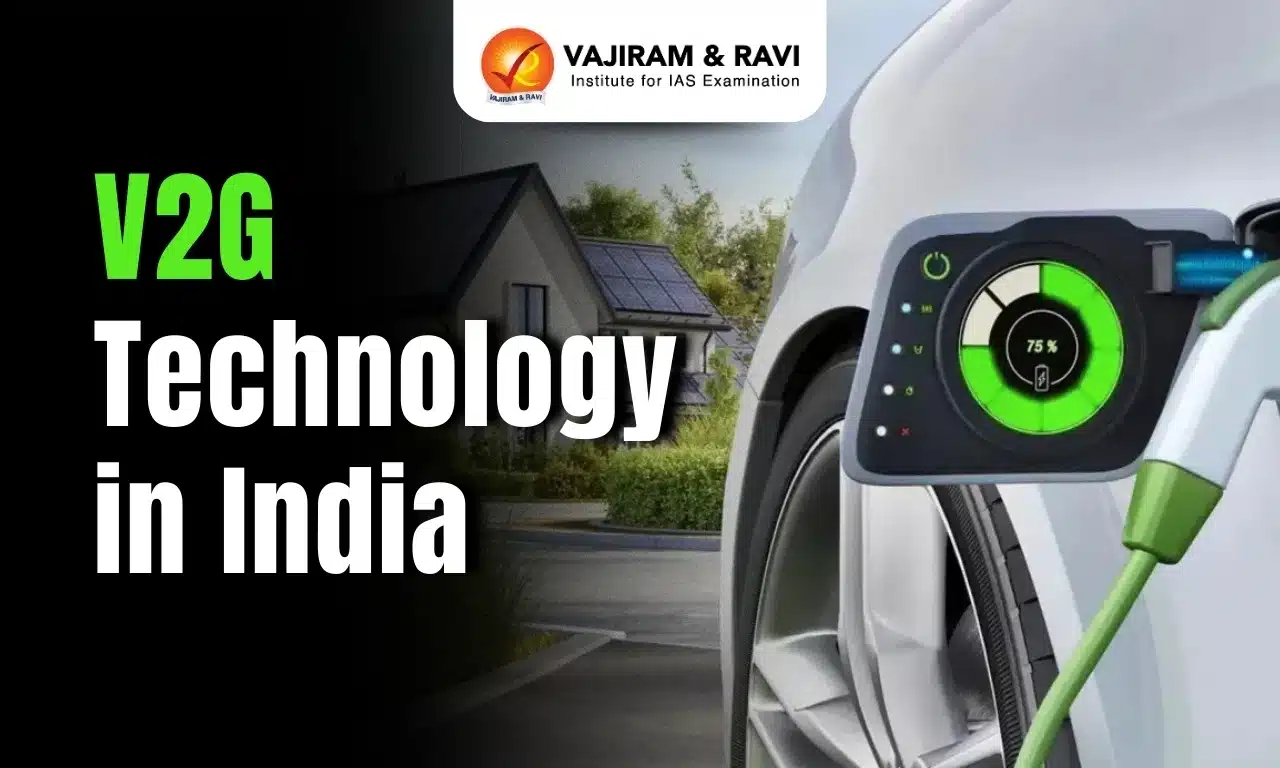
  • Vehicle-to-Grid (V2G) refers to technologies that allow Electric Vehicle (EV) batteries to send power back to the grid. 
  • When not in use, EVs can act as decentralized battery storage systems, supporting the power grid via bi-directional chargers.

Working of V2G

  • V2G involves two key processes:
    • Grid-to-Vehicle (G2V): Power flows from the grid to charge the EV.
    • Vehicle-to-Grid (V2G): The EV discharges stored energy back into the grid when needed.

Broader Applications

  • While V2G is the most prominent, EV batteries can also support:
    • Vehicle-to-Home (V2H) for powering household devices
    • Vehicle-to-Vehicle (V2V) energy transfers between EVs

V2G Technology Can Support India’s Power Sector

  • Demand-Side Management
    • Peak Load Reduction: EVs can discharge power during high-demand periods, reducing stress on power plants and lowering energy costs.
    • Load Balancing: Charging EVs during off-peak hours helps stabilize electricity demand throughout the day.
  • Renewable Energy Integration
    • Storage for Volatile Renewables: V2G stores surplus solar and wind energy and releases it when needed, mitigating renewable intermittency.
    • Grid Balancing: Provides ancillary services like frequency regulation and voltage support for grid reliability.
  • Grid Flexibility and Resilience
    • Backup Power Supply: V2G-enabled EVs can act as emergency power sources during outages.
    • Decentralized Storage: EVs offer local energy storage, reducing dependence on centralized plants.
  • Economic Benefits
    • Cost Savings for EV Owners: Users can earn by selling excess energy back to the grid.
    • Improved Grid Efficiency: V2G boosts grid reliability and reduces operational costs for utilities.
  • Additional Advantages
    • Smart Charging and Communication: Enables efficient energy flow through intelligent systems.
    • Environmental Impact: Supports the use of clean energy, helping reduce carbon emissions.

Global Adoption of V2G Technology

  • Growth in Mature EV Markets
    • V2G technologies are rapidly advancing in countries with established EV ecosystems, such as the U.S. and Europe. 
    • EVs are increasingly seen as cost-effective distributed energy storage solutions.
  • Incentivised Participation
    • United Kingdom and The Netherlands: EV owners receive compensation for supplying excess power to the grid during peak demand periods.
    • California, USA: EV users are encouraged to contribute to ancillary services, such as grid stability and frequency regulation, with attractive financial incentives.
  • Decentralised Energy Storage and Emergency Use
    • EVs serve as crucial decentralized storage units, offering emergency power during outages and supporting disaster resilience amid increasing climate-related disruptions.

Current Status of V2G in India

  • V2G technology in India is still in its infancy. The primary focus has been on expanding EV charging infrastructure rather than enabling power flow back to the grid.

Pilot Projects and Planning

  • Some DISCOMs have initiated pilot projects for smart charging and V2G integration. 
  • The Central Electricity Authority (CEA) has formed a committee to develop guidelines for reverse charging from EVs to the grid.

Importance of Smart Charging

  • The CEA committee identified smart charging as essential to support EV adoption while minimizing stress on the distribution grid.

Structural and Market Challenges

  • India's electricity market is not yet equipped for decentralized systems like V2G. Key issues include:
    • Variability in renewable energy supply
    • Mismatches between electricity generation and demand

Need for Regulatory Support

  • To enable large-scale V2G adoption, India must implement regulatory reforms that support bi-directional energy flow and incentivize EV owners.

V2G Technology in India FAQs

Q1. What is V2G technology?

Ans. V2G allows Electric Vehicle batteries to send power back to the grid, supporting energy management.

Q2. How does V2G support grid stability?

Ans. V2G helps balance demand and supply by discharging stored energy from EVs during peak hours, reducing grid stress.

Q3. What benefits does V2G offer?

Ans. V2G offers grid flexibility, renewable energy integration, peak load reduction, and economic benefits for EV owners.

Q4. Is V2G technology being adopted globally?

Ans. Yes, countries like the U.K., Netherlands, and the U.S. incentivize EV owners to provide power to the grid.

Q5. What challenges does V2G face in India?

Ans. India faces challenges like market structure issues, renewable energy variability, and the need for regulatory support for V2G.

Source: TH | BL

Operation ATALANTA

Operation ATALANTA

Operation ATALANTA Latest News

Recently, the European Union Naval Force (EUNAVFOR) under Operation ATALANTA has proposed a joint naval exercise with the Indian Navy.

Why in the News?

  • EUNAVFOR Operation ATALANTA, which operates in the Western Indian Ocean and the Red Sea, has proposed a joint maritime exercise with the Indian Navy to be conducted around the end of May 2025.
  • The primary goal of the proposal is to enhance coordination and maritime cooperation between European naval forces and the Indian Navy, particularly in the face of resurgent piracy threats and geopolitical instability in the Red Sea region.
  • The proposed drill will go beyond the usual Passage Exercises (PASSEX) and will include advanced tactical manoeuvres, counter-piracy operations, and inter-naval communications training, if approved.
  • The Horn of Africa region, once again experiencing piracy amidst Houthi rebel activity in the Red Sea, has prompted a need for enhanced maritime coordination, even though incidents have decreased recently.

About Operation ATALANTA

  • Launched in 2008, Operation ATALANTA is the EU's counter-piracy mission in the Western Indian Ocean and the Red Sea, initially targeting piracy off the Somali coast.
  • Its expanded mandate includes:
    • Protection of World Food Programme (WFP) vessels
    • Surveillance of the arms embargo on Somalia
    • Monitoring drug and arms trafficking
    • Combating Illegal, Unreported and Unregulated (IUU) fishing
    • Disruption of illegal charcoal trade

Source: TH

Operation ATALANTA FAQs

Q1: What is Operation ATALANTA?

Ans: Operation ATALANTA is a counter-piracy naval mission launched by the European Union in 2008 to protect vessels against piracy off the coast of Somalia and the Horn of Africa.

Q2: What are the objectives of Operation ATALANTA?

Ans: The operation aims to safeguard World Food Programme (WFP) shipments, protect vulnerable ships, monitor fishing activities, and deter piracy in the Western Indian Ocean.

Q3: Which naval forces participate in Operation ATALANTA?

Ans: Naval forces from European Union member states along with international partners collaborate under the EU Naval Force (EU NAVFOR) for Operation ATALANTA.

International Maritime Bureau (IMB)

International Maritime Bureau

International Maritime Bureau Latest News

Global Maritime piracy and armed robbery incidents have seen a noticeable increase in the first three months of 2025, according to the International Maritime Bureau (IMB).

About International Maritime Bureau

  • The ICC International Maritime Bureau (IMB) is a non-profit-making organisation,established in 1981, to act as a focal point in the fight against all types of maritime fraud, malpractice, and piracy. 
  • It is a specialised division of the International Chamber of Commerce (ICC).
  • It serves as a platform for cooperation and information sharing among various stakeholders, including governments, shipping companies, and law enforcement agencies. 
  • By acting as a central hub for reporting and disseminating information on maritime crimes, the IMB helps in preventing and combating piracy, armed robbery, and other illicit activities that pose a threat to the safety of ships and crew members.
  • The IMB Piracy Reporting Centre is located at Kuala Lumpur, Malaysia.
  • The key services of the PRC are:
    • Issuing daily status reports on piracy and armed robbery to ships via broadcasts on the Inmarsat-C SafetyNET service. 
    • Reporting piracy and armed robbery at sea incidents to law enforcement and the International Maritime Organization (IMO).
    • Helping local law enforcement apprehend pirates and assist in bringing them to justice. 
    • Assisting shipowners whose vessels have been attacked or hijacked.
    • Assisting crew members whose vessels have been attacked. 
    • Providing updates on pirate activity via the Internet, twitter, and email alerts.
    • Publishing comprehensive quarterly and annual reports detailing piracy statistics. 
  • The services of the PRC are provided free of charge to all ships irrespective of their ownership or flag. 
  • The IMB also locates lost ships or ships seized by pirates, recovers stolen cargoes, and prepares customised reports on a chargeable basis. 
  • The United Nations (UN) International Maritime Organization (IMO), in its resolution A 504 (XII) (9) adopted on 20 November 1981, has, among other things, urged all governments,interests, and organizations to exchange information and provide appropriate co-operation with the IMB. 
  • The IMB also has an observer status with the International Criminal Police Organization (ICPO – INTERPOL). 
  • Through its expertise and extensive network, the IMB offers mediation and arbitration services, helping parties involved in maritime disputes to reach amicable settlements and avoid costly legal proceedings.
  • IMB actively engages in advocacy and awareness campaigns to promote best practices in maritime security and trade facilitation. 
  • It collaborates withinternational organizations, such as the IMO, to develop guidelines and standards aimed at enhancing the security and efficiency of global shipping operations.

Source: MI

International Maritime Bureau FAQs

Q1: Where is the International Maritime Bureau?

Ans: IMB has its Head Office at Limassol, Cyprus.

Q2: What is the primary objective of the International Maritime Bureau (IMB)?

Ans: Act as a focal point to combat maritime fraud, malpractice, and piracy

Q3: IMB operates as a specialized division of which organization?

Ans: International Chamber of Commerce (ICC)

James Webb Space Telescope (JWST)

James Webb Telescope

James Webb Space Telescope (JWST) Latest News

Recently, scientists have found tentative but strong evidence of possible extraterrestrial life on a distant exoplanet named K2-18b, located 124 light years away from Earth in the Leo constellation.

About James Webb Space Telescope (JWST)

  • The James Webb Space Telescope (JWST), launched in December 2021, is the largest and most powerful space observatory built through a collaboration between NASA, European Space Agency (ESA), and Canadian Space Agency (CSA).
  • JWST orbits the L2 Lagrange Point, about 1.5 million km beyond Earth, enabling a stable position for deep-space observation.
  • The telescope operates primarily in the infrared spectrum and is equipped with components such as:
    • Optical Telescope Element (OTE) – collects light from distant objects.
    • Integrated Science Instrument Module (ISIM) – houses all cameras and instruments.
    • Sunshield – protects sensitive instruments from solar radiation.
    • Spacecraft Bus – provides necessary operational support.

Scientific Findings on K2-18b

  • The Cambridge University research team studied the planet’s atmosphere and detected chemical signatures of gases like dimethyl sulphide (DMS) and dimethyl disulphide (DMDS).
  • On Earth, these gases are known to be produced only by marine phytoplankton and certain bacteria, raising the possibility of biological activity on K2-18b.
  • The amount of DMS detected is thousands of times greater than Earth's levels, suggesting, if biological, that the planet might be teeming with life.

Source: BBC

James Webb Space Telescope (JWST) FAQs

Q1: What is the James Webb Space Telescope (JWST)?

Ans: The James Webb Space Telescope is a space-based observatory launched by NASA in December 2021 designed to observe the universe in infrared light.

Q2: How is JWST different from the Hubble Telescope?

Ans: Unlike Hubble, which observes mainly in visible and ultraviolet light, JWST focuses on infrared light, allowing it to see through cosmic dust and view early galaxies.

Q3: What scientific goals does JWST serve?

Ans: JWST aims to study the formation of stars, galaxies, and planetary systems, analyze exoplanet atmospheres, and look back to the earliest stages of the universe.

People for the Ethical Treatment of Animals (PETA)

People for the Ethical Treatment of Animals (PETA)

People for the Ethical Treatment of Animals Latest News

The Trump administration's recent policy changes to end animal testing are garnering support from animal rights groups like PETA.

About People for the Ethical Treatment of Animals

  • It is a nongovernmental organization (NGO) committed to ending abusive treatment of animals in business and society and promoting consideration of animal interests in everyday decision-making and general policies and practices.
  • It is the largest animal rights organization in the world.
  • It is based in Norfolk, Virginia, United States, with entities worldwide.
  • PETA was founded in 1980 by Ingrid Newkirk and Alex Pacheco, who were influenced by Australian ethicist Peter Singer’s book Animal Liberation (1975). 
  • Initially recognized for exposing cruelty in research laboratories, PETA has grown into a global entity with over nine million members and considerable annual expenditures. 
  • PETA opposes speciesism, a human-supremacist worldview, and focuses on the four areas in which the largest numbers of animals suffer the most intensely for the longest periods of time: in laboratories, in the food industry, in the clothing trade, and in the entertainment business. 
  • PETA also works on a variety of other issues, including the cruel killing of rodents, birds, and other animals who are often considered “pests” and cruelty to domesticated animals.
  • PETA works through public education, investigations, research, animal rescue, legislation, protests, and negotiations with companies and regulatory agencies.

Source: HT

People for the Ethical Treatment of Animals FAQs

Q1: Who were the founders of PETA?

Ans: Ingrid Newkirk and Alex Pacheco

Q2: What is the main focus of PETA’s efforts?

Ans: Ending abusive treatment of animals in business and society

Q3: Where is PETA's headquarters located?

Ans: Norfolk, Virginia, USA

India’s Prison Crisis: Overcrowding and Lack of Healthcare Services in Focus

India’s Prison Crisis: Overcrowding and Lack of Healthcare Services in Focus

What’s in Today’s Article?

  • India’s Prison Conditions Latest News
  • About the India Justice Report
  • India’s Prison Healthcare Crisis Under Scrutiny
  • Worsening Inmate Overcrowding
  • Acute Shortage of Medical Professionals
  • A Mental Health Emergency Behind Bars
  • Invisibility of Disability in Prisons
  • Recommendations and Way Forward
  • India’s Prison Conditions FAQs

India’s Prison Conditions Latest News

  • The Tata Trusts recently published the India Justice Report 2025 according to which Indian jails face extreme overcrowding and are battling multiple health challenges.

About the India Justice Report

  • The India Justice Report (IJR) is a collaborative effort by several civil society organizations and policy think tanks. 
  • It is a data-driven assessment that evaluates the justice delivery systems across India’s 36 States and UTs, covering five key sectors:
    • Police
    • Judiciary
    • Prisons
    • Legal Aid
    • Human Rights Commissions
  • The report employs quantitative indicators to highlight both progress and persistent gaps in structural capabilities and public service delivery.

India’s Prison Healthcare Crisis Under Scrutiny

  • The India Justice Report 2025 reveals alarming findings about the condition of Indian prisons, placing the spotlight on worsening overcrowding, the glaring lack of healthcare personnel, and the urgent need for mental health support across prison facilities. 
  • With a rising inmate population and stagnant infrastructure development, the report flags a systemic failure that requires immediate policy attention.

Worsening Inmate Overcrowding

  • The inmate population in India rose sharply from 3.8 lakh in 2012 to 5.7 lakh in 2022, and is projected to reach 6.8 lakh by 2030
  • However, the available prison capacity stands at only 4.3 lakh, with a forecast of just 5.15 lakh by 2030, falling significantly short of demand.
  • The national occupancy rate stands at 131%, a substantial jump from 112% in 2012.
  • States like Maharashtra saw an occupancy spike from 99% to 161% over a decade.
  • The report identifies overcrowding as a key contributor to communicable disease outbreaks, deteriorating living conditions, and increased strain on administrative and health infrastructure.

Acute Shortage of Medical Professionals

  • The report highlights a 43% vacancy rate among prison medical officers, and the existing doctor-to-prisoner ratio stands at a staggering 1:775, far worse than the Model Prison Manual 2016 benchmark of 1:300.
  • This deficit in medical staff hinders not only day-to-day healthcare but also responses to outbreaks, injuries, chronic illness management, and even forensic documentation.

A Mental Health Emergency Behind Bars

  • Perhaps the most serious revelation of the report is the near-collapse of India’s prison mental healthcare system.
    • Only 25 psychologists are available for the entire prison population, equating to one psychologist for every 22,929 prisoners.
    • In 2022, India had 69 sanctioned posts for mental health professionals, but less than half were filled.
    • Not a single state or union territory meets the standard of 1 psychologist per 500 inmates.
  • Mental illness among prisoners doubled from 4,470 in 2012 to 9,084 in 2022.
  • Despite this surge, 25 States and Union Territories make no provision for a psychologist or psychiatrist within their correctional staff. 
  • This gap poses immense risks, including increased suicides, unchecked behavioural issues, and relapse among those with substance use disorders.

Invisibility of Disability in Prisons

  • The report also notes the absence of national-level data regarding prisoners entering jails with a disability or those who acquire disabilities during incarceration
  • This undermines efforts to implement inclusive prison reforms or offer legal protection and special care to these vulnerable groups.

Recommendations and Way Forward

  • The India Justice Report calls for:
    • Urgent recruitment of medical and mental health staff in jails.
    • Strategic investment in prison infrastructure expansion.
    • Regular publication of prison health and disability data.
    • Policy incentives for States to decongest prisons, especially through alternatives to incarceration like bail reforms and community sentencing.
  • India’s prison system stands at a crossroads. As the country advances technologically and economically, its correctional system needs equal attention to ensure dignity, health, and safety for all inmates, aligning with international human rights standards.

India’s Prison Conditions FAQs

Q1. What is the current national prison occupancy rate in India?

Ans. India’s national prison occupancy rate is 131%, far exceeding its prison capacity.

Q2. How many psychologists are available for Indian prisons?

Ans. There are only 25 psychologists available for over 5.7 lakh prisoners across the country.

Q3. What is the ideal doctor-to-prisoner ratio as per the Model Prison Manual?

Ans. The benchmark is 1 doctor per 300 inmates. Currently, the national average is 1:775.

Q4. What was the rise in mental illness cases among inmates between 2012 and 2022?

Ans. The number of prisoners with recorded mental illness rose from 4,470 in 2012 to 9,084 in 2022.

Q5. What does the India Justice Report 2025 emphasize?

Ans. The report emphasizes urgent reforms in prison staffing, infrastructure, and healthcare delivery, especially mental health support.


Source :TH

Role of V2G Technology in Strengthening India’s Power Sector | KSEB-IIT Bombay Pilot

Role of V2G Technology in Strengthening India’s Power Sector | KSEB-IIT Bombay Pilot

What’s in Today’s Article?

  • V2G Technology in India Latest News
  • Vehicle-to-Grid (V2G) Technology
  • Global Adoption of V2G Technology
  • Current Status of V2G in India
  • V2G Technology in India FAQ’s

V2G Technology in India Latest News

  • The Kerala State Electricity Board (KSEB), in collaboration with IIT Bombay, has launched a pilot project to evaluate the feasibility of integrating Electric Vehicles (EVs) with the State's power grid using Vehicle-to-Grid (V2G) technology.
  • The project aims to assess how EVs can support the grid during peak demand periods, leveraging EVs as a potential solution to balance the electricity load when solar energy is not accessible.

Vehicle-to-Grid (V2G) Technology

  • Vehicle-to-Grid (V2G) refers to technologies that allow Electric Vehicle (EV) batteries to send power back to the grid. 
  • When not in use, EVs can act as decentralized battery storage systems, supporting the power grid via bi-directional chargers.

Working of V2G

  • V2G involves two key processes:
    • Grid-to-Vehicle (G2V): Power flows from the grid to charge the EV.
    • Vehicle-to-Grid (V2G): The EV discharges stored energy back into the grid when needed.

Broader Applications

  • While V2G is the most prominent, EV batteries can also support:
    • Vehicle-to-Home (V2H) for powering household devices
    • Vehicle-to-Vehicle (V2V) energy transfers between EVs

V2G Technology Can Support India’s Power Sector

  • Demand-Side Management
    • Peak Load Reduction: EVs can discharge power during high-demand periods, reducing stress on power plants and lowering energy costs.
    • Load Balancing: Charging EVs during off-peak hours helps stabilize electricity demand throughout the day.
  • Renewable Energy Integration
    • Storage for Volatile Renewables: V2G stores surplus solar and wind energy and releases it when needed, mitigating renewable intermittency.
    • Grid Balancing: Provides ancillary services like frequency regulation and voltage support for grid reliability.
  • Grid Flexibility and Resilience
    • Backup Power Supply: V2G-enabled EVs can act as emergency power sources during outages.
    • Decentralized Storage: EVs offer local energy storage, reducing dependence on centralized plants.
  • Economic Benefits
    • Cost Savings for EV Owners: Users can earn by selling excess energy back to the grid.
    • Improved Grid Efficiency: V2G boosts grid reliability and reduces operational costs for utilities.
  • Additional Advantages
    • Smart Charging and Communication: Enables efficient energy flow through intelligent systems.
    • Environmental Impact: Supports the use of clean energy, helping reduce carbon emissions.

Global Adoption of V2G Technology

  • Growth in Mature EV Markets
    • V2G technologies are rapidly advancing in countries with established EV ecosystems, such as the U.S. and Europe. 
    • EVs are increasingly seen as cost-effective distributed energy storage solutions.
  • Incentivised Participation
    • United Kingdom and The Netherlands: EV owners receive compensation for supplying excess power to the grid during peak demand periods.
    • California, USA: EV users are encouraged to contribute to ancillary services, such as grid stability and frequency regulation, with attractive financial incentives.
  • Decentralised Energy Storage and Emergency Use
    • EVs serve as crucial decentralized storage units, offering emergency power during outages and supporting disaster resilience amid increasing climate-related disruptions.

Current Status of V2G in India

  • V2G technology in India is still in its infancy. The primary focus has been on expanding EV charging infrastructure rather than enabling power flow back to the grid.

Pilot Projects and Planning

  • Some DISCOMs have initiated pilot projects for smart charging and V2G integration. 
  • The Central Electricity Authority (CEA) has formed a committee to develop guidelines for reverse charging from EVs to the grid.

Importance of Smart Charging

  • The CEA committee identified smart charging as essential to support EV adoption while minimizing stress on the distribution grid.

Structural and Market Challenges

  • India's electricity market is not yet equipped for decentralized systems like V2G. Key issues include:
    • Variability in renewable energy supply
    • Mismatches between electricity generation and demand

Need for Regulatory Support

  • To enable large-scale V2G adoption, India must implement regulatory reforms that support bi-directional energy flow and incentivize EV owners.

V2G Technology in India FAQs

Q1. What is V2G technology?

Ans. V2G allows Electric Vehicle batteries to send power back to the grid, supporting energy management.

Q2. How does V2G support grid stability?

Ans. V2G helps balance demand and supply by discharging stored energy from EVs during peak hours, reducing grid stress.

Q3. What benefits does V2G offer?

Ans. V2G offers grid flexibility, renewable energy integration, peak load reduction, and economic benefits for EV owners.

Q4. Is V2G technology being adopted globally?

Ans. Yes, countries like the U.K., Netherlands, and the U.S. incentivize EV owners to provide power to the grid.

Q5. What challenges does V2G face in India?

Ans. India faces challenges like market structure issues, renewable energy variability, and the need for regulatory support for V2G.

Source: TH | BL

Study Recommends Rollback of FGD Mandate for Indian Coal Power Plants

Study Recommends Rollback of FGD Mandate for Indian Coal Power Plants

What’s in Today’s Article?

  • FGD Mandate for Coal Plants Latest News
  • Flue Gas Desulphurisation (FGD)
  • Key Highlights of the Study
  • FGD Mandate for Coal Plants FAQs

FGD Mandate for Coal Plants Latest News

  • A study by the National Institute of Advanced Studies, commissioned by the Office of the Principal Scientific Adviser, has recommended that the Union Environment Ministry roll back its 2015 policy mandating all 537 coal-fired power plants to install Flue Gas Desulphurisation (FGD) units. 
  • Instead, the installation should be limited to plants using imported coal or coal with high sulphur content (>0.5%), ensuring a more cost-effective and targeted approach to reducing sulphur dioxide emissions.

Flue Gas Desulphurisation (FGD)

  • Flue Gas Desulphurisation (FGD) is a process used to remove sulphur dioxide (SO₂) from the exhaust gases of fossil fuel power plants and industrial sources.
  • SO₂ is a harmful air pollutant that causes acid rain and respiratory issues. FGD helps reduce its presence in the atmosphere.

Working of FGD

  • Absorption: An absorbent like lime, limestone, or ammonia reacts with SO₂.
  • Scrubbing: The absorbent, often in slurry form, is sprayed into a scrubber tower to contact flue gases.
  • Chemical Reaction: SO₂ reacts with the absorbent to form compounds like calcium sulphite or calcium sulphate.
  • Byproducts: Some systems produce useful byproducts like gypsum, which is used in construction.

Regulatory Mandate in India

  • The MoEF&CC has made FGD installation mandatory for all coal-fired thermal power plants to curb SO₂ emissions and comply with environmental norms.

Timeline of Compliance Extensions

  • 2015: Emission Norms Introduced
    • MoEF&CC introduced strict SO₂ emission norms for coal-fired thermal power plants (TPPs).
    • Initial compliance deadline set for 2017.
  • 2017: First Extension Granted
    • Ministry of Power requested a 7-year extension.
    • Supreme Court allowed a 5-year extension till 2022.
    • Plants in Delhi-NCR were to comply by 2019.
  • 2021: Task Force and Categorization
    • April 1: MoEF&CC issued a notification to form a task force.
    • April 16: Task force created with officials from MoEF&CC, Power Ministry, CEA, and CPCB.
    • Plants categorized based on location:
      • Category A: Within 10 km of NCR/1M+ population cities — Deadline: Dec 31, 2022
      • Category B: Within 10 km of critically polluted/non-attainment cities — Dec 31, 2023
      • Category C: All other plants — Dec 31, 2024
  • 2022: Deadlines Revised
    • New compliance deadlines announced in September:
      • Category A: Dec 31, 2024
      • Category B: Dec 31, 2025
      • Category C: Dec 31, 2026
  • 2024: Final Extension Announced
    • December notification revised deadlines again for non-retiring plants:
      • Category A: Dec 31, 2027
      • Category B: Dec 31, 2028
      • Category C: Dec 31, 2029

Key Highlights of the Study

  • FGD Mandate Should Be Rolled Back
    • The study recommended withdrawing the 2015 policy mandating FGD installation in all 537 coal-fired power plants.
  • Apply FGD Only to High-Sulphur Coal Users
    • FGDs should be mandatory only for plants using imported or high-sulphur coal (>0.5%), not for those using domestic low-sulphur coal.
  • Poor Compliance Despite Extended Deadlines
    • Although the original deadline for installing FGDs was 2018, only 8% of plants have complied, with deadlines now pushed to as late as 2029. 
    • Of the 537 plants, 230 are in various stages of installing FGDs, while 260 have yet to place orders.
  • High Costs Make FGD Economically Unviable
    • FGD installation costs ₹1.2 crore per MW. With coal capacity expected to reach 283,000 MW by 2032, the financial burden is massive.
  • Indian Coal Emits Less SO₂
    • The study pointed out that 92% of Indian coal has low sulphur content (0.3%–0.5%). 
    • Furthermore, existing pollution control norms—such as mandatory 220-metre stack heights—combined with Indian climatic conditions, are adequate to prevent harmful SO₂-related effects like acid rain. 
      • A 2024 IIT Delhi study referenced in the report confirms that acid rain is not a major concern in India.
  • FGDs Could Worsen Global Warming
    • The report warns that widespread FGD installation could backfire environmentally. 
    • It would raise freshwater and power consumption in plants and add 69 million tonnes of CO₂ between 2025 and 2030, while only reducing SO₂ emissions by 17 million tonnes. 
    • Given that SO₂ helps mask global warming, indiscriminate removal of SO₂ emissions could actually intensify global warming, the study argues, referencing Intergovernmental Panel on Climate Change (IPCC) findings.
  • Focus Should Shift to Particulate Matter
    • Instead of targeting SO₂, the study recommends focusing on reducing particulate matter pollution, primarily caused by the high ash content in Indian coal. 
    • Installing electrostatic precipitators—available from Bharat Heavy Electricals Limited—could reduce PM emissions by 99% at a cost of just ₹25 lakh per MW, making it a more cost-effective and impactful solution.

FGD Mandate for Coal Plants FAQs

Q1. What is the FGD mandate for coal plants in India?

Ans. It mandates installation of Flue Gas Desulphurisation units to reduce sulphur dioxide emissions from all coal-fired power plants.

Q2. Why does the study oppose universal FGD installation?

Ans. High costs, low SO₂ in Indian coal, and minimal acid rain risks make universal FGD installation economically and environmentally inefficient.

Q3. Which coal plants should install FGDs, according to the study?

Ans. Only those using imported or high-sulphur coal with sulphur content greater than 0.5% should install FGDs.

Q4. How can particulate matter pollution be reduced cost-effectively?

Ans. Installing electrostatic precipitators can cut particulate matter by 99% at just ₹25 lakh per MW, says the study.

Q5. What are the environmental downsides of widespread FGD use?

Ans. FGDs consume water, raise CO₂ emissions, and removing SO₂ could worsen global warming by reducing atmospheric cooling effects.

Source: TH | BL | DTE

Enquire Now