Huajiang Grand Canyon Bridge

Huajiang Grand Canyon Bridge

Huajiang Grand Canyon Bridge Latest News

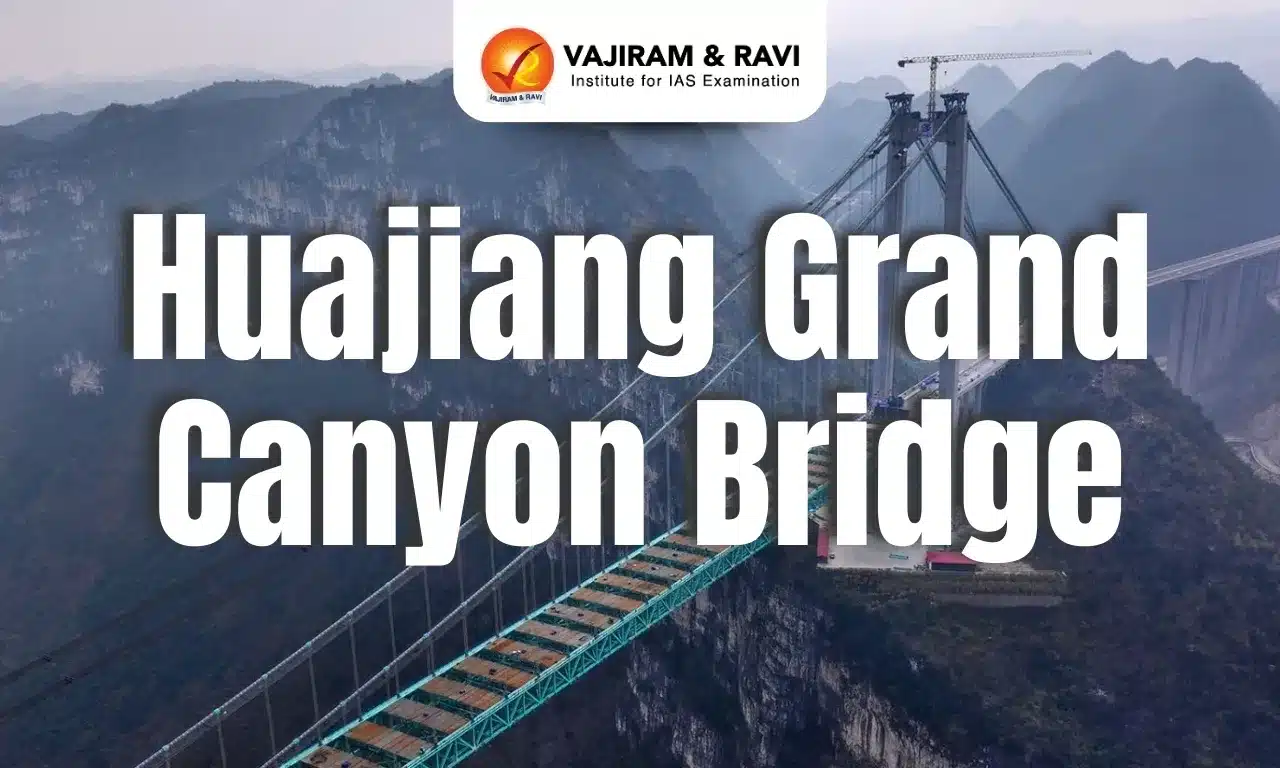
China is all set to unveil the Huajiang Grand Canyon Bridge, a record-breaking structure that is set to become the world’s highest bridge.

About Huajiang Grand Canyon Bridge

  • It is a suspension bridge currently under construction in Zhenfeng County, Guizhou Province, China.
    • Guizhou province is a mountainous area of China, which is 800 miles west of the city of Shenzhen.
    • It's already home to many impressive structures and buildings. Nearly half of the top 100 tallest bridges in the world are in Guizhou.
  • Upon completion,Huajiang Grand Canyon Bridge will hold the title of the world's highest bridge.
  • It will be 625 meters (2,051 feet) above Beipan River level-200m taller than the Eiffel Tower.
  • That also makes it taller than the Millau Viaduct in France, which at 343 meters (1,125 feet) held the record for the tallest bridge until now.
  • The bridge is a steel truss suspension bridge with a total length of 2,890 metres (9,482 feet).
  • Altogether, these trusses weigh about 22,000 tons, equivalent to three Eiffel Towers.
  • It's taken 3 and a half years to build, with construction officially starting on 18 January 2022.
  • The cost of the bridge is estimated at around £216 million (Rs 2,200 crore).
  • It will form part of the Shantou–Kunming Expressway, a major roadway that connects China’s southeastern coastal city of Shantou to Kunming, the capital of Yunnan province.
  • The bridge will cut travel time across the canyon from about one hour to two minutes.

SourceIND

Huajiang Grand Canyon Bridge FAQs

Q1: Where is Huajiang Grand Canyon Bridge?

Ans: It is a suspension bridge currently under construction in Zhenfeng County, Guizhou Province, China.

Q2: What type of bridge is the Huajiang Grand Canyon Bridge?

Ans: Steel truss suspension bridge

Q3: How high will the Huajiang Grand Canyon Bridge be above the Beipan River?

Ans: 625 meters

Surface Mount Technology (SMT)

Surface Mount Technology (SMT)

Surface Mount Technology Latest News

Inaugurating VVDN Technologies' SMT (Surface Mount Technology) Line at Manesar recently, the Minister of Electronics and Information Technology noted that electronics manufacturing in India has risen 5-fold in the last decade, topping Rs 11 lakh crore.

About Surface Mount Technology

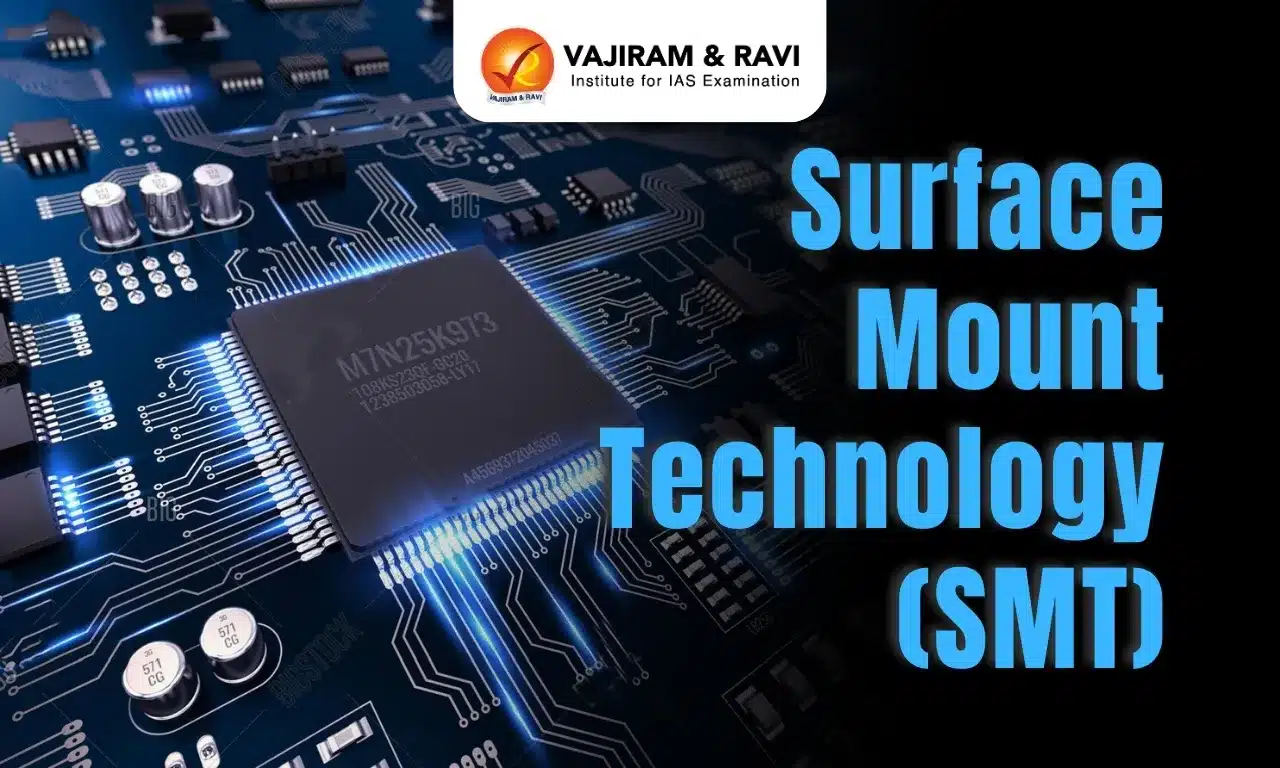
  • It refers to a manufacturing technique where electronic components are directly applied to the surface of a printed circuit board (PCB). 
  • SMT, developed in the 1960s and 1970s, replaced conventional through-hole technology (THT), producing more compact, economical, and efficient electronic devices.
  • This method enables automated production to conduct a more extensive assembly, resulting in the creation of a fully functional circuit board.
  • Any electronic element installed in this manner is identified as a surface-mounted component (SMD). 
  • In opposition to conventional manufacturing techniques, SMT removes the necessity for elements to be placed through apertures; rather, elements are attached to the board via the process of soldering.
    • The two main soldering techniques are reflow soldering and wave soldering.
    • Assembling PCBs using SMT involves various steps like solder paste application,component placement, reflow soldering, and cleaning.
  • SMT is used in many industries like consumer electronics, medical, and aerospace industries.
  • THT vs. SMT:
    • As compared to THT, SMT has cheaper production costs, increased component density, and superior electrical performance. But the initial cost is high, and it is difficult to repair.
    • The process for SMT production setup is faster when compared to THT. This is because components are mounted using solder paste instead of drilled holes. It saves time and labor-intensive work. 
    • SMT supports microelectronics by allowing more components to be placed closer together on the board. This leads to designs that are more lightweight and compact.
    • SimplicityIn THT, lead wires pass through the holes to connect components. Because SMT components are soldered right onto the PCB, the overall makeup is far less complex.
    • The heat dissipated in SMT is also less than through-hole components.

SourceET

Surface Mount Technology FAQs

Q1: What is surface mount technology?

Ans: It is a method used in electronics for mounting components directly onto the surface of a printed circuit board (PCB).

Q2: Which of the following is a main soldering technique used in surface mount technology?

Ans: Reflow soldering

Q3: What is a key advantage of Surface Mount Technology (SMT) over through-hole technology (THT)?

Ans: As compared to THT, SMT has cheaper production costs, increased component density, and superior electrical performance.

Tapi River

Tapi River Latest News

Three members of a family — a minor boy and his parents — jumped to death from a bridge into the Tapi River at Kamrej in Surat district recently.

About Tapi River

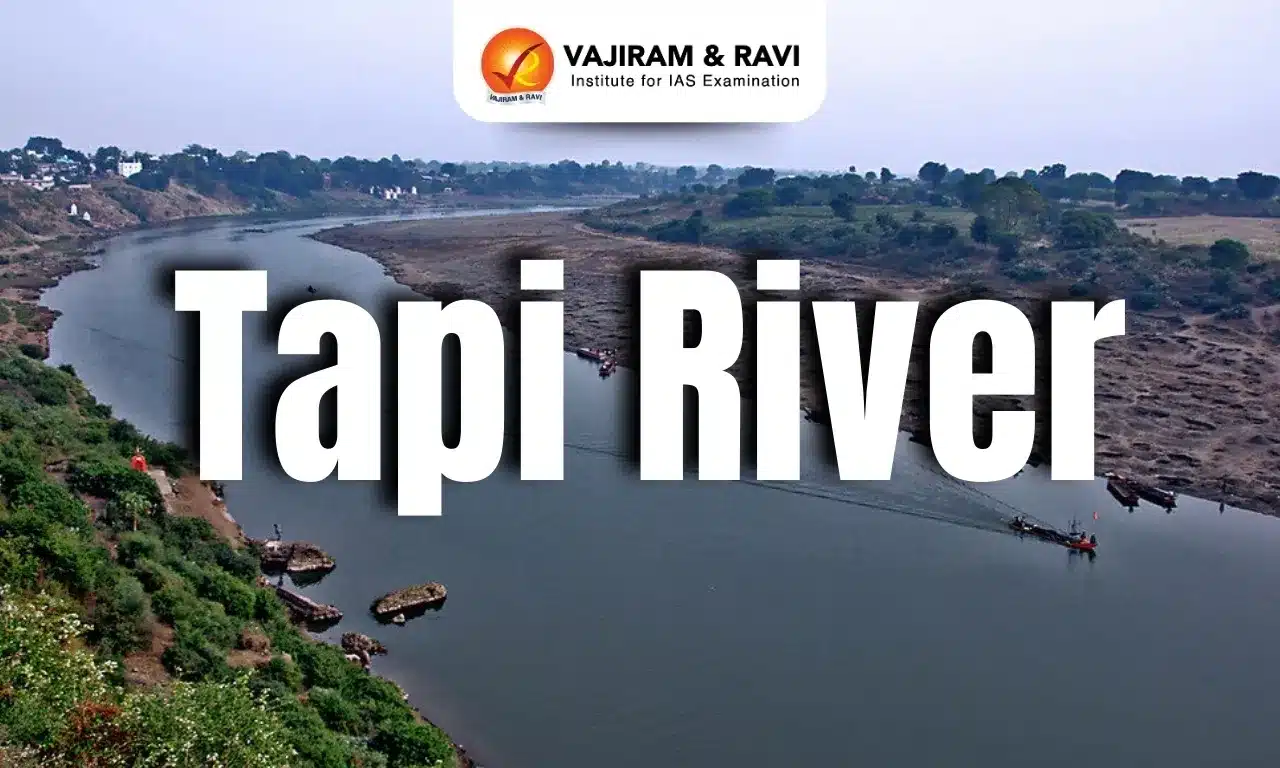
  • The Tapi River, also known as the Tapti River, is one of the major rivers in central India.
  • It is considered one of the only three major rivers in India that flow from east to west, the other two being the Narmada and the Mahi rivers.
  • It covers a large area in the State of Maharashtra besides areas in the states of Madhya Pradesh and Gujarat. 
  • Course: 
    • Origin: It rises in the Gawilgarh Hills of the central Deccan plateau in south-central Madhya Pradesh state. 
    • It flows westward between two spurs of the Satpura Range, across the Jalgaon plateau region in Maharashtra state, and through the plain of Surat in Gujarat state to the Gulf of Khambhat (an inlet of the Arabian Sea). 
  • It has a total length of about 700 km. For the last 51 km it is tidal but is navigable by small vessels.
  • It drains an area of 65,145 sq.km., which is nearly two percent of the total area of India.
    • The basin lies in the states of Maharashtra (51,504 sq.km.),Madhya Pradesh (9,804 sq.km.) and Gujarat (3,837 sq.km.).
    • Situated in the Deccan plateau, the basin is bounded by the Satpura range on the north, by the Mahadev hills on the east, by the Ajanta Range and the Satmala hills on the south, and by the Arabian Sea on the west. 
    • The major part of the basin is covered with agriculture, accounting for 66.19% of the total area.
  • The Tapti flows roughly parallel to the longer Narmada River to the north, from which it is separated by the main part of the Satpura Range. 
  • The two river valleys and the intervening range form the natural barrier between northern and peninsular India.
  • The Tapti River’s three major tributaries—the Purna, Girna, and Panjhra—flow from the south in Maharashtra state.
  • Ukai Dam: A major hydroelectric project located on the Tapi River, providing water and electricity to surrounding areas.

SourceIE

Tapi River FAQs

Q1: Where does Tapi River start and end?

Ans: The Tapi River starts at Gawilgarh Hills in Madhya Pradesh and ends by flowing into the Arabian Sea near Surat in Gujarat.

Q2: Which dam is built on Tapi river?

Ans: The Ukai Dam

Q3: What is the total length of Tapi River?

Ans: It has a total length of about 700 km.

Root Rot Disease, Treatment, Cause, Prevention, Latest News

Root_Rot_Disease

Root Rot Disease Latest News

Farmers cultivating 'pichi poo' (red jasmine) in Tiruchy, Tamil Nadu, say they are staring at huge losses as the crop has been hit by a fungal infection that causes root decay.

About Root Rot Disease

  • Root rots, as the name suggests, attack plants from the ground via their roots. 
  • This can lead to wilting and plant death. 
  • These rots may also affect the trunk and stems, causing splits or rots above ground. 
  • Rots may also affect young plants such as seedlings.
  • There are two causes of root rot: overwatering and/or the presence of fungal-like pathogens. 
  • Overwatering depletes oxygen in the soil, and this causes the roots to stop functioningbecome softened, and die. 
  • Pathogens can also invade plants that are affected by inconsistent or overwatering. The range of pathogens that cause root rots affects many different plants.
  • It is caused by numerous fungi, especially Armillaria mellea, Clitocybe tabescens, and Fusarium, and many oomycetes, including Pythium, Phytophthora, and Aphanomyces.
  • If a root-rot pathogen is present,it may spread through the soil, carried by soil water,to affect nearby plants.
  • Prevention: 
    • Control measures include planting in well-drained soils, including raised beds, planting resistant varieties (such as plants grafted onto resistant rootstock), or selecting plants that naturally cope well with wet or heavy clay soil. 
    • Where root rot occurs, remove affected plants. Some fungal treatments are available to treat soils.

SourceNIE

Root Rot Disease FAQs

Q1: What is the name of the fungus that causes root rot?

Ans: Root rot is caused by numerous fungi, especially Armillaria mellea, Clitocybe tabescens, and Fusarium.

Q2: How does root rot spread?

Ans: When soil is soggy, fungal spores multiply, and the pathogen that causes root rot starts to spread.

Q3: What is the best treatment for root rot?

Ans: The best treatment for root rot involves a combination of removing affected roots, improving drainage, and treating with a fungicide.

Andhra SC Sub-Categorisation Ordinance: Impact on Reservation and Equity

SC Sub-Categorisation Ordinance

What’s in Today’s Article?

  • SC Sub-Categorisation Ordinance Latest News
  • Sub-Categorisation Ordinance – Background
  • Rajeev Ranjan Mishra Commission Recommendations
  • Proposed Quota Distribution Among SC Sub-Groups
  • SC Sub-Categorisation Ordinance FAQs

SC Sub-Categorisation Ordinance Latest News

  • The Andhra Pradesh Cabinet has approved a draft ordinance by the Social Welfare Department to implement sub-categorisation among Scheduled Castes (SCs). 
  • This means the government plans to introduce ‘reservation within reservation’, aiming to allocate quotas based on the relative level of backwardness among different SC communities. 
  • The move seeks to ensure more equitable distribution of benefits among the most disadvantaged sections within the SC category.

Sub-Categorisation Ordinance – Background

  • Following the Supreme Court’s verdict allowing states to sub-classify Scheduled Castes (SCs), the Andhra Pradesh government initiated steps to implement this within the state.

Formation of Commission

  • In November 2024, the then government established a one-man commission under retired IAS officer Rajeev Ranjan Mishra to examine the need and structure for SC sub-categorisation.
  • The commission conducted public hearings across the state's 13 districts (now reorganised into 26 districts), gathering views from stakeholders, community members, and experts.

Submission and Adoption of Report

  • The commission submitted its comprehensive report in March 2025. 
  • The report was subsequently unanimously adopted by both the Legislative Council and the Legislative Assembly of Andhra Pradesh.

Draft Ordinance Prepared

  • Based on the recommendations of the report, the state government has drafted an ordinance to implement sub-categorisation among SCs.

Purpose of SC Sub-Categorisation

  • The main goal of SC sub-categorisation is to ensure fair and equitable distribution of reservation benefits among all SC sub-castes, rather than concentrating them within a few dominant groups.

Demand for Proportional Representation

  • Leaders from Scheduled Castes (SCs), Scheduled Tribes (STs), and Backward Classes (BCs) argue that reservation should be based on the numerical strength of individual sub-castes, not just on the overall SC population. 
  • This would make the quota system more just and representative.

Call for Criteria-Based Reservations

  • Supporters have long advocated that reservations in education, government jobs, and local bodies should be allocated based on the backwardness, and social and financial status of each SC sub-group.

Grievance of the Madiga Community

  • The Madiga community, a major SC sub-group in Andhra Pradesh and Telangana, claims that the Mala community dominates and corners most reservation benefits. 
  • They seek sub-categorisation to correct this imbalance and ensure inclusivity for all marginalised sub-castes.

Rajeev Ranjan Mishra Commission Recommendations

  • The Commission recommended dividing the Scheduled Castes (SCs) in Andhra Pradesh into three distinct categories, based on the level of backwardness, covering a total of 59 SC sub-castes.

Group 1: Most Backward (Relli Sub-group)

  • This group includes 12 sub-castes considered the most socio-economically disadvantaged.
  • Sub-castes included:
    • Bavuri, Chachati, Chandala, Dandasi, Dom, Ghasi, Godagali, Mehtar, Paki, Pamidi, Relli, Sapru

Group 2: Backward (Madiga Sub-group)

  • Comprising 18 sub-castes, this group is classified as backward, but slightly better off than Group 1.
  • Sub-castes included:
    • Arundhatiya, Bindala, Chamar, Chambhar, Dakkal, Dhor, Godari, Gosangi, Jaggali, Jambuvulu, Kolupulavandlu, Madiga, Madiga Dasu, Mang, Mang Garodi, Matangi, Samagara, Sindholu

Group 3: Less Backward (Mala Sub-group)

  • This group includes 29 sub-castes, classified as the less backward among the three categories.
  • Sub-castes included:
    • Adi Dravida, Anamuk, Arayamala, Arvamala, Bariki, Byagara, Chalavadi, Yellamalavar, Holeya, Holeya Dasari, Madasi Kuruva, Mahar, Mala, Mala Dasari, Mala Dasu, Mala Hannai, Mala Jangam, Mala Masti, Mala Sale, Mala Sanyasi, Manne, Mundala, Samban, Yatala, Valluvan, Adi Andhra, Masti, Mitta Ayyalavar, Panchama

Proposed Quota Distribution Among SC Sub-Groups

  • The Rajeev Ranjan Mishra Commission recommended the following reservation split within the Scheduled Caste (SC) quota (total 15%):
    • Group 1 – Most Backward (Relli sub-group): 1.0% reservation
    • Group 2 – Backward (Madiga sub-groups): 6.5% reservation
    • Group 3 – Relatively Less Backward (Mala sub-groups): 7.5% reservation

Objective of Sub-Categorisation

  • The key aim of this reform is to promote integrated and equitable development among all SC sub-castes by:
    • Ensuring fair representation in education, employment, politics, and civil society
    • Addressing historical imbalances where dominant sub-castes benefited disproportionately
    • Enabling inclusive progress and preventing marginalisation of the most backward groups

SC Sub-Categorisation Ordinance FAQs

Q1. What is the SC Sub-Categorisation Ordinance?

Ans. It introduces ‘reservation within reservation’, allocating quotas based on the relative backwardness of SC communities.

Q2. Who recommended the SC sub-categorisation?

Ans. The Rajeev Ranjan Mishra Commission recommended dividing SCs into three categories based on backwardness.

Q3. How many groups are there in SC sub-categorisation?

Ans. The ordinance divides SCs into three groups: Most Backward, Backward, and Less Backward.

Q4. What is the proposed quota for each SC group?

Ans. Group 1: 1%, Group 2: 6.5%, and Group 3: 7.5% reservation.

Q5. What is the aim of SC sub-categorisation?

Ans. It aims to ensure equitable development and fair representation in education, jobs, and politics for all SC sub-castes.

Source: IE | IE | TH

Mahadev Koli Tribe

Mahadev Koli Tribe

Mahadev Koli Tribe Latest News

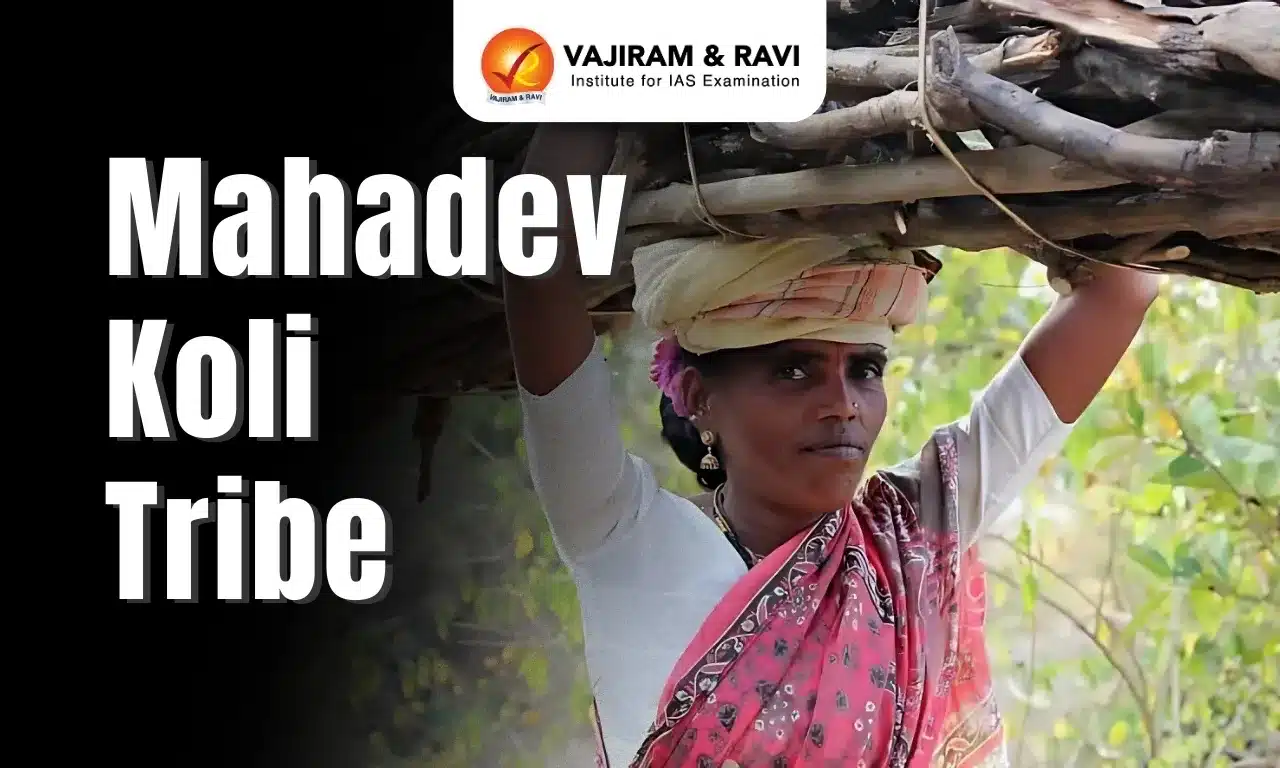
A recent study highlights the Mahadev Koli tribe’s rich reservoir of medicinal and ecological knowledge, expertise that could be vital in strengthening global climate resilience.

About Mahadev Koli Tribe

  • Mahadev Koli or Mahadeo Koli are a subcaste of the Koli community of Maharashtra and Goa states of India.
  • The Mahadev Koli derive their name from their god, Mahadev, and live in the Mahadev hills of Maharashtra.
  • They are found mostly in the Pune, Ahmednagar, and Nasik districts of Maharashtra. 
  • They are classified as a Schedule Tribe.
  • They speak Marathi and use the Devanagari script. 
  • There are twenty-four exogamous clans among the Mahadev Koli, and they use their clan's names as their surnames.
  • Their staple food consists of rice, nagli, varai, and wheat. 
  • Occupation: Other than agriculture, they are also involved in cattle production, dairy and poultry farming, and wage labour as subsidiary occupations.
  • Beliefs: 
    • Most of the Mahadev Koli follow a number of Hindu traditions. 
    • Members of each clan have their own deity.
  • They possess extensive knowledge of local flora, utilizing over 50 native tree species for medicinal purposes.
  • Tanaji Malusare, a revered general in Chhatrapati Shivaji Maharaj's army, hailed from this community.  His valor in the Battle of Sinhagad is legendary.

Source: IE

Mahadev Koli Tribe FAQs

Q1: In which Indian states are the Mahadev Koli primarily found?

Ans: Maharashtra and Goa

Q2: The Mahadev Koli primarily speak which language?

Ans: Marathi

Q3: Tanaji Malusare, a heroic general under Shivaji Maharaj, belonged to which community?

Ans: Mahadev Koli

Jumping Genes

Jumping Genes

Jumping Genes Latest News

Recent research by University of Texas (UT) Health San Antonio has found that transposon activation may be a key factor in the progression of Alzheimer’s disease.

Jumping Genes and Alzheimer’s

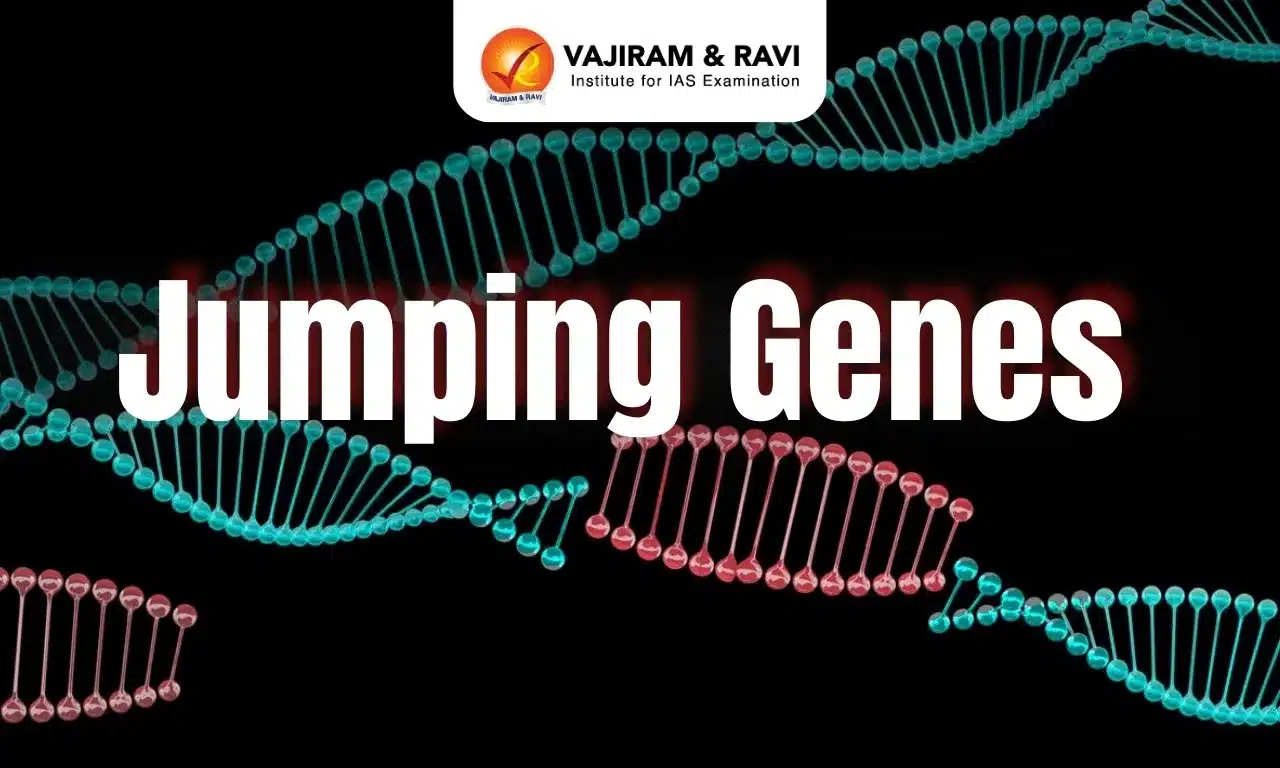
  • Jumping genes, scientifically known as transposons, are mobile genetic elements that can move from one location to another within the genome. They were first discovered by Barbara McClintock, who won the Nobel Prize in 1983 for this work.
  • In humans, transposons make up nearly 50% of the genome, and while most are inactive, some retain the ability to “jump” and cause genomic instability.
  • The most common type of jumping genes is retrotransposons, especially LINE-1 elements, which replicate through an RNA intermediate and use reverse transcriptase to reintegrate into DNA.
  • Normally, the activity of these elements is tightly controlled by the body through epigenetic mechanisms, but in aging or diseased brains, especially in neurodegenerative conditions like Alzheimer’s, these controls can weaken.
  • Once activated, transposons can insert themselves into essential genesdisrupt DNA sequences, and lead to cellular damage, especially in the brain’s neurons, which are non-dividing and highly vulnerable.
  • In experiments with genetically modified fruit flies that mimic Alzheimer’s symptoms, blocking transposon activity using an HIV drug (3TC) led to improvements in neural function.
    • 3TC is a reverse transcriptase inhibitor, which prevents retrotransposons from copying and inserting themselves into new parts of the genome.
    • In a clinical trial with human patients, 3TC did not directly improve memory but reduced neurofilament light (NfL)—a key biomarker of neurodegeneration—suggesting protection against neuronal damage.
  • This supports a new hypothesis: Alzheimer’s disease may not just be a disorder of protein aggregation (like amyloid or tau), but also one of genomic instability caused by the reactivation of jumping genes.

Source: SC

Jumping Genes FAQs

Q1: What are Jumping Genes?

Ans: Jumping Genes, or transposons, are DNA sequences that can change their position within the genome, causing genetic mutations and variations.

Q2: Who discovered Jumping Genes?

Ans: Barbara McClintock, an American scientist, discovered Jumping Genes in maize (corn), and was awarded the Nobel Prize in Physiology or Medicine in 1983.

Q3: How do Jumping Genes affect evolution?

Ans: Jumping Genes contribute to genetic diversity, evolution, and genome reorganization, and sometimes trigger diseases like cancer by disrupting normal gene function.

Andhra SC Sub-Categorisation Ordinance: Impact on Reservation and Equity

Andhra SC Sub-Categorisation Ordinance: Impact on Reservation and Equity

What’s in Today’s Article?

  • SC Sub-Categorisation Ordinance Latest News
  • Sub-Categorisation Ordinance – Background
  • Rajeev Ranjan Mishra Commission Recommendations
  • Proposed Quota Distribution Among SC Sub-Groups
  • SC Sub-Categorisation Ordinance FAQs

SC Sub-Categorisation Ordinance Latest News

  • The Andhra Pradesh Cabinet has approved a draft ordinance by the Social Welfare Department to implement sub-categorisation among Scheduled Castes (SCs). 
  • This means the government plans to introduce ‘reservation within reservation’, aiming to allocate quotas based on the relative level of backwardness among different SC communities. 
  • The move seeks to ensure more equitable distribution of benefits among the most disadvantaged sections within the SC category.

Sub-Categorisation Ordinance – Background

  • Following the Supreme Court’s verdict allowing states to sub-classify Scheduled Castes (SCs), the Andhra Pradesh government initiated steps to implement this within the state.

Formation of Commission

  • In November 2024, the then government established a one-man commission under retired IAS officer Rajeev Ranjan Mishra to examine the need and structure for SC sub-categorisation.
  • The commission conducted public hearings across the state's 13 districts (now reorganised into 26 districts), gathering views from stakeholders, community members, and experts.

Submission and Adoption of Report

  • The commission submitted its comprehensive report in March 2025. 
  • The report was subsequently unanimously adopted by both the Legislative Council and the Legislative Assembly of Andhra Pradesh.

Draft Ordinance Prepared

  • Based on the recommendations of the report, the state government has drafted an ordinance to implement sub-categorisation among SCs.

Purpose of SC Sub-Categorisation

  • The main goal of SC sub-categorisation is to ensure fair and equitable distribution of reservation benefits among all SC sub-castes, rather than concentrating them within a few dominant groups.

Demand for Proportional Representation

  • Leaders from Scheduled Castes (SCs), Scheduled Tribes (STs), and Backward Classes (BCs) argue that reservation should be based on the numerical strength of individual sub-castes, not just on the overall SC population. 
  • This would make the quota system more just and representative.

Call for Criteria-Based Reservations

  • Supporters have long advocated that reservations in education, government jobs, and local bodies should be allocated based on the backwardness, and social and financial status of each SC sub-group.

Grievance of the Madiga Community

  • The Madiga community, a major SC sub-group in Andhra Pradesh and Telangana, claims that the Mala community dominates and corners most reservation benefits. 
  • They seek sub-categorisation to correct this imbalance and ensure inclusivity for all marginalised sub-castes.

Rajeev Ranjan Mishra Commission Recommendations

  • The Commission recommended dividing the Scheduled Castes (SCs) in Andhra Pradesh into three distinct categories, based on the level of backwardness, covering a total of 59 SC sub-castes.

Group 1: Most Backward (Relli Sub-group)

  • This group includes 12 sub-castes considered the most socio-economically disadvantaged.
  • Sub-castes included:
    • Bavuri, Chachati, Chandala, Dandasi, Dom, Ghasi, Godagali, Mehtar, Paki, Pamidi, Relli, Sapru

Group 2: Backward (Madiga Sub-group)

  • Comprising 18 sub-castes, this group is classified as backward, but slightly better off than Group 1.
  • Sub-castes included:
    • Arundhatiya, Bindala, Chamar, Chambhar, Dakkal, Dhor, Godari, Gosangi, Jaggali, Jambuvulu, Kolupulavandlu, Madiga, Madiga Dasu, Mang, Mang Garodi, Matangi, Samagara, Sindholu

Group 3: Less Backward (Mala Sub-group)

  • This group includes 29 sub-castes, classified as the less backward among the three categories.
  • Sub-castes included:
    • Adi Dravida, Anamuk, Arayamala, Arvamala, Bariki, Byagara, Chalavadi, Yellamalavar, Holeya, Holeya Dasari, Madasi Kuruva, Mahar, Mala, Mala Dasari, Mala Dasu, Mala Hannai, Mala Jangam, Mala Masti, Mala Sale, Mala Sanyasi, Manne, Mundala, Samban, Yatala, Valluvan, Adi Andhra, Masti, Mitta Ayyalavar, Panchama

Proposed Quota Distribution Among SC Sub-Groups

  • The Rajeev Ranjan Mishra Commission recommended the following reservation split within the Scheduled Caste (SC) quota (total 15%):
    • Group 1 – Most Backward (Relli sub-group): 1.0% reservation
    • Group 2 – Backward (Madiga sub-groups): 6.5% reservation
    • Group 3 – Relatively Less Backward (Mala sub-groups): 7.5% reservation

Objective of Sub-Categorisation

  • The key aim of this reform is to promote integrated and equitable development among all SC sub-castes by:
    • Ensuring fair representation in education, employment, politics, and civil society
    • Addressing historical imbalances where dominant sub-castes benefited disproportionately
    • Enabling inclusive progress and preventing marginalisation of the most backward groups

SC Sub-Categorisation Ordinance FAQs

Q1. What is the SC Sub-Categorisation Ordinance?

Ans. It introduces ‘reservation within reservation’, allocating quotas based on the relative backwardness of SC communities.

Q2. Who recommended the SC sub-categorisation?

Ans. The Rajeev Ranjan Mishra Commission recommended dividing SCs into three categories based on backwardness.

Q3. How many groups are there in SC sub-categorisation?

Ans. The ordinance divides SCs into three groups: Most Backward, Backward, and Less Backward.

Q4. What is the proposed quota for each SC group?

Ans. Group 1: 1%, Group 2: 6.5%, and Group 3: 7.5% reservation.

Q5. What is the aim of SC sub-categorisation?

Ans. It aims to ensure equitable development and fair representation in education, jobs, and politics for all SC sub-castes.

Source: IE | IE | TH

United Nations Security Council (UNSC)

United Nations Security Council (UNSC)

United Nations Security Council (UNSC) Latest News

Kuwait’s Permanent Representative to the UN, who chairs the Intergovernmental Negotiations (IGN) on UNSC reforms, recently affirmed that India will "surely" be a strong contender if the United Nations Security Council (UNSC) is expanded.

About the United Nations Security Council (UNSC)

  • The UNSC is one of the five principal organs of the United Nations (UN), with the primary responsibility of maintaining international peace and security.
  • Under the UN Charter, all member states must comply with UNSC decisions.
  • It determines threats to peace, recommends settlement methods, imposes sanctions, and authorises military actions.

Structure and Membership

  • The UNSC consists of 15 members, each having one vote.
  • Five permanent members (P5) with veto power:
  • China, France, Russia, the United Kingdom, and the United States.
  • Ten non-permanent members, elected by the UN General Assembly for two-year terms, with equitable geographical representation:
    • 5 from Africa/Asia1 from Eastern Europe2 from Latin America, and 2 from Western Europe/others
  • The UNSC is headquartered at the United Nations Headquartersin New York City.

G4 Nations’ Position and India’s Advocacy

  • India, Brazil, Germany, and Japan (G4) are actively advocating UNSC reform. At a recent IGN meeting, India’s Permanent Representative declared the current UNSC structure outdated, no longer reflecting contemporary geopolitical realities.
  • The G4 proposal calls for:
    • Expanding the Council from 15 to 25 or 26 members
    • Including 11 permanent members and 14–15 non-permanent members
    • Encouraging Member States to submit models to enable formal negotiations

United Nations Security Council (UNSC) FAQs

Q1. What is the United Nations Security Council (UNSC)?
Ans. UNSC is one of the six principal organs of the UN responsible for maintaining international peace and security.

Q2. How many members are there in the UNSC?
Ans. The UNSC has 15 members — 5 permanent (P5) members and 10 non-permanent members elected for two-year terms.

Q3. Who are the permanent members of the UNSC?
Ans. The P5 members are China, France, Russia, the United Kingdom, and the United States, each holding veto power.

Source: IT

NISAR Mission

NISAR Mission

NISAR Mission Latest News

The NISAR Mission is expected to be launched in June 2025 onboard a GSLV (Geosynchronous Satellite Launch Vehicle).

About the NISAR Mission

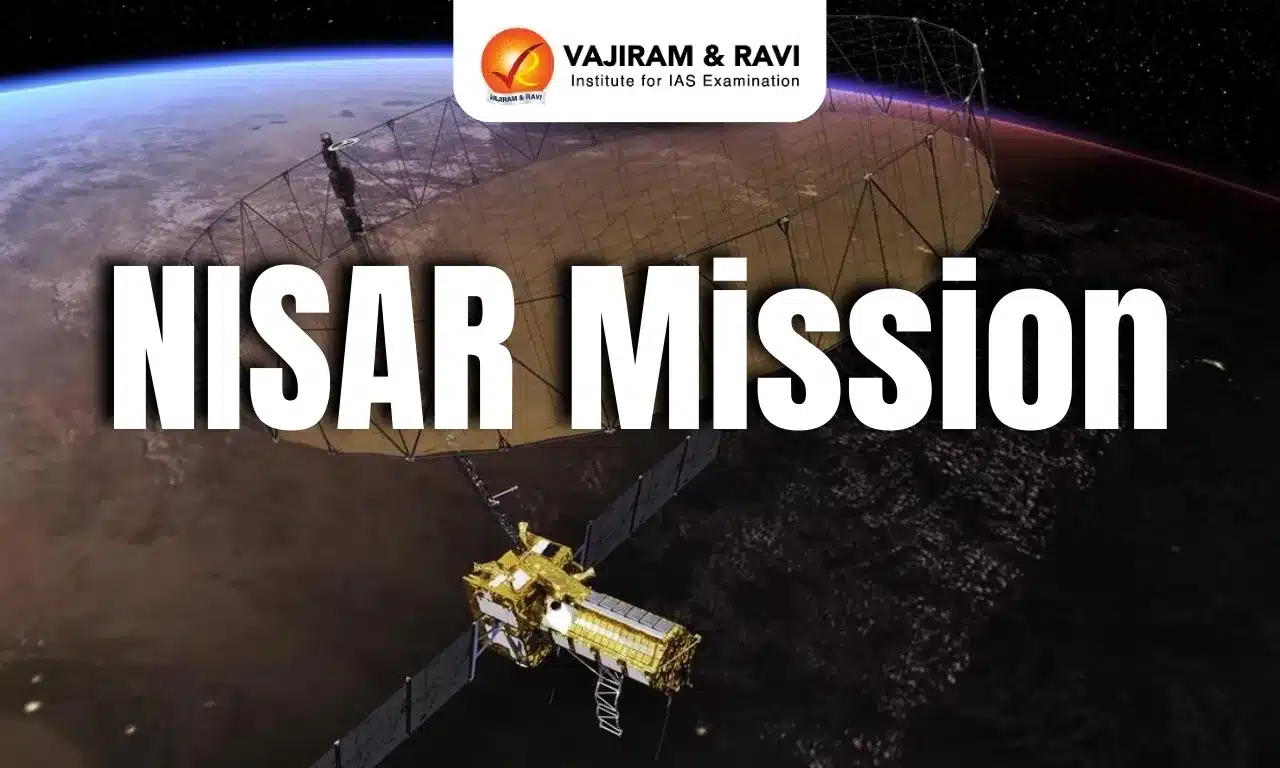
  • NISAR (NASA-ISRO Synthetic Aperture Radar) is a joint Earth observation satellite mission developed by NASA and ISRO under a bilateral agreement signed in 2014.
  • The satellite is scheduled for launch in June 2025 from the Satish Dhawan Space Centre, Andhra Pradesh, aboard ISRO’s Geosynchronous Satellite Launch Vehicle Mark II (GSLV Mk II).
  • It marks the first-ever collaboration of its kind between India and the United States in radar-based Earth monitoring from space.
  • NISAR aims to map the entire Earth’s surface every 12 days, enabling high-frequency, precise, and repeat observations.
  • It will monitor ecosystem changes, ice sheet dynamics, vegetation patterns, sea level rise, and groundwater variation, and will track natural hazards like earthquakes, volcanoes, tsunamis, and landslides.

Key Features and Components

Feature

Details

Thermal blanketing

Uses gold-coloured thermal blankets to maintain the satellite’s optimal temperature.

Radar payload

Core instrument for capturing Earth surface movement and geophysical changes.

Spacecraft bus

Supports power generation, communication, navigation, and attitude control.

Antenna and Reflector

Equipped with a 12-metre drum-shaped wire mesh reflector, the largest in space, to enhance signal focus and surface imaging precision.

Technological Advancements

  • Dual Radar System: NISAR is the first satellite to use two radar frequencies simultaneously — L-band (NASA) and S-band (ISRO).
    • L-band Radar: Penetrates dense forests and soil, useful for volcanic and seismic zone monitoring.
    • S-band Radar: Offers higher resolution surface imaging, operating at 2–4 GHz frequency and 8–15 cm wavelength, ideal for urban and terrain analysis.

Related Upcoming ISRO Missions

  • EOS-09 Mission: An Earth Observation Satellite capable of capturing high-resolution images during day and night, planned for May 2025.
  • Gaganyaan TV-D2 Mission: A Crew Escape System test for India’s first human spaceflight programme, simulating emergency scenarios.
  • Axiom-4 MissionIndian astronaut Shubhanshu Shukla to travel to the International Space Station, becoming only the second Indian in space after Rakesh Sharma (1984).

NISAR Mission FAQs

Q1. What is the NISAR Mission?
Ans. NISAR (NASA-ISRO Synthetic Aperture Radar) is a joint Earth observation satellite project between NASA and ISRO designed to monitor changes in Earth’s surface, including ecosystems, glaciers, groundwater, and natural hazards.

Q2. What is the primary objective of the NISAR mission?
Ans. The mission aims to provide high-resolution, all-weather, day-and-night imaging to study earthquakes, volcanoes, landslides, floods, and soil moisture dynamics.

Q3. What kind of radars does NISAR use?
Ans. NISAR uses dual-band Synthetic Aperture Radars — L-band radar (provided by NASA) and S-band radar (developed by ISRO).

Source: IE

UNESCO Memory of the World (MoW) Programme

UNESCO Memory of the World (MoW) Program

UNESCO Memory of the World (MoW) Programme Latest News

Recently, UNESCO has added manuscripts of the Bhagavad Gita and Bharata’s Natyashastra to the Memory of the World (MoW) Register in 2025.

What is the Memory of the World (MoW) Programme?

  • The MoW Programme was launched by UNESCO in 1992 with the goal of preserving global documentary heritage and preventing what it called “collective amnesia.”
  • It aims to safeguard rare documents, including manuscripts, oral traditions, audio-visual content, and archive materials, of global and universal value.
  • According to UNESCO, this documentary heritage should be preserved, protected, and permanently accessible to all, while respecting cultural practices.
  • The MoW Register serves as a global compendium of such heritage, and is updated biennially (every two years).
  • As of 2025, the Register contains 570 entries, including:
    • The Mahavamsa (Sri Lanka’s ancient chronicle),
    • Shaiva Siddhanta manuscripts (India),
    • Auschwitz trial recordings (Germany),
    • And the March 7, 1971 speech of Bangabandhu Sheikh Mujibur Rahman (Bangladesh).

India’s Contributions to the MoW Register

  • India has made 13 contributions, including two joint submissions:
    • Rig Veda (added in 2005),
    • Works of Abhinavagupta, the Shaivite philosopher (added in 2023),
    • Archives of the Non-Aligned Movement’s first summit in Belgrade, 1961 (joint submission),
    • Dutch East India Company archives (joint submission).
  • In 2025, two new Indian manuscripts were added, both preserved at the Bhandarkar Oriental Research Institute, Pune:
    • Natyashastra by Bharata Muni
    • Bhagavad Gita, attributed to Vyasa

Source: IE

UNESCO Memory of the World (MoW) Programme FAQs

Q1: What is the UNESCO Memory of the World Program?

Ans: The MoW Program aims to preserve and provide universal access to documentary heritage of global significance, like manuscripts, archives, and audio-visual materials.

Q2: When was the MoW Program launched?

Ans: The UNESCO Memory of the World Program was launched in 1992 to safeguard documentary heritage from decay, damage, or deliberate destruction.

Q3: Name one Indian entry in the MoW Register.

Ans: The "Rigveda Manuscripts" preserved at the Bhandarkar Oriental Research Institute in Pune are inscribed on the UNESCO Memory of the World Register.

Article 142

Article 142

Article 142 Latest News

Recently, the Vice-President criticized Article 142 as a “nuclear missile against democratic forces”, especially after its use in the Tamil Nadu Governor's case.

What is Article 142?

  • Article 142 empowers the Supreme Court to pass any order or decree necessary for complete justice in any pending case before it. This power is discretionary and unique to the apex court.
  • The concept of complete justice means ensuring justice beyond technicalities by filling legislative gaps, and interpreting or even overriding laws when necessary to protect constitutional valuesfundamental rights, and social welfare.
  • The framers of the Constitution, especially Dr. B.R. Ambedkar, intentionally entrusted this extraordinary power only to the Supreme Court. The jurisprudence under Article 142 has developed over 50+ years, with the Court maintaining self-imposed limits.
  • Article 142 elevates the Supreme Court’s role as the guardian of the Constitution, enabling it to intervene in cases involving public interesthuman rights, or democratic breakdown, ensuring justice where legislative or executive action is lacking.
  • The Article strengthens democracy by protecting the rights of minorities, ensuring equal treatment before the law, and acting as a check on executive and legislative overreach.
  • Article 142 promotes judicial innovation by allowing the Court to create guidelines and direct government authorities, especially in cases involving public interest and constitutional values.
  • The lack of a clear definition of “complete justice” can lead to subjectivityinconsistent rulings, and unaccountable discretion. This raises concerns under the basic structure doctrine, particularly the separation of powers.

Source: IE

Article 142 FAQs

Q1: What is Article 142?

Ans: Article 142 empowers the Supreme Court of India to pass any decree or order necessary for doing “complete justice” in any pending matter before it.

Q2: Why is Article 142 considered unique?

Ans: Article 142 is unique because it gives wide discretionary powers to the Supreme Court, even allowing it to fill legal gaps or override statutory limitations for ensuring justice.

Q3: Can Article 142 override existing laws?

Ans: Yes, temporarily, the Supreme Court can override laws if necessary to ensure complete justice in individual cases, but it cannot permanently alter the law.

Kailash Mansarovar Yatra to Resume: Sacred Pilgrimage Revives After Four-Year Hiatus

Kailash Mansarovar Yatra to Resume: Sacred Pilgrimage Revives After Four-Year Hiatus

What’s in Today’s Article?

  • Kailash Mansarovar Latest News
  • Resumption of the Yatra after a Four-Year Gap
  • Background: Suspension and Diplomatic Reset
  • The Significance of Kailash Mansarovar
  • Available Routes for the Yatra
  • Registration Process and Eligibility
  • Looking Ahead
  • Kailash Mansarovar Yatra 2025 FAQs

Kailash Mansarovar Latest News

  • The Ministry of External Affairs (MEA) has announced that the Kailash Mansarovar Yatra, which has not taken place since 2020, will resume this year.

Resumption of the Yatra after a Four-Year Gap

  • The Ministry of External Affairs (MEA) recently confirmed that the Kailash Mansarovar Yatra, one of the most religiously significant pilgrimages for Hindus, Buddhists, Jains, and the Bon religion, will resume in 2025. 
  • The pilgrimage, suspended since 2020 due to the COVID-19 pandemic and strained India-China relations, is now being revived amidst a larger diplomatic rapprochement between the two nations.
  • Discussions regarding the resumption began at the Special Representatives’ meeting in Beijing in December 2024, where India’s NSA Ajit Doval met with China’s Foreign Minister Wang Yi. 
  • A follow-up visit by India’s Foreign Secretary to Beijing in January 2025 paved the way for this year’s planned yatra.

Background: Suspension and Diplomatic Reset

  • Although COVID-19 was the initial reason for halting the yatra, tensions following the Galwan Valley clash in June 2020 delayed its resumption
  • However, with both countries agreeing to disengage at key border friction points such as Demchok and Depsang in 2024, relations have since improved. The yatra’s reinstatement is symbolic of this shift.
  • In October 2024, Prime Minister Narendra Modi met Chinese President Xi Jinping on the side-lines of the BRICS Summit in Kazan, further easing tensions.

The Significance of Kailash Mansarovar

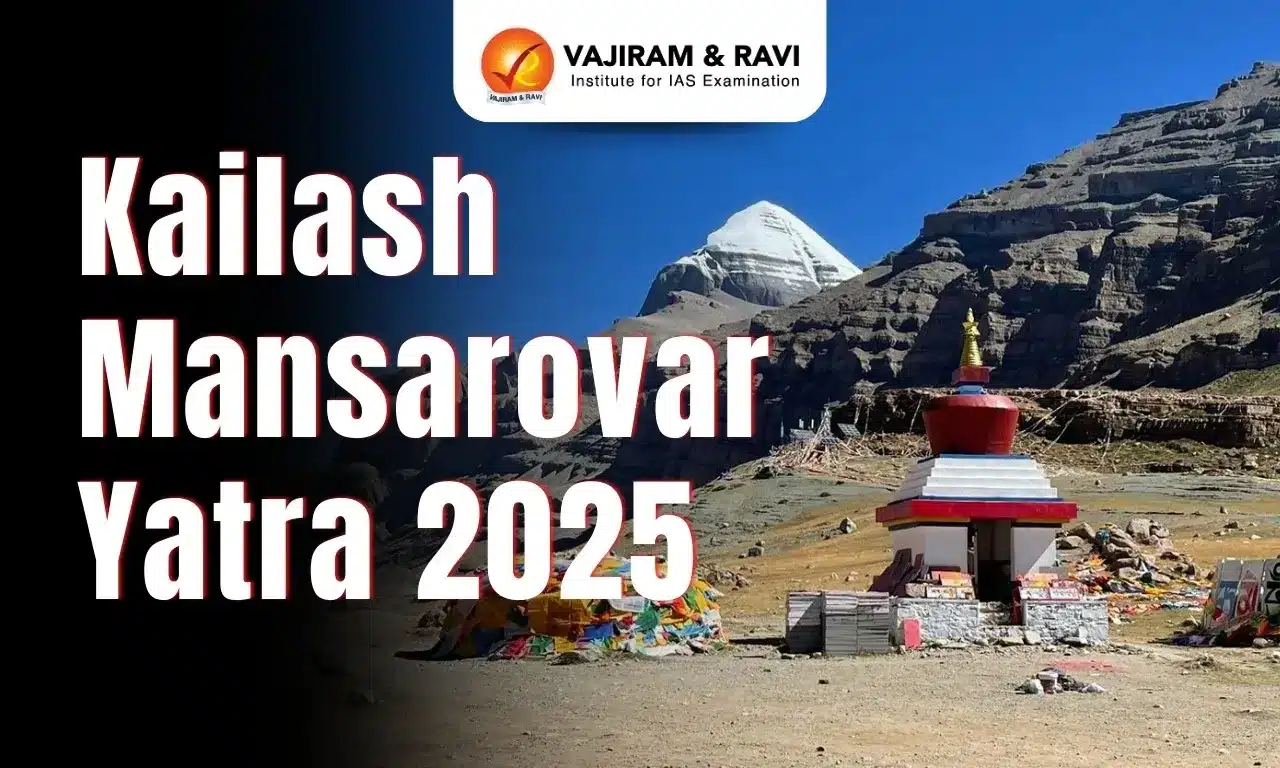
  • Located in Tibet Autonomous Region, Lake Mansarovar (Mapam Yumtso) and Mount Kailash (6,638 meters) are considered sacred. 
  • Hindus believe Mount Kailash is the abode of Lord Shiva, while Buddhists associate it with spiritual enlightenment. 
  • Every year, hundreds of Indian pilgrims undertake the high-altitude trek, which includes circumambulating the holy mountain (a ritual known as parikrama).
  • Before its suspension, the yatra was organized by the MEA during June-September each year. 
  • Only Indian passport holders aged between 18 and 70 years with sound health were allowed, as the pilgrimage spans 23–25 days and demands considerable physical endurance.

Available Routes for the Yatra

  • Lipulekh Pass Route (Uttarakhand)
    • Most direct but physically demanding
    • Involves around 200 km of trekking
    • Lies near the trijunction of India, Nepal, and Tibet
    • Operational since 1981 until halted in 2020
  • Nathu La Pass Route (Sikkim)
    • Fully motorable except for the 35–40 km circumambulation of Mount Kailash
    • Longer (approx. 1,500 km), but easier for older or physically less active pilgrims
    • Operational since 2015
  • On the Indian side, logistics are arranged by Kumaon Mandal Vikas Nigam (Lipulekh) and Sikkim Tourism Development Corporation (Nathu La). 
  • The Chinese authorities manage facilities across the border.
  •  Nepal Route (Private)
    • Operated by private tour agencies
    • Accessible since 2023 but not popular due to high visa fees and lack of support infrastructure
    • Charter flights from Nepalgunj offer darshan of Mount Kailash
    • India is also developing a Mount Kailash viewing point in Dharchula near Lipulekh

Registration Process and Eligibility

  • Registration usually opens in April-May on the MEA portal. Due to limited slots, a computerized draw of lots is held.
    • Cost: Over ₹2 lakh per pilgrim.
    • Required: Indian passport, medical and physical fitness clearance.
  • Route allocation is computerized, and once assigned, changes are difficult.

Looking Ahead

  • The yatra’s revival marks not only a religious milestone but also a geopolitical one, indicating a soft reset in India-China bilateral relations. 
  • The MEA is expected to release detailed guidelines, dates, and quotas soon. 
  • Meanwhile, preparations on logistics, healthcare, and security fronts are underway to ensure a smooth and safe pilgrimage for all yatris.

Kailash Mansarovar Yatra 2025 FAQs

Q1. Why was the yatra suspended earlier?

Ans. The yatra was suspended due to the COVID-19 pandemic and later, due to strained India-China relations.

Q2. Which are the two official routes for the yatra?

Ans. The two official routes are via Lipulekh Pass (Uttarakhand) and Nathu La Pass (Sikkim).

Q3. When is the yatra expected to resume?

Ans. The Kailash Mansarovar Yatra is expected to resume in 2025, with final dates to be announced by the MEA.

Q4. What is the significance of Mount Kailash and Lake Mansarovar?

Ans. They are sacred in Hinduism, Buddhism, Jainism, and Bon, believed to be the abode of Lord Shiva.

Q5. What are the eligibility criteria for pilgrims?

Ans. Pilgrims must be Indian passport holders aged 18–70, medically fit, and must apply through the MEA portal.


Source: TH | IE

Enquire Now