Alamosaurus

Alamosaurus

Alamosaurus Latest News

In a remarkable find at Big Bend National Park, United States, geology students recently uncovered a rare and nearly complete fossil of the Alamosaurus.

About Alamosaurus

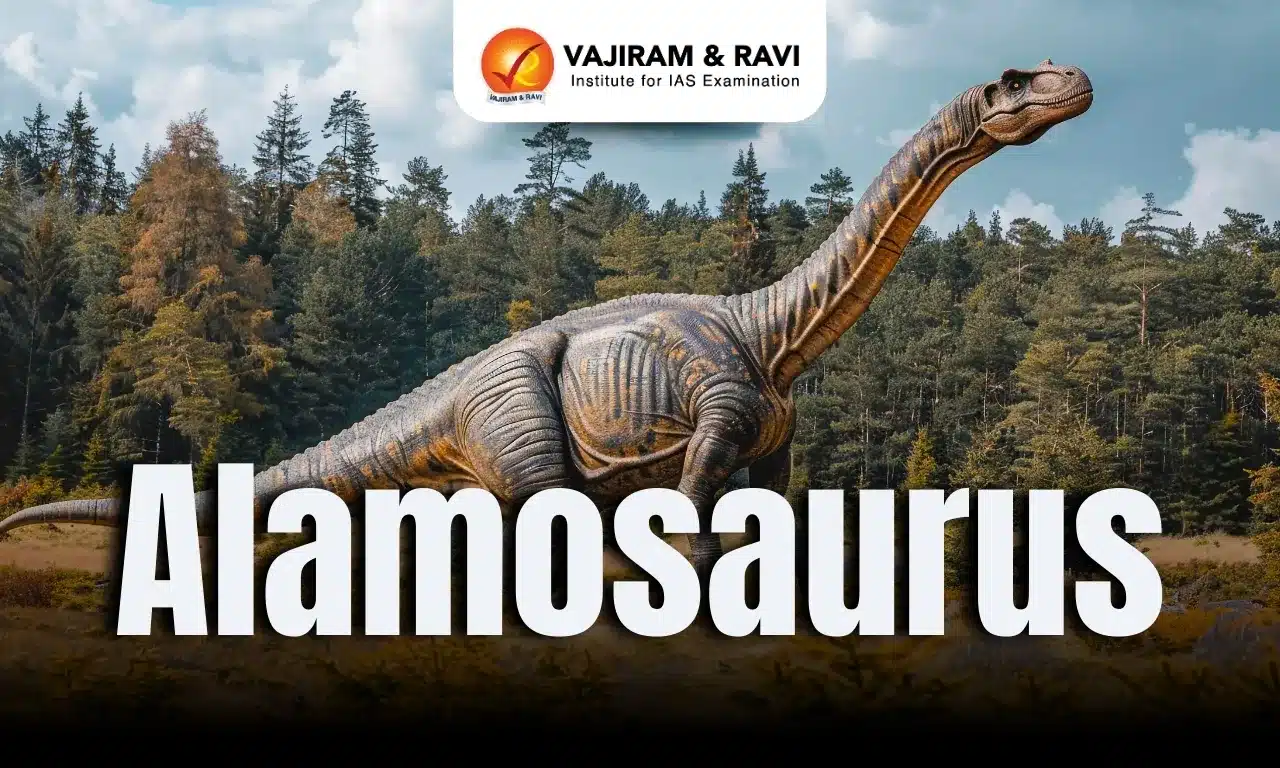
  • Alamosaurus is one of the largest dinosaurs known to have existed.
  • Native to North America during the late Cretaceous period (100.5 to 66 million years ago) , Alamosaurus is an herbivorous sauropod with armoured spikes on its back that protect it from predator attacks.
    • The sauropods were not only the largest dinosaurs but also the largest land animals ever to evolve. 
  • Alamosaurus is the only known sauropod in North America from the Upper Cretaceous.
  • It was the largest terrestrial animal in North America during the Upper Cretaceous. 
  • Standing at least 11 meters (36 feet) tall, 30.5 meters (100 feet) long, and weighing 38-80 metric tons, it rivals the size of the biggest sauropods like Argentinosaurus, which lived in Argentina, South America around 97-92 million years ago.
  • It has a long neck, tail, and pillar-like limbs characteristic of its family.
  • Alamosaurus died out in the Cretaceous-Paleogene extinction event, making it one of the last non-avian dinosaurs to ever walk the Earth.

SourceIDR

Alamosaurus FAQs

Q1: During which period did Alamosaurus live?

Ans: Upper Cretaceous

Q2: Where was Alamosaurus native to?

Ans: North America

Q3: Alamosaurus belonged to which group of dinosaurs?

Ans: Sauropods

Hindu Kush Himalaya (HKH)

Hindu Kush Himalaya (HKH)

Hindu Kush Himalaya Latest News

The Hindu Kush Himalaya (HKH) region recorded its lowest snow persistence in 23 years during the 2024–2025 winter, according to a new report published recently.

About Hindu Kush Himalaya

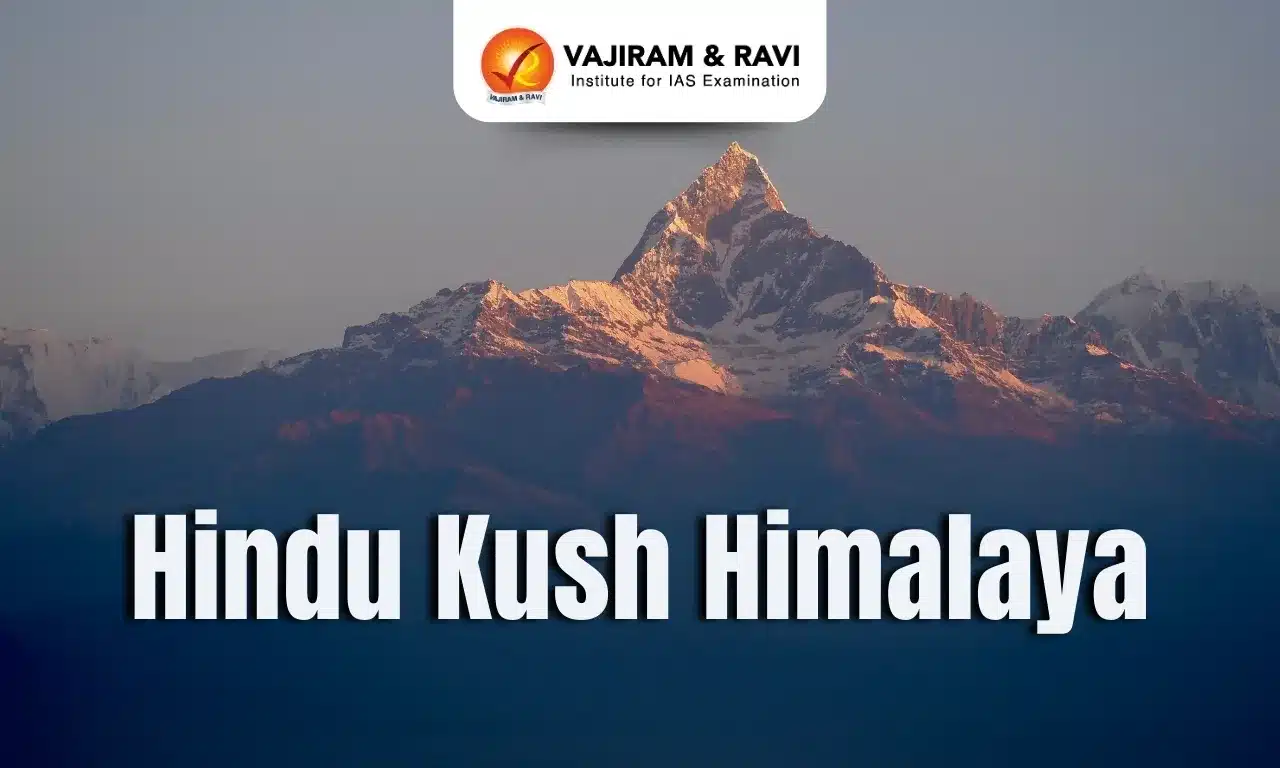
  • The HKH mountains extend around 3,500 km over eight countries — Afghanistan, Bangladesh, Bhutan, China, India, Nepal, Myanmar, and Pakistan.
  • It covers an area of approximately 4.2 million sq.km.
  • It runs northeast to southwest and divides the valley of the Amu Darya (the ancient Oxus River) to the north from the Indus River valley to the south. 
  • To the east the Hindu Kush buttresses the Pamir range near the point where the borders of China, Pakistani-administered Kashmir, and Afghanistan meet, after which it runs southwest through Pakistan and into Afghanistan, finally merging into minor ranges in western Afghanistan. 
  • The range has numerous high snow-capped peaks, with the highest point being Tirich Mir or Terichmir at 7,708 meters (25,289 ft) in Chitral, Pakistan.
  • It is considered the Third Pole (after the North and South Poles) and has significant implications for climate.
  • The HKH forms the largest area of permanent ice cover outside of the North and South Poles and is home to 4 global biodiversity hotspots. 
  • The HKH region is the source of ten large Asian river systems: the Amu Darya, Indus, Ganges, Brahmaputra, Irrawaddy, Salween, Mekong, Yangtse, Yellow River, and Tarim.
  • The basins of these rivers provide water to 1.9 billion people, a fourth of the world’s population.
  • Contains diverse ecosystems: glaciers, alpine meadows, forests, wetlands, and grasslands.
  • HKH may be divided into three main sections: the eastern Hindu Kush, the central Hindu Kush, and the western Hindu Kush, also known as the Bābā Mountains.
  • The inner valleys of the Hindu Kush see little rain and have desert vegetation.

SourceTOI

Hindu Kush Himalaya FAQs

Q1: What rivers originated from Hindu Kush Himalayas?

Ans: Ten large Asian river systems originate in the HKH – the Amu Darya, Brahmaputra (Yarlungtsanpo), Ganges, Indus, Irrawaddy, Mekong, Salween (Nu), Tarim (Dayan), Yangtse (Jinsha) and Yellow River.

Q2: Which is the largest mountain in Hindu Kush?

Ans: Tirich Mir or Terichmir at 7,708 meters (25,289 ft) in Chitral, Pakistan.

Q3: Why is the Hindu Kush Himalayas referred to as the “Third Pole”?

Ans: It has the largest ice cover outside of the polar regions.

Nitrogen

Nitrogen

Nitrogen Latest News

India, the world’s second-largest emitter of N₂O after China, faces climate risks as N₂O has 300 times the global warming potential of CO₂.

About Nitrogen

  • Nitrogen is the most abundant atmospheric gas, constituting ~78% of Earth’s atmosphere.
  • Nitrogen is vital for forming DNA, ATP (cellular energy currency)proteinschlorophyll, and acts as a neurotransmitter via nitric oxide (NO).

Nitrogen Cycle: Natural Balancing Act

  • Atmospheric nitrogen (N₂) is inert and unusable by plants or animals.
  • Plants rely on diazotrophs (N-fixing bacteria) through symbiotic association (e.g., in legumes).
  • Nitrifying bacteria convert ammonia into nitrites (NO₂⁻) and then nitrates (NO₃⁻) – the form plants can absorb.
    • Nitrification: Ammonia → Nitrites → Nitrates (plant-usable form).
  • Denitrification returns excess nitrates back to the atmosphere, maintaining the natural nitrogen cycle.

Haber-Bosch Process

  • Developed in the early 20th century, allowed industrial fixation of nitrogen to produce ammonia.
  • Uses fossil fuels, high heat and pressure, and an iron catalyst.
  • Enabled synthetic fertiliser revolution → contributed to Green Revolution and exponential population growth.

Environmental Risks of Excess Nitrogen (Latent Time-Bomb)

  • Reactive nitrogen (ammonia, nitrate, nitrous oxide) is now overproduced through chemical fertilisers.
  • 80% of applied nitrogen is lost to the environment via leaching and emissions, causing:
    • Eutrophication of water bodies → Algal bloomsDead Zones (e.g., Gulf of Mexico).
    • Soil acidification and air pollution from NOx emissions.
    • Formation of ground-level ozone and acid rain.
    • N₂O (Nitrous oxide) is now the third most potent greenhouse gas after CO₂ and CH₄.

Source: TH

Nitrogen FAQs

Q1: What is the most abundant gas in Earth's atmosphere?

Ans: Nitrogen is the most abundant gas in Earth's atmosphere, making up about 78% of the air by volume.

Q2: What is the Nitrogen Cycle?

Ans: The Nitrogen Cycle is a biogeochemical process that converts atmospheric nitrogen into forms usable by plants and animals, involving processes like nitrogen fixation, nitrification, assimilation, ammonification, and denitrification.

Q3: Name an example of nitrogen-fixing bacteria.

Ans: Rhizobium is a well-known nitrogen-fixing bacterium that lives symbiotically in the root nodules of leguminous plants.

Gonorrhoea

Gonorrhoea

Gonorrhoea Latest News

A new oral antibiotic named gepotidacin could be a breakthrough in the fight against stubborn gonorrhoea infections, according to a recent study.

About Gonorrhoea

  • It is a sexually transmitted infection (STI), also called a sexually transmitted disease (STD), caused by the bacteria Neisseria gonorrhea. 
  • It is sometimes known as ‘the clap'.
  • Gonorrhea bacteria can infect the urethra, rectum, female reproductive tract, mouth, throat or eyes.
  • Transmission
    • It is most commonly spread during vaginal, oral or anal sexual activity. 
    • But babies can get the infection during childbirth. 
    • In babies, gonorrhea most commonly affects the eyes.
  • Gonorrhea can affect people of any age, anatomy, or gender, but it’s particularly common among teens and young adults between the ages of 15 and 24.
  • Symptoms
    • Many people with gonorrhoea won’t notice any symptoms. If you do get symptoms, it’s usually between 1 to 14 days after getting the infection.
    • Men are more likely to experience symptoms. Up to 50% of women won’t experience symptoms. 
    • Gonorrhoea can cause a sore throat, conjunctivitis,unusual vaginal or penile discharge, and pelvic and genital pain.
  • Untreated gonorrhoea can cause:
    • infections affecting the skin, joints, heart (endocarditis) and brain (meningitis)
    • infertility in both females and males
    • pelvic inflammatory disease (PID)
    • epididymitis and prostatitis (inflammation of your prostate)
    • Some of these complications can cause permanent damage to your health.
  • Prevention: It can be prevented by practicing safe sex.
  • Treatment: Most of the time antibiotics cures gonorrhoea.

SourceIT

Gonorrhoea FAQs

Q1: What is gonorrhoeae?

Ans: Gonorrhea is a sexually transmitted infection (STI).

Q2: What is the causative agent of gonorrhoea?

Ans: It is caused by the bacteria Neisseria gonorrhea.

Q3: How can newborn babies contract gonorrhoea?

Ans: How can newborn babies contract gonorrhoea?

Bullseye Galaxy

Bullseye Galaxy

Bullseye Galaxy Latest News

The Bullseye Galaxy (LEDA 1313424) was recently discovered by an international team of researchers using the Hubble Space Telescope and W.M. Keck Observatory.

About Bullseye Galaxy

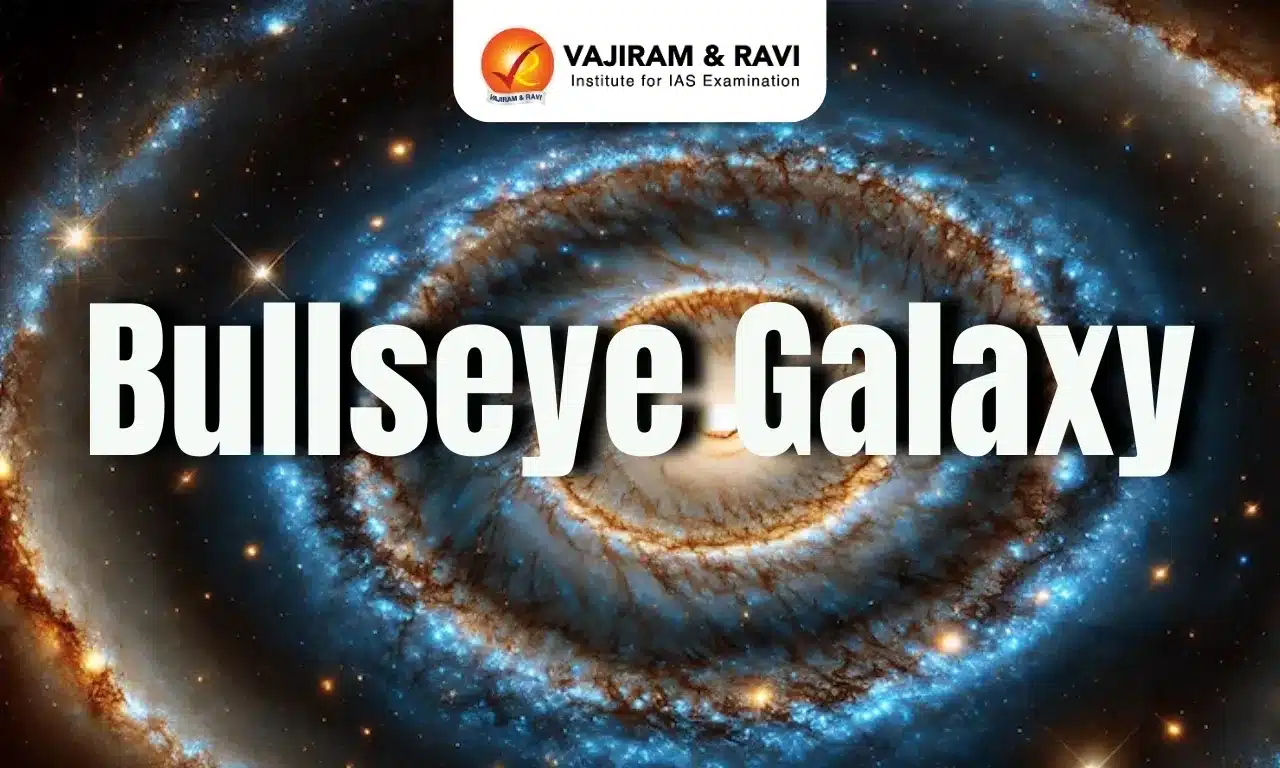
  • The Bullseye Galaxy (LEDA 1313424) is a collisional ring galaxy (CRG) located approximately 534 million light-years away in the constellation Pisces..
    • The galaxy's distinct ringed structure is believed to have formed approximately 50 million years ago due to a head-on collision with a blue dwarf galaxy.
    • This head-on collision is believed to have caused rippling gas waves, leading to star formation in ring-like patterns.
    • This discovery was termed “serendipitous” as ringed galaxies usually have only two or three rings.
  • Observed Through Multiple Telescopes:
    • The Hubble Space Telescope confirmed eight rings.
    • The W.M. Keck Observatory in Hawaii confirmed a ninth ring, revealing the full structure.
  • The Bullseye Galaxy spans 250,000 light-years in diameter — nearly 2.5 times larger than the Milky Way. Despite a current separation of 130,000 light-years, a thin trail of gas still connects it to the colliding dwarf galaxy.
  • The Bullseye may evolve into a Giant Low Surface Brightness (GLSB) Galaxy, a rare, massive galaxy type believed to hold clues about dark matter.
  • Giant Low Surface Brightness (GLSB) Galaxy features: 
    • Composed of diffuse, low-density stellar disks.
    • Contain large amounts of neutral hydrogen but exhibit low star formation rates.
    • Include examples like Malin 1, which is 6.5 times wider than the Milky Way.
  • GLSB galaxies are believed to be rich in dark matter, and their unusual mass distribution challenges the Standard Model of Cosmology.
  • These galaxies display a uniform central mass instead of a dense core, suggesting discrepancies in current models.

Source: TH

Bullseye Galaxy FAQs

Q1: What is the Bullseye Galaxy?

Ans: The Bullseye Galaxy (LEDA 1313424) is a collisional ring galaxy (CRG) located approximately 534 million light-years away in the constellation Pisces.

Q2: How far is the Bullseye Galaxy from Earth?

Ans: The Bullseye Galaxy is located approximately 534 million light-years away from Earth.

Strait of Gibraltar

Strait of Gibraltar

Strait of Gibraltar Latest News

Bengal swimmer Sayoni Das successfully managed to cross the Strait of Gibraltar as reportedly the first Asian woman recently.

About Strait of Gibraltar

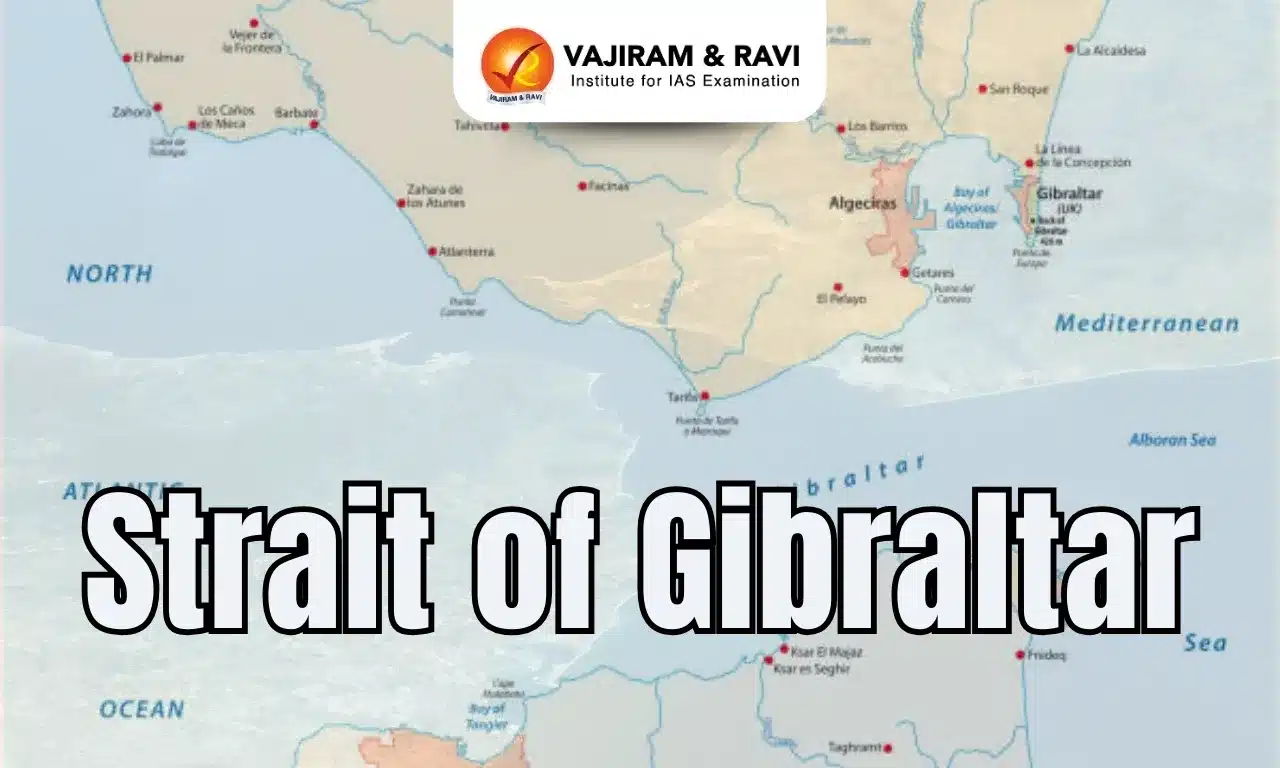
  • It is the body of water separating Europe from Africa and connects the Mediterranean Sea to the Atlantic Ocean.
  • Bordering Countries: The Strait is bordered by Spain and the British Overseas Territory of Gibraltar in the north and by the African country of Morocco and the Spanish enclave of Ceuta in the south.
  • It is about 58 km long and has a width of about 13 km at its narrowest pointbetween Morocco’s Point Cires and Spain’s Point Marroquí. 
  • The western end of the strait located between Spain’s Cape Trafalgar and Morocco’s Cape Spartel has a width of about 43 km. 
  • The strait’s eastern end, locatedbetween the Rock of Gibraltar in the north and Mount Hacho or Jebel Moussa in the south, has a width of about 23 km. 
    • These two land features in the strait’s eastern extremity are known as the Pillars of Heracles. 
  • The Strait of Gibraltar's depth ranges from 300 to 900 m and it forms a significant gap between the high plateau of Spain and the Atlas Mountains of Northern Africa. 
  • Formation: Geological studies have revealed that the Strait was formed due to the northward movement of the African Plate towards the European Plate.
  • Waterflow: The Atlantic Ocean and the Mediterranean Sea have different salinity levels, and therefore the highly saline waters from the Mediterranean Sea flow outward and underneath the currents from the Atlantic Ocean, whereas the less saline Atlantic waters flow inward and on top of the Mediterranean Sea current.
  • It is the only natural link between the Atlantic Ocean and the Mediterranean Sea and is one of the busiest waterways in the world. 
  • An important port located on the Strait of Gibraltar is the Moroccan port of Tanger-Med, near Tangier.

SourceTSM

Strait of Gibraltar FAQs

Q1: Which two countries are separated by Strait of Gibraltar?

Ans: The Strait of Gibraltar separates Spain (in Europe) and Morocco (in Africa).

Q2: What is another name for the Strait of Gibraltar?

Ans: Another name for the Strait of Gibraltar is the "Pillars of Hercules".

Q3: What is the closest point between Europe and Africa?

Ans: The closest point between Europe and Africa is at the Strait of Gibraltar.

SpaDeX Mission

SpaDeX Mission

SpaDeX Mission Latest News

Recently, The Indian Space Research Organisation (ISRO) has successfully completed the second docking of its two satellites — SDX01 (Chaser) and SDX02 (Target) — under the SpaDeX (Space Docking Experiment) mission.

About the SpaDeX Mission

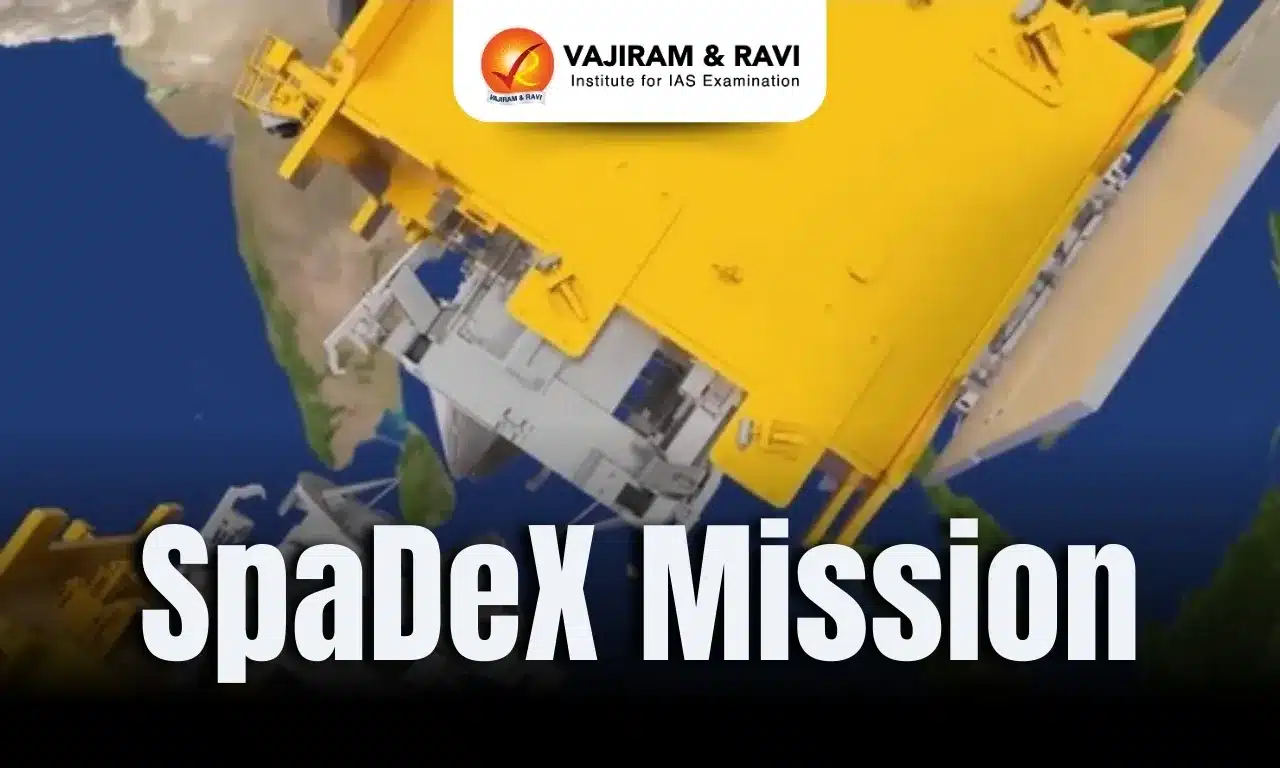
  • SpaDeX (Space Docking Experiment) is a technology demonstration mission developed by ISRO to validate the capability of docking and undocking two small satellites in low-Earth orbit.
  • The mission involved two small satellites, each weighing around 220 kgSDX01 (Chaser), SDX02 (Target)
  • These satellites were launched by PSLV-C60 into a 460 km circular orbit with an inclination of 45 degrees.

Objectives of the SpaDeX Mission

  • Primary objective: To develop and demonstrate the capability for rendezvousdocking, and undocking of spacecraft in orbit.
  • Secondary objectives: To demonstrate the transfer of electric power between docked spacecraft a crucial component for future in-space operations.
    • To develop and validate composite spacecraft control systems.
    • To test payload operations after undocking — important for deep-space missions.
  • With this achievement, India becomes the fourth country after the United StatesRussia, and China to successfully conduct satellite docking operations.

Source: TH

SpaDeX Mission FAQs

Q1: What does SpaDeX stand for?

Ans: SpaDeX stands for "Space Docking Experiment," an Indian Space Research Organisation (ISRO) mission aimed at demonstrating autonomous docking between two spacecraft.

Q2: Why is the SpaDeX Mission significant for India?

Ans: SpaDeX is critical for future Indian space missions involving crewed spaceflights, space station modules, and satellite servicing, as it will allow two spacecraft to dock in orbit without human intervention.

Q3: Which organization is behind the SpaDeX Mission?

Ans: The SpaDeX Mission is being developed by ISRO — the Indian Space Research Organisation.

Article 355 of the Indian Constitution

What is Article 355 of the Indian Constitution?

Article 355 Latest News

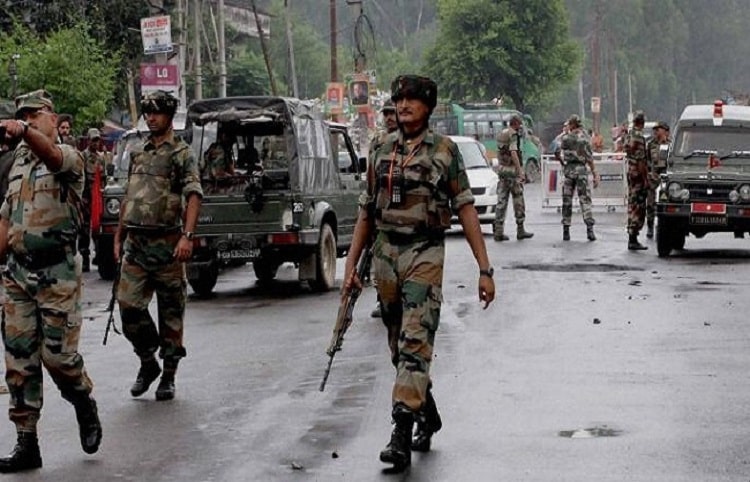
The Supreme Court recently appeared surprised over a petition seeking the invocation of Article 355 in West Bengal, citing violence in Murshidabad district during protests against the Waqf Amendment Act.

About Article 355

  • It is a part of emergency provisions contained in Part XVIII of the Constitution of India, from Article 352 to 360.
  • It empowers the central government to take all necessary steps to protect a state against internal disturbances and external aggression.
  • It empowers the Centre to take necessary steps to protect a state from any kind of threat, be it internal or external. 
  • It allows the Centre to take charge of a state's law and order enforcement without dismissing the government, and is considered a step below the President's rule, which gives full control to the President.
  •  The provision is designed to ensure that the government can act swiftly and decisively in the event of any disturbance or threat to the peace and security of the country.
  • Exact definition:
    • The exact definition of Article 355 in the Constitution of India is, “It shall be the duty of the Union to protect every State against external aggression and internal disturbance and to ensure that the government of every State is carried on in accordance with the provisions of this Constitution.”

SourceHT

Article 355 FAQs

Q1: Article 355 of the Indian Constitution is part of which section?

Ans: Emergency Provisions

Q2: What is the primary purpose of Article 355?

Ans: To empower the Centre to protect states against internal disturbances and external aggression.

Q3: Which part of the Indian Constitution contains the emergency provisions, including Article 355?

Ans: Part XVIII

Judiciary and Constitutional Boundaries: Vice-President’s Remarks Spark National Debate

Judiciary and Constitutional Boundaries: Vice-President’s Remarks Spark National Debate

What’s in Today’s Article?

  • Judicial Activism Latest News
  • Judiciary’s Role in a Constitutional Democracy
  • Recent Remarks by Vice-President Dhankhar
  • Mixed Reactions and Constitutional Interpretation
  • Judicial Independence and Constitutional Sovereignty
  • Judicial Independence and Constitutional Balance FAQs

Judicial Activism Latest News

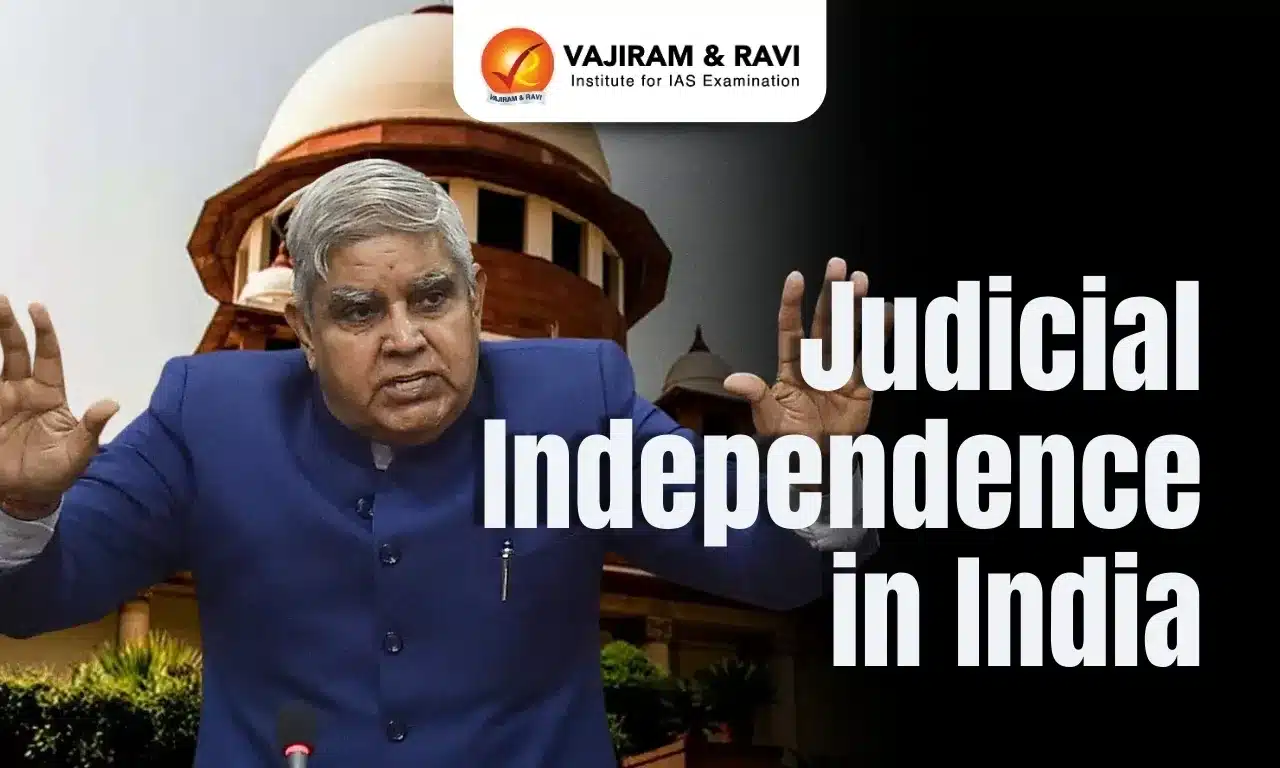
  • Vice-President Jagdeep Dhankhar recently raised certain issues with respect to the independence of the judiciary, its powers of judicial review and the judgment prescribing timelines to the President and Governor for their actions.

Judiciary’s Role in a Constitutional Democracy

  • India’s judiciary is constitutionally placed as the guardian of the Constitution and the rights of citizens. 
  • It exercises wide powers through mechanisms such as judicial review and Article 142 to uphold justice and ensure accountability, including for the executive. 
  • However, its role has occasionally sparked debate, particularly concerning its perceived lack of transparency and the scope of its powers.

Recent Remarks by Vice-President Dhankhar

  • At a recent public event, Vice-President Jagdeep Dhankhar voiced serious concerns regarding various facets of the Indian judiciary’s functioning, leading to widespread discussion. His observations covered five core aspects:
    • Transparency in Judicial Inquiries: He criticized the opaque nature of internal inquiries into judicial misconduct, especially referencing an incident involving recovery of large amounts of cash from a Delhi High Court judge’s residence.
    • Judicial Directives to Constitutional Authorities: Dhankhar questioned a recent Supreme Court judgment that directed timelines for action by Governors and the President on pending state legislation. The court had issued a writ of mandamus, holding high constitutional offices accountable in cases of undue delay.
    • Accountability Deficit: The Vice-President emphasized that unlike the executive and legislature, the judiciary lacks a mechanism to be directly answerable to the public.
    • Size of Constitution Benches: He suggested re-evaluating the provision under Article 145(3), which mandates a minimum of five judges to adjudicate constitutional questions, noting the current strength of the Supreme Court is 34, unlike just 8 when the Article was framed.
    • Use of Article 142: The Vice-President opined that the sweeping powers under Article 142 are sometimes used in ways that undermine the principles of representative democracy.

Mixed Reactions and Constitutional Interpretation

  • The Vice-President’s statements have triggered divided reactions across the political and legal spectrum. 
  • While some see this as overreach from a high constitutional office, others view it as a long overdue criticism reflecting broader public sentiment.
  • Arguments in Favour of Greater Transparency
    • There is widespread public concern regarding the secrecy surrounding inquiries into alleged judicial misconduct. 
    • Many experts believe the Chief Justice of India should institutionalize a transparent inquiry mechanism to reinforce public trust.
  • Judicial Activism: Justified or Overstepped?
    • Judicial activism through Article 142 has played a crucial role in landmark decisions, such as:
      • Bhopal gas tragedy compensation (1989)
      • Vishaka guidelines on sexual harassment (1997)
      • Cancellation of illegal coal-block allocations (2014)
      • Granting permanent commission to women officers in armed forces (2024)
      • Guidelines on unlawful demolitions (2024)
    • These rulings illustrate the judiciary’s evolving role in ensuring justice where administrative or legislative mechanisms fall short.
  • On Judicial Review and Timeline Mandates
    • The judiciary’s power of judicial review has been repeatedly upheld as part of the Constitution’s basic structure. 
    • Legal scholars have noted that the Supreme Court’s ruling to prescribe action timelines for the President and Governors was derived from precedents and supported by government guidelines (Home Ministry’s Office Memorandum of 2016).
  • Constitutional Bench Composition
    • While Article 145(3) specifies a minimum of five judges to decide constitutional matters, current pendency levels and the increased strength of the bench suggest this number may still be optimal, considering logistical constraints.

Judicial Independence and Constitutional Sovereignty

  • The Indian constitutional system blends British-style Parliamentary sovereignty and American-style judicial supremacy. 
  • The Indian judiciary, through judicial review, upholds constitutional supremacy, enabling it to examine the legality of legislative and executive actions.
  • This synthesis is foundational to Indian democracy. While transparency and inclusiveness in appointments (via a potential reformed National Judicial Appointments Commission) may help restore public faith, it must not come at the cost of judicial independence.

Judicial Independence and Constitutional Balance FAQs

Q1. What prompted the Vice-President’s recent criticism of the judiciary?

Ans. He raised concerns over lack of transparency in judicial inquiries and overreach in mandating timelines to the President and Governors.

Q2. What is Article 142 of the Indian Constitution?

Ans. It empowers the Supreme Court to pass any order necessary to deliver “complete justice” in any case.

Q3. Why is judicial review considered a basic structure of the Constitution?

Ans. Because it ensures laws and executive actions adhere to constitutional values and can be struck down if found violative.

Q4. What was the Supreme Court’s directive to the Governors and President?

Ans. It mandated timelines for action on State legislation to prevent indefinite delays.

Q5. What reform has been suggested for judicial appointments?

Ans. A broader-based National Judicial Appointments Commission with veto power for the CJI to ensure transparency and inclusiveness.


Source: TH

Yak

yak

Yak Latest News

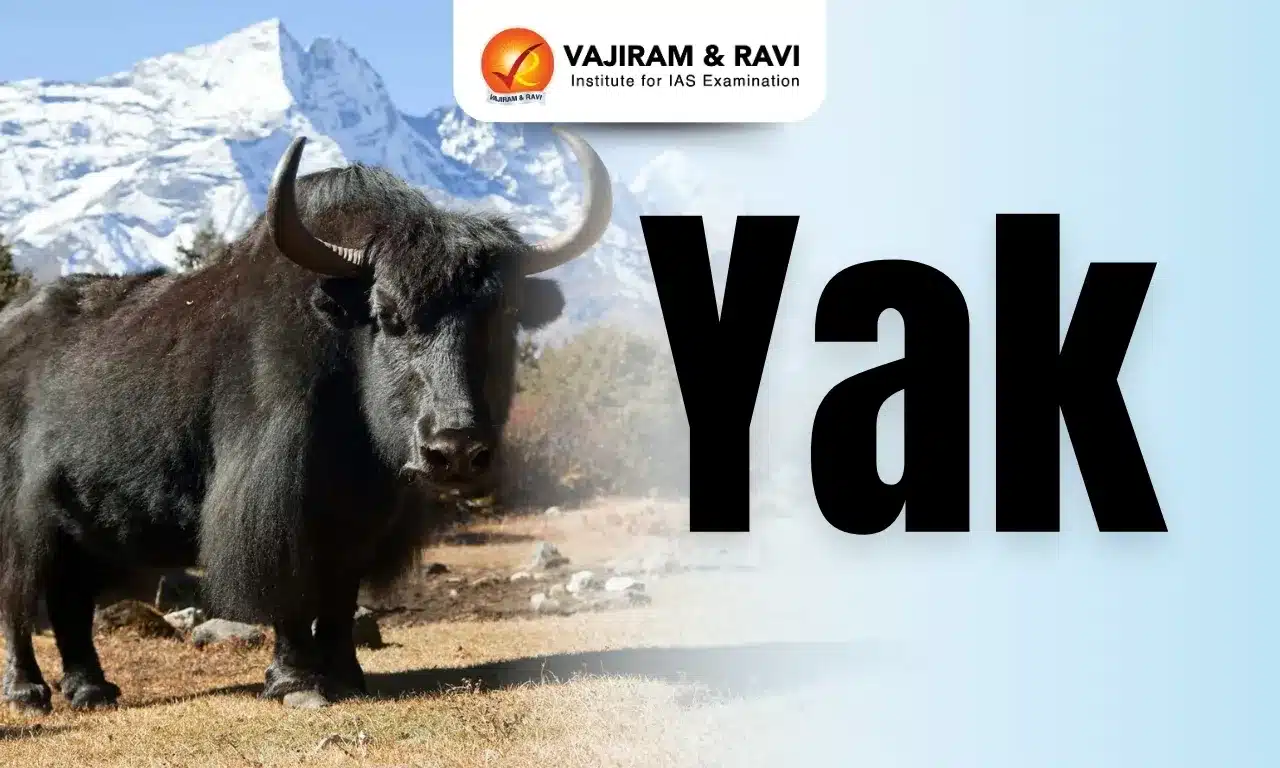
Nepal observed its first-ever ‘National Yak Day’ on April 20, 2025, to honor the cultural, ecological, and economic value of the yak in the Himalayan region.

Why in the News?

  • The International Centre for Integrated Mountain Development (ICIMOD) urged stakeholders to elevate the yak to its rightful place in the sustainable development agenda, especially across the Hindu Kush Himalaya (HKH) region.
  • ICIMOD emphasised that indigenous communities like the Sherpa, Tamang, Thakali, Rai, and Limbu have historically protected and practiced yak herding, linking it with food security, cultural identity, and biodiversity conservation.

Biological and Geographic Features of Yak

  • Scientific Name:Wild yakBos mutus; Domesticated yakBos grunniens
  • HabitatWild yaks inhabit alpine tundra at altitudes of 5000 to 7000 meters. They thrive in environments such as alpine meadows, alpine steppes, and desert steppes.
  • Geographic distribution: Found throughout the Himalayan region, Tibetan plateau, Mongolia, and parts of South-Central Asia.
    • In India, yaks are reared in Arunachal Pradesh, Sikkim, Himachal Pradesh, Uttar Pradesh, and the union territories of Jammu & Kashmir and Ladakh.

Physical Characteristics of Yak

  • Wild yaks are around 2 meters tall at the shoulder, while domesticated yaks are smaller.
  • They have long, shaggy hair for insulation and curved horns, with larger horns in males.
  • Their lung capacity is nearly three times that of cattle, with smaller red blood cells, making them highly adapted to high-altitude, low-oxygen environments.
  • Yaks are herbivorous, feeding on grasses and alpine plants.
  • Uses and Socio-Economic Importance:
    • Domesticated yaks are used for milk, meat, and as pack animals, transporting goods across mountain passes.
    • They are also used in climbing and trekking expeditions, capable of ascending up to 20,000 feet.
    • Yaks are often crossbred with domestic cattle to produce dzo or chauri gai, which are adaptable hybrids used in agropastoralism across altitudinal gradients.
  • Conservation Status: Wild yaks are listed as ‘Vulnerable’ on the IUCN Red List, indicating the need for urgent conservation efforts to protect their habitats and genetic diversity.

Source: DTE

Yak FAQs

Q1: What is a Yak?

Ans: A Yak is a long-haired, domesticated bovid species (Bos grunniens), primarily found in the Himalayan region, including India, Nepal, Bhutan, and Tibet.

Q2: In which Indian states are Yaks commonly reared?

Ans: Yaks are mainly reared in Sikkim, Arunachal Pradesh, Ladakh (UT), and parts of Himachal Pradesh.

Q3: Why are Yaks important for high-altitude economies?

Ans: Yaks are a crucial source of milk, meat, wool, and transport for pastoral communities living in cold, mountainous regions.

RBI Adds 2.5% Liquidity Buffer for Digital Deposits Under New LCR Norms

RBI Adds 2.5% Liquidity Buffer for Digital Deposits Under New LCR Norms

What’s in Today’s Article?

  • Liquidity Coverage Ratio (LCR) Latest News
  • Liquidity Coverage Ratio (LCR)
  • RBI Releases Final LCR Norms
  • Liquidity Coverage Ratio (LCR) FAQs

Liquidity Coverage Ratio (LCR) Latest News

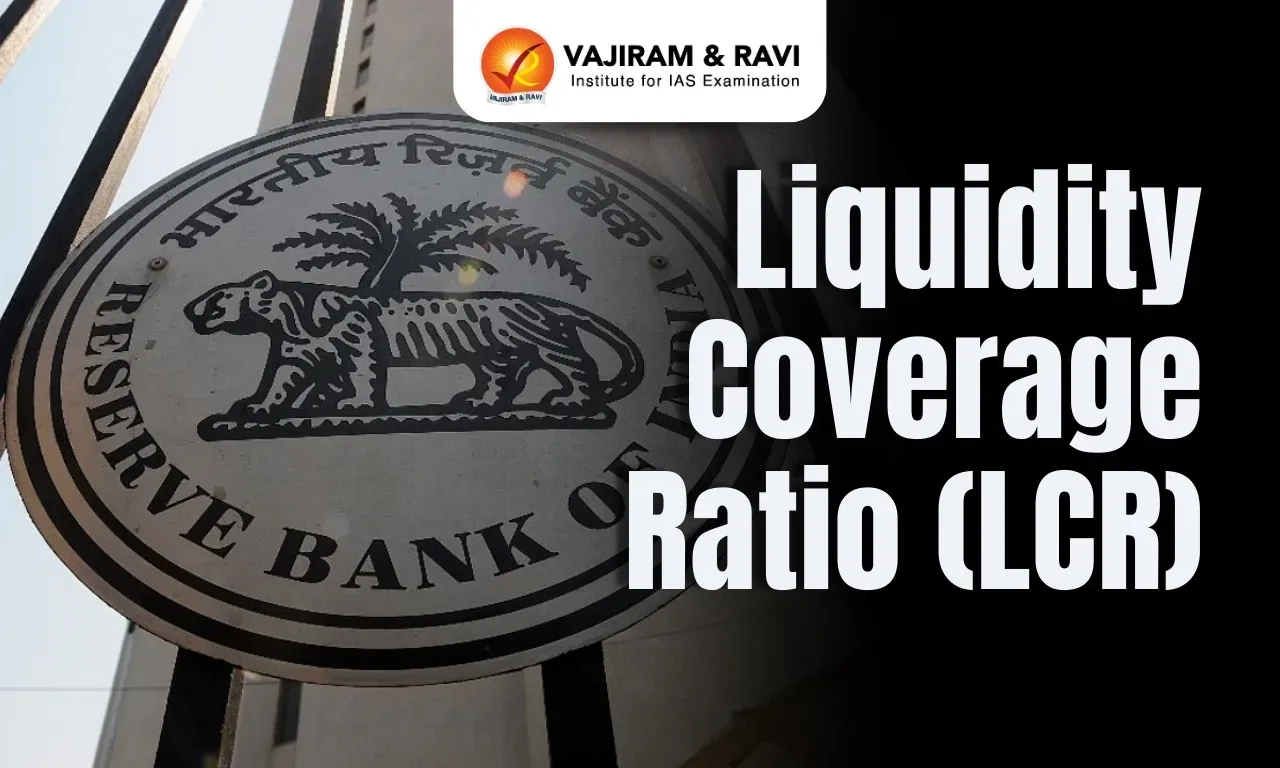
  • The Reserve Bank of India (RBI) has relaxed the Liquidity Coverage Ratio (LCR) norms by introducing a new requirement: banks must now assign an additional 2.5% run-off factor to retail deposits accessible via internet and mobile banking (IMB) services.
  • run-off factor refers to the percentage of deposits that a bank expects to be withdrawn in a short-term period of stress.

Liquidity Coverage Ratio (LCR)

  • The LCR is a regulatory standard designed to ensure that banks hold enough high-quality liquid assets (HQLAs) to cover their total net cash outflows over a 30-day stress period. 
  • It acts as a financial stress test to protect against short-term liquidity disruptions.

Origin and Implementation

  • The LCR was developed by the Basel Committee on Banking Supervision (BCBS) following the global financial crisis. 
  • Proposed in 2010 and finalized in 2014, the rule became fully applicable with a 100% minimum requirement in 2019. 
  • It primarily applies to large banks with over $250 billion in assets or $10 billion in foreign exposure.

LCR Formula

  • LCR = High-Quality Liquid Assets (HQLA) / Total Net Cash Outflows (30 days)
  • The ratio reflects a bank’s ability to survive a liquidity crunch for 30 days without external support.

High-Quality Liquid Assets (HQLA)

  • In India, High Quality Liquid Assets (HQLA) are assets that banks and other financial institutions hold to meet short-term liquidity needs, especially during periods of stress. 
  • These assets are readily convertible to cash with minimal loss in value and are considered to be low-risk and of high credit quality. 
  • They serve as a safety net, ensuring institutions can meet their funding obligations promptly.
  • E.g., - Cash and Balances with the RBI; Government Securities etc.

Limitations of LCR

  • Reduced Lending Capacity: Holding excess liquidity may limit banks’ ability to offer loans.
  • Uncertain Effectiveness: The real test of LCR’s adequacy will come only during a future financial crisis.

RBI Releases Final LCR Norms

  • RBI has finalized and released the Liquidity Coverage Ratio (LCR) guidelines. 
  • A key update includes an additional 2.5% run-off factor for internet and mobile banking (IMB)-enabled deposits of retail and small business customers.
  • This is a reduction from the earlier proposed 5%.

Digital Deposits and Run-off Factors

  • IMB-enabled stable retail deposits will now attract a 7.5% run-off factor (up from 5%).
  • IMB-enabled less stable deposits will have a 12.5% run-off factor (up from 10%).
  • IMB includes services like internet banking, mobile banking, and UPI.

Implementation Timeline

  • The revised norms will be effective from April 1, 2026 and apply to all commercial banks, excluding payments banks, regional rural banks, and local area banks.
  • During meetings with RBI in January 2025, both public and private banks requested a deferment of LCR implementation, citing preparedness concerns.
  • Originally proposed in July 2024, the RBI had called for a 5% additional run-off for IMB-enabled deposits, which sparked industry feedback.

Impact on Liquidity and Lending

  • The RBI estimates that the banking system’s LCR will improve by 6% as of December 31, 2024.
  • With Rs 45–50 lakh crore in HQLAs, the relaxation could free up Rs 2.7–3 lakh crore in lendable resources.
  • This may support an additional credit growth of 1.4–1.5%, boosting economic activity.

Liquidity Coverage Ratio (LCR) FAQs

Q1. What is LCR?

Ans. LCR ensures banks hold enough liquid assets to cover 30-day cash outflows in stress situations.

Q2. Why did RBI revise LCR norms?

Ans. To manage risks from volatile digital deposits and strengthen liquidity in digital banking systems.

Q3. What is the new run-off factor?

Ans. A 2.5% additional run-off for internet and mobile banking-enabled deposits of retail and small businesses.

Q4. When will the new rule be effective?

Ans. From April 1, 2026, across commercial banks (excluding payments and rural banks).

Q5. How will this impact lending?

Ans. Relaxed norms could unlock ₹2.7–3 lakh crore in lending, boosting credit growth by 1.4–1.5%.

Source: IE | OM | RBI

World’s First Emissions Trading Market to Cut Particulate Pollution

World’s First Emissions Trading Market to Cut Particulate Pollution

What’s in Today’s Article?

  • Particulate Emissions Trading Latest News
  • Emissions Trading Scheme (ETS)
  • Criticisms of Emissions Trading Schemes (ETS)
  • Overview of the Surat Emissions Trading Scheme (ETS)
  • Significance of Emissions Trading Markets
  • Particulate Emissions Trading FAQs

Particulate Emissions Trading Latest News

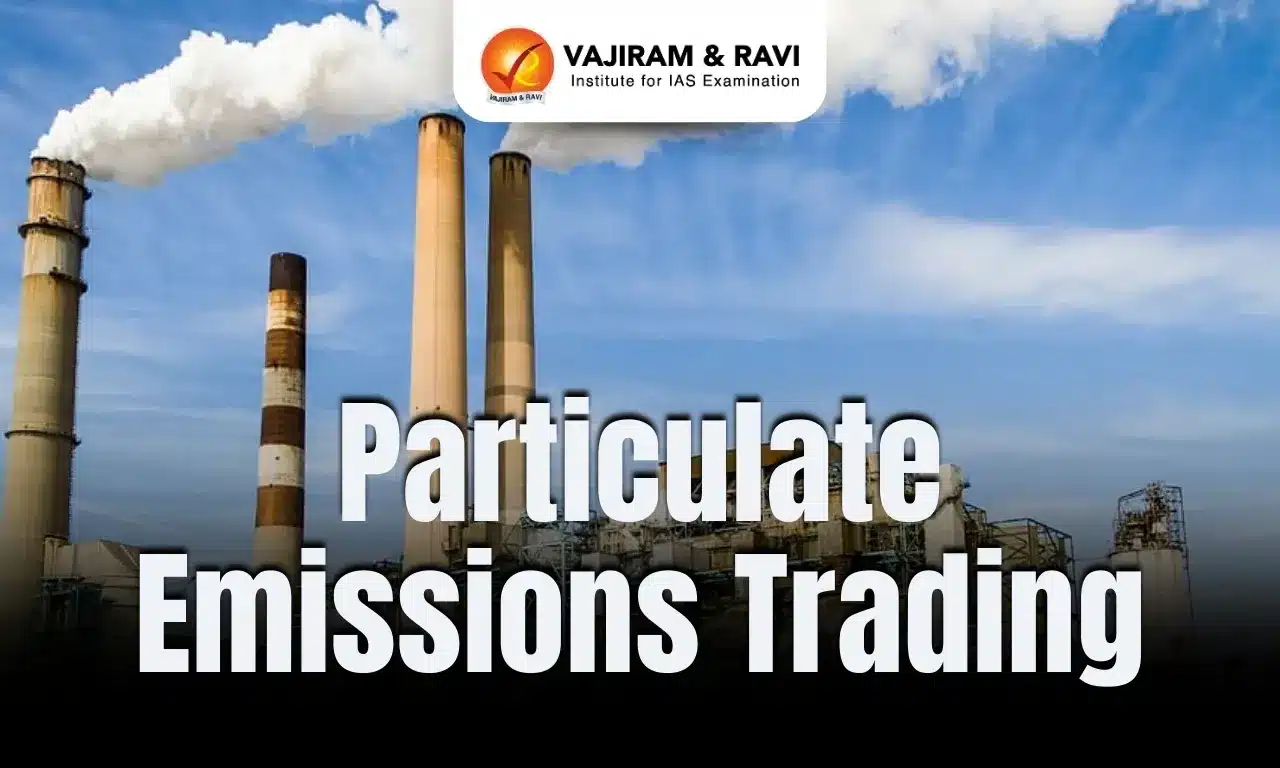
  • A recent study published in the Quarterly Journal of Economics highlights the success of the world’s first market for trading particulate emissions, implemented in Surat’s industrial cluster. 
  • The study, covering 162 textile plants over nearly two years, found that those participating in the emissions trading system reduced pollution by 20–30%—significantly more than those under conventional regulation. 
  • Market participants had permits for 99% of their emissions, while non-participating plants violated norms nearly one-third of the time. The findings support emissions trading as an effective pollution control tool, building on global models from Europe and China.

Emissions Trading Scheme (ETS)

  • An ETS is a regulatory mechanism aimed at reducing greenhouse gas or particulate emissions by offering financial incentives for industries to comply with pollution norms and invest in cleaner technologies.

Working of ETS – The Cap-and-Trade Model

  • Cap on Emissions: Regulators set a limit (cap) on the total allowable emissions.
  • Permits Allocation: Industries receive permits representing the right to emit a specific amount of pollutants (e.g., 1 kg of particulate matter or 1 ton of CO₂).
  • Trading System: Plants that reduce emissions can sell their unused permits to others, creating a financial incentive for cleaner operations.

Benefits for Industries

  • Flexibility: Industries with fewer resources can buy permits while gradually transitioning to cleaner tech.
  • Revenue Opportunity: Efficient plants can earn by selling surplus permits.

Price Controls and Penalties

  • Price Stability: Regulators set a minimum (floor) and maximum (ceiling) price for permits to keep the market attractive and stable.
  • Enforcement: Industries exceeding caps face penalties or must surrender permits.

Long-Term Impact

  • As the ETS matures, regulators reduce the total number of permits, pushing industries toward adopting cost-effective, cleaner technologies.

Criticisms of Emissions Trading Schemes (ETS)

  • Over-Allocation of Permits
    • In several cases, regulators issued too many permits, leading to low permit prices.
    • This reduced the incentive for industries to invest in cleaner technologies.
    • Example: The Le Monde investigation (2023) found surplus permits in the European ETS, undermining its environmental goals.
  • Weak Regulatory Oversight
    • Lack of strict monitoring and transparency has hampered market effectiveness.
    • Actual environmental impacts have been difficult to assess due to insufficient oversight.
  • Industry Lobbying and Free Permits
    • In the U.S., fossil fuel companies have lobbied to delay cap tightening and secure free permits.
    • This turned ETS into a “pay-to-pollute” system rather than an emissions-reduction mechanism.
  • Design Flaws in China’s ETS
    • China’s carbon market uses emissions intensity (per unit of output), not absolute caps.
    • This approach doesn’t guarantee total emissions reduction, especially as production increases.
  • Environmental Injustice
    • A 2018 PLOS Medicine study on California’s ETS found:
      • Regulated plants were mostly located in disadvantaged communities.
      • Emissions actually increased in these areas between 2011 and 2015, raising equity concerns.

Overview of the Surat Emissions Trading Scheme (ETS)

  • Launched in 2019, Surat-ETS is the world’s first market-based pilot to control particulate matter pollution.
    • It is the world’s first ETS pilot to control particulate pollution and India’s first for any pollutant. 
  • Targeted 342 highly polluting industries, primarily using coal, lignite, and diesel.
  • Developed by the Gujarat Pollution Control Board (GPCB) with researchers from J-PAL, EPIC, and Yale University.

Impact of the Surat ETS

  • The scheme significantly improved compliance and emission control.
  • Provided a cost-effective, transparent, and flexible approach to reducing pollution in an industrial cluster.

Significance of Emissions Trading Markets

  • Limitations of the Traditional Command-and-Control System
    • Pollution regulation in India follows a top-down approach enforced by the Environment Ministry, CPCB, and SPCBs.
    • Non-compliance results in fines, shutdowns, or bureaucratic delays.
    • Uniform regulations apply the same standards to all industries, regardless of their size or resources.
    • This favors larger plants that can bear the costs and influence regulatory decisions.
  • Challenges in Monitoring and Enforcement
    • With limited manpower and resources, regulators struggle to monitor thousands of industries effectively.
    • High enforcement costs make the system inefficient and reactive, rather than preventive.
  • How Emissions Trading Markets Help
    • ETS introduces flexibility by allowing industries to trade emissions permits based on their actual performance.
    • Offers financial incentives for pollution reduction instead of relying solely on penalties.
    • Supports a customized compliance path, helping resource-constrained industries gradually adopt cleaner technology.
    • Shifts focus from enforcement to market-driven solutions, improving efficiency and accountability.

Particulate Emissions Trading FAQs

Q1. What is ETS?

Ans. A market system where industries trade permits to emit pollutants, incentivizing cleaner technologies and compliance.

Q2. Where was the first particulate ETS launched?

Ans. In Surat, Gujarat, covering 342 polluting industries, especially in the textile sector.

Q3. What was the pollution reduction result?

Ans. Plants under ETS reduced particulate pollution by 20–30% over nearly two years.

Q4. How does ETS benefit industries?

Ans. It offers flexibility and financial incentives, enabling gradual adoption of clean tech and emissions compliance.

Q5. What are criticisms of ETS?

Ans. Critics cite over-allocated permits, weak monitoring, and unfair pollution in disadvantaged communities.

Source: IE | IE | EPIC

Enquire Now