
Gonorrhoea Latest News
A new oral antibiotic named gepotidacin could be a breakthrough in the fight against stubborn gonorrhoea infections, according to a recent study.
About Gonorrhoea
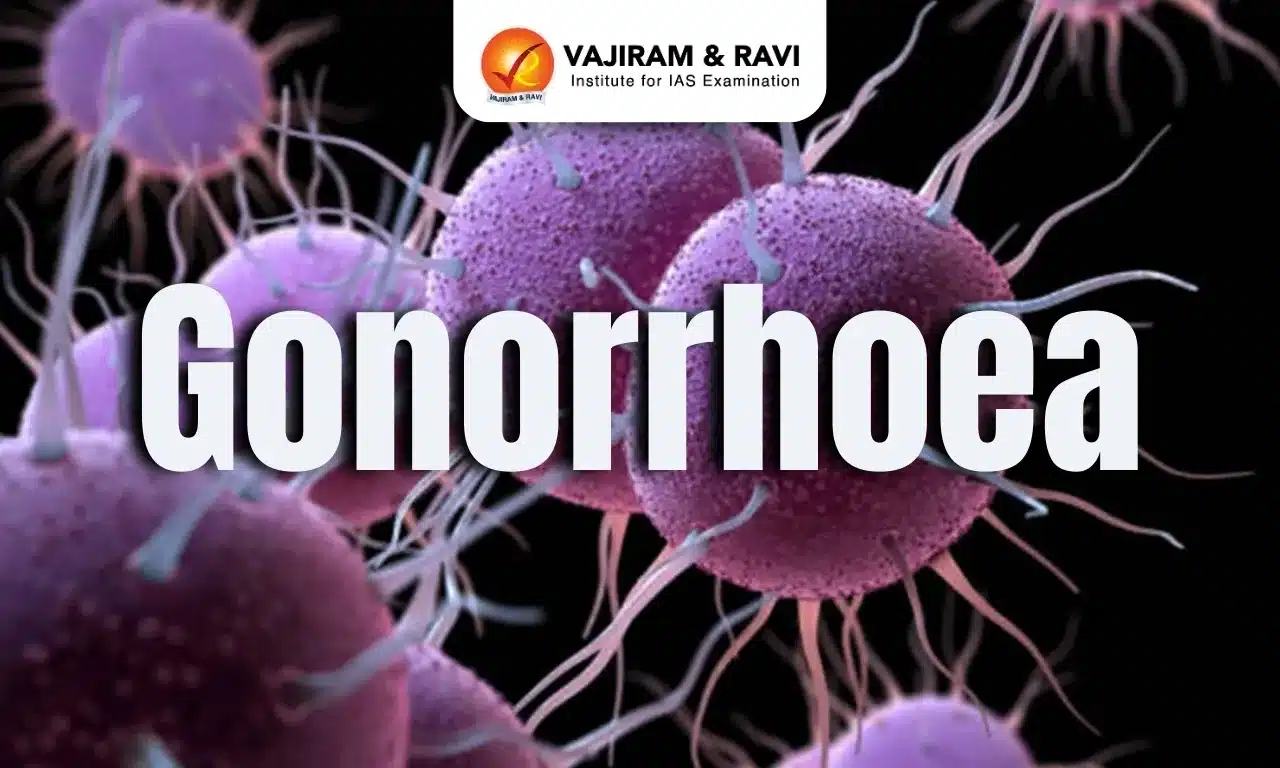
- It is a sexually transmitted infection (STI), also called a sexually transmitted disease (STD), caused by the bacteria Neisseria gonorrhea.
- It is sometimes known as ‘the clap'.
- Gonorrhea bacteria can infect the urethra, rectum, female reproductive tract, mouth, throat or eyes.
- Transmission:
- It is most commonly spread during vaginal, oral or anal sexual activity.
- But babies can get the infection during childbirth.
- In babies, gonorrhea most commonly affects the eyes.
- Gonorrhea can affect people of any age, anatomy, or gender, but it’s particularly common among teens and young adults between the ages of 15 and 24.
- Symptoms:
- Many people with gonorrhoea won’t notice any symptoms. If you do get symptoms, it’s usually between 1 to 14 days after getting the infection.
- Men are more likely to experience symptoms. Up to 50% of women won’t experience symptoms.
- Gonorrhoea can cause a sore throat, conjunctivitis,unusual vaginal or penile discharge, and pelvic and genital pain.
- Untreated gonorrhoea can cause:
- infections affecting the skin, joints, heart (endocarditis) and brain (meningitis)
- infertility in both females and males
- pelvic inflammatory disease (PID)
- epididymitis and prostatitis (inflammation of your prostate)
- Some of these complications can cause permanent damage to your health.
- Prevention: It can be prevented by practicing safe sex.
- Treatment: Most of the time antibiotics cures gonorrhoea.
Source: IT
Gonorrhoea FAQs
Q1: What is gonorrhoeae?
Ans: Gonorrhea is a sexually transmitted infection (STI).
Q2: What is the causative agent of gonorrhoea?
Ans: It is caused by the bacteria Neisseria gonorrhea.
Q3: How can newborn babies contract gonorrhoea?
Ans: How can newborn babies contract gonorrhoea?
