Total Allowable Catch (TAC)

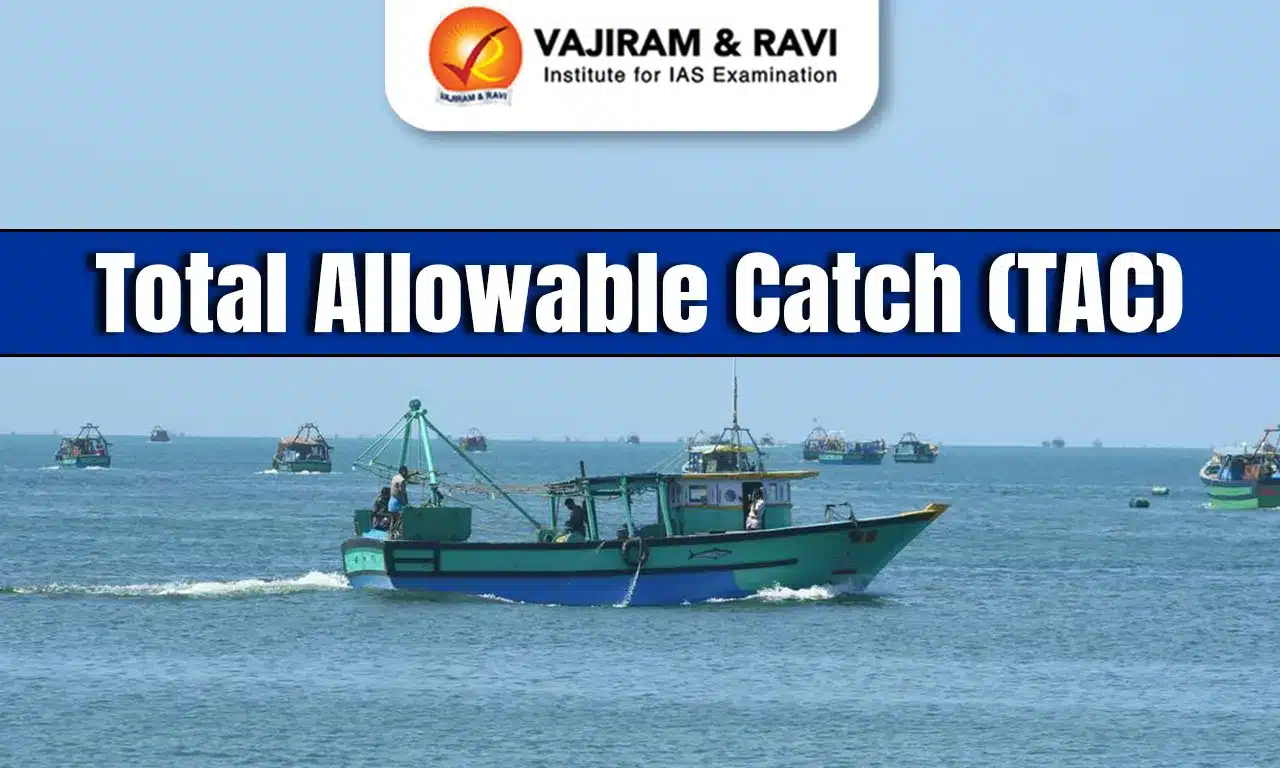
Total Allowable Catch (TAC)

Total Allowable Catch (TAC) Latest News

A recent dispute involving the US and Russia highlighted the geopolitical and environmental implications of TAC enforcement.

What is Total Allowable Catch (TAC) ?

  • Total Allowable Catch (TAC) refers to the maximum quantity of a particular fish species that can be legally harvested from a specific water body, such as oceans, seas, or lakes, within a defined period.
  • It is a regulatory measure adopted by national governments and international fisheries management agencies to ensure the sustainable exploitation of marine resources.

Why is TAC Important?

  • TAC ensures the long-term sustainability of fish stocks by maintaining a minimum viable population size that can replenish naturally each year.
  • In the absence of TAC, overfishing can occur, depleting fish populations to the extent that they are unable to recover, thus threatening marine biodiversity, ecosystem balance, and the livelihoods of coastal communities.
  • It acts as a scientific tool for preventing resource collapse, especially in commercially valuable species.

Indian Context

  • India implements a seasonal fishing ban, which functions as a TAC equivalent of zero for a specified duration to conserve fish stocks during the breeding season.
  • The ban is enforced in India’s Exclusive Economic Zone (EEZ) for 61 days annually:
    • East Coast: From April 15 to June 14
    • West Coast: From June 1 to July 31
  • This restriction aims to protect spawning fish and support regeneration of marine life during peak monsoon when fish reproduce in large numbers.

Total Allowable Catch (TAC) FAQs

Q1. What does Total Allowable Catch (TAC) mean?
Ans. TAC is the maximum quantity of a specific fish species that can be legally caught in a given period to prevent overfishing.

Q2. Who sets TAC limits?
Ans. TAC is determined by national fisheries authorities or international bodies like FAO or Regional Fisheries Management Organisations (RFMOs).

Q3. How does TAC help marine ecosystems?
Ans. TAC prevents overexploitation of fish stocks, supporting marine biodiversity and long-term sustainability.

Source: TH

ECINET

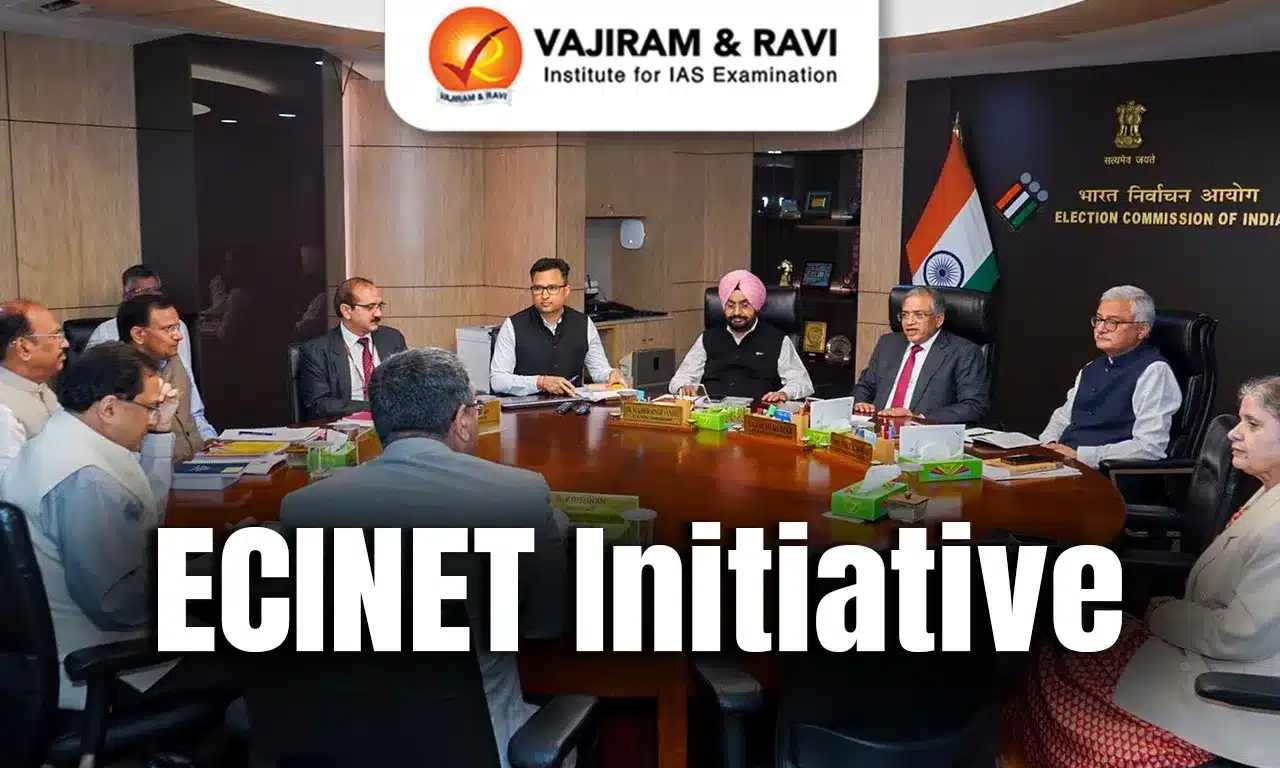
ECINET

ECINET Latest News

In a significant step towards streamlining electoral services, the Election Commission of India (ECI) will be launching a single-point digital platform called ECINET.

About ECINET

  • It is a single-point digital platform being developed by the Election Commission of India (ECI).
  • It is a new user-friendly digital interface for the electors and other stakeholders such as the election officials, political parties, and civil society.
  • It will integrate and reorient over 40 of ECI’s existing mobile and web applications.
    • ECINET will subsume existing apps like the Voter Helpline App, Voter Turnout App, cVIGIL, Suvidha 2.0, ESMS, Saksham, and KYC App.
  • ECINET will have an aesthetic User Interface (UI) and a simplified User Experience (UX) by providing a singular platform for all electoral-related activities. 
  • This move is also designed to alleviate the burden of the users for downloading and navigating multiple apps and remembering different logins.
  • ECINET will enable users to access relevant electoral data on their desktops or smartphones. 
  • The data on ECINET will be entered solely by the authorized ECI official.
    • It would ensure that the data made available to the stakeholders is as accurate as possible.
    • However, in case of any conflict, the primary data as duly filled in statutory forms will prevail. 
  • The data provided through ECINET will be strictly aligned within the legal framework established by the Representation of People Act 1950, 1951, Registration of Electoral Rules 1960, Conduct of Election Rules 1961, and instructions issued by ECI from time to time.
  • ECINET is expected to benefit nearly 100 crore electors and the entire electoral machinery comprising over 10.5 lakh Booth Level Officers (BLOs), around 15 Lakh Booth Level Agents (BLAs) appointed by Political Parties, nearly 45 Lakh Polling Officials, 15,597 Assistant Electoral Registration Officers (AEROs), 4,123 EROs, and 767 District Election Officers (DEOs) across the country.

ECINET FAQs

Q1. What is ECINET?

Ans. A single-point digital platform by the Election Commission of India.

Q2. Who enters data into ECINET?

Ans. The data on ECINET will be entered solely by the authorized ECI official.

Q3. How many existing mobile and web apps of the ECI will ECINET integrate?

Ans. It will integrate and reorient over 40 of ECI’s existing mobile and web applications.

Source: ET

Voter ID Rules in India: Citizenship, Verification, and Common Loopholes

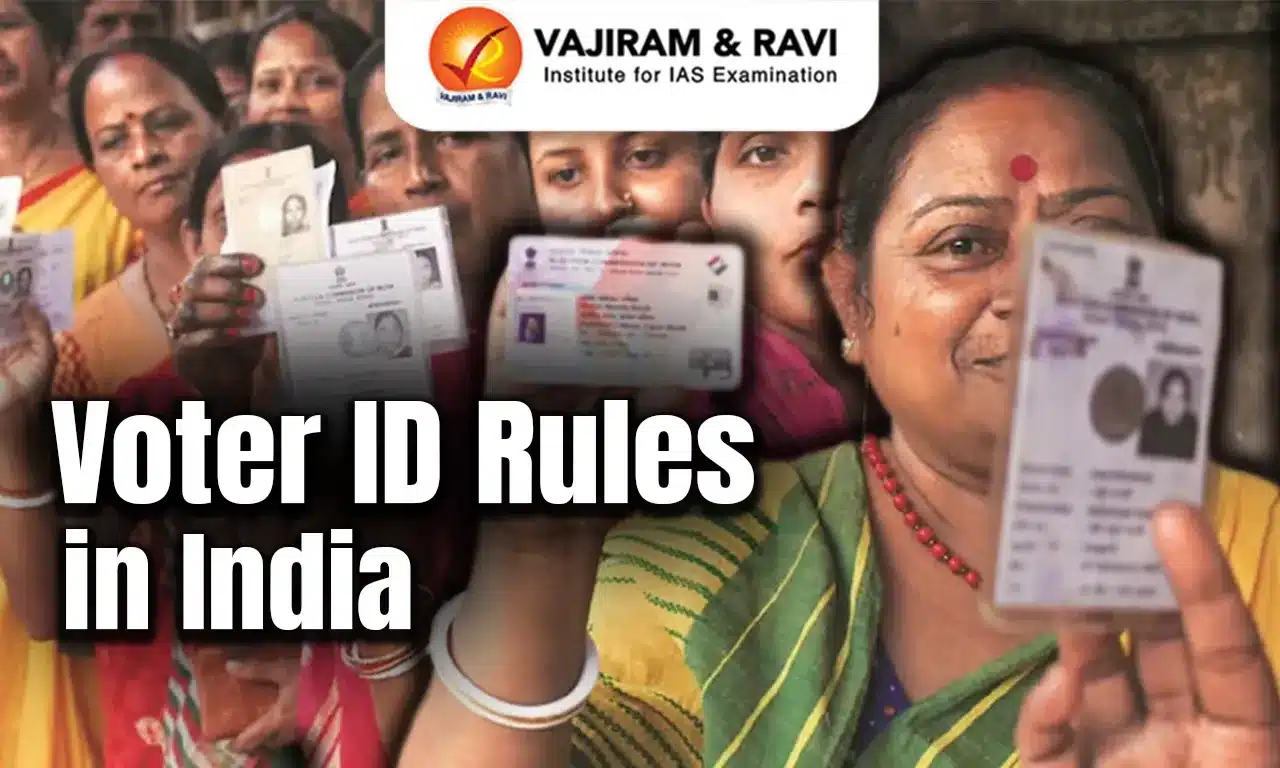
Voter ID Rules in India: Citizenship, Verification, and Common Loopholes

What’s in Today’s Article?

  • Voter ID Rules in India Latest News
  • Rules Regarding Voter ID Eligibility and Verification
  • How Citizenship is Determined for Voter Registration
  • Cases of Non-Citizens Holding Voter IDs
  • Voter ID Rules in India FAQs

Voter ID Rules in India Latest News

  • Following a government order in response to the Pahalgam terror attack, hundreds of Pakistani nationals have been deported from India. 
  • Several deportees, however, claimed possession of Indian identity documents, such as Aadhaar cards, ration cards, and Voter IDs.

Rules Regarding Voter ID Eligibility and Verification

  • Article 326 of the Indian Constitution grants the right to vote to every Indian citizen aged 18 years or above in elections to the Lok Sabha and State/UT Assemblies.

Disqualification Criteria (Representation of the People (RP) Act, 1950– Section 16)

  • A person can be disqualified from voter registration if they:
    • Are not a citizen of India.
    • Are of unsound mind, as declared by a competent court.
    • Are disqualified under any law related to corrupt practices or election-related offences.

Application Process (Form 6)

  • Form 6 -the Election Commission of India’s (ECI’s) form for registering new electors - is used for registering new electors with the ECI.
  • Requires self-attested documents for:
    • Age proof
    • Address proof
  • No separate citizenship proof is needed, but the applicant must sign a citizenship declaration.

Penalties for False Declaration (Section 31, RP Act)

  • If the citizenship declaration is false, the applicant can face:
    • Up to 1 year of imprisonment
    • Or a fine
    • Or both

Verification by Electoral Authorities

  • Electoral Registration Officer (ERO) verifies claims and objections.
  • Booth Level Officers (BLOs) assist EROs by collecting forms and documents.
  • The ERO may also conduct hearings and investigations before finalizing entries.

How Citizenship is Determined for Voter Registration

  • Responsibility of the Electoral Registration Officer (ERO)
    • The ERO must ensure that no ineligible person, including non-citizens, is added to the electoral roll.
    • The ERO must independently verify the applicant’s citizenship status, especially when a claim or objection is raised.
    • The ERO is expected to evaluate all evidence presented during the inquiry without external influence.
  • Initial Onus of Proof
    • The applicant bears the initial burden of proof to establish Indian citizenship when applying for the first time.
  • Special Cases
    • For migrants within India, the ERO cross-checks with the District Election Officer (DEO) of the applicant’s previous district.
    • For married women without documentary proof:
      • Previous voter registration as an unmarried woman can be considered.
      • Proof of marriage or certificates from village heads (before and after marriage) may be accepted.
  • Objections to Citizenship
    • If someone objects to an applicant’s citizenship, the burden of proof shifts to the objector.
    • However, the ERO may still require the applicant to provide proof of Indian citizenship in such cases

Cases of Non-Citizens Holding Voter IDs

  • Previous Instances
    • Non-citizens obtaining voter IDs is not a new issue.
    • The Election Commission of India (ECI) has previously identified and removed such ineligible voters from the electoral rolls.
    • Legal action has been initiated in cases where objections were found valid.
  • Current Measures
    • The ECI is working to link Aadhaar with Voter IDs to prevent non-citizens from registering.
  • Limitations of Aadhaar Linkage
    • Possession of Aadhaar by non-citizens makes detection difficult, as Aadhaar alone cannot confirm citizenship.
    • Thus, Aadhaar linkage is not a foolproof solution for identifying ineligible voters.

Voter ID Rules in India FAQs

Q1. Who can vote in India as per the Constitution?

Ans. Every Indian citizen aged 18 or above is eligible to vote under Article 326 of the Constitution.

Q2. Can non-citizens apply for a Voter ID?

Ans. No. Non-citizens are disqualified under the Representation of the People Act, 1950.

Q3. What documents are needed for Voter ID registration?

Ans. Age and address proofs are needed. Citizenship is self-declared, not verified through a specific document.

Q4. What if a false citizenship claim is made?

Ans. Under Section 31, punishment includes imprisonment up to 1 year, a fine, or both.

Q5. Is Aadhaar enough to confirm citizenship?

Ans. No. Aadhaar cannot confirm citizenship and may allow non-citizens to falsely register.

Source: IE | ECI

Ghassem Basir Missile

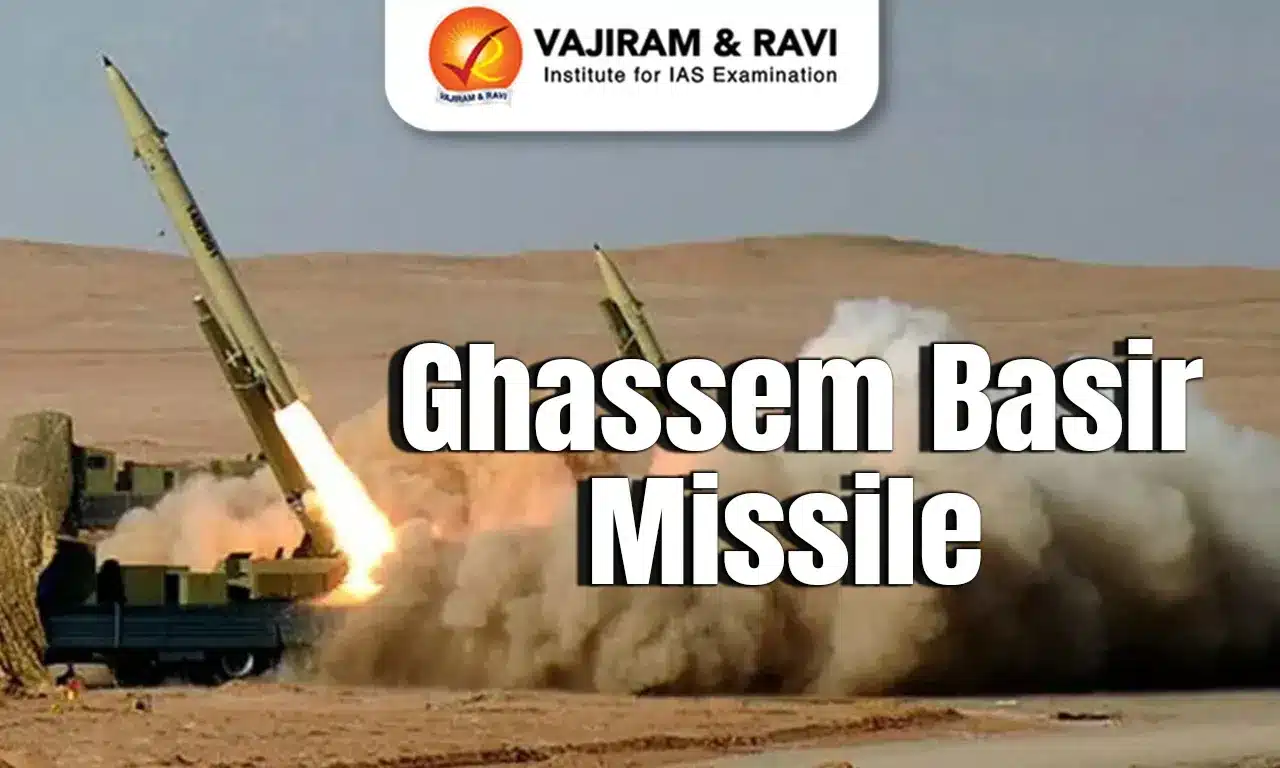
Ghassem Basir Missile

Ghassem Basir Missile Latest News

Iran recently unveiled a new solid-fuel ballistic missile named Ghassem Basir.

About Ghassem Basir Missile

  • It is a new medium-range ballistic missile (MRBM) developed by Iran.
  • It is designed to strike targets located more than 1,200 kilometers away.

Ghassem Basir Missile Features

  • The missile’s length is estimated to be approximately 11 meters, with an overall weight of roughly 7 tons.
  • The missile's airframe is apparently manufactured using carbon fiber composite materials, reducing structural mass and radar cross-section. 
  • The warhead is reported to weigh approximately 500 kilograms. 
  • The propulsion system is based on solid fuel, which enables quicker launch readiness and more stable storage conditions compared to liquid-fueled alternatives.
  • It can reach speeds up to Mach 12. 
  • The guidance system features a thermal imaging sensor, allowing the missile to identify and home in on targets using heat signatures during its terminal flight phase.
  • Additionally, the missile is equipped with a maneuverable reentry vehicle (MaRV) that separates from the booster and is designed to decrease drag, reduce radar observability, and improve ballistic efficiency.
  • It can reportedly be launched from mobile transporter-erector-launchers (TELs), including platforms that resemble civilian trucks.

Ghassem Basir Missile FAQs

Q1. Which country developed the Ghassem Basir missile?

Ans. Iran

Q2. What type of missile is the Ghassem Basir?

Ans. Medium-range ballistic missile (MRBM)

Q3. What is the reported maximum range of the Ghassem Basir missile?

Ans. Over 1,200 kilometers

Source: NDTV

Alcatraz Island

Alcatraz Island

Alcatraz Island Latest News

The US President recently directed his administration to rebuild and enlarge Alcatraz, the infamous prison that has been shuttered for more than 60 years on a remote California island off the coast of San Francisco.

About Alcatraz Island

  • Alcatraz Island, also known as'The Rock,' a rocky island in San Francisco Bay, off the coast of California, in the United States. 
  • It occupies an area of 22 acres (9 hectares).
  • History:
    • Sold in 1849 to the U.S. government, Alcatraz was the site of the first lighthouse (1854) on the coast of California. 
    • In 1859 the first permanent army troops were stationed at Alcatraz. 
    • Two years later it became a military prison.
    • In 1907 it was named the Pacific Branch of the U.S. Military Prison. 
    • The army left the island in 1933. 
    • Alcatraz served as a federal (national) prison from 1934 to 1963. 
    • It housed some of the most dangerous prisoners in the country. 
    • The prison was able to hold more than 330 convicts in cells that were 10 feet by 4.5 feet (3 meters by 1.5 meters). However, it was rare for more than 260 prisoners to occupy the island at one time.
    • Alcatraz was considered to be the most inescapable prison in the United States. 
    • A few inmates did escape the island. However, it is unlikely that they survived the currents of San Francisco Bay.
    • Eventually, the cost of maintaining the prison resulted in its closing in March 1963.
    • In 1972 Alcatraz became part of the newly created Golden Gate National Recreation Area. It is now open to the public and is a popular tourist destination.

Alcatraz Island FAQs

Q1. Why is Alcatraz so famous?

Ans. Alcatraz is famous primarily for being one of the most notorious and secure federal prisons in the United States.

Q2. Where is Alcatraz Island located?

Ans. It is located in San Francisco Bay, off the coast of California, in the United States. 

Q3. Why was Alcatraz shut down?

Ans. The cost of maintaining the prison resulted in its closing in March 1963.

Source: HT

Spain

Spain

Spain Latest News

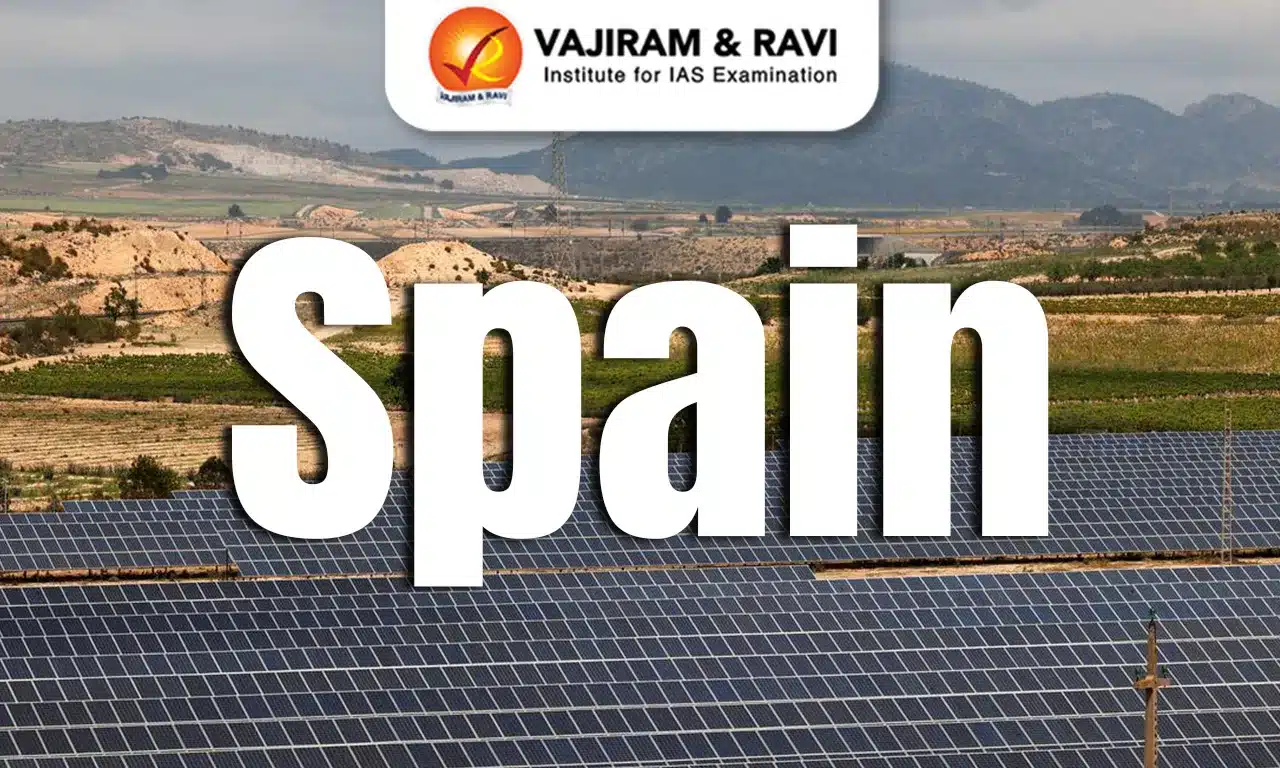
A recent massive power outage across the Iberian Peninsula (Spain and Portugal) has raised concerns over the integration of solar and wind energy into national power grids.

Key Facts About Spain

  • Spain is located in Southwestern Europe, occupying nearly 82% of the Iberian Peninsula, making it the dominant territorial entity in this region.
  • Land borders: Spain shares its borders with Portugal (to the west)France and Andorra (to the northeast), and the British Overseas Territory of Gibraltar (to the south).
  • Maritime borders: Spain is bounded by the Mediterranean Sea (to the southeast and east), the Bay of Biscay (to the north), and the Atlantic Ocean (to the northwest and southwest).
  • Mountain ranges: The Pyrenees Mountains form a natural barrier between Spain and France, playing a crucial role in shaping climatic zones and acting as a cultural divide.
  • Plateaus and Plains: The Meseta Central is a vast interior plateau, dominating the central part of Spain. The Andalusian Plain lies in the south and is agriculturally significant.
  • Rivers: Spain is traversed by important rivers such as:
    • Ebro River – flows into the Mediterranean.
    • Tagus River – shared with Portugal.
    • Douro River – originates in Spain and enters Portugal.
    • Guadalquivir River – navigable and important for trade.
  • Desert feature: Spain hosts the Tabernas Desert in Andalusia, recognized as the only true desert in mainland Europe, contributing to Spain’s environmental diversity.
  • Islands:
    • Balearic Islands – located in the Mediterranean Sea.
    • Canary Islands – situated off the northwest coast of Africa in the Atlantic Ocean. These are of strategic geopolitical importance.

Spain FAQs

Q1. Where is Spain located geographically?
Ans. Spain is located in southwestern Europe, sharing borders with Portugal, France, Andorra, and the Mediterranean Sea.

Q2. What is the political system of Spain?
Ans. Spain is a parliamentary constitutional monarchy with a King as head of state and a Prime Minister as head of government.

Q3. What is Spain’s position in the European Union?
Ans. Spain is a founding member of the EU and part of the Eurozone, using the euro as its currency.

Source: TH

Saola

Saola

Saola Latest News

An international team of scientists has successfully mapped the genome of the Saola using tissue fragments obtained from hunter-collected remains, marking a critical step in understanding and conserving this species.

About Saola

  • The Saola (Pseudoryx nghetinhensis) is one of the rarest large land mammals in the world and is often dubbed the "Asian Unicorn" due to its elusive nature.
  • The Saola was first scientifically discovered in 1992 during a joint expedition by the Vietnamese Ministry of Forestry and WWF.
  • The animal is characterised by long, straight, and parallel horns up to 20 inches, found in both males and females, and striking white facial markings.
  • It is currently listed as Critically Endangered on the IUCN Red List, with an estimated population of only 50 to 300 individuals as per the 2015 assessment.

Habitat and Distribution

  • The Saola is found exclusively in the mist-covered evergreen forests of the Annamite Mountains along the Vietnam–Laos border.
  • These forests have little or no dry season and are known for their dense canopy and unique biodiversity.

Major Threats

  • The species is threatened by widespread snaringillegal hunting, and deforestation due to human activities such as agriculture and burning.
  • Its habitat fragmentation and low reproductive numbers make it particularly vulnerable to extinction.

Why Genome Mapping Matters

  • For the first time, scientists have mapped the complete genome of the saola using DNA fragments from remains found in hunter households.
  • Genomic data were compiled for 26 saola individuals, offering valuable insights into genetic diversity, population structure, and conservation potential.

Key Genetic Findings

  • The analysis revealed that saola populations split into two distinct genetic groups between 5,000 and 20,000 years ago, likely due to changes in forest habitats after the Last Glacial Maximum.
  • The shift from hunter-gatherer to agricultural societies (~4,000 years ago) led to increased huntingforest loss, and genetic isolation of populations.
  • Each group lost different segments of genetic diversity, meaning their gene pools are complementary—when combined, they can restore overall diversity crucial for species survival.

Saola FAQs

Q1. What is the Saola, and where is it found?
Ans. The Saola is a critically endangered mammal endemic to the Annamite Mountains of Laos and Vietnam.

Q2. Why is the Saola referred to as the 'Asian Unicorn'?
Ans. Due to its extreme rarity and elusive nature, the Saola is often called the 'Asian Unicorn'.

Q3. What is the IUCN status of the Saola?
Ans. The Saola is listed as Critically Endangered on the IUCN Red List due to habitat loss and hunting.

Source: DTE

HADR Exercise

HADR EXERCISE

HADR Exercise Latest News

INS Sharda, an offshore patrol vessel of the Indian Navy, has arrived at Maafilaafushi Atoll, Maldives, to participate in its first-ever Humanitarian Assistance and Disaster Relief (HADR) Exercise, scheduled from May 4 to May 10, 2025.

INS Sharda's Maiden HADR Exercise in the Maldives

  • This initiative is part of India’s broader strategic vision to foster regional maritime cooperation and ensure disaster preparedness in the Indian Ocean Region (IOR).
  • The deployment underscores India’s commitment to its "Neighbourhood First" Policy, wherein the Maldives holds a special strategic and cultural significance as a close maritime neighbour.
  • The exercise aligns with the recently launched "MAHASAGAR" vision – Mutual and Holistic Advancement for Security and Growth Across Regions – announced by the Prime Minister in Mauritius.
  • This vision reaffirms India’s role as a net security provider and first responder in the Indian Ocean.
  • The MAHASAGAR vision is an extension of India’s earlier SAGAR doctrine (Security and Growth for All in the Region), emphasising inclusive security, regional collaboration, and disaster resilience.
  • According to the Indian Navy, the key objectives of this HADR exercise include:
    • Enhancing interoperability between the Indian Navy and the Maldives National Defence Force (MNDF).
    • Conducting joint drills for Search and Rescue (SAR) operationsdisaster response coordinationlogistical support, and medical assistance.
    • Facilitating training sessions for capacity building.
    • Engaging with local communities for awareness and disaster resilience preparedness.

HADR Exercise FAQs

Q1. What does HADR stand for?
Ans. HADR stands for Humanitarian Assistance and Disaster Relief, a key element of India’s defence diplomacy and regional outreach.

Q2. Which Indian agencies are involved in HADR operations?
Ans. Indian Armed Forces, National Disaster Response Force (NDRF), Indian Coast Guard, and the Ministry of External Affairs are involved in HADR operations.

Q3. What is the significance of India’s HADR exercises?
Ans. India uses HADR exercises to enhance regional cooperation, project soft power, and strengthen response mechanisms for natural disasters in the Indo-Pacific.

Q4. Name a recent multilateral HADR exercise India participated in.
Ans. Exercise Samudra Shakti and Exercise ASEAN-India Maritime Exercise (AIME) have included HADR components recently.

Source: PIB

Semaglutide

Semaglutide

Semaglutide Latest News

The recent New England Journal of Medicine study published that a weekly dose of semaglutide has shown remarkable results in treating Metabolic Dysfunction-Associated Steatohepatitis (MASH).

What is Semaglutide?

  • Semaglutide is a GLP-1 receptor agonist, originally developed for Type 2 diabetes management.
  • It is the active ingredient in drugs like Ozempic (for diabetes) and Wegovy (for weight loss).

What is MASH?

  • MASH (Metabolic Dysfunction-Associated Steatohepatitis) is a serious form of fatty liver disease marked by excessive fat accumulation, inflammation, and fibrosis in the liver.
  • It occurs independently of alcohol use and is often linked to overnutrition, obesity, diabetes, and metabolic syndrome.
  • MASH is considered a progressive liver condition and can lead to cirrhosis or liver failure if untreated.

Why is This Study Important?

  • There is currently no approved drug treatment for MASH, making this finding highly significant.
  • The results show that semaglutide not only improves liver histology but also addresses the root metabolic dysfunctions, such as insulin resistance and inflammation.
  • It provides hope for an additional therapeutic option for patients already vulnerable to cardiovascular, metabolic, and renal complications—areas where semaglutide has proven benefits.

Semaglutide FAQs

Q1. What is Semaglutide used for?
Ans. Semaglutide is a medication primarily used for treating type 2 diabetes and obesity.

Q2. Under which drug class does Semaglutide fall?
Ans. Semaglutide is a GLP-1 (Glucagon-Like Peptide-1) receptor agonist, which improves blood sugar control and reduces appetite.

Source: IE

Sanjay Gandhi National Park (SGNP)

Sanjay Gandhi National Park (SGNP)

Sanjay Gandhi National Park Latest News

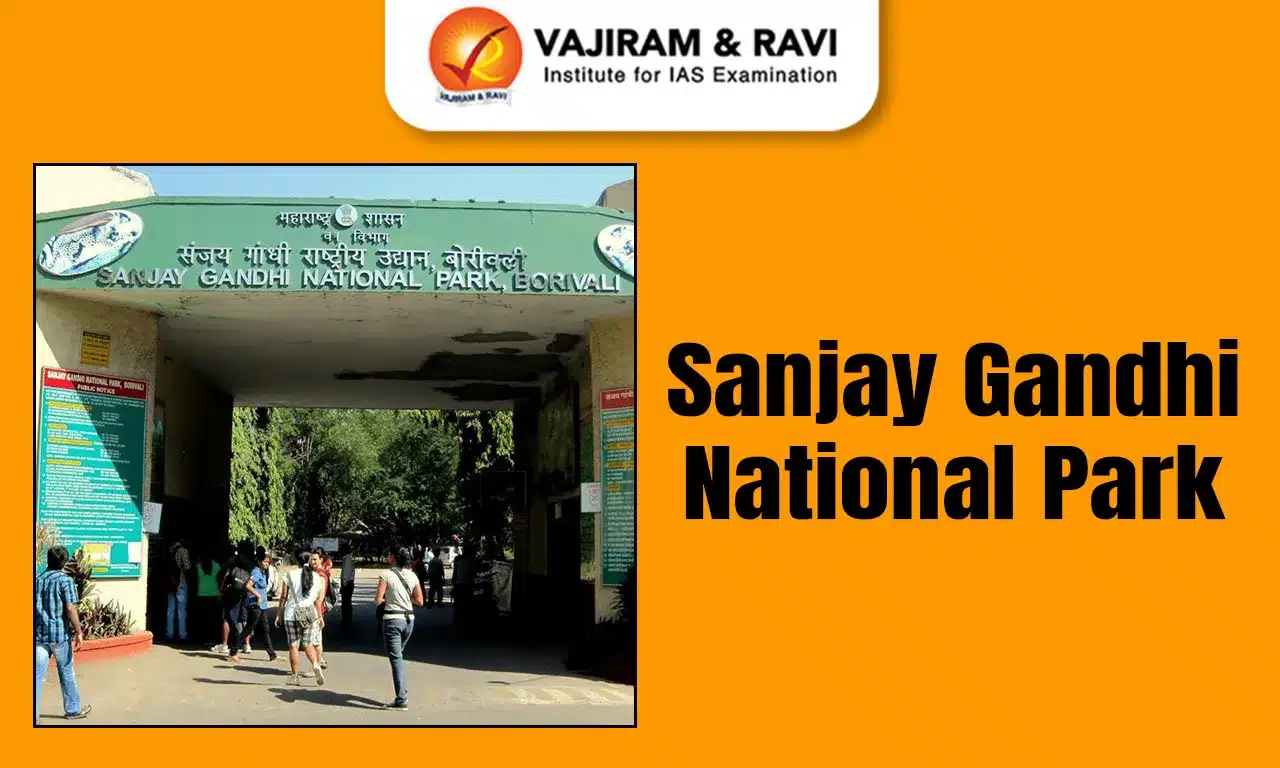
A recent census reveals at least 54 leopards in Sanjay Gandhi National Park, highlighting coexistence of wildlife amid urbanization and conservation efforts.

About Sanjay Gandhi National Park

  • It is a large protected area near Borivali in the northern part of Mumbai.
  • It is situated partly in Thane District and in Mumbai Suburban District of Maharashtra.
  • In the early days, the park was known as Krishnagiri National Park. However, in 1974 the name of this park was changed to 'Borivali National Park' and in 1981 to 'Sanjay Gandhi National Park' to pay tribute to late Indian leader Sanjay Gandhi.
  • It covers an expansive area of 103 sq.km., making it one of the largest parks in the world located within city limits. 
  • The Kanheri caves, which are located within the park, were carved out by Buddhist monks between the 1st century CE and 10th century CE.
    • The caves served as monasteries, temples, schools, and living quarters for the monks. 
    • They also contain some of the finest examples of Buddhist art and architecture in India.
    • They were chiseled out of a massive basaltic rock outcropping.
  • Besides, the park also has two artificial lakes, namely Tulsi Lake and Vihar Lake. The two lakes together supply a significant amount of water to South Mumbai.
  • FloraKadamba, Teak, Karanj, Shisham, and species of acacia, Ziziphus, euphorbias, etc are found in this National Park.
  • Fauna:
    • Leopard, sambar, chital, barking deer, rusty spotted cat, hyena, common palm civet, small Indian civet, Indian crested porcupine, Indian hare, Indian flying fox, common langur, and bonnet macaque.
    • The park also boasts 251 species of birds and a large variety of butterflies.

Sanjay Gandhi National Park FAQs

Q1. Where is Sanjay Gandhi National Park located?

Ans. It is situated partly in Thane District and in Mumbai Suburban District of Maharashtra.

Q2. Which ancient site is located within the boundaries of Sanjay Gandhi National Park?

Ans. Kanheri Caves

Q3. What is the total area covered by SGNP?

Ans. It covers an expansive area of 103 sq.km., making it one of the largest parks in the world located within city limits. 

Source: HT

Centre Urges States to Conduct Civil Defence Drills Amid Security Concerns

Centre Urges States to Conduct Civil Defence Drills Amid Security Concerns

What’s in Today’s Article?

  • Civil Defence Drills Latest News
  • Overview of Civil Defence
  • MHA Issues Civil Defence Directives
  • Civil Defence Drills FAQs

Civil Defence Drills Latest News

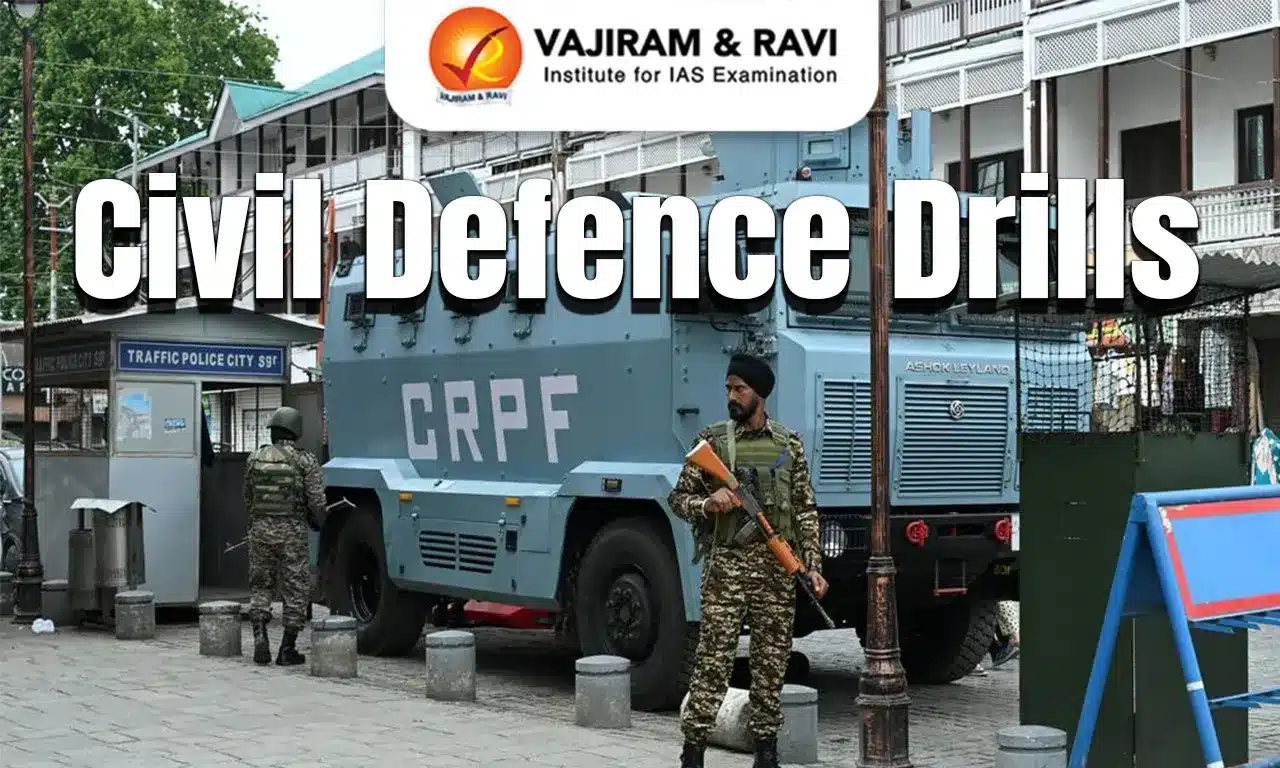
  • Amid rising tensions along the Line of Control following the Pahalgam terror attack and the possibility of an Indian military response, the Centre has instructed northern and western states and Union Territories to test and reinforce their civil defence systems. 
  • The Ministry of Home Affairs has directed states like Jammu & Kashmir, Punjab, Rajasthan, and Haryana to conduct mock drills on May 7 to prepare for any hostile attack. 

Overview of Civil Defence

  • Civil Defence measures are designed to address emergency situations, protect the public, and help restore critical services and infrastructure damaged by disasters or hostile attacks.

Historical Background

  • Initially, Civil Defence in India focused on awareness and planning under the Emergency Relief Organization (ERO).
  • The 1962 China War and 1965 Indo-Pak conflict prompted a policy shift.
  • This led to the enactment of the Civil Defence Act, 1968, enabling protective measures across India during hostile attacks.

Civil Defence Act, 1968 and Amendments

  • The Civil Defence Act, 1968 authorizes non-combat measures to protect people and property from hostile attacks via air, land, or sea.
  • It also enables the formation of the Civil Defence Corps and the creation of rules and regulations.
  • The 2009 Amendment expanded its scope to include disaster management as an additional function of Civil Defence, covering both natural and man-made disasters.

Geographical Scope and Categorization

  • Though applicable across India, Civil Defence is operational in tactically and strategically vulnerable areas.
  • Civil Defence activities are currently limited to 259 categorized towns across 36 States and Union Territories.
  • 100 Multi-Hazard Prone Districts have been specifically identified for enhanced preparedness.

Organizational Structure

  • Civil Defence is primarily volunteer-based, supported by a small number of paid staff during peacetime and expanded during crises.
  • The current volunteer target is 14.11 lakh, of which 5.38 lakh have already been raised.
  • The organisation is managed and trained by Deputy Controllers, Medical Officers, and Civil Defence Instructors.
  • Duty and training allowances are provided to volunteers.
  • The long-term goal is to have 1 crore Civil Defence volunteers across India within 7 years.

MHA Issues Civil Defence Directives

  • The Ministry of Home Affairs instructed states like Jammu & Kashmir, Punjab, Rajasthan, and Haryana to conduct mock drills on May 7
  • The drills will be conducted down to the village level in 244 vulnerable districts.

Key Measures Include

  • Operationalising air raid sirens
  • Implementing blackout protocols
  • Training civilians and students on safety measures
  • Evacuation rehearsals
  • Camouflaging critical infrastructure (e.g., power plants, military sites)

Mobilisation of Civil Defence volunteers

  • Over 4 lakh Civil Defence volunteers under the Directorate General, Civil Defence (DGC), MHA will be mobilised.
  • These steps aim to enhance preparedness against potential aerial or ground attacks.

Examples of Measures Already Taken

  • A 30-minute blackout drill was conducted in Ferozepur, Punjab on May 4, where residents switched off lights from 9:00–9:30 PM.
  • The Ferozepur Cantonment Board issued public advisories for participation.

Civil Defence Drills FAQs

Q1. What prompted the Centre to initiate civil defence drills?

Ans. Rising tensions after the Pahalgam attack and potential military retaliation prompted the Centre to initiate preparedness measures.

Q2. Which states are conducting the drills?

Ans. Jammu & Kashmir, Punjab, Rajasthan, and Haryana were instructed to conduct civil defence drills on May 7.

Q3. What is the Civil Defence Act, 1968?

Ans. It authorizes non-combat measures to protect civilians and property during hostile attacks and includes volunteer mobilisation.

Q4. What activities are included in the drills?

Ans. Air raid sirens, blackout drills, camouflaging infrastructure, evacuation training, and volunteer mobilisation are key activities.

Q5. What are India's long-term goals for civil defence?

Ans. The goal is to train 1 crore Civil Defence volunteers across India in the next 7 years.


Source: IE | TH | DGFSCDHG

Caste Census in India: Political Implications and Path to Social Equity

Caste Census in India: Political Implications and Path to Social Equity

What’s in Today’s Article?

  • Caste Census Latest News
  • Introduction
  • Historical Context of Caste Enumeration
  • Defining the OBC Category and Challenges in Representation
  • Broader Social Implications
  • Conclusion
  • Caste Census India FAQs

Caste Census Latest News

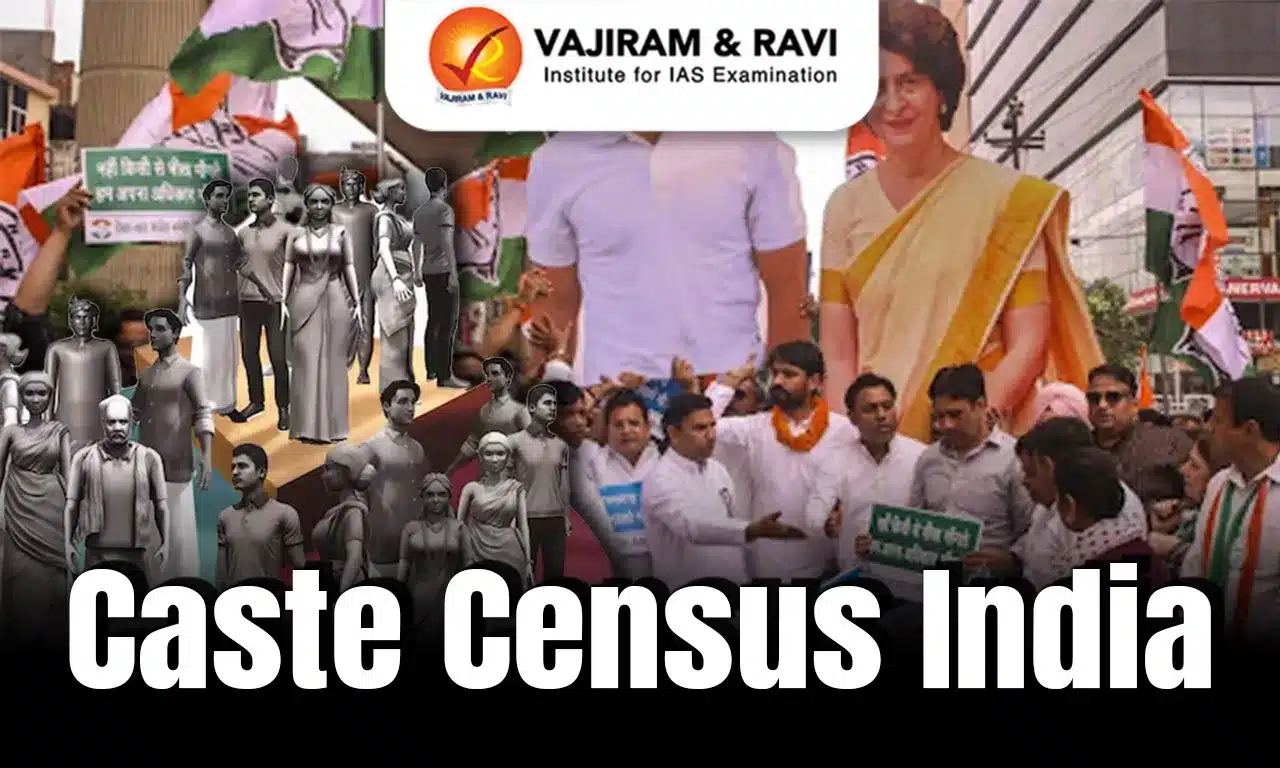
  • Recently, the Central Government announced that a caste enumeration will be included with the forthcoming census.

Introduction

  • The Central Government’s decision to include caste enumeration in the upcoming national Census marks a pivotal moment in the country’s socio-political evolution. 
  • The move is not just administrative, it is deeply political. 
  • As debates around representation, resource allocation, and social justice intensify, the caste census is being viewed as a corrective measure to decades of skewed data and policy imbalance. 
  • This new phase could reshape the contours of caste-based politics and governance in India.

Historical Context of Caste Enumeration

  • Caste enumeration in India began under British colonial rule with the first formal Census in 1872
  • The 1901 Census under H.H. Risley converted the exercise into a political instrument by introducing caste classification, which later influenced the formation of caste organizations and discourse across the subcontinent.
  • Post-independence, caste was excluded from enumeration, barring Scheduled Castes and Scheduled Tribes
  • The assumption was that caste consciousness would fade in a democratic, egalitarian framework. 
  • However, this exclusion overlooked the vast diversity and socio-economic inequities among Other Backward Classes (OBCs), especially the most deprived segments.

Defining the OBC Category and Challenges in Representation

  • The first attempt to identify OBCs was made through the Kaka Kalelkar Commission (1953), which listed around 2,300 communities. 
  • Yet, its recommendations were dismissed due to vague criteria and lack of political consensus. 
  • A more radical intervention came from Dr. Ram Manohar Lohia, who argued that "merit comes from opportunity," advocating for greater access for marginalized communities.
  • The breakthrough came with the Mandal Commission Report (1980), which estimated that OBCs comprised 52% of India’s population and recommended 27% reservations in public jobs and educational institutions. 
  • While the report's partial implementation in 1990 changed India’s political landscape, it also exposed the limitations of relying on outdated 1931 data. Since then, the demand for a fresh caste census has gained momentum.

Broader Social Implications

  • While OBCs have gained political representation over the decades, this has disproportionately benefited intermediary and dominant backward castes. 
  • Several smaller SC and OBC communities remain invisible in public policy and electoral equations due to lack of data, leadership, and targeted welfare.
  • A caste-based census could democratize representation by bringing such groups into focus. It could also shed light on land ownership, education, and access to government schemes, revealing the economic underpinnings of caste inequalities. 
  • The enumeration would not only serve OBCs but also denotified tribes, nomadic communities, and underrepresented minorities.

Conclusion

The inclusion of caste enumeration in the national Census signals a paradigm shift in India’s social contract. By generating granular data on caste and correlating it with economic indicators, the state can better target welfare schemes and bridge persistent gaps in representation. 

If implemented transparently and sensitively, the caste census can become a tool for inclusive development, rectifying decades of structural inequities and ensuring that no community is left behind in India’s democratic journey.

Caste Census India FAQs

Q1. When was the last caste-based Census conducted in India?

Ans. The last caste-based Census was conducted in 1931 during British rule.

Q2. What was the Mandal Commission’s estimate of the OBC population?

Ans. The Mandal Commission estimated that OBCs make up about 52% of India’s population.

Q3. Why is the caste census being demanded now?

Ans. A caste census is being demanded to update outdated data and ensure equitable policy and political representation.

Q4. Which political parties currently support caste enumeration?

Ans. Parties like Congress, Samajwadi Party, and JD(U), among others, are supporting caste enumeration as part of their electoral and social justice strategy.

Q5. How can a caste census help marginalized communities?

Ans. It can bring visibility to underrepresented groups, guide targeted welfare, and correct imbalances in political representation and resource allocation.


Source: TH

Jharkhand Completes OBC Data Collection for Urban Local Body Quotas under Supreme Court’s “Triple Test”

Jharkhand Completes OBC Data Collection for Urban Local Body Quotas under Supreme Court’s “Triple Test”

What’s in Today’s Article?

  • Triple Test to Determine Reservation for OBCs in Local Bodies Latest News
  • What is the “Triple Test”?
  • Progress in Jharkhand
  • Survey Methodology and Scope
  • OBC Population in Jharkhand
  • Conclusion
  • Triple Test to Determine Reservation for OBCs in Local Bodies FAQs

Triple Test to Determine Reservation for OBCs in Local Bodies Latest News

  • Jharkhand has completed the data collection process to determine reservation for Other Backward Classes (OBCs) in Urban Local Bodies (ULBs), complying with the Supreme Court-mandated “triple test” criteria. 
  • This marks a significant step in implementing constitutionally valid OBC reservations in urban governance.

What is the “Triple Test”?

  • About: The “triple test” is a legal framework laid down by the Supreme Court in Vikas Kishanrao Gawali vs State of Maharashtra (2021) to ensure that OBC reservations in local bodies are fair, evidence-based, and within constitutional limits.
  • It comprises three steps:
    • Constitution of a dedicated commission: A body tasked with conducting a rigorous empirical inquiry into the backwardness of OBCs in local bodies.
    • Recommendation-based reservation: Determining quantum of reservation based on the commission’s findings to avoid arbitrary or excessive quotas.
    • Reservation ceiling: Ensuring that total reservation for SCs, STs, and OBCs does not exceed 50% of the total seats in local bodies.

Progress in Jharkhand

  • Establishment of OBC Commission:
    • The Jharkhand OBC Commission was constituted in June 2023.
    • Commission members studied Madhya Pradesh’s implementation of the triple test as a model.
  • Data collection timeline: Data collection completed (between December 2023 - March 2024) and submitted (recently, several districts missed their submission deadlines) to the Commission.
  • Verification and analysis:
    • Data will be handed to empanelled institutions like IIM, Xavier School of Management (XLRI) and Xavier Institute of Social Service (XISS) for socio-economic and educational analysis.
    • A final report will be submitted to the state government post-verification. Based on which, Jharkhand will determine OBC quotas in the 48 ULBs across the state.
  • Administrative bottleneck: The Chairperson's post is vacant, and the report cannot be officially submitted without their approval.

Survey Methodology and Scope

  • A door-to-door survey identified OBC voters and their population share in urban areas only.
  • Focused on:
    • Political representation in urban local bodies in Jharkhand over the last 25 years.
    • Caste-wise data of elected representatives (MPs, MLAs, Mayors, Panchayat members).
    • Historical data of winners from general seats in the last two ULB elections.
  • Not a caste census: Unlike the all-India caste census, this is urban-specific and focused on ULB quota eligibility.

OBC Population in Jharkhand

  • OBCs constitute ~50% of the state’s population.
  • Subdivided into:
    • BC-I (Backward Class I): More socially and educationally backward; includes 127 castes.
    • BC-II (Backward Class II): Relatively better-off; includes around 45 castes.
  • Kudmi/Mahato community is the largest OBC group, accounting for 15% of the electorate.

Conclusion

  • Successful implementation of the Triple Test in Jharkhand could set a precedent for other states to follow in ensuring constitutionally valid and data-driven OBC reservations in local governance. 
  • This process not only strengthens grassroots democracy but also enhances the inclusivity and representational equity of India’s urban political landscape.

Triple Test to Determine Reservation for OBCs in Local Bodies FAQs

Q1. What is the "Triple Test" laid down by the Supreme Court regarding OBC reservation in local bodies?

Ans. The "Triple Test" requires the constitution of a dedicated commission for empirical inquiry, determination of reservation proportion based on its recommendations, and ensuring total SC/ST/OBC reservation does not exceed 50%.

Q2. How has Jharkhand progressed in implementing the Triple Test for OBC reservation in Urban Local Bodies (ULBs)?

Ans. Jharkhand has completed OBC data collection across all districts and is preparing a final report through empanelled research institutes.

Q3. How does the recent OBC survey in Jharkhand differ from the nationwide caste census?

Ans. The Jharkhand survey focused only on OBC population and political representation in urban areas, unlike the nationwide caste census which aims to cover all castes across the entire country.

Q4. What is the composition and classification of OBCs in Jharkhand?

Ans. Jharkhand classifies OBCs into BC-I (more backward, 127 castes) and BC-II (relatively better-off, 45 castes), with OBCs forming about 50% of the state population.

Q5. Why is the final report on OBC data in Jharkhand yet to be submitted?

Ans. The final report cannot be submitted because the chairperson's post of the Jharkhand OBC Commission is currently vacant.

Source: IE

Enquire Now