Vajiram & Ravi provides Daily articles for 7 May 2025, tailored for aspirants. We cover all relevant news and events crucial for the exam, ensuring you stay updated & well-prepared.
India ranked 130th on the Human Development Index, out of 193 countries and territories, according to the 2025 Human Development Report (HDR) released recently.
About Human Development Report
It is an annual publication by the United Nations Development Programme (UNDP) that evaluates and compares countries based on human development rather than just economic growth.
It analyses development progress across a range of indicators known as the Human Development Index (HDI), which encompasses achievements in health and education,along with levels of income.
Highlights of HDR 2025:
The 2025 HDR, titled “A Matter of Choice: People and Possibilities in the Age of AI”, highlights the critical role of artificial intelligence in shaping the next chapter of human development.
The study revealed stalled progress on the HDI in all regions across the world and warned that increasing trade tensions, a worsening debt crisis, and the rise of jobless industrialisation risked making the situation worse.
Iceland, with an HDI value of 0.972, ranked at the top of the Index, followed by Norway and Switzerland.South Sudan was at the bottom at 193 with 0.388.
India is ranked 130th on the Human Development Index (HDI), out of 193 countries and territories.
India improved its HDI value from 0.676 in 2022 to 0.685 in 2023, with the country remaining in the medium human development category, although moving closer to the threshold for high human development (HDI ≥ 0.700).
It also noted that India’s HDI value has increased by over 53 percent since 1990, growing faster than both the global and South Asian averages.
Among India’s neighbours, China (75th), Sri Lanka (78th), and Bhutan (127th) are ranked above India, while Bangladesh (130th) is ranked at par. Nepal (145th), Myanmar (149th), and Pakistan (168th) are ranked below India.
India’s life expectancy also rose to 72 years in 2023 from 67.7 in 2022, while expected schooling years increased to 13 from 12.6, with average schooling years increasing to 6.9 from 6.57. Meanwhile, the per capita Gross National Income (GNI) jumped from $6,951 to $9,047 (PPP 2021).
India was the only low- or middle-income country among the top 10 in the Global AI Index, with the highest level of self-reported AI skills penetration.
The country also showed improved retention of domestic AI talent: 20 percent of Indian AI researchers reportedly remained in India in 2023, compared to almost none in 2019.
Human Development Report 2025 FAQs
Q1. Who publishes the annual Human Development Report?
Ans. United Nations Development Programme
Q2. Which country ranked first in the Human Development Index (HDI) in the 2025 HDR?
Ans. Iceland
Q3. What was India’s rank on the Human Development Index in 2025?
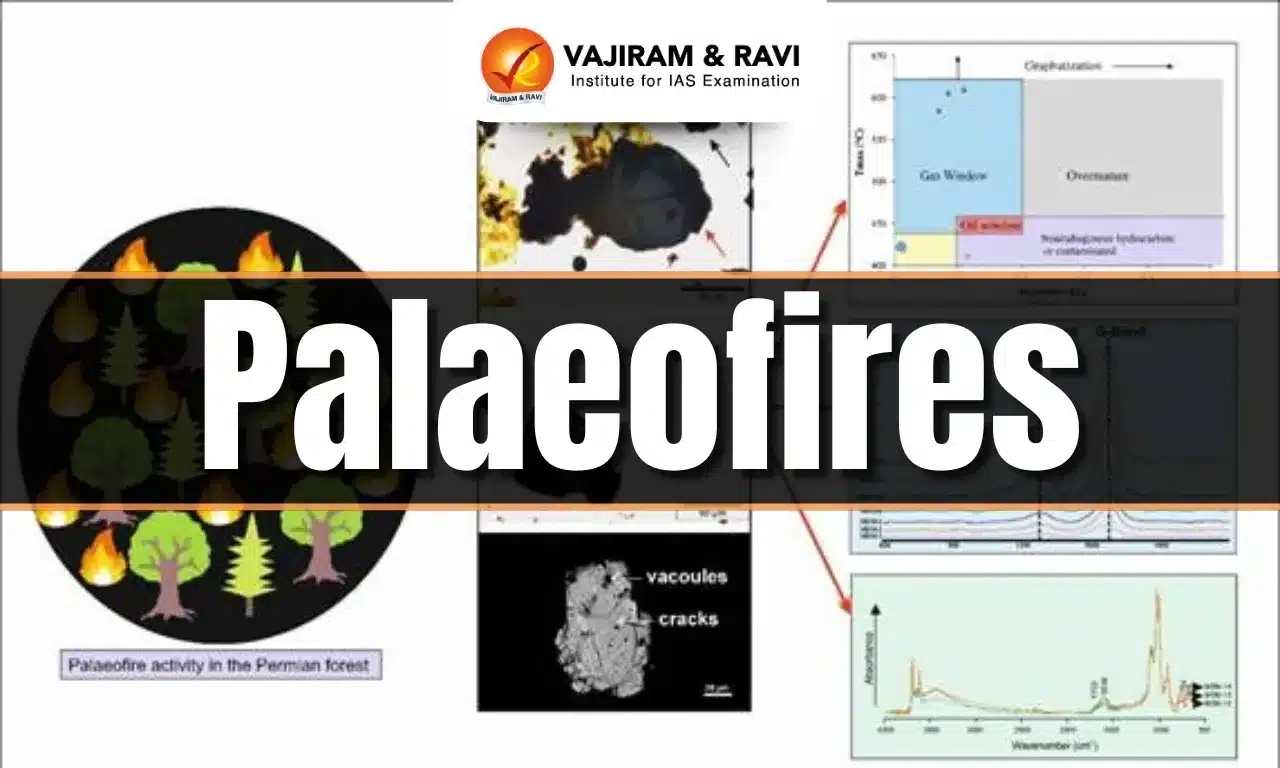
Recently, Scientists have traced evidence of palaeofires (ancient wildfires) from the Permian Period (~250 million years ago) in the Godavari Basin.
About Palaeofires and Key Findings
Palaeofires refer to wildfire events preserved in geological records, which play a crucial role in understanding Earth’s past vegetation, climate evolution, and coal formation.
The study spanned geological periods from the Late Silurian (443.8–419.2 million years ago) to the Quaternary (from 2.58 million years ago to present), highlighting how wildfires have historically shaped landscapes, vegetation patterns, and coal formation.
The research combined advanced techniques like Palynofacies analysis, Raman Spectroscopy, Rock-Eval Pyrolysis, and FTIR Spectroscopy to examine microscopic organic matter and fossil charcoal in ancient sedimentary rocks.
Palynofacies analysis revealed three main types of organic particles:
Translucent Organic Matter (TrOM) – includes pollen and plant debris.
Palaeofire Charcoal (PAL-CH) – direct evidence of vegetation burning.
Oxidised Charcoal (OX-CH) – possibly reworked or transported post-burning.
Key discovery: The team successfully distinguished between in situ (on-site) and ex situ (transported) charcoal, helping resolve a long-standing debate in geology regarding the origin of charcoal found in coal-bearing formations.
During regressive phases (sea-level drop), well-preserved, concentrated fire residues were found.
During transgressive phases (sea-level rise), charcoal was more oxidised and dispersed, indicating environmental mixing and transport.
High atmospheric oxygen levels in the Permian Period likely made the Earth more fire-prone, intensifying wildfire frequency and scale.
The Raniganj Coalfield was one of the earliest Indian sites where macroscopic charcoal in coal seams suggested the presence of palaeofires in ancient peat-forming environments (palaeomires).
These findings help understand how wildfires influence carbon cycling and long-term carbon sequestration—important for modern climate change mitigation strategies.
Palaeofires FAQs
Q1. What are palaeofires? Ans. Palaeofires are ancient wildfires that occurred naturally in Earth's geological past, identified through charcoal deposits, sediment records, and tree rings.
Q2. How are palaeofires studied? Ans. Through palaeoecological and geological evidence, especially charcoal analysis in lake beds, peat, and ice cores.
Cashless Treatment of Road Accident Victims Scheme, 2025 Latest News
The Government of India recently launched a groundbreaking cashless treatment scheme for road accident victims across the country, ensuring swift and hassle-free medical care for those affected.
About Cashless Treatment of Road Accident Victims Scheme, 2025
Under the scheme, any individual injured in a road accident involving a motor vehicle on any public road in India will be eligible for cashless medical treatment at designated hospitals.
The maximum benefit under the scheme is capped at Rs 1.5 lakh and is valid for up to seven days from the date of the accident.
Treatment at hospitals that are not designated under the scheme will be limited to stabilisation measures, as further detailed in the scheme's guidelines.
To ensure seamless execution, the National Health Authority (NHA) will serve as the coordinating agency.
It will work in collaboration with the police, hospitals, and respective State Health Agencies to operationalise the scheme effectively.
The State Road Safety Council in each state and Union Territory will act as the nodal agency responsible for the scheme's implementation within their jurisdiction.
This includes coordinating with the National Health Authority for the onboarding of designated hospitals, the treatment of victims, payment processes to hospitals, and other related matters through a dedicated portal.
A 17-member steering committee headed by the road transport secretary will monitor the implementation of the scheme.
Cashless Treatment of Road Accident Victims Scheme, 2025 FAQs
Q1. Under the Cashless Treatment of Road Accident Victims Scheme, who is eligible for cashless medical treatment?
Ans. Any individual injured in a road accident involving a motor vehicle on public roads.
Q2. What is the maximum benefit provided under the Cashless Treatment of Road Accident Victims Scheme?
Ans. Rs 1.5 lakh
Q3. How long is the cashless treatment valid after a road accident under the scheme?
Researchers from the Monterey Bay Aquarium Research Institute (MBARI) and Florida State University have developed a new method to estimate oceanic carbon export using satellite data.
About Lagrangian Growth-Advection Model
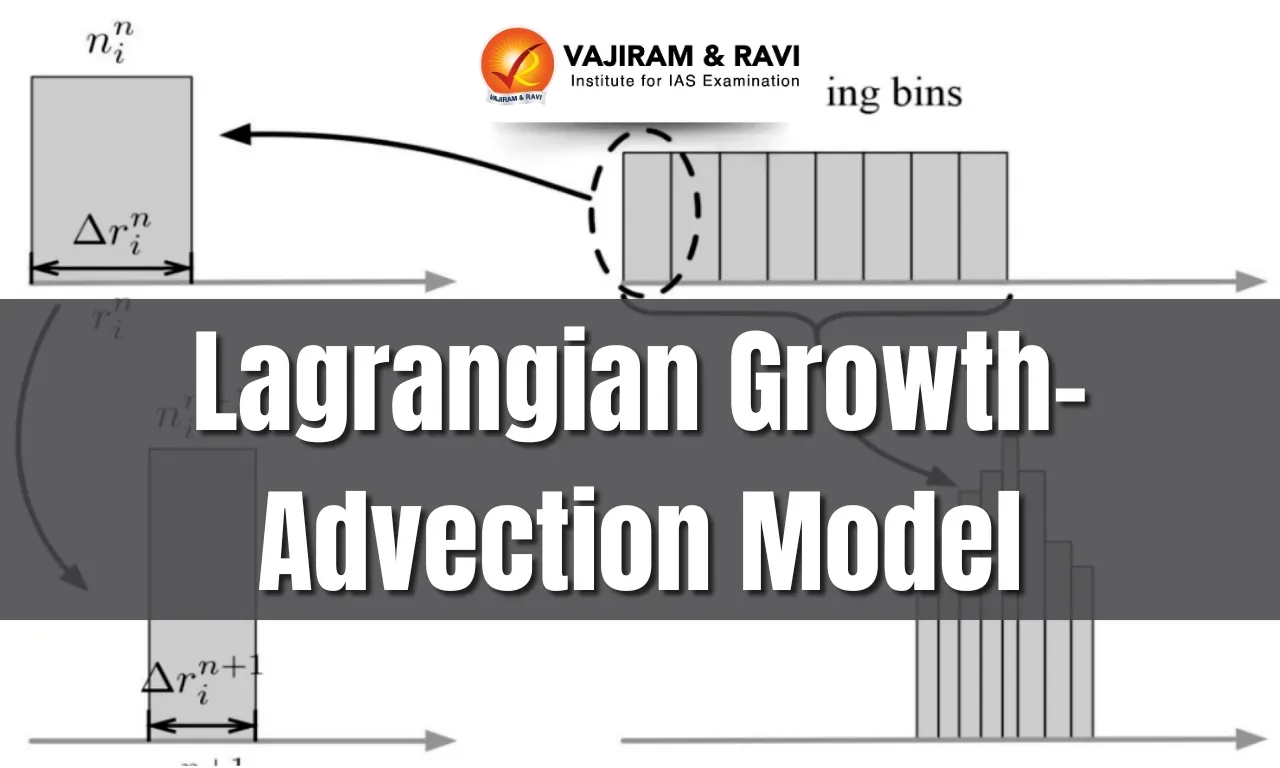
A Lagrangian Growth-Advection Model combines Lagrangian methods, which track individual fluid particles, with the concept of advection (the movement of a fluid) and growth (changes in a particle's properties).
It maps phytoplankton succession and carbon export by following surface ocean currents, particularly in upwelling regions like the California Current.
Key Innovations:
Incorporates spatial and temporal lags between carbon production and export.
Accounts for zooplankton activity, ocean advection (movement of plankton), and biological succession.
Does not rely solely on ocean color, providing a complementary alternative.
Performance and Validation: The new model's predictions matched results from deep-sea carbon monitoring, such as those at Station M (a long-term MBARI seafloor observatory).
Pulses of carbon flux observed previously, unexplained by earlier models, are better captured by this approach.
The ocean absorbs a significant portion of atmospheric CO₂, playing a key role in regulating Earth's climate.
Marine organisms convert dissolved CO₂ into organic carbon, which eventually sinks to the deep ocean, a process known as carbon sequestration via the biological pump.
Existing satellite-based models depend primarily on ocean colour data, which measures phytoplankton productivity via surface chlorophyll concentrations. However, these models fail to account for subsurface and temporal lags in carbon transfer.
Lagrangian Growth-Advection Model FAQs
Q1. What is the Lagrangian Growth-Advection Model used for? Ans. It is used in oceanography and climate modelling to simulate the movement and growth of biological or chemical tracers in ocean currents.
Q2. What does "Lagrangian" refer to in this model? Ans. "Lagrangian" refers to tracking the movement of individual particles or water parcels as they flow with ocean currents.
Global Space Exploration Summit (GLEX) 2025 Latest News
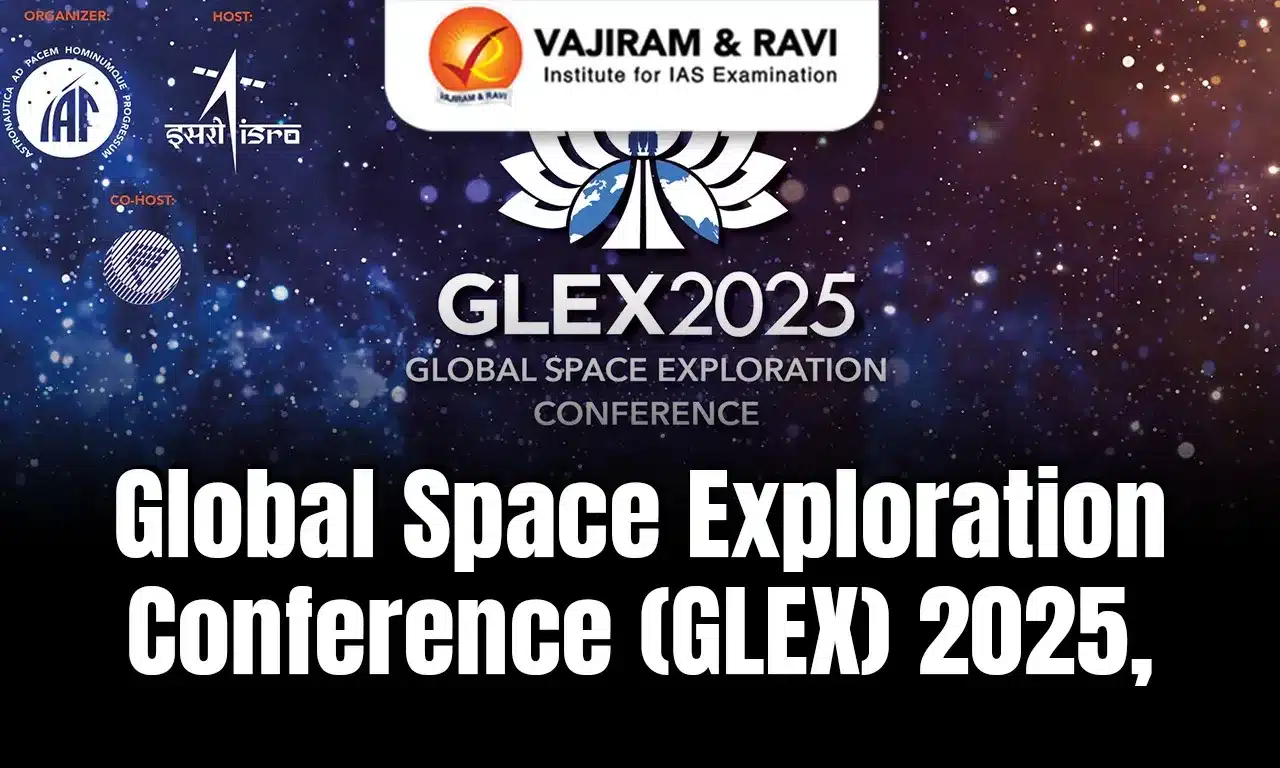
India will host the 12th edition of the Global Space Exploration Conference (GLEX 2025) from 7th to 9th May 2025 in New Delhi.
About Global Space Exploration Summit (GLEX) 2025
GLEX 2025's theme is “Reaching New Worlds: A Space Exploration Renaissance,” emphasising innovation, inclusivity, and international cooperation in space science.
GLEX 2025 is jointly organised by:
International Astronautical Federation (IAF) – the world’s leading space advocacy body.
Indian Space Research Organisation (ISRO) – as the primary host.
Astronautical Society of India (ASI) – as the co-host.
The conference represents a milestone in India’s expanding global space leadership, highlighting its transition from a regional space power to a key international player.
About the IAF (International Astronautical Federation)
Founded in 1951, the IAF has over 500 members from 78 countries, including major space agencies, private firms, research institutes, and universities.
Its motto “Connecting @ll Space People” and vision “A space-faring world cooperating for the benefit of humanity” guide its efforts to promote global space cooperation.
The GLEX series, organised by IAF, serves as a platform to share programmatic, technical, and policy insights and facilitate collaborative space missions across nations.
Global Space Exploration Summit (GLEX) 2025 FAQs
Q1. What is the Global Space Exploration Conference (GLEX) 2025? Ans. GLEX 2025 is an international space conference organised by the International Astronautical Federation (IAF) in collaboration with a host country to discuss the future of space exploration and cooperation.
Q2. Where is GLEX 2025 scheduled to be held? Ans. GLEX 2025 is scheduled to be held in Delhi.
Interplay Between Judicial Independence, Popular Sovereignty, and Judicial Activism
Conclusion
The Doctrine of Separation of Power FAQs
The Doctrine of Separation of Power Latest News
Recent comments by Vice-President Jagdeep Dhankhar have stirred a constitutional and political debate regarding the role and powers of the judiciary vis-à-vis the executive.
Concerns arise from his remarks calling judges a "super parliament", questioning their power to direct the President, and asserting judges are not accountable under the law.
Key Constitutional Principles
Separation of powers:
The doctrine of separation of powers is a cornerstone of the Indian Constitution.
It ensures that the three organs - Legislature, Executive, and Judiciary - function independently.
Any overreach by one organ into another's domain undermines constitutional governance.
Even the independence of the judiciary is fully secured because of the principle of separation of powers [L. Chandra Kumar versus Union of India (1997)].
If at any time judges try to exercise their powers arbitrarily, it shall be a gross violation of Article 50 of DPSP, and the government may initiate a process for a removal of the judge concerned.
Supremacy of the Constitution:
The rule of law and the supremacy of the Constitution are foundational doctrines.
Even the President, Governors, and judiciary are bound by constitutional provisions.
No authority is beyond scrutiny if it violates constitutional boundaries.
Dissecting the Vice-President’s Remarks
The 'super parliament' comment:
The term "super parliament" is misleading and constitutionally unsound.
Parliament, as a body elected by the people, holds legislative power - but this does not mean that the judiciary’s constitutional review powers encroach upon Parliament's supremacy.
The judiciary acts as a guardian of the Constitution, ensuring no law violates constitutional limits.
Judiciary's role regarding Presidential assent:
The President of India, under Article 52, is the constitutional head and must act on the aid and advice of the Council of Ministers (Articles 74, 78).
S/he is elected according to the provisions contained in Articles 54 and 55 establishing India as a Republic.
If there is undue delay in granting assent to a bill, the judiciary can intervene to protect popular sovereignty.
Judicial Accountability Mechanisms
Constitutional limits on judicial power:
All judicial powers stem from the Constitution and must be exercised within its limits.
Judges can be removed only on grounds of "proved misbehaviour", which includes violation of the Constitution.
Parliament's role:
Parliament holds the power to enact laws that can alter or overrule judicial decisions, provided it follows constitutional procedure.
This reflects the democratic principle of checks and balances.
Interplay Between Judicial Independence, Popular Sovereignty, and Judicial Activism
Judicial independence:
Vital for upholding the basic structure doctrine.
Shielded from arbitrary executive or legislative interference.
Popular sovereignty: The judiciary’s actions, such as setting deadlines for the President or Governor to assent bills, aim to uphold public interest and constitutional compliance.
Article 142 and judicial activism:
Empowers the Supreme Court to pass orders for complete justice.
Such provisions underscore the Court's role in filling legislative or executive voids when constitutional mechanisms are silent.
Conclusion
The constitutional authorities, particularly those in high office, must speak responsibly.
The statement given by the VP that the law of the land does not apply to judges is not at all rational because he himself, as the second highest constitutional authority, questions the rule of law in India.
Therefore, it is necessary to uphold the judiciary's constitutional role and emphasize that the rule of law, accountability, and constitutional supremacy are the guiding lights of Indian democracy.
The Doctrine of Separation of Power FAQs
Q1. What is the constitutional implication of calling the judiciary a ‘super parliament’?
Ans. Calling the judiciary a ‘super parliament’ is constitutionally misleading, as the judiciary functions within the doctrine of separation of powers and cannot override the will of the people represented through Parliament.
Q2. How does the Constitution ensure judicial accountability in India?
Ans. Judicial accountability is ensured through constitutional provisions allowing removal of judges on grounds of proved misbehaviour, including violation of the Constitution.
Q3. Can the judiciary set deadlines for the President or Governors regarding assent to bills? Justify.
Ans. Yes, the judiciary can set deadlines as undue delay in granting assent undermines popular sovereignty, and such directions ensure adherence to constitutional mandates.
Q4. Why is the statement that “law of the land does not apply to judges” constitutionally incorrect?
Ans. It is incorrect because all judicial powers are derived from the Constitution, and judges are bound by its provisions under the doctrine of constitutional supremacy.
Q5. How does Article 142 empower the Supreme Court in maintaining constitutional governance?
Ans. Article 142 empowers the Supreme Court to pass any order necessary to do complete justice, especially when constitutional provisions or laws are silent on a matter.
Structural Framework and the Merit vs. Spoils System
Major Challenges Facing Indian Civil Services
Reforms for a Future-Ready Civil Service
Conclusion
Civil Services Reform FAQs
Civil Services in India Latest News
On the occasion of Civil Services Day (April 21), Cabinet Secretary T. V. Somanathan IAS, spoke about the importance of civil services in maintaining and strengthening democracy.
Introduction
On Civil Services Day 2025, Cabinet Secretary T. V. Somanathan highlighted the indispensable role of civil services in upholding Indian democracy.
While praising their contributions to governance, elections, and development administration, he also acknowledged the deep-rooted challenges that impede their efficiency and credibility.
In the context of evolving governance needs, civil services in India stand at a critical juncture where reform is not just desirable, but imperative.
Evolution and Role of Civil Services in India
Civil services in India date back to 1858, when the British established the Indian Civil Service based on a merit system to manage administrative functions.
Post-independence, this role was taken over by the Union Public Service Commission (UPSC), which has since remained the cornerstone of merit-based recruitment.
Civil servants have consistently been central to:
Conducting free and fair elections.
Ensuring continuity of governance during President’s Rule in states.
Advising political executives in policy formulation.
Implementing welfare schemes and disaster relief efforts.
Managing day-to-day administrative functions such as public service delivery and regulation enforcement.
They serve as the institutional memory of governance and act as the fulcrum of state functionality.
Structural Framework and the Merit vs. Spoils System
India follows a merit-based system, which entails rigorous selection through competitive examinations conducted by independent agencies like UPSC.
In contrast, the spoils system, historically practiced in the U.S., involved appointments based on political allegiance and was largely dismantled by 1883.
Despite India’s formal reliance on merit, creeping political interference threatens to convert the Indian system into a partial spoils framework, especially in appointments, transfers, and tenures.
Major Challenges Facing Indian Civil Services
Erosion of Neutrality:
A foundational trait of civil services, neutrality is fast declining. Bureaucrats are increasingly seen aligning with political interests, which compromises the integrity and impartiality expected of them.
Political Interference:
Frequent and arbitrary transfers, especially of upright officers, discourage independent functioning. Administrative decisions are often influenced by political calculations rather than public interest.
Generalist Bias and Lack of Domain Expertise:
The generalist model of the Indian bureaucracy, where officers rotate across sectors, limits their capacity to address increasingly technical and specialized challenges. This results in sub-optimal policy design and implementation.
Endemic Corruption:
Corruption exists at multiple levels of the bureaucracy. Despite the existence of vigilance mechanisms, many cases go unpunished, eroding public trust in civil servants.
Reforms for a Future-Ready Civil Service
Insulation from Political Pressure:
To ensure the rule of law and constitutional governance, civil servants must be granted a reasonable degree of autonomy in postings, tenures, and transfers.
Shift from Procedures to Outcomes:
Currently, bureaucratic performance is judged by inputs (expenditure) or outputs (activities). There is a need to transition to outcome-based monitoring to align public service with actual societal impact.
Lateral Entry of Domain Experts:
Introducing professionals from outside the service at senior levels can bring fresh perspectives and technical proficiency. This complements the institutional knowledge of career bureaucrats and enhances governance quality.
Strengthening Accountability and Transparency:
Internal performance audits, independent vigilance mechanisms, and a digital record of administrative decisions can strengthen accountability within the system.
Conclusion
Civil services have been the backbone of India’s democratic and administrative machinery.
However, the changing landscape of governance, growing public expectations, and the complexity of socio-economic challenges demand structural reforms.
A balance must be struck between political accountability and bureaucratic independence.
By shifting towards an outcome-oriented, expertise-driven, and politically insulated civil service, India can strengthen its governance foundations for the future.
Civil Services Reform FAQs
Q1. What is the biggest challenge faced by Indian civil services today?
Ans. Political interference in postings and decisions is a major challenge eroding bureaucratic neutrality.
Q2. Why is lateral entry into civil services being recommended?
Ans. Lateral entry allows subject-matter experts to bring technical skills and new perspectives to policy-making.
Q3. How does the merit system differ from the spoils system?
Ans. The merit system relies on competitive selection and neutrality, while the spoils system favors political loyalty in appointments.
Q4. What reform is needed in bureaucratic performance monitoring?
Ans. A shift from output-based monitoring to outcome-based evaluation is needed for effective governance.
Q5. What role do civil services play during President’s Rule in states?
Ans. Civil servants ensure uninterrupted administration and continuity of governance during such times.
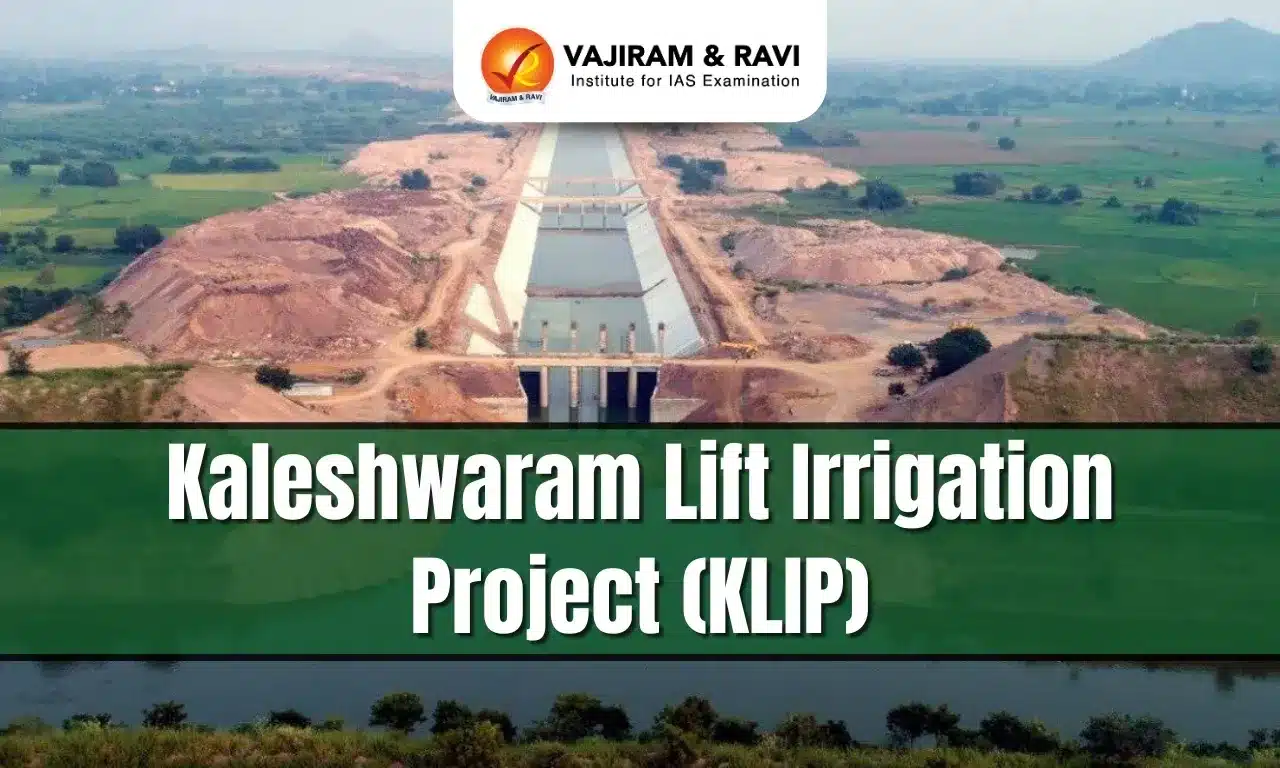
India’s national safety regulator for large dams, the National Dam Safety Authority (NDSA), has found “irreparable damage” in the structure of three barrages that are part of the Kaleshwaram Lift Irrigation Project (KLIP).
About Kaleshwaram Lift Irrigation Project
It is a multi-purpose irrigation project on the Godavari River in Kaleshwaram, Bhupalpally, Telangana.
It is designed to provide water for irrigation and drinking purposes to about 45 lakh acres in 20 of the 31 districts in Telangana, apart from Hyderabad and Secunderabad.
Currently the world’s largest multi-stage lift irrigation project, its farthest upstream influence is at the confluence of the Pranhita and Godavari rivers.
The Pranahita River is itself a confluence of various smaller tributaries, including the Wardha, Painganga, and Wainganga rivers, which combine to form the seventh-largest drainage basin on the subcontinent.
It comprises seven links and 28 packages, stretching over a distance of approximately 500 km (310 mi) across 13 districts.
The extensive canal network associated with the project spans over 1,800 km (1,100 mi).
The project aims to produce a total of 240 TMC (Thousand Million Cubic Feet) of water, which is allocated for various purposes such as irrigation, municipal water supply to Hyderabad, industrial use, and drinking water in nearby villages.
Kaleshwaram Lift Irrigation Project FAQs
Q1. The Kaleshwaram Lift Irrigation Project is located on which river?
Ans. Godavari River
Q2. Which Indian state is home to the Kaleshwaram Lift Irrigation Project?
Ans. Telangana
Q3. The Pranahita River, involved in the Kaleshwaram project, is formed by the confluence of which rivers?
India Satellite Communication Guidelines Latest News
Key Compliance Requirements for Satcom Companies in India
Current Regulatory Landscape
India Satellite Communication Guidelines FAQs
India Satellite Communication Guidelines Latest News
India’s Department of Telecommunications (DoT) has issued stricter security guidelines for satellite communication (satcom) services.
It added new conditions related to data localization, website blocking, metadata collection, and the integration of the indigenous NavIC (Navigation with Indian Constellation) positioning system.
Key Compliance Requirements for Satcom Companies in India
The Department of Telecommunications (DoT) has issued a set of security and operational guidelines for satellite communication firms such as Starlink (Elon Musk), Amazon’s Kuiper, Eutelsat OneWeb, and Jio.
Key Compliance Requirements
Local Manufacturing
Companies must submit a year-wise phased manufacturing plan, aiming to indigenise at least 20% of the ground segment within five years of starting commercial operations.
Data Localisation
All satellite communication-related data must be stored within India.
Domestic Navigation System Integration
Mandatory integration of NavIC, India’s regional navigation system, in user terminals on a best-effort basis, with full transition required by 2029.
Website Blocking Mechanism
Firms must enable systems to block government-identified websites.
Cooperation with Law Enforcement
Companies are required to collect and share metadata with security agencies when requested.
Enhanced Data Localisation Requirements
No Routing Through Foreign Gateways
Satcom operators must ensure that user traffic originating from or destined for India is not routed through any foreign gateway, Point of Presence (PoP), or space system not part of the designated satellite constellation.
No Data Mirroring Abroad
Operators are prohibited from mirroring Indian user traffic to any server/system located outside India.
Decryption Ban Outside India
Companies must undertake not to copy or decrypt Indian telecom data outside the country.
India-Based Infrastructure Mandate
Data centres, DNS resolution systems, and lawful interception mechanisms must be located within India.
Network control, user terminal monitoring, and equipment control must also operate from within Indian territory.
National Security and Law Enforcement Cooperation
Service Restrictions During Emergencies
Companies must be capable of restricting services to individuals, subscriber groups, or regions during periods of hostilities or national emergencies.
Clearances for Voice and Data Services
Separate security clearances are required before launching voice or data communication services.
Special Monitoring Zones (SMZs)
Designated zones include areas within 50 km of international borders and coastal regions up to the Exclusive Economic Zone (200 nautical miles).
These zones will be monitored by law enforcement and security agencies.
Real-Time User Terminal Tracking
Operators must provide real-time location data (latitude-longitude) of all user terminals, both fixed and mobile, upon request.
They must also report foreign or unregistered terminals connecting from within Indian territory.
Strategic Intent
These guidelines reflect India’s push for:
Digital sovereignty
National security
Promotion of indigenous technologies like NavIC
Boosting local manufacturing in telecom infrastructure
Current Regulatory Landscape
Starlink is currently undergoing security clearance to begin operations in India.
It has already formed retail partnerships with Airtel and Jio.
The Telecom Regulatory Authority of India (TRAI) is finalising the satellite spectrum allocation framework, which will impact how these companies operate.
India Satellite Communication Guidelines FAQs
Q1. What is NavIC and why must satcom firms use it?
Ans. NavIC is India’s regional navigation system; satcom firms must integrate it for better national security and self-reliance.
Q2. What are India’s new data localisation rules for satellite firms?
Ans. Firms must store all user data in India and avoid routing or mirroring traffic through foreign servers or systems.
Q3. Which companies are affected by these new DoT guidelines?
Ans. Starlink, Amazon Kuiper, Eutelsat OneWeb, and Jio must follow India’s new rules to operate satellite communication services.
Q4. What infrastructure must satcom companies locate within India?
Ans. Data centers, DNS resolution, lawful interception, and user monitoring systems must be physically based within Indian territory.
Q5. How must firms cooperate with Indian law enforcement?
Ans. They must provide real-time user tracking, metadata, and block access in sensitive zones when requested by authorities.
Background: From "Diwali Deadline" to Final Agreement
Key Highlights of the UK-India Trade Deal
Reasons Behind the Push for the Deal
Key Issues During Negotiations
Beyond Trade: A Platform for Wider Collaboration
UK-India Free Trade Agreement 2025 FAQs
UK-India Free Trade Agreement 2025 Latest News
India and the UK signed a Free Trade Agreement (FTA) after nearly three years of negotiations. The agreement reduces tariffs on 90% of goods.
The deal aims to boost trade, investment, job creation, and innovation. It comes at a time of global trade uncertainty and marks a major economic collaboration between the world’s fifth and sixth largest economies.
Background: From "Diwali Deadline" to Final Agreement
The FTA was first targeted for completion by Diwali 2022 during British PM Boris Johnson's India visit, where he called Modi his “khaas dost.”
Despite missing the initial deadline, the agreement was finally achieved in 2025, marking a major milestone.
UK First Among Western Trade Partners
The UK beat the US and EU in sealing an FTA with India — a strategic win for both nations.
This puts India in a stronger position for ongoing trade talks with Washington and Brussels, as the UK deal becomes a benchmark for future agreements.
Key Highlights of the UK-India Trade Deal
Trade Expansion:
The deal is projected to increase annual bilateral trade by £25.5 billion from 2040 onward.
In 2024, UK-India trade stood at £42.6 billion, with UK exports at £17.1 billion and imports from India at £25.5 billion.
India ranked as the UK’s 11th-largest trading partner in 2024.
Tariff Reductions and Market Access
India’s Gains:
99% of Indian exports to the UK will enjoy zero-duty access.
Boost for labour-intensive sectors: textiles, marine products, leather, footwear, sports goods, toys, gems & jewellery, engineering goods, auto parts, and organic chemicals.
UK’s Gains:
India to slash duties on 90% of tariff lines, with 85% becoming fully tariff-free within 10 years.
Lower Indian tariffs on whisky, medical devices, advanced machinery, and lamb to make UK exports more competitive.
Major Sectors Benefitting:
Alcohol: Tariffs on whisky and gin will drop from 150% to 75% initially, reaching 40% by the tenth year—boosting the UK’s Scotch whisky exports.
Automobiles: India will cut auto import tariffs to 10% under a quota system (down from over 100%).
Other Goods: Reduced tariffs for British exports such as cosmetics, aerospace components, lamb, medical devices, salmon, electrical machinery, soft drinks, chocolate, and biscuits.
Services and Workforce Mobility:
The deal includes increased quotas for Indian workers to take up employment in specific sectors in the UK, enhancing labour mobility and service trade cooperation.
Indian workers in the UK will receive a three-year exemption from social security payments, reducing financial burden and improving mobility opportunities.
Reasons Behind the Push for the Deal
Supply Chain Disruptions & China Diversification:
The COVID-19 pandemic exposed the vulnerabilities of global supply chains overly reliant on China.
Western countries, including the UK, sought to implement a ‘China-plus one’ strategy—diversifying supply chains by partnering with countries like India.
Post-Brexit Market Realignment
After Brexit, the UK lost access to the EU’s Single Market.
India, with its large and growing consumer base, emerged as a critical alternative to offset this economic gap.
Economic Pressures in the UK
The UK has been grappling with a cost-of-living crisis.
The FTA is viewed as a timely economic boost and a political win for PM Keir Starmer, who assumed office in July 2024.
India’s Shift from RCEP
In 2019, India opted out of the China-led Regional Comprehensive Economic Partnership (RCEP), increasing the urgency to find alternative trade alliances like the UK.
Key Issues During Negotiations
Limited Trade Gains for India
According to the Global Trade Research Initiative (GTRI), many Indian exports already benefit from low or zero tariffs in the UK, so the FTA’s impact on trade volume may be limited.
Services and Work Visas
India prioritized better access for its service professionals, particularly in IT and healthcare.
However, immigration remains a sensitive issue for the UK post-Brexit.
Eventually, only about 100 new work visas per year for Indian professionals were agreed upon.
Carbon Tax Dispute
The UK’s proposal to impose a carbon tax on metal imports (based on emissions) raised concerns for Indian exporters, particularly in steel and aluminum.
Negotiations were needed to address the potential impact on India’s competitiveness.
Beyond Trade: A Platform for Wider Collaboration
The FTA is seen as a foundation for deeper cooperation in sectors such as: Defence and security; Critical technologies; Education; Tourism and Indian diaspora engagement.
An Indian official aptly remarked: “The FTA is the floor, not the ceiling.”
UK-India Free Trade Agreement 2025 FAQs
Q1. When was the UK-India FTA signed and why is it significant?
Ans. Signed in 2025, it boosts trade, jobs, and investment, marking India’s first major Western FTA post-Brexit.
Q2. What are the key benefits for India under the FTA?
Ans. India gains zero-duty access for 99% exports, helping textiles, gems, auto parts, toys, chemicals, and more.
Q3. How will the FTA affect UK exports to India?
Ans. India reduces tariffs on whisky, medical devices, cars, machinery, and lamb—improving UK’s competitiveness in Indian markets.
Q4. Does the deal include services or worker mobility?
Ans. Yes, Indian workers get sector-specific UK employment quotas and a 3-year social security exemption for cost relief.
Q5. What broader collaborations are expected post-FTA?
Ans. FTA opens doors for deeper ties in defence, technology, education, tourism, and engagement with the Indian diaspora.
Scientists use classical poems to map the decline of Yangtze finless porpoise from the Tang Period to the People's Republic of China.
Why in the News?
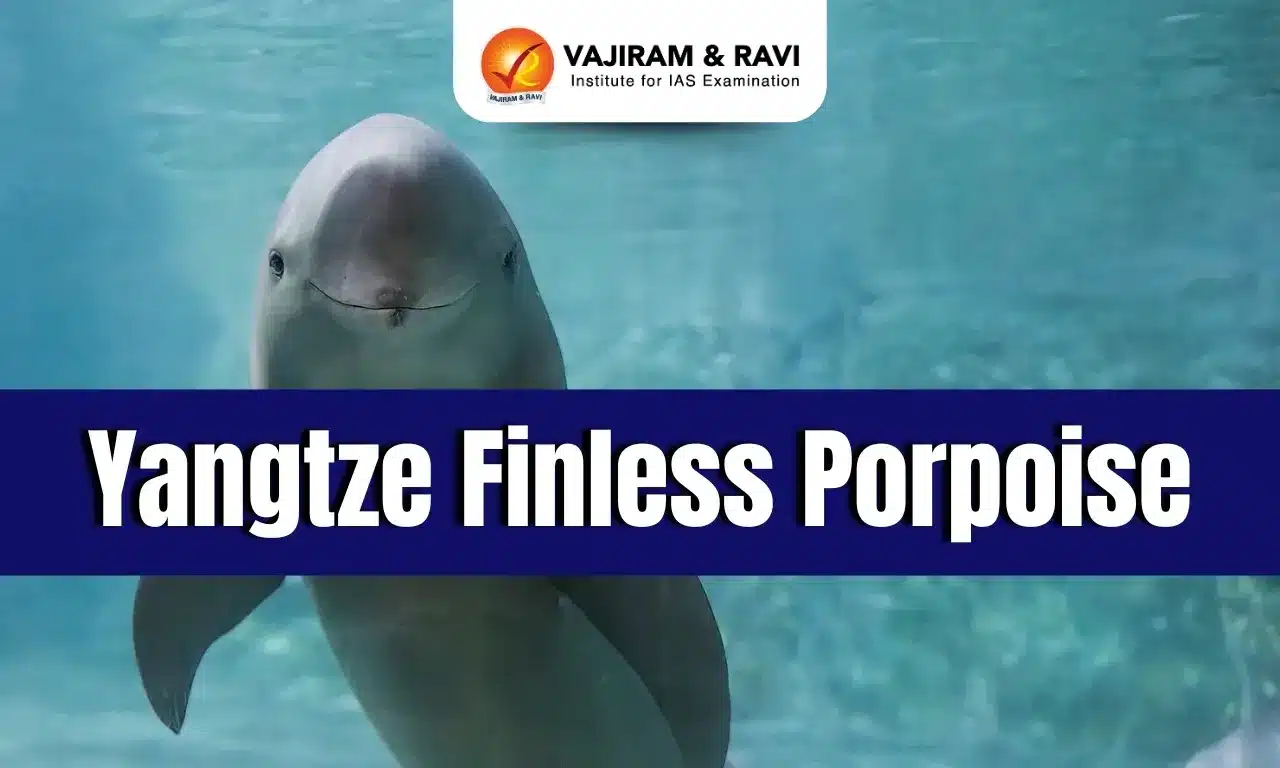
Chinese scientists have utilised classical Chinese poetry to reconstruct the historical distribution of the Yangtze finless porpoise, the only known freshwater porpoise species in the world.
This study demonstrates the scientific use of ancient literary records to track biodiversity trends over 1,000+ years, from the Tang Dynasty (618–907 CE) to the modern People's Republic of China.
About the Yangtze Finless Porpoise
Habitat: Found exclusively in the Yangtze River, Asia’s longest river.
Unique traits: Known for a mischievous smile and intelligence similar to gorillas.
Ecological role: Considered a key indicator species, reflecting the overall health of its freshwater ecosystem.
Size & Behaviour: Small-bodied, slow-moving, and non-migratory.
Conservation Status
IUCN Red List: Critically Endangered
Estimated population: Only 1,000–1,800 individuals
Extinction risk: High – parallels drawn with the Baiji dolphin, declared functionally extinct in 2006, marking the first human-driven extinction of a dolphin species.
Yangtze Finless Porpoise FAQs
Q1. What is the Yangtze finless porpoise? Ans. It is a critically endangered freshwater cetacean species found only in the Yangtze River in China.
Q2. What is its IUCN Red List status? Ans. The Yangtze finless porpoise is listed as Critically Endangered on the IUCN Red List.
Q3. Is it the only freshwater porpoise species? Ans. Yes, it is the only known freshwater porpoise species in the world.
NASA’s IXPE Unlocks X-ray Emission Mystery in Black Hole Jets
What is IXPE?
IXPE (Imaging X-ray Polarimetry Explorer) is a joint mission of NASA and the Italian Space Agency, launched on December 9, 2021.
It is the first satellite capable of measuring the polarisation of X-ray light, a key feature for understanding high-energy astrophysical phenomena.
What are Blazars and Why BL Lacertae Matters?
Blazars are a type of active galactic nuclei (AGN) where a supermassive black hole ejects a relativistic jet of particles oriented directly toward Earth.
BL Lacertae (BL Lac) is a well-known blazar and among the first discovered. It is located in the Lacerta constellation.
It is distinguished by its high variability and intense electromagnetic emissions, making it a suitable candidate for polarisation studies.
Scientific Discovery by IXPE – Key Findings
The mission aimed to solve the long-standing mystery of how X-rays are generated in black hole jets.
Two competing theories existed:
Proton-based models (would result in high X-ray polarization).
Electron-based models (would result in low X-ray polarization).
IXPE's observations found that the X-rays emitted from BL Lac's jets were only weakly polarized (no more than 7.6%).
Simultaneously, the optical light was highly polarised (as high as 47.5%, the highest ever recorded for a blazar).
This clear contrast confirmed that the X-rays are not generated by protons, but rather through electron-photon interactions.
Compton Scattering
The phenomenon responsible is Compton Scattering, where high-speed electrons scatter infrared photons, boosting them to X-ray energies.
This interaction provides a direct link between relativistic electron activity and X-ray generation in extreme environments.
IXPE (Imaging X-ray Polarimetry Explorer) FAQs
Q1. What is IXPE? Ans. IXPE is a space-based X-ray telescope launched by NASA to study the polarisation of X-rays emitted by cosmic objects.
Q2. When was IXPE launched? Ans. IXPE was launched on December 9, 2021, aboard a SpaceX Falcon 9 rocket.