Vajiram & Ravi provides Daily articles for 8 May 2025, tailored for aspirants. We cover all relevant news and events crucial for the exam, ensuring you stay updated & well-prepared.
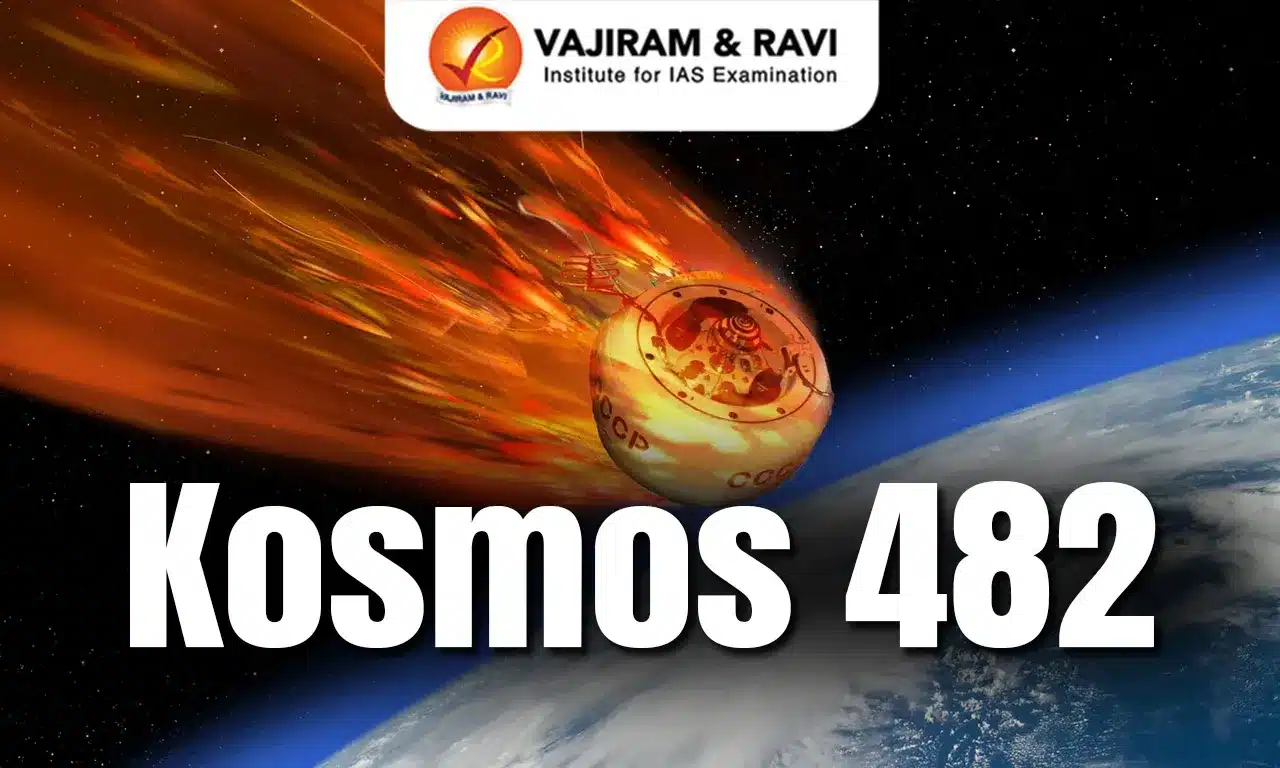
A part of the Soviet spacecraft Kosmos 482, launched on March 31, 1972, is expected to re-enter Earth's atmosphere around May 10, 2025, after orbiting the planet for over five decades.
What is Kosmos 482?
Kosmos 482 is a Soviet-era Venus lander, launched on March 31, 1972 as part of the Venera space programme.
It was meant to land on Venus, but a rocket's upper stage malfunction left it stranded in Earth orbit.
After more than 50 years in space, a 500-kg lander module is expected to make an uncontrolled re-entry into Earth’s atmosphere around May 10, 2025.
What Wen Wrong with Kosmos 482?
The upper stage of the launch vehicle shut down prematurely due to a timer malfunction.
This prevented the spacecraft from escaping Earth’s gravity and sent it into a low Earth orbit instead.
The main spacecraft eventually burned up in the atmosphere, but the lander module continued orbiting.
About the Venera Programme
The Venera programme (1961–1984) was a Soviet interplanetary mission series aimed at exploring Venus.
It launched 28 probes, of which 13 entered Venus’s atmosphere and 10 landed on the surface.
Venera 8, the twin of Kosmos 482, successfully landed on Venus in 1972 and transmitted data for 50 minutes.
Venus conditions: Surface temperature ~462°C and pressure ~92 times Earth’s.
Venera landers were specially designed using:
Spherical titanium hulls
Heat-resistant layers
Pressure insulation
Active cooling systems.
Kosmos 482 FAQs
Q1. What is Kosmos 482? Ans. Kosmos 482 is a Soviet-era spacecraft, launched in 1972, intended to land on Venus, but it failed to escape Earth's orbit.
Q2. Why is Kosmos 482 in the news recently? Ans. Kosmos 482 is in the news due to concerns that it may re-enter Earth's atmosphere, posing a potential space debris risk.
INS Kiltan, an Indian Naval Ship, arrived in Singapore to participate in IMDEX Asia 2025, held at the Changi Exhibition Centre.
About IMDEX (International Maritime Defence Exhibition)
IMDEX Asia is a premier maritime and defence exhibition in the Asia-Pacific region, held biennially in Singapore since its inception in 1997.
It serves as a global platform for navies, coast guards, and maritime defence industries to:
Showcase naval platforms and systems.
Debut cutting-edge maritime technologies.
Engage in high-level policy and strategic dialogue.
The International Maritime Security Conference (IMSC) is a key part of IMDEX.
It was established in 2009.
Jointly organised by the Republic of Singapore Navy (RSN) and the S. Rajaratnam School of International Studies (RSIS).
It brings together navy chiefs, coast guard heads, policymakers, strategic analysts, and maritime stakeholders.
The conference focuses on enhancing mutual security, maritime domain awareness, and cooperative solutions for challenges in the global maritime commons.
IMDEX Asia 2025 FAQs
Q1. What is IMDEX Asia? Ans. IMDEX Asia is a premier international maritime defence exhibition and conference held biennially in Singapore, focusing on naval platforms, systems, and technologies.
Q2. What is the International Maritime Security Conference (IMSC)? Ans. The IMSC is a biennial multilateral event that focuses on enhancing maritime security cooperation among navies and maritime agencies across the Indo-Pacific region.
Q3. Who organises the IMSC, and where is it usually held? Ans. The IMSC is organised by the Republic of Singapore Navy and is typically hosted in Singapore, often in conjunction with the International Maritime Defence Exhibition (IMDEX Asia).
The US President Donald Trump plans to officially rename the ‘Persian Gulf’ as the ‘Arabian Gulf’ during a visit to Saudi Arabia, aligning with the preferences of Arab Gulf nations.
Historical Context and Naming Dispute
The term ‘Persian Gulf’ has been used consistently since the 16th century, widely recognised in historical records, international treaties, and cartographic references.
Arab states, especially Saudi Arabia and the UAE, prefer the term ‘Arabian Gulf’, using it in their national maps and documents.
In 2012, Iran threatened to sue Google for not labelling the water body on its maps, asserting its historical naming rights.
Geographical Features of the Persian Gulf
The Persian Gulf is a marginal sea of the Indian Ocean, located in Western Asia, and is a vital geopolitical chokepoint.
It is connected to the Arabian Sea via the Strait of Hormuz, one of the world’s most strategic maritime passages for global oil shipments.
It spans ~251,000 km², with an average depth of 50 meters and maximum depth of 90 meters.
The coastline stretches ~5,117 km, with Iran having the longest stretch (~1,536 km).
It is bounded by:
North: Iran
Southwest: Saudi Arabia, Qatar, UAE
Northwest: Iraq, Kuwait, Bahrain
Important Islands: Qeshm Island (Iran) is the Largest island in the Persian Gulf, with an area of ~1,491 km²—about 2.5 times the size of Bahrain.
Bahrain: A sovereign archipelago state, comprising over 50 islands, and a significant US naval base location.
Institutional recognition: The International Hydrographic Organisation (IHO) still recognises the water body as the Persian Gulf.
Although countries can use alternative names domestically, they cannot impose unilateral changes in global nomenclature.
Strategic and Economic Importance
The Persian Gulf is central to global energy security, with ~30% of the world’s oil exports passing through the Strait of Hormuz.
It is a theatre of naval deployment for countries like the USA, Iran, and Gulf states, often reflecting power projection and regional dominance.
Islands like Qeshm (Iran) and Bahrain (a sovereign state) hold strategic military and economic value.
Persian Gulf vs Arabian Gulf FAQs
Q1. What is the Persian Gulf? Ans. The Persian Gulf is a shallow inland sea in Western Asia, bordered by countries like Iran, Iraq, Kuwait, Saudi Arabia, and UAE.
Q2. What is the Strait of Hormuz? Ans. The Strait of Hormuz is a narrow passage connecting the Persian Gulf with the Gulf of Oman, through which a significant share of global oil supply passes, making it a strategic chokepoint.
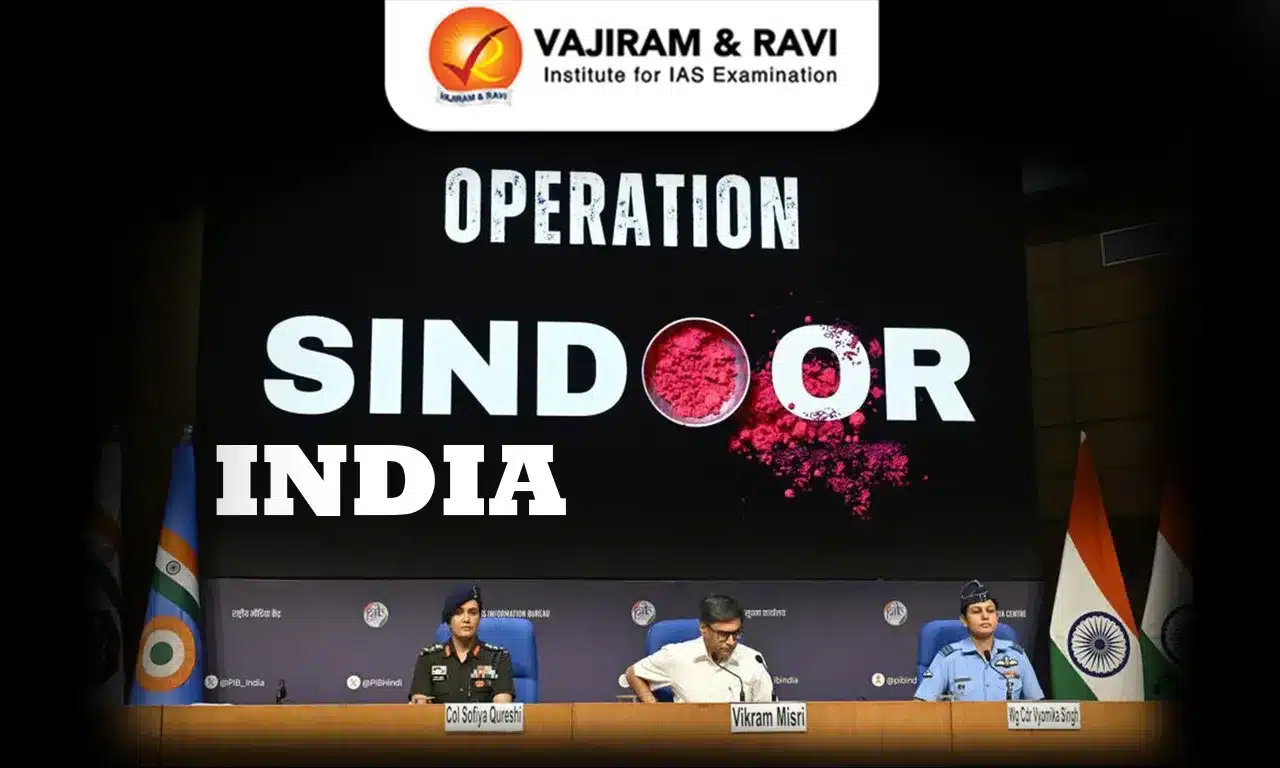
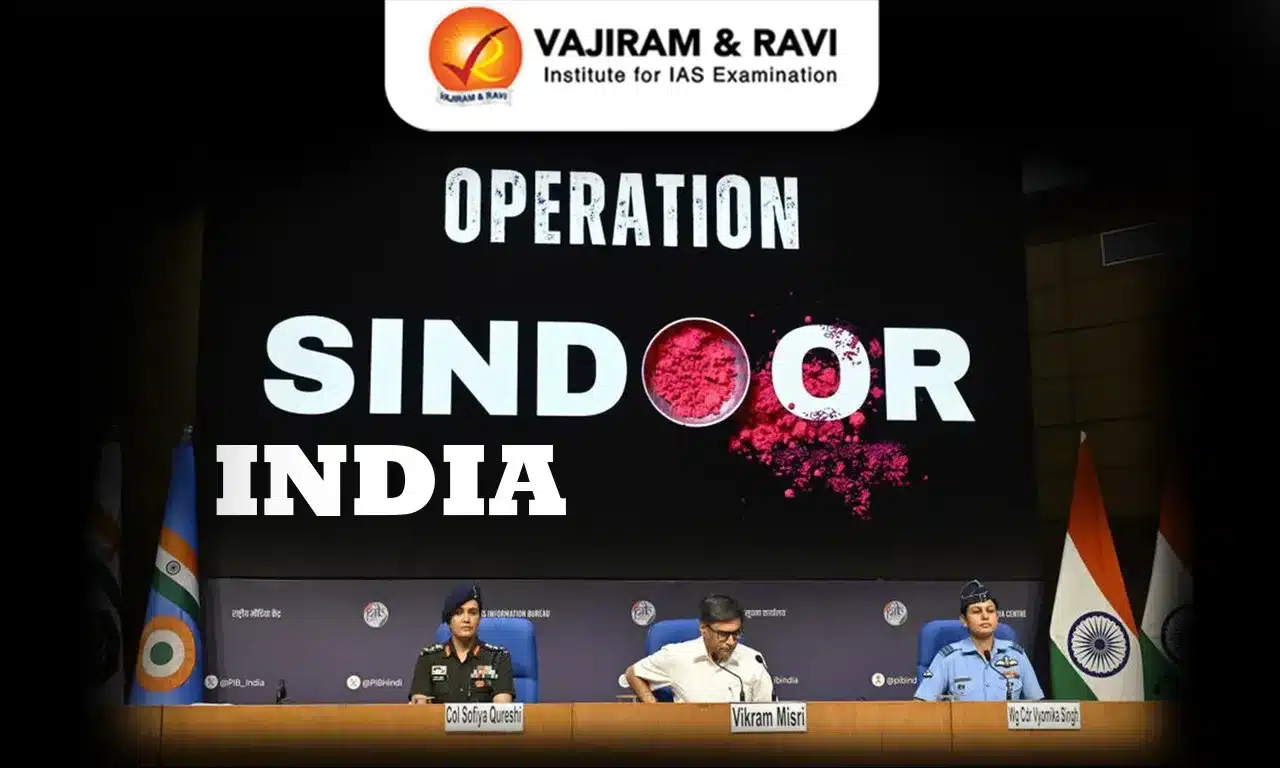
Operation Sindoor was launched by the Indian Armed Forces recently as a retaliatory precision strike on terror camps in Pakistan and Pakistan-occupied Kashmir (PoK).
Precision and Targeting
21 terror camps across 9 different locations were hit using niche-technology weapons and carefully selected warheads to ensure minimum collateral damage.
The weapons deployed were part of India’s long-range precision-guided arsenal, built over the last few years for high-value target engagement.
Key Weapons Used in Operation Sindoor
HAMMER (Highly Agile and Manoeuvrable Munition Extended Range): A French-origin air-to-ground smart weapon system integrated with Rafale aircraft.
Range: Up to 70 km; capable of being fitted on various guided platforms.
Features: All-weather precision, autonomous guidance, resistant to jamming, and effective at low altitudes and rough terrains.
Recently acquired by India for deep strike capabilities.
SCALP (Système de Croisière Autonome à Longue Portée): An air-launched stealth cruise missile, also called Storm Shadow in the UK.
Range: Up to 450 km, with terrain-hugging flight for stealth and precision.
Equipped with INS, GPS, and terrain referencing systems for bunker-busting accuracy.
METEOR (Beyond Visual Range Air-to-Air Missile - BVRAAM): A next-generation air-to-air missile built by MBDA, effective in electronic warfare environments.
Uses a solid-fuel ramjet engine, giving it an extended No-Escape Zone, enabling target destruction at maximum range.
BRAHMOS Supersonic Cruise Missile: Jointly developed by DRDO (India) and NPOM (Russia) under BrahMos Aerospace.
Speed: Up to Mach 2.8–3.0; Range: Increased from 290 km to ~450–500 km after India enters into the MTCR.
Operates on Fire-and-Forget Principle, adaptable for land, sea, and air platforms.
Warhead: 200–300 kg; Terminal altitude as low as 10 metres.
Loitering Munitions (Kamikaze Drones): Can hover over target areas, perform surveillance, and strike with high precision when a target is identified.
Autonomous or semi-autonomous systems used to strike mobile or time-sensitive targets.
Being inducted in large numbers across the Army, Navy, and Air Force.
Operation Sindoor FAQs
Q1. What is the full form of HAMMER in missile technology? Ans. HAMMER stands for Highly Agile Modular Munition Extended Range, a precision-guided air-to-ground missile developed by France.
Q2. What is SCALP in the context of missiles? Ans. SCALP stands for Système de Croisière Autonome à Longue Portée, a long-range, air-launched cruise missile developed by France.
Q3. What is the BRAHMOS missile? Ans. BRAHMOS is a supersonic cruise missile jointly developed by India and Russia, named after the Brahmaputra and Moskva rivers.
In Operation Sindoor, SCALP missiles were reportedly launched from Indian Rafale jets to strike deep-terror infrastructure in Pakistan and PoK.
About SCALP Missile
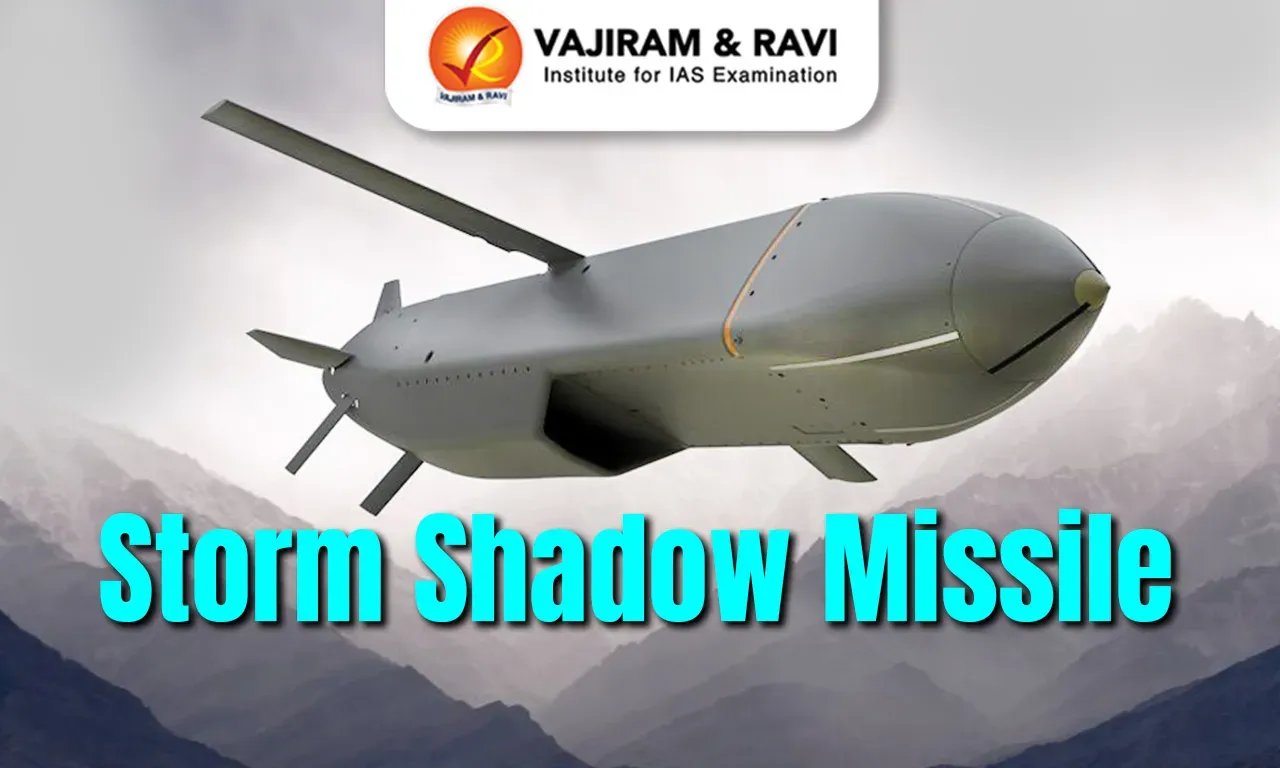
The SCALP missile, also known by its British name, ‘Storm Shadow’, is a long-range, air-launched cruise missile.
It is conventionally armed and used for deep strike missions against high-value, fixed or stationary targets.
Its full name, Systeme de Croisiere Autonome a Longue Portee, underscores its role as an autonomous, extended-range strike weapon.
It is jointly developed by the United Kingdom and France.
It is also in service with the air forces of Egypt, India, Italy, Greece, Saudi Arabia, Qatar, and the United Arab Emirates (UAE).
SCALP Missile Features
It has a range of around 500 km.
Weighing 1,300 kg, it carries a 450 kg conventional warhead capable of penetrating hardened bunkers.
It is around five metres long and has a wingspan of three metres.
Flying at subsonic speeds (around Mach 0.8) and low altitudes, it uses terrain-following navigation, GPS/INS guidance, and infrared terminal homing for high accuracy.
These features allow it to fly at low altitudes to evade enemy radar detection.
As it approaches its target, the missile’s infrared guidance system compares the target with preloaded images to ensure high accuracy and minimise collateral damage.
Designed for stealth and precision, the SCALP is capable of operating in any weather conditions.
Launch platform: India integrates SCALP with the Rafale fighter jets, which are currently operated by the Indian Air Force.
SCALP Missile FAQs
Q1. What is the scalp missile?
Ans. It is a long-range, air-launched cruise missile.
Q2. Which two countries jointly developed the SCALP missile?
Ans. UK and France
Q3. What is the approximate range of the SCALP missile?
Jenu Kuruba families recently began their long-awaited re-occupation of their ancestral homes inside the Nagarhole National Park.
About Jenu Kuruba Tribe
The Jenu Kuruba is recognized as a Particularly Vulnerable Tribal Group (PVTG), primarily found in the Kodagu and Mysore districts of Karnataka.
The name "Jenu Kuruba" originates from Kannada, where "jenu" means honey. This name reflects their traditional occupation of honey collection, gathering food, and managing forest produce.
The Jenu Kuruba community's primary sources of income have historically been land and forest resources.
They are also referred to by the names "Then Kurumba" or "Kattu Naikar."
They live in small settlements called Hadi.
Social life:
They live a semi-nomadic lifestyle which is not maintained by rulers, police, centralized visible forces, or religious monasteries.
They have their own pattern, which consists of levels with a headman (Yajamana) and a ritual head (Gudda).
Except for the religious decisions, they take care of all the functions of the people.
Beliefs:
The Jenu Kuruba belief system refers to religious behaviour relating to supernatural beings.
They have their own identities and names and the Jenu Kuruba people have deep surrenderance towards them.
Their songs and dances deal with themes relating to agriculture, marriage, myths, and religious beliefs.
Jenu Kuruba Tribe FAQs
Q1. The Jenu Kuruba tribe is primarily located in which Indian state?
Ans. Karnataka
Q2. What is the traditional occupation of the Jenu Kuruba community?
Ans. Honey collection and forest produce gathering
Q3. What are the traditional small settlements of the Jenu Kuruba people called?
Anak Krakatau’s deadly 2018 collapse was preceded by years of unnoticed ground movement, now exposed through satellite radar analysis.
About Anak Krakatau Volcano
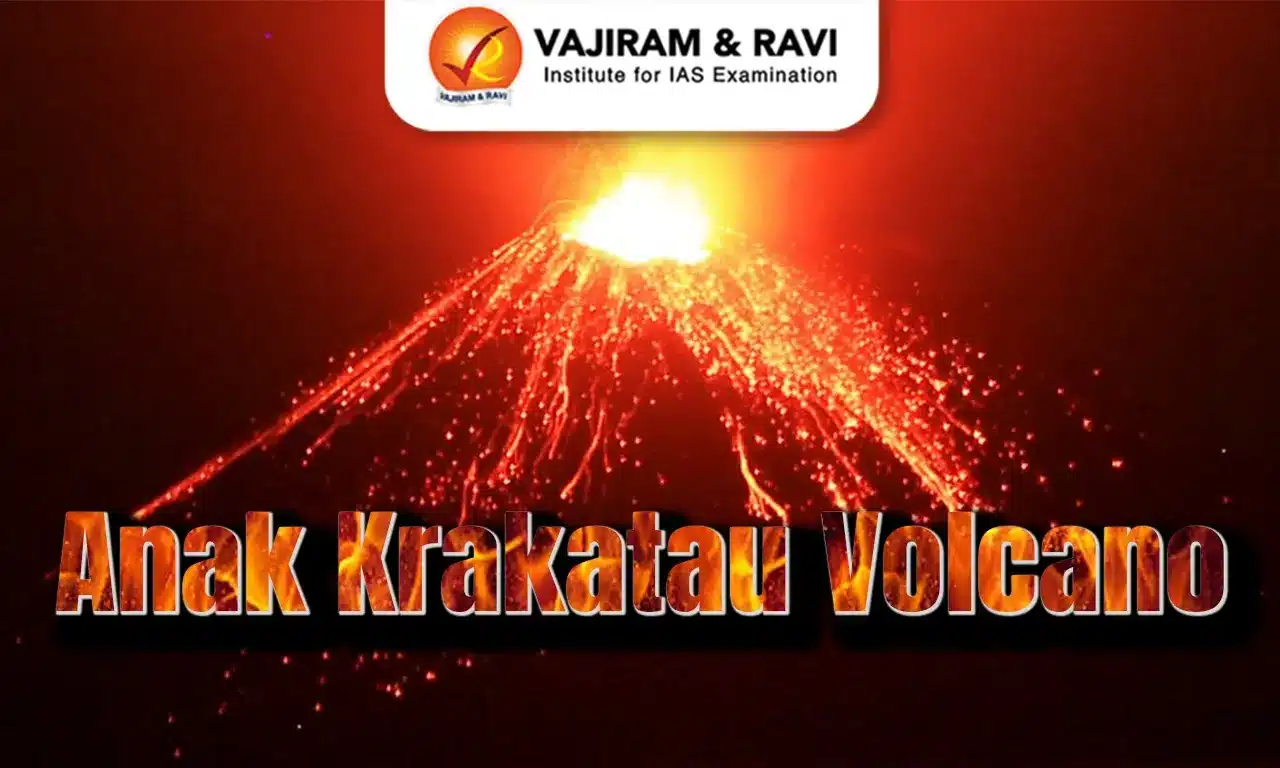
Anak Krakatau (meaning “Child of Krakatau”) is a stratovolcano located in the Sunda Strait, between Java and Sumatra in Indonesia.
It is a part of the Ring of Fire, a chain of volcanoes in the Pacific Ocean.
It emerged from the sea in 1927 and is the offspring of the catastrophic Krakatoa eruption of 1883.
Over the following years, frequent strombolian eruptions resulted in growth of the volcano.
It sits above multiple magma chambers.
Anak Krakatau has been the site of frequent eruptions. Anak Krakatau has had at least nine episodes of activity since 1963, most lasting less than one year.
On 22 December 2018, an eruption led to the collapse of the southwestern flank of the volcano, with the resulting landslide generating a tsunami that caused devastation along the nearby coasts of southern Sumatra and west Java.
Anak Krakatau Volcano FAQs
Q1. Where is Anak Krakatau volcano located?
Ans. It is located in the Sunda Strait, between Java and Sumatra in Indonesia.
Q2. The origin of Anak Krakatau is linked to the eruption of which volcano in 1883?
Ans. Krakatoa
Q3. Which type of volcanic eruption is commonly associated with Anak Krakatau?
India successfully conducted Operation Sindoor, a joint military operation involving the Army, Navy, and Air Force, targeting terrorist camps at nine locations in Pakistan and Pakistan-occupied Kashmir (PoK).
The strikes were a response to the April 22 terrorist attack in Pahalgam, attributed to ISI-backed militant groups. Precision munitions were used to hit four targets in Pakistan (Bahawalpur, Muridke, Sialkot, Sarjal) and five in PoK, with the objective of dismantling terrorist infrastructure operating with impunity.
Purpose Behind Target Selection
The targets were chosen to dismantle anti-India terrorist infrastructure linked to groups actively engaged in cross-border terrorism.
Involvement of Proscribed Terror Groups
The sites were connected to banned outfits such as Lashkar-e-Taiba (LeT), Jaish-e-Mohammad (JeM), and Hizbul Mujahideen (HM), which are known to receive direct support from Pakistan’s military and intelligence agencies.
Nature of Terrorist Facilities
These groups operate from training camps (Markaz) and launch pads, often concealed within government-run buildings.
Launch pads: Used for infiltration staging and arms training.
Larger camps: Serve purposes like religious indoctrination, propaganda, logistics, and recruitment.
Key Signals from Operation Sindoor
Redefining the Causal Link Between Pakistan and Terrorism
India framed Operation Sindoor as a response not just to the recent Pahalgam attack, but to a two-decade-long pattern of Pakistan-sponsored terrorism since the 2001 Parliament attack.
It highlighted the role of groups like Jaish-e-Mohammed (JeM) and Lashkar-e-Taiba (LeT), both UN-designated terrorist groups.
Cited examples like Sajid Mir and the FATF’s role in forcing Pakistan to take symbolic actions without dismantling terror networks.
Targeting key sites like Markaz Subhan Allah, Markaz Taiba, and Mehmoona Joya undermines Pakistan’s narrative that newer proxy groups (like TRF) are disconnected from Islamabad.
Targeting Terror, Not the Pakistani Military
India continues its doctrine of hitting terrorist infrastructure without targeting Pakistan’s conventional military.
The strikes were labeled as “non-military” and “preemptive”, similar to the approach in the 2016 surgical strikes and 2019 Balakot airstrike.
However, Sindoor marks an escalation in depth and scale, striking targets deep within Pakistan, not just in PoK.
Calibrated Action with Strategic Restraint
India emphasized Sindoor was “focused, measured, and non-escalatory”, showing it does not seek full-scale war.
However, it sent a clear message that Pakistan’s nuclear deterrence posture no longer shields its terror infrastructure.
Future escalations by Pakistan could trigger Indian retaliation on military assets, pushing the threshold higher.
What Makes Operation Sindoor Different
Unprecedented Scale and Reach
Nine locations targeted across Pakistan and Pakistan-occupied Kashmir (PoK), including Muzaffarabad, Bahawalpur, Rawalakot, Jhelum, and more.
24 missile strikes launched in a single day — India’s largest single-day strike so far.
Over 70 militants killed and 60 injured, sending a powerful deterrent message.
Unlike Balakot (2019) and Uri (2016), which targeted one or few sites, Sindoor reflects a massive, coordinated offensive.
Wider Target Spectrum and Deep Strikes
India signaled that no part of Pakistan is off-limits, targeting deep inside the Pakistani heartland.
Shows a clear shift in policy — from reactive to pre-emptive and assertive.
Military analysts noted this operation crossed previous thresholds in terms of both geography and intensity.
Tri-Services Coordination and Advanced Weaponry
Indian Army, Navy, and Air Force all took part, demonstrating joint operational strength.
Strikes were highly coordinated, time-bound, and used real-time UAV confirmation to verify destruction — marking a new benchmark in precision warfare.
Strategic Red Line Shift
India refrained from hitting Pakistani military installations to avoid conventional escalation, but the depth and scale of the strikes clearly altered the red line.
The operation has redefined the costs Pakistan may have to bear for continuing cross-border terrorism.
Symbolic Naming, Human-Centric Messaging
Named “Sindoor” to honour the victims of the Pahalgam attack, particularly widows of the 26 slain.
Reflects a shift from military glorification to moral justification.
Operation Sindoor India FAQs
Q1. What triggered Operation Sindoor?
Ans. The April 22 Pahalgam terrorist attack prompted India to launch coordinated strikes on ISI-backed terror camps in Pakistan and PoK.
Q2. Which terrorist groups were targeted?
Ans. India targeted camps linked to Lashkar-e-Taiba, Jaish-e-Mohammad, and Hizbul Mujahideen operating under ISI protection.
Q3. How many locations were hit in the operation?
Ans. Nine locations, including Bahawalpur, Muzaffarabad, and Kotli, were hit with 24 precision-guided missile strikes.
Q4. What was India’s strategic message?
Ans. India redefined its red line by targeting deep inside Pakistan without provoking conventional escalation, signalling pre-emptive capability.
Q5. Why is the name ‘Sindoor’ significant?
Ans. ‘Sindoor’ honors the victims of the Pahalgam attack, particularly widows, reflecting a moral and symbolic naming choice.
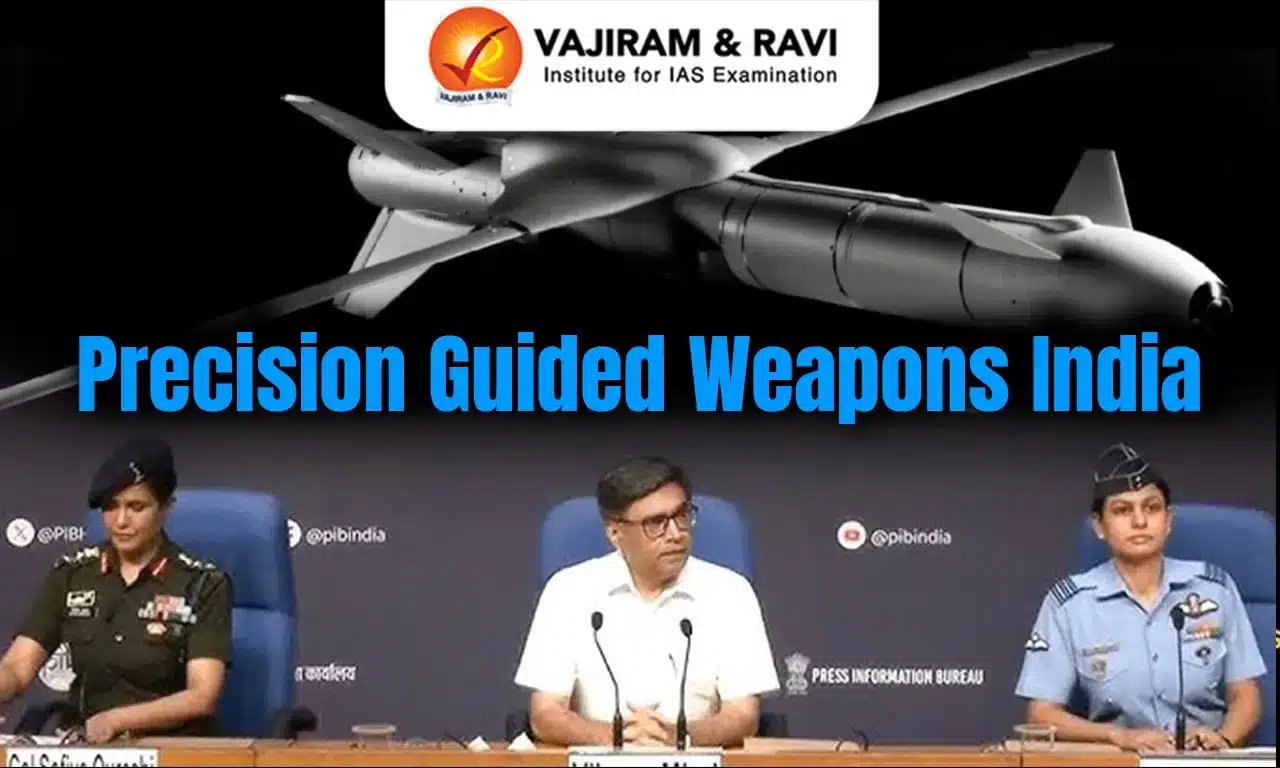
Cutting-Edge Precision Weapons in India’s Military Arsenal
Precision Guided Weapons India FAQs
Precision Guided Weapons India Latest News
India carried out Operation Sindoor, targeting 21 terror camps across nine locations in Pakistan and Pakistan-occupied Kashmir (PoK) in response to a recent terrorist attack in Pahalgam.
The Indian Armed Forces used precision strikes with niche-technology weapons and carefully chosen warheads to minimize collateral damage.
Although specific weapons were not disclosed, the military's arsenal now includes advanced precision-guided long-range weapons and drones, such as loitering munitions.
Precision Guided Munitions (PGMs)
PGMs, also called smart weapons or smart bombs, are missiles or bombs designed to accurately strike specific targets while minimizing collateral damage.
Key Features of PGMs
Advanced Guidance Systems: PGMs use GPS, laser guidance, infrared sensors, or radar to track and hit targets precisely.
Mid-Flight Course Corrections: They can adjust their trajectory mid-air to account for weather, wind, or targeting errors.
Reduced Collateral Damage: By targeting with precision, PGMs limit harm to civilians and nearby infrastructure.
Increased Accuracy: They offer greater accuracy than unguided munitions, with a much smaller margin of error.
Versatile Deployment: PGMs can be launched from aircraft, ships, ground platforms, or UAVs, enhancing their operational flexibility.
Cutting-Edge Precision Weapons in India’s Military Arsenal
Two weeks after Pakistani terrorists killed 26 civilians in Pahalgam, India launched Operation Sindoor, conducting airstrikes on nine locations in Pakistan and PoK targeting terrorist infrastructure.
The Indian Air Force (IAF) deployed Rafale jets, which used SCALP missiles for deep strikes and HAMMER missiles for medium-range precision targets.
HAMMER
The HAMMER (Highly Agile and Manoeuvrable Munition Extended Range) is an air-to-ground precision-guided weapon system developed by Safran, a French aerospace and defence company.
Capabilities and Range
It has a range of up to 70 km and can be mounted on Rafale jets, as well as fitted to bombs and other guided systems, making it highly versatile for medium-range tactical operations.
Advanced Features
The system is autonomous, resistant to jamming, and capable of being launched from low altitudes over rough terrain, allowing precision strikes against a wide range of targets.
India’s Procurement
India has procured several HAMMER systems in recent years to strengthen its aerial strike capabilities.
SCALP
SCALP-EG (Système de Croisière Autonome à Longue Portée — Emploi Général), also known as Storm Shadow in the UK, is an air-launched cruise missile designed for long-range deep strike missions with stealth features.
Manufacturer and Range
Developed by MBDA, a European multinational defence company, SCALP has a range of around 450 km and is capable of low-altitude flight, making it hard to detect.
Operational Versatility
It can be deployed at night and in all weather conditions, providing the Indian Air Force with high operational flexibility.
Advanced Navigation and Targeting
SCALP uses a combination of INS, GPS, and terrain referencing for navigation, allowing it to penetrate heavily fortified targets like bunkers and ammunition depots with high precision.
METEOR: Next-Gen Air-to-Air Superiority
The Meteor is a Beyond Visual Range Air-to-Air Missile (BVRAAM) developed by MBDA, effective even in dense electronic warfare environments.
It uses a solid-fuel ‘ramjet’ motor, providing continuous thrust and enabling the largest 'No Escape Zone' among air-to-air missile systems.
BRAHMOS: India’s Supersonic Cruise Power
The BrahMos is a supersonic cruise missile jointly developed by India’s DRDO and Russia’s NPO Mashinostroyeniya, and is operational in all three Indian defence services.
It operates at speeds close to Mach 3, ensuring faster target engagement, low dispersion, and minimal interception risk.
The missile follows a ‘Fire and Forget’ mode, with a cruising altitude of up to 15 km and terminal altitude as low as 10 metres, carrying a 200–300 kg conventional warhead.
Loitering Munitions
Loitering munitions are aerial weapons that combine surveillance and strike capabilities, allowing them to identify and engage targets with precision.
These systems can be operated autonomously or manually, offering real-time intelligence and the ability to strike at the right moment.
In recent years, the Indian Armed Forces have been actively procuring various types of drones, including loitering munitions, to enhance situational awareness and precision strike capabilities.
Precision Guided Weapons India FAQs
Q1. What are Precision Guided Munitions (PGMs)?
Ans. PGMs are smart weapons that use GPS, laser, or radar guidance for accurate strikes with minimal collateral damage.
Q2. What is the range of the HAMMER missile?
Ans. The HAMMER missile has a range of up to 70 km and can be launched from Rafale jets or fitted to bombs.
Q3. Why is SCALP missile hard to detect?
Ans. SCALP flies at low altitudes with stealth capabilities, making it difficult to detect and ideal for deep strikes.
Q4. What makes the METEOR missile unique?
Ans. METEOR uses a ramjet engine and has the largest “No Escape Zone” in any air-to-air missile system.
Q5. What are loitering munitions?
Ans. Loitering munitions combine surveillance and strike capabilities, allowing autonomous or manual precision targeting using real-time intelligence.
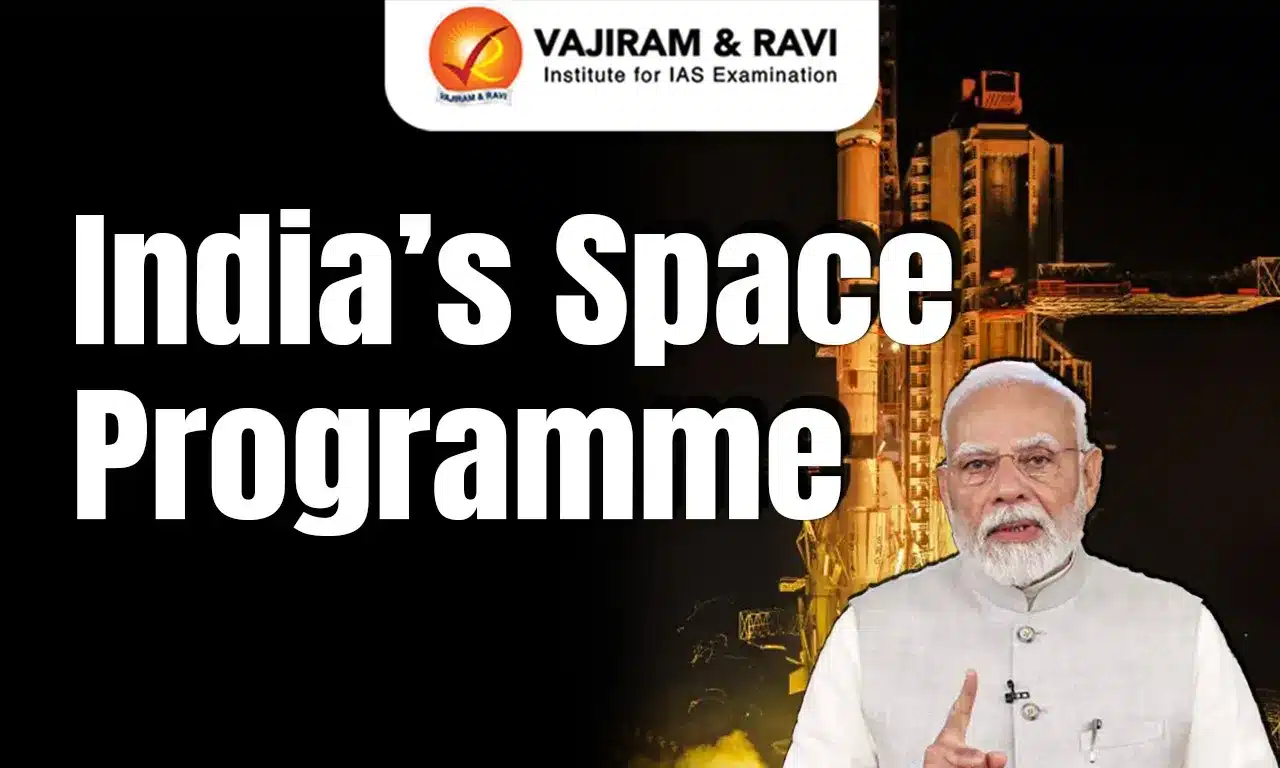
Recently, Prime Minister Narendra Modi said that India was marching ahead with renewed confidence in the field of space exploration and its astronauts' footprints will be on the Moon.
Introduction
Prime Minister Narendra Modi has outlined an ambitious future for India’s space programme, reaffirming the country's rising role in both global scientific exploration and domestic empowerment.
In his address to the Global Space Exploration Conference (GLEX) 2025, PM Modi emphasized that India’s space efforts are not about competition, but about “reaching higher together”, driven by the spirit of collective growth, technological advancement, and service to humanity.
Space as a Catalyst for Empowerment
PM Modi asserted that space exploration in India has a dual purpose, scientific progress and citizen empowerment.
From providing alerts to fishermen to enabling the Gati Shakti logistics platform and enhancing railway safety and weather forecasting, Indian satellites have been actively improving governance and the everyday lives of citizens.
He added that India’s space infrastructure supports socio-economic transformation, showcasing space not merely as a frontier of science, but as a driver of inclusive development.
Highlighting this, PM Modi said India’s rockets don’t just carry payloads but “the dreams of 1.4 billion Indians.”
A Legacy of Achievements
India’s space journey began modestly with a small rocket launch in 1963. Since then, the country has reached several significant milestones:
India became the first country to land near the lunar South Pole with Chandrayaan-3 in 2023.
Chandrayaan-1 helped discover water on the Moon.
Chandrayaan-2 produced the highest resolution images of the Moon.
In 2014, India became the first country to reach Mars in its maiden attempt with the Mangalyaan mission.
India has also demonstrated engineering excellence by:
Building cryogenic engines in record time.
Launching 100 satellites in a single mission.
Sending more than 400 satellites for 34 countries.
Achieving satellite docking in space, a step forward for human spaceflight capability.
The Road Ahead: Moon, Mars, Venus
Looking toward the future, PM Modi announced a clear and ambitious roadmap:
By 2025: India will send astronaut Shubhanshu Shukla on a 14-day joint ISRO-NASA mission to the International Space Station under the Axiom-4 mission.
By 2035: India will establish the Bharatiya Antariksha Station, opening new frontiers in research and international collaboration.
By 2040: Indian astronauts will set foot on the Moon. Mars and Venus are also part of ISRO’s future planetary exploration agenda.
These goals reaffirm India’s commitment to bold, long-term space ambitions, rooted in both national pride and global cooperation.
Boosting Private Participation and Innovation
PM Modi highlighted the emergence of over 250 space startups in India, which are contributing to breakthroughs in satellite tech, propulsion systems, and imaging technologies.
He noted that many of these initiatives are led by women scientists, reflecting the inclusive character of India’s scientific community.
These private players are not only generating employment (over 22,000 jobs in the past decade) but are also driving economic value and global relevance for India’s space sector.
Strategic Diplomacy Through Space
India's commitment to using space for diplomacy and regional cooperation was also emphasized.
After launching satellites for South Asian countries, the upcoming G20 Satellite Mission, announced during India’s G20 presidency, will be a symbolic and practical gift to the Global South.
This aligns with India’s broader vision of sharing scientific progress to address shared global challenges and strengthen multilateralism.
India’s Space Programme FAQs
Q1. What is the Bharatiya Antariksha Station and when will it be launched?
Ans. It is India’s own space station planned to be operational by 2035.
Q2. When will India send its first astronaut to the Moon?
Ans. India aims to land its astronaut on the Moon by 2040.
Q3. What is the G20 Satellite Mission?
Ans. It is India’s upcoming satellite initiative announced during its G20 presidency to support the Global South.
Q4. What major milestones has ISRO achieved in space exploration?
Ans. ISRO has discovered water on the Moon, launched 100 satellites in one mission, and reached Mars in its first attempt.
Q5. How is India involving private companies in its space sector?
Ans. Over 250 startups are actively contributing to satellite, propulsion, and imaging tech development, many led by women scientists.