
Shingles Disease Latest News
A recent large-scale study from South Korea, published in the European Heart Journal, reveals that individuals vaccinated against shingles have a 23% lower risk of cardiovascular events, including heart attacks and strokes.
About Shingles Disease
- Shingles, also known as herpes zoster, is caused by the reactivation of the varicella-zoster virus, the same virus responsible for chickenpox.
- After a person recovers from chickenpox, the virus remains dormant in the nerve cells and can reactivate years later, especially when the immune system is weakened due to age, illness, or immunosuppressive medications.
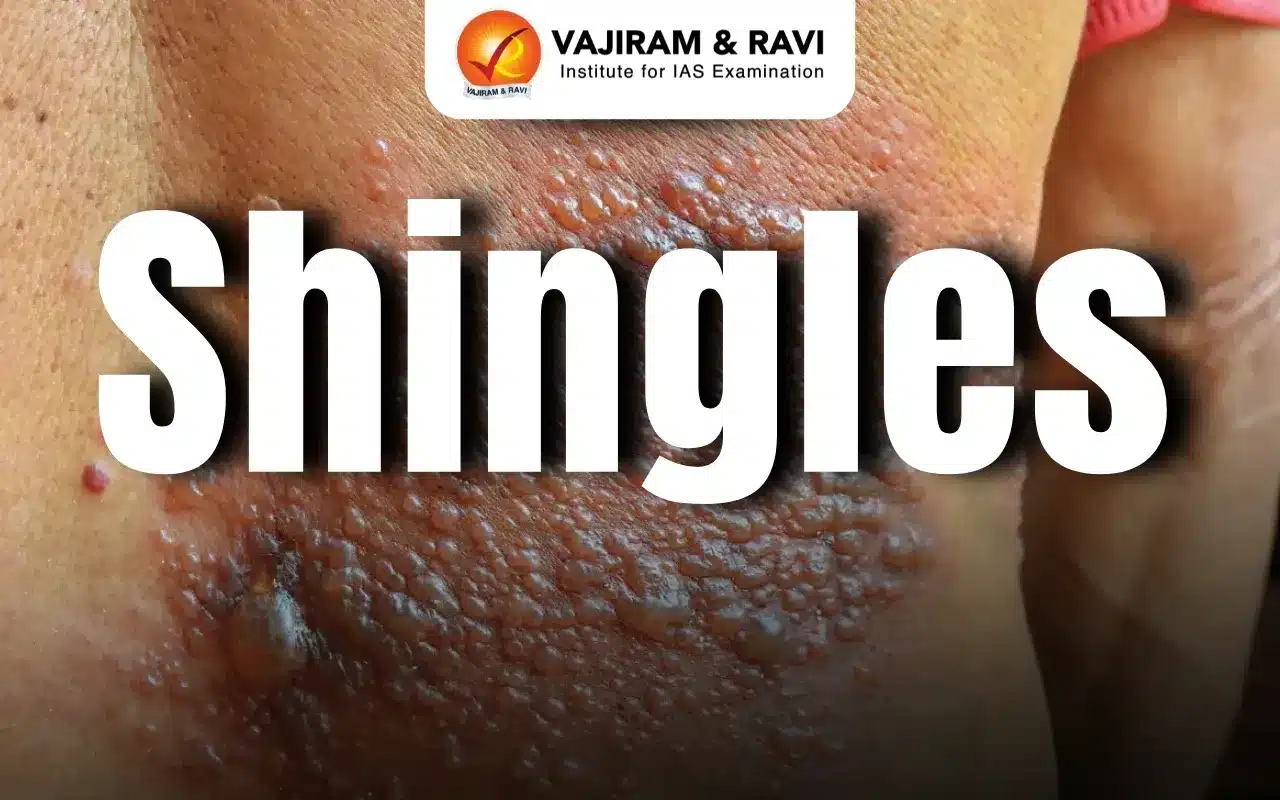
- Shingles typically presents as a painful rash, often forming a stripe of blisters on one side of the torso, neck, or face. Other symptoms may include itching, tingling, burning, headache, fever, and sensitivity to light or touch.
- The most common complication is postherpetic neuralgia (PHN), a persistent nerve pain that can last for months after the rash clears.
- Shingles is not contagious, but the virus can be spread to someone who has never had chickenpox.
- It is most common in people over 50 or those with weakened immune systems.
- There is a vaccine called Shingrix available, which helps in preventing shingles and its complications. Antiviral medications can reduce the severity and duration of shingles, especially if started early.
Shingles Disease FAQs
Q1. What causes shingles?
Ans. Shingles is caused by the reactivation of the varicella-zoster virus, which remains dormant in nerve cells after a chickenpox infection.
Q2. Who should get the shingles vaccine?
Ans. Adults aged 50 and above, and those with weakened immune systems, should get vaccinated. Shingrix is the preferred vaccine.
Q3. What are the new health benefits of the shingles vaccine?
Ans. Recent studies show the vaccine not only prevents shingles but also reduces the risk of cardiovascular diseases by 23% and dementia by 20%.
Source: IE
