Jnanpith Award

Jnanpith Award

Jnanpith Award Latest News

The President of India conferred the 58th Jnanpith Award on Sanskrit scholar Jagadguru Rambhadracharya Ji at a function held at Vigyan Bhavan in New Delhi recently.

About Jnanpith Award

  • It is the highest literary honour of India, given to writers who have excelled in literature in different Indian languages.
  • It is given every year to an author for his/her outstanding contribution towards Indian literature through creative writing in any of the Indian languages mentioned in Schedule VIII of the Indian Constitution and English.
  • It was instituted in 1961. 
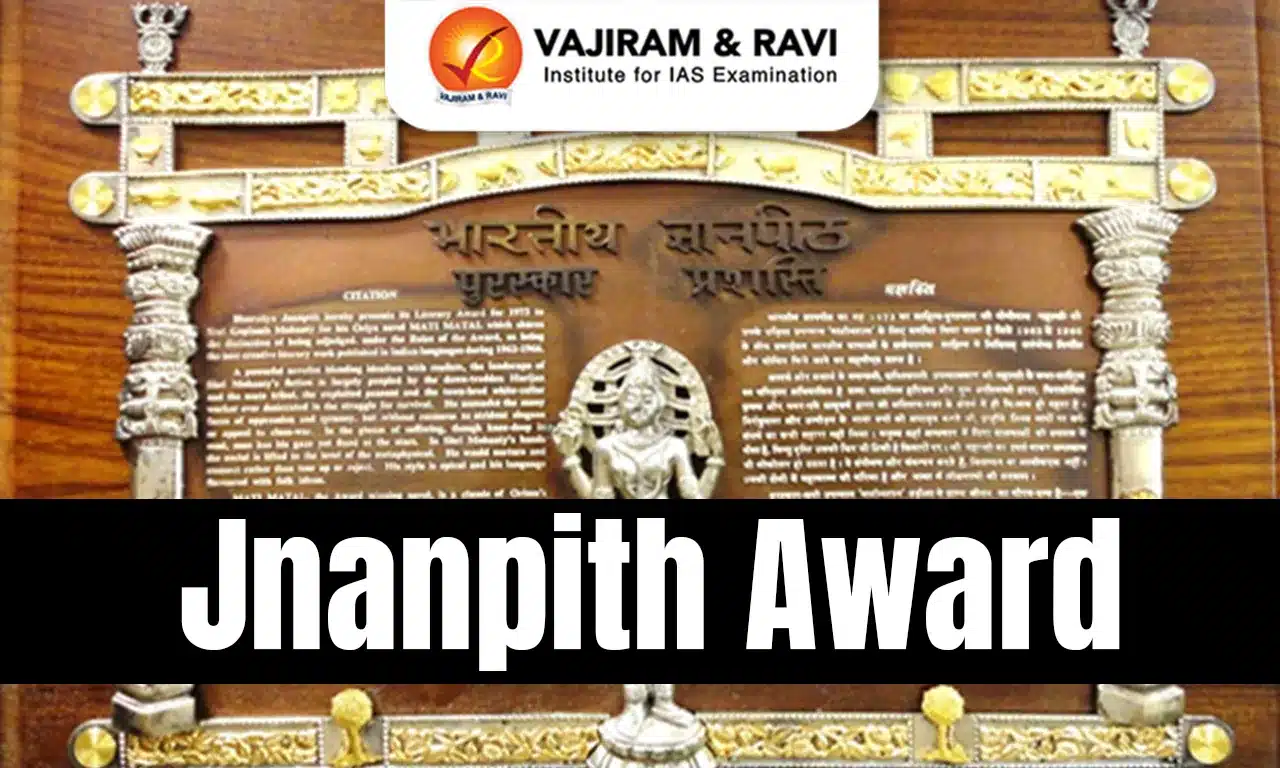
  • The prize carries a cash award, a citation, and a bronze replica of Vagdevi (Saraswati), the goddess of learning. 
  • It is sponsored by the cultural organization Bharatiya Jnanpith.
    • Bharatiya Jnanpith is one of the premier literary organisations of India, which is nurturing literature and culture through its literary endeavors, which include awards, publication, fellowship, and research, for the last several decades. 
    • The organisation was established in 1944.
  • The first recipient of the award was Malayalam poet G. Sankara Kurup, who received the award in 1965 for his collection of poems Odakkuzhal.
  • Only those creative writers who are alive and are Indian citizens, can be proposed for the Award.
  • A language which receives the Award in a particular year is not eligible for consideration for the next two years. 
  • A writer who receives the Award once will not be considered again.
  • The Award may not be given in a particular year if the Jnanpith Award Selection Board feels that there is no suitable name which comes up to the expected standard of the Award.

Jnanpith Award FAQs

Q1: Who was awarded the 58th Jnanpith Award?

Ans: Sanskrit scholar Jagadguru Rambhadracharya

Q2: Who got the 1st Indian Jnanpith Award?

Ans: The first recipient of the award was Malayalam poet G. Sankara Kurup.

Q3: What is the second highest literary award in India?

Ans: The second highest literary award in India is the Sahitya Akademi Award.

Source: PIB

Presidential Reference

Presidential Reference

Presidential Reference Latest News

President Droupadi Murmu recently referred 14 questions to the Supreme Court under Article 143.

What is a Presidential Reference?

  • Presidential Reference is a constitutional mechanism under Article 143 of the Indian Constitution, wherein the President of India seeks the advisory opinion of the Supreme Court on important questions of law or fact.
  • This power enables the executive to seek judicial clarity on complex constitutional matters without initiating litigation.
  • There are two components of Article 143:
    • Article 143(1) allows the President to refer any question of law or fact of public importance to the Supreme Court for its advisory opinion.
    • Article 143(2) pertains to disputes involving pre-Constitutional treaties and agreements, permitting the President to refer such matters for legal clarification.
  • Nature of Opinion: The Supreme Court’s opinion is not binding on the President. It does not carry precedential value but holds strong persuasive authority and is usually followed by the executive and judiciary.
  • Historical origin: The provision originates from the Government of India Act, 1935, which empowered the Governor-General to refer legal matters to the Federal Court.
  • Procedure for Reference: The President refers to the advice of the Union Council of Ministers. As per Article 145, a minimum 5-judge Bench of the Supreme Court must hear the matter.
  • The court's discretion: The Supreme Court may choose whether or not to answer the reference. It can refuse to respond if the question is vaguehypothetical, or outside judicial purview.
  • Global comparisons:
    • Canada: Allows similar advisory references to the Supreme Court of Canada
    • United States: It does not permit advisory opinions, and it respects the strict separation of powers.

Presidential Reference FAQs

Q1: What is a Presidential Reference?
Ans: A Presidential Reference is a mechanism under Article 143 of the Constitution through which the President of India can seek the opinion of the Supreme Court on a question of law or fact of public importance.

Q2: How many types of Presidential Reference exist?
Ans: There are two types: one related to legal questions (Article 143(1)), and the other related to disputes arising out of pre-Constitution treaties or agreements (Article 143(2)).

Source: NIE

A-to-I mRNA Editing in Animals

A-to-I mRNA Editing in Animals

A-to-I mRNA Editing in Animals Latest News

Researchers from China recently reported that it’s hard to make sense of the widespread persistence of A-to-I mRNA editing in animals.

Concept and Mechanism

  • DNA acts like a recipe book for building proteins using 20 amino acids. Each recipe (i.e., gene) is transcribed into messenger RNA (mRNA).
  • The mRNA is then read by ribosomes to assemble proteins. The mRNA is composed of four nucleotide bases: A (adenosine), U, G, and C.
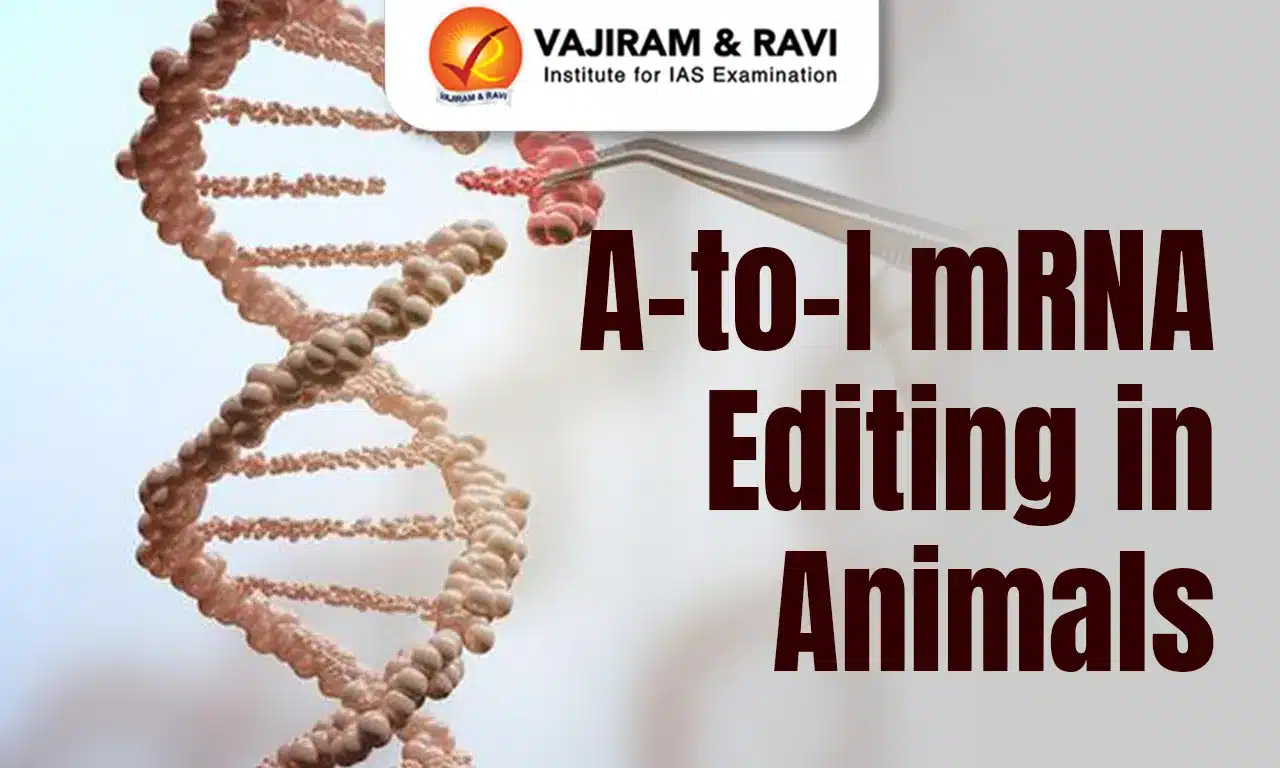
  • In A-to-I mRNA editing, the adenosine (A) in mRNA is enzymatically converted into inosine (I) by proteins called ADARs (Adenosine Deaminase Acting on RNA).
  • The ribosome reads inosine as guanine (G), altering the protein’s amino acid sequence post-transcriptionally, without any change in the DNA.
  • Functional Impact: A-to-I editing can change the codon identity, thereby producing a different amino acid in the resulting protein.
    • This may lead to functional protein diversification and alteration in protein stability or activity.
  • A major risk is misreading stop codons:
    • A stop codon like UAG or UGA may be edited to UGG, coding for tryptophan.
    • This allows the ribosome to continue protein synthesis, potentially creating abnormally long or malfunctioning proteins.

Discovery of PSC Genes

  • Researchers identified 71 genes in F. graminearum that contain premature stop codons (UAG) in their unedited mRNA.
  • These were termed PSC (premature stop codon-containing) genes.
  • Deleting these genes had:
    • No impact during asexual growth.
    • But significant disruption during sexual development, proving the essentiality of A-to-I editing in these stages.

A-to-I mRNA Editing in Animals FAQs

Q1: What is A-to-I mRNA editing?
Ans: A-to-I mRNA editing is a post-transcriptional RNA modification where adenosine (A) is converted to inosine (I) by the ADAR (Adenosine Deaminase Acting on RNA) enzyme.

Q2: What is the significance of inosine in mRNA?
Ans: Inosine is read as guanosine (G) by the cellular machinery, which can alter the resulting protein sequence, potentially affecting its function.

Source: TH

Polar Satellite Launch Vehicle (PSLV)

Polar Satellite Launch Vehicle (PSLV)

Polar Satellite Launch Vehicle (PSLV) Latest News

ISRO launched the PSLV-C61 mission from Sriharikota to place the EOS-09 satellite into a Sun-synchronous polar orbit. The mission failed due to a third-stage issue.

What is PSLV?

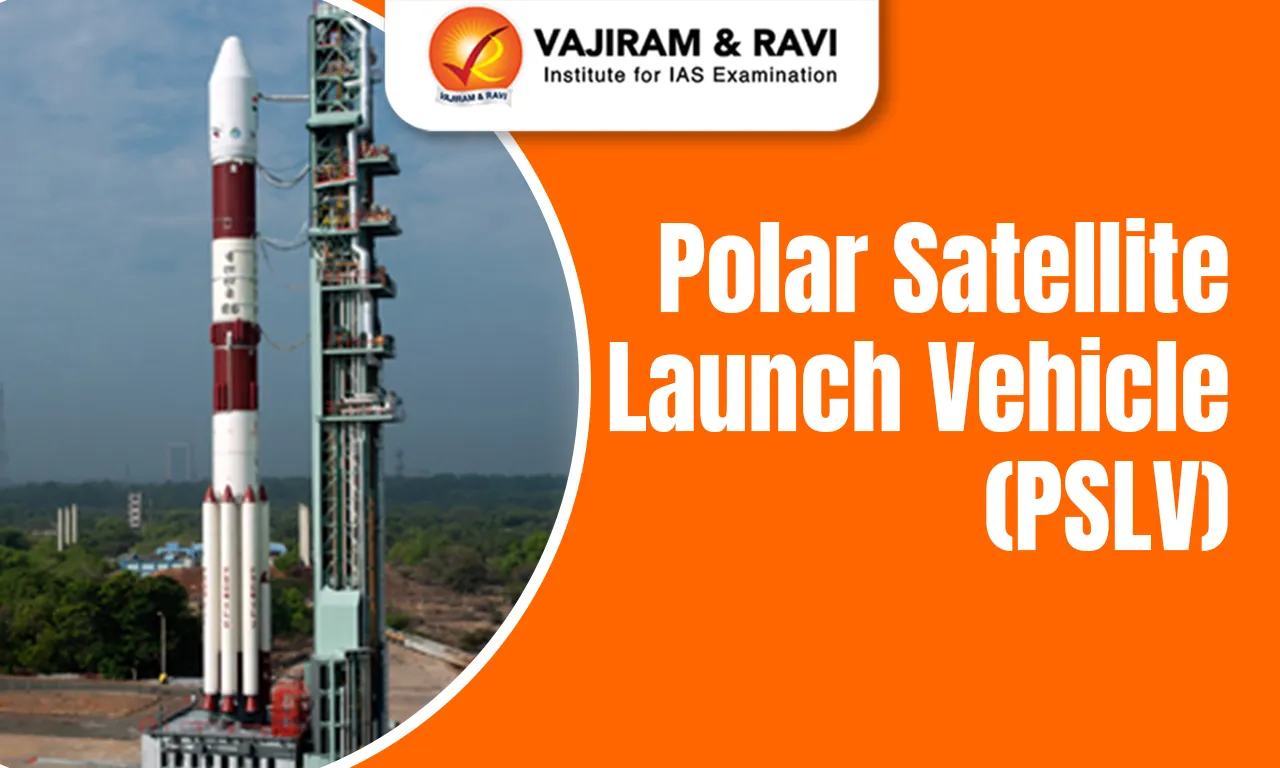
  • PSLV stands for Polar Satellite Launch Vehicle, a four-stage launch vehicle developed by the Indian Space Research Organisation (ISRO).
  • It is primarily designed to place satellites into Sun-synchronous polar orbits (SSPOs), which are ideal for Earth observation missions.
  • Each stage of PSLV is powered by a different engine and propellant combination, enabling it to carry medium-weight payloads to a variety of orbits with high precision.

Configuration and Design

  • The PSLV has four stages, with alternate solid and liquid propulsion systems:
    • First Stage:
      • Uses HTPB-based solid propellant (Hydroxyl-Terminated Polybutadiene).
      • In the XL configuration, it is supported by six strap-on boosters that enhance the initial thrust.
      • Capable of generating a peak thrust of 4.8 MegaNewtons (MN).
    • Second Stage: Powered by the Vikas engine, which uses a liquid fuel combination:
      • Unsymmetrical Dimethylhydrazine (UDMH) as fuel
      • Nitrogen Tetroxide (N₂O₄) as oxidiser
      • Generates a thrust of approximately 0.8 MN.
    • Third Stage: Reverts to solid propulsion, again using HTPB-based fuel.
    • Fourth Stage: Utilises two liquid engines burning Monomethylhydrazine (MMH) and Mixed Oxides of Nitrogen (MON).

Polar Satellite Launch Vehicle (PSLV) FAQs

Q1: What is the Polar Satellite Launch Vehicle (PSLV)?
Ans: PSLV is India’s third-generation satellite launch vehicle developed by ISRO, known for its reliability in launching satellites into Sun-Synchronous Polar Orbits.

Q2: Why is PSLV called the ‘Workhorse of ISRO’?
Ans: PSLV earned this title due to its consistent performance, high success rate, and ability to launch multiple satellites in a single mission.

Q3: What type of orbits can PSLV launch satellites into?
Ans: PSLV can launch satellites into Polar Orbits, Geosynchronous Transfer Orbits (GTO), and even sub-Geosynchronous orbits.

Source: TH

Tornado

Tornado

Tornado Latest News

Recently, over 20 people have died in the southern United States due to severe storms and tornado outbreaks affecting Missouri and Kentucky.

What is a Tornado?

  • tornado is a vertical, land-based column of violently rotating air that forms from the base of a thunderstorm to the ground.
  • It is characterised by a rapid cyclonic circulation and is often seen as a cloud-filled condensation funnel extending from the sky to the ground.
  • In cases of low humidity, the tornado may not form a visible funnel and may appear only as a swirl of dust or debris near the ground.
  • When such a rotating column of air forms over a water body, it is known as a waterspout.

Wind Speeds and Movement

  • Tornadoes typically exhibit wind speeds ranging from 105 to 322 km/h, but some extreme events can exceed this range.
  • They can be stationary or move at high speeds, often advancing at around 97 km/h across the landscape.
  • The sheer speed and intensity of the winds make tornadoes one of the most destructive natural phenomena on land.

Mechanism of Formation

  • Tornado formation is closely linked to interactions between contrasting air masses.
  • collision of warm, moist air (usually from tropical regions) with cool, dry air (typically from polar or upper regions), especially in the presence of a low-pressure system or trough, leads to the formation of thunderstorms and may trigger tornadoes.
  • Cyclonic circulations and atmospheric instability further contribute to the rotational dynamics needed for tornado development.
  • Geographical distribution: Tornadoes occur most commonly in mid-latitude regions (between 20° and 60° latitude in both hemispheres) where cold polar air meets warm tropical air, producing frequent thunderstorm activity.
    • The United States experiences the highest frequency of tornadoes globally, particularly in the region known as “Tornado Alley”.
    • Other countries prone to tornado occurrences include Argentina and Bangladesh, which also lie in the tropical-midlatitude interaction zones.
  • Measurement: The Enhanced Fujita Scale is used to classify the strength of tornadoes based on estimated wind speeds and associated damage levels.
    • The scale ranges from EF0 (weakest) to EF5 (strongest), with EF5 tornadoes being catastrophically destructive, often flattening buildings and uprooting trees.

Tornado FAQs

Q1: What is a tornado?
Ans: A tornado is a rapidly rotating column of air extending from a thunderstorm to the ground, often forming a visible funnel-shaped cloud.

Q2: In which region are tornadoes most common?
Ans: Tornadoes are most frequent in the United States, especially in "Tornado Alley", which includes states like Texas, Oklahoma, and Kansas.

Q3: What scale is used to measure tornado intensity?
Ans: Tornadoes are classified using the Enhanced Fujita (EF) scale, which ranges from EF0 to EF5 based on wind speed and damage caused.

Source: DW

New Caledonia

New Caledonia

New Caledonia Latest News

A high-stakes attempt by the French Overseas Minister to broker a new political accord for New Caledonia collapsed recently, plunging the French Pacific territory into profound uncertainty.

About New Caledonia

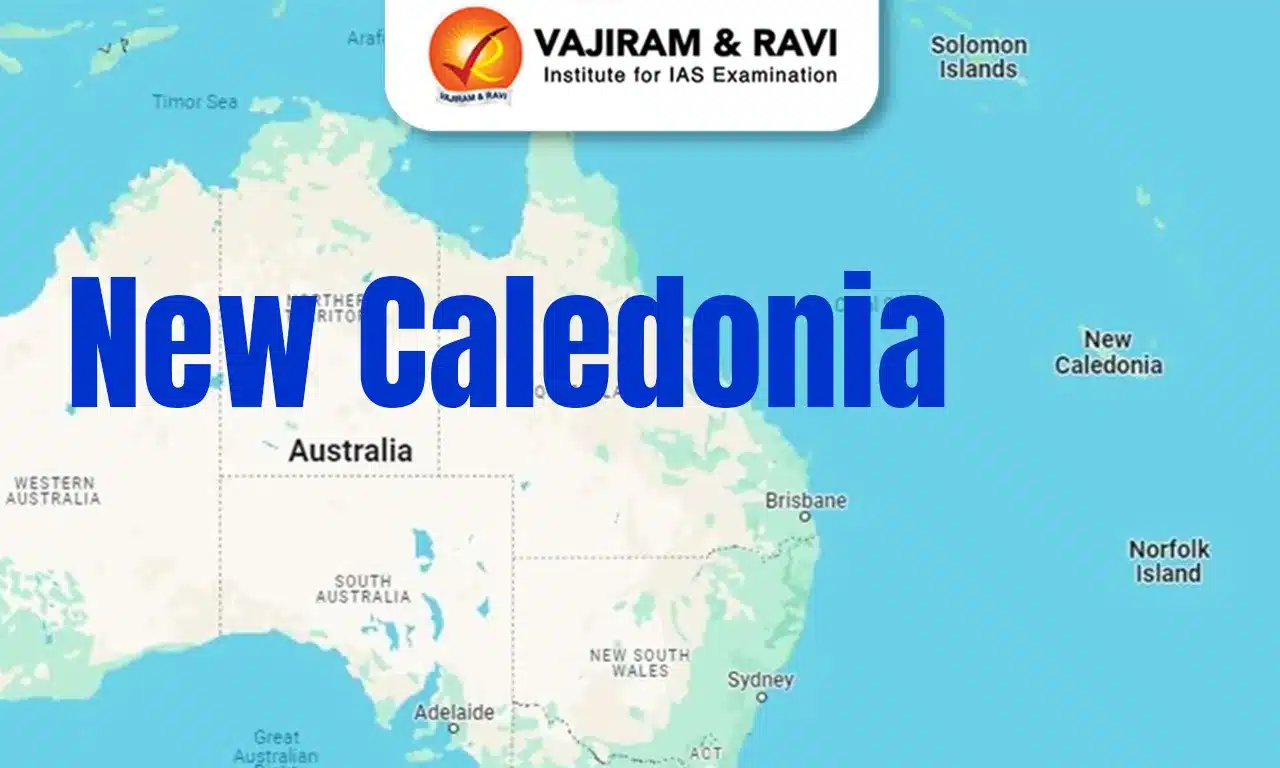
  • It is a French overseas territory located in the southwestern Pacific Ocean, approximately 1,500 km east of Australia.
  • It comprises the main island of Grande Terre (where the capital, Nouméa, is situated), the four Loyalty Islands (Ouvéa, Lifou, Tiga, and Maré), the Belep archipelago, the Isle of Pines, and some remote islands.
  • Just over 270,000 people live in New Caledonia (2019 census). 
  • Approximately 39 percent are indigenous ('Kanak'). The remainder are Caledonians of European, Polynesianand other (including Vietnamese, Indonesian and Algerian) origins.
  • It is one of the European Union's Overseas Countries and Territories (OCTs), but is not part of the European Union, the Euro or Schengen zones.

History of Island

  • New Caledonia, originally inhabited by the Kanaks, came under French control in 1853.
  • Post-WWII, Kanaks gained French citizenship, but 1960s French migration made them a minority, sparking an independence movement.
  • Tensions led to the Matignon Agreements (1988) and Nouméa Accord (1998), promising three independence referendums.
  • The 2018 and 2020 referendums favoured France. Despite COVID-19 concerns, the 2021 referendum also favoured France, angering the Kanaks.

Significance of New Caledonia for France

  • Strategic location: Situated in the South Pacific, New Caledonia provides France with a military and geopolitical presence in a region with growing global interest, particularly with increasing influence from China.
  • Economic resources: The island is rich in natural resources, notably nickel, which is vital for various industries, including manufacturing and technology. It holds about 25% of the world’s nickel reserves.
  • New Caledonia’s lagoons, with their diverse reefs and associated ecosystems, were designated a UNESCO World Heritage site in 2008.

New Caledonia FAQs

Q1: Is New Caledonia a country or not?

Ans: New Caledonia is a semi-autonomous French territory. 

Q2: Where is New Caledonia located?

Ans: East of Australia in the southwestern Pacific

Q3: New Caledonia is a territory of which country?

Ans: France

SourceTH

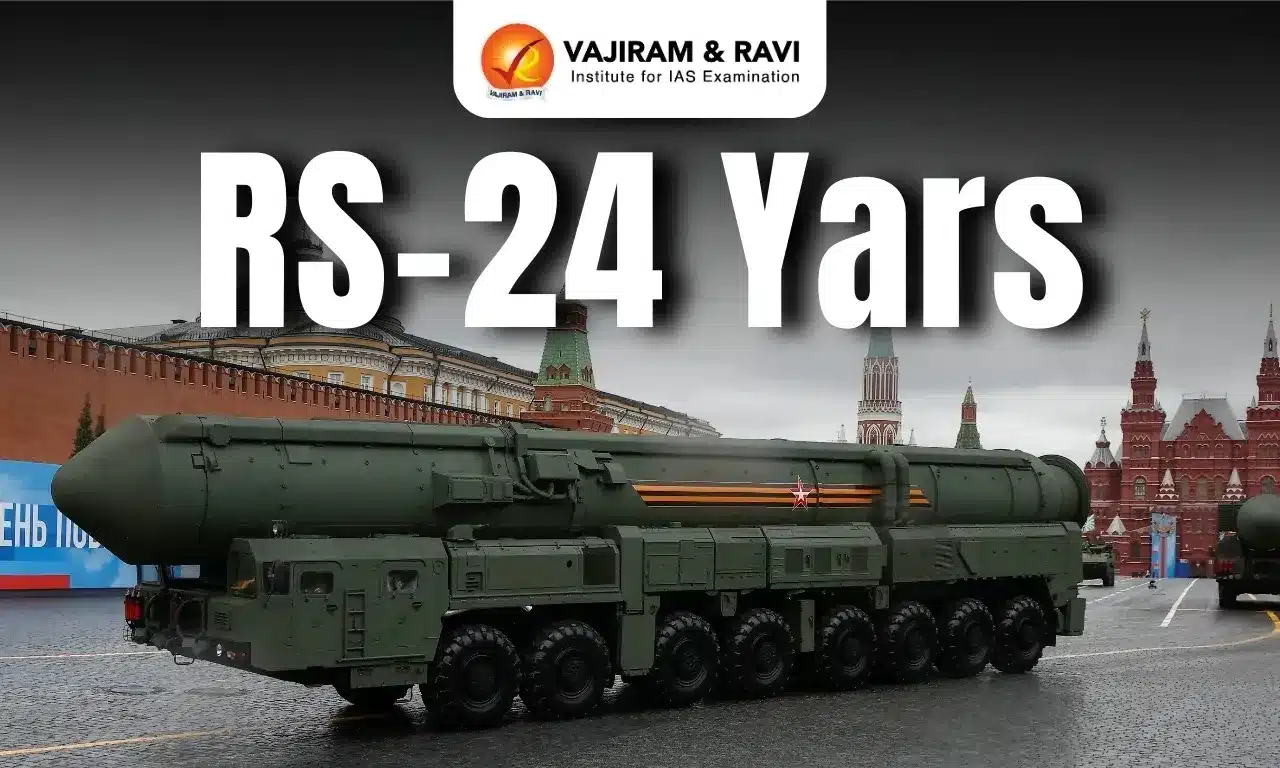
RS-24 Yars

RS-24 Yars

RS-24 Yars Latest News

Ukraine's military intelligence agency recently said Russia planned to conduct a "training and combat" launch of the RS-24 intercontinental ballistic missile from the Yars complex to intimidate Ukraine and the West.

About RS-24 Yars

  • The Yars RS-24 (NATO designation SS-29) is a Russian-made intercontinental ballistic missile (ICBM) system.
  • It is believed to have entered into service in February 2010. 
  • It is designed to replace Russia’s SS-19 Stiletto and SS-18 Satan ICBMs.
  • It is able to penetrate highly protected targets and also any current Ballistic Missile Defense (BMD) System.

Yars RS-24 Features

  • It is a three-stage, solid propellantMIRV-capable (Multiple Independently Targetable Reentry Vehicles) ICBM.
  • The RS-24 missile will be deployed both in silos and on mobile platforms.
  • The missile is estimated to be 22.5 meters in length and 2 meters in diameter.
  • The total launch weight of the RS-24 is assessed to be 49,000 kg and is expected to have a minimum range of 2,000 km and a maximum of 10,500 km.
  • The missile uses an guidance upgraded system of the inertial and Glonass systems.
  • The missile can be armed with up to 10 MIRVs, each containing a thermonuclear warhead weighing 300 kilotons.
  • It has the capability to manoeuvre during flight and deploy both active and passive decoys, which gives Yars an advantage against modern missile defence systems.

RS-24 Yars FAQs

Q1: What is the RS-24 Yars?

Ans: Russian intercontinental ballistic missile (ICBM)

Q2: What is the maximum range of the RS-24 Yars missile?

Ans: 10,500 km

Q3: What is the estimated total launch weight of the RS-24 Yars?

Ans: 49,000 kg

SourceREUT

How Live Baiting Threatens India’s Tigers and Conservation Ethics

Live Baiting Threatens India’s Tigers

Live Baiting in Tiger Reserves Latest News

  • Kankati, a 23-month-old tigress in Ranthambore, has killed two people within a month. She and her siblings were raised with live bait provided to their sick mother, Arrowhead. 
  • This exposure has made them lose their fear of humans. Experts worry this could make Kankati and her siblings a threat to forest staff and visitors.

Live Baiting

  • Live baiting involves offering a live prey animal to a predator. Historically, British hunters used it to lure tigers for easy shooting from hidden perches.

Use in Tiger Tourism

  • In post-Independence India, live baiting became common in tiger reserves for tourism. 
  • It allowed visitors to witness tigers feeding, especially in places like Sariska, until the practice was banned for tourism in 1982 by Prime Minister Indira Gandhi.

Continued Use in Conflict Situations

  • Despite the ban in tourism, live baiting still continues in conflict scenarios to trap big cats like leopards, using goats or dogs.

Present-Day Practice

  • Today, live baiting is mainly used to feed injured or aging tigers that can no longer hunt, typically offering buffalo calves every week or ten days.

Live Baiting: Prohibited but Not Banned for Injured Tigers

  • While live baiting for tiger sightings is banned, using it for old or injured tigers is not formally prohibited under NTCA’s (National Tiger Conservation Authority) Standard Operating Procedure (SOP), though it is “not advisable.”

NTCA’s Conservation Principle: Minimal Human Intervention

  • The SOP emphasizes minimal human involvement in managing wild tiger populations. 
  • Artificial feeding goes against the principle of “survival of the fittest,” and interferes with natural selection.

Risks of Artificial Feeding

  • Feeding wild tigers may lead to their habituation to humans, increasing the risk of conflict — including attacks on livestock or people.

Expert View: Use Only as Emergency

  • Conservationists warn that baiting should only be a short-term, emergency strategy — for example, for injured tigresses with cubs. 
  • Even then, it should be limited to once every two weeks and not exceed three months, to prevent tigers from becoming fearless around humans.

Misplaced Kindness vs. Natural Order

  • In the wild, death due to injury, starvation, or competition is natural. However, a wave of public sentiment — especially post-2005 Sariska crisis — led to increasing human intervention under the guise of compassion.
  • Human-driven compassion, though well-intentioned, often disrupts natural wildlife dynamics — leading to dependency, loss of survival instincts, and greater risks for both tigers and humans.

The Case of the Guda Cubs: Raised But Not Wild

  • Following the poisoning of the Guda tigress in 2008, her cubs were regularly baited with buffalo calves. 
  • Raised without learning to hunt, the male (T36) was later killed by a wild rival. 
  • His sister (T37) survived due to the lower threat female tigers face from rivals.

Simba’s Story: Tragedy of Dependency

  • Simba, another cub raised on bait after his mother’s death, died from porcupine quill injuries after a failed hunt — a result of his lack of survival skills in the wild.

Geriatric Care for Tigers: Compassion or Interference

  • By 2010, baiting extended to aged tigers like Machhli and Anantpura male (T2). 
  • T2 eventually died too weak to hunt, while Machhli lived unnaturally long in the wild — aided by human-supplied bait for seven years until 2016.

Beyond Feeding: A Culture of Over-Intervention

  • While live baiting is limited to reserves like Ranthambhore and Tadoba, a broader culture of quick, emotional intervention is spreading across India's tiger reserves.
  • Visible injuries or limps in tigers often spark tourist-driven demands for treatment, resulting in increased tranquilisation and medical attention for even minor issues.
  • From trucking in prey animals to creating extra water holes during harsh summers, reserves like Corbett, Bandipur, Kanha, and Pench are increasingly altering natural conditions to sustain tiger populations unnaturally.
  • Experts warn that excessive human care leads to unnatural survival of weaker tigers, increased competition, and higher chances of human-tiger conflict.

The Expert View: Protect, Don’t Pamper

  • Experts emphasize that wild tigers do not need pet-like care. 
  • The best conservation strategy is preserving natural habitats and prey — and letting nature take its course.

Live Baiting in Tiger Reserves FAQs

Q1. What is live baiting in tiger conservation?

Ans. Live baiting involves tying live animals to lure tigers for better photo or tracking opportunities in reserves.

Q2. Where has live baiting been reported recently?

Ans. Instances were reported in Ranthambore Tiger Reserve, Rajasthan, during attempts to locate missing tiger T-117.

Q3. Why is live baiting controversial in India?

Ans. It violates wildlife ethics, risks animal cruelty, and contradicts India's Wildlife Protection Act.

Q4. What are the conservation risks of live baiting?

Ans. It alters tiger behavior, increases dependency on human-provided prey, and disrupts natural hunting instincts.

Q5. What legal actions address live baiting?

Ans. Wildlife Protection Act, 1972, prohibits such practices; conservationists call for strict enforcement and transparency.

Source: IE

India-Bangladesh Trade Strains Deepen as China Expands Influence

India-Bangladesh Trade Strains Deepen

India-Bangladesh Trade Tensions Latest News

  • Bangladesh set to graduate from the United Nations’ Least Developed Country (LDC) category in November 2026. This will end its duty-free access to export markets such as the European Union. 
  • To offset the impact, Bangladesh is shifting economically towards China. This pivot is straining its trade relations with India.

Growing India–Bangladesh Trade Tensions

  • Political and economic tensions between India and Bangladesh are rising. 
  • India has imposed import restrictions on Bangladeshi goods, especially ready-made garments — Bangladesh's top export and foreign exchange earner.

Key Trade Facilities Withdrawn

  • Earlier in April, India ended a five-year-old transhipment facility that allowed Bangladesh to export goods to Western markets via Indian land routes and airports. 
  • This marked an early sign of worsening ties.

Reasons Behind India's Moves

  • Indian officials cite reciprocal trade restrictions by Bangladesh and congestion at Indian ports as reasons for these decisions.

Role of Chinese Influence

  • Bangladesh’s Chief Adviser Muhammad Yunus has pushed for greater Chinese economic presence near India’s Northeast. 
  • This aligns with China's strategy to curb India's regional influence.

Strategic Context

  • India’s refusal to join the China-led RCEP and its push to integrate with Western economies (US, UK, EU, EFTA) reflect its broader economic shift, which contrasts with Bangladesh’s tilt towards China.

India Targets Garment Imports from Bangladesh

  • New Delhi has imposed restrictions on garment imports from Bangladesh to boost domestic textile jobs. 
  • This move aligns with India’s strategy to promote labour-intensive sectors under new free trade agreements.

Push from Trade Agreements

  • India’s textile sector is expected to benefit from recent FTAs. 
  • Indian garments now enjoy duty-free access to the UK, and similar access is being pursued with the EU and US.

Domestic Industry's Longstanding Concerns

  • Indian textile firms have raised concerns over Bangladesh’s price advantage. 
  • Bangladeshi exporters benefit from duty-free Chinese fabric and export subsidies, making their products 10–15% cheaper in the Indian market.

Uneven Playing Field

  • According to the Global Trade Research Initiative (GTRI), Indian manufacturers face higher costs due to a 5% GST on locally sourced fabric, while Bangladesh enjoys import and export incentives. 
  • Global brands sourcing from Bangladesh further impact India's domestic market.

Bangladesh Imposes Restrictions on Indian Yarn

  • Bangladesh has restricted Indian yarn exports via land ports, allowing them only through seaports. 
  • This move reportedly caters to domestic textile mill demands, despite land routes being faster and cheaper.

Impact on Trade

  • Yarn exports form a significant portion—20%—of India’s $11.38 billion exports to Bangladesh in FY25. 
  • In FY24, cotton yarn and handloom exports to Dhaka totaled $2.39 billion. 
  • In contrast, India annually imports over $700 million worth of ready-made garments from Bangladesh.

China's Expanding Influence in Bangladesh

  • Since June 2020, China has granted 97% of Bangladeshi goods duty-free access to its domestic market. 
  • It is also helping Bangladesh upgrade its industrial base and diversify exports.

Strategic Infrastructure and Defense Ties

  • Bangladesh hosts the highest number of Chinese-backed infrastructure projects in South Asia. 
  • It is also the second-largest global buyer of Chinese military hardware, accounting for over 70% of its major arms imports.

Political Shift Favors Beijing

  • The fall of Sheikh Hasina’s pro-India government in mid-2024 and the rise of an interim administration under Muhammad Yunus have accelerated Bangladesh’s alignment with China. 
  • Yunus’s March 2025 visit to Beijing resulted in $2.1 billion in investments and cooperation agreements.

China's Strategic Footprint

  • China’s involvement in sensitive projects like the Teesta River development signals a deeper strategic presence in Bangladesh, directly challenging India’s regional influence.

India-Bangladesh Trade Tensions FAQs

Q1. Why are India-Bangladesh trade ties worsening?

Ans. India imposed restrictions on Bangladeshi garments; Bangladesh restricted Indian yarn via land ports.

Q2. How is China influencing Bangladesh’s economy?

Ans. China offers duty-free access, infrastructure investments, and military hardware, deepening Bangladesh’s dependence.

Q3. What did India withdraw recently?

Ans. India ended a key transshipment facility that helped Bangladesh export to the West via Indian routes.

Q4. How does politics affect trade decisions?

Ans. Change in Bangladesh’s leadership in 2024 favored China, straining traditionally pro-India trade ties.

Q5. What is India’s economic counter-strategy?

Ans. India boosts textile exports through FTAs and promotes local industries with policy support and import restrictions.

Source: IE | ToI

India’s Nuclear Power Sector Reform: Opening Doors for Private and Foreign Participation

Nuclear Sector Reforms

Nuclear Sector Latest News

  • The Union government is likely to move two crucial amendments in the laws governing the country’s atomic energy sector in the upcoming monsoon session of Parliament.

Introduction

  • India is on the cusp of a transformative reform in its nuclear energy sector. 
  • The government is planning two key legislative amendments aimed at opening up atomic energy generation to private and foreign players. 
  • This move follows a significant regulatory clearance from the United States and is intended to unlock the commercial potential of the Indo-US civil nuclear agreement signed nearly two decades ago.

Legislative Reforms in Nuclear Sector

  • The government is expected to table two critical amendments during the upcoming monsoon session of Parliament:
  • Amendment to Nuclear Liability Law
    • The first proposed amendment pertains to the Civil Liability for Nuclear Damage Act, 2010
    • Currently, the law channels the liability for nuclear accidents to equipment vendors, which has deterred major global players such as GE-Hitachi, Westinghouse, and Framatome from investing in India. The amendment seeks to:
    • Cap the liability of vendors to the original value of the contract.
    • Introduce a time-bound liability window, beyond which vendors will not be held responsible.
    • This is expected to reassure foreign investors by mitigating their long-term legal and financial risks.
  • Amendment to the Atomic Energy Act, 1962
    • The second amendment would allow private Indian companies, and possibly foreign firms, to operate nuclear power plants as generators, an activity currently reserved for state-owned entities like NPCIL and NTPC. This will:
    • Enable public-private partnerships in nuclear energy.
    • Open doors for minority equity participation by foreign firms in upcoming nuclear projects.
    • Increase competition, technology infusion, and investment in India’s nuclear sector.

US Clearance Boosts India’s Position

  • In March 2025, the US Department of Energy (DoE) gave regulatory clearance to Holtec International, allowing the company to transfer small modular reactor (SMR) technology to its Indian partners including Tata Consulting Engineers and Larsen & Toubro. The approval under Part 810 of the US Atomic Energy Act was a game-changer because:
    • It had previously prohibited US firms from engaging in nuclear design and manufacturing work in India.
    • The clearance now enables co-production and technology transfer for SMRs in India, aligning with India’s goals to localize manufacturing and reduce energy import dependency.
  • This marks a significant shift, aligning Washington’s regulatory stance with New Delhi’s strategic and commercial interests.

Broader Geostrategic and Trade Context

  • These reforms are part of a broader trade and investment outreach with the US, potentially contributing to an Indo-US trade pact currently under negotiation. The inclusion of nuclear cooperation enhances the bilateral relationship by:
    • Expanding clean energy cooperation.
    • Strengthening strategic trust between the two nations.
    • Positioning India as a future export hub for nuclear technology, particularly SMRs.

Implications for India’s Energy Security and Climate Goals

  • The opening of the nuclear sector to private and foreign players could be a pivotal moment for India’s energy transition, especially as it aims to achieve net-zero emissions by 2070. Key implications include:
    • Accelerated nuclear capacity addition, which currently lags behind other clean energy sectors.
    • Diversification of clean energy sources, reducing reliance on coal and imported fossil fuels.
    • Promotion of innovation through global technology partnerships and domestic manufacturing.
  • With India’s electricity demand projected to double by 2040, nuclear energy can play a vital role in ensuring baseload power availability with minimal carbon footprint.

Challenges and the Road Ahead

  • Despite the potential, challenges remain:
    • Political opposition and public safety concerns about nuclear energy.
    • The arduous legislative path, particularly for amending the liability law.
    • Ensuring regulatory compliance and safety mechanisms while involving private players.
  • However, if these reforms are passed, they could position India as a major hub for next-generation nuclear technologies like SMRs and advanced reactors, boosting energy independence and technological self-reliance.

Conclusion

  • The Indian government’s move to amend nuclear laws and allow private and foreign participation represents a landmark shift in policy. 
  • Backed by recent US regulatory clearances, this strategic reform has the potential to not only revitalize India’s nuclear energy program but also integrate it more deeply into global clean energy supply chains. 
  • The success of this initiative will depend on the timely passage of legislation, regulatory preparedness, and stakeholder consensus.

India’s Nuclear Energy Sector Reform FAQ

Q1: What is the aim of the proposed amendment to the Atomic Energy Act, 1962?

Ans: To allow private and foreign players to operate nuclear power plants in India.

Q2: What change is proposed to the nuclear liability law?

Ans: To cap vendor liability and limit it to a defined time frame and contract value.

Q3: Which US company recently got clearance to transfer nuclear tech to India?

Ans: Holtec International received clearance under Part 810 of the US Atomic Energy Act.

Q4: Why is India amending its nuclear laws now?

Ans: To attract foreign investment and leverage the Indo-US nuclear deal after US regulatory relaxations.

Q5: How will this impact India’s clean energy goals?

Ans: It will accelerate nuclear energy development, aiding India’s transition to low-carbon power.

Enquire Now