
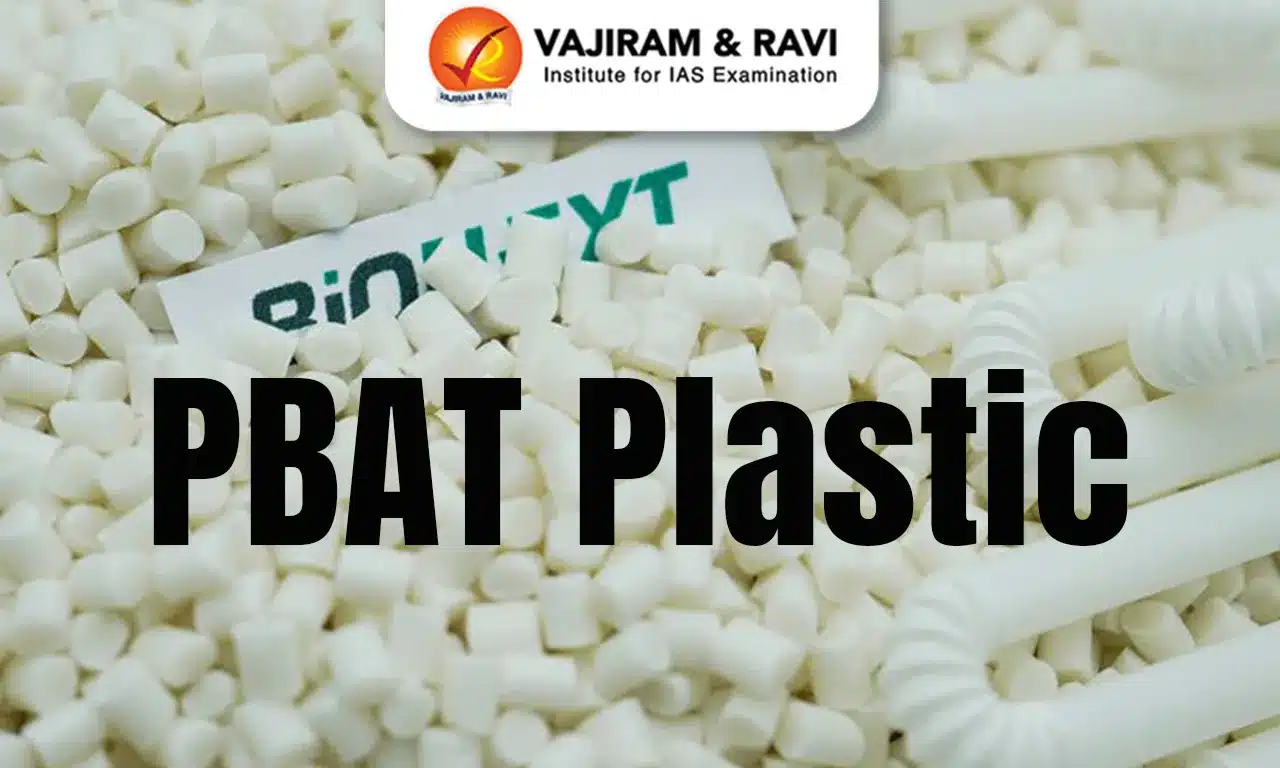
PBAT Plastic Latest News
Kamalpur Nagar Panchayat in Tripura has introduced compostable bags made from PBAT as a sustainable alternative to single-use plastic (SUP).
What is PBAT Plastic?
- PBAT (Polybutylene Adipate Terephthalate) is a biodegradable thermoplastic polymer used as an eco-friendly substitute for traditional plastics.
- It is a copolymer of adipic acid, 1,4-butanediol, and terephthalic acid and can be processed using conventional plastic manufacturing methods.
- PBAT is often blended with other biopolymers to enhance its mechanical and barrier properties.
Properties of PBAT
- 100% compostable – breaks down into water, CO₂, and biomass under industrial composting conditions within 180 days.
- Flexible and tough, making it ideal for bags, films, and packaging.
- It is moisture-resistant, chemically inert, and offers good barrier properties.
PBAT vs PLA
|
Feature |
PBAT |
PLA (Polylactic Acid) |
|
Composition |
Copolymer of adipate + terephthalate |
Made from lactic acid (corn/sugarcane) |
|
Flexibility |
Flexible and tough |
Rigid and brittle |
|
Applications |
Bags, packaging |
Cutlery, electronics packaging |
|
Degradation Rate |
Faster composting |
Slower degradation |
|
Cost |
Lower than PLA, but higher than conventional plastics |
Higher than PBAT |
PBAT Plastic FAQs
Q1: What is PBAT plastic?
Ans: PBAT (Polybutylene Adipate Terephthalate) is a biodegradable and compostable plastic that behaves like conventional plastic but decomposes in the environment under industrial composting conditions.
Q2: Is PBAT plastic eco-friendly?
Ans: Yes, PBAT is considered eco-friendly as it breaks down into carbon dioxide, water, and biomass, reducing plastic pollution.
Q3: What is PBAT made from?
Ans: PBAT is a fossil fuel-derived polymer synthesised from butanediol, adipic acid, and terephthalic acid. Though biodegradable, it is not bio-based.
Source: PIB
