
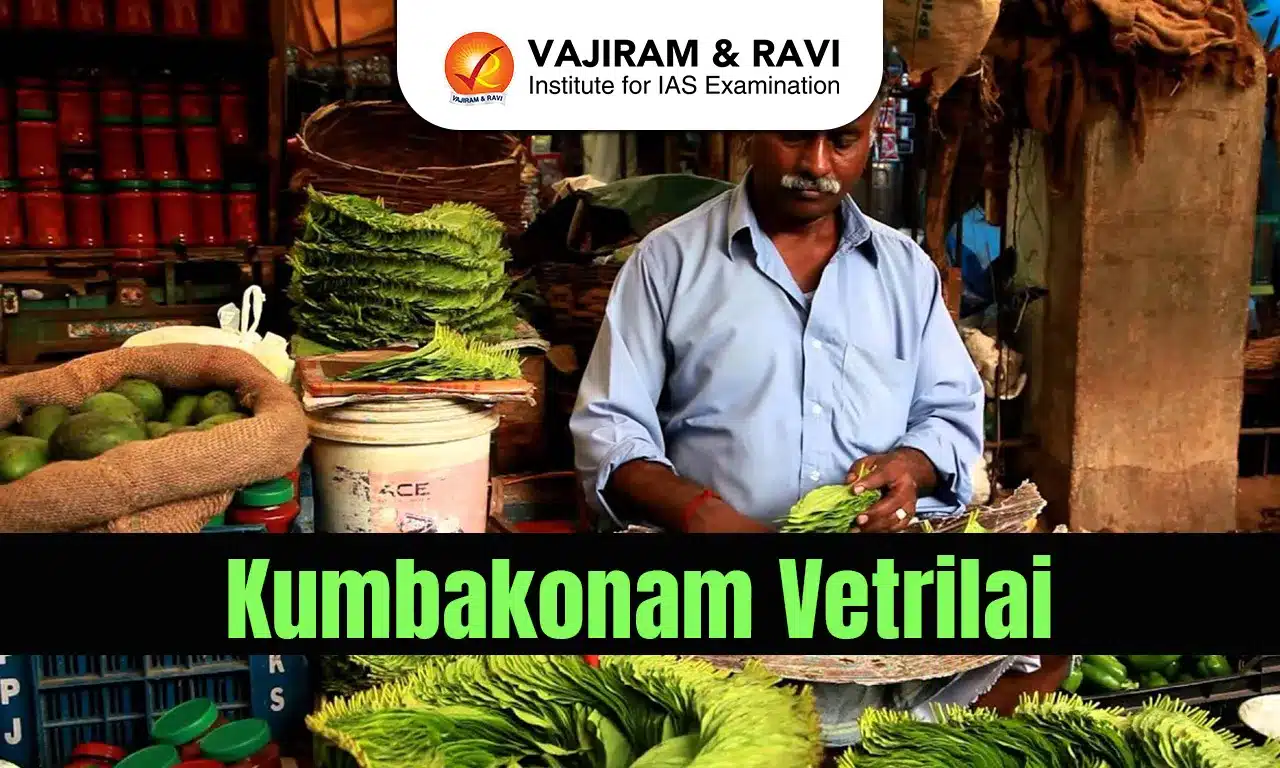
KumbakonamVetrilai Latest News
Recently, the Kumbakonamvetrilai or betel leaf or paan leaf was granted a Geographical Indication (GI) tag by the Government of India.
About KumbakonamVetrilai
- It is predominantly grown in Thanjavur’s fertile Cauvery river basin, giving it a unique taste and aroma.
- The dark to light green, oblong heart-shaped leaves with a pungent taste are cultivated.
- The betel leaf has been widely cultivated across Kumbakonam and adjacent villages of Ayyampettai, Swamimalai and Rajagiri in Thanjavur district of Tamil Nadu.
- It is a staple in South Asian households and is central to preparing paan, a popular South Asian post-meal chew.
- The Kumbakonam betel leaf is exported to some countries.
Harvesting Process of Kumbakonam Vetrilai
- After 20–25 days of planting, kolunthu vetrilai – the first leaves – emerge.
- The first-year harvest happens from the seventh to 12th month.
- It is called maaruvethalai, produces larger leaves with a better shelf life of six to seven days, and fetches higher prices in the market.
- Second and third-year yields – kelavethalai and kattavethalai – are smaller compared to the first year’s yield.
KumbakonamVetrilai FAQs
Q1: Why is Kumbakonam famous for betel leaves?
Ans: The uniqueness of the Kumbakonam betel leaf comes from the soil in Cauvery River banks, which is rich in organic content.
Q2: Which country is famous for betel leaf?
Ans: Major betel leaf growing countries are Sri Lanka, India, Thailand and Bangladesh.
Source: IE
