Dag Hammarskjöld Medal

Dag Hammarskjöld Medal

Dag Hammarskjöld Medal Latest News

Two Indian peacekeepers who lost their lives while serving under the U.N. flag last year will be honoured posthumously with the Dag Hammarskjold Medal by the United Nations as it commemorates International Day of U.N. Peacekeepers on May 29.

About Dag Hammarskjöld Medal

  • It is the highest honour awarded to UN peacekeepers. 
  • It was established in 1997 as a posthumous award given to members of peacekeeping operations who lost their lives during service with a peacekeeping operation under the operational control and authority of the United Nations.
  • Each year on Peacekeeper's Day (May 29), this medal is awarded to any member state that has lost one or more military or police peacekeepers at a ceremony at United Nations headquarters.
  • It is named after the second Secretary-General of the United Nations, Dag Hammarskjold.
  • On 6 October 1998, the first Medal was presented to the family of Dag Hammarskjöld. 
  • Dag Hammarskjold was Secretary-General of the United Nations from April 10, 1953, until September 18, 1961, when he died in a plane crash while on a peace mission in the Congo. 
  • The second medal honoured Commandant René de Labarrière, Military Observer in the United Nations Truce Supervision Organization, who was the first peacekeeper to lose his life in a United Nations peacekeeping operation, in 1948.

Other UN Awards

  • Captain Mbaye Diagne Medal for Exceptional Courage: It is awarded to those military, police, civilian United Nations personnel and associated personnel who demonstrate exceptional courage in the face of extreme danger while fulfilling the mandate of their missions or their functions in the service of humanity and the United Nations.
  • UN Military Gender Advocate of the Year Award: It was started in 2016 to recognise the dedication and effort of an individual peacekeeper in promoting the principles within the UN Security Council Resolution 1325.

India and UN Peacekeeping

  • Since the 1950s, India has sent over 290,000 peacekeepers to more than 50 missions worldwide, making it the largest contributor to UN peacekeeping efforts. 
  • Today, over 5,000 Indian troops serve in nine of the eleven active missions, often in dangerous and hostile regions, dedicated to upholding global peace and security. 
  • Beyond deployments, India actively strengthens UN missions through training, capacity building, and technological support.

Dag Hammarskjöld Medal FAQs

Q1: What is the Dag Hammarskjöld Medal?

Ans: The highest honour awarded to UN peacekeepers who lost their lives in service.

Q2: In which year was the Dag Hammarskjöld Medal established?

Ans: It was established in 1997 as a posthumous award.

Q3: Who was honored with the first Dag Hammarskjöld Medal in 1998?

Ans: On 6 October 1998, the first Medal was presented to the family of Dag Hammarskjöld.

SourceTH

Stromatolites

Stromatolites

Stromatolites Latest News 

Recently, a large stromatolites — dating back to 600 million years unearthed in the pine-clad ridges of Chambaghat in Solan district of Himachal Pradesh.

About Stromatolites

  • Stromatolites are organo-sedimentary structures formed from the entrapment of calcium carbonate precipitates by algae and cyanobacteria.
  • They are biosedimentary structures produced in shallow marine seas.
  • These structures are usually characterized by thin, alternating light and dark layers that may be flat, hummocky, or dome-shaped. 
  • Stromatolites were common in Precambrian time (i.e., more than 542 million years ago).
  • Most stromatolites are marine, but some forms from Proterozoic strata more than 2 ½ billion years old are interpreted as inhabiting intertidal areas and freshwater ponds and lakes.
  • Living stromatolites are found in only a few salty lagoons or bays on Earth.
  • The stromatolites at Chambaghat lie within the Krol Group of sedimentary rocks, comprising limestone, shale, and sandstone, formed in a shallow marine environment of what was once the Tethys Sea.
  • This region was once part of Gondwana, the southern supercontinent that included India, South America, Africa, and others.
  • The Indian plate’s northward drift and collision with Eurasia lifted marine sediments, including stromatolites, thousands of meters skyward. 

Significance of Stromatolites

  • These ancient structures offer a window into a time when Earth’s atmosphere was dominated by greenhouse gases, and oxygen was nonexistent.
  • Their presence in the Himalayas, far from any current coastline, reveals a story of tectonic shifts, lost oceans, and the microbial origins of life.

Stromatolites in India

  • Chitrakoot, Uttar Pradesh: Known for columnar stromatolites in Vindhyan limestones.
  • Morni Hills, Haryana: Features well-preserved stromatolite beds in dolomite formations.
  • Mussoorie and Nainital, Uttarakhand: Sites in the Krol Belt showcase Precambrian marine sedimentation.
  • Jaisalmer Fossil Park, Rajasthan: A protected area highlighting a range of Mesozoic fossils, including marine life.
  • Dharwar Supergroup, Karnataka: Neoarchean stromatolites in the Chitradurga schist belt, over 2.6 billion years old.
  • Bhima Basin, Karnataka: Precambrian stromatolites preserved in shallow marine limestones.

Stromatolites FAQs

Q1: Did stromatolites create oxygen?

Ans: In Western Australia, 3.5bn-year-old stromatolites built up the oxygen content of the Earth's atmosphere to about 20%

Q2: What is the significance of stromatolites in Earth's history?

Ans: Stromatolites, the bio sedimentary products of microbe-sediment interactions, have the potential to provide significant information on the interaction of the biosphere, atmosphere, hydrosphere, and litho-sphere

Q3: What is the oldest fossil found in India?

Ans: Dickinsonia

Source: IE

Modified Interest Subvention Scheme

Modified Interest Subvention Scheme

Modified Interest Subvention Scheme Latest News

Recently, the Union Cabinet approved the continuation of the Interest Subvention (IS) component under the Modified Interest Subvention Scheme (MISS) for the financial year 2025-26.

About Modified Interest Subvention Scheme

  • It is a Central Sector Scheme
  • It is aimed at ensuring the availability of short-term credit to farmers at an affordable interest rate through Kisan Credit card (KCC).
  • Under the Scheme
    • Farmers received short-term loans of up to Rs.3 lakh through Kisan Credit Cards (KCC) at a subsidized interest rate of 7%, with 1.5% interest subvention provided to eligible lending institutions.
    • Additionally, farmers repaying loans promptly are eligible for an incentive of up to 3% as Prompt Repayment Incentive (PRI) effectively reducing their interest rate on KCC loans to 4%.
    • For loans taken exclusively for animal husbandry or fisheries, the interest benefit is applicable up to Rs.2 lakh.
  • No changes have been proposed in the structure or other components of the scheme.
  • The scheme is implemented and monitored by the Reserve Bank of India (RBI) and National Bank for Agriculture and Rural Development (NABARD).
  • Through Public Sector Banks, Regional Rural Banks (RRBs), Cooperative Banks and Private Sector Banks operating in rural and semi urban areas, they ensure that the interest subvention benefits reach the farmers.

Modified Interest Subvention Scheme FAQs

Q1: When was the modified interest subvention scheme launched?

Ans: 2006-07

Q2: What is the full form of KCC?

Ans: KCC stands for Kisan Credit Card. It is a type of credit card that is offered to the farmers by the government of India. 

Source: PIB

Stingless Bees

Stingless Bees_

Stingless Bees Latest News

A new study has shown that stingless bees, which produce a high-value honey with a distinct flavour, can increase the yield and quality of crops.

About Stingless Bees

  • A stingless bee is a bee that appears very similar to a honeybee, but is incapable of stinging.
  • Approximately 550 species of stingless bees are found within several genera that are members of the Meliponini tribe. They are also related to bumblebees and carpenter bees.
  • Common genera of stingless bees: Austroplebeia, Melipona, and Tetragonula
  • They do possess stingers, but they are too small to be useful in defense. Instead of stinging, stingless bees use their mandibles to bite their attackers.
  • Benefits: Stingless bees can be used for pollination without fear of being stung. They are known for their popular medicinal honey and pollination potential, which paves the way for the formulation of crop pollination calendars to benefit all stakeholders. 

Distribution of Stingless Bees

  • Africa, Australia, Southeast Asia, and parts of the Americas are the main areas where the stingless bee is found. 
  • In India, these bees are reported primarily from the northeastern, eastern, and southern Indian States. In the northeast, these bees are reared traditionally in homestead apiaries.

Stingless Bees FAQs

Q1: What are the benefits of stingless bees?

Ans: Tropical Meliponini bees produce stingless bee honey (SBH). Studies have shown beneficial properties, including antibacterial, bacteriostatic, anti-inflammatory, neurotherapeutic, neuroprotective.

Q2: What is Pollination?

Ans: It is the act of transferring pollen grains from the male anther of a flower to the female stigma. The goal of every living organism, including plants, is to create offspring for the next generation.

Source: TH

Nurdles

Nurdles

Nurdles Latest News

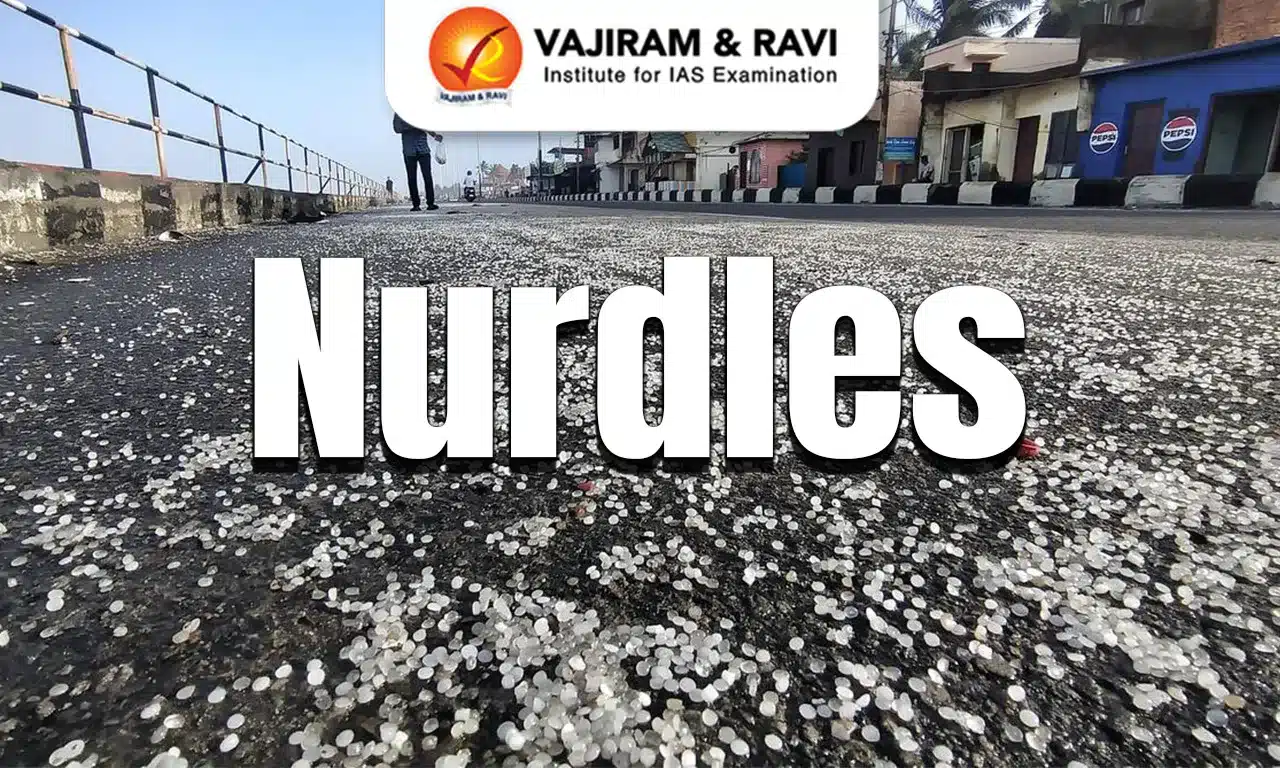
Recently, tiny plastic pellets (nurdles) were found on beaches in Thiruvananthapuram in Kerala following the sinking of the container vessel MSC ELSA3.

About Nurdles

  • These aresmall pre-formed masses of moulding material that have relatively uniform dimensions within a specific batch. These pellets are utilised as raw material in moulding and extrusion operations.
  • When in the form of microplastics, these pellets are commonly referred to as ‘nurdles’ and serve as the foundational material for manufacturing a wide range of plastic products.
  • They are classified as primary microplastics, these pellets and are between 1 mm to 5 mm in diameter. They constitute a major component in the global plastic chain.
  • Microplastic nurdles are mainly composed of polyethene, polypropylene, polystyrene, and polyvinyl chloride.
  • These pellets are melted and moulded into various products, including packaging, water bottles, toys, and textiles.

Impact of Nurdles on Environment

  • These pellets remain a dangerous pollutant. Their short- and long-term impacts include habitat contamination and their breaking up into micro and nano plastics and entering the food chain.
  • They could have serious implications for the marine and coastal ecosystems and humans.

Nurdles FAQs

Q1: What is the meaning of microbeads?

Ans: Microbeads are tiny pieces of plastic, often microscopic in size, that are added to a range of products, including rinse-off cosmetics, personal care and cleaning products.

Q2: What are nurdles used for?

Ans: Nurdles are melted down and made into many plastic items, from clothes to cars, food wrappers to artificial Christmas trees.

Source: TH

Seven Summits Challenge

Seven Summits Challenge

Seven Summits Challenge Latest News

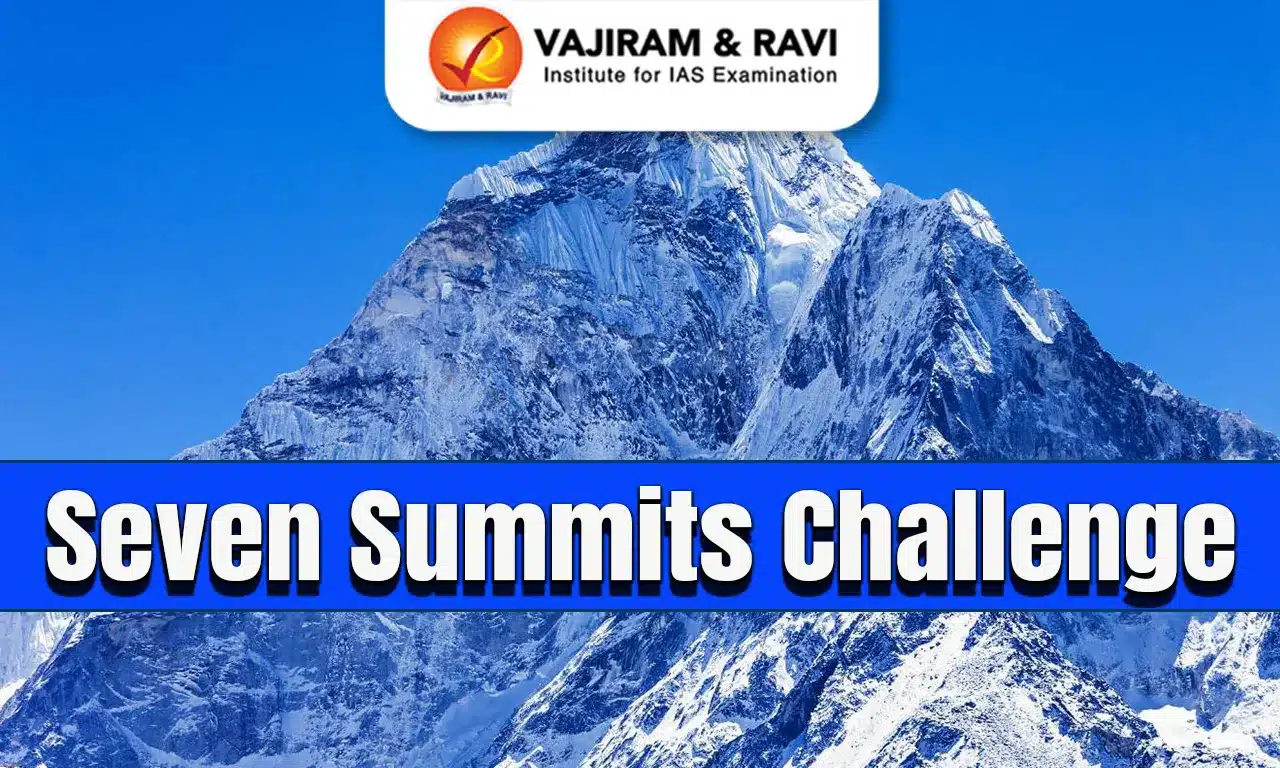
Hyderabad teenager Vishwanath Karthikey Padakanti recently became the youngest Indian and the second youngest person in the world to complete the legendary 7 Summits challenge.

About Seven Summits Challenge

  • The ‘Seven Summits‘ is a challenge first proposed and then completed by Richard Bass in 1985. 
  • It consists of climbing to the highest point on each of the seven continents, including
    • Kilimanjaro: Africa (5,892 m)
    • Elbrus: Europe (5,642 m)
    • Aconcagua: South America (6,962 m)
    • Denali: North America (6,194 m)
    • Kosciuszko: Australia (2,228 m) or Puncak Jaya/Carstensz PyramidOceania (4,884 m)
    • Mount Vinson: Antarctica (4,892 m)
    • Mount Everest: Asia (8,848 m)
  • The Seven Summits challenge has two options – the ‘Bass’ list or the ‘Messner’ list. 
    • The difference between the two lists is that one includes the highest peak in Australia (Kosciuszko), while the other includes the highest peak in Oceania/Australasia instead (Puncak Jaya in Indonesia), respectively.
    • Most will attempt the Bass list, while others will then push on to complete the Messner list too.

Seven Summits Challenge FAQs

Q1: What is the seven summit challenge?

Ans: It consists of climbing to the highest point on each of the seven continents.

Q2: What are the 7 summits of the world?

Ans: Everest (Asia), Elbrus (Europe), Aconcagua (South America), Denali (North America), Kilimanjaro (Africa), Mount Vinson (Antarctica) and Mount Puncak Jaya (Oceania).

Q3: Who was the first person to complete the original “Seven Summits” challenge?

Ans: Richard Bass

SourceTH

Churdhar Wildlife Sanctuary

Churdhar Wildlife Sanctuary

Churdhar Wildlife Sanctuary Latest News

The forest department of Himachal Pradesh recently put on hold its order imposing user charge on visitors to the Churdhar Wildlife Sanctuary in Sirmaur district.

About Churdhar Wildlife Sanctuary

  • It is located in the Sirmour district of Himachal Pradesh.
  • It is situated in the Shivalik range of the Himalayas.
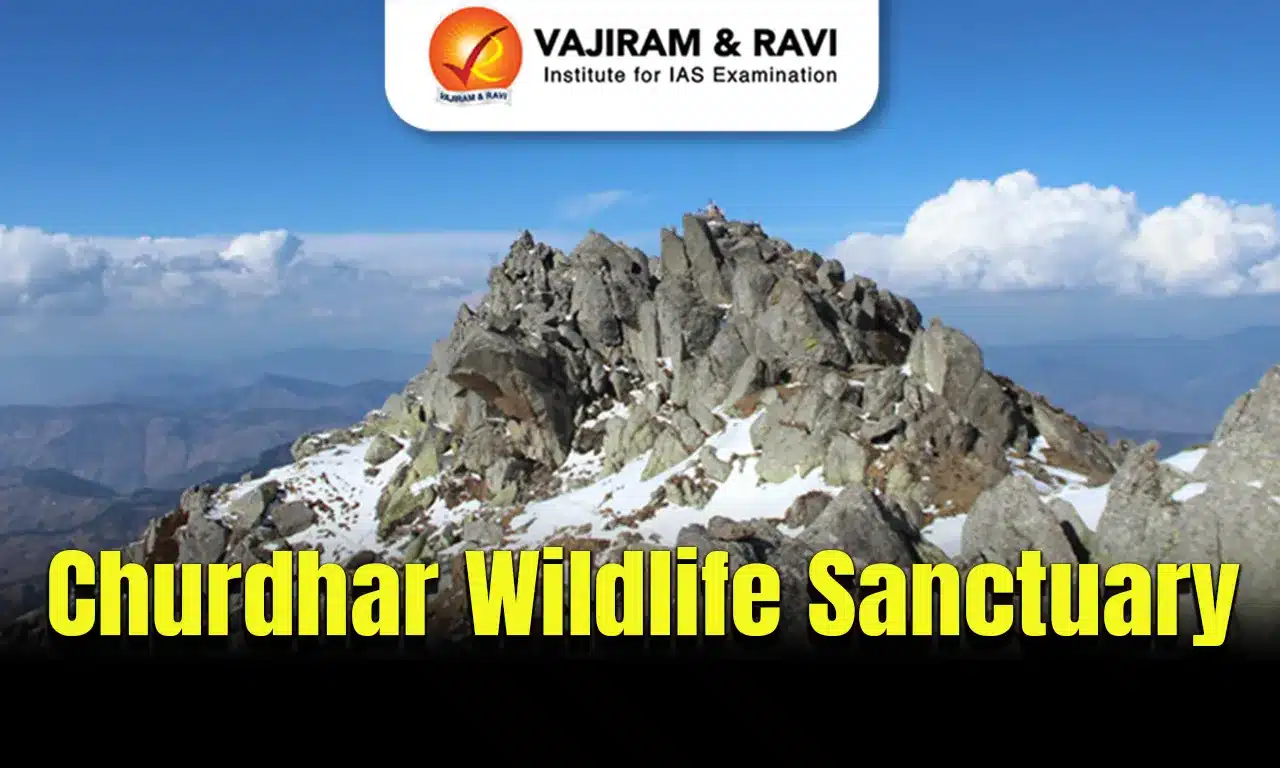
  • Established in 1985, this sanctuary spans 56 sq.km. and encircles the majestic Churdhar Peak, also known as Choordhar
  • Churdhar peak is the highest peak in the outer Himalayas.
  • From the top of the peak, visitors can relish the view of wild Gangetic plains and the Satluj River on its south and Badrinath (a well-known Hindu pilgrimage) towards its north.
  • A small temple dedicated to Lord Shiva sits atop the peak, adding spiritual significance to the sanctuary.
  • Flora:
    • It is quite renowned for being a habitat of herbal medicine trees and plants. 
    • Wild Himalayan Cherry, Aloe Vera (Dhrit Kumari), and Amaranthus spinosus (Chulai) are some of the best aromatic plants which can be found here, and these herbs possess amazing medicinal properties. 
    • The main trees in the sanctuary are oak and deodar.
  • Fauna: The sanctuary is home to various species, including musk deer, black bears, monals (Himalayan pheasants), and leopards.

Churdhar Wildlife Sanctuary FAQs

Q1: In which Indian state is Churdhar Wildlife Sanctuary located?

Ans: Himachal Pradesh

Q2: Churdhar Sanctuary lies in which range of the Himalayas?

Ans: Shivalik Range

Q3: Churdhar Peak, encircled by the sanctuary, holds which distinction?

Ans: Highest peak in the Outer Himalayas.

SourceTP

Pedicularis rajeshiana

Pedicularis rajeshiana

Pedicularis rajeshiana Latest News

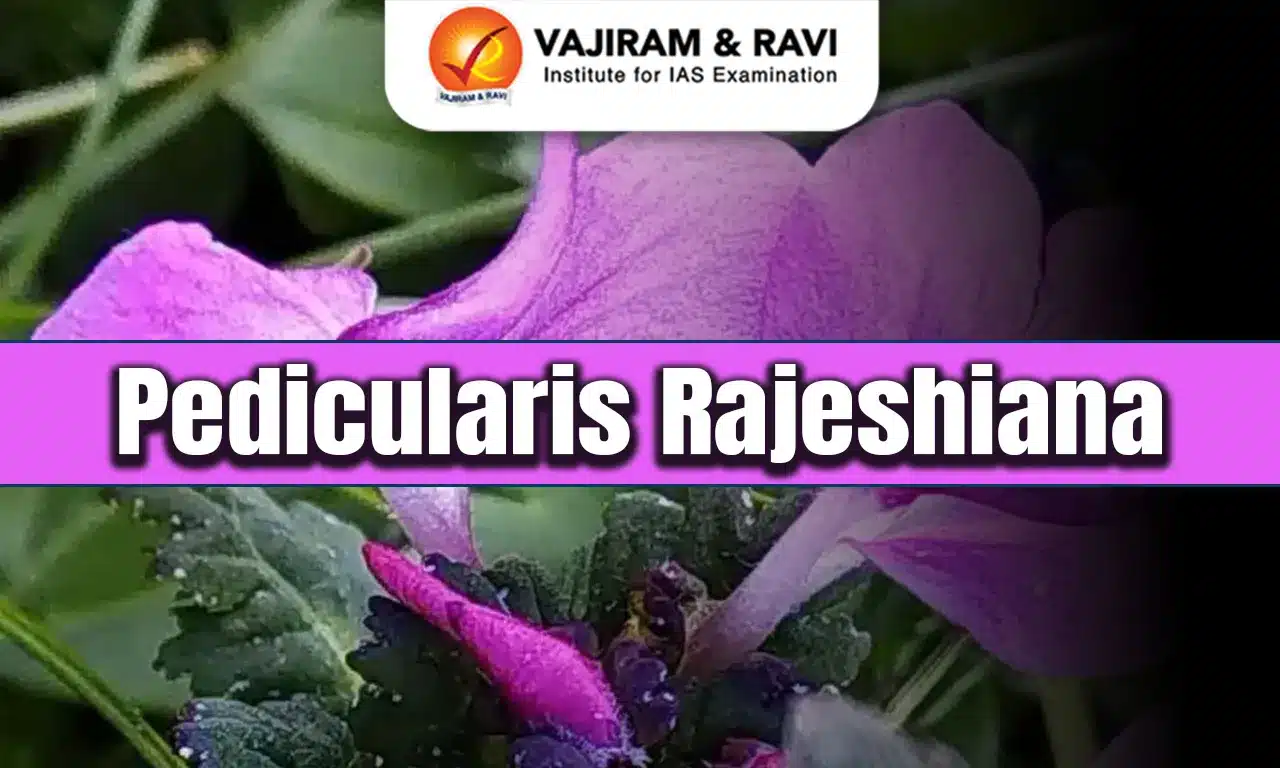
Recently, researchers have discovered a new plant species, Pedipularis rajeshiana, in the high-altitude regions of Rohtang Pass in the western Himalayas region.

About Pedicularis rajeshiana

  • It belongs to a group of plants known as "Louseworts", which are hemiparasitic, meaning they derive some nutrients from other plants while still performing photosynthesis.
  • The plant was found at an altitude of 4,390 metres (about 14,400 feet) in the Rohtang Pass, a rugged and ecologically rich area in Himachal Pradesh.
  • Pedicularis rajeshiana was spotted growing in small, scattered patches in shaded rocky slopes. 
  • This discovery was made during a plant survey under the Ministry of Environment, Forest and Climate Change (MOEF&CC) and the Botanical Survey of India, as part of the "Flora of India" project.

Features of Pedicularis rajeshiana

  • India is home to 83 known species of Pedicularis, with 36 species found in the western Himalayas alone.
  • Due to their parasitic nature and specific habitat requirements, many of these plants are endemic — found only in certain regions.
  • The identification of Pedicularis rajeshiana adds to this rich biodiversity and highlights the ecological significance of high-altitude Himalayan ecosystems.

Pedicularis rajeshiana FAQs

Q1: What is Pedicularis used for?

Ans: Pedicularis appears as flowering flames of red in early spring. Traditionally used as a muscle relaxant and calming agent.

Q2: What is the common name for Pedicularis canadensis?

Ans: Pedicularis canadensis, called common lousewort or wood betony

Source: TOI

National Academy of Medical Sciences (NAMS)

National Academy of Medical Sciences

National Academy of Medical Sciences Latest News

One of the critical gaps in cancer care in India is the lack of adequate diagnostic services, finds the latest report by the National Academy of Medical Sciences (NAMS).

About National Academy of Medical Sciences 

  • It is a unique institution functioning as an apex body with the objective to foster and utilize academic excellence as its resource to meet medical and social goals. 
  • It was registered as the 'Indian Academy of Medical Sciences' on 21st April, 1961, under Societies Registration Act XXI of 1860.
  • It was renamed NAMS on 16th November, 1976.
  • The academy has been recognised by the Government of India as a nodal agency for continuing education for medical and allied health professionals.
  • It also advises the Government of India in matters of National Health Policy and Planning. 
  • NAMS encourages and sponsors nationwide Continuing Medical Education (CME) programmes, symposia, workshops, etc.
  • It has made significant efforts to improve the reach of CME programmes by establishing tele-linkages between medical colleges, and it is also connected with the National Knowledge Network. 
  • The academy serves as a very important tool for dissemination of recent medical advances via journals, monographs, etc. 
  • NAMS also bestows prestigious fellowships and awards upon eminent biomedical scientists in recognition of their outstanding contributions.

NAMS Task Force Report on Breast Cancer in India

  • India is recording nearly 200,000 new cancer cases each year.
  • Sixty percent of the global population resides in Asia, which accounts for 50% of cancer cases and 58% of cancer-related deaths. 
  • India ranks third in accounting for cancer cases, following China and the United States of America. 
  • The projected cancer burdenin India is estimated to reach 2.08 million by 2040, representing a 57.5% increase from 2020.
  • In India, breast cancer is the most common malignancy among women and a leading cause of cancer-related deaths.
  • The proportion of patients diagnosed with breast cancer at a younger age is notably higher in India when compared with high-income countries. 
  • Additionally, patients in India tend to present with later-stage disease compared to the West. 
  • More than 60% of patients in India present at Stage 3 or 4, while around 60% of the patients in the U.S. are diagnosed in situ or at Stage 1. 
  • It adds that more than 50% of patients in India experience a delay of over three months before seeking medical care. 
  • In India the survival rate for patients with breast cancer is lower compared to Western countries due to several factors, including the late-stage presentation, delayed initiation of definitive management, and inadequate or fragmented treatment.

National Academy of Medical Sciences FAQs

Q1: What was the original name of the National Academy of Medical Sciences when it was first registered in 1961?

Ans: Indian Academy of Medical Sciences

Q2: Under which Act was the National Academy of Medical Sciences registered?

Ans: Societies Registration Act, XXI of 1860

Q3: According to the NAMS Task Force Report on Breast Cancer in India, approximately how many new cancer cases are recorded in India each year?

Ans: 200,000

SourceTH

Dark Pattern

Dark Patterns

Dark Patterns Latest News

The Union Minister for Consumer Affairs, Food, and Public Distribution recently instructed all e-commerce companies to conduct self-audits to analyse and eliminate dark patterns to comply with consumer protection regulations.

About Dark Patterns

  • It refers to any user interface that has been deliberately crafted to mislead or manipulate users into actions they might not otherwise take. 
  • The term "dark pattern" was coined in 2010 by UK-based user experience designer Harry Brignull. 
  • Dark patterns exploit cognitive biases and psychological principles to influence user behavior.
  • They can range from subtle and mildly misleading to overtly aggressive tactics.
  • The practice is seen across a wide range of sectors, from retail to travel, health to social media.
  • One frequent example is the "sneak into basket" design, where an additional item is quietly added to a user's online shopping cart without explicit consent. 
  • Another common tactic is presenting a large, brightly coloured "Accept" button for cookies or subscriptions, while hiding or minimising the "Reject" option.
  • These interface choices are not accidental, they are calculated to guide users towards choices that benefit the company, often at the consumer's expense.
  • Dark patterns can also take the form of hidden costs that only appear at the final stage of checkout. 
  • Regulation:
    • In many countries, including India, there is no dedicated law that explicitly outlaws the practice. 
    • For instance, under India's Consumer Protection Act, 2019, unfair trade practices are prohibited but enforcement depends on proving that a pattern is deceptive, intentional, and has caused harm. 
    • This is often difficult in digital contexts, where user interaction is rapid.
    • In November 2023, the Department of Consumer Affairs, Government of India, released guidelines for 13 dark patterns.
    • According to these guidelines, the use of any of these prescribed dark patterns amounts to a misleading advertisement, an unfair trade practice, or a violation of consumer rights.

Dark Patterns FAQs

Q1: What are dark patterns?

Ans: It refers to any user interface that has been deliberately crafted to mislead or manipulate users into actions they might not otherwise take. 

Q2: What is a dark pattern example?

Ans: Examples of dark patterns include: Misdirection: Highlighting irrelevant features to obscure critical details. Roach Motel: Making it easy to sign up but almost impossible to cancel.

Q3: Why is it difficult to enforce regulations against dark patterns in digital contexts?

Ans: Proving deception, intent, and harm is challenging given rapid interactions.

Source: NIE

Why the Deputy Speaker Matters: Constitutional Role, Powers & the Vacancy Debate

Deputy Speaker of Lok Sabha

Deputy Speaker of Lok Sabha Latest News

  • The Deputy Speaker's post has remained vacant for six years, raising concerns about constitutional compliance and democratic strength. 
  • In a parliamentary democracy, this role is not merely ceremonial but crucial for ensuring accountability, smooth functioning, and balanced power-sharing between the ruling party and the Opposition. 
  • The prolonged vacancy, reportedly due to the ruling government's reluctance to offer the position to an Opposition member, undermines the principle of power-sharing and democratic conventions, which hold significance even in the absence of explicit legal provisions.

Election and Tenure of the Deputy Speaker

  • Under Article 93 of the Constitution, the Lok Sabha must elect a Speaker and Deputy Speaker from among its members “as soon as may be,” though no specific timeline is given.
  • Article 94 ensures that the Deputy Speaker remains in office until resignation, removal, or disqualification, underlining the role's continuity.

Election Process

  • The date of the Deputy Speaker’s election is fixed by the Speaker and communicated to members through a parliamentary bulletin. 
  • The election is conducted via a ballot paper vote.

Tenure and Removal

  • The Deputy Speaker remains in office until the dissolution of the Lok Sabha, unless removed earlier by a resolution passed by a majority of members. 
  • The position is also vacated if the Deputy Speaker ceases to be a Member of Parliament.
  • If the Deputy Speaker’s seat falls vacant, the members of the House may elect a new Deputy Speaker.

Position in Order of Precedence

  • In the official hierarchy, the Deputy Speaker ranks tenth, alongside the Deputy Chairman of the Rajya Sabha, Union Ministers of State, and members of the Planning Commission.

Powers, Functions, and Privileges of the Deputy Speaker

  • The Deputy Speaker assists the Speaker in managing the functioning of the Lok Sabha. 
  • In the Speaker's absence or when the post is vacant, the Deputy Speaker presides over proceedings and performs all associated duties.
  • If nominated to any legislative committee, the Deputy Speaker automatically assumes the role of its chairman.

Participation in Debates and Voting

  • Unlike the Speaker, the Deputy Speaker can participate in debates and vote on matters as an ordinary member when the Speaker is presiding. 
  • When presiding over the House, the Deputy Speaker may only cast a vote in the event of a tie.

Conventions and Financial Independence

  • By convention, the Deputy Speaker, like the Speaker, does not sponsor Bills or resolutions, nor does he raise questions. 
  • His salary is drawn from the Consolidated Fund of India and is not subject to parliamentary approval.

Constitutional Authority under Articles 95 and 96

  • Article 95 empowers the Deputy Speaker to maintain order, discipline, and adjourn proceedings in the Speaker’s absence. 
  • Under Article 96, when a motion to remove the Deputy Speaker is under debate (with a 14-day advance notice), he cannot preside but is allowed to vote—though not to cast the deciding vote in case of a tie.

Parliamentary Convention

  • While the Speaker is traditionally from the ruling party, the Deputy Speaker's post has conventionally been offered to a member of the Opposition. 
  • This informal practice aims to foster cooperation and maintain balance in the parliamentary process.

Prolonged Vacancy of the Deputy Speaker

  • Absence in Successive Lok Sabhas
    • The Government did not appoint a Deputy Speaker during the 17th Lok Sabha (2019–2024), and indications suggest a similar approach for the 18th Lok Sabha. 
    • This ongoing vacancy reflects a failure to reach consensus between the ruling party and the Opposition, reportedly due to the government's reluctance to offer the post to the Opposition.
  • Constitutional and Procedural Violations
    • The prolonged vacancy undermines several constitutional provisions—Articles 93, 94, and 180. 
    • Additionally, it violates Rule 8 of the Lok Sabha’s Rules of Procedure (1952), which states that the election shall be held on a date fixed by the Speaker following a formal motion.

Constitutional Implications of the Deputy Speaker's Vacancy

  • Misinterpretation of Article 93
    • Although Article 93 mandates the election of a Deputy Speaker “as soon as may be,” the absence of a fixed timeline has led to prolonged delays. 
    • This undermines the constitutional intent and risks creating a constitutional vacuum.
  • Erosion of Democratic Balance
    • The Deputy Speaker’s post is conventionally allotted to the Opposition to ensure power-sharing and uphold democratic values. 
    • Its continued vacancy centralizes authority in the Speaker—typically from the ruling party—thus disrupting the intended balance between the government and the Opposition.
  • Threat to Parliamentary Stability
    • The Indian parliamentary system, modeled on the Westminster tradition, depends on structured debates and mutual accountability. 
    • Without a Deputy Speaker, the resilience of this system is compromised, especially in scenarios such as the resignation or incapacitation of the Speaker, which could lead to a constitutional crisis.
  • Undermining Consensus-Driven Politics
    • By ignoring the convention of offering the Deputy Speaker’s role to the Opposition, the spirit of cooperative and consensus-based governance is weakened, eroding the core values of parliamentary democracy.

Deputy Speaker of Lok Sabha FAQs

Q1. What does the Deputy Speaker do?

Ans. Presides in the Speaker’s absence, chairs key committees, maintains order, and ensures continuity in legislative functions.

Q2. Why is the Deputy Speaker’s post vacant?

Ans. Due to political deadlock and reluctance by the ruling party to offer the role to the Opposition.

Q3. What does Article 93 say?

Ans. Article 93 mandates electing a Deputy Speaker “as soon as may be,” emphasizing urgency but without a fixed timeline.

Q4. Is the Deputy Speaker always from the Opposition?

Ans. By convention, yes. It promotes balance and cooperation in Parliament, though not a legal requirement.

Q5. What are the risks of prolonged vacancy?

Ans. It centralizes power, weakens parliamentary accountability, and may trigger a constitutional crisis if the Speaker’s role becomes vacant..

Source: TH TH

India’s Sodium-Ion Battery Push: A Strategic Shift Beyond Lithium

Sodium-Ion Battery Technology India

Sodium-Ion Battery Technology Latest News

  • A research team at the Bengaluru-based Jawaharlal Nehru Centre for Advanced Scientific Research (JNCASR) has developed a super-fast charging sodium-ion (Na-ion) battery that can charge up to 80 per cent in just six minutes.

Introduction

  • With global concerns mounting over the limited availability and rising cost of lithium, India is taking bold strides toward developing sodium-ion battery (Na-ion) alternatives. 
  • These efforts are part of a broader strategy to reduce reliance on lithium-ion batteries, an area where China commands a dominant position. 
  • Recent innovations from Indian institutions like the Jawaharlal Nehru Centre for Advanced Scientific Research (JNCASR) and IIT Bombay are propelling sodium-ion technology into the spotlight as a feasible and scalable alternative.

Strategic Rationale for Sodium-Ion Batteries

  • Lithium-ion batteries have long been the backbone of energy storage in electric vehicles (EVs), portable electronics, and renewable energy grids. 
  • However, lithium’s global supply chain is heavily concentrated and geopolitically sensitive, with China leading in both battery manufacturing and lithium refining. 
  • Given China's growing dominance, including its top producers CATL and BYD, India’s pivot to sodium-ion chemistry reflects both a strategic and technological imperative.
  • Sodium, on the other hand, is more abundant and widely distributed. It can be extracted from seawater and poses fewer environmental hazards during storage and transportation. 
  • These characteristics make sodium a viable alternative to lithium, especially in a country like India with ambitions for energy security and technological self-reliance.

Breakthrough Innovation by Indian Scientists

  • In a major development, a team at Bengaluru-based JNCASR has developed a NASICON-type sodium-ion battery with significantly enhanced charging performance and lifespan
  • Unlike conventional Na-ion batteries that suffer from slow charge rates and shorter life cycles, this innovation enables up to 80% charge in just six minutes and supports over 3,000 charge cycles.
  • The researchers achieved this performance by making critical modifications to the battery's anode material:
    • Nanoparticle Engineering: Reducing particle size to the nanoscale.
    • Carbon Wrapping: Encasing the particles in a thin carbon layer.
    • Aluminum Doping: Incorporating small amounts of aluminum to enhance conductivity and ion mobility.
  • These improvements not only accelerate the charging process but also reduce degradation risks, offering a safer and more reliable battery.

Advantages and Limitations of Sodium-Ion Batteries

  • Advantages:
    • Resource Abundance: Sodium is far more available than lithium and can be extracted more sustainably.
    • Cost-Effective Materials: Na-ion batteries use aluminium instead of copper, reducing production costs.
    • Safety: Can be transported at zero volt, lowering fire hazards.
    • Thermal Stability: Operate safely at a wider range of temperatures.
  • Limitations:
    • Lower Energy Density: Sodium-ion batteries currently offer less energy storage per unit weight compared to lithium-ion batteries.
    • Design Rigidity: Cannot be moulded into various shapes like prismatic or cylindrical forms.
    • Shorter Cycle Life: While improving, they still lag behind the 8,000+ cycles of lithium iron phosphate batteries.
    • High Initial Costs: Limited commercial presence results in higher production costs at present.

Future Applications and Outlook

  • Despite current limitations, sodium-ion batteries hold immense promise for a wide range of applications, from electric two-wheelers and drones to solar-powered rural electrification systems. 
  • Their lower cost and safer handling characteristics make them particularly suitable for mass deployment in developing regions.
  • The technology has already undergone validation using high-end electrochemical tests and quantum simulations. 
  • As efforts to scale up continue, India’s bet on Na-ion batteries could position it as a leader in alternative battery chemistries, especially at a time when the world seeks safer, cleaner, and more equitable energy storage solutions.

Sodium-Ion Battery Technology FAQs

Q1. What recent breakthrough has India made in sodium-ion battery development?

Ans. JNCASR scientists developed a super-fast charging sodium-ion battery with over 3,000 cycles and 80% charge in six minutes.

Q2. Why is India focusing on sodium-ion batteries?

Ans. Sodium-ion batteries offer a safer, more abundant, and cost-effective alternative to lithium-ion batteries.

Q3. Which Indian companies are working on sodium-ion battery technology?

Ans. KPIT Technologies and Trentar Energy Solutions are collaborating to commercialise sodium-ion battery systems.

Q4. What are the advantages of sodium-ion over lithium-ion batteries?

Ans. Sodium-ion batteries are safer, use abundant materials, and are more environmentally friendly.

Q5. What are the current limitations of sodium-ion batteries?

Ans. They have lower energy density, shorter cycle life, and less design flexibility compared to lithium-ion batteries.

Source: IE

India’s Economic Rank: Nominal GDP vs PPP – What the Numbers Really Say

India's Economic Ranking

India's Economic Ranking Latest News

  • NITI Aayog CEO BVR Subrahmanyam recently claimed that India has overtaken Japan to become the world’s fourth-largest economy, citing IMF data. 
  • This claim was met with both celebration and skepticism, with some insisting IMF data still places India fifth.

India's Economic Ranking – Data, Debate, and Context

  • NITI Aayog CEO recently claimed India is now the fourth-largest economy, overtaking Japan. 

A More Surprising Claim: India Is Third

  • Based on IMF data, another claim emerges — India has actually been the third-largest economy in the world since 2009, when it overtook Japan, during the govt under PM Manmohan Singh.

Evidence 

image4.webp

  • The above figure displays India’s GDP trajectory (dark green line) clearly separating from others in 2009. 
  • It also marks another pivotal shift in 2016, when China overtook the US to become the largest economy.

Understanding Economic Rankings Through Nominal GDP and Purchasing Power

  • Cost of Living vs. Nominal Income
    • Two individuals earning similar salaries may not enjoy the same quality of life if one lives in a high-cost city like Mumbai and the other in a lower-cost city like Patna. 
    • This difference is due to the cost of living, which affects purchasing power and not just nominal income.
  • Nominal GDP
    • Nominal GDP is the total market value of all goods and services produced in a country, measured using current prices and converted into US dollars. 
    • This is the metric currently being used to claim India has overtaken Japan.
  • Problems with Nominal GDP Comparisons
    • Exchange Rate Sensitivity: Changes in the rupee-dollar or yen-dollar exchange rate can alter rankings without actual changes in economic output.
    • Data Revisions: India's GDP figures often undergo revisions, making real-time comparisons less reliable.
    • Lack of Cost Context: Nominal GDP ignores purchasing power and cost of living, which are essential for assessing real economic well-being.
  • India’s Current Position
    • As per IMF data, India overtook the UK post-COVID in nominal GDP. 
    • However, it is still behind Japan and Germany as of the end of 2024. IMF projections show India overtaking both soon.
  • Why Purchasing Power Parity (PPP) Matters
    • Unlike nominal GDP, GDP by Purchasing Power Parity (PPP) adjusts for cost-of-living differences across countries. 
    • It provides a more accurate comparison of what people can actually buy with their incomes — making it a more meaningful metric of economic strength.
    • While nominal GDP rankings create headlines, PPP-based GDP offers a more realistic picture of a nation’s economic capacity and the standard of living of its citizens.

Understanding Purchasing Power Parity (PPP)

  • PPP is a method used to compare the economic productivity and standards of living between countries by accounting for the relative cost of living and inflation rates. 
  • It tells us how much actual goods and services one can buy in a country with its income, instead of relying on exchange rates alone.

India’s Global Ranking by PPP

  • According to PPP-based GDP estimates, India became the third-largest economy in the world as early as 2009, not just recently — a fact often overlooked in public discussions.
  • PPP gives a truer picture of a country’s economic strength by adjusting for what money can actually buy. In PPP terms, India has been among the top economies for over a decade.

The Politics Behind GDP Rankings

  • India has made significant progress in nominal GDP terms, growing at an average rate of 6% to 7% since 2004
  • This growth has helped India surpass major global economies in dollar-based rankings.

Why Governments Prefer Nominal Rankings

  • Governments often highlight nominal GDP milestones because:
    • They’re easier to communicate.
    • They show recent progress.
    • They help claim political credit.

Why PPP-Based Rankings Are Ignored

  • Even though India became the third-largest economy by PPP in 2009, this ranking has remained unchanged.
  • Since the relative position hasn’t shiftedPPP metrics offer no fresh political advantage.
  • Hence, they are rarely mentioned in political discourse, despite offering a truer economic picture.

The Limits of Aggregate GDP Rankings – Why Per Capita Matters

  • Since 2021, India’s nominal GDP has been higher than the UK’s in total terms. This is often used to highlight India’s economic rise on the global stage.

Per Capita GDP Tells a Different Story

  • Despite India’s higher total GDP:
    • In 2021, UK’s per capita GDP was $46,115 vs. India’s $2,250.
    • By 2025, UK’s per capita GDP will be $54,949, while India’s will only be $2,879.
    • UK’s per capita GDP remains nearly 19 times higher than India’s.

Why Per Capita Metrics Matter More

  • While aggregate GDP rankings can fuel national pride, they hide the reality of low average incomes and purchasing power.
  • Such rankings often divert attention from core challenges such as Poverty; Low productivity and Unequal development.

India's Economic Ranking FAQs

Q1. Has India overtaken Japan in GDP ranking?

Ans. Nominally close, but IMF data shows India is still fifth; PPP ranks India third since 2009.

Q2. What is nominal GDP?

Ans. Nominal GDP measures a country’s total output using current prices, often influenced by currency exchange fluctuations.

Q3. Why is PPP more accurate than nominal GDP?

Ans. PPP adjusts for cost of living, reflecting true purchasing power and living standards across different economies.

Q4. How does India compare per capita with the UK?

Ans. India’s per capita GDP is 19 times lower than the UK’s, despite having higher total nominal GDP.

Q5. Why do politicians prefer nominal GDP figures?

Ans. Nominal GDP rankings are easier to promote politically and show recent progress, unlike stable PPP rankings. 

Source: IE | IE

Enquire Now