
Nurdles Latest News
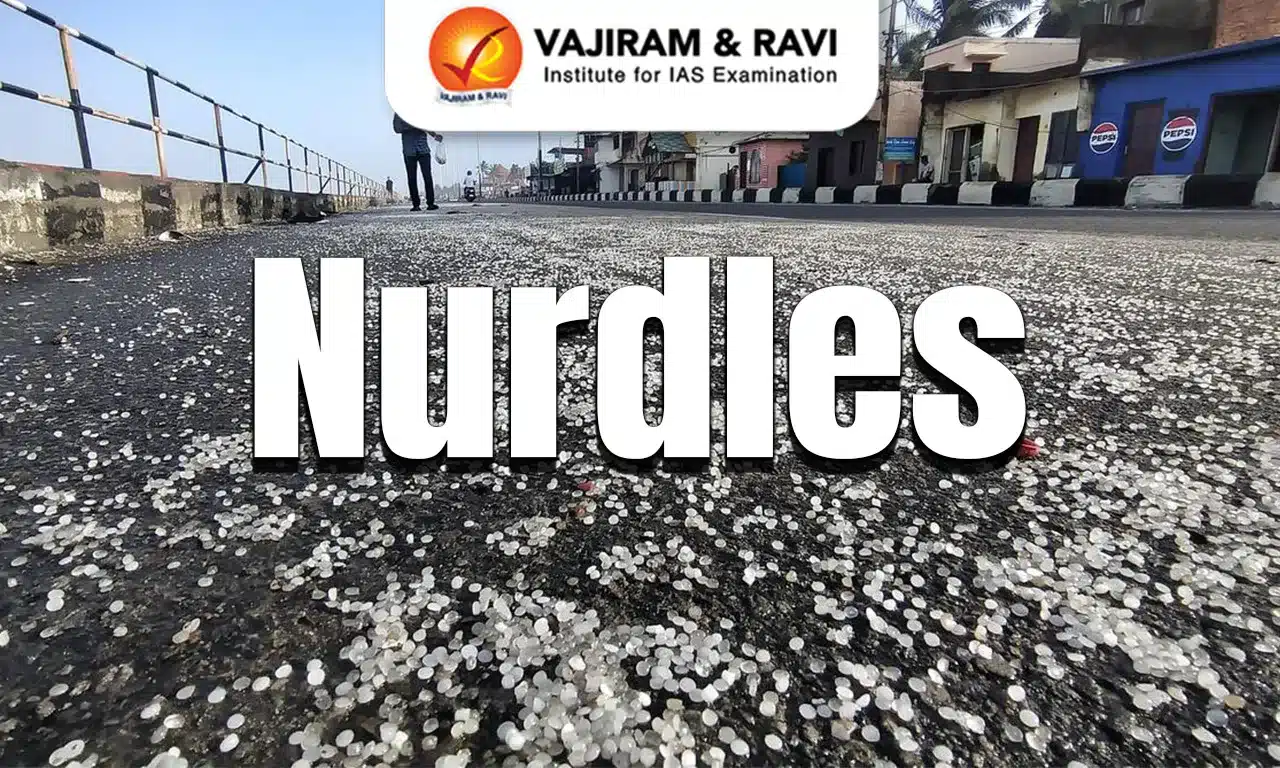
Recently, tiny plastic pellets (nurdles) were found on beaches in Thiruvananthapuram in Kerala following the sinking of the container vessel MSC ELSA3.
About Nurdles
- These aresmall pre-formed masses of moulding material that have relatively uniform dimensions within a specific batch. These pellets are utilised as raw material in moulding and extrusion operations.
- When in the form of microplastics, these pellets are commonly referred to as ‘nurdles’ and serve as the foundational material for manufacturing a wide range of plastic products.
- They are classified as primary microplastics, these pellets and are between 1 mm to 5 mm in diameter. They constitute a major component in the global plastic chain.
- Microplastic nurdles are mainly composed of polyethene, polypropylene, polystyrene, and polyvinyl chloride.
- These pellets are melted and moulded into various products, including packaging, water bottles, toys, and textiles.
Impact of Nurdles on Environment
- These pellets remain a dangerous pollutant. Their short- and long-term impacts include habitat contamination and their breaking up into micro and nano plastics and entering the food chain.
- They could have serious implications for the marine and coastal ecosystems and humans.
Nurdles FAQs
Q1: What is the meaning of microbeads?
Ans: Microbeads are tiny pieces of plastic, often microscopic in size, that are added to a range of products, including rinse-off cosmetics, personal care and cleaning products.
Q2: What are nurdles used for?
Ans: Nurdles are melted down and made into many plastic items, from clothes to cars, food wrappers to artificial Christmas trees.
Source: TH

