
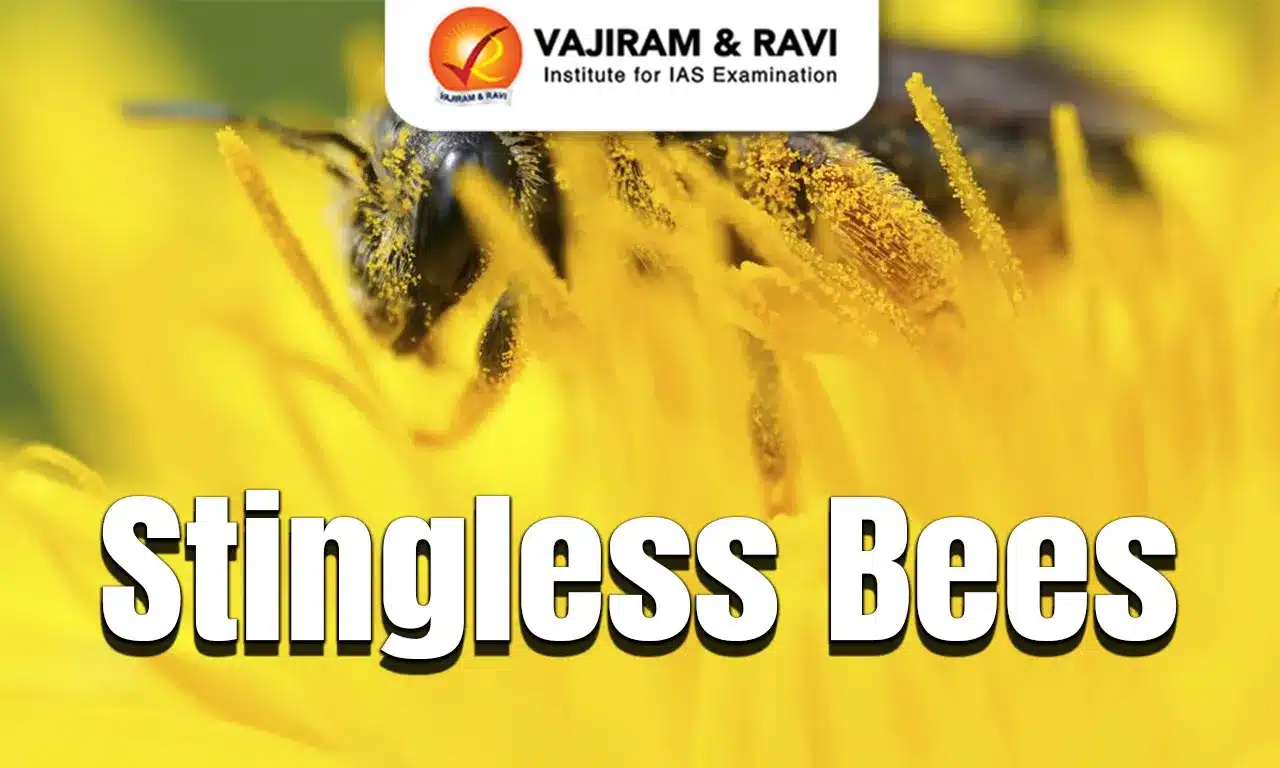
Stingless Bees Latest News
A new study has shown that stingless bees, which produce a high-value honey with a distinct flavour, can increase the yield and quality of crops.
About Stingless Bees
- A stingless bee is a bee that appears very similar to a honeybee, but is incapable of stinging.
- Approximately 550 species of stingless bees are found within several genera that are members of the Meliponini tribe. They are also related to bumblebees and carpenter bees.
- Common genera of stingless bees: Austroplebeia, Melipona, and Tetragonula
- They do possess stingers, but they are too small to be useful in defense. Instead of stinging, stingless bees use their mandibles to bite their attackers.
- Benefits: Stingless bees can be used for pollination without fear of being stung. They are known for their popular medicinal honey and pollination potential, which paves the way for the formulation of crop pollination calendars to benefit all stakeholders.
Distribution of Stingless Bees
- Africa, Australia, Southeast Asia, and parts of the Americas are the main areas where the stingless bee is found.
- In India, these bees are reported primarily from the northeastern, eastern, and southern Indian States. In the northeast, these bees are reared traditionally in homestead apiaries.
Stingless Bees FAQs
Q1: What are the benefits of stingless bees?
Ans: Tropical Meliponini bees produce stingless bee honey (SBH). Studies have shown beneficial properties, including antibacterial, bacteriostatic, anti-inflammatory, neurotherapeutic, neuroprotective.
Q2: What is Pollination?
Ans: It is the act of transferring pollen grains from the male anther of a flower to the female stigma. The goal of every living organism, including plants, is to create offspring for the next generation.
Source: TH
