Shangri-La Dialogue

Shangri-la Dialogue

Shangri-La Dialogue Latest News

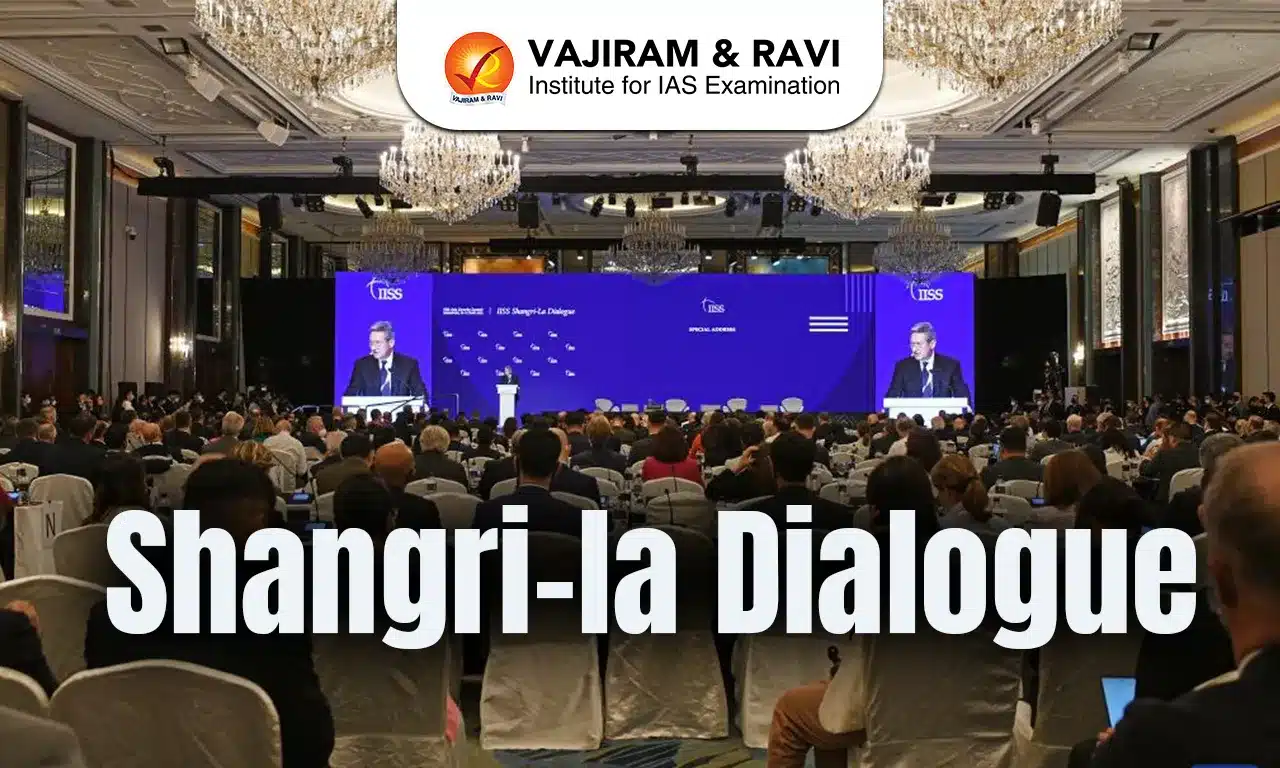
Chief of Defence Staff General Anil Chauhan will visit Singapore to attend the 22nd edition of the Shangri-La Dialogue, hosted annually by the International Institute for Strategic Studies.

About Shangri-La Dialogue

  • It is Asia’s premier defence and security summit that brings together defence ministers, military chiefs, policymakers and strategic experts across the globe.
  • Since its birth in 2002, it has developed into the most influential multilateral security exchange platform in the Asia-Pacific region.
  • It is held in June every year in Singapore's Shangri-La Hotel.
  • It is organized by the International Institute for Strategic Studies (IISS) in London, UK, and co-organized by Singapore's Ministry of Defence. 
  • The agenda of the Shangri-La Dialogue is closely related to the security situation and development trend in the Asia-Pacific region, covering traditional and non-traditional security and other fields. 
    • These include traditional security issues such as territorial disputes and military cooperation, as well as non-traditional security issues such as terrorismcybersecurity, and climate change. 
    • Such agenda setting enables the dialogue to fully reflect the security challenges and cooperation needs of the Asia-Pacific region.
  • Around the above issues, Shangri-La Dialogue is divided into two forms: open general assembly exchanges and closed-door group meetings. 
    • Open exchanges at the conference allow delegates to make speeches and discuss issues of common interest, enhancing mutual understanding and trust. 
    • Closed-door breakout sessions are more in-depth and specific, allowing participants to discuss and negotiate on a topic in depth and seek cooperation and solutions.

Shangri-La Dialogue FAQs

Q1: What is the Shangri-La Dialogue?

Ans: Asia’s premier defence and security summit.

Q2: Where is the Shangri-La Dialogue held each year?

Ans: Singapore’s Shangri-La Hotel

Q3: Which organization primarily organizes the Shangri-La Dialogue?

Ans: It is organized by the International Institute for Strategic Studies (IISS) in London, UK, and co-organized by Singapore's Ministry of Defence. 

SourceTH

Know Your DIGIPIN’ and ‘Know Your PIN Code Web Portals

Know Your DIGIPIN’

Know Your DIGIPIN’ and ‘Know Your PIN Code Web Portals Latest News

Recently, the Department of Posts, Ministry of Communications launched two transformative digital platforms: ‘Know Your DIGIPIN’ and ‘Know Your PIN Code’.

About Know Your DIGIPIN

  • The DIGIPIN (Digital Postal Index Number) is an open-source, interoperable, geo-coded, grid-based digital address system developed by the Department of Posts in collaboration with IIT Hyderabad and NRSC, ISRO.
  • Vision: To offer Address-as-a-Service (AaaS) — an array of services associated with address data management to support secure and efficient interactions between users, government entities, and private sector organisations.
  • The ‘Know Your DIGIPIN’ portal enables users to:
    • Retrieve their DIGIPIN based on precise geolocation.
    • Input latitude and longitude coordinates to fetch corresponding DIGIPINs and vice versa.

Advantages Of Know Your DIGIPIN

  • This initiative simplifies location mapping, enhances logistics and emergency response, and ensures last-mile delivery, especially in rural and underserved areas.
  • Incorporating DIGIPIN as an additional address attribute enables the leveraging of GIS capabilities, laying the foundation for future GIS-based digitalisation of service delivery across various organisations in a cost-effective manner.
  • DIGIPIN will enhance location accuracy across multiple sectors by providing precise geographic coordinates, ensuring accurate service delivery and reducing emergency response times.
  • A complete repository of the DIGIPIN technical documentation and source code has been made available on GitHub, promoting open collaboration and nationwide adoption.
  • It is now available to all Ministries, State Governments, institutions for integration into their workflows, and users for their own use.

About Know Your PIN Code Web Application

  • It is the six-digit PIN Code system, introduced in 1972.
  • The Department undertook a national geofencing exercise across all postal jurisdictions to geo-reference all the pin code boundaries of the country.

Features of Know Your PIN Code Web Application

  • Identify the correct PIN Code based on the location.
  • Submit feedback on PIN Code accuracy for continuous refinement of pin code dataset.
  • The geo-fenced PIN Code boundaries dataset has also been uploaded on Open Government Data Platform under the title “All India PIN Code Boundary geo-json”.

Know Your DIGIPIN’ and ‘Know Your PIN Code Web Portals FAQs

Q1: What is the digi pin code?

Ans: A DIGIPIN code is a 10-character alphanumeric sequence. It's a pure function of your location's latitude and longitude, making it unique for each approx.

Q2: What is the full form of PIN code?

Ans: PIN code stands for Postal Index Number code.

Q3: Can digipin be used for rural or remote areas?

Ans: Yes, DIGIPIN works for all areas, including rural, remote, and urban regions.

Source: PIB

Exercise Nomadic Elephant

Exercise NOMADIC ELEPHANT

Exercise Nomadic Elephant Latest News

Recently, the Indian Army contingent departed for the 17th edition of India- Mongolia Joint Military Exercise NOMADIC ELEPHANT which is scheduled to be conducted in Ulaanbaatar, Mongolia.

About Exercise Nomadic Elephant

  • It is an annual joint military exercise conducted alternatively in India and Mongolia.
  • Last edition of the same exercise was conducted at Umroi, Meghalaya in July 2024.
  • The Indian contingent comprising 45 personnel will be represented mainly by troops from a battalion of the ARUNACHAL SCOUTS. 
  • Aim of the exercise is to enhance interoperability between the two forces while employing a joint task force in semi conventional operations in semi urban/ mountainous terrain under United Nations mandate.
  • The scope of this exercise involves Platoon level Field Training Exercise. During the exercise, Indian and Mongolian troops will engage in various training activities.
  • In addition, to enhance complexity of exercise, aspects pertaining to Cyber Warfare are also being incorporated in this edition of the exercise.
  • The exercise underscores the shared commitment of India and Mongolia towards regional security, peace and stability.
  • The exercise reinforces the India-Mongolia relationship as a cornerstone of regional cooperation, fostering strong military ties and promotion of cultural understanding.
  • A testament to the enduring bond of friendship, trust and cultural linkages between India and Mongolia, the exercise sets the stage for meaningful professional engagement, highlighting the unwavering commitment of both nations to broader defence cooperation.

Exercise Nomadic Elephant FAQs

Q1: What is the first edition of nomadic elephant exercise?

Ans: 2004

Q2: What is the United Nations?

Ans: The United Nations (UN) is an intergovernmental organization that was established with the purpose of promoting international cooperation and maintaining peace and security among its member states.

Source: PIB

Government Tightens Norms for CSS and CS Schemes Continuation Post-2026

Evidence-Based Policy and Fiscal Prudence

Evidence-Based Policy and Fiscal Prudence Latest News

  • As India gears up for the 16th Finance Commission cycle (from 1st April 2026 to 31st March 2031), the Union Government has mandated third-party evaluation as a precondition for the continuation of Centrally Sponsored Schemes (CSS) and Central Sector Schemes (CS) beyond March 31, 2026.
  • There are 54 CSSs and 260 CSs which have their terminal date of approval till 31.03.2026 and are likely to be submitted for re-appraisal.

Current Evaluation Process

  • NITI Aayog, the government’s top think tank, is currently conducting evaluation of the CSSs.
  • This exercise is to be completed shortly and the draft reports will be shared with the respective ministries and departments.

Key Directives from the Ministry of Finance

  • No CSS or CS scheme will be appraised for continuation without third-party evaluation.
  • Evaluation must reflect positive outcomes, justification of mandate, and performance-based necessity.
  • Such exercise in the past had allowed the Central Government to enhance its capital expenditure substantially which now stands at Rs. 11.21 lakh crore for FY 2025-26 (BE).

Timeline for Ministries

  • The ministries and departments have been asked to conduct evaluation studies of their schemes by the end of July this year.
  • Get approval for continuation of schemes beyond March 31, 2026 from the Expenditure Finance Committee (EFC) before the start of the budget making process.

Financial Allocations for 16th Finance Cycle

  • Allocation formula: Ministries will get allocations 5.5 times their average actual expenditure during 2021-22 to 2025-26.
  • Requests for increased allocation:
    • For example, the Ministry of Health & Family Welfare sought more funds for vaccination programs.
    • Cabinet Secretary cautioned ministries against inflated projections, urging realistic budgeting.

About CSS and CS

  • CSSs are programs funded mostly by the Union Government and implemented by State Governments. Examples: PM Poshan Scheme, PM Awas Yojana (Gramin).
  • CSs, on the other hand, are fully funded and implemented by the Union Government. This means, they are executed directly through central ministries/departments. Examples: National Digital Health Mission, PLI Scheme.
  • These schemes cover a wide gamut, from social sectors like health, women and child development, school and higher education, tribal welfare to agriculture sector, urban and rural infrastructure, environment, scientific research etc.
  • While in case of CSs, the government of India bears 100% of the cost, in case of CSSs, the scheme expenditure is shared in a predefined ratio between the central and the state governments (60:40/75:25/90:10).

Conclusion

  • The Government’s insistence on rigorous third-party evaluations before the continuation of CSS and CS schemes marks a shift toward evidence-based policy and fiscal prudence
  • With the 16th Finance Commission's recommendations looming, ministries must align their priorities with realistic and performance-driven outcomes, making this a crucial development in India's public finance architecture.

Evidence-Based Policy and Fiscal Prudence FAQs

Q1. What is the key condition imposed by the Ministry of Finance for the continuation of Centrally Sponsored and Central Sector Schemes beyond March 31, 2026?

Ans. The schemes must undergo mandatory third-party evaluation demonstrating positive outcomes and continued relevance to be considered for continuation in the 16th Finance Commission cycle.

Q2. Differentiate between Centrally Sponsored Schemes (CSS) and Central Sector Schemes (CS) with suitable examples.

Ans. CSS are jointly funded by the Centre and States (e.g., PM Awas Yojana), whereas CS are entirely funded and implemented by the Centre (e.g., Production Linked Incentive Scheme).

Q3. What formula will be used to determine ministry-wise fund allocation during the 16th Finance Commission period (2026–2031)?

Ans. Ministries will receive an allocation 5.5 times their average actual annual expenditure from 2021-22 to 2025-26.

Q4. What role is NITI Aayog currently playing in the appraisal process of government schemes?

Ans. NITI Aayog is conducting third-party evaluations of Centrally Sponsored Schemes and is expected to submit draft reports to the respective ministries.

Q5. Why is the upcoming 16th Finance Commission cycle significant from the perspective of public financial management and governance?

Ans. It introduces outcome-based funding and encourages fiscal discipline and accountability in scheme continuation and budget planning.

Source: IE

Open Interest

open interest (OI)

Open Interest Latest News

SEBI recently announced a sweeping overhaul of its equity F&O framework, introducing a new Future Equivalent (FutEq) method to assess open interest more accurately. 

About Open Interest

  • It is a term commonly used in Futures and Options (F&O) tradingwhere the number of open contracts changes on a daily basis. 
    • In simple terms, every trade has two sides: a buyer and a seller. Whenever an F&O contract is traded, it is considered open until one of the parties closes their position through offsetting. 
  • Open Interest is the total number of active options and futures contracts that have not yet been settled against an asset at a given time in the trading arena. 
  • It is primarily used as an indicator to identify market positions of securities that have not yet been closed for an unknown reason. 
  • To summarise, it is referred to as a measure of liquidity in conjunction with market activity. 
  • Like any other security traded in the market, it is subject to market changes.
  • When new contracts are created or opened, it rises. A rise in the number of them indicates that there are more buyers and sellers for a specific security. 
  • It decreases when positions in existing contracts are closed out by buyers (or holders) and sellers. 
  • Investors might make conclusions about the day's market activity by monitoring changes in the open interest at the end of each trading day.
  • Importance of Open Interest in Stock Market:
    • Open interest plays a significant role in helping options traders understand the liquidity of an option.
    • It is a measure of market activity. It indicates if a market will trendor be range-bound, often known as choppy. 
    • An increase in open interest indicates that the number of new positions is increasing. This suggests that the market is being traded actively and is more likely to trend, while decreasing open interest indicates money flowing out of the market.
    • After a sustained price gain, a levelling off of Open Interest is usually an early indicator of the end of a bull market phase.
    • To summarise, this type of indicator can be a significant piece of information when evaluating a possible investment.

What are Futures and Options (F&O)?

  • F&O are the major types of stock derivatives trading in a share market. 
  • These are contracts signed by two parties for trading a stock asset at a predetermined price on a later date. 
  • Such contracts try to hedge market risks involved in stock market trading by locking in the price beforehand.
  • F&O are contracts which derive their price from an underlying asset (known as underlying), such as shares, stock market indices, commodities, ETFs, and more.
  • Futures contracts obligate the buyer to purchase an underlying asset, while the seller must deliver it at a predetermined price and date. 
  • In options contracts, the buyer has the right, but not the obligation, to buy or sell the underlying asset at a predetermined price and date, while the seller must honour the contract if the buyer chooses to exercise their option.
  • F&O basics allows individuals to reduce future risk with their investment through pre-determined prices. 
  • However, since a direction of price movements cannot be predicted, it can cause substantial profits or losses if a market prediction is inaccurate. 
  • Typically, individuals well versed with the operations of a stock market primarily participate in such trades.

Open Interest FAQs

Q1: What does “Open Interest” (OI) represent in Futures & Options trading?

Ans: The total number of active contracts not yet settled.

Q2: When does Open Interest increase?

Ans: When new contracts are created or opened.

Q3: A leveling off of Open Interest after a sustained price gain typically signals what?

Ans: The end of the bull market phase.

SourceNIE

International Emergency Economic Powers Act (IEEPA)

International Emergency Economic Powers Act of 1977

International Emergency Economic Powers Act Latest News

A U.S. federal court recently blocked President Donald Trump’s broad tariffs, ruling that the International Emergency Economic Powers Act (IEEPA) doesn’t give him authority to impose sweeping import taxes.

About International Emergency Economic Powers Act of 1977

  • It is a United States act which was legislated on 28 October 1977
  • It gives the president broad powers to regulate various financial transactions upon declaring a national emergency.
  • The IEEPA empowers the US president to proclaim an unusual and exceptional threat to the federal security, foreign policy, and economy of the United States that originates in whole or in considerable part outside the United States. 
  • It also empowers the president to restrict transactions and freeze assets in response to such a statement.
  • In the case of an actual attack on the United States, the president has the authority to seize property associated with a nation, group, or individual that assisted in the attack. 
  • In addition, because the IEEPA is governed by the terms of the National Emergencies Act (NEA), an emergency proclaimed under the Act must be renewed annually in order to stay in existence.
  • IEEPA is a treaty that extends executive power over crises during times of peace.
  • The IEEPA empowers the president to respond to uncommon and extraordinary risks to national security by altering the United States' economic policy. 
  • The IEEPA serves as the governing authority for much of the US sanctions regime.
  • The US Congress initially passed IEEPA in an attempt to restrict the emergency economic powers granted to the president under the Trading with the Enemy Act, a 1917 law that gave the president expansive authority to regulate international transactions during wartime. 
    • President Richard M. Nixon used the precursor statute to briefly impose a 10 percent universal tariff in 1971.
  • No president has previously used IEEPA to put tariffs on imported goods.
  • Instead, presidents have imposed tariffs in response to national security threats using Section 232 of a 1962 trade law. 
    • That legal provision differs from IEEPA in part because it requires an investigation and report that has to be issued within 270 days. 
    • The provision also focuses on certain imports that threaten to impair U.S. national security.

International Emergency Economic Powers Act FAQs

Q1: When was the International Emergency Economic Powers Act (IEEPA) enacted?

Ans: October 28, 1977

Q2: What is the International Emergency Economic Powers Act (IEEPA)?

Ans: It gives the US president broad powers to regulate various financial transactions upon declaring a national emergency.

Q3: IEEPA was originally intended to limit presidential powers granted by which war-time statute?

Ans: Trading with the Enemy Act

SourceET

MPOWER Framework

mpower framework

MPOWER Framework Latest News

Unlike in other countries where higher prices have deterred smoking, prices remain low in India; tobacco affordability undermines the World Health Organization’s MPOWER framework and weakens control, hindering efforts to reduce tobacco-related cancers.

About MPOWER Framework

  • In line with the World Health Organization (WHO) Framework Convention on Tobacco Control (WHO FCTC), WHO introduced the MPOWER measures in 2008. 
  • MPOWER are a set of six cost-effective and high-impact measures that help countries reduce demand for tobacco. These measures include:
    • Monitoring tobacco use and prevention policies.
    • Protecting people from tobacco smoke.
    • Offering help to quit tobacco use.
    • Warning about the dangers of tobacco.
    • Enforcing bans on tobacco advertising, promotion, and sponsorship.
    • Raising taxes on tobacco.
  • The MPOWER measures have played a significant role in encouraging smokers to consider the most effective way to quit smoking. 
  • Each letter in MPOWER stands for a measure intended to assist governments in achieving the FCTC's objectives.

Key Facts on WHO Framework Convention on Tobacco Control

  • It is the first treaty negotiated under the auspices of the WHO.
  • It is an evidence-based treaty that reaffirms the right of all people to the highest standard of health.
  • It was adopted by the World Health Assembly on 21 May 2003 and entered into force on 27 February 2005.
  • Since its entry into force in 2005, this international treaty has become one of the most rapidly and widely embraced treaties in United Nations (UN) history. 
  • To date, 180 countries globally have ratified the WHO FCTC, including 50 WHO European Member States. 
  • The WHO FCTC asserts the importance of strategies to reduce both demand and supply and provides a framework for tobacco control measures to be implemented at the national, regional, and international levels. This includes actions to:
    • Protect public health policies from commercial and other vested interests of the tobacco industry (Article 5.3).
    • Adopt price and tax measures to reduce the demand for tobacco (Article 6).
    • Protect people from exposure to tobacco smoke (Article 8).
    • Regulate the contents of tobacco products (Article 9).
    • Regulate tobacco product disclosures (Article 10).
    • Regulate the packaging and labelling of tobacco products (Article 11).
    • Warn people about the dangers of tobacco (Article 12).
    • Ban tobacco advertising, promotion, and sponsorship (Article 13).
    • Offer people help to end their addictions to tobacco (Article 14).
    • Control the illicit trade in tobacco products (Article 15).
    • Ban sales to and by minors (Article 16).
    • Support economically viable alternatives to tobacco growing (Article 17).
  • In addition, Article 7 of the Treaty requests that the Conference of the Parties (COP) propose guidelines for the implementation of the Convention, with the aim to assist Parties in meeting their obligations under the Convention.

MPOWER Framework FAQs

Q1. What are the objectives of MPOWER?

Ans. MPOWER are a set of six cost-effective and high-impact measures that help countries reduce demand for tobacco.

Q2. Which organisation introduced the MPOWER framework?

Ans. World Health Organization (WHO)

Q3. What does the “M” in MPOWER stand for?

Ans. Monitoring tobacco use and prevention policies

SourceTH

Surge in Bank Fraud Value Despite Decline in Cases: RBI Data for FY25

Bank Fraud in India FY25

Bank Fraud Latest News

  • According to RBI’s Annual Report, bank frauds reduced in FY25 but the amount involved went up almost three-fold and most cases occurred in digital payments.

Significant Rise in Bank Fraud Amounts Amid Fewer Cases

  • In a surprising trend, data from the Reserve Bank of India (RBI) revealed that even as the number of reported bank fraud cases fell by over 34% in FY25, the monetary value involved surged nearly threefold. 
  • According to the RBI’s Annual Report 2024-25, the total amount involved in banking frauds rose from Rs. 12,230 crore in FY24 to Rs. 36,014 crore in FY25, an increase of 194%.
  • The number of frauds dropped from 36,060 to 23,953 cases, suggesting enhanced detection or better internal control measures. 
  • However, this decrease in frequency was overshadowed by the steep rise in value, which exposed critical gaps in large-value transactions, especially in loan portfolios.

Nature and Sectoral Distribution of Frauds

  • Of the Rs. 36,014 crore frauds reported in FY25, nearly Rs. 33,148 crore, over 92%, were related to advances, indicating persistent vulnerabilities in banks’ lending practices
  • These loan-related frauds often involve diversion of funds, overvaluation of collateral, and misrepresentation of financial statements by borrowers.
  • In terms of number, the majority of cases were digital payment frauds involving cards and internet banking, totalling 13,516 cases. 
  • However, these only accounted for Rs. 520 crore of the total amount, indicating that although digital payment frauds are frequent, their value remains comparatively small.

Public vs. Private Sector Bank Trends

  • Private sector banks accounted for the majority (59.4%) of the total fraud cases, reporting 14,233 incidents. 
  • However, the maximum value of frauds was reported by public sector banks (PSBs), which accounted for Rs. 25,667 crore, or more than 71% of the total amount. 
  • This indicates that while private banks experience more frequent small-value frauds (mainly digital), PSBs continue to struggle with large-ticket loan frauds.
  • The RBI observed that 122 old cases involving Rs. 18,674 crore were reclassified and reported afresh in FY25 after a Supreme Court judgment in March 2023 mandated stricter procedural compliance, leading to this statistical spike.

Fraud Reporting Nuances and Legal Developments

  • According to the RBI, frauds reported in a given year might have occurred in earlier years. 
  • The reported amounts do not necessarily represent final losses, as some sums may be recovered later. 
  • Moreover, a staggering Rs. 112,911 crore worth of 783 fraud cases were withdrawn by banks as of March 31, 2025, due to non-compliance with the principles of natural justice, as laid out by the Supreme Court.
  • This legal correction emphasizes the necessity of procedural diligence and has implications for how fraud is reported and classified in banking.

RBI’s Strategic Measures to Mitigate Fraud

  • Recognizing the gravity of the situation, the RBI has proposed multiple regulatory and supervisory interventions to mitigate fraud risks and improve operational resilience in the banking sector.
  • Enhanced Supervisory Framework
    • RBI plans to strengthen supervision of private banks and small finance banks. Special attention will be given to operational resilience, especially for digital services, to ensure they remain robust under stress.
  • Liquidity Stress Testing
    • To avert systemic crises, RBI is developing new cash-flow-based stress testing frameworks to assess the liquidity position of banks under extreme but plausible conditions. 
    • These tests aim to ensure that banks maintain adequate buffers and can meet obligations during crises.
  • Digital Forensic Readiness and Monitoring
    • RBI is working on a framework to monitor the uptime and resilience of digital banking services in near real time. 
    • A dynamic online dashboard for customers will be rolled out in phases, offering analytics and transparency on service quality.
  • Fraud Risk Governance
    • RBI is expected to tighten reporting mechanisms, requiring banks to adopt more robust internal controls, automated red flags for large advances, and regular audits for high-risk accounts.

Government’s Complementary Initiatives

  • Alongside RBI, the Government of India has also taken steps to curb bank fraud:
    • Central Fraud Registry (CFR): The CFR, a searchable online database, helps banks track fraud history across financial institutions before sanctioning new loans.
    • Fugitive Economic Offenders Act, 2018: This allows for confiscation of assets of absconding defaulters like Nirav Modi and Vijay Mallya.
    • Strengthening SFIO and ED: The Serious Fraud Investigation Office (SFIO) and Enforcement Directorate (ED) are actively pursuing high-value fraud investigations.
    • PSB Reforms: Governance reforms and improved accountability mechanisms have been implemented across public sector banks to improve due diligence.

Bank Fraud in India FY25 FAQs

Q1. What was the total value of bank frauds reported in FY25?

Ans. Bank frauds worth ₹36,014 crore were reported in FY25, nearly tripling from the previous year.

Q2. Which sector reported the highest number of fraud cases?

Ans. Private sector banks reported the highest number of fraud cases, accounting for over 59% of total cases.

Q3. Which category accounted for the highest value of bank frauds?

Ans. Advances or loan portfolios accounted for over 92% of the total fraud value in FY25.

Q4. What caused the sudden spike in fraud value despite fewer cases?

Ans. The reclassification and fresh reporting of 122 past cases amounting to ₹18,674 crore contributed to the surge.

Q5. What measures is RBI taking to reduce fraud in digital and loan sectors?

Ans. RBI is enhancing supervision, stress testing, digital monitoring, and forensic readiness to improve fraud detection and resilience.

Source: IE | TOI | BS

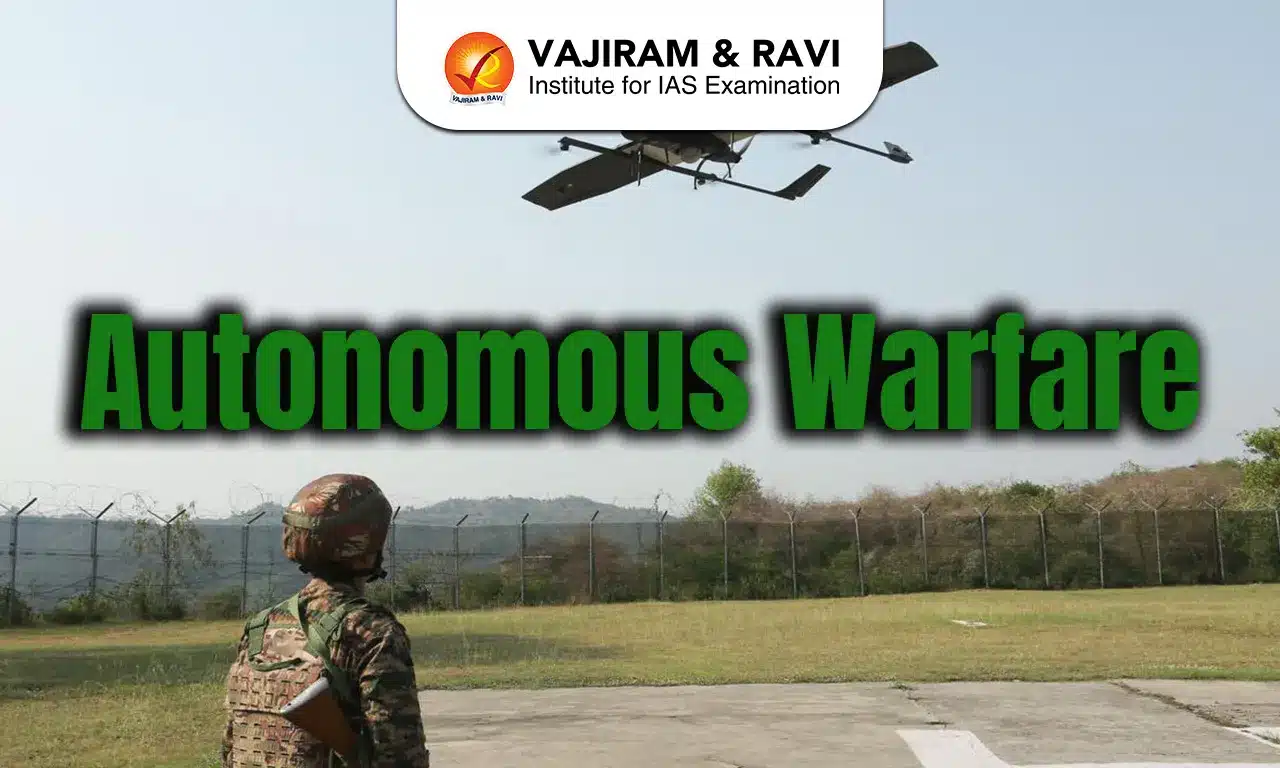
Autonomous Warfare in Operation Sindoor: India-Pakistan Drone Conflict

Autonomous warfare

Autonomous Warfare Latest News

  • Launched in early May as retaliation for the April 22 Pahalgam terror attack, Operation Sindoor marked the first direct drone-led military conflict between nuclear-armed India and Pakistan. 
  • Over four days, both nations shifted to a new mode of engagement centered on Unmanned Aerial Systems (UAS)—including armed drones, loitering munitions, and electronic decoys—operating below the threshold of full-scale war.
  • Prior to the operation, Israeli Heron MK-II and indigenous TAPAS-BH-201 (Rustom-II) UAVs conducted deep surveillance into Pakistani airspace. 
  • From May 7, India struck nine targets, and both sides deployed a wide range of drones for real-time ISR (Intelligence, Surveillance, Reconnaissance) and precision strikes
  • Tactics included the use of decoy drones to spoof enemy radars and drain interceptor stocks. The conflict de-escalated by May 10 following a ceasefire, setting a precedent for drone-centric warfare in South Asia.

India’s Use of Aerial Systems in Operation Sindoor

  • India used a varied fleet of Unmanned Aerial Systems (UAS), including:
    • Indigenous loitering munitions like Nagastra-1
    • Israeli-origin Harop drones (capable of autonomous radar targeting)
    • Swarm drones developed by DRDO and private firms for radar saturation

Tactical Strategy: Sequenced Drone Strikes

  • Initial waves included decoy drones and EW (electronic warfare) payloads to confuse radar and exhaust SAM (Surface-to-Air Missile) defences.
  • Followed by precision loitering munitions and armed UAVs guided by Heron MK II and TAPAS-BH-201 drones.
  • Quadcopters and micro-UAVs supplied real-time ISR feeds via the Integrated Battle Management System (IBMS) for dynamic target acquisition.

Notable Impacts and Strikes

  • Reports claimed a cricket match in Rawalpindi was disrupted due to Indian drone strikes.
  • Chinese-supplied HQ-9 SAM system near Lahore was reportedly destroyed by an Indian Harop drone.

Strategic Implications

  • The operation showcased India’s growing capability in autonomous warfare, executing precise, risk-free cross-border strikes.
  • Analysts highlighted this as a new model of deterrence in South Asia, signaling a shift in regional aerial power dynamics in India’s favor.

India’s Multi-Layered Air Defence System During Operation Sindoor

  • Integrated Air Command and Control System (IACCS) is India’s core air defence nerve centre.
  • It fuses inputs from ground-based radars, AWACS, satellites, and other sensors.
  • It also enables real-time tracking and interception of low-altitude threats like drones via integration with SAMs and fighter jets.
  • It is designed with redundancy — damage to nodes doesn't disrupt overall operations due to alternate data links and mobile radars.

Pakistan’s Attempted Disruption

  • Pakistan tried to overload IACCS by varying drone altitude, timing, and routes to: Disrupt communication nodes; Confuse command loops; Find vulnerabilities for follow-up drone/missile strikes.
  • All attacks were unsuccessful; any disruptions were swiftly mitigated.

Advanced Features and Failover Capabilities

  • IACCS’s ‘mesh’ architecture allows:
    • Seamless failover when nodes are hit.
    • Sustained situational awareness using satellite uplinks and mobile platforms.
  • Directed Energy Weapons (DEWs): Employed high-powered lasers/microwaves to neutralise drones quickly.

Tactical Support: Akashteer System

  • Akashteer developed by Bharat Electronics Limited (BEL) for Army Air Defence units.
  • Digitised command layer ensures:
  • Real-time coordination between sensors and weapons.
  • Effective handling of low-level threats like UAVs, even under EW/communication stress.

Layered Architecture of the Air Defence Shield

  • India used a multi-layer defence combining:
    • Retrofitted Cold War-era systems.
    • Modern missile platforms.
  • Low-Level Air Defence (LLAD) Network
    • Composed of legacy systems upgraded with radar-directed fire and electro-optical sights.
    • Even Army and BSF snipers contributed by shooting down drones in frontline areas.
  • Modern Additions
    • Israeli SPYDER missile system with Python-5 and Derby missiles: Used for point defence against UAVs, cruise missiles, and aircraft.

A New Kind of War – The Technological Evolution of Operation Sindoor

  • Advanced Missile Systems for Layered Defence
    • Akash & Akash-NG: Provided medium-range air defence against aerial threats.
    • Barak-8: India-Israel joint development offering long-range protection of high-value strategic assets from aircraft, drones, and missiles.
    • S-400 'Triumf' (Sudarshan Chakra): Russia-made cutting-edge long-range air defence system; India has received 3 out of 5 units ordered.
  • Centralised Integration through IACCS
    • All missile systems were seamlessly integrated via the Integrated Air Command and Control System (IACCS).
    • Enabled coordinated, real-time responses to a full spectrum of aerial threats.
  • Dawn of Algorithmic, Autonomous Warfare
    • Operation Sindoor marked a paradigm shift:
      • From conventional to autonomous, algorithm-driven warfare.
      • Deterrence mechanisms are now shaped by data, drones, and digital precision rather than brute force.
      • Future conflicts may begin not with human mobilization but with the silent launch of autonomous drones — a shift in both strategy and psychology of warfare.

Autonomous Warfare FAQs

Q1. What is Operation Sindoor?

Ans. A drone-led military conflict between India and Pakistan launched in May, marking the start of autonomous warfare in South Asia.

Q2. Which drones did India use?

Ans. India used Nagastra-1, Harop drones, and swarm drones for precision strikes and aerial dominance.

Q3. What is the IACCS?

Ans. India’s Integrated Air Command and Control System ensures real-time tracking and neutralization of drone threats using multi-source data integration.

Q4. What role did Directed Energy Weapons play?

Ans. DEWs used high-powered lasers and microwaves to quickly detect and disable incoming enemy drones during combat.

Q5. How did India defend against Pakistani drones?

Ans. India employed a layered air defence system with LLAD platforms, Akash missiles, SPYDER systems, and upgraded Cold War-era weapons.

.Source: TH

Kalanamak Rice

Kalanamak Rice

Kalanamak Rice Latest News

The Uttar Pradesh government, in consultation with the commerce ministry, plans to promote the export of Kalanamak rice to countries with majority or large Buddhist populations.

About Kalanamak Rice

  • Kalanamak is a traditional variety of paddy with black husk and strong fragrance.
  • It is considered a gift from Lord Buddha to the people of Sravasti when he visited the region after enlightenment.
  • It is traditional, non-basmati aromatic rice grown in eastern Uttar Pradesh, particularly in Siddharth nagar, where it has been designated as an ODOP (one district one product) item.
  • It is also grown in 11 districts of the Terai region of north-eastern Uttar Pradesh and in Nepal, the traditional variety has been prone to ‘lodging’, a reason for its low yield.
    • Lodging: Lodging is a condition in which the top of the plant becomes heavy because of grain formation, the stem becomes weak, and the plant falls on the ground.
  • It is a nutritional powerhouse. It is rich in iron and antioxidants, has a low glycemic index, and is naturally gluten-free, making it a healthy dietary choice, especially for diabetics.
  • It is protected under the Geographical Indication (GI) tag system.

Kalanamak Rice FAQs

Q1: Who developed kalanamak rice?

Ans: Dr. R. C. Chaudhary

Q2: Which district is Kala Namak Rice grown in?

Ans: Siddharthnagar

Source: LM

US Court Strikes Down Trump’s Tariffs Imposed Under Emergency Powers

Trump tariffs ruling

Trump Tariffs Ruling Latest News

  • A U.S. court ruled that President Donald Trump exceeded his authority by imposing tariffs on various countries under the 1977 International Emergency Economic Powers Act (IEEPA). 
  • The Court of International Trade stated that Trump's April 2 tariffs, announced on what he called "Liberation Day," were not justified under the emergency law. 
  • The ruling also struck down earlier tariffs on Canada, Mexico, and China, concluding that the government misused the IEEPA to justify the trade measures.

U.S. Court of International Trade (USCIT): Role and Standing

  • The USCIT provides a dedicated judicial forum for civil cases related to import transactions and international trade. 
  • It ensures consistent and uniform interpretation of trade laws across the country.

Jurisdiction and Authority

  • Under the Customs Courts Act of 1980, the USCIT holds exclusive jurisdiction over civil actions against the United States, its officers, or agencies, arising from laws governing international trade. 
  • It can hear cases from any part of the country.

Historical Evolution

  • The court traces its roots to 1890, when Congress authorized the appointment of nine general appraisers to oversee merchandise valuation at key ports. 
  • Initially administrative, their role evolved over time into a judicial one, with progressively broader powers.

Structure and Appointments

  • The USCIT consists of nine judges, appointed by the President and confirmed by the Senate. 
  • These judges serve lifetime tenures, reflecting the court’s status as an Article III federal court.

Challenge to Trump's Tariffs under Emergency Law

  • Twelve US states (including New York, New Mexico, Connecticut and Arizona) challenged the tariffs, as did five small businesses. The court combined the two cases.

Arguments by the States

  • Tariffs financially burdened state governments.
  • Tariffs did not specifically target drug cartels, despite this being a stated justification.

Core Legal Issue

  • Whether the President's use of the 1977 International Emergency Economic Powers Act (IEEPA) to impose tariffs exceeded the legal limits of emergency economic powers.

Court’s Focus

  • Determining the scope of presidential authority under the IEEPA.
  • Assessing if the tariffs aligned with the intended use of emergency powers.

Court Ruling on Trump’s Tariffs under IEEPA

  • The U.S. Court of International Trade examined whether the International Emergency Economic Powers Act (IEEPA) of 1977 grants the President unlimited authority to impose tariffs on goods from nearly every country.

unnamed (1).webp

Court’s Ruling

  • The court held that IEEPA does not confer such unbounded authority, and therefore struck down the challenged tariffs. 
  • It concluded that Trump’s actions exceeded the scope of authority delegated under the Act.

IEEPA’s Limitations and Historical Context

  • The court noted that while the President’s economic powers expanded during the World Wars and the Great Depression, IEEPA was enacted in 1977 to limit such powers.
  • Under IEEPA, presidential powers can be exercised only to address “unusual and extraordinary threats” declared under a national emergency.

Trump’s Justification and Court’s Rebuttal

  • January 20 Emergency Declaration:
    • Trump declared a national emergency under IEEPA citing threats from international cartels linked to drugs, gangs, and violence in the Western Hemisphere.
    • Tariffs Imposed: 25% on goods from Mexico and Canada; 20% on goods from China.
    • Court’s Response: The court found that these tariffs did not directly address the declared threats, and thus, were unjustified under IEEPA.
  • April 2 “Liberation Day” Tariffs:
    • Trump announced: A flat 10% baseline tariff on all countries; Retaliatory tariffs against specific trade partners.
      • These were justified on grounds like trade imbalances, lack of reciprocity, and suppressed domestic wages.
    • Court’s Response: The court ruled these tariffs were also beyond the President’s emergency powers, as they addressed broad economic concerns, not specific national emergencies as required under IEEPA.

Legal Reference to Trade Act of 1974

  • The court highlighted that Section 122 of the Trade Act of 1974 allows limited tariffs to address balance-of-payment issues.
  • This shows that tariffs must be imposed under narrower, clearly defined laws, not unconditionally under emergency powers.

Next Steps Ordered by the Court

  • The Trump administration must issue new orders reflecting the court’s decision within 10 days.
  • The administration has paused retaliatory tariffs for 90 days, but the 10% baseline tariff remains active.

Appeal and Political Response

  • The White House has appealed the decision to the U.S. Court of Appeals for the Federal Circuit.
  • It may ultimately reach the Supreme Court.

Trump Tariffs Ruling FAQs

Q1. Why were Trump’s tariffs challenged?

Ans. States and businesses argued the tariffs imposed economic burdens and misused emergency powers under the IEEPA.

Q2. What is the IEEPA?

Ans. The International Emergency Economic Powers Act allows limited presidential powers to address extraordinary national threats—not broad economic issues.

Q3. What did the court decide?

Ans. The court ruled Trump exceeded legal authority; the tariffs imposed were declared ultra vires and unlawful.

Q4. What is the USCIT?

Ans. The U.S. Court of International Trade handles trade-related civil cases with exclusive jurisdiction under the Customs Courts Act of 1980.

Q5. What happens next?

Ans. Trump’s administration must revise orders in 10 days; they’ve appealed to higher courts, possibly reaching the Supreme Court.

Source: IE | IE | ToI  | TH

Enquire Now