India’s Extreme Poverty Falls Sharply Under Revised World Bank Poverty Line

India’s Poverty Rate

India’s Poverty Rate Latest News

  • India’s extreme poverty fell to 5.3% in 2022-23 from 27.1% in 2011-12, a much sharper decline than in previous decades, the World Bank said, releasing updated data..

Introduction

  • India has recorded a significant decline in extreme poverty over the past decade, according to the latest estimates by the World Bank using an updated threshold of $3 per day in 2021 PPP terms. 
  • The new estimates reflect India's resilience and progress in reducing poverty, even after adjusting for inflation and other macroeconomic changes.

Revised Global Poverty Thresholds

  • In 2022-23, the World Bank raised the extreme poverty line from $2.15 per day to $3 per day (in 2021 PPP terms) to better reflect cost-of-living increases across developing nations. 
  • This adjustment shifts the global benchmark for poverty measurement, thereby increasing the comparability and relevance of data across time.
  • At this $3/day level, the share of India’s population living in extreme poverty is estimated to be 5.3%, a steep fall from 27.1% in 2011-12
  • In absolute terms, the number of people living in extreme poverty has decreased from 344 million to just over 75 million in this period.

India's Progress under Different Poverty Lines

  • At the $2.15/day line (previous international standard based on 2017 PPP), India's extreme poverty rate stood at 2.3% in 2022, compared to 16.2% in 2011-12.
  • Under the lower-middle-income country (LMIC) poverty line, now revised to $4.20/day (up from $3.65/day), India's poverty rate fell from 57.7% to 23.9% in the same period.
  • Interestingly, while the nominal poverty line has been raised, the new threshold of $4.20/day is effectively lower for India compared to an inflation-adjusted $4.40/day line, thus explaining the decline in poverty rate even under the revised standard.

Demographic and Educational Inequities in Poverty

  • The World Bank’s data also highlight disparities based on geography and education:
  • Rural Poverty: Dropped from 69% in 2011-12 to 32.5% in 2022-23 under the $3.65/day line.
  • Urban Poverty: Declined from 43.5% to 17.2% in the same period.
  • Educational Disparities: 35.1% of Indians aged 16+ with no formal schooling live below the poverty line, compared to just 14.9% among those with post-secondary education.

Multidimensional Poverty Indicators

  • Apart from income-based poverty, India has also seen improvement in non-monetary dimensions of deprivation:
  • World Bank’s MPI: India’s non-monetary poverty fell from 53.8% in 2005-06 to 15.5% in 2022-23.
  • NITI Aayog Estimates: Show a reduction in multidimensional poverty from 29.17% in 2013-14 to 11.28% in 2022-23.
  • Indicators used include access to clean drinking water, electricity, sanitation, and educational enrolment.

Consumption Trends and Economic Implications

  • The decline in poverty is also supported by rising consumption levels:
    • Rural Monthly Per Capita Expenditure (MPCE): Increased from ₹1,430 in 2011-12 to ₹2,079 in 2023-24 (at 2011-12 prices).
    • Urban MPCE: Rose from ₹2,630 to ₹3,632 during the same period, reflecting an overall improvement in living standards.
  • This consumption-driven growth supports the argument that India’s poverty reduction has been broad-based and sustained, aligning with macroeconomic recovery and welfare reforms.

Conclusion

  • India’s progress in reducing poverty, even under the revised and more rigorous international benchmarks, underscores its achievements in economic development, social welfare, and infrastructure delivery. 
  • While challenges remain in addressing inter-group disparities and improving human capital, the data indicate a decisive shift toward a more inclusive growth model. 
  • The full data for 2023-24 will be released in October 2025 under the World Bank's Poverty and Inequality Platform (PIP), potentially offering more insights into India’s poverty trajectory in the post-pandemic era.

India’s Poverty Rate FAQs

Q1. What is India’s extreme poverty rate at the $3/day threshold in 2022-23?

Ans. India’s extreme poverty rate stood at 5.3% in 2022-23 under the World Bank’s $3/day poverty line.

Q2. How many people in India were living in extreme poverty in 2022-23?

Ans. Approximately 75.24 million people in India were living in extreme poverty in 2022-23.

Q3. What is India’s poverty rate under the revised LMIC line of $4.20/day?

Ans. The poverty rate under the $4.20/day LMIC line fell to 23.9% in 2022-23.

Q4. What is the trend in rural and urban poverty under the $3.65/day line?

Ans. Rural poverty fell from 69% to 32.5%, and urban poverty declined from 43.5% to 17.2% between 2011-12 and 2022-23.

Q5. What does the Multidimensional Poverty Index (MPI) indicate for India?

Ans. India’s MPI-based non-monetary poverty fell from 53.8% in 2005-06 to 15.5% in 2022-23.

Source: IE | FE

Funds for Poor Prisoners Lie Unused Despite MHA Advisory

Support to Poor Prisoners Scheme

Support to Poor Prisoners Scheme Latest News

  • The Union government has raised concerns over States and Union Territories not utilizing funds meant to help poor prisoners who remain in jail due to lack of money for bail or release. 
  • In an advisory to Home Secretaries and Prison Heads, the Ministry of Home Affairs (MHA) reiterated the importance of the scheme during multiple video conferences, stressing its role in providing much-needed relief to financially distressed inmates.

Support to Poor Prisoners’ Scheme: Overview

  • The Ministry of Home Affairs launched the Support to Poor Prisoners scheme to assist economically disadvantaged inmates who are unable to secure bail or pay fines due to financial constraints. 
  • The National Crime Records Bureau (NCRB) serves as the Central Nodal Agency for its implementation.

Scheme Introduced in May 2023

  • Launched in May 2023, the scheme came with detailed guidelines and a Standard Operating Procedure (SOP). 
  • It mandated the formation of an Empowered Committee in each district and an Oversight Committee at the State level to approve financial aid for eligible inmates.

Standard Operating Procedure (SOP)

  • Undertrial Prisoners
    • Trigger Point: If an undertrial prisoner is not released within 7 days of being granted bail, jail authorities must inform the Secretary, District Legal Services Authority (DLSA).
    • Assessment: DLSA will examine the prisoner's inability to furnish surety with help from NGOs, civil society representatives, probation officers, or revenue officers within 10 days.
    • Review by Empowered Committee: DLSA will place verified cases before the District Level Empowered Committee every 2–3 weeks.
    • Financial Aid: Upon recommendation, up to ₹40,000 can be released per case, preferably in the form of a Fixed Deposit for court use.
  • Exceptions: No aid for prisoners booked under:
    • Prevention of Corruption Act
    • Prevention of Money Laundering Act
    • NDPS Act
    • UAPA or other specified laws
  • Post-Trial Scenarios:
    • If acquitted or convicted, courts may order return of the bail amount to the government.
    • If bail is granted under Section 389(3) CrPC, the amount may be used for appeal.
  • Higher Bail Amounts:
    • DLSA may engage with legal aid for reduction.
    • Requests exceeding ₹40,000 must be approved by the State Oversight Committee.
  • Convicted Prisoners
    • Trigger Point: If a convicted prisoner remains in jail due to nonpayment of fine, Jail Superintendent must notify Secretary, DLSA within 7 days.
    • Financial Assessment: DLSA conducts inquiry with help from District Social Worker, NGOs, Probation Officer, and Revenue Officer in 7 days.
    • Sanctioning Aid: The Empowered Committee can approve up to ₹25,000 per prisoner for court deposit.
    • Higher Fine Amounts: For sums over ₹25,000, approval must come from the State Level Oversight Committee.

Alarming Overcrowding in Indian Jails

  • According to the India Justice Report 2025:
    • The national jail occupancy rate stands at over 131%.
    • Undertrial prisoners make up approximately 76% of the total prison population.
  • The report warns that:
    • The prison population could reach 6.8 lakh by 2030.
    • However, the projected capacity of jails by that time is only 5.15 lakh, indicating a severe shortfall.

Centre Flags Poor Implementation of Prisoner Relief Scheme

  • The Union government has raised concern over the non-utilisation of funds allocated under the Support to Poor Prisoners Scheme by several States and Union Territories. 
  • These funds were intended to provide financial assistance to undertrial prisoners who remain in jail due to an inability to pay bail or fines.

MHA Issues Advisory to States/UTs

  • The Ministry of Home Affairs (MHA), in an advisory to Home Secretaries and Heads of Prisons, noted that despite multiple video conferences and reminders emphasizing the importance of the scheme, many States/UTs failed to act. 
  • Funds made available through the Central Nodal Agency remain unutilised due to the lack of identification of eligible prisoners.
  • The MHA emphasized that proper implementation of the scheme would not only provide relief to poor prisoners but also help reduce prison overcrowding.

States/UTs Urged to Act Proactively

  • The MHA has urged States and Union Territories to:
    • Identify eligible prisoners as per the scheme’s guidelines.
    • Conduct regular meetings of District Empowered Committees to ensure timely relief.

Support to Poor Prisoners Scheme FAQs

Q1. What is the Support to Poor Prisoners Scheme?

Ans. A government scheme offering financial aid to undertrials and convicts unable to secure bail or pay fines.

Q2. Why are funds under the scheme unutilized?

Ans. Many States/UTs failed to identify eligible prisoners or hold required Empowered Committee meetings for fund disbursement.

Q3. What is the impact of poor implementation?

Ans. Delays in prisoner release contribute to severe jail overcrowding and defeat the scheme's welfare intent.

Q4. What is the financial aid limit under the scheme?

Ans. Up to ₹40,000 for undertrials and ₹25,000 for convicts, extendable with higher committee approval.

Q5. How does this scheme reduce overcrowding?

Ans. Timely release of poor inmates through financial aid helps reduce undertrial numbers and frees up prison space.

.Source: TH | HT | Vikaspedia

Waste Picker Enumeration App

Waste Picker Enumeration App

Waste Picker Enumeration App Latest News

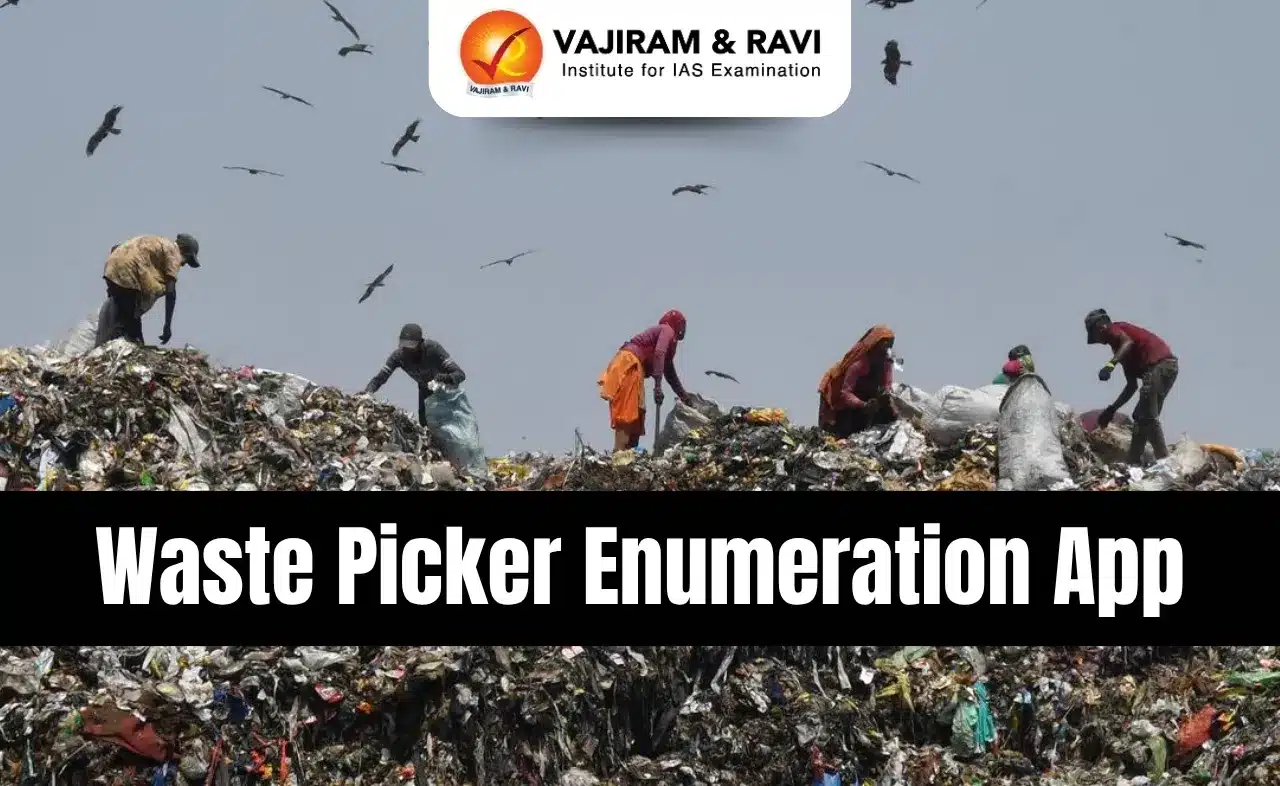
On the occasion of World Environment Day 2025, the Ministry of Social Justice and Empowerment (MoSJE) recently launched a nationwide digital application-Waste Picker Enumeration App-for profiling Waste Pickers under the NAMASTE Scheme.

About Waste Picker Enumeration App

  • It is an online system to count, recognize, and assist waste collectors via social security and livelihood-focused initiatives within the NAMASTE Scheme.
  • It is an initiative of the Ministry of Social Justice and Empowerment (MoSJE) in partnership with the Ministry of Housing and Urban Affairs (MoHUA).
  • It is executed through the National Safai Karamcharis Finance & Development Corporation (NSKFDC).
  • Aim:
    • To acknowledge waste pickers as crucial workers in India’s solid waste management framework.
    • To grant them identity, safety, and integration into official urban frameworks.

Waste Picker Enumeration App Features

  • Large-Scale Profiling: Aims to enumerate 250,000 waste pickers and issue occupational identity cards to provide formal recognition.
  • Health and Safety Coverage: Offers health insurance through Ayushman Bharat and supplies personal protective equipment and seasonal safety kits.
  • Skill and Livelihood Assistance: Provides training for skill development and financial support for waste collection vehicles to encourage sustainable livelihoods.
  • Enhancing Waste Management Systems: Facilitates the establishment of waste picker groups to handle 750 dry waste collection points throughout city regions.
  • Knowledge-Driven Empowerment: Publishes essential materials such as the Guide for Mainstreaming Waste Picker Collectives and the Charting Change report on socio-economic insights.

Key Facts about NAMASTE Scheme

  • It is an ongoing Central Sector Scheme jointly implemented by MoSJE and the MoHUA with NSKFDC being the implementation agency for sewer and septic tank workers (SSWs). 
  • The scheme expanded its mandate in June 2024 to include Waste Pickers.
  • Objective:
    • To guarantee dignity, safety, and livelihood for sewer workers, septic tank cleaners, and currently, waste pickers.
    • To eradicate manual scavenging and encourage mechanized, proficient sanitation services.
  • CoverageFive hundred cities (converging with AMRUT cities) will be taken up under this phase of NAMASTE.
  • It will be implemented for the period 2022-26. 

Waste Picker Enumeration App FAQs

Q1: Which two ministries jointly launched the Waste Picker Enumeration App?

Ans: Ministry of Social Justice and Empowerment & Ministry of Housing and Urban Affairs

Q2: What is the main objective of the Waste Picker Enumeration App?

Ans: To count and recognize waste pickers and integrate them into social security and livelihood programs.

Q3: Which agency is responsible for implementing the Waste Picker Enumeration App?

Ans: National Safai Karamcharis Finance & Development Corporation (NSKFDC)

SourcePIB

Difference Between Citizenship and Nationality

Difference Between Citizenship and Nationality

The difference between citizenship and nationality marks an important distinction in both the terms. Often used interchangeably, both terms have different meanings. Nationality refers to the membership one inherits from their parents, while citizenship is a legal status provided by a nation-state. Both the terms define the connection of an individual with a country, however citizenship can be given through legal processes like registration and naturalisation, not alone birth. Despite their similarities, nationality and citizenship carry unique legal implications and cultural significance. This article examines their differences, emphasizing how they define individuals' connections to a country and their associated rights and responsibilities.

What is Nationality? 

Nationality is a legal bond between a specific country and nation. It represents the membership of a person with a particular nation, determined by birth, descent and naturalisation. Nationality gives a person their political identity within a country and gives certain rights and duties connected to becoming a member of that nation. 

What is Citizenship? 

Citizenship refers to the legal status that allows a person to fully become a member of a specific country and nation. The subset of nationality portrays the formal and active relationship in an individual and the state. Citizenship also refers to particular privileges, rights and responsibilities within a political community. It focuses on active participation and responsibilities of a person of the country. Used interchangeably, the difference between nationality and citizenship is important in both political and legal context. 

Nationality and Citizenship Key Difference 

While “Nationality” represents where an individual is born, “Citizenship” shows the legal requirements and the political status that recognises an individual as a citizen. The differences between Nationality and Citizenship are:

Difference

Nationality

Citizenship

Basis

Acquired by birth within a country or descent from nationals

Obtained through legal processes like birth, naturalization, or marriage

Definition

Status of belonging to a particular nation

Legal belonging to a particular country or state

Diplomatic Protection

Limited consular protection while abroad

Full consular assistance and protection

Duration of Status

Lifelong unless voluntarily renounced or revoked

Typically lifelong, but can be revoked under certain circumstances

Inheritance

Inherited from parents in some cases, regardless of birthplace

Citizenship by birthright in some countries, regardless of parents' nationality

Multiple Citizenship

Many countries allow dual or multiple nationalities

Dual citizenship allowed in some cases, varies by country

Obligations

Limited obligations compared to citizens

Obedience to laws, tax payment, and possibly military service

Passport Issuance

Eligible for a national passport, benefits vary

Entitled to a valid passport for international travel and consular aid

Political Participation

May lack voting rights in home country elections if residing abroad

Generally entitled to vote and participate in political processes

Rights and Benefits

Limited rights, such as residency and employment in the home country

Full legal rights, including voting, social benefits, and legal protections

Stateless Individuals

Risk of statelessness without recognized nationality

Legal recognition and protection, preventing statelessness

Also Check
Difference Between Cabinet and Council of Ministers Difference between National Anthem and National Song
Difference Between GMT and IST Difference Between Citizenship and Nationality
Difference Between District Collector and District Magistrate Difference Between Kumbh and Mahakumbh
Difference Between Fundamental Rights and Fundamental Duties Differences Between Censure and No-Confidence Motion
Differences Between Absolute Poverty and Relative Poverty Difference Between Wildlife Sanctuary and National Park

Difference Between Nationality and Citizenship FAQs

Q1: Is citizenship and nationality the same thing?

Ans: No, nationality refers to a person’s legal belonging to a country, while citizenship grants specific rights and duties within that nation.

Q2: What is an example of nationality and citizenship?

Ans: For example, a person born in India has Indian nationality, but if they become a U.S. citizen, their nationality remains Indian, while their citizenship changes to American.

Q3: Is Indian a nationality or citizenship?

Ans: "Indian" is both a nationality and a citizenship, but in legal terms, nationality refers to belonging to India, while citizenship grants rights under Indian law.

Q4: Is British my nationality or citizenship?

Ans: "British" can refer to both nationality and citizenship, but in legal terms, British nationality includes various categories, while British citizenship provides full legal rights.

Q5: What is my nationality if I was born in India?

Ans: If you were born in India and meet the legal criteria, your nationality is Indian.

Losgna Occidentalis

Losgna Occidentalis

Losgna Occidentalis Latest News

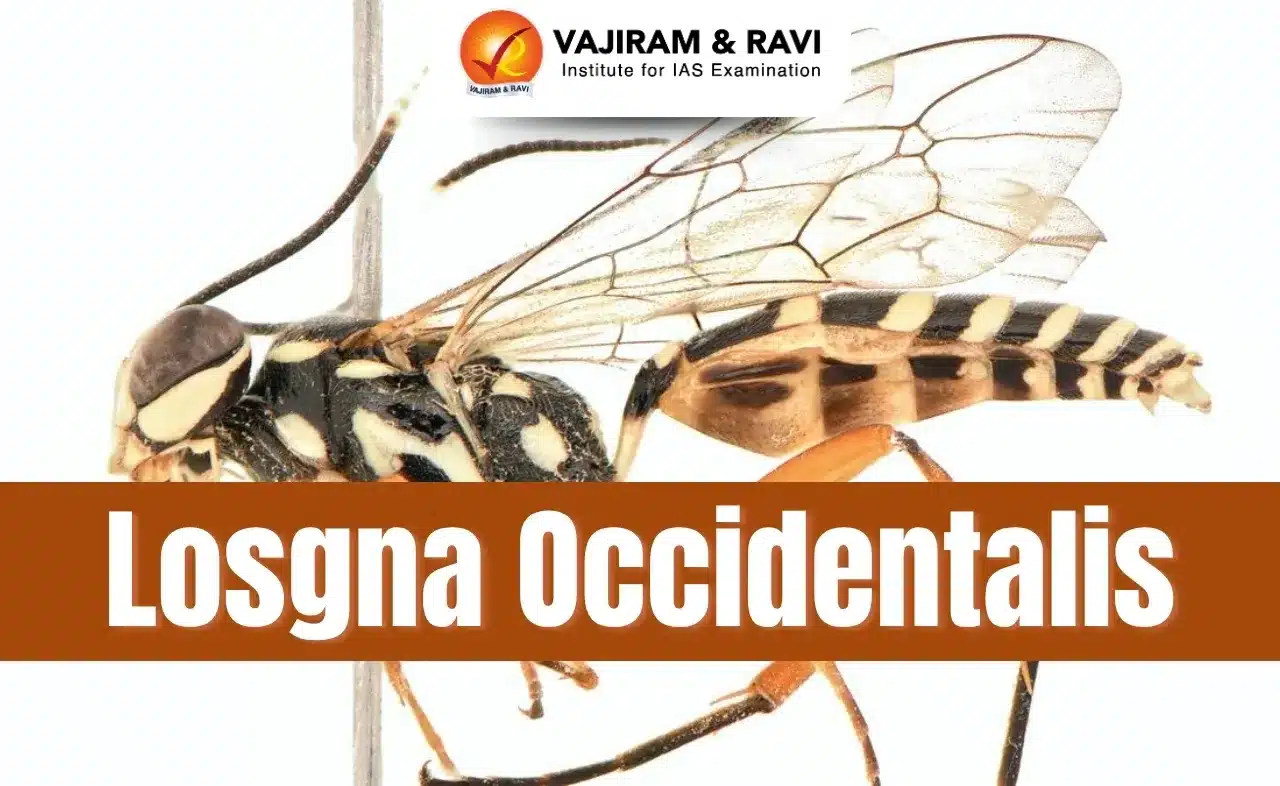
A recent study published in Zootaxa, a peer-reviewed scientific journal for animal taxonomists, pointed out the rediscovery of the Losgna genus in India, after close to six decades.

About Losgna Occidentalis

  • It was discovered from an urban dry scrub forest in Chandigarh.
  • It belongs to a parasitic wasp (family Ichneumonidae), a group known for laying eggs inside or on other arthropod hosts.
  • Prior to this discovery, Losgna had not been recorded in India since Heinrich’s 1965 monograph. No records, specimens or published literature on Losgna existed in any Indian institution after 1965.
  • It appeared that the genus had vanished entirely from its once‐documented range in northeast India 
  • Researched named the new species ‘Losgna occidentalis’ because it represents the westernmost known occurrence of the genus: prior records came exclusively from tropical forests of eastern India and adjacent regions of Southeast Asia.
  • At present only existing specimens of any Losgna species are those preserved at the Natural History Museum, London.

Losgna Occidentalis FAQs

Q1: What is a Parasite?

Ans: It is an organism that lives on or in another organism, the host, and gets its food from or at the expense of its host.

Q2: What are Tropical Forests?

Ans: Tropical forests are rich ecosystems located in tropical zones surrounding the equator. They make up six percent of Earth's land surface area.

Source: TH

Fusarium Graminearum

Fusarium Graminearum

Fusarium Graminearum Latest News

The recent arrest of a Chinese researcher and charges against another for smuggling a dangerous crop-killing fungus Fusarium graminearum into the United States have brought renewed attention to the threat of agro-terrorism.

About Fusarium Graminearum

  • It is a fungus that affects the kernel development of various grains, thereby reducing the yield.
  • It can also cause ear rot or stalk rot in maize crops. Once infected, the fungus continues to spread as the crop matures.
  • It is known to survive in plant tissue residues like small grain stems and roots and infect new plants.
  • It causes Fusarium head blight—a disease that ravages cereal crops such as wheat, barley, maize, and rice.
  • The fungus not only decimates yields but also produces a toxin called vomitoxin (deoxynivalenol), making the grain unsafe for human and animal consumption.
  • According to the US Department of Agriculture, this disease causes over $1 billion in crop losses annually in the United States alone.
  • Vomitoxin can cause vomiting, diarrhea, abdominal pain, and fever in livestock and people, further amplifying its public health impact.

What is Agro-Terrorism?

  • It is the intentional use of biological agents—such as plant pathogens, pests, or contaminants—to attack a country’s agricultural infrastructure.
  • It targets food production systems with the aim of causing economic devastation, food insecurity, and public panic.
  • Agro-terrorism is attractive to hostile actors because it is low-cost, difficult to detect, and capable of triggering far-reaching economic and social damage.
  • Agriculture-based sectors are especially vulnerable. Unlike military or financial systems, farms, food processing plants, and supply chains are less protected and widely dispersed.
  • Biological attacks on crops or livestock can go undetected for weeks and are difficult to trace back to the perpetrators.
  • This makes agro-terrorism a potent weapon for countries or groups seeking to destabilize a rival nation.

Fusarium Graminearum FAQs

Q1: What diseases are caused by Fusarium species?

Ans: Fusarium fungi cause vascular wilt, root rot, foot and stem rot, leaf lesions, fruit rot, head blight in cereals, and post-harvest decay.

Q2: What are the toxins in Fusarium graminearum?

Ans: Deoxynivalenol (DON)

Source: LM

Diphtheria

Diphtheria

Diphtheria Latest News

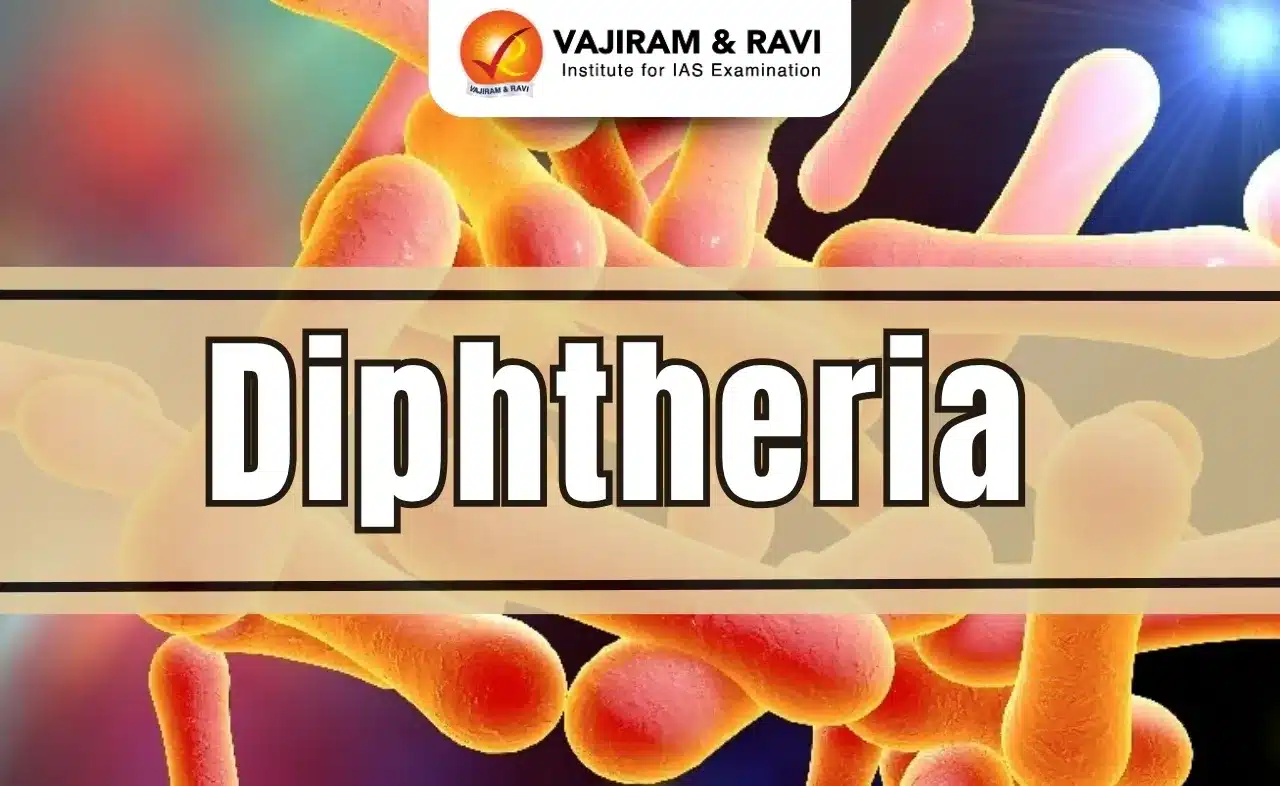
Recently, new research said the largest diphtheria outbreak to strike Western Europe in 70 years has been affecting vulnerable people such as migrants and the homeless since 2022.

About Diphtheria

  • It is a highly contagious bacterial infection that can attack the respiratory tract and spread throughout the body.
  • It is caused by strains of bacteria called Corynebacterium diphtheriae that make a toxin.

Transmission of Diphtheria

  • It can spread from person to person, usually through respiratory droplets, like from coughing or sneezing. 
  • People can also get sick from touching infected open sores or ulcers.
  • It can also infect the skin, causing open sores or ulcers. However, diphtheria skin infections rarely result in severe disease.

Symptoms of Diphtheria

  • Typical symptoms of the infection include a sore throat, fever, swollen neck glands and weakness.
  • Within 2–3 from infection, the dead tissue in the respiratory tract forms a thick, grey coating that can cover tissues in the nose, tonsils and throat, making it hard to breathe and swallow.

Treatments for Diphtheria

  • Neutralization of unbound toxin with Diphtheria Antitoxin (DAT)
  • Antibiotics to prevent further bacterial growth;
  • Monitoring and supportive care to prevent and treat complications, e.g. airway obstruction, myocarditis.
  • Although diphtheria can be treated with medications, in advanced stages, the bacterial infection can damage the heart, kidneys and nervous system.

Diphtheria FAQs

Q1: What is diphtheria caused by?

Ans: Diphtheria is caused by the bacterium Corynebacterium diphtheriae.

Q2: How do you control diphtheria?

Ans: Widespread immunisation against diphtheria is the only effective control. 

Source: TH

Loan-to-Value (LTV) Ratio

Loan-to-Value (LTV) Ratio

Loan-to-Value (LTV) Ratio Latest News

Providing relief to small borrowers, the Reserve Bank of India (RBI) recently increased the loan-to-value (LTV) ratio for gold-backed loans up to ₹5 lakh.

About Loan-to-Value (LTV) Ratio

  • LTV Ratio represents the proportion of an asset’s value that a lender is willing to provide debt financing against, usually expressed as a percentage.
  • LTV is calculated by dividing the loan amount by the property's appraised value or purchase price, whichever is lower. 
  • LTV Ratio = (Loan Amount/Appraised Property Value) x 100
  • For example, if you are planning to purchase a property that is priced at ₹1 crore and the bank's LTV is 70%, you will be eligible for a loan amount of ₹70 lakh.
  • LTVs tend to be higher for assets that are considered more “desirable” as collateral.
  • The desirability of an asset as collateral is generally measured by how stable its value ishow active its secondary market is, and how easily the title can be transferred to other parties (among other things).
  • Typically, loan assessments with high LTV ratios are considered higher-risk loans. Therefore, if the loan is approved, it has a higher interest rate.

Recent RBI Changes to Loan-to-Value (LTV) Ratio for Gold-Backed Loans

  • RBI has increased the LTV ratio from 75% to 85% for gold loans of up to Rs 2.5 lakh per borrower, including interest.
  • In simple terms, if the pledged gold is worth Rs 1 lakh, borrowers can now get up to Rs 85,000 instead of the earlier Rs 75,000.
  • For gold loans more than Rs 2.5 lakh and up to Rs 5 lakh, the LTV ratio has been set at 80 percent. 
  • For loans more than Rs 5 lakh, the central bank has set an LTV of 75 percent.

Loan-to-Value (LTV) Ratio FAQs

Q1: What does the Loan-to-Value (LTV) ratio primarily measure?

Ans: The proportion of the asset value financed through a loan.

Q2: Why are higher LTV ratios generally considered riskier for lenders?

Ans: Because they indicate less collateral buffer if the borrower defaults.

Q3: How is the LTV ratio calculated?

Ans: (Loan Amount ÷ Property Value or Purchase Price, whichever is lower) × 100

SourceBS

Historic Rail Link Connects Kashmir Valley with Katra via Vande Bharat Trains

Kashmir Rail Link

Kashmir Rail Link Latest News

  • PM Modi flagged off two Vande Bharat trains between Shri Mata Vaishno Devi Katra and Srinagar, marking the launch of a direct rail link to the Kashmir Valley. 
  • This historic milestone is expected to significantly boost development, trade, tourism, and deepen the region’s integration with the rest of India.

Early Railway Efforts in Jammu and Kashmir

  • The first railway line in the princely state of Jammu and Kashmir was constructed by the British in 1897, connecting Jammu and Sialkot (now in Pakistan) over a stretch of 40–45 km.
  • In 1902 and 1905, proposals were made for a Rawalpindi-Srinagar rail line via the Jhelum River, and an alternative Jammu-Srinagar line via Reasi was supported by Maharaja Pratap Singh. Neither plan materialized.

Post-Partition Disconnection and Reconnection

  • After Partition in 1947, Sialkot became part of Pakistan, severing Jammu’s railway connectivity.
  • Until 1975, the closest railway station to Jammu and Kashmir was in Pathankot, Punjab.
  • The Pathankot-Jammu rail line was inaugurated in 1975.
  • Construction of the Jammu-Udhampur rail line (53 km) began in 1983, but was only completed in 2004 — 21 years later.

Udhampur-Srinagar-Baramulla Rail Link (USBRL) Project

  • In 1994, the project was extended from Udhampur to Srinagar and Baramulla.
  • The USBRL Project was officially approved in March 1995 at an estimated cost of ₹2,500 crore and declared a national project in 2002.
  • Over the years, sections of the line became operational.

Completion of USBRL: A Landmark Achievement

  • The USBRL is now fully completed:
    • 272 km of rail tracks
    • 36 tunnels and 943 bridges
    • Total cost: ₹43,780 crore
  • It now connects Katra and Srinagar with a travel time of just 3 hours, marking a transformative milestone in connectivity for the region.

An Engineering Marvel in the Himalayas

image3.webp

  • The USBRL project overcame extreme geological and climatic challenges in the seismically active and snow-bound Shivalik Hills and Pir Panjal range.
  • Key engineering achievements include:
    • Chenab Bridge: World’s highest railway arch bridge, 359 metres above the riverbed.
      • It rises 35 metres higher than the Eiffel Tower. 
      • Spanning 1,315 metres, this steel arch structure is a key part of the Udhampur Srinagar Baramulla Railway Link.
      • The bridge can withstand wind speeds of up to 260 kilometres per hour and is built to last 120 years. 
      • Structural steel suitable for temperatures ranging from minus 10 to 40 degrees Celsius has been used.
    • Anji Khad Bridge: Indian Railways’ first cable-stayed bridge, also in Reasi district.
      • It spans the deep Anji River valley, south of the Chenab, connecting the Katra Banihal section of the Udhampur Srinagar Baramulla Rail Line.
      • Towering 331 metres above the riverbed and stretching 725 metres across, it is anchored by 96 high tensile cables. 
      • At its heart stands an inverted Y shaped pylon that climbs 193 metres above its foundation.
    • Longest transport tunnel in India: 12.77 km in Ramban district.

Year-Round, All-Weather Rail Connectivity

  • Two Vande Bharat trains in each direction will connect Katra to Srinagar in just 3 hours, cutting road travel time by half.
  • The trains are designed to operate even during harsh winter conditions, ensuring uninterrupted access to the Kashmir Valley throughout the year.
  • Plans are underway to extend service to Jammu Tawi, enabling direct rail connectivity to Srinagar from across India.

Boost to Economy and Tourism

  • The railway link is expected to revolutionise tourism in Jammu and Kashmir by offering safe, quick, and scenic travel options.
  • It will facilitate faster and cheaper transport of local products like apples, dry fruits, pashmina shawls, and handicrafts to other parts of the country.
  • The cost of importing daily essentials into the Valley is likely to decrease, benefiting local residents and businesses alike.

Kashmir Rail Link FAQs

Q1. What is the USBRL project?

Ans. A 272-km railway connecting Udhampur, Srinagar, and Baramulla, enhancing connectivity and economic integration with the Kashmir Valley.

Q2. Which engineering feats were achieved?

Ans. It includes the world’s highest railway arch bridge, India's longest transport tunnel, and first cable-stayed railway bridge.

Q3. How will the trains benefit locals?

Ans. All-weather trains reduce travel time, lower transport costs, and improve access to goods and services in the Valley.

Q4. What is the impact on tourism?

Ans. Faster, scenic train travel is expected to significantly boost tourism to Jammu and Kashmir year-round.

Q5. How does this link aid trade?

Ans. It enables faster, cheaper transport of local produce like apples, handicrafts, and dry fruits across the country.

Source: IE | PIB | IE

Indian Council of Arbitration

Indian Council of Arbitration

Indian Council of Arbitration Latest News

The Indian Council of Arbitration (ICA) organized the 3rd edition of its International Conference on “Arbitrating Indo-UK Commercial Disputes” during the London International Disputes Week (LIDW) 2025.

About Indian Council of Arbitration

  • It is one of the oldest arbitral institutions in India.
  • It was established in 1965 as a specialized arbitral body at the national level under the initiatives of the Government of India and apex business organizations FICCI.
  • It is a registered society under the Societies Registration Act, 1860, operating on a not-for-profit basis.
  • Objective: The main objective of ICA is to promote amicable, quick and inexpensive settlement of commercial disputes by means of arbitration, conciliation, regardless of location. 
  • Function: The core function of ICA is the cost effective and efficient administration of arbitration proceedings.
  • The ICA has its own set of procedural rules which govern the conduct of the entire arbitration proceedings, from its commencement to its termination.
  • In addition, ICA is tasked with the mission of promoting and building capacity in the area of ADR (Alternative Dispute Resolution).
  • It acts as a specialized arbitral body at the national level under the initiatives of the Govt. of India and apex business organizations like FICCI etc.
  • Head office: New Delhi

Indian Council of Arbitration FAQs

Q1: What is the role of the Indian Council of Arbitration?

Ans: The core function of ICA is the cost effective and efficient administration of arbitration proceedings.

Q2: What is the difference between conciliation and arbitration?

Ans: Arbitration involves a neutral third party rendering a legally binding decision after considering the arguments of both parties, while conciliation revolves around a mediator facilitating communication and negotiation to help the parties reach a mutually acceptable agreement.

Source: TH

Index Cards

Index Cards

Index Cards Latest News

Recently, the Election Commission of India has streamlined, technology-driven system to generate Index Cards and various statistical reports after the conduct of the elections.

About Index Cards

  • It is a non-statutory, post-election Statistical Reporting Format.
  • It is developed as a suo moto initiative by the Election Commission of India (ECI) to promote accessibility of election-related data at the constituency level for all stakeholders, including researchers, academia, policymakers, journalists, and the general public.
  • It is designed to disseminate data across multiple dimensions—such as candidates, electors, votes polled, votes counted, party-wise and candidate-wise vote share, gender-based voting patterns, regional variations, and performance of political parties
  • The Index Card forms the foundation for generating about 35 Statistical Reports for Lok Sabha elections and 14 for State Assembly elections.
  • These reports cover variables like State/PC/AC-wise elector details, number of polling stations, state and constituency-wise voter turnout, participation of women electors, performance of national/state parties and Registered Unrecognized Political Parties (RUPPs).
  • Earlier, this information was manually filled at the Constituency level using various statutory formats in Physical Index Cards. These physical Index Cards were subsequently used for data entry into the online system to facilitate the generation of statistical reports.
  • This manual, multi-layered process was time-consuming and frequently led to delays in data availability and dissemination.

Index Cards FAQs

Q1: Which elections are managed by the Election Commission of India?

Ans: By Article 324 of the Constitution of India, it is vested with the power of conducting elections to – Parliament, State Legislatures, Office of President and Vice-President of India.

Q2: What is a Registered Unrecognised Political Party?

Ans: These are the parties which are either newly registered parties or those which have not secured enough percentage of votes in the assembly or general elections to become a state party, or those which have never contested elections since being registered.

Source: TH

Pandya Dynasty

Pandya Dynasty

Pandya Dynasty Latest News

An 800-year-old Shiva temple of the later Pandya period was recently unearthed at Udampatti, a village in Melur taluk, Madurai district, Tamil Nadu.

About Pandya Dynasty

  • The Pandya dynasty was an ancient Tamil dynasty of South India that developed during the Sangam Age. 
  • It is one of the three Tamil dynasties, the other two being the Chola and the Chera. 
    • The kings of the three dynasties were referred to as the Three Crowned Kings of Tamilakam.
  • The Early Pandyas ruled parts of Southern India from at least 4th century BCEPandya rule ended in the first half of the 16th century CE.
  • They ruled extensive territories, at times including the Chera (Kerala) country, the Chola country, and Ceylon (now Sri Lanka) through collateral branches subject to Madura.
  • They initially ruled their country, Pandya Nadu, from Korkaia seaport on the southernmost tip of the Indian Peninsula, and in later times moved to Madurai.
  • The early Pandya Dynasty of the Sangam Literature faded into obscurity upon the invasion of the Kalabhras.
  • The dynasty revived under Kadungon in the early 6th centurypushed the Kalabhras out of the Tamil country, and ruled from Madurai. 
  • They again went into decline with the rise of the Cholas in the 9th century and were in constant conflict with them. 
  • The Pandyas allied themselves with the Sinhalese and the Cheras in harassing the Chola empire until they found an opportunity for reviving their fortunes during the late 13th century. 
  • The Later Pandyas (1216–1345) entered their golden age under Maravarman Sundara Pandyan and Jatavarman Sundara Pandyan (c. 1251), who expanded the empire into Telugu country,conquered Kalinga (Orissa), and invaded and conquered Sri Lanka. 
  • They also had extensive trade links with the Southeast Asian maritime empiresof Srivijaya and their successors. 
  • The Pandyas excelled in both trade and literature.
  • They controlled the pearl fisheries along the South Indian coast between Sri Lanka and India, which produced some of the finest pearls in the known ancient world.
  • The Pandyas had diplomatic relations as far as Rome. 
  • The symbol of the Pandya Dynasty was the fish

Pandya Dynasty Literary Sources

  • Pandyas are mentioned in Sangam literature (c. 100–200 C.E.) as well as by Greek and Roman sources during this period. 
  • The country of the Pandyas was described as Pandaie by MegasthenesPandi Mandala in the Periplus of the Erythraean Sea (1st-century CE Greco-Roman travelogue) and as Pandya Mediterranea and Modura Regia Pandionis by Ptolemy.

Pandya Dynasty Literary Sources Cultural Contributions

  • The Pandya empire was home to temples including Meenakshi Temple in Madurai, and Nellaiappar Temple in Tirunelveli.
  • Jainism, Shaivism, and Vaishnavism flourishedduring the reign of the early Pandya kings, but after the revival of the Pandya power by Kadungon, the Shaivite Nayanars and the Vaishnavite Alvars rose to prominence. and the non-Hindu sects declined.
  • Traditionally, the legendary Sangams (congregation of Tamil poets who created the great Sangam literature) were held in Madurai under their patronage, and some of the Pandya Kings were poets themselves. 
  • Under Pandya patronage, Tamil poets and scholars thrived, enriching Tamil literature significantly. 
  • The dynasty also made notable contributions to art, music, and dance, particularly Bharatanatyam. 
  • Advancements in irrigation and agriculture further bolstered their economic stability. 
  • The Pandyas actively promoted education and established renowned centers of learning.

Pandya Dynasty Literary Sources Decline

  • During their history, the Pandyas were repeatedly in conflict with the Pallavas, Cholas, Hoysalas, and finally the Muslim invaders from the Delhi Sultanate. 
  • The Islamic invasion led to the end of Pandya supremacy in South India, and in 1323, the Jaffna Kingdom of Sri Lanka declared its independence from the crumbling Pandya Empire. 
  • The Pandyas lost their capital city, Madurai, to Madurai Sultanate in 1335. 
  • However, they shifted their capital to Tenkasi and continued to rule the Tirulnelveli, Tuticorin, Ramanad, and Sivagangai regions. 
  • Meanwhile, the Madurai sultanate was replaced by Nayaka governors of Vijayanagara in 1378. 
  • In 1529 Nayaka governors declared independence and established the Madurai Nayak dynasty.

Pandya Dynasty FAQs

Q1. What was the earliest known capital of the Pandya Dynasty?

Ans. They initially ruled their country, Pandya Nadu, from Korkai, a seaport on the southernmost tip of the Indian Peninsula, and in later times moved to Madurai.

Q2. Which ancient travelogue referred to the Pandya territory as "Pandi Mandala"?

Ans. Periplus of the Erythraean Sea

Q3. Which symbol is associated with the Pandya Dynasty?

Ans. Fish

SourceTH

Chenab Railway Bridge

Chenab Railway Bridge

Chenab Railway Bridge Latest News

The Prime Minister recently inaugurated the Chenab railway bridge, the world’s highest rail bridge, marking a historic milestone in India’s infrastructure journey.

About Chenab Railway Bridge

  • It is located in the Reasi district of Jammu and Kashmir.
  • It is built at a cost of around ₹1,400 crore above the Chenab River.
  • It is a vital part of the Udhampur-Srinagar-Baramulla Rail Line (USBRL), aimed at connecting the Kashmir Valley to the rest of the country.
  • It holds the record for the tallest railway arch bridge globally, with a deck height of 359 metres—35 metres higher than the Eiffel Tower. 
  • Spanning 1,315 metres, the structure includes a 785-metre arch and a 530-metre approach span, designed to traverse a deep gorge in the challenging Himalayan terrain. 
  • The bridge is designed to last 120 years, capable of withstanding winds up to 266 km/h, earthquakes up to magnitude 8, and explosions equivalent to 40 tonnes of TNT. 
  • It is engineered to endure extreme Himalayan climates, tolerating temperatures as low as -20°C and maintaining structural integrity in severe weather.

Chenab Railway Bridge Project Execution

  • Managed by Konkan Railway Corporation, the project was executed by Afcons Infrastructure, VSL India, and South Korea’s Ultra Construction & Engineering. 
  • Steel Authority of India supplied the steel, and Swiss firm Mageba provided specialised bearings.
  • Engineers used Tekla software to create precise 3D modelsaiding accurate design and construction in a geologically complex region.
  • The foundation and safety assessments were conducted by top Indian institutions
  • IISc Bangalore designed the protective base, IIT Delhi and IIT Roorkee handled seismic and slope analyses, while DRDO contributed to the bridge’s blast-resistant features.
  • Construction required over 28,660 metric tonnes of steel and the creation of 26 kilometres of motorable roads for access and transport in the mountainous region. 

Chenab Railway Bridge FAQs

Q1: Where is Chenab Railway Bridge located?

Ans: It is located in the Reasi district of Jammu and Kashmir.

Q2: Is Chenab bridge world's highest?

Ans: It is the world's highest rail arch bridge.

Q3: The Chenab Railway Bridge is a part of which railway project?

Ans: Udhampur-Srinagar-Baramulla Rail Line (USBRL)

SourceHT

Amoebic Meningoencephalitis (AME)

Amoebic Meningoencephalitis (AME)

Amoebic Meningoencephalitis Latest News

The Kerala State Public Health Laboratory, one of the apex referral laboratories in Kerala, recently developed its own molecular diagnostic test kits to identify five common species of free-living amoeba (FLA) which are toxic to humans and which can cause amoebic meningoencephalitis.

About Amoebic Meningoencephalitis 

  • It is an infection of the brain and the membranes covering the brain (which are called the meninges). 
  • It is caused by free-living amoebae (a microscopic single-celled organism) found in water.
  • This is a very rare, but serious disease with a mortality rate of more than 95%.
  • It affects mainly young, active people.
  • It is classified into two main types: Primary Amebic Meningoencephalitis (PAM) and Granulomatous Amebic Encephalitis (GAE). 
    • PAM is caused by Naegleria fowleri, while GAE is typically associated with Acanthamoeba species and Balamuthia mandrillaris.
    • PAM tends to progress rapidly and is often fatal within a few days, whereas GAE develops more slowly but is equally deadly if not treated promptly. 

Amoebic Meningoencephalitis Transmission

  • The amoeba that causes the infection occurs in shallow surface waters and incorrectly maintained swimming pools, hot tubs, and spas, particularly in warm climates. 
  • Swimming in salt water has not been associated with this disease.
  • Infection occurs when infected water enters the nose. This can happen when diving, jumping, or swimming in freshwater. 
  • The amoeba then invades the brain and meninges through the nose. 

Amoebic Meningoencephalitis Symptoms

  • sore throat
  • headache and pain in the forehead
  • hallucinations (sensory experiences that are created in the mind)
  • confusion
  • nausea and vomiting
  • high fever
  • neck stiffness and pain
  • disturbances of taste and smell
  • seizures (fits)

Amoebic Meningoencephalitis Treatment

Swift diagnosis and treatment with specific antibiotics may be useful, but recovery is rare.

Amoebic Meningoencephalitis FAQs

Q1. What is Amoebic Meningoencephalitis?

Ans. An infection of the brain and meninges caused by amoebae.

Q2. Which form of Amoebic Meningoencephalitis is caused by Naegleria fowleri?

Ans. Primary Amebic Meningoencephalitis (PAM)

Q3. What is the mortality rate for Amoebic Meningoencephalitis?

Ans. More than 95%.

SourceTH

Enquire Now