
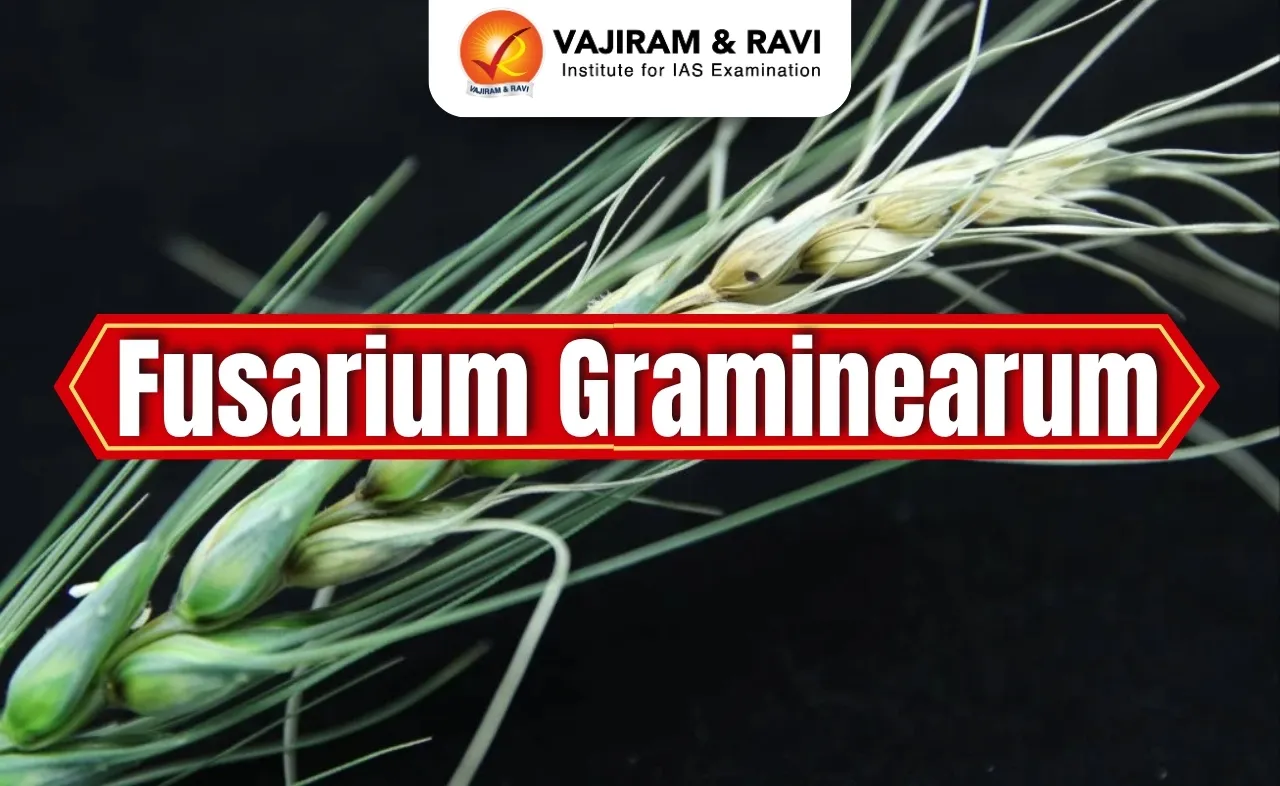
Fusarium Graminearum Latest News
The recent arrest of a Chinese researcher and charges against another for smuggling a dangerous crop-killing fungus Fusarium graminearum into the United States have brought renewed attention to the threat of agro-terrorism.
About Fusarium Graminearum
- It is a fungus that affects the kernel development of various grains, thereby reducing the yield.
- It can also cause ear rot or stalk rot in maize crops. Once infected, the fungus continues to spread as the crop matures.
- It is known to survive in plant tissue residues like small grain stems and roots and infect new plants.
- It causes Fusarium head blight—a disease that ravages cereal crops such as wheat, barley, maize, and rice.
- The fungus not only decimates yields but also produces a toxin called vomitoxin (deoxynivalenol), making the grain unsafe for human and animal consumption.
- According to the US Department of Agriculture, this disease causes over $1 billion in crop losses annually in the United States alone.
- Vomitoxin can cause vomiting, diarrhea, abdominal pain, and fever in livestock and people, further amplifying its public health impact.
What is Agro-Terrorism?
- It is the intentional use of biological agents—such as plant pathogens, pests, or contaminants—to attack a country’s agricultural infrastructure.
- It targets food production systems with the aim of causing economic devastation, food insecurity, and public panic.
- Agro-terrorism is attractive to hostile actors because it is low-cost, difficult to detect, and capable of triggering far-reaching economic and social damage.
- Agriculture-based sectors are especially vulnerable. Unlike military or financial systems, farms, food processing plants, and supply chains are less protected and widely dispersed.
- Biological attacks on crops or livestock can go undetected for weeks and are difficult to trace back to the perpetrators.
- This makes agro-terrorism a potent weapon for countries or groups seeking to destabilize a rival nation.
Fusarium Graminearum FAQs
Q1: What diseases are caused by Fusarium species?
Ans: Fusarium fungi cause vascular wilt, root rot, foot and stem rot, leaf lesions, fruit rot, head blight in cereals, and post-harvest decay.
Q2: What are the toxins in Fusarium graminearum?
Ans: Deoxynivalenol (DON)
Source: LM
