
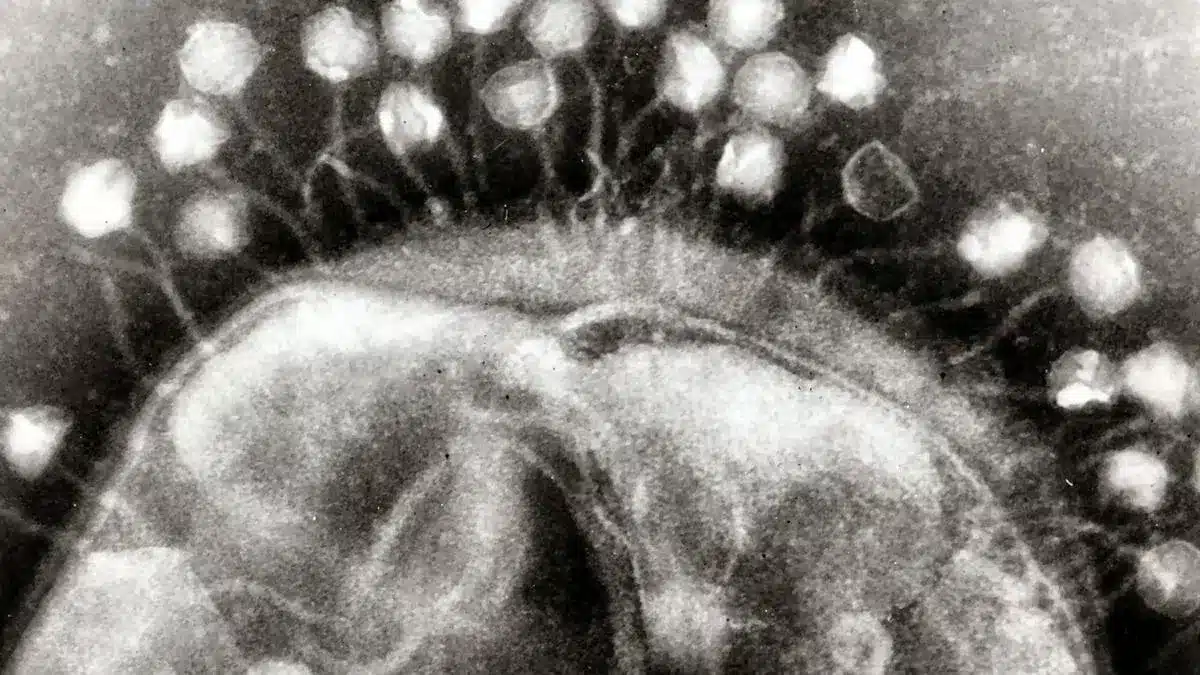
Bacteriophages Latest News
Due to antimicrobial resistance (AMR) the world is now rediscovering bacteriophages and much relevant research is ongoing in many countries.
About Bacteriophages
- Bacteriophages are ‘good viruses’ that naturally prey on bacteria.
- They are all around us, in the water, in the soil, in our gut, on our skin, etc. There are believed to be 10-times as many phages as bacteria on the earth.
- Unlike an antibiotic, which may be able to kill many species of bacteria, phages may only kill a few strains of a particular bacterium.
- All bacteriophages are composed of a nucleic acid molecule that is surrounded by a protein structure.
- The nucleic acid may be either DNA or RNA, and it may be double-stranded or single-stranded.
- There are two main strategies that have been used in treating patients by using Bacteriophages
- One, isolate the bacteria from the infected tissue, check which phage works against it in the lab, grow more of that phage and administer it to the patient.
- These phages may come from a phage bank of one’s own or in very serious cases one may even ask phage banks elsewhere in the world for help. These are natural phages.
- Second. genetically engineered phages, which have been modified in the lab to expand the variety of bacteria they can kill.
- Uses: Phages have been used for burns, foot ulcers, gut infections, respiratory infections, urinary tract infections, etc.
Bacteriophages FAQs
Q1: What are bacteriophages known for?
Ans: Bacteriophages, also known as phages, are viruses that infect and replicate only in bacterial cells.
Q2: Who discovered the virus?
Ans: Dmitry Ivanovsky
Source: TH
