
Passage Exercise Latest News
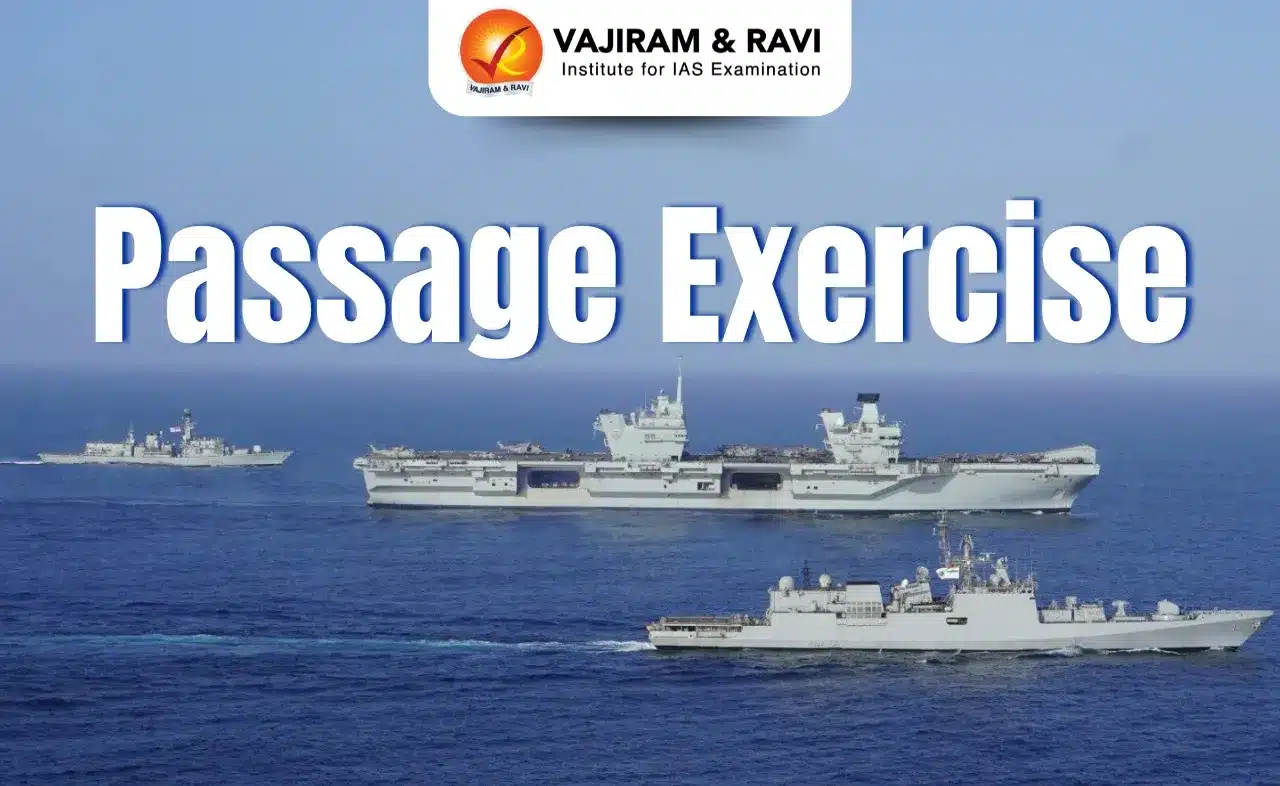
Recently, the Passage Exercise (PASSEX) was conducted in the North Arabian Sea.
About Passage Exercise
- It was conducted by the Indian Navy and the United Kingdom.
- It featured Indian naval assets including the stealth frigate INS Tabar, a submarine, and the long-range maritime patrol aircraft P-8I. The UK's naval contingent included HMS Prince of Wales and HMS Richmond.
- The exercise highlighted advanced operational coordination and interoperability between the two forces.
- With synchronised tactical manoeuvres and unified helicopter control operations, both navies demonstrated their readiness and high-end combat capabilities.
- The exercise served as a testament to the operational strength and combat preparedness of Indian naval units, both surface and underwater.
- Indian submarines and warships were instrumental in executing complex maritime tasks during the operation, earning them recognition as some of the most capable units globally.
- The joint PASSEX carries strategic significance due to its location.
- The North Arabian Sea remains a critical maritime corridor for global trade, including essential energy shipments.
- Conducting joint drills in this region reflects a shared commitment by India and the United Kingdom to maintaining maritime stability, safeguarding sea lines of communication, and projecting a credible naval presence in the Indo-Pacific.
Source: IT
Passage Exercise FAQs
Q1: Which exercise did the INS Tabar participate in?
Ans: Passage exercise
Q2: What is the displacement of the INS Tabar?
Ans: Fully loaded, INS Tabar has a displacement of 4,035 tons.
