Statins Latest News
Recent study has found that Statins could lower the death rate by nearly 40 per cent for critically ill patients with sepsis.
About Statins
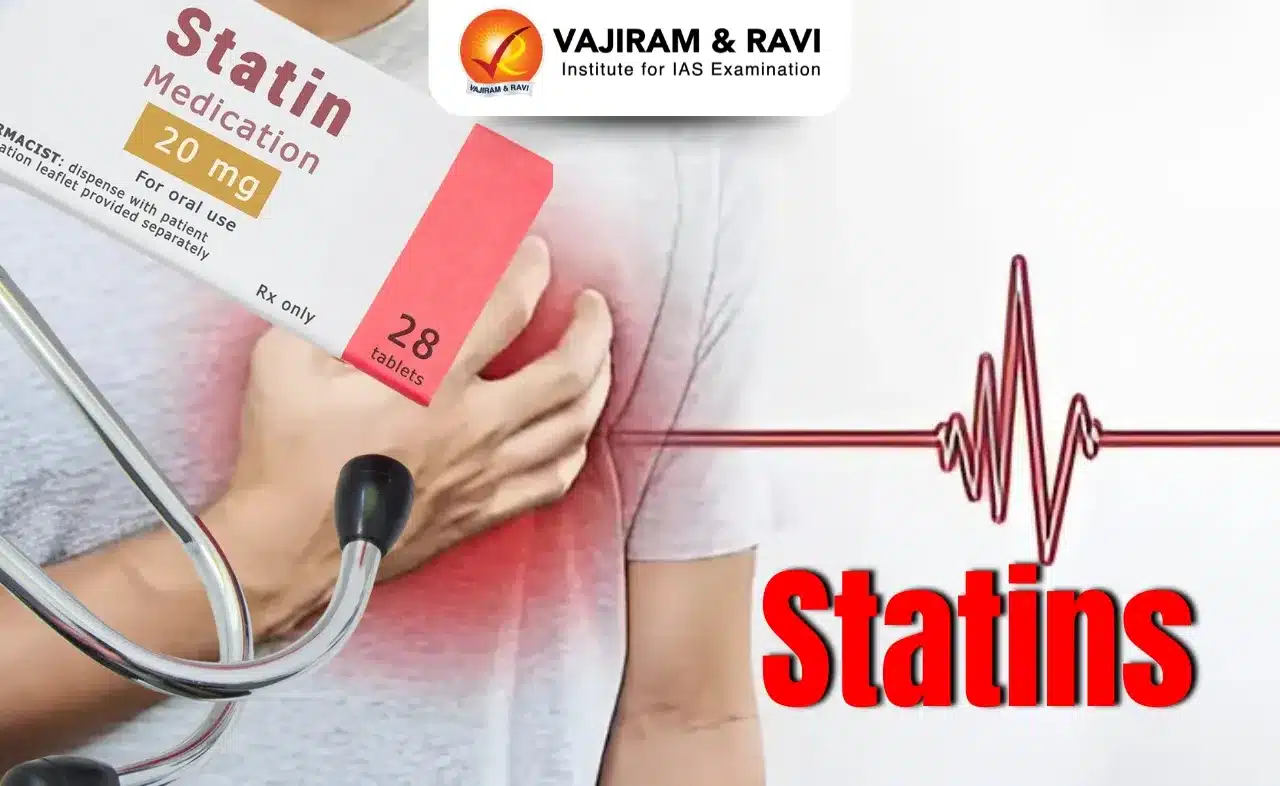
- Statins are medications that lower cholesterol levels by blocking an enzyme in the liver that helps produce cholesterol.
- They are prescribed to reduce the risk of cardiovascular diseases like heart attack and stroke.
- Too much cholesterol in the blood can cause a buildup of plaque on the walls of the arteries. That buildup can eventually cause the arteries to narrow or harden.
- Some statins can decrease your LDL (low-density lipoprotein, or “bad”) cholesterol by 50% or more. Providers often call LDL “bad” because it builds up inside your arteries, making it harder for blood to move through them.
- These medicines also have been linked to a lower risk of heart disease and stroke.
- Statins may also help reduce the risk of certain blood clots.
- Statins can sometimes interact with other medicines, increasing the risk of serious side effects, such as muscle damage.
- Statins have anti-inflammatory, immunomodulatory, antioxidative and antithrombotic properties.
- They may help mitigate excessive inflammatory response, restore endothelial function, and show potential antimicrobial activities.
Source: TH
Statins FAQs
Q1: Which are statin drugs?
Ans: atorvastatin (Lipitor), fluvastatin (Lescol XL), lovastatin (Altoprev),
Q2: What are statins used for Ncert?
Ans: Statins produced by the yeast Monascus purpureus have been commercialised as blood-cholesterol lowering agents.

